The subtle art of moving to the Cloud: 11 things to consider

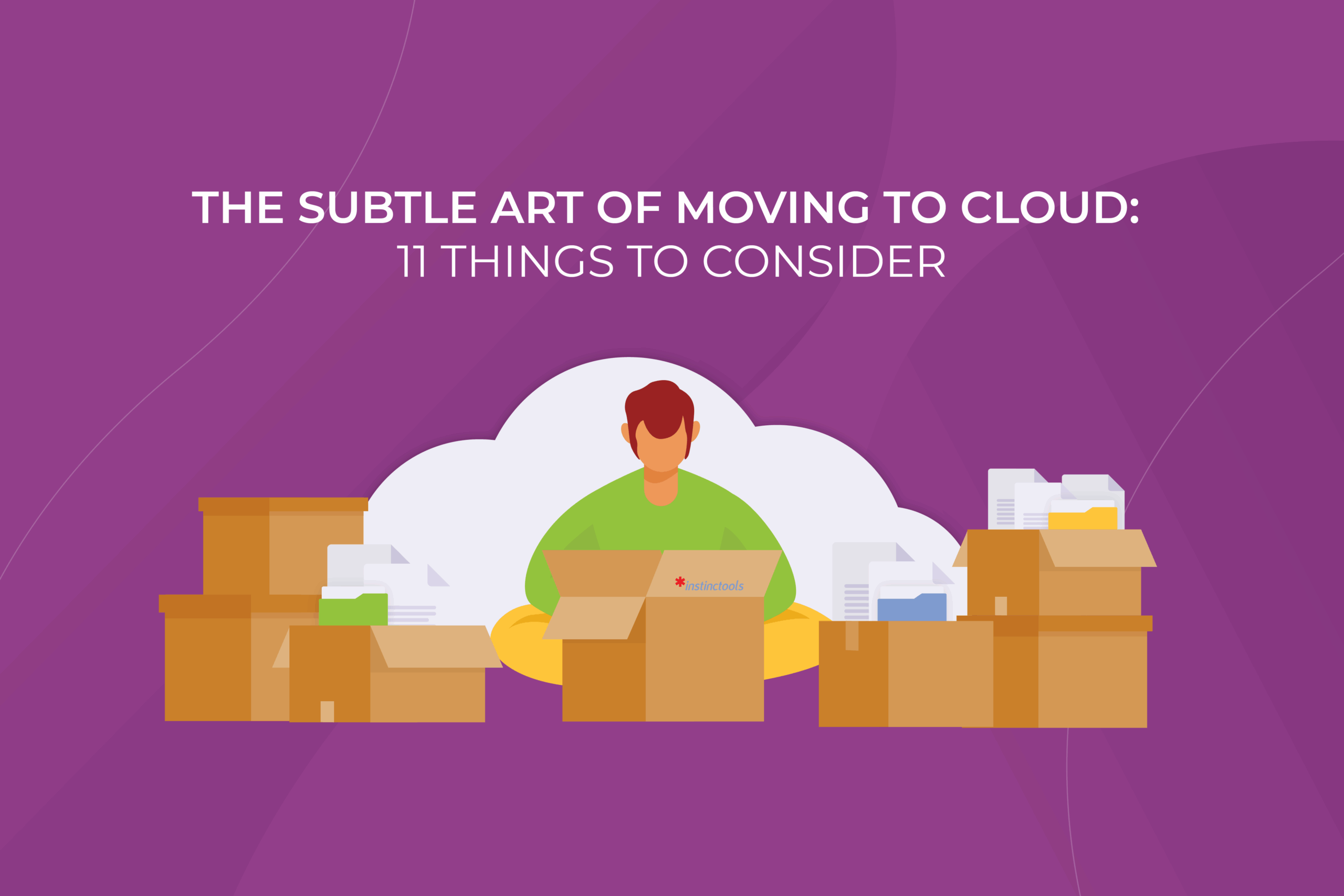
Migration to the cloud is like moving to a new house: backbreaking, time-consuming, but pretty satisfying in the end. You pack your life into boxes, deliver them to the new place, and, eventually, after everything is arranged, breathe out a sigh of relief. 

The same goes with cloud computing – you can’t just get there. There’s a lot to think about and get ready for.

1. Proper inventory.

Migration projects start with figuring out what’s in place, if those items are needed and how they will work on the new platform. This preparation stage is always about deciding what is useful enough to keep and what doesn’t make sense to store.

It’s actually pretty simple: if the costs of making your legacy app “cloud-ready” are less than maintaining it on-premises than it’s worth it. To determine if the migration is justified from a cost standpoint, you need to take into consideration the costs of converting, implementing, and integrating the cloud-based app with your existing architecture. 

3. Security.

All the modern IT systems today are invariably connected to the Internet, which makes them vulnerable to hack attacks. The fact that cloud computing is a distributed network also makes it easier for companies to quickly recover from such attacks. What you need to do to minimize, the problem is to examine your cloud provider’s security measures and risk mitigation capabilities. 
4. Migration approaches.

While considering moving to the cloud it’s important to understand not only why but also how to get there. You can choose one of the approaches within the migration strategy which suits your business needs best. There are three of them to consider: rehosting, replatforming, and refactoring.

5. Cloud compatibility.

Another thing you need to figure out in advance is whether it’s possible to host your software on a remote server. Sometimes companies have to replace much of their existing IT infrastructures to make their legacy systems compatible with the cloud. A more cost-effective option might be to use the hybrid cloud, which is capable of addressing most of these compatibility issues.

6. Shift in responsibility.

Although it might be viewed as a totally positive feature, it’s more controversial than it sounds. When something goes wrong at the cloud’s provider’s end, the only thing you can do is to log the issue with the vendor and wait for the resolution. Your IT department becomes powerless to address many problems. It’s actually neither a good thing nor a bad one, but a new reality you should get used to in order to move your business forward. 

7. Data management.

It is another tricky issue in cloud service adoption. Which browsers does the cloud service support, and how does it handle data loss? Can the cloud provider or the user organization recover that data, and what’s the turnaround time? In what locations is customers’ data eventually stored?
8. Downtime. 

Unfortunately, you can’t get away from downtime. But what you can do, is to have applications with offline syncing. This means, if you suffer downtime you can keep working and all your updated files will sync to the cloud automatically once the issue is resolved. 

9. Scalability.

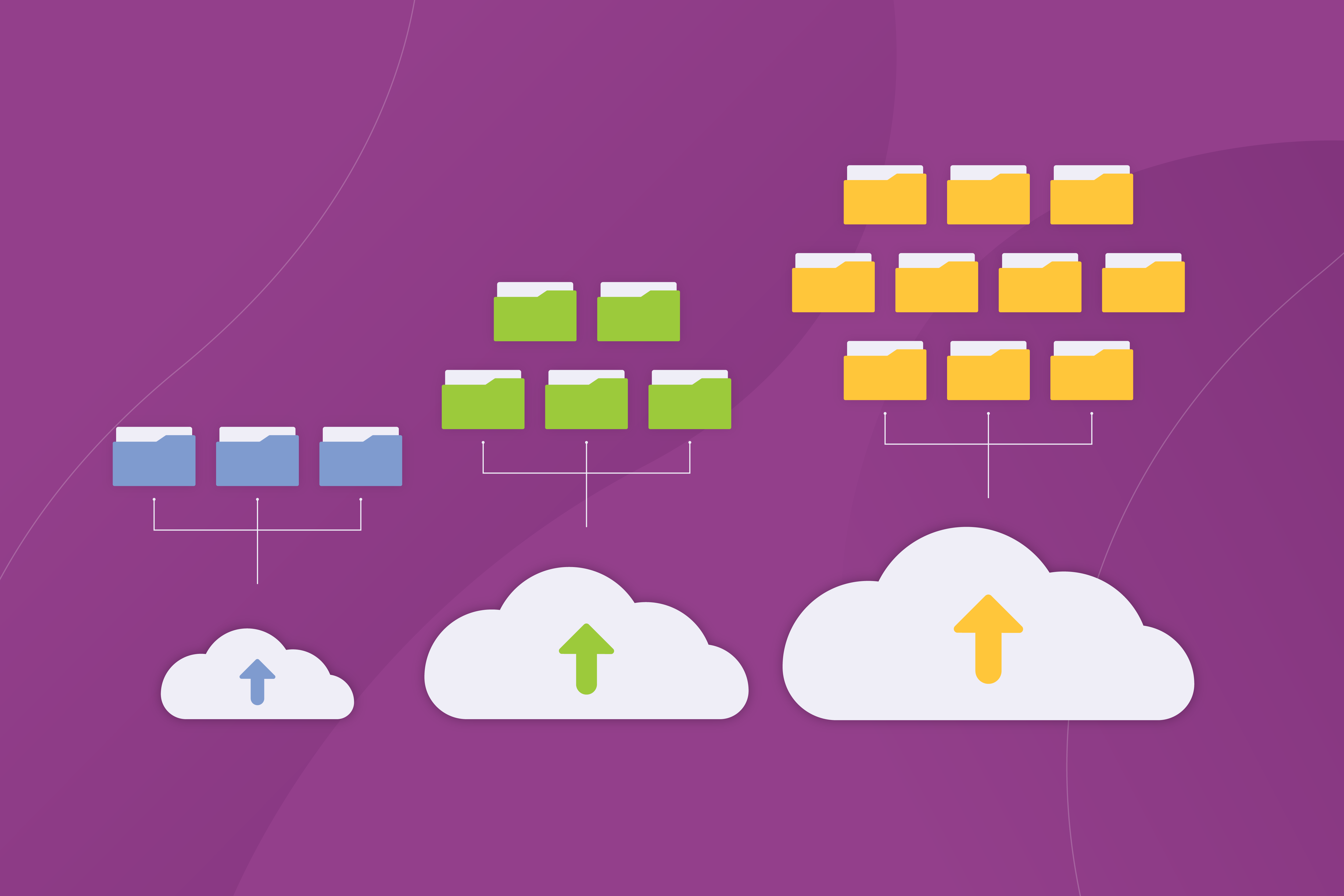
Let’s be honest, there’s little to think about: one of the main reasons for moving to the cloud is its ability to scale to one’s business requirements. The thing is that it can be done without you needing to be forward-thinking and have too many plans. With managed services, it can even be done automatically. With the proper support for scalability in your application, it’s like having a magical house that can be expanded or narrowed down to any size you need at that moment.

10. Automation.

If you want to increase productivity, think of the processes that can be automated. For example, you can schedule automatic updates across your software, so you don’t have to worry about slower operation times. Automation can save so many business hours in productivity.

11. Cloud service management.

There are two options here. You may try to manage the cloud migrations all by yourself, which often turns out to be a painstaking experience. Imagine your house needs repairing. Could you handle it on your own? And, more importantly, would you like to? It’s far more labor-intensive, takes a lot more time, and there’s a higher chance you’re going to get it wrong. Or you can seek the assistance of a vendor to bolster your project. It makes sense if you want to lift a burden of dealing with a massive infrastructure migration off your shoulders. A trusted partner can optimize and re-architect your data, providing a prescribed, personalized cloud solution.

While moving to the cloud, preparation is key. It ensures a smooth transition of your system and its capability to use all the benefits of cloud services. Once you get there, you’ll know… and you’ll breathe out in relief.


Follow us on LinkedIn to keep updated on the most recent company news, interesting case studies, and insights from our experts!
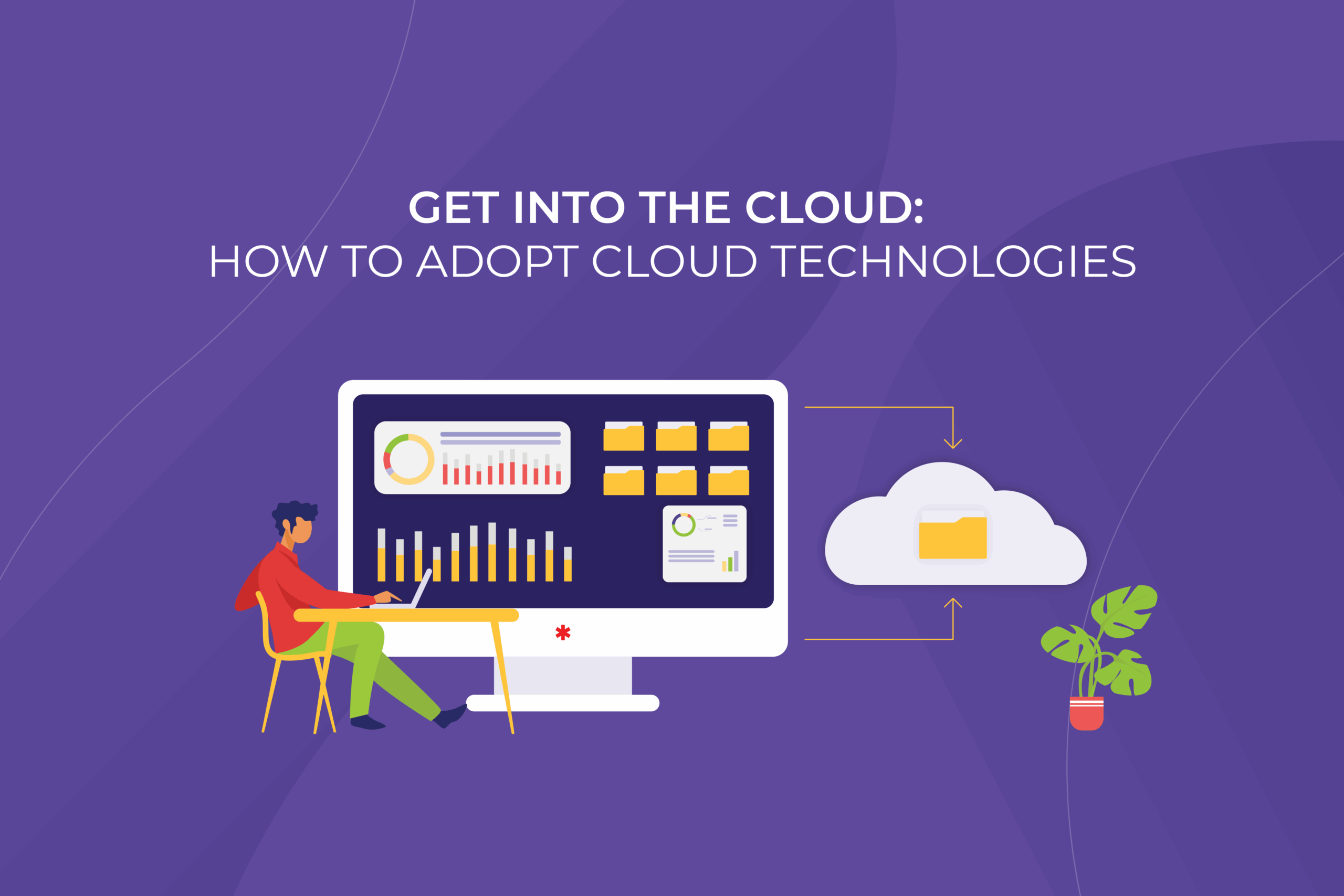
Get into the Cloud: How to adopt Cloud technologies and why do it ASAP

Whether to modernize or not, stops being a question when outdated software systems can’t keep a business afloat. That’s like evolution applied to the technological world: it’s not the strongest or the most intelligent of the species that survives, it’s the one that’s most adaptable to change.

Why move to the Cloud?

Once you admit that your software no longer meets your business needs, don’t lament and fall into despair. You’re not automatically obliged to shut down the old system and build a new one from scratch. Replacement is not the only option. It may make some sense to re-engineer or transfer the original product to new technologies. And it oftentimes does. There are different modernization strategies out there that depend on the problems you’re trying to solve.

Today we’re going to consider the most popular strategy  –  migration to the cloud.  But don’t delude yourself with the term. The migration doesn’t necessarily imply simply moving systems to the cloud. It goes hand in hand with a transformational strategy and frequently includes enhancements to let you get the full value of the benefits the cloud infrastructure can provide.

We won’t lie to you that this way is all that smooth and covered with rose petals. There are some pitfalls you may come across. But, you know what they say: forewarned is forearmed.

Benefits of cloud adoption

The benefits of cloud computing adoption are definitely worth it. They allow a business to:

  • reduce overhead expenditures on testing, integration, and maintenance
  • shorten time to release new features
  • scale the processes up and down according to needs
  • increase the flexibility of the system(s) with the help of sophisticated solutions that cloud-providers are steadily developing 

However tempting the idea to start ‘right here, right now’ may be, any decisions related to software modernization should be based on real data and thorough thoughts, rather than guesswork and sudden impulses. That’s why before starting cloud computing adoption, you need to:

  • Define the current state of your system
    It’s impossible to create a roadmap for modernization without having a clear understanding of each application of yours and its interdependencies. Only a deep insight into your applications, including its running state, processes, infrastructure, business KPI, codebase, etc. will help you to choose the right track and stay on it.
  • Set technological and business goals
    Using the information you’ll get from a detailed analysis of the current state of the system, you can think of improvements in terms of profitability, customer experience, and more. The goals you set should not come up out of nowhere but be based upon the real situation your system is in and the sourcing you can afford. You can’t just expect that everything you want will pop up with a magic wand swish.

Approaches to cloud adoption

Now, having data – not just ‘gut feelings’ – under your belt, you can choose one of the approaches within the migration strategy which suits your business needs best. There are three of them to consider:

  • Rehosting is the technique of the lowest cost and risk. While re-engineering projects can take years, rehosting is faster. It keeps the underlying business logic untouched with no negative impact on the enterprise. As a result, the system operates in exactly the same way.
    On the other hand, rehosting doesn’t generally make use of cloud-native features as some other techniques do.
  • Replatforming includes adjusting the code to a new platform while preserving the existing functionality. Minimal changes like using a managed database offering or adding auto-scaling can help return the basic profit of cloud infrastructure.
  • Refactoring presupposes restructuring and optimizing the existing code without altering its external behavior. Refactoring an application component allows for solving technical problems and improving the component’s features and structure.
    By re-coding some portion of an existing application, companies can fully exploit cloud-native features and maximize operational cost efficiency in the cloud.

The good news is that you can start with one approach, acquire some initial benefits, and then keep on modernizing your systems through other approaches to get even better results. When the primary modernization iteration is accomplished, you can estimate its out-turns by comparing your previous baseline against the current performance, user experience, and business outcome data. Thus, you’ll see the areas where further modernization can be made.

There’re a number of big, powerful players on the market which to a large extent owe their success to cloud technologies. We bet you’ve heard about Netflix or Spotify. These are the companies that have learned the lesson: it’s the one that’s the most adaptable to change who survives.


Follow us on LinkedIn to keep updated on the most recent company news, interesting case studies, and insights from our experts!
Hidden costs of legacy software

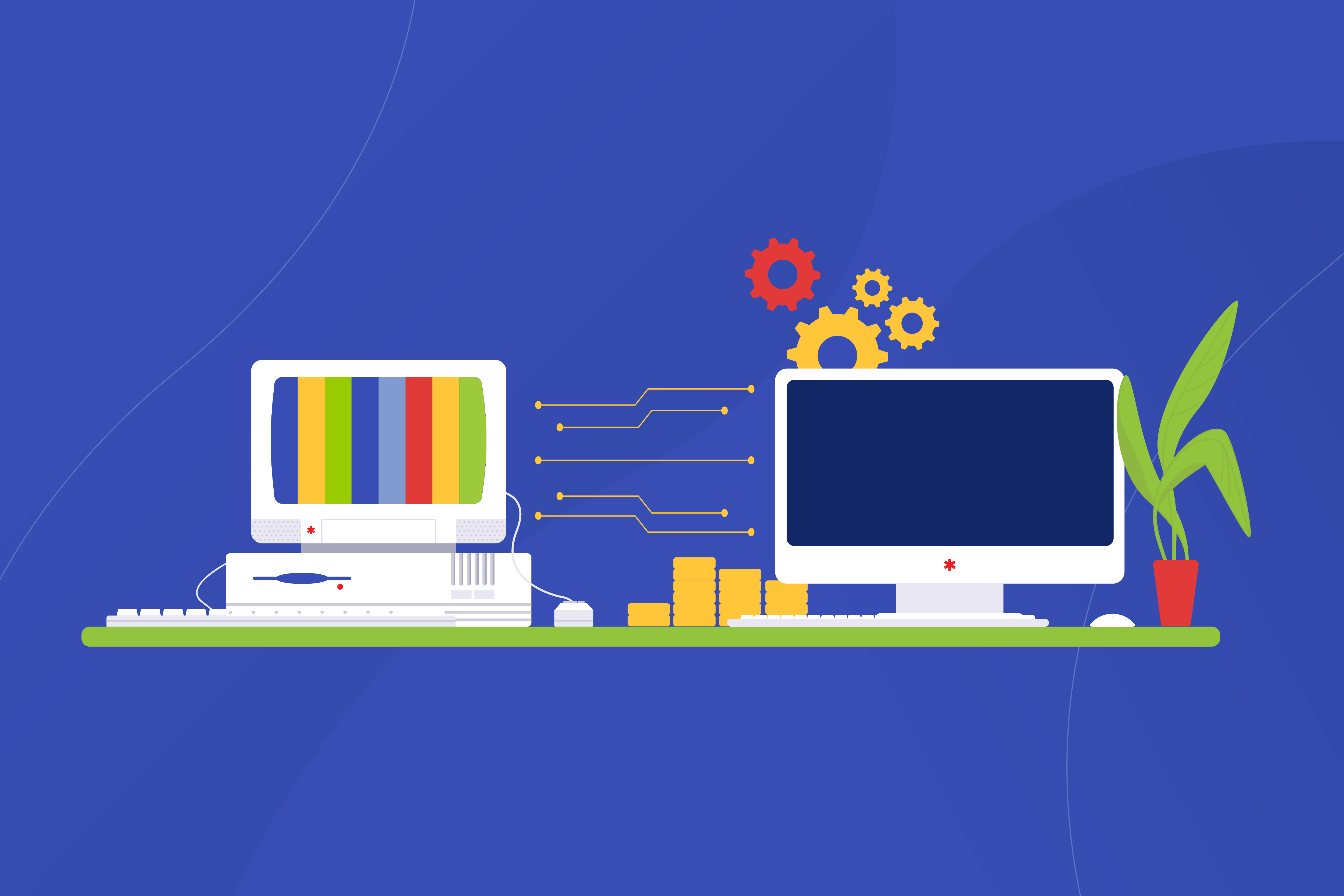
Holding onto legacy software may seem like a cheap and easy approach. You don’t need to change anything, just support the existing infrastructure, and hope for the best. However, deciding against a modernization approach and maintaining aging systems comes with significant costs that you might not be aware of.

Infrastructure issues

Legacy systems often require a specific technical environment, including hardware. The cost of ownership of such software solutions is very high due to operational and administrative expenses. On average, cloud solutions allow you to save about 65 percent of your IT infrastructure costs over the first 3 years. And the more servers your systems require, the bigger your cloud benefit is.

Furthermore, with your apps in the cloud, you can use only the computing power you need at the moment, unlike with high-priced hardware, which, in case of downtime, is a complete waste.

Another issue that roots from outdated software and problems in its configuration is security. Legacy systems are vulnerable to malware and breaches, and they are less resistant to cyber-attacks. What was secure a decade ago, might not be reliable now.

Legacy software updates and changes

Due to the outdated technology stack or overcomplicated inner architecture (often expressed in a “spaghetti code” and a technical debt), legacy systems can be hard or even impossible to change or expand to greater capabilities. Thus, any change or update to the legacy software requires time and effort, neither of which come cheap.

Staff training

Legacy software is typically not user-friendly and difficult to work with. Training your new employees to work with old-school software seems unreasonable since it makes the staffing process harder and more expensive. Outdated software with unoptimized, awkward interfaces can significantly slow down your operations. At the same time, modern business systems have powerful informational architecture, rich navigation options, and strictly defined visual elements and style.

Integration problems

No matter how old your software is. It has to be able to integrate well with other tools and applications that you use to run your business more efficiently and effectively. The problem is that old-fashioned systems have a monolithic structure. As a result, they require an excessive amount of custom-code to make them work with new technologies, modules, and tools. Therefore, you need a system that is capable of handling integrations in a manner that does not break your processes.

If you are hog-tied by your decade-old legacy systems, it will blow up in your face someday. Your competitors might have already integrated those new tools and have been taking advantage of their benefits. That means you will continue to lose your customers and revenue, putting your business’s existence at risk. 

Modern technologies, though, are integration-ready by default. Why reinvent the wheel, when you can use an existing, tried and true solution?

Missed business opportunities

It is almost impossible to calculate the true cost of managing your business processes with legacy software. Why? Because there is something called lost opportunity cost, which is usually involved with most legacy applications.

Your software must be able to keep up with changes in your business model, processes, or simply the scale of operations. Having the systems which lack this ability and no longer solve your business problems, you will end up adapting your business to your software while it should be the other way round.

Furthermore, if you want your business to evolve and grow, you will require a better throughput capacity and a completely new multi-tenant architecture to manage all your operations.

Lack of agility and efficiency

Time is money. Actually, time is more than money. Your business success depends on how fast you can respond to the market challenges and how long it takes you to adopt new technologies. In this respect, legacy systems hold back innovation, which results in significant losses. On top of that, being less efficient, outdated software influences employee productivity in a negative way.

You see, there are plenty of obstacles that get in the way of your business success if you run legacy software. Yet, there are even more: Employee satisfaction. Customer loyalty. Your brand image, which, by the way, is not “nothing” as Sprite’s slogan claims, but “everything”. Just ask Starbucks.

Role and functions of an architect in a software development project

In this article, we clear up some of the popular questions about the roles, functions, and responsibilities of an architect in a software development project. 

At the stage of a new software project evaluation, it is crucial to analyze and define the main technical characteristics of the future product and how well it achieves a customer’s business goals. In the IT industry, such functions are performed by the software architect, whose role may be distributed among different team members.

Who is an architect?

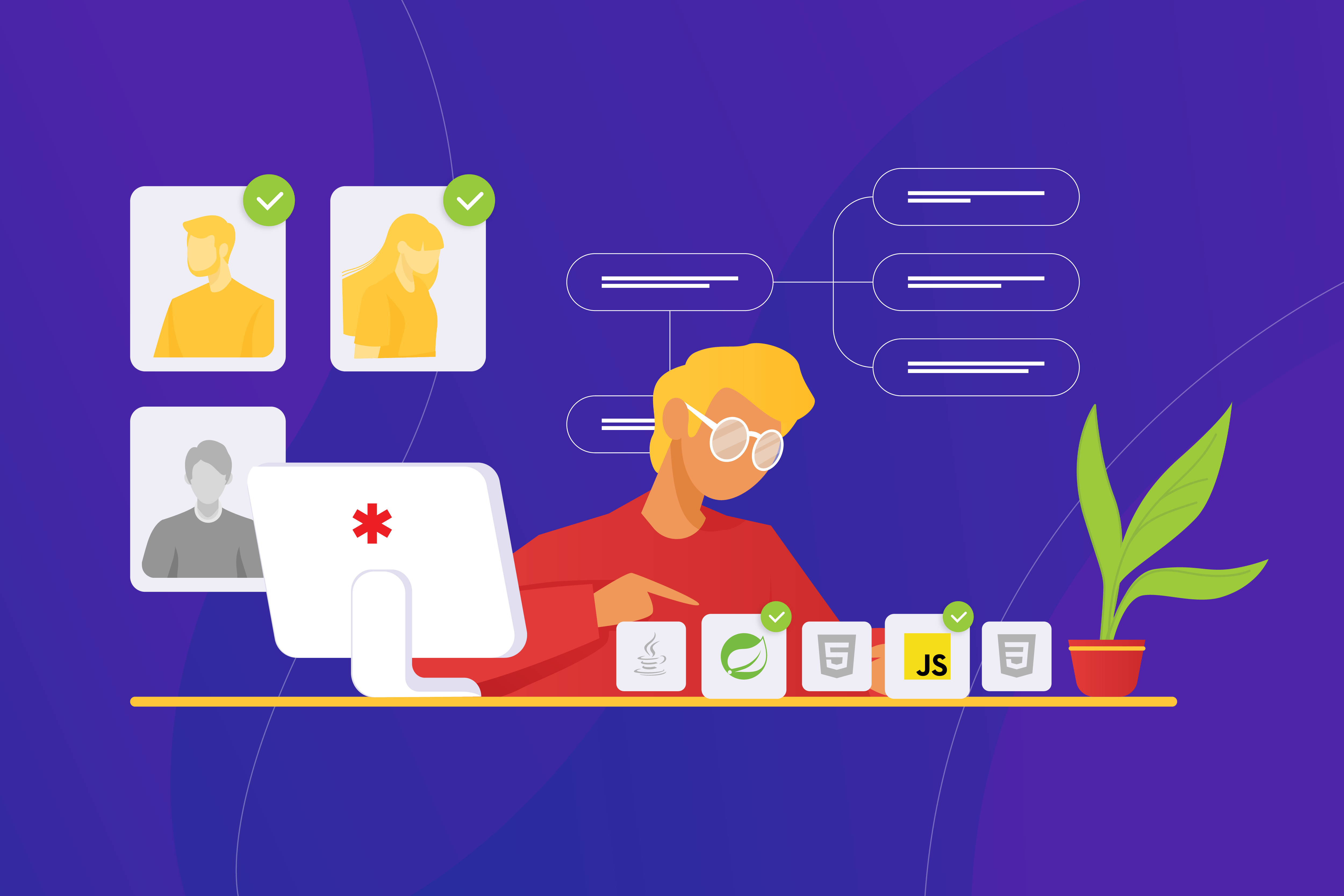
The architect in the IT-sphere is a person responsible for making technological decisions regarding the software solution and its compliance with customer business needs. Such an expert knows the systems and methodologies applied in the development process, the languages used for coding and the architecture building process as a whole. The architect plays an important role in the process of discussing, developing and implementing a technological product meeting the business needs of a customer.

Architect functions on a project

The architect’s work and decisions directly affect the activities at every stage of the project. Basically, a major part of the architect’s responsibilities relates to the early identification of the concerns regarding product delivery. The architect makes decisions to mitigate the detected risks for each process: business needs capturing, planning, implementation, testing and deployment.

In a nutshell, the architect’s activities include defining the results of each development stage to get the expected product. The following function set expresses such activities in more detail.

Understanding the purpose

The main interest of the architect is to understand the customers’ needs and the goals they want to achieve by implementing a new system (or reworking an existing one). For example, such needs or goals could be sales increasing, entering a new market, costs optimization, etc. While gathering this information, the architect focuses on finding potential failures in the technical aspects of the software.

Here at *instinctools, often a customer has an existing system that was developed considering only the functional requirements. The previous vendor (or in-house specialists) could have delivered all the required functionality, but the product doesn’t satisfy the customer anyway. Why? In most of the cases, the system wasn’t aimed to solve the business problem. No one validated that the required functionality provided the required solution.

To minimize such risks, we suggest that the architect be involved from the first clarification call. Together with business analysts, architects can identify the purpose and possible “pain points” at the earliest stages of the future project.

Defining quality attributes

From a customer or a user perspective, any software system can be defined by its functionality. But there is an aspect that is often omitted while considering the system requirements: the system’s quality, i.e. how well the functions are provided. Each quality aspect is expressed by the term quality attribute. Here are some examples of such attributes:

  • performance (response time, hardware resources required, max number of users working with the system at the moment, etc.)
  • usability (UI simplicity, easiness of operation, user error protection, etc.)
  • reliability (max possible downtime per year, fault tolerance, etc.)
  • maintainability (efforts for the system modification).

It’s a common wish to implement a system with ideal quality. But in reality, it would be quite costly, extremely time-consuming, and, in general, impossible. The good thing is that software, being in a specific environment, doesn’t need to be ideal in all aspects. For example, a CRM system in a 10,000-employee company doesn’t need the functionality for a billion users access as a worldwide social network do. But also the CRM requires much less human and hardware resources to support it.

That’s why it’s important to have clear quality attribute requirements during software development. And it’s the architect’s job to identify them. Understanding the purpose of the product and the customer’s goals, the architect prioritizes and emphasizes the crucial quality attributes for further product implementation.

Building a technical solution (architecture)

An architect deals with different technological aspects: existing programming practices, development frameworks, data storage engines, cloud technologies, testing strategies, etc. Such an expert uses this knowledge to compose a vision of the system that will solve the business problem. The common word for this vision is the solution or architecture.

Since a single problem can have multiple solutions, the architect has to validate each of them, test hypotheses, and build required prototypes. As a result of this work, the architect proposes the most suitable option. It implies the reasoning that includes:

  • cost estimates,
  • justification of the technologies used,
  • potential risks,
  • mitigation activities,
  • the number of teams required,
  • development stage priorities, and many other implementation details.

Bridging the communication gap

It’s no secret business people and IT specialists speak different languages. Both sides often complain that it’s difficult to communicate with each other. However, it’s crucial to have an unambiguous understanding of the developing system. That’s why there should be a person that will understand both sides and make a “communication bridge” between them. An architect is that person who can bring an understanding of the business domain aspects to engineers and explain to business people what the system really is.

Architect: Role vs. Job

Here at *instinctools, we have a strong belief that any software project requires someone responsible for the activities mentioned above. But it doesn’t mean that any development team must have a member with a special “badge” to make the architectural decisions.

For example, a lead software developer with deep expertise in the project domain who has already earned the customer trust can determine the solution for the product as a whole. It would be also more effective to delegate architectural decisions to a specialist in a specific technological stack if the solution is completely based on it.

Another common case is when the architect’s functions are distributed among other project participants. For instance, a project manager with a technical background defines the functional and quality attribute requirements. Meanwhile, a lead developer is responsible for building a technical solution. Both of them are capturing the business purpose and bridging the communication gap.

The distribution of an architect’s role among team members depends on the project itself. A system’s complexity, the developer’s background, the terms of cooperation, and other conditions can affect it. But in general, when the project has many unknowns and requires more technical engagement, the role is assigned to a solution architect, who is an expert in such tasks.


Within several years of delivering software solutions, *instinctools has gained certain experience in optimizing processes for achieving customer goals. That implies an understanding of technical requirements and how they correlate with customer business goals. Here at *instinctools, an architect performs such expertise at different stages of a software development project. Whether a person or a role, the architect uses their expertise to better analyze business problems or the current system’s drawbacks and suggest the best possible solutions for the future that we are ready to deliver. Now.

How to cut project costs: Business Intelligence VS cost overruns in construction

Cost overruns have always been one of the major issues for the construction industry. The main reasons are weak management, inaccurate estimates, design flaws, and changing orders. Ignoring these problems is definitely a dead end while addressing them is your chance to take the lead in a highly competitive market. 

Plainly put, going over budget is a direct cause of ineffective processes. Less reworking means savings, more productivity means savings, truly efficient decision making means… guess what? Right. Savings as well. Technological advancements make it possible to have real-time data that accelerate the decision-making pace, lowers the likelihood of redoing a design, and boost the productivity of a team.

So, if the first thing that crosses your mind when you think about your project budget is an “OMG” abbreviation, it’s time to use another one – BI. Business Intelligence is changing the construction industry helping companies to effectively handle managing equipment and manpower, which are pivotal for profit margins increase.

Let’s take a closer look at how it works.

Meticulous design 

Predictability becomes a critical notion when it comes to construction. It’s far easier for the team and less painful for the budget to deal with the changes at the pre-construction phase. BI dashboards provide users with the capacity to quickly evaluate the metrics of design development. If you can better track the design progress, then there will be little-to-no surprises in design deliverables.

The pre-construction teams can leverage real-time design data, tracking design progression in real-time. It empowers all parties to have the most current design information, allowing everyone to do their best work.

Moreover, with dashboard data readily available, the pre-construction team can suggest alternative solutions reducing material costs during the construction phase.

Besides, complete and detailed designs will also prevent you from major change orders, which entail substantial spendings as well.

Keeping an eye on KPIs

Key performance indicators (KPIs) help to measure the current state of the project and what your team needs to meet the goals. Does your project run on time? What’s your actual project cost to date? Are you keeping to your budget? What’s your current reworking cost? Are your labor costs steady? You can find answers to these and many other questions on BI dashboards. They are proved to be indispensable to control completion time, costs, and support executives in their decisions.

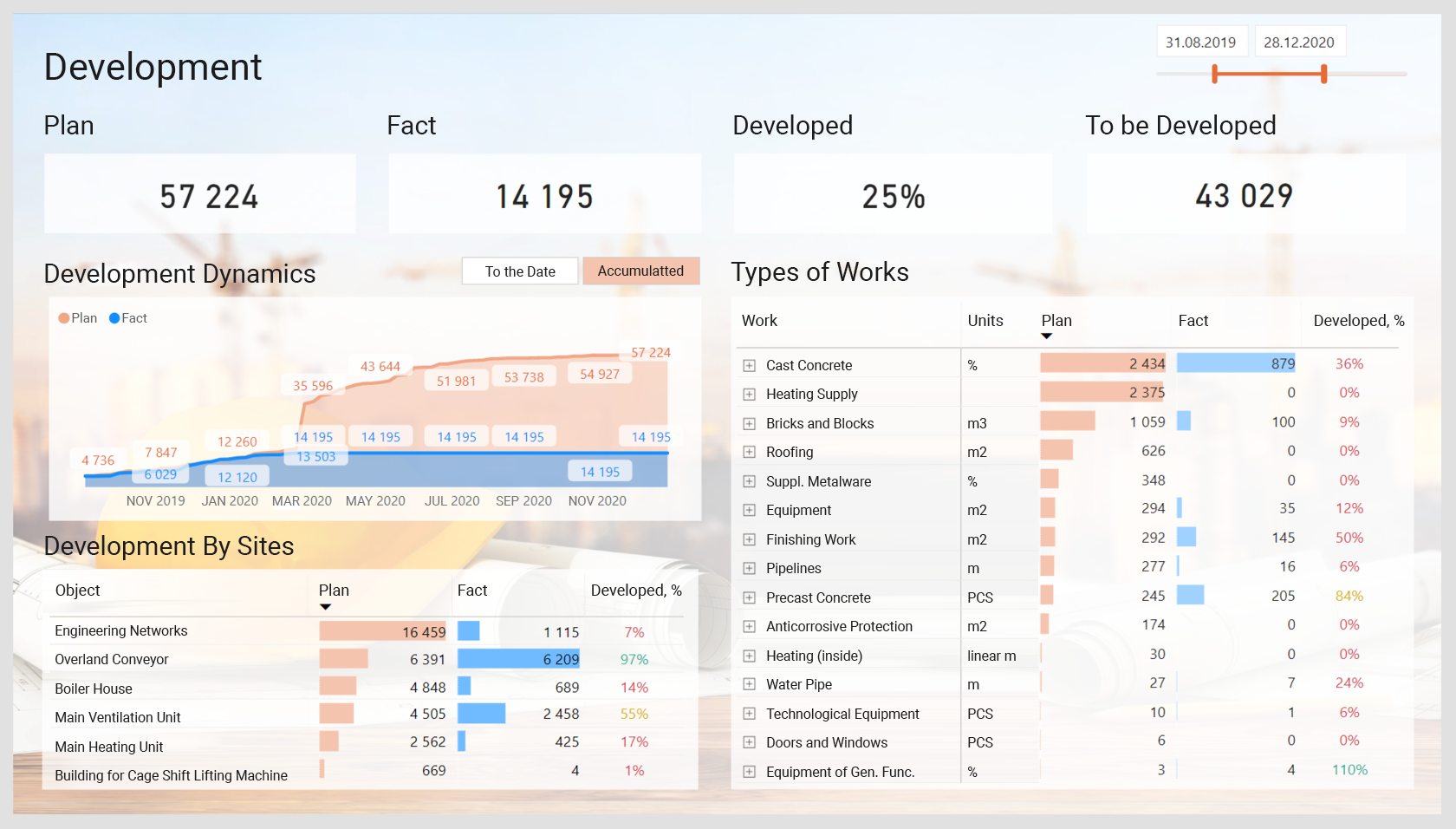
Development report on a Business intelligence dashboard
Development report on business intelligence dashboard.

Automation of some aspects of the job and interconnection of the office, trailer, and the field

BI software can reduce time spent on the most tedious tasks, like daily reporting, unleashing human resources for actual work. Moreover, when all your data is in a single place and is available for all your team members – no matter where they are, it becomes easier to keep up with the immediate changes and turn lagging indicators into leading ones. As a result, teams will complete projects faster – reducing your labor costs not to mention the need for rework.

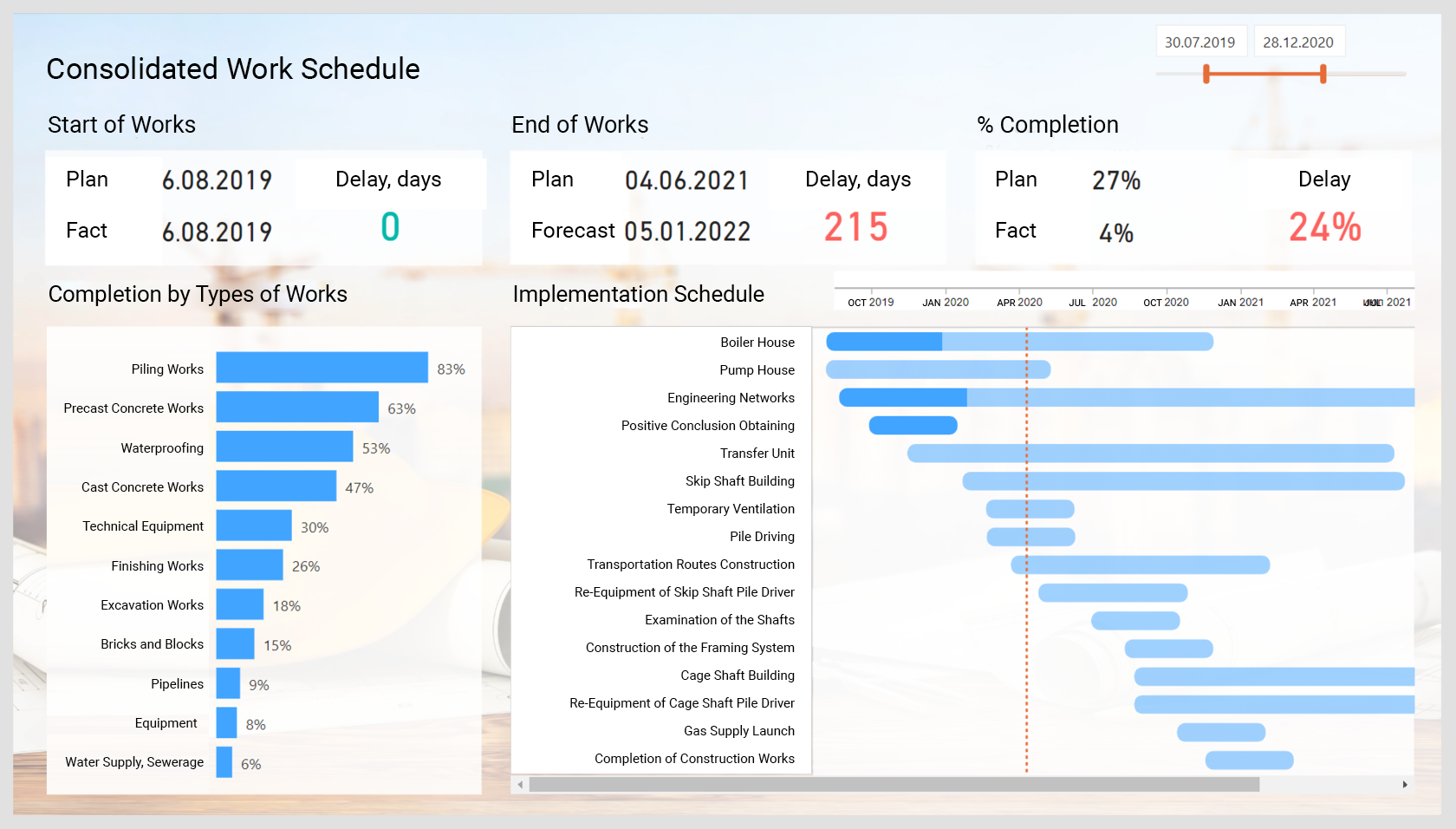
Work Schedule report on business intelligence dashboard
Work Schedule report on business intelligence dashboard.

Reducing downtime

Relying on manual monitoring methods of the machines increases the probability of downtime occurring. As a consequence, your project activities cease owing to the backlog in tasks that can’t be executed until the machines are back in working order. Meanwhile, monitoring heavy-duty construction equipment digitally prepares you to schedule repair in real-time. Besides, detecting faults in the line, BI tools can predict and diagnose issues early on and optimize the performance of equipment.

Site Safety

Although the connection between site safety and BI might seem less than obvious, it still exists. Real-time updates on the state of the equipment can prevent your project from damage and, more importantly, protect your staff from injures. Needless to say, timely security measures will keep your project assets where they belong.

Tracking materials

Failing to have proper insight and control on how you’re using materials could create a huge waste of resources. Up-to-date technologies help to track, manage, and control your inventories in real-time, keeping material waste to a minimum and reducing costs.

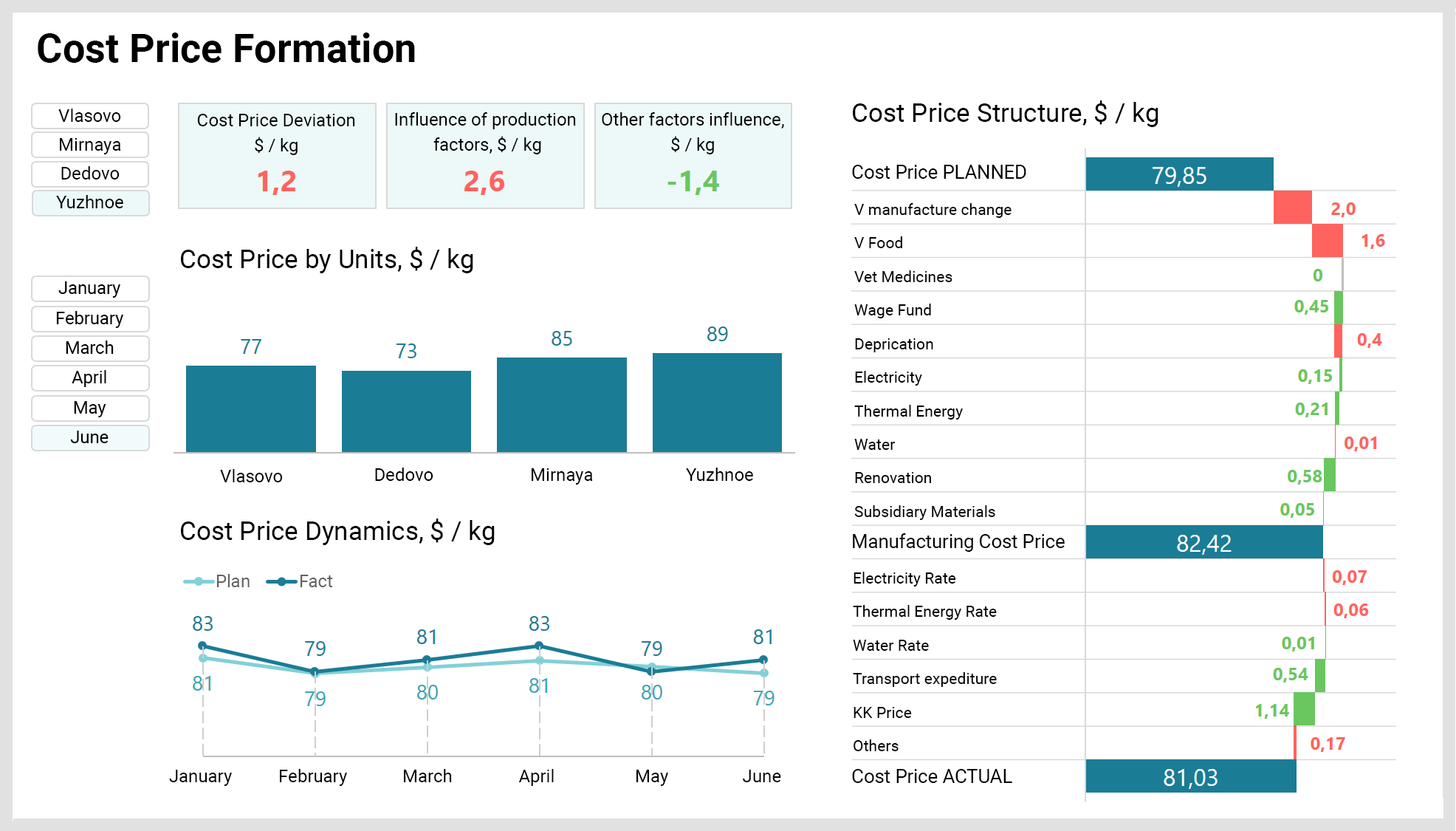
Cost price formation on business intelligence dashboard
Cost price formation on business intelligence dashboard.

Risk estimation

Retaining a risk management strategy through all construction project phases is crucial if you want to avoid serious cost overruns and stay ahead of potential problems and change orders. Having the data at hand, you can manage risk effectively and experience financial savings from all the improved productivity and enhanced decision making. 

To be continued… by you

Although there are plenty of ideas for cost-cutting in construction, that’s not all. Having deep insight into your data, you’ll definitely come up with so many more. Also, historical data from other projects will help you identify and gain efficiencies in current work and displace over-the-top spendings by increased productivity step-by-step, project-by-project.

How to choose a private blockchain… kind of thing

As soon as you’ve decided that blockchain or distributed ledger is the technology your business cannot flourish without, the question of choosing the right one between those two comes up. There are plenty of promising projects out there that can be adjusted to your needs. The only way of making up your mind is to take into account all the important criteria.

Structure & Data

If you want to share some data between nodes (connection points) and don’t need to keep an entire history of all the transactions (append-only data structure) you can go for a Distributed Ledger. It is a database that exists across several locations or among different participants. Although it doesn’t hit the headlines as Blockchain does, Blockchain is just one type of a Distributed Ledger. The main difference between them is that, unlike blockchain, a DL does not necessarily need to have a data structure in blocks. Being not dependent on the previous block, DL reaches a very good speed of transactions. The most vivid example of DL is R3 Corda. 

Storing big files in the blockchain is not a great idea. Information is added in blocks, limited in size, so it is impossible to add a big package of data at a time. If you are sure you need not just hashes, but also tamper resistance, visibility, decentralization for your files, consider Storj and Sia.

Permissions

All enterprise-focused systems assure to be permissioned ones, but in most cases, it’s simple role management. Multichain – an open platform for building blockchains – has the following list of permissions: connect, send, receive, issue, mine, activate, admin. It’s a pretty good and flexible list, but when you create a smart contract with completely different entities and roles, this list won’t help. You won’t be able to specify the existing permissions, for instance, to grant different access according to the hierarchy (admin, super admin, owner, staff, guest) or ban a particular group of people from buying your product (e.g. to forbid those who are underage to buy alcohol), etc… So be ready to implement your own permissions system.

Database

Most chains save data in key-value storages like LevelDB. They are very fast and good at simultaneous writing, but to find and sort the information out you have to duplicate all the data in a separate general-purpose database and keep this copy up to date. However, there are blockchains where you don’t have have to do it. Hyperledger Fabric supports extended queries thanks to CouchDb, EOS, and BigchainDB thanks to MongoDB. Also, Credits has query capabilities with Credits DBMS.

Upgradability

Market conditions are changing and the conditions of deals are changing along with them. In this respect, immutability – one of the main advantages of blockchain – becomes a disadvantage that developers should cope with when they want to upgrade a smart contract. Migrating data to a new contract can take a lot of resources and lead to unwanted issues like errors, stealing the money from the contract account, changing the data by someone who isn’t supposed to do it, and many others. Thus, if these procedures might occur quite often, then it’s important to choose a blockchain that will handle this problem as fast and smoothly as possible.

In Hyperledger Fabric you can change the contract or even write a new one independently on a channel state. As Hyperledger Fabric splits into channels, the modifications you want to make will be applied only to the channel with an existing contract. Similar to this, you can upgrade a contract in your private installation of EOS.

CAP theorem of a distributed system: decentralization, scalability, consistency.
CAP theorem states the impossibility of simultaneously satisfying more than 2 out of 3 guarantees in a distributed system: consistency, decentralization, and scalability.

Consensus

The term is self-defining: it’s a mutual agreement among the participants on the state of all data. The type of consensus depends on the way it is reached, for example by a voting requirement of a simple majority or by using some validators, etc. Although you might hear about many types of consensus, in reality, there’re just a few that make sense within a private blockchain. These are PoA, BFT, Raft.

Privacy

Not all blockchains have the same requirements for privacy. In some of them, the process of adding new participants may cause certain inconveniences.  E.g. in Hyperledger Fabric you will have to update a channel block and upgrade a chaincode. Also to make sure a participant has got encrypted data you have to wait for him to be online otherwise the information can be lost. The only chain that natively allows to revoke access to the previously granted data is Hyperledger Iroha. To make a private transaction in Quorum you have to wait for all the participants mentioned in the privateFor field. That’s not a good choice if you want to restrict access to some information within a chain, for example, to interact with a particular participant without other participants seeing it.

Asset

If exchanging the assets is your priority consider financial chains. They are fast and easy to understand. Some of them even support creating your own native assets, e.g. Stellar, Credits, BigchainDB, NEO, NEM, MultiChain, Hyperledger Iroha, Chain Core, Openchain.

Customization

There are three projects that allow you to create your own transaction handler and do absolutely what you want, e.g. work with the state on a low level or run any code, Substrate, Tendermint, Hyperledger Sawtooth. These frameworks allow you to focus on business logic of your chain, not on consensus, validating blocks, and storing them. If you want to create your own consensus and exchange special signals, instead of blocks, consider libp2p.

Energy consumption

Here’s the inconvenient truth: the amount of energy consumed by blockchain technology is comparable to that of a small country. The good news is that it relates to chains based on Proof-of-Work consensus (e.g. Bitcoin). PoW is the first consensus algorithm for a blockchain to secure data, but, fortunately, not the only one. There are other options such as a Proof-of-Authority consensus which allows pre-selected nodes to run a chain, using about the equivalent energy of a light bulb. Hyperledger is a good example of a private blockchain that uses PoA.

The ability to directly interact with peers like in R3 Corda also significantly decreases energy consumption, because there is no necessity to broadcast and validate blocks.

Speed

Again, it depends on the types of consensus. The only slow one is PoW. The others are fast enough. Of course, it’s hard to compare the speed of a really decentralized system with a highly optimized and scaled database cluster, so keep in mind that interacting within a blockchain still can be a bottleneck in your architecture.

There’s no one-size-fits-all solution. But it doesn’t mean that you have to tolerate the features you don’t really need. Feel free to combine! By adding something you are interested in and cutting off anything useless, you will eventually come to what is best for your business!

You don’t need blockchain… until you do!

Being ready for blockchain means being ready for the future.

As this technology is still in its infancy, we twist, whirl and test it in all possible variations to see whether it actually works as billed. And you know what? It does. For plenty of our customers, who want to lift their business up to a whole new level of functionality, blockchain – or at least some aspect of it – is a total must.

Blockchain is not your cup of tea if you’re afraid of changes – even the positive ones. Or, if you don’t pursue ambitious goals. Maybe, you’re simply not ready for the great responsibility it entails.

Anyway, you can stop reading this article right now if you don’t want to find out the advantages of blockchain our clients already enjoy.

Transparency

The problem in many companies, especially those that produce something complicated is that they’re managing different vendors across a horizontal supply chain. All of these people that go into making a product don’t have the same database. They don’t use the same infrastructure, so it becomes really hard to see a product evolve over time. Using blockchain, we can create a shared reality across non-trusting entities. It means all of these nodes in the network have the ability to monitor and validate the chain for themselves.

Ability to create smart contracts

Smart contracts have a number of advantages over traditional ones. These are lower price, efficient implementation, absence of middlemen and automatic payment. All the actions are transparent, there’re no loopholes in contracts, which makes it impossible to interpret them to one’s benefit. A perfect solution indeed, for the financial market (banks, insurance), accounting and auditing, logistics, registration of property rights, etc. 

Peer-to-peer connection

Using peer-to-peer networks you kill two birds with one stone. No, wait a sec – even three of the feathered creatures. Let’s see.      

  • Getting rid of the vulnerability of the client-server network, where everything depends on a central agent. In this model when something goes wrong everyone suffers. If the server doesn’t work, no one can gain access to it. And, moreover, the server deals with a great volume of clients’ private information. That’s why companies that depend on this model have to spend A LOT of money to protect themselves from being hacked. But with a peer-to-peer connection that blockchain provides, there’s no need to rely on a central point of storage.
  • Efficiency. When it comes to the financial sector everyone wants a faster output. You can make a transaction in a few seconds, while traditionally it takes up to a few days.
  • Cost reduction. How can blockchain help to cut costs?  Spoiler alert: by removing intermediaries.

Cryptography

Quite a bonus to everything mentioned above, isn’t it? But if all you need from blockchain is cryptography, why not start things off with the special libraries or hardware wallets that can sign, encrypt, decrypt and verify signatures? It’ll be enough for authentication/authorization users and hiding data.   

Transaction register

Details of the transactions are recorded, verified and settled within seconds across all nodes, which, on top of that, have shared write access.

Opportunity to control personal data back to the owner

With blockchain, it has become possible to create “identity in a black box”, which only gives a piece of information that’s required to do something. And, what’s even more important, belongs to the immediate owner.

Simple and clear as it might seem, blockchain is definitely not something you need to dive into without giving it careful thought. There are plenty of specific issues – business and technological ones – you have to deal with beforehand. 

“What type of blockchain/distributed ledger should I go for?”, 

“Is it necessary to write my own chain or had I better choose one out of the existing projects?”,

 “And if so, HOW can I do it?”…

In the upcoming articles, we’ll help you figure out these and many other problems which refer to the adoption of blockchain technology. We’ll give you experience-based tips and consider the real cases so that you will see in what way blockchain can meet your expectations.

Follow our news or contact us right now to embrace the technology of the future for your today’s success.

Pre-discovery workshop: turning problems into opportunities. Part 2.

The start of a project can be disturbing, not to say even intimidating, especially if the questions are piling up and the answers aren’t readily coming in. During the Pre-Discovery workshop, we delve deeply into the customer’s anxieties, frustrating problems, and haunting questions, not letting a single detail slip our mind. As here, in *instinctools, we know for sure: it’s the details that matter.

The Pre-Discovery phase is a package solution. It consists of 3 parts: preparation, workshop, and post-analysis.

THE PREPARATION

Preparation starts well in advance. The time we spend on it depends on the inputs. The information we get during the Clarification Call with the customer and documentation provided by them are carefully processed and analyzed. If needs be – for instance, the customer has a start-up company – we conduct a competitive analysis as well. Then, based on this data, the agenda is developed.

Throughout the entire process, we remain in close contact with our customers to agree on the contract terms, the participants, and the agenda. After the agenda is confirmed, we work out a Pre-Discovery Question list, which is unique for each customer. It helps to elaborate on the issues declared on the agenda. We can also pitch a preliminary solution which may include Initial UI/UX Concepts, Business solution options, Implementation and delivery options, the sketch of a technical solution, etc. 

THE WORKSHOP

The main goal during this stage is to discuss the vision of the solution and define risks, dependencies, tools, and other limiting factors of the project. The Pre-Discovery workshop itself lasts  3-4 days, depending on each particular case. Each day of the workshop starts with specially designed warming-up activities aimed at setting the work on the right track. Then the agenda is announced. Sometimes the agenda can be changed throughout the discussion. However, we never fail to keep in mind, how it contributes to the end goal. In the course of the day, our team dives into the current state of the customer’s business with the help of relevant questions. We discuss business processes, use cases and scenarios, problem vision, infrastructure, etc., and set up goals and tasks. 

At the end of the day, summing-up and reflection is a must. Not only do we provide our customers with proper feedback, but we also ask for feedback from them. It helps not to get bogged down and drive the work further towards success.

THE POST-ANALYSIS

As part of the post-analysis, the customer gets the results of the workshop packed in Vision and Scope Document and Architecture Overview Documentation, the pitch of UI/UX concepts and Infrastructure and license costs – if they exist. On top of that, taking into account the outputs of the Pre-Discovery phase, we prepare an offer for the Discovery phase.

We try our best to meet the requirements of each and every customer. Being part of the Delivery-as-a-service (DaaS) approach, the Pre-Discovery Workshop is highly customized. Activities may vary from case to case. But what remains unchanged is our devotion to what we do and a strong desire to deliver value. We create a solution, unveiling the details our customers miss. In the long run, it’s truly the details that count!

Pre-discovery workshop: turning problems into opportunities. Part 1

The idea that your business can benefit from technological solutions has already settled in your mind, but do you still fail to picture the whole project? Seriously, that’s ok. According to Delivery-as-a-service (DaaS) approach, a project is divided into particular phases. The thing is to work properly on these phases so that, in the end, they will create a seamless scheme.

Each phase paves the way for the next one, making the project more stable. At the same time,  it becomes more valuable in itself, as it provides the customer with a real, obvious result of our work.

We have already defined the starting point of a project – which is a Clarification Call. The next important step, flowing naturally from the previous one, is a Pre-Discovery workshop. It is here, where we reconfigure the customer’s task from our expert perspective. This has become possible since we plunge into the business context of the customer to realize what their problems are.

As DaaS implies partnership, the Pre-Discovery workshop can be referred to as a core activity, which helps to start building up a trusting relationship with the customer. 

That’s just one of the numerous reasons why we have chosen the format of a workshop. Here are some others:

  • Live communication is a total win-win. It helps us understand the customer’s needs better, while the customer can evaluate our team’s knowledge and experience in person;
  • The encouragement of proactivity results in highlighting the problems and offering solutions;
  • A high level of involvement at an early stage gives the project a solid start; 
  • There is always participant interaction, which makes workshops dynamic and efficient;
  • The possibility to handle the questions as they arise and often turn them into group discussions, which will definitely clear up your vision on the current state of your business;
  • Open dialogue between participants reinforces fundamental concepts, while also providing fresh perspectives and varying methods;
  • The atmosphere that is lighthearted, exciting, and inspiring creates an environment where ideas flow freely, and people enjoy the process;
  • The capacity of the team is way bigger than that of one person and it often leads to new insights. It’s hardly possible that there is one person out there, who is confident and qualified enough to embrace all the functions;
  • Immediate feedback. There’s no need to wait for ages. Participants can exchange feedback, as well as the ideas, on the spot;
  • There’s a clear link between new ways of thinking, the workshop provides, and the motivation to move forward, it encourages.

The perks of the Pre-Discovery workshop are crucial for those who want to set their projects on the right track from the very beginning, as well as for those, overwhelmed by the number of problems they have. Our team is ready to prove that within each problem, there’s always an opportunity.

All ready for your project? A clarification call helps to find out

The Clarification Call is a starting point of project delivery. It’s a free, non-commitment though crucial activity, which either defines (clarifies) or, at least, comes close to defining a customer’s needs. That’s like a medical check-up, but in a business sense: you have the opportunity to articulate your pain in the neck and get a preliminary diagnosis.

Before the Clarification Call, if desired, a potential customer gets a checklist with some questions. Answering them is entirely optional. Nevertheless, you may feel free to lay out your major requests in advance.

You may be aware that something needs to be done but all of a sudden (in fact, quite predictably) realize that you don’t know what exactly it is. Breathe out! That’s not a stumbling block at all. We are able to perform your business task not only on a technical level but also on a methodological one, so you can start either with something that bothers you or with an opportunity you would like to bring about. Our team is ready to answer the questions that arise during the call. As well as help navigate you through the processes and stages of the project and relevant cases. You can rest assured that it’s a friendly discussion!

As it’s extremely important for us to be in complete sync with our customers, we meticulously select the team involved in this phase. In general, these are representatives of the Sales Department, Project Manager, Business Analyst, and Solution Architect.  Yet, the structure of the team is pretty flexible and is specified according to each case. 

The team on the customer’s side is not limited to certain positions. Let’s put it this way, not really must-have, but nice-to-have include Product Owner, Product Manager, Project Manager, Chief Technical Officer (or other staff from the technical department). And other key positions are welcomed.

During the discussion, or within 24 hours thereafter, the customer gets expert feedback on their risks and weak points, which require a more thorough investigation. Moreover, we provide them with initial recommendations and next steps plan, if need be, which implies a transition to Pre-Discovery Workshop.

Whether or not to make these steps towards the following phases of the project is up to you. It’s doubtless that after the Clarification Call you’ll get a better idea of current gaps in your business processes and see any possible room for improvement.

Leave us a note if you have any questions or would like to learn more about our project delivery approach. Our sales specialists are ready to provide you with comprehensive advice and to find the right team for your project implementation!

Anna Vasilevskaya
AI modified real photo
Anna Vasilevskaya
Account Executive

Get in touch

Drop us a line about your project at
[email protected] or via the contact
form below, and we will contact you soon.