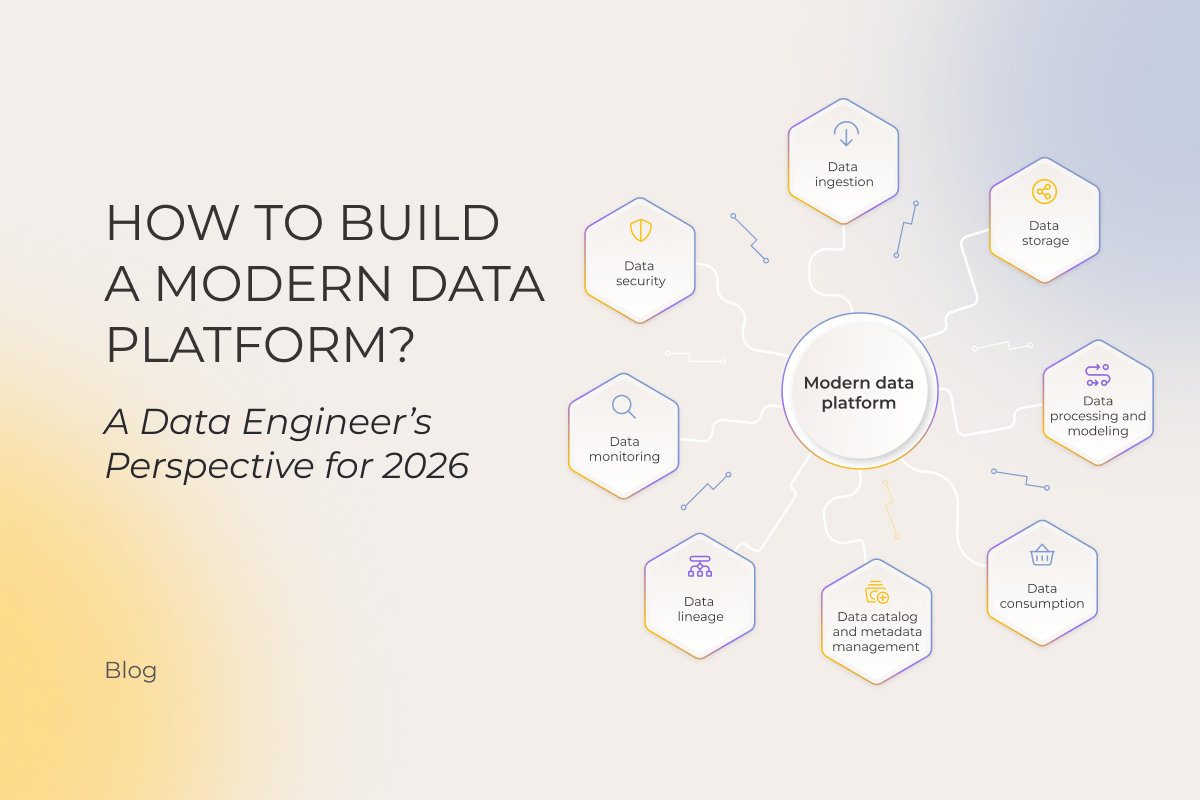
How to Build a Modern Data Platform? A Data Engineer’s Perspective for 2026

The surge of interest in artificial intelligence has elevated the importance of building the modern data platform. And here’s why.

As AI sets higher expectations for how businesses use their data, many are growing more uncertain about the strength of their data foundations. Companies still struggle with issues such as integration, security, and data quality and the pace of improvement has not matched the increasing demands of AI/ML initiatives.

Today, a striking 84% of global data and analytics executives agree their data strategies need a ground-up rethink before innovative AI-related undertakings and advanced analytics can live up to their promise. And the surest way towards this is building a modern data platform. In this article, our data experts explain how to build a data platform right.

Key highlights

  • Advanced data analytics and AI/ML initiatives can only succeed on a foundation of clean, well-organized data. A modern data platform, developed in line with a clear data platform strategy, delivers exactly that.
  • Core layers of a modern data platform architecture include data ingestion, data storage, data transformation, data processing, data consumption, and data governance.
  • Without strong governance, even the most elaborate data platforms risk inconsistencies, compliance issues, and limited trust in the insights derived.

What is a modern data platform?

A modern data platform (MDP) is a unified, enterprise-wide data ecosystem of tools that enables the collection, storage, transformation, and consumption of data under transparent governance. Its goal is to move beyond a set of loosely connected components and their chaotic usage toward a cohesive modern data infrastructure that oversees the full data lifecycle end to end. It can be reached either by a collection of best-of-breed, cloud-native tools for data tasks (such as dbt, Fivetran, etc.), commonly referred to as a modern data stack, or a more integrated and often self-service platform built around those modern data ecosystem components.

Why do businesses need a modern data platform?

In fact, 82% of companies are either planning or already implementing a data platform. There’s nothing new about the business goals they are trying to achieve with solutions like this. What is new is how effectively a modern data platform enables organizations to reach them, tipping the balance in its favor over legacy, fragmented, and semi-manual data management environments that offer nothing but slow, brittle, expensive, and hard-to-scale band-aids.

modern data platform

Building a modern data platform dramatically shortens time-to-value and boosts efficiency across the sought-after AI/ML initiativesand augmented analyticsproducing real-time, actionable insights. Other benefits of having well-organized data platform infrastructure include:

  • Lower costs. Even with a solid upfront investment, building a big data platform saves money in the long run by reducing spend on data team headcount needed to manage scattered data sources, as well as on licensing fees for disparate tools.
  • Saving engineering time. To create a new pipeline, there’s no need for intensive coding work as templates and reusable components can be replicated across different use cases. 
  • Democratized usage. Beyond data analysts, the platform’s user-friendly ecosystem makes trusted and governed data accessible to a broader team of business users across the organization.
  • Frictionless data delivery. Data doesn’t get stuck in isolated silos or require complex handoffs between tools. Besides, with standardized schema and governance, different teams can access and interpret the same data without extra cleaning or mapping.

However, a modern data analytics platform is only as effective as the vision behind it. Without a clear data platform strategy, businesses end up duplicating efforts across teams, fragmenting their data ecosystem, and slowing every transformation initiative, whether in business intelligence, advanced analytics, or AI.

When is it better to opt for custom data platform development? Isn’t a ready-made enterprise data platform enough?

Off-the-shelf platforms like Microsoft Fabric or Google BigQuery are fine for fast launch at relatively lower upfront costs or standard needs.

But if you want a data foundation that’s built for your unique playbook, one that scales exactly when and how your business scales, delivers long-term savings, and eventually turns into a genuine competitive edge, you need custom data platform development, also called data platform engineering or data platforming.

Besides, ready-made solutions often come packed with features you don’t need. Or, worse, data platform features that aren’t designed for your actual needs, leaving you to hack your way around their limitations. Those workarounds eat up time and budgets.

With custom data platforming, on the other hand, you:

  • get exactly what you need to achieve your goals
  • gain full control over your data platform architecture and your usage model, which is especially crucial when your data becomes a strategic digital asset
  • have the freedom to rapidly test and deploy advanced AI functionalities, like autonomous AI agents or semantic understanding before they are available in commercial platforms. Plus, these can be tailored exactly to your needs, something ready-made solutions allow only in a very limited way.

How to build core data platform layers?

As a rule, a modern data platform architecture is built on four core layers, including ingestion, storage, processing, and consumption. Each is made up of its own set of tools and technologies. Collectively, components of a modern data ecosystem aim for one simple goal: getting the right data, to the right people, at the right time, in the right shape.

Modern data platform architecture

Data ingestion

Data ingestion is the first step in extracting value from the massive volumes of structured and unstructured data businesses amass from corporate systems like ERP or CRM, financial platforms, third-party providers, social media, and others. 

When data ingestion is well-planned, all relevant data sources are identified and properly integrated, and data flowing into the modern data platform is validated and formatted for reliable storage and efficient downstream processing. Engineers have to wrestle chaos into order, carefully deciding how to handle formats, missing or duplicated data, and temporal alignment, since errors here cascade into analytics, reporting, or AI models, depending on the business use case for the data.

Today, this is made possible by tools like Fivetran, Apache Kafka, and CDC technologies such as Debezium.

Data storage

The choice of a data storage system depends on an organization’s requirements and a variety of data users, and performance expectations. Modern storage architectures can be deployed in both cloud and on-premises environments while leveraging high-resilience databases for modern data platforms to support AI workloads and large-scale data processing. When building a data analytics platform, the following storage options are commonly considered:

  • Data warehouses. A data warehouse is the right choice when the required datasets are well defined, their structure is known, and data-reliant initiatives are already clear.
  • Data lakes. When organizations expect analysis patterns to evolve and need to work across heterogeneous data, a data lake provides the necessary room to explore.
  • Data lakehouses. Pioneered by Databricks, the lakehouse concept makes it possible to use data management features inherent in data warehousing on the raw data stored in a low-cost data lake owing to its metadata layer.

Data processing and modeling

Stored data only becomes useful once it’s been properly transformed. The data processing layer is where cleansing, combining, and structuring data happens to ensure its quality, consistency, and readiness for planned initiatives. Depending on your needs, we integrate different data platform tools in this stage. Just a few examples are:

  • For high-speed, large-scale batch data processing, we suggest using Apache Spark and its integrated modules for SQL, streaming, and machine learning.
  • When a fully managed, serverless ETL service is needed, AWS Glue automatically discovers, prepares, and combines data for analysis.
  • Apache Kafka (with Kafka Streams) powers real-time streaming applications that demand high scalability and fault tolerance.
  • To perform stateful, low-latency computations on unbounded data streams, Apache Flink provides exactly-once processing guarantees.
  • dbt transforms data directly within the warehouse using SQL-centric modeling and documentation.
  • Complex data pipelines are programmatically authored, scheduled, and monitored as directed acyclic graphs (DAGs) with Apache Airflow.

Data consumption

This is where data becomes actionable. From the powerful outputs of machine learning models to sleek, interactive dashboards, all the data platform features you’ve wanted from your development initiative come served on a silver platter.

  • Business intelligence. Curated datasets from the storage system are consumed via drag-and-drop interfaces or direct SQL, producing BI dashboards and reports that inform daily operational decisions and strategic reviews.
  • Machine learning and data science. Here, data fuels predictive engines. Data scientists access organized feature stores and massive datasets to train models, running iterative experiments to deploy services that can, for example, forecast inventory demand or score transaction risk in real time. The toolkit includes solutions like Databricks ML, SageMaker, or Vertex AI.
  • Data as a product. Cleaned, aggregated data can be exposed to other internal systems or customer-facing applications through secure, documented APIs, such as a REST endpoint or an internal GraphQL API.

Let’s stack up your data platform, brick by brick

Contact us

Building trust in your data pipeline through effective governance

Data platform implementation isn’t complete without making the whole system observable, secure, and trustworthy, while keeping all the workflows traceable.

The bitter truth is, no single platform covers all aspects of data governance. To serve the goal, it must be composed of multiple, well-chosen data platform tools. This is how modern data platforms work.

Data catalog and metadata management

Effective data governance is impossible without knowing where the data is and what it means. Think of catalog and metadata management as the map, legend, and compass for your data ecosystem. Metadata tools like DataHub or Unity Catalog act as the Google for your data, indexing schemas, owners, descriptions, and usage stats, while semantic layers (dbt Docs, Cube, Looker semantic model) and tagging engines (Atlas-based catalogs, Purview classifiers) add shared meaning and classify sensitive data.

Data lineage

Data lineage shows how data flows from raw ingestion to consumption. It answers practical governance questions:

  • Where did this data come from?
  • What transformations were applied?
  • What depends on this table or column?

Lineage is captured via tools like OpenLineage, dbt, Spark, Airflow, and Unity Catalog, and visualized in catalogs such as DataHub. This traceability enables impact analysis, root-cause debugging, and safe change management, and is critical for regulatory compliance.

Data monitoring

When data arrives late, duplicates appear, or the data isn’t structured the way the pipeline requires, observability tools surface the issue before users notice.

  • With monitoring and alerting tools (Monte Carlo, Bigeye), data quality becomes measurable and enforceable, answering the question “can we trust this data?”.
  • Freshness, volume, and schema-drift checks (Great Expectations, Soda) reveal when data stops behaving as expected.
  • To keep the data platform fast, reliable, and cost-efficient as usage scales, query performance monitoring tools like Snowflake Query History, or Databricks metrics are added.

That’s how you configure data quality management across your pipelines.

Data security

No business data platform is complete without security built in. This is where you ensure the right people access the right data, all the needed policies are enforced automatically, and sensitive information is protected, while multiple teams can work safely and compliantly. Your security stack should enforce a set of practices, including:

  • Policy enforcement. Define and automate policies that govern who can access data and under what conditions. Policy engines like Apache Ranger, AWS Lake Formation, or Azure Purview can be helpful.
  • Access control management. Apply role-based (RBAC) or attribute-based (ABAC) models to strictly govern user permissions.
  • Data protection. Mask or tokenize sensitive information to minimize exposure while enabling safe data use for teams.
  • Schema integrity control. Apply rules and constraints at the data schema level to prevent unauthorized or invalid data modifications. Thinks Delta Lake constraints or BigQuery policies.

Here’s how to make a data platform matter for the long haul: best practices

For every modern cloud data platform implementation, going live is only the starting line. The expected system’s operation and performance depend on a set of carefully orchestrated follow-up measures. These data platform best practices come from real-world implementations across industries, including high-volume analytics, ML pipelines, and modern cloud-native architectures designed to survive the next AI wave.

  • Run a controlled pilot. Select a single use case or a defined user group for the initial rollout. The objective is to test your core assumptions about usability and utility in a real, but contained, environment. Gather specific feedback on bottlenecks and areas of confusion, then address them.
  • Educate your employees. Embed learning into their workflow rather than forcing formal training. Provide context-sensitive guides, templates, and self-serve notebooks so your team can explore data safely. Pair this with hands-on workshops tied to real projects and create a feedback loop where early adopters mentor others, gradually making usage the default behavior instead of an optional skill.
  • Monitor impact. You need a balanced approach. Tie platform metrics to business outcomes: track adoption, query performance, data freshness, and error rates alongside revenue, product usage, or operational efficiency gains.
  • Scale smartly. Treat your modern data platform as a living system. Adapt it as your business needs evolve and as new data technologies emerge.

Design a data platform that’s tailored to your current data landscape and future innovations

Contact us

Before jumping into building a data platform, get clear on what you really need

It’s always better to step back and define exactly what your use case requires because the wrong architecture or technology choice can lock you into inefficiencies for years. 

Different business needs require fundamentally different solutions. For instance, if your goal is to build real-time recommendation engines, the platform must handle streaming data and low-latency inference, whereas predictive analytics on historical sales data demands batch processing and scalable storage for structured datasets. Each of these needs dictates different architecture choices, and your data platform strategy overall, so defining them early on ensures the platform actually supports your goals and prevents costly redesigns.

At Instinctools, we conduct a discovery phase to reveal the precise requirements upfront and make sure you commit to the right solution, one that delivers today and tomorrow, without resorting to retrofits or overcomplication.

– Ivan Dubouski, AI Lead Engineer, Instinctools

During discovery sessions dedicated to data platform design for our clients, we usually look at a few core things:

  • Defining business objectives and concrete use cases
  • Auditing the state of existing data pipelines
  • Tying goals to success criteria 
  • Validating technology fit for data types, scale, and workloads
  • Mapping governance, security, and regulatory compliance requirements
  • Assessing organizational capabilities, skills, and data maturity

Invest in the data engine that earns its keep

Book a call

What makes a good (and AI-ready) data platform

Sustainable, scalable, AI-optimized architecture of a modern data platform is formed thanks to a set of guiding principles:

  • Unified access. Providing a single, consistent access layer for raw data, derived data, and AI services to reduce fragmentation and operational friction.
  • Semantic context. Embedding business meaning and relationships into data through a rich semantic layer (often powered by knowledge graphs) to make data understandable and actionable.
  • Multimodal by default. Supporting all data types – structured data, text, images, video, audio, and their AI-native derivatives (e.g., embeddings) – as integral components of the platform.
  • Productized data as a foundation. Treating data as reusable, well-documented products with rich metadata to accelerate AI development and enable scalable reuse.
  • Continuous adaptation. Refining data and data products based on system feedback and changing needs, enabling ongoing improvement and new data derivations.
  • Governed and trusted by design. Ensuring all data is secure, compliant, explainable, and validated to build lasting trust and reliability.

How AI gives a nudge to modern data platform development

Rather than acting solely as a consumer of data, AI can also serve as an enabler of more mature data platform design and management practices. It helps establish and maintain semantic consistency, governance controls, and trust across use cases through:

  • Reducing duplicate definitions and improving consistency by automatically identifying similar business terms, recommending standard definitions, and suggesting the right owners for key data assets.
  • Making data classification more accurate and maintainable by combining existing classifications with context from related data, lineage, and past decisions.
  • Assessing the impact of changes before they happen by predicting which reports, applications, or teams may be affected by schema or pipeline updates, and identifying the most likely source of issues.
  • Speeding up data quality issue resolution by connecting anomalies to business impact, responsible teams, and downstream dependencies.
  • Strengthening data governance by detecting where sensitive data restrictions should be applied, flagging uncertain classifications, and highlighting areas that need review.

Building an analytics platform is faster and more reliable than ever with AI-powered development practices

Contact our experts

Start your data platform off on the right foot 

What sets a modern data platform apart from traditional data architectures is that its design is dictated by each specific business task at hand. If your AI or advanced analytics initiatives need a strong, custom-built data foundation to take flight, make sure it’s there for you, crafted from the best technologies and tools the market offers and pieced together by a reliable engineering partner.

From data platform strategy and first production deployments to data platform transformation initiatives, our data engineering services company has guided companies through every stage of modern data platform implementation.

FAQ

What is the modern data platform?

A modern data platform is an integrated set of tools and technologies that supports an enterprise’s data across its entire lifecycle.

What is data platform engineering?

Data platform engineering involves designing, building, and maintaining the infrastructure, pipelines, and tools that enable organizations to collect, store, process, and consume data at scale. It combines software engineering principles with data management expertise to create reliable, scalable data systems.

What does a modern data platform look like?

Often a cloud-native, serverless platform that ingests, stores, transforms and serves data on demand. It typically follows a lakehouse architecture, combining the structured performance of a data warehouse with the flexible storage of a data lake. It also features a centralized governance layer, and self-service access points for data scientists and business users.

What is an example of a data platform?

A good modern data platform example is Microsoft Azure Data Platform, which unifies data ingestion (Azure Data Factory, Event Hubs), data storage (Azure Data Lake, Azure SQL), data processing (Azure Databricks, Synapse Analytics), data governance (Microsoft Purview), data analytics (Power BI) and AI/ML (Azure Machine Learning). Other examples include Google Cloud data platform and AWS data platform.

What are the major data platforms?

The market is dominated by Snowflake, Databricks, and the native stacks from “Big Three” cloud providers: Google BigQuery, Amazon Redshift, and Microsoft Azure Synapse/Fabric. Each offers integrated tools for data engineering, warehousing, and machine learning.

What are the layers of a modern data platform architecture?

The architecture rests on five pillars: ingestion (ELT tools like Fivetran), storage (data lakes / lakehouses / data warehouses), processing (transformation and modeling tools like dbt), consumption (business intelligence tools, AI/ML platforms, APIs), and governance (observability, security, lineage, and cataloging).

How do modern data platforms work?

Modern data platforms combine ingestion, storage, processing, and consumption layers into a unified system. Data flows from operational sources through pipelines into storage (data lakehouse, warehouse), gets transformed by processing engines, then serves analytics, BI tools, and AI/ML workloads. Governance and metadata management run across all layers.

How long does it take to build a modern data platform?

Building a basic modern data platform takes 3-6 months for an MVP and 12-18 months for full enterprise deployment with governance, AI-readiness, and multiple consumption paths. Timeline depends on team size, complexity of data sources, and whether you use ready-made components or go fully custom.

How to modernize your data platform?

Data platform modernization starts with assessing the specific parts of your data stack that create bottlenecks, risks, or unnecessary costs. Every environment is different, so priorities vary. The right approach may involve upgrading tools, redesigning pipelines, improving data architecture, or replacing legacy components to match your business and technology goals.
Preparing Data for AI and Machine Learning: A Production-Ready Playbook

Key highlights

  • Machine learning data preparation is a mandatory part of any ML initiative aiming to avoid the ‘garbage in, garbage out’ trap.
  • Getting data from raw to AI-ready can take up to 80% of the ML project timeline, but the effort ensures high accuracy of the model outcomes.
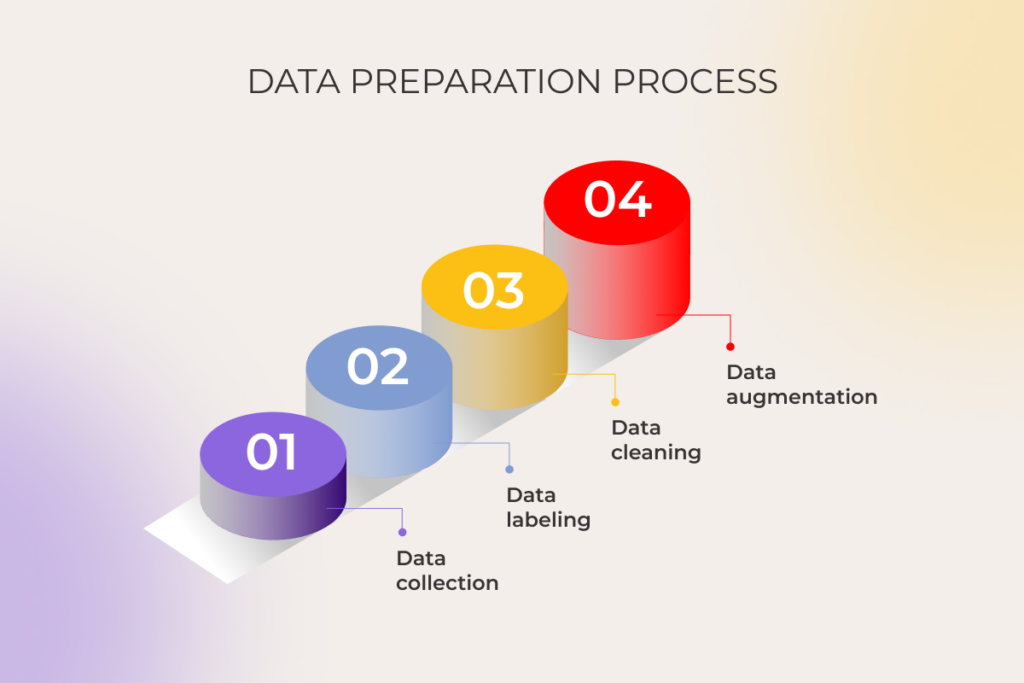
  • Well-thought-out data collection, hybrid labeling, and cleaning are the compulsory steps of the data preparation pipeline, data augmentation is an optional one.

Data is the backbone of any analytical system. Nothing has changed in this regard with the industry-wide adoption of AI technology. Drawing on our hands-on experience in delivering AI solutions across industries, this playbook walks you through every step of preparing data for AI, from collection and labeling to cleaning and augmentation, to help you build a reliable dataset that powers accurate, bias-free models.

What does data preparation mean for AI and machine learning? 

Data preparation for machine learning and AI means collecting raw data from internal and external sources, labeling it, and carrying out data quality improvement to produce a well-calibrated, bias-free dataset for training an ML model. It’s not a one-off step but a continuous process, since each time new data arrives, it must be labeled, cleaned, and checked for bias.

Why prepare data for machine learning and AI?

Data preparation is the most time-consuming part of any ML project, taking up to 80% of the overall timeline. But this initial investment in data discovery pays off manifold. 

  • Grounded confidence in your data. At the AI scale, the old garbage-in-garbage-out adage evolves and takes the form of “garbage in, beautifully phrased/formatted/visualized garbage out.” Putting data preparation on the front burner saves you from falling into a trap of false confidence in the model’s outcomes without noticing that “something is rotten in the state of Denmark.”
  • Highly precise decision-making. Clean, bias-free, use-case-relevant data leads to well-thought-out business decisions.
  • Ability to deliver hyper-personalized user experience. In highly competitive domains, say, streaming services or ecommerce websites with AI-driven recommendation systems at their core, the level of data preparedness directly influences user experience, helping companies win new customers and retain existing ones.

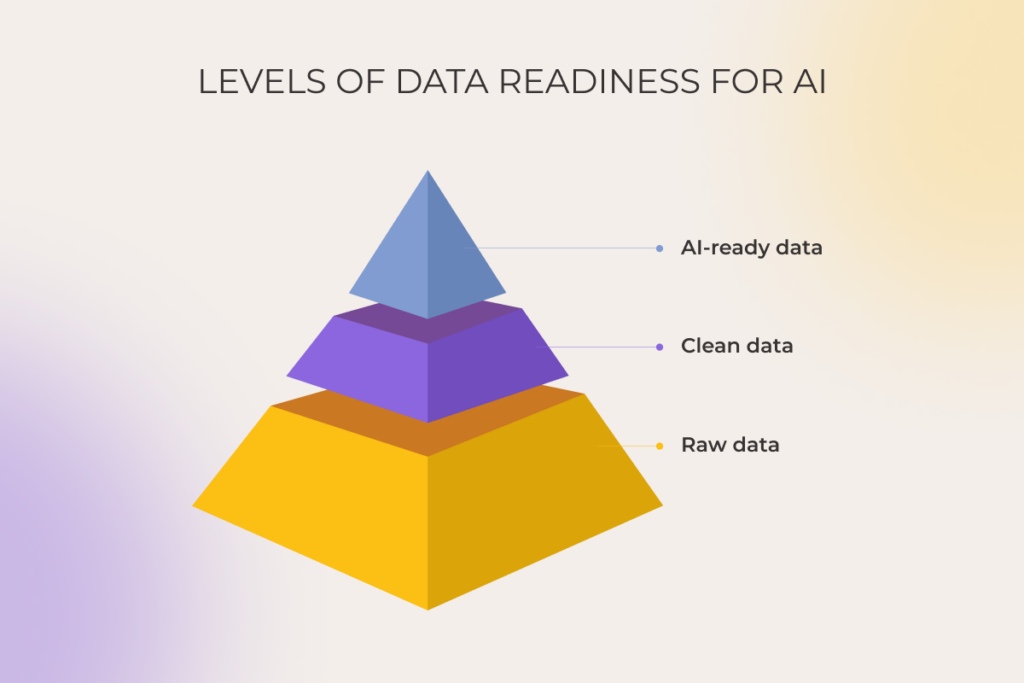
Data readiness levels for AI & ML 

ML models are only as good as the data they’re fed. And that data needs to go from messy to clean and purpose-ready. 

  • Raw data. Unstructured data in multiple formats and from various internal and external sources. It’s consolidated in one place, usually a data lake or a lakehouse, but hasn’t undergone any checks. 
  • Clean data. Structured data that has been freed of duplicates, outliers, and missing values, making it usable for various projects. Clean data is typically stored in a data warehouse for easier access and management. At this stage, the intended use of the dataset isn’t yet defined.
  • AI-ready data. Once the task is defined, data scientists get the clean and labeled data and ensure it fits the use case. For instance, they eliminate irrelevant data, such as dog images in a dataset for training a fare‑evasion detection model. At this point, they also determine whether the dataset needs to be reduced or artificially augmented with synthetic data.
An infographic showing AI and machine learning data preparation readiness levels

Scanning your dataset for duplicates and missing values is a shortcut to understanding how much your data is messed up. For instance, you can use Python libraries like Pandas and Great Expectations to run an auto check. Even more than 3% of exact duplicates in your dataset is strong evidence that it’s nowhere near AI-ready. 

— Pavel Klapatsiuk, AI Lead Engineer, *instinctools

How to prepare data for machine learning and AI

Behind every thriving AI model is a lot of unglamorous preparation work. Here are our practice-proven tips on how to make each step of that groundwork count.

1. Data collection

The first thing to do for successful data collection is getting an experienced data scientist on board. Once the purpose of your ML project is clear, they will determine the right strategy to collect the data and prevent potential bias from slipping into a training dataset. 

Say, for a global online retailer that wants to analyze customer behavior, a data expert can anticipate the WEIRD bias (oversampling data from Western, Educated, Industrialized, Rich, and Democratic populations) and head it off by diversifying data sources to include inputs across regions, cultures, income groups, etc.

— Pavel Klapatsiuk, AI Lead Engineer, *instinctools

The same goes for data noise, which has to be filtered out in advance. For instance, in churn-prediction work spanning website, CRM, and ad platforms, not every event belongs in training. You’ll have to sift out the noise, such as test accounts, marketing email previews that look like real opens, competitors’ clicks, price-checkers’ activity, and other artifacts.  

If your business involves IoT devices, the physical world writes itself into your data (mechanical vibration, temperature spikes, electrical hum), turning real-world noise into data noise. In one of our oil and gas projects vibrations from drilling rigs were making it tricky to identify meaningful signals. Our data scientist had to go through the data fields filled in according to the info from sensors to determine the most informative ones and down-weight the rest to lower their noisy impact.

So where to collect the data from?

  • Internal sources, such as databases and business operational systems (ERP, CRM, inventory software, etc.). 
  • External sources, such as public databases, social media platforms, third‑party datasets, publicly available or purchased reports and statistics, etc.

If you’re a startup without rich internal data, check for valid publicly available datasets. Even if there’s no exact match, you can still resort to web scraping and assemble a solid dataset from free public sources.

— Pavel Klapatsiuk, AI Lead Engineer, *instinctools

Also remember to put a premium on data lineage from the very start of machine learning data preparation. When you can trace the path of any data point within your dataset end-to-end, fixing errors and auditing becomes a walk in the park. 

2. Data labeling

After collecting the raw data, you need to specify its context for the ML models by labeling it. The labels, or annotations, make data more consumable for a model and enable it to interpret the information correctly, contributing to the overall accuracy of the outputs.

While data labeling can be automated, our hands-on experience proves that if you want the ML model to masterfully imitate human perception, thinking, and judgment, at least some part of the labeling should be done by humans. 

— Pavel Klapatsiuk, AI Lead Engineer, *instinctools 

Here’s how to make the most out of the hybrid labeling approach while not spending a fortune:

  • Create a ‘golden’ seed set. Have three human annotators cross-label 5-10% of the dataset (size-dependent). Use a brief guideline, measure inter-annotator agreement, and resolve disagreements. You don’t need senior data scientists here – trained annotators are enough.
  • Train the auto-labeler, then loop. Use the golden set to train an AI-assisted labeling tool (passive learning), auto-label the rest, and spot-check samples. Route uncertain/low-confidence items back to humans (active learning) until quality stabilizes.
  • Pick the right tooling. Available options range from open-source platforms like CVAT and Label Studio to SaaS solutions like SuperAnnotate and LabelBox.
  • Run a final human check. Annotators from the first step validate auto-generated labels to ensure consistently high precision throughout the dataset. 

3. Data cleaning 

Once the whole dataset is labeled, clean it from duplicates, outliers, missing data, irrelevant or incorrect records. As we’ve mentioned earlier, you can leverage Python libraries like Pandas and Great Expectations to detect and flag all issues automatically. 

However, sometimes you do need to enrich your dataset with inconsistent and incorrect inputs on purpose. It applies to the conversational AI chatbots of all kinds, from general customer support bots to specialised ones like flight booking assistants, financial advisors, etc. You have to take into account user queries with typos and misspellings, syntax and grammar errors, to improve intent recognition rates. 

Further decisions like “should the outliers and missing values be removed, imputed, or corrected using domain knowledge?” require human judgment. 

Don’t rush to anonymize data at this stage! While encryption is a vital data protection mechanism, if applied to an uncleaned dataset, it only complicates spotting irrelevant and incorrect entries. It’s better to double down on sensitive data anonymization after you get a noise-free, clean dataset.  

— Pavel Klapatsiuk, AI Lead Engineer, *instinctools 

4. Data augmentation

It may happen that after all the cleaning, you’re left with too little data to train the ML model (“too little” being a spectrum that varies from tens of patient records for a niche medical research to thousands of user interactions for an ecommerce customer study). That’s where data augmentation comes in handy.

For example, a dermatology R&D lab is building AI-powered software to make a preliminary diagnosis based on skin photos. For a rare cancer like cutaneous T-cell lymphoma, early signs can resemble eczema or psoriasis, and examples are scarce. In this case, a data scientist can resort to image augmentation (zoom, flip/mirror, rotate, crop, slight lighting shifts) to expand the dataset. In less regulated contexts, synthetic images can be generated based on the originals as part of the machine learning data preparation.

An infographic showing the process of preparing data for AI and machine learning

If you still have data preparation-related questions, find an AI and ML consulting services provider to cooperate with.

AI/ML data preparation checklist

Here’s a short recap of the data preparation work that prevents rework. Do this before the modeling starts:

  • Engage a data scientist early to design collection, cut noise, and preempt bias
  • Apply a hybrid data labeling approach: create a human ‘golden set’ → train an auto-labeler → spot-check low-confidence items
  • Automate the first pass of data cleaning, then apply human judgment to drop, impute, or correct with domain rules 
  • Anonymize sensitive data after labeling and cleaning it
  • Augment image and text data if the training dataset ended up being too small after the previous AI data preparation steps

Would you rather delegate the hustle of machine learning data preparation to a trusted partner?

Let’s talk

Data preparation is the heavy lifting that accelerates every next step

Data preparation is like getting the soil ready before you plant. If the soil is full of rocks and weeds, the seeds won’t take. It’s the same with AI: clean, unbiased, balanced data gives your model the fertile ground it needs to perform well.

Get the basics right with our data scientists’ support

Book a free session

FAQ

What is data preparation in AI and machine learning?

Data preparation for machine learning and AI is the process targeted at cleaning the data, eliminating the bias it may contain, and ensuring the data is relevant to your AI use case.

How clean is “clean enough” for machine learning data?

Data without missing values, duplicates, and outliers is clean enough for training an ML model. The catch is that cleanliness alone doesn’t signal the end of data preparation for machine learning. 

Do I need to label data for unsupervised learning?

The primary purpose of unsupervised learning is analyzing and clustering unlabeled datasets to uncover meaningful patterns in data. You don’t need to label data, the algorithm will generate its own labels for the human labelers to interpret.

What are the key stages of AI/ML data preparation?

Stages of preparing data for AI & ML include pre-collection data assessment, data collection, labeling, cleaning, and augmentation or reduction if needed.

Why is data preparation crucial?

Prepared data is a mandatory prerequisite for getting an accurate, bias-free ML model and, thus, precise decision-making. Invest in modeling with unprepared data as a foundation, and you’ll end up with a harmful solution producing inaccurate outputs.

AI Development: Be-All and End-All Leader’s Guide

Key highlights

  • AI development has moved to the stage where it shows measurable results across industries.
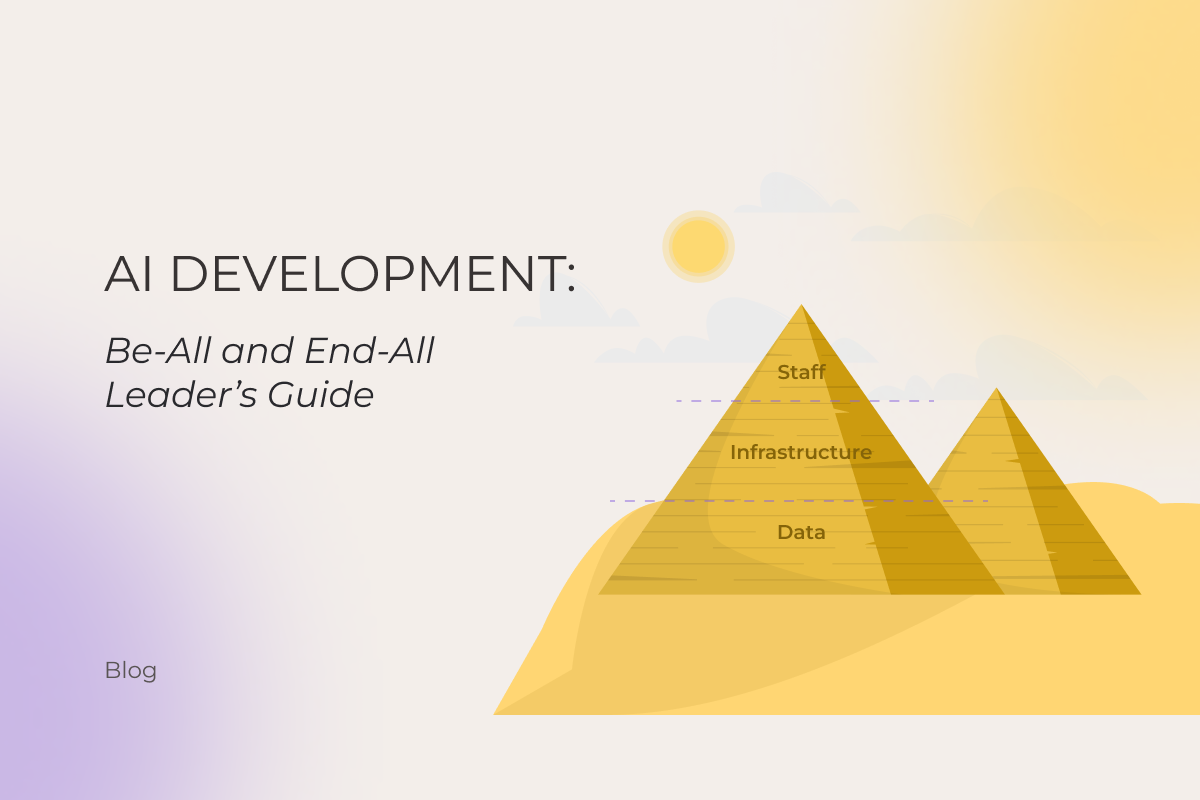
  • Artificial intelligence (AI) can meet your transformational expectations if your data, infrastructure, and workforce are ready.
  • Machine learning algorithms work better and safer with an AI governance framework in place.

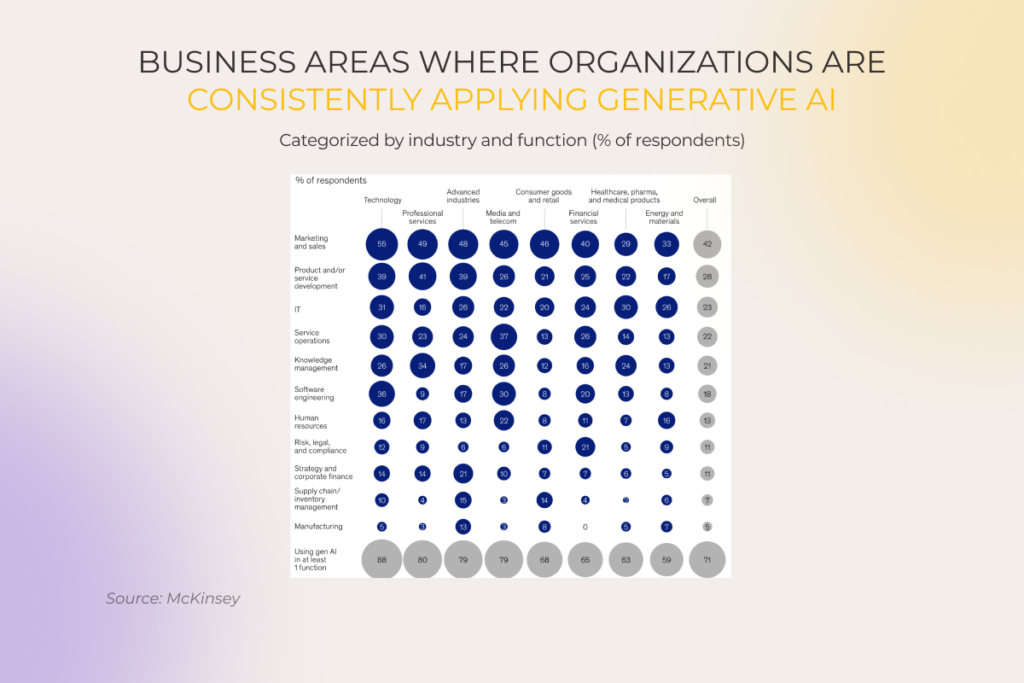
Artificial intelligence is becoming more powerful and omnipresent day by day. 78% of companies already use artificial intelligence in at least one business function to minimize costs, speed up processes, reduce complexity, transform customer engagement, fuel innovation, and unlock new revenue streams. However, only 1% of these organizations describe their AI developing efforts as “mature.”

How to do AI development right on the first try and avoid the AI adoption plateau? This guide summarizes a decade of our hands-on AI expertise, as we were providing our clients with scalable, value-focused AI solutions long before LLMs hit the headlines. 

Read this comprehensive AI development guide to get the answers that spark action, and move from small-scale pilots to deploying AI at scale in a way that is sustainable, secure, and aligned with your business goals.
What is AI development?

AI development is the process of creating intelligent systems that can mimic human cognitive skills such as learning, comprehension, reasoning, problem solving, decision making, and creativity. Underpinned by capabilities like natural language processing, image and speech recognition, computer vision, machine learning, deep learning, and generative AI, these systems can create various types of content, analyze data, identify patterns, and make predictions faster than humanly possible. For companies looking to leverage these capabilities, professional artificial intelligence services development can provide the specialized expertise needed to navigate this complex undertaking.

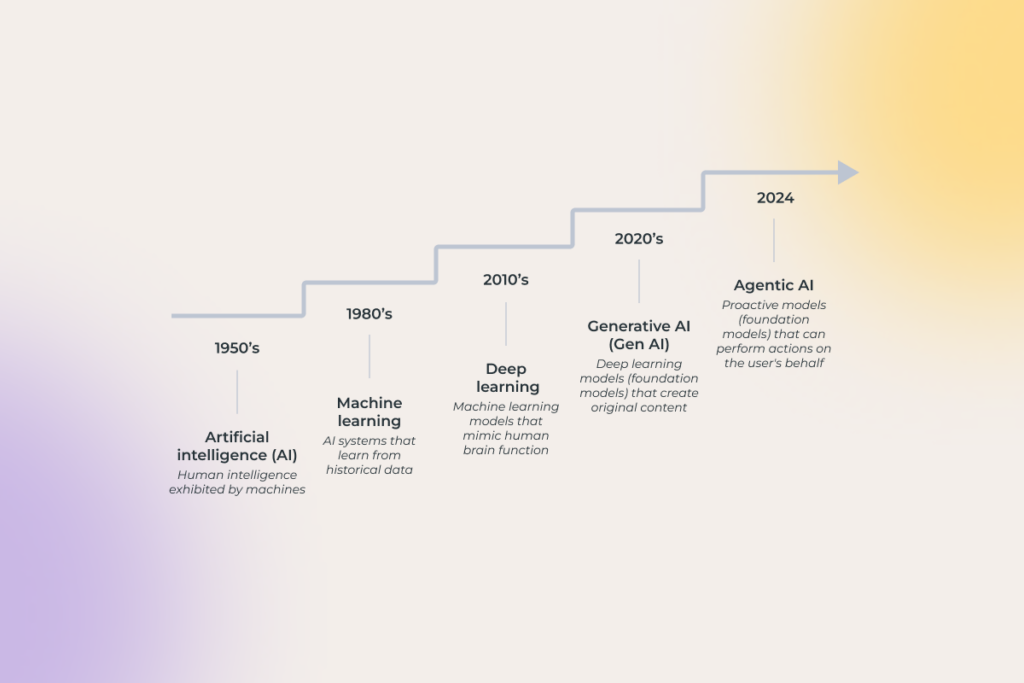
 the evolution of AI development

Does AI development pay off? The true return on artificial intelligence investment

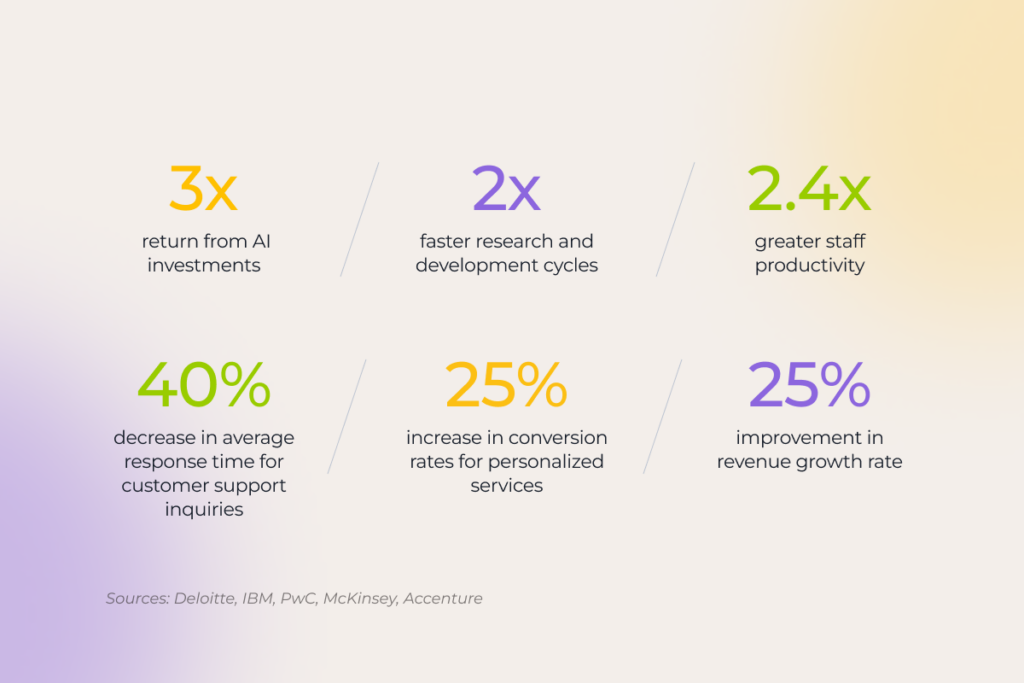
While AI technologies have generated years of hype and expectations of high ROI, there was little evidence to prove this promise. In 2026, however, the technology’s potential is backed by hard data.

statistics on the success of AI development initiatives

Yet, unlocking this value is only possible with a thoughtful approach, which starts with identifying relevant business use cases. That’s why, before rushing into AI-based development, companies often choose to invest in AI adoption workshops — intensive exploratory and planning activities which set the right project trajectory from day one.

Where is AI making the biggest impact?

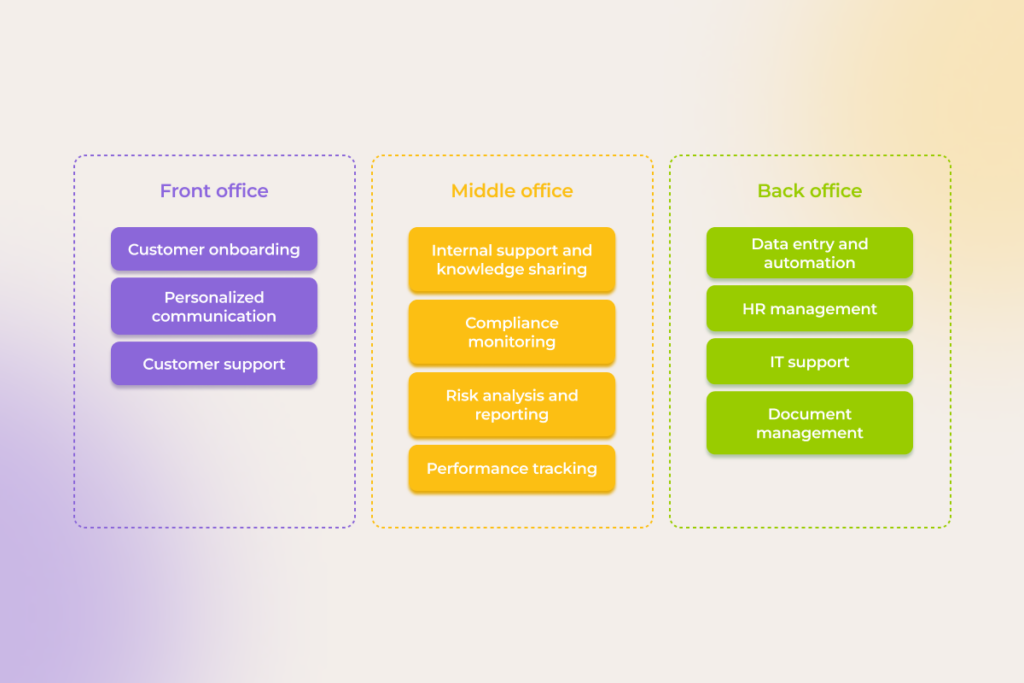
Recent developments in AI empower companies to accelerate and enhance their front, middle, and back office processes by automating repetitive tasks within workflows, enriching them with personalization and problem-solving capabilities, and eliminating human errors.

AI makes an impact on front, middle, and back office processes

The shift toward action-oriented AI 

In 2023-2024, a new trend started gaining traction — large action models (LAM), better known as AI agents. This marked a fundamental shift from generative to actionable AI, where AI algorithms moved beyond providing output to performing tasks on the user’s behalf.    

However, so far, the potential of AI development technologies is still largely untapped —  only 11% of companies involved in the development of AI move from piloting to deploying AI agents.

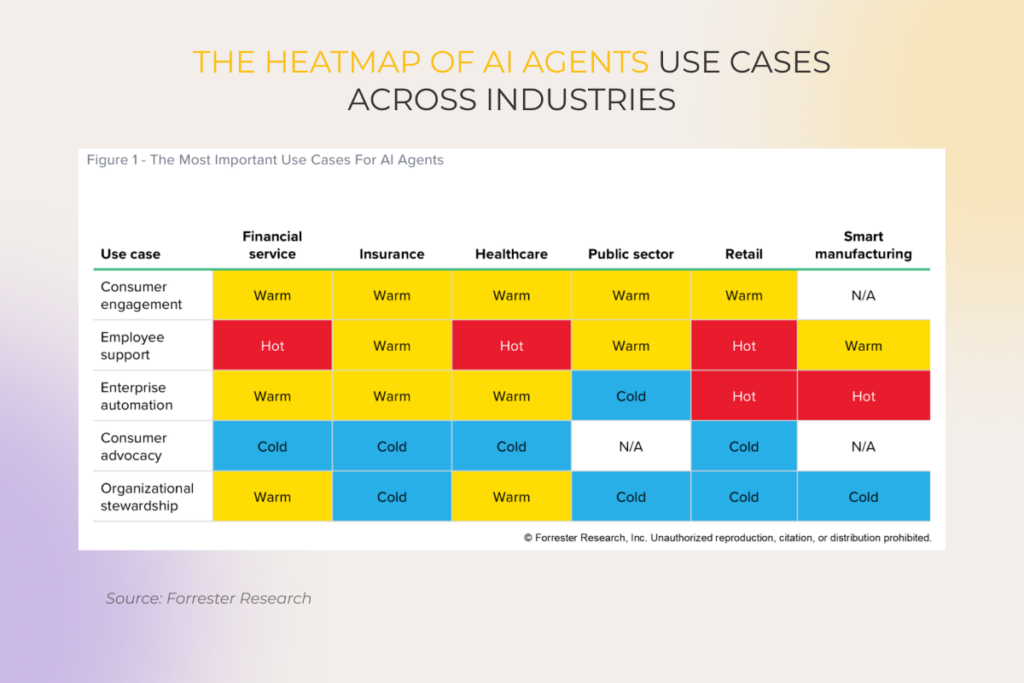
AI Agents Will Advance AI From Decisioning To Action

Take the legal world. Our client, a global law firm, wanted to implement AI to analyze stacks of M&A data and extract key points in one click. A multimodal AI agent now interprets legal language, tables, and images, saving the client 47,000 hours of manual work annually.

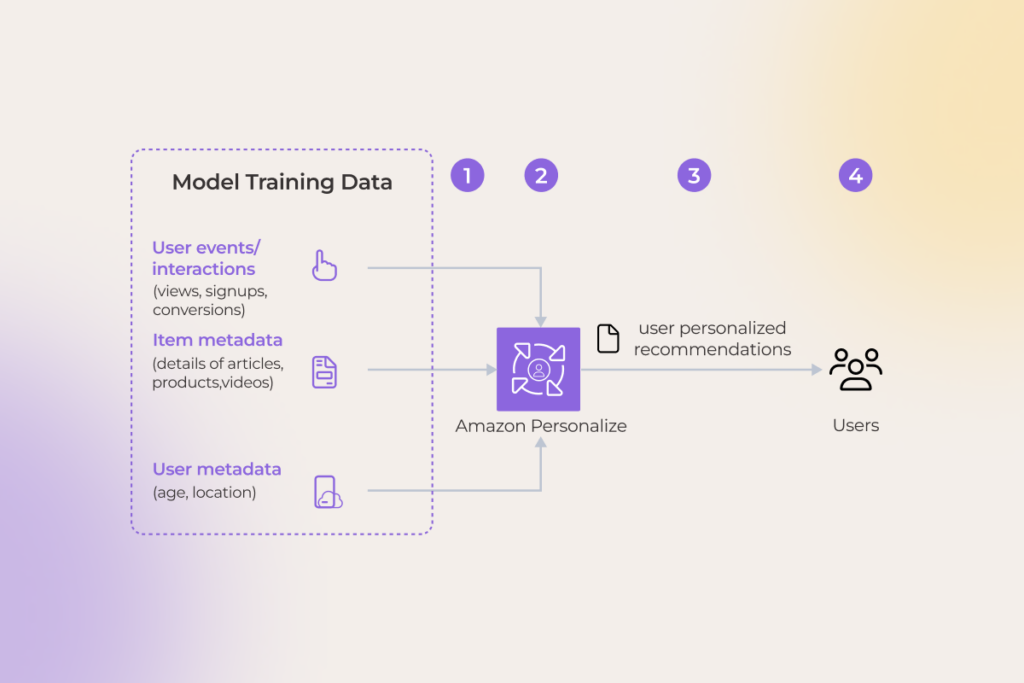
On the retail side, Amazon is setting the standard, simplifying and streamlining the entire shopping journey. Its AI agents power highly personalized recommendations, automate fulfillment workflows, and even complete purchases across third-party sites via a “buy for me” feature. 

AI Development

Meanwhile, an organization from the travel sector partnered with our chatbots development company to overhaul their booking app by replacing a rule-based chatbot with a proactive virtual assistant that can handle all bookings and payments and track expenses on the user’s behalf. This upgrade spiked the annual retention rate from 28% to 41%.

Predictive equipment maintenance is another area where AI agent development solutions drive significant efficiency gains. Deploying them to orchestrate machinery maintenance for an electronics manufacturer led to a 20% drop in maintenance costs and a 15% boost in production uptime. 

Proven high-impact use cases across industries 

If you can imagine it, AI can do it. Moreover, chances are someone is already leveraging it. But with all the hype, many use cases can feel more like marketing fiction than practical solutions to real business needs. 

Indeed, artificial intelligence (AI) development promises are huge on a full-blown Midas scale, with everything it touches supposed to turn to gold, or rather, a fully autonomous workflow. We’ve cut through the noise and gathered real-world examples of our clients’ projects across industries and functions.

This list isn’t final, as there’s more to AI than meets the eye, and valid use cases keep multiplying, but it offers surefire ways to nail AI development right here, right now. 

AI Development

Ecommerce

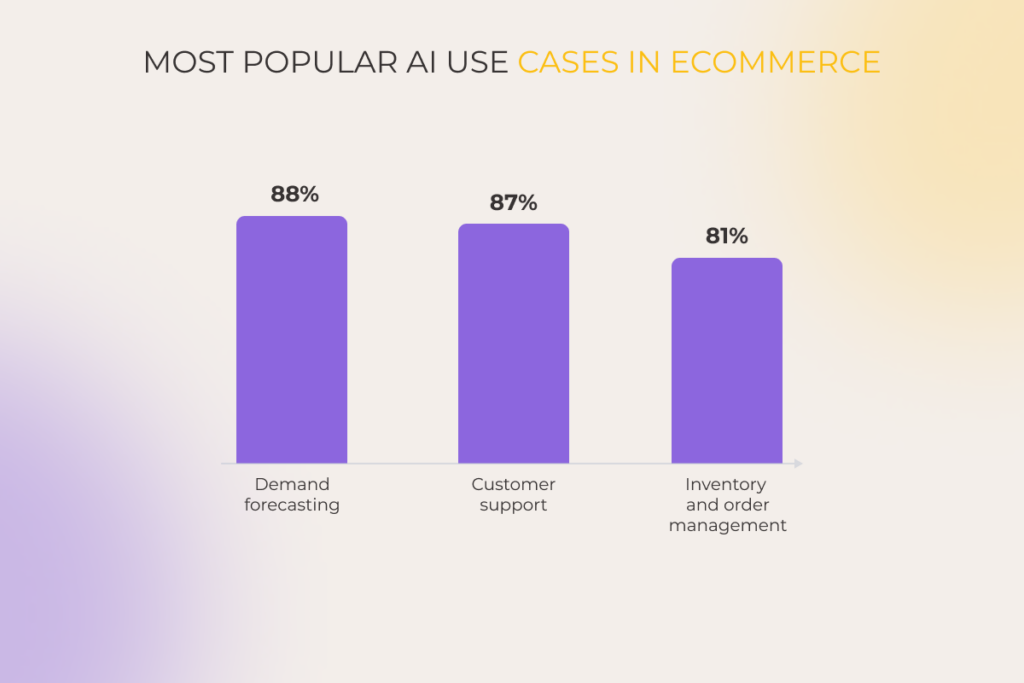
IBM survey pinpoints that AI’s contribution to revenue growth in retail will more than double by 2027. The technology has permeated all ecommerce functions to some degree:

Most popular AI use cases in ecommerce

Tried and true generative AI applications in ecommerce include:

  • Hyper-personalization of every step of the customer journey, from custom advertising and recommendations to unique loyalty programs  
  • Virtual try-ons with computer vision and augmented reality under their hood
  • Human-like intelligent chatbots for accurate 24/7 customer support
  • Market research with AI combing through the vast amounts of customer data, feedback on social media platforms, competitors’ moves, and other valuable data
  • ML-powered demand forecasting backed by the EPoS and transactional data for 90%+ accurate predictions
  • Ad spend optimization by matching best-performing offerings to relevant consumers 
  • Supply chain and inventory data analysis carried by neural networks evaluating suppliers, optimizing logistics routes, improving last-mile delivery, and running what-if scenarios to foresee demand fluctuations
  • Gen AI-driven pricing based on customers’ behavior, market trends, seasonality, inflation rates, and other variables
  • Enhanced fraud detection thanks to simulating fraudulent activities and training AI algorithms to detect and counteract them

Technology

Gen AI-powered automation is the primary driver of changes in how software engineering companies deliver their services. Projects that earlier called for niche expertise can now be done automatically and at a way lower cost. Let’s take COBOL as an example. Our experience proves that by using generative AI tools to translate legacy COBOL code into Java, you can cut software modernization costs by 70%.

The range of time-tested AI usage in software development spans: 

  • Writing robust boilerplate code thanks to pattern recognition, contextual awareness, and code suggestion.
  • Explaining legacy code 
  • Computer code refactoring and modernization
  • Code translation aligned with the project’s specific coding style, patterns, and software libraries
  • Early-stage bug detection when fixing anomalies costs next to nothing and doesn’t affect your project budget
  • Testing where neural networks take over test planning, synthesizing test data, and generating and executing test cases 
  • Preparing comprehensive documentation and keeping it updated

Logistics 

The volatility of trade controls and reciprocal tariffs, with consequent supply chain disruptions and ambiguous tax regulations, introduces an uncertain business environment as a new normal.

Our AI center of excellence is developing an AI-driven strategic response to minimize the impact of tariff-associated risks. Here’re two solutions we’ve already tried with our clients:

  • A bill of materials analyzer built with the use of machine learning techniques can predict potential Harmonized Tariff Schedule (HTS) classifications, flag high-duty components, and recommend duty-efficient alternatives.
  • Thanks to natural language processing, fine-tuned LLMs can read CAD files and PDF spec sheets and suggest product specification optimizations to help classify items under lower-rate tariff categories. Early adopters of this approach report 3–5 % duty savings. 

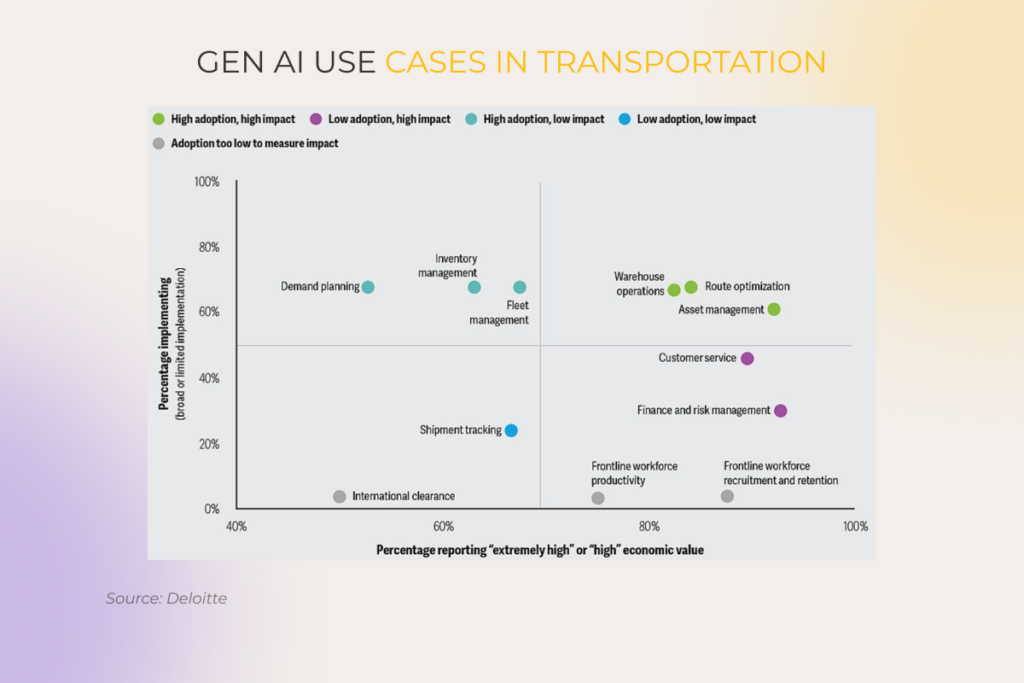
The implications of AI in the logistics industry aren’t limited to the tariffs’ context. For instance, generative and conversational AI successfully cover the high-impact operational areas: 

  • Inventory management and demand planning, when ML-based predictive data analytics enables highly accurate stock replenishment
  • Real-time route optimization enabled by deep learning models analyzing the weather conditions, traffic density, and road restrictions
  • Real-time vehicle route optimization depending on the weather conditions, traffic density, and road restrictions
  • Customer service with AI chatbots handling routine customer queries
  • Finance and risk management, where artificial neural network monitors regulatory changes and factors in operational cost trends, such as rising fuel prices and increasing inflation, to suggest relevant budget adjustments
a chart of generative AI use cases in transportation

Our client, an Italian transportation company, used conversational AI within their mobile taxi booking app to provide smart, human-like customer support with 97% accuracy of intent recognition. This approach empowered them to resolve 78% of support requests without the involvement of human workers and gain a 4.8-star app rating.

Automotive

75% of automotive manufacturers already use gen AI at all stages of the R&D process and report up to a 30% productivity gain.  

Once confined to the pages of science fiction, autonomous vehicles are now a tangible reality, with generative AI and deep learning techniques working in tandem to process vast amounts of sensor data in real time. The rise of self-driving cars has pushed manufacturers to harness gen AI’s ability to create infinite synthetic driving scenarios, allowing models to train on millions of edge cases that would be too dangerous or rare to capture on real roads.

CarMax, the largest used car retailer in the United States, demonstrates another use case. Their GenAI tool scans and summarizes thousands of real customer reviews and updates the related section on the vehicle’s page, enabling buyers to instantly grasp the pros and cons of a particular car highlighted by other drivers. 

Finance

Banks, insurance agencies, accounting and tax firms, and mortgage companies benefit from adopting conversational AI tools for front, core, and back-office operations, increasing staff productivity by up to 35% while reducing cost-to-serve by 20%.

For instance, high-impact conversational AI use cases in banking include:

  • Customer onboarding with AI-powered image recognition taking care of ID validation checks and submitting the customers’ documents
  • Customer support with 60% of trivial inquiries, such as activating a card, resetting PINs or account passwords, and updating account information, being handled by AI bots 
  • Deep neural networks analyze customer data, identify patterns in saving and expense behavior to distill tailored insights delivered by personalized virtual financial advisors
  • Assistance to C-level executives to save them from spending ⅓ of their time on chasing down metrics from the management information systems team
  • Employee onboarding and training with a single AI chatbot trained on the company’s data instead of slogging through the corporate wiki

Manufacturing

AI and machine learning are the driving forces of Industry 4.0, and the speed of their adoption is accelerating by the day. 

Common real-world applications of AI in manufacturing cover:

  • Digital twins allowing for optimizing production lines, supply chains, and whole-factory workflows without disrupting physical assets 
  • Predictive machinery maintenance backed with deep learning models and IoT sensor data prevents failures before they occur, eliminating unexpected downtime
  • Advanced quality control systems powered by computer vision spot product defects in real time
  • Mass product customization becoming scalable, with artificial intelligence adjusting product designs on the fly based on customer feedback
  • Demand forecasting relying on augmented analytics helps maintain optimal stock levels and reduce carrying costs

Healthcare 

GenAI-driven solutions, from text-based chatbots to voice-enabled interfaces, reshape user experience for both patients and healthcare providers by making medical care more affordable while driving operational cost-efficiency. For instance, AI-based claims processing speeds up resolution time by 40%, creating a better patient experience. At the same time, delegating this and other administrative, repetitive tasks to AI saves up to 25% of total healthcare spending.

Key use cases for AI in healthcare including conversational tools are:

  • Proactive appointment scheduling
  • Medical triaging to take symptoms gathering and identifying diagnoses off the shoulders of over-loaded primary care doctors
  • Clinical decision support, where even general-purpose LLMs can cut hours of preparing the clinical recommendations down to minutes 
  • Remote patient monitoring
  • Post-visit patient support and engagement, for instance, outlining care summaries, estimating out-of-the-pocket costs for patients, walking them through the insurance coverage and billing process, and other complex tasks
  • Medication management with an AI assistant serving as a personalized medication encyclopedia
  • Reimbursement, where AI prioritizes claims, submits them to insurance providers, monitors payments from providers, and offers guidance on bills to patients  
  • Clerical operations, like churning out post-visit summaries, organizing clinical notes, and creating personalized learning plans for clinicians
  • Clinical trials with AI handling a broad range of tasks, from candidate screening to checking for missing data points in incoming clinical trial data and lab results
  • Back-office work and administrative functions, such as finance, staffing, and legal activities

Oil & gas 

The margin for error in the oil and gas industry is razor-thin. A delayed maintenance check, a misjudged drill path, or a supply chain hiccup can lead to millions lost. In such a high-stakes environment, AI adoption is your chance to stay on top of your game.  

The range of AI use cases in the oil and gas:

  • Reservoir exploration with AI augmenting human fieldwork by interpreting seismic images and creating geo-models of hydrocarbon reservoirs in hours instead of months
  • Drilling optimization, when ML algorithms and neural networks are used to prevent drill-bit failures 
  • Automated E&P equipment scanning with computer vision at its core to schedule maintenance on time and decrease operational expenses
  • Field workers’ support with virtual assistants proves to be more efficient than human-staffed call centers
  • By using robots with OGI cameras and summaries generated by AI, operators can perform tasks typically done through dangerous manual entries, such as inspecting storage facilities and taking remedial actions
  • Route planning and adjustments can be done on the go without increasing the planned transit time
  • Refinery optimization with AI systems monitoring distillation, catalytic cracking, and hydrogenation to spot safety hazards 
  • Quality control done by AI models ensures that fuels and petrochemicals meet key standards, such as ISO, ASTM, and API
  • Accelerated and cheaper product R&D thanks to AI-based simulations
  • Supply chain automation, as ML algorithms take over configuring distribution networks, monitoring inventory levels at each facility, and optimizing transportation routes

3 questions to assess your AI readiness 

Everyone is talking AI, a medley of use cases prove its efficiency… And here comes the ‘but’: is your data, infrastructure, and employees ready for artificial intelligence?

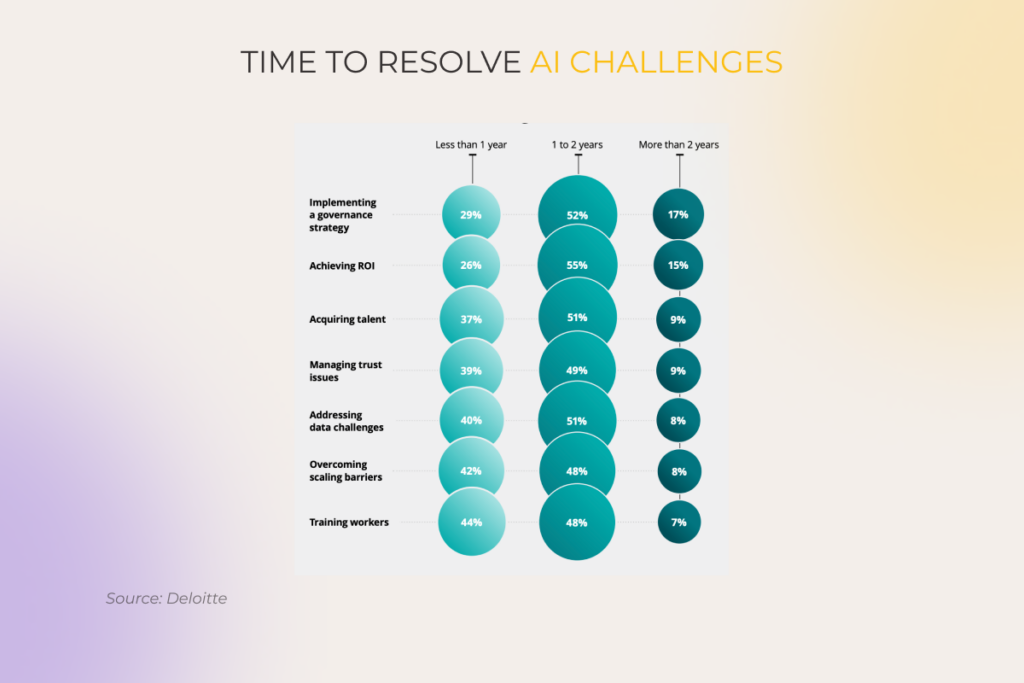
Business owners tend to feel optimistic hearing that developing artificial intelligence can take something between a few months and a year. However, the reality shows there are quite a lot of things to be taken care of prior to AI technology development, and they take time too.

47% of C-suite respondents believe that overcoming AI adoption barriers, such as data concerns, trust issues, risk management, governance, regulatory compliance, and workforce training, can be achieved within 12+ months. Meanwhile,  Deloitte’s AI research indicates a 1–2 year timeline as more realistic, with some challenges extending up to five years. 

an approximate timeline for resolving different AI adoption challenges

Is your data AI-ready? 

Lack of easy access to data from different systems, incorrect and missing data, bias, and other issues increase the AI development and maintenance costs, not to mention affecting the solution’s quality. 

Since data is the difference maker, 75% of companies have already increased their investments in organizing, streamlining, and protecting their data. How can you strengthen your data lifecycle management to keep up with them? Building on experience gained through delivering professional data preparation services, we’ve listed data-related challenges standing in the way of AI adoption and shared practical tips for addressing them.

Inadequate data quality 

Clean and validate data regularly to spot and remove duplicates and incomplete records before they affect the accuracy of machine learning models. The frequency depends on the data type and its importance for decision-making:

  • High-velocity data, like financial transactions, should be validated daily. 
  • Operational business data, such as supply chain and inventory records, can be checked weekly.
  • Customer data, like CRM records and customer profiles, can be reviewed for inaccuracies once a month. 

Use resources like the Great Expectations data quality framework, dbt tests, or the Deequ library to automate and schedule validation checks for each type of your data. 

Lack of data 

If you don’t have enough proprietary data to fine-tune deep learning models or cannot use real data because of privacy concerns, your limited dataset may fail to reflect the reality and result in an algorithmic bias. 

Discriminatory outcomes lead to missed business opportunities and severe legal and regulatory penalties, as it was with UnitedHealth Group. The health insurance provider used a faulty AI tool for post-acute care predictions that denied elderly patients coverage for extended care. 

To combat these risks:

  • Augment your existing data with its modified versions if your dataset lacks diversity. Say, you are training a customer sentiment classifier on a limited set of customer reviews. You can diversify the dataset by replacing some words in reviews with synonyms. Changing ‘fast shipping’ to ‘quick delivery’ doesn’t compromise the original review, but is essential for training a highly accurate AI classifier.
  • Generate synthetic data that mimics the characteristics of the existing data without jeopardizing its privacy. This is a silver bullet for accelerating medtech R&D efforts without exposing patients’ information. 

Generating synthetic data is also a go-to option for simulating rare events. For example, a traffic management company may not have enough data on accidents to create a solid AI-driven accident prediction and prevention system. Synthetic data empowers them to immediately get realistic scenarios in any weather and lighting conditions for different road types, traffic density, and driver behavior.   

  • Use bias-detection tools like AI Fairness 360, Fairlearn Aequitas, etc., to ensure you have a diverse, equitable dataset. In cases when there’s no quick way to get more high-quality data on the underrepresented group, you can oversample minority classes to balance the dataset.

Data privacy 

With the EU Artificial Intelligence Act going into effect in 2026 and the shifting status of AI-specific legislation in the US (Colorado and Virginia AI Acts), companies have to stay alert about how their AI systems store and use personal data and other confidential information. 

Better safe than sorry (and on the front pages) — confront data privacy concerns by embedding privacy-by-design principles in data collection, storage, and usage processes:

  • Reduce data usage to the essential minimum
  • Encrypt sensitive data at rest 
  • Anonymize private data before feeding it into AI models
  • Incorporate human review mechanisms to oversee AI decision-making

No data governance 

AI can’t scale without robust governance guardrails. Therefore, the development of artificial intelligence requires an end-to-end data lifecycle strategy, from secure data gathering to its safe disposal.

  • Implement data quality monitoring procedures
  • Establish clear data ownership 
  • Impose strict data access rules
  • Develop data privacy policies to protect data from misuse 
  • Set up templates to enable data traceability
  • Ensure you have a centralized data storage
  • Arrange data inventory mechanisms
  • Enforce clear data disposal practices

Is your infrastructure AI-ready? 

Infrastructure to support the AI development process includes cloud services, data storage, and network security. Our AI engineers share insights on optimizing each component.

Cloud services 

The type of model you pick directly affects cloud costs and storage needs. And that’s the reason behind 77% of companies using smaller models (13B parameters and below) rather than large ones. 

The challenge of using the right tool for the right job is especially valid when choosing between LLMs and SLMs. LLMs shine when it comes to answering general queries. But SLMs can be quickly trained on a small, ​​highly curated dataset to address your specific use cases.

Apart from so-called narrow AI, designed for a specific task or limited set of tasks, organizations can also use industry-specific models tailored to the needs of a particular domain. There’s already a whole range, from BloombergGPT for finance to BioNeMo for biotech to ClimateBERT for climate change research.

— Pavel Klapatsiuk, AI Lead Engineer, *instinctools

There’s also a question of API-based vs. self-hosted models. When accessing AI capabilities via API, you avoid costly infrastructure investments, but lack control. Self-hosting AI models, on the other hand, come with high compute demands but offer complete control over the model and airtight-secure data pipelines. 

Data storage 

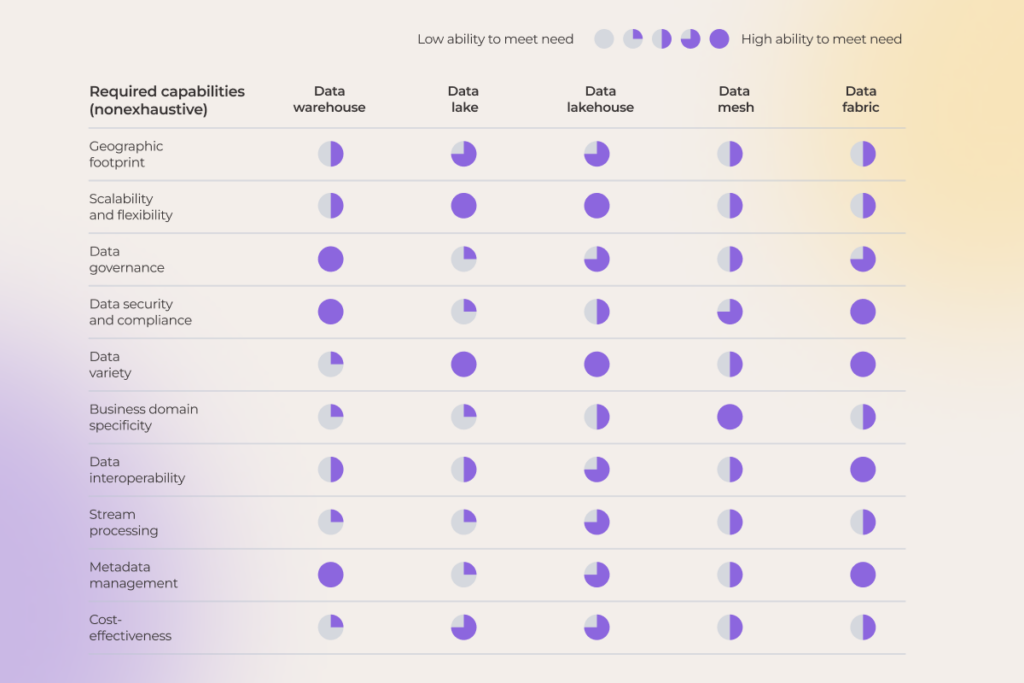
Traditional data lakes and warehouses fall short in supporting the agility, governance, and scalability requirements of AI initiatives. New architectures like data lakehouses, data mesh, and data fabric have brought AI development from hype to reality. 

Each data architecture type has its highs and lows, and choosing the right one involves balancing various trade-offs, including limited scalability and flexibility, weaker data governance capabilities, lower data security, and higher cost.

Data storage

Our AI projects show that a data lakehouse often meets most business needs — single data storage with built-in data governance controls for different kinds of big data, seamless scalability, and adequate functional security.

— Ivan Dubouski, Head of AI CoE, *instinctools

Network security 

Last but not least in your infrastructure assessment is network security. Robust policies and controls are vital for protecting your resources (data storage, models, APIs) from external or internal threats, such as data exfiltration, model poisoning, adversarial inputs, unauthorized API access, etc.

Our recommendations for secure AI development include:

  • Adopting a zero trust security posture with granular access controls and centralized identity management (IAM)  
  • Integrating network security tools (SIEM, SOAR, or XDR) to centralize signals from an automated anomaly detection system and enable fast, coordinated incident response across your AI infrastructure.

Can your staff take on AI roles?

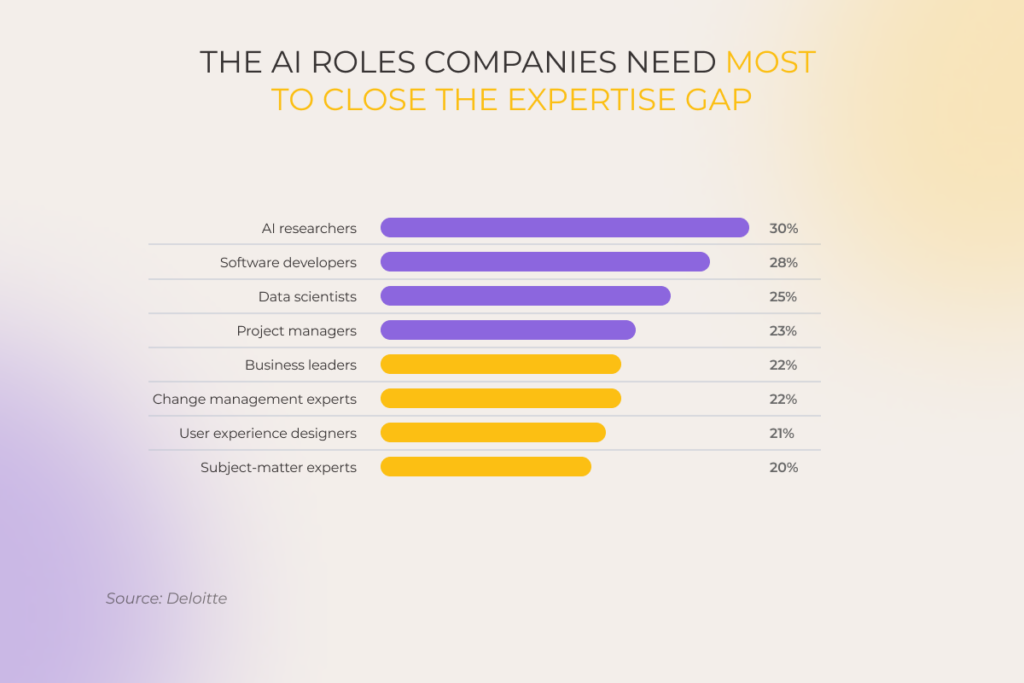
IBM pinpoints that 84% of companies considering AI development lack AI-specific technical competence and resort to augmenting their team as they don’t have months to hunt for and win over top talents in computer science, data science, ML engineering, and other AI-specific areas. 

The AI roles companies need most to close the expertise gap

Raising strong in-house AI expertise isn’t a weekend bootcamp. While some professionals can pivot into AI-related roles relatively quickly, upskilling takes time. 

For instance, given the widespread use of Python in deep learning, ML, and NLP, your in-house Python developers already have a head start. With focused upskilling, they can transition into roles like prompt engineers or AI/ML engineers. In my experience, the first option will require 3+ weeks of full-scale training, and the second will take 3+ months of full-time learning and hands-on practice. 

So the question is: can you afford investing in the employees’ reskilling without compromising the momentum of your current projects? 

— Ivan Dubouski, Head of AI CoE, *instinctools

Struggling with data, infrastructure, or talent?

Delegate it

Navigating AI development risks

The same AI software that can increase your revenue by more than 10% can also expose the company to various data, model, operational, and ethics risks. While many consulting firms warn about AI dangers in vague terms, we draw from hands-on project experience and offer targeted, actionable ways to handle them, all aligned with the NIST AI risk management framework.

Cybersecurity threats

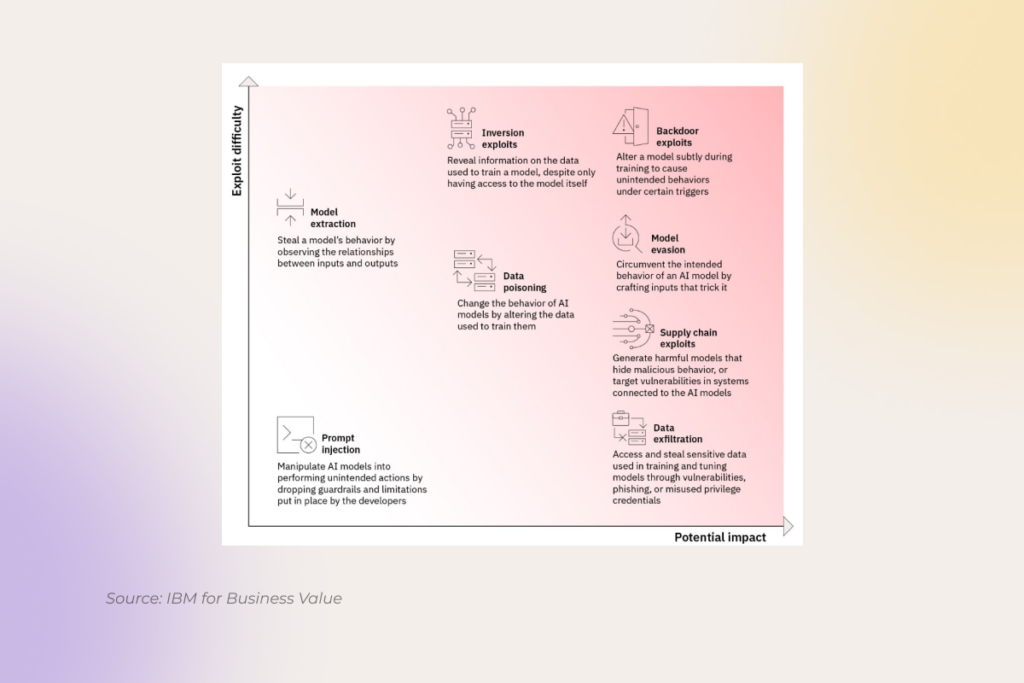
Only 24% of AI initiatives are secured against AI-related threats, such as data poisoning, data tampering, API security breaches, model inversion attacks, prompt injections, etc.  

a chart of AI security threats by complexity and potential impact

Secure all the stages of the AI pipeline to enable the safe development of AI solutions. 

  • Data collection and handling. Data encryption at rest and in transit and strict access controls are the basic best practices.
  • ML model training. If you access open-source models via APIs, use strong authentication protocols like OAuth, OpenID Connect, etc. 
  • ML model usage. Use a machine learning detection and response (MLDR) solution to monitor the models’ behavior and quickly detect and quarantine or disconnect compromised models.  

Data privacy issues 

Inform users about data collection practices for your AI system, such as what personally identifiable information (PII) you want to collect, for what purposes, how it’ll be stored and used, Then, let customers decide if they want to share their data. 

In highly regulated industries like finance and healthcare, where companies are obliged to comply with specific regulatory acts, such as HIPAA and GLBA, organizations should consider replacing real information with synthetic data.  

Intellectual property infringement 

Even though AI-centered copyright laws, such as the Generative AI Copyright Disclosure Act in the US, the EU AI Act, and the Generative AI Training Licence in the UK, are still in the legislative process, you’d better play it safe. 

To weed out the possibility of intellectual property violation while developing AI systems:

  • Check your datasets for potential copyrighted content with copyright detection software, such as DE-COP for text, Google Vision AI for images, Audible Magic for audio, etc.
  • Use publicly available data or data that’s explicitly licensed for use, distribution, modification, and commercial use (for example, has a Creative Commons BY license).

Lack of explainability and transparency 

The complex nature of machine learning algorithms is a double-edged sword. On the bright side, it contributes to delivering highly accurate outputs. On the dark side, the logic behind these algorithms is challenging to understand and explain. 

If you want neural networks and deep learning algorithms to be an open book, adopt explainable AI techniques tailored to your model type:

  • Feature importance, LIME, and SHAP for simpler machine learning models, such as decision trees, gradient boosting, and random forests.
  • DeepLIFT and integrated gradients for more complex deep neural networks with deep learning and neural networks at their core.

Misinformation and manipulation 

AI hallucinations are one of the examples of misinformation that damages the reputation of AI systems. Malicious manipulations, like reverse engineering and model hacking, are even more harmful, as attackers can expose sensitive or confidential information or poison your ML model with bias. 

Safeguard your AI development process by:

  • Using high-quality data for model training
  • Rigorously testing your ML model
  • Continually evaluating and refining the ML model 
  • Keeping humans in the loop to review and validate the accuracy of the model’s outputs

AI-specific technical debt 

Quickly patched data pipelines, rushed model deployments, and poorly documented feature engineering slow down future iterations of your AI software, raise its maintenance costs, and increase the risk of model failures. 

To minimize the amount of AI-related tech debt that builds up around data, models, and infrastructure, strengthen all of the weak points:

  • Set up automated data validation, standardize data pipelines, and track data lineage to get high-quality, consistent, and reliable data.
  • Use monitoring tools with auto alerts to catch model drift immediately.
  • Prioritize building solid MLOps pipelines and scalable infrastructure that support deployment, monitoring, and retraining to ensure consistent behavior of the ML model in production.

Can’t wrap your head around all possible AI risks?

We’ve got you covered

Solid AI governance as your clear-cut to risk-free, responsible AI

AI governance should be established from day one rather than tabled and taken care of later.  Without well-documented rules and standards for aligning your AI development with ethical and human values, your AI initiatives are doomed to face the aforementioned risks. 

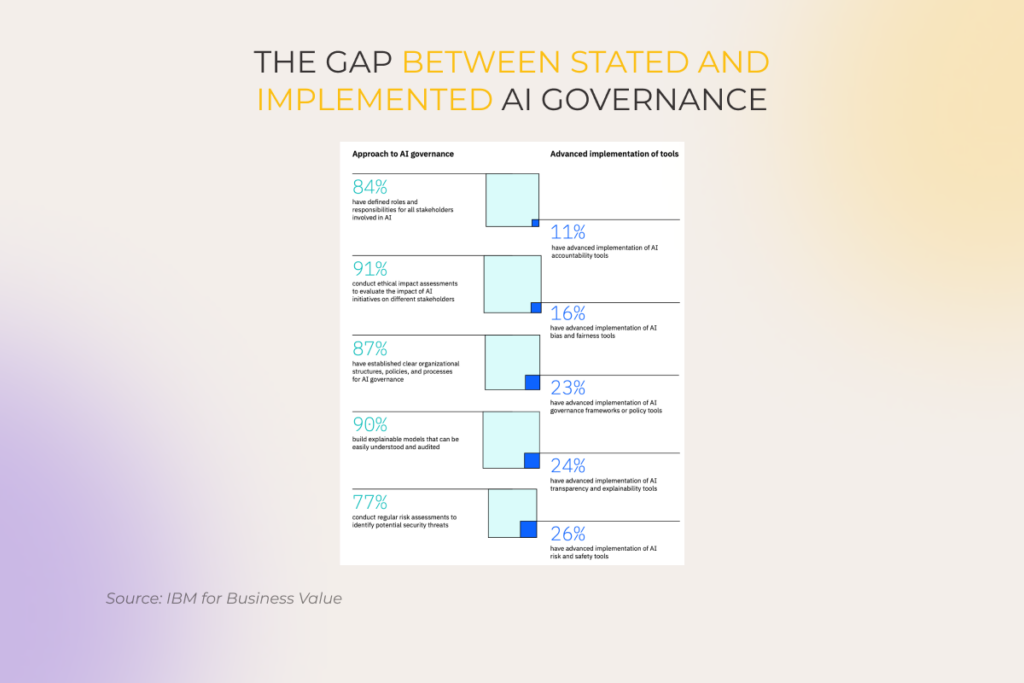
Deloitte’s AI research highlights that the lack of a sound AI governance framework is one of the most widespread roadblock companies bump into when adopting artificial intelligence. Another survey pinpoints the chasm between what organizations declare about AI governance and what they actually do. If you’re in the same boat as 79% of businesses that don’t have a robust AI governance framework yet, mind that the boat is rocking, and it’s time to act. 

an infographic illustrating the gap between stated and implemented AI governance

Here’s a set of responsible-by-design AI principles to use as a blueprint for your AI governance framework:

  1. Build an AI ethics code around principles, such as fairness, interpretability, and human oversight.
  2. Keep an eye on local and global AI regulations and align your internal AI policies with new standards before they come into force.  
  3. Raise in-house data stewards and risk officers who’ll be in charge of overseeing AI development and deployment. 
  4. Create a compliance checklist and run regular audits to ensure policy adherence — quarterly for AI systems used in finance and healthcare, and annually for less regulated cases.
  5. Address AI-specific failure scenarios, such as model bias, drift, misuse, etc., with on-point risk mitigation practices (AI model optimization, pre-deployment bias audit, automated drift detection, detailed audit logs).
  6. Incorporate responsible AI best practices, such as model explainability, data encryption and anonymization, bias monitoring, etc.

These AI development principles should be established from day one. Yet, keep in mind that your AI governance policies aren’t set in stone. You should review and refresh them whenever you add new machine learning models to your tech stack, spot even minor incidents or failures, and if new AI regulations emerge.

— Pavel Klapatsiuk, AI Lead Engineer, *instinctools

Stages of the AI development lifecycle

As tempting as it is to jump straight into the development of AI technology, selecting ML models, and fine-tuning them on your data, the right place to start is by defining your business problem. Only then can you clearly see high-value, low-risk AI use cases capable of moving the needle. 

That’s why AI projects should begin with an exploratory and planning workshop focused on the following:

  • Articulating your business problem to set clear goals and requirements for your AI development project
  • Identifying low-barrier, high-impact use cases and establishing their success metrics
  • Creating technology and business risk profiles for selected AI use cases

After strategic preparation is done, move to the development steps:

  • Selecting an AI model compatible with your existing infrastructure and matching your performance metrics
  • Customizing the AI model to tailor it to your particular use case 
  • Integrating the fine-tuned model into your infrastructure by connecting it to relevant databases, data pipelines, and APIs
  • Verifying the model’s performance under production conditions and fine-tuning it further with model distillation techniques if needed
  • Deploying your AI solution and monitoring its performance in real-world scenarios
  • Continuously improving the software’s performance by collecting user feedback and retraining or updating the underlying model to enhance output quality and accuracy 

Here’s a thing. You don’t need to reinvent the wheel with every new use case. If you invest in robust MLOps practices, you’ll always have a scalable, low-friction AI development process.

— Ivan Dubouski, Head of AI CoE, *instinctools

Get your AI initiative rolling

Schedule a call

How to decrease AI development cost? Bonus cheat sheet from our AI engineers 

AI development doesn’t have to break the bank. Our AI development company in the USA has battle-tested tips for building high-performing and accurate AI solutions at half the cost.

  • Use API-based foundation models instead of self-hosted ones. This way, you pay as you go instead of investing in computing power upfront. If you decide on self-hosting, you can still save by adopting optimized inference engines (vLLM, TensorRT) to slash inference costs by up to 60–80%.
  • Apply transfer learning instead of full training and use PEFT techniques (LoRA, QLoRA, or QDoRA) for cost-efficient fine-tuning.
  • Use SLMs whenever possible to pay a lower per-token cost.
  • Store and reuse model outputs for solutions like AI-powered FAQ bots to avoid paying for the same answer 1000 times. This way, you cut API costs by 30–60% and improve response speed.

AI becomes valuable when it is strategic

Just like the cloud changed the game last decade, artificial intelligence is set to define the next, completely rewriting the rules of how businesses operate. If you’re wondering when to explore AI development, the answer is yesterday. And the next best time is now, with a clear strategy, not scattered experimentation.  While tackling individual use cases is a natural starting point, long-term success comes from embedding AI development into your broader business strategy. Adoption at scale isn’t just a tech upgrade, but rather a company-wide transformation spanning data, infrastructure, and workforce.

If you struggle to move from planning and scattered experimentation to structured execution and scaling, it’s time to bring in expert guidance from a trusted artificial intelligence development company.

Ready to start your AI journey?

Let’s strategize

FAQ

Which industries does AI benefit the most?

From our experience, AI development delivers most benefits in ecommerce, finance, healthcare, manufacturing, transportation, energy, media, and telecommunications sectors. However, there are a lot of low-barrier, high-impact AI applications across other industries.

What is the timeline for implementing AI?

Depending on the current state of your data, infrastructure, and workforce readiness, AI implementation takes 12 to 36 months.

How can I accelerate my AI adoption?

To accelerate the development of AI you can use API-based foundation models to kick off your project quickly. But to speed up the evolution of your AI initiative in the long run, you should invest in building solid MLOps pipelines and regular staff reskilling and upskilling programs.

What is the smartest AI right now?

New developments in AI, such as AI agents, are considered the smartest and most advanced AI form, as agentic systems can initiate and perform complex tasks, including multi-step ones, within a diverse software ecosystem without human intervention.

What to expect from AI in the next 5 years? 

Recent development in artificial intelligence indicates that AI’s level of responsibility and autonomy will increase. That means that AI agents will keep dominating the AI industry in the foreseeable future, causing a shift from application architecture to AI agent architecture.
Current trends, such as further domain and industry customization of the foundational models and exponential evolution of generative AI, conversational AI, and edge AI use cases, will keep unfolding. 

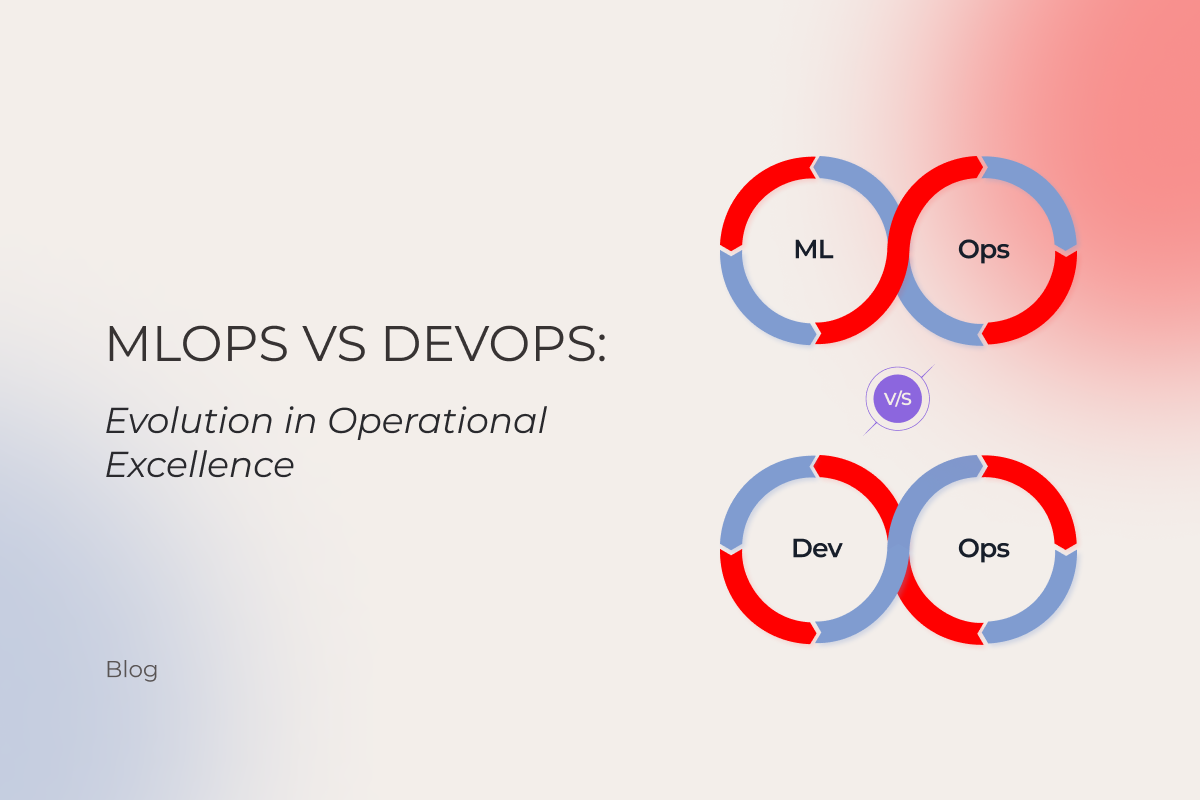
MLOps vs DevOps: Evolution in Operational Excellence

Being good enough once doesn’t guarantee being good enough forever. This evolutionary idea also works for the DevOps methodology, which has long been the gold standard for streamlining software development and deployment, emphasizing collaboration. It was enough to tackle the challenges of the previous decade but hit the wall as machine learning (ML) gained momentum, bringing new challenges. 

The good news is that the methodology can be fine-tuned to keep up with advancing technologies. Imagine the same iterative approach, continuous integration, continuous delivery, continuous training, and continuous monitoring, but applied to ML models. Enter MLOps, designed to match the specifics of working within the machine learning domain.

The two approaches have a lot of overlaps, as you’ll see in our side-by-side MLOps vs. DevOps comparison. 

What is MLOps? Looking at the concept through the DevOps lenses

MLOps, short for machine learning operations, builds upon the foundational principles of DevOps, sharing the same goal of automating processes. But instead of optimizing software development and delivery pipeline, as DevOps does, MLOps extends beyond deploying code. It strives to automate and standardize processes across the entire ML lifecycle, allowing organizations to operationalize AI at scale. 

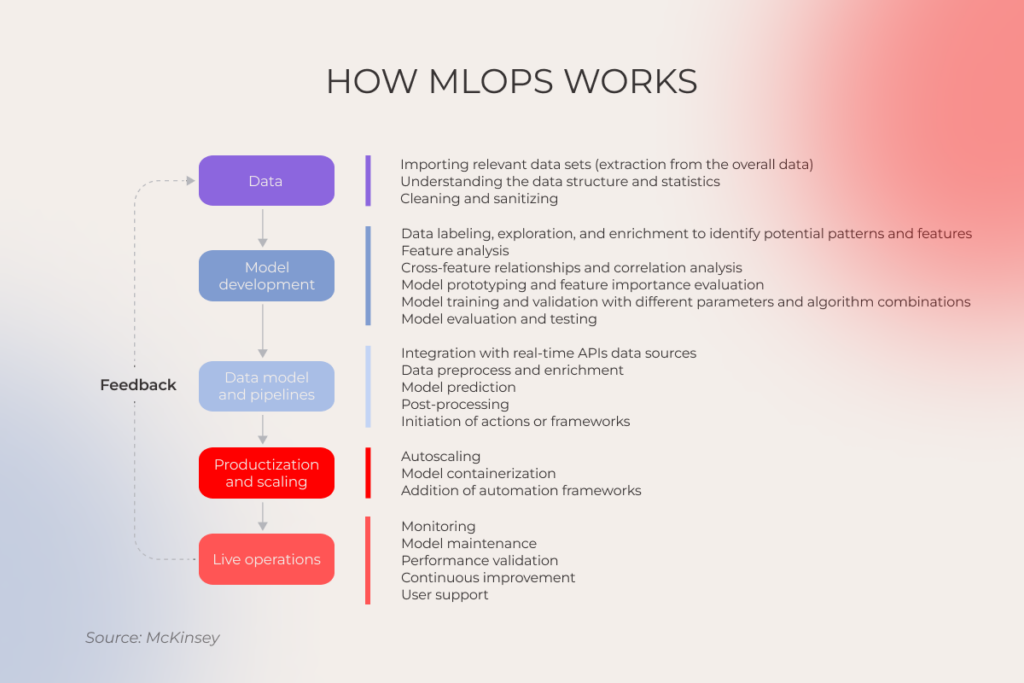
Flowchart showing how MLOps works

From data pipelines to model training and infrastructure management, MLOps tools align ML application development (Dev) with ML system deployment and operations (Ops), maximizing the value of your machine learning investments. 

Note: In the trio of AIOps vs MLOps vs DevOps, AIOps and MLOps also have different priorities. While MLOps is an extension of DevOps tailored to the machine learning domain, AIOps leverages AI and ML to automate IT operations.

DevOps walked so MLOps can run. How MLOps wins adopters’ minds

According to McKinsey, adopters of comprehensive MLOps practices shelve 30 percent fewer models and squeeze 60% more value out of their AI initiatives. These figures come off as hardly surprising, considering DevOps-inspired improvements machine learning operations usher into the AI development workflows. 

Automation and continuous processes

A hands-free approach to managing the software development life cycle is the bedrock of DevOps, powered by the implementation of automation tools that minimize human effort. Software development and operations also hinge on iterative, ongoing activities, all aimed at accelerating software delivery without reducing its reliability:

  • Continuous integration (CI),
  • Continuous delivery (CD),
  • Continuous deployment. 

MLOps takes these principles up a notch, laying them over the entire ML lifecycle. For example, automated model training kicks into action right after model training code updates or data changes, while automated testing allows AI teams to flag issues early in development and stop them in their tracks. Just like DevOps, MLOps adheres to an iterative approach where models are constantly monitored, evaluated, and refined through continuous integration, continuous delivery, continuous training, and continuous monitoring.

Version control systems and configuration management

Effective versioning of code and configuration changes are among other tenets that carry DevOps and enable development teams to collaborate effectively, perform experiment tracking, and manage code. 

In the same vein, MLOps applies version control to datasets, model code, and configurations, ensuring reproducibility, auditability, and consistency across artificial intelligence development flows.

Automated monitoring and feedback loops

DevOps is all about keeping a pulse on applications in production in case any issues come up, plus continuous monitoring helps track user interactions. 

In MLOps, continuous monitoring manifests in a slightly different way and applies mainly to model performance, data quality, and infrastructure health. Through feedback loops, AI and data science teams keep model performance in check and effortlessly spot issues like data drift, concept drift, or performance degradation.

Testing and validation

In DevOps, comprehensive testing and validation strategies revolve around automated testing, continuous integration, and continuous delivery (CI/CD) pipelines. This approach also entails a variety of testing scenarios, including unit testing, integration testing, performance testing, and other checks, integrated early in the development.

Here, MLOps follows suit, but extends testing to comprise tests for features and data, tests for model development, and tests for ML infrastructure. This holistic approach reduces the risk of deployment failures and allows engineers to tackle unique challenges like model drift and insufficient explainability.

Infrastructure scalability and flexibility

By adopting such DevOps practices as infrastructure-as-code, continuous delivery, microservices architecture, and others, companies can adapt to fluctuating workloads and rapid changes in application requirements.

Given the complexity of models and overwhelming data volumes, scalability also takes the central stage in MLOps. Along with scalability-friendly DevOps tools and practices, MLOps also employs containerization and orchestration to enable hassle-free application deployment and scaling across different environments.

Collaboration

At-scale automation and optimization of development workflows becomes a pipe dream without bridging the gaps between development and operations teams. That’s why a sync between the two is a central theme in DevOps.

MLOps expands the collaborative circle to include data scientists, ML engineers, and IT operations, streamlining the transition of machine learning models from development to production environments. Moreover, MLOps-inspired collaboration relies on model lifecycle management and governance.

Now you might think that DevOps alone can address the challenges brought about by ML workflows. But in reality, it falls short of providing a holistic ecosystem. With DevOps alone, all sides of the development process work in silos, dealing with unpredictable model experiments and manual model release processes. DevOps doesn’t imply result traceability or reproducibility so without MLOps, AI teams can’t deliver reliable, trustworthy, and compliant machine learning models.

DevOps without MLOps for ML workflows

DevOps or MLOps, we can do it both

Reach out to our team

Comparing MLOps and DevOps workflows

Both DevOps and MLOps lifecycles circulate around automated deployment, quality control, and continuous feedback — with a common goal of automating and streamlining processes. However, the paths to value are different for each approach. 

DevOps starts as early as the development environment set-up and segues into the coding stage which is then followed by the CI stage and automated testing. This lifecycle stretches as far as post-deployment monitoring, allowing development teams to enhance incident response and implement continuous improvement.

DevOps lifecycle

While the DevOps lifecycle consists of 8 steps, the MLOps one comprises five core stages, directly tied to model development, deployment, and management. The lifecycle unfolds with data preparation, supported by versioning, pipeline building, and data labeling. This step flows smoothly into model development and training, encompassing experiment tracking, training automation, and model versioning.  

MLOps also provides a structured approach to model deployment and post-deployment optimization, providing such automated capabilities as containerization, autoscaling, and more.

MLOps lifecycle

Adoption drivers for MLOps are the same for DevOps. Or are they?

While the rationale for introducing MLOps and DevOps practices may vary across organizations, common adoption drivers overlap. Both methodologies do a great job of reducing development cycle times, enhancing productivity, promoting system reliability, and last — but far from the least — fostering healthier collaborative practices. Here is a rundown of benefits that MLOps has brought to our clients’ table:

1. Accelerated scalability across business processes, workflows, and customer journeys

Executives often lament that the transition from AI solution idea to implementation can stretch up to over a year — and the progress remains sluggish, no matter how hefty their investments are. MLOps flips the script, allowing AI adopters to go from zero to hero in about 2 to 12 weeks with no additional talent or technical debt. 

This momentum stems from MLOps-induced standardization that is achieved through the creation of reusable components and workflow automation. Erstwhile time- and effort-consuming tasks like data ingestion, data management, and data integration become an easy lift, with little need for human oversight.

Modular pre-made components can lay the ground for creating a larger product or system — something that helped our client, a fintech company, deploy the solution five times faster and with fewer resources. By developing a central AI platform and layering modular pre-made components on top, they rapidly adapted their recommendation engine for different countries, improving customers’ access to relevant financial products and investments.

Along with reusable model training scripts and deployment infrastructure, MLOps allows organizations to diversify their portfolio of reusable assets to include ready-to-use data products. These artifacts consolidate a particular set of data according to common standards, facilitating its repurposing for multiple current and future use cases within a specific field.

2. Enhanced data acquisition and preprocessing

Traditional, manual-based workflows are known for time-consuming data workflows due to inconsistent data formats, data silos, and difficulties in tracking data changes. From data loading to data transformation, automated data pipelines — aimed at extracting, transforming, and loading data efficiently — relieve data professionals of manual tasks. 

Today, data pipelines can also be augmented by an LLM, besides other traditional MLOps tools, to automate data processing activities, such as data cleaning, anomaly detection, and data summarization.

Beyond maintaining data quality, data pipelines reduce errors, facilitate governance, and, of course, reduce the time it takes to collect and process data.

3. Easier dataset classification and management

Whether your data engineers are enhancing data security, ensuring compliance, or buckling up for an advanced data analytics solution, data classification is an essential building block for effective data management and protection. 

MLOps takes the inefficiency out of data classification and management by providing robust metadata management systems that group and tag datasets based on their source, type, and quality. Unified data repositories further facilitate consistent dataset management, making classification and timely access less of a struggle.

Moreover, MLOps processes seamlessly integrate with existing data governance frameworks, aligning data classification with the organizational policies of your company.

4. Closer insight into the effectiveness of dataset changes

In ML development, comparing different datasets allows data engineering teams to: 

  • keep tabs on the performance of a machine learning model,
  • spot data issues,
  • improve model interpretability. 

MLOps versioning tools facilitate tracking and managing changes made to various components of an ML solution over time.

This deep dive comparison is accompanied by experiment tracking — the process of jotting down all experiment-related information alongside model performance metrics and hyperparameters — to reveal patterns in the interplay of different experiments. Once AI teams have singled out two models with the highest accuracy, they can run A/B testing, which is another MLOps gismo for comparing model performance with different dataset versions.

Moreover, MLOps tools provide a venue for organized experimentation, allowing development teams to easily reproduce previous runs, compare different models or configurations, and recreate experiments for verification or debugging.  

Finally, built-in analytics and visualization tools enable engineers to keep a detailed lab notebook for how changes in datasets impact model accuracy, precision, recall, and other performance metrics.

5. Ensured regulatory compliance at scale

While a holistic risk management strategy is non-negotiable for all machine learning projects, the practical implementation of risk management strategies hinges on the practices used by AI teams. MLOps kits out teams with ample tools for comprehensive model governance, including metadata tracking, centralized repositories, model versioning, and other trackers. 

Reusable elements, equipped with detailed documentation on their structure, use, and risk considerations, also reduce error rates and allow for seamless, uniform component updates to filter down to dependent AI solutions.

One of our fintech clients who operates in a domain with a long tradition of strict regulations contacted our MLOps team to increase the auditability of their deployed models. By implementing CI/CD integration, metadata management, and pipeline orchestration, we empowered their team to maintain a comprehensive audit trail of model changes and associated compliance considerations.

6. Improved model quality at lower costs

Automation in itself is a powerful tool for cost-friendly quality improvement, but there’s a lot more to the cost-saving potential of machine learning operations. Thanks to continuous monitoring of model performance, MLOps tools detect issues early in development and trigger automated retraining, refining model quality over time with no overhead costs. Also, by continuously monitoring and reporting resource usage, MLOps tools reveal cost-saving opportunities.

Moreover, MLOps aligns resource allocation with actual needs, reducing idle times and costs and enabling dynamic scaling, which is essential for handling traffic spikes without compromising performance or incurring additional expenses.  

It’s not DevOps vs MLOps, it’s DevOps and MLOps

While DevOps focuses on accelerating software delivery and reliability, MLOps is more about improving ML model deployment and management. But despite seemingly different objectives, these methodologies do not cancel each other out. Instead, MLOps draws upon core DevOps principles, transcending the software development field and covering the unique needs and challenges of the ML development lifecycle. 

For this very reason, pure-play DevOps, although setting up a strong foundation for software development, is not enough for environments with data as a first-class citizen, making MLOps a backbone for all things machine learning.

Looking for an MLOps partner to join your AI project?

Let’s pool our efforts

LLM vs. SLM: Key Differences, Advantages, and How to Choose the Right Language Model

Does size still matter? With AI, the default assumption used to be “yes.” More parameters, better results, end of story. That logic held until small language models (SLMs) started punching above their weight. Gartner’s prediction is that smaller, task-specific models will hit 3× the deployment volume of general-purpose LLMs by 2027, a signal that the LLM vs. SLM question has shapeshifted. Business owners who once asked “which model should I pick?” are now asking how to orchestrate both.

Instinctools’ AI engineers have mapped the SLM vs. LLM comparison as it stands today, underlining when it’s reasonable to downsize to an SLM, and when banking on an LLM pays off. 

What is an LLM and what is an SLM?

Both large and small language models (LLMs and SLMs) are artificial neural networks trained on vast amounts of data and built to process and understand natural language and perform a range of tasks from simple text summarization to taking actions on the user’s behalf. 

If all language models rest on the same foundation, what is the difference between LLMs and SLMs? Primarily, the number of parameters, which are the internal values a model learns during training. The more parameters it has, the more patterns it can usually capture. SLMs typically range from 1 billion to 15 billion. Phi-4-mini, Mistral 7B, and DistilBERT are some of the go-to picks in this range. LLMs start in the tens of billions and reach into the trillions, with GPT, Claude, and Gemini models leading the pack.

LLM vs. SLM: key differences at a glance

The SLM vs. LLM gap no longer boils down to “small versus powerful.” The tradeoffs stretch across infrastructure costs, latency, deployment flexibility, reasoning depth, and governance overhead. Here’s how both model families compare in production environments.

CriteriaSLMLLM
Resource requirementsRuns on consumer hardware, edge devices, or a single GPURequires high-end GPU infrastructure and large memory footprint
Cost of adoption and usageLower inference costs, but usually requires fine-tuningHigher inference costs, though broader out-of-the-box capabilities reduce customization work
Fine-tuning timeHours to weeks with LoRA/QLoRA on limited hardwareMonths (in rare cases when fine-tuning is necessary)
National specificityDiverse representation of alphabet-specific languages Broader multilingual coverage, but uneven cultural representation
Capabilities rangeStrong in narrow, repetitive, and latency-sensitive tasksBetter at broad reasoning, orchestration, and open-ended workflows
Inference speedFaster response times and lower latencySlower inference, though MoE architectures narrow the gap
Output qualityLower due to a smaller context window More reliable in complex reasoning and long-context tasks
SecurityMight present certain risks (API violation, prompt injection, training data poisoning, confidential data leakage, etc.) and requires clear AI governance

Advantages of SLMs over LLMs

SLMs have earned their spot as a practical alternative to large language models for businesses that want to adopt AI without investing a fortune into the technology. The core advantages of an SLM over an LLM include:

  • Lower inference cost (up to 100 times cheaper per query via API, and zero per query when deployed on-device).
  • Faster response times, especially for short, bounded tasks such as classification, routing, extraction, autocomplete, simple customer support, and local assistants.
  • Reduced vendor lock-in when using open-weight models, as businesses can self-host, fine-tune, quantize, and move models across different infrastructure stacks.
  • Deployable on consumer hardware, edge devices, and smartphones, particularly with quantized models such as Llama 3.2 1B/3B, Phi, and Gemma-family models.
  • Faster and cheaper customization (weeks and a single GPU vs. months and a cluster).
  • Lower energy consumption per inference, a smaller carbon footprint at scale.

When LLMs still win: strengths of large language models

LLMs are broad-spectrum AI language models built for complex tasks that require broad knowledge, multi-step reasoning, and deep contextual understanding. The LLM advantages over their smaller counterparts include:

  • Stronger multi-step reasoning across domains like legal analysis, financial modeling, and scientific research.
  • Much larger context windows, enabling the model to work with long documents, large research corpora, complex conversations, and sometimes substantial portions of codebases or document sets in one pass .
  • Multimodal capabilities covering text, image, audio, and video in a single model.
  • Lower need for task-specific fine-tuning, because frontier LLMs often perform well with prompting, retrieval-augmented generation, tools, and examples. However, production deployments still require evaluation, guardrails, monitoring, and workflow design.
  • The reasoning and planning depth that makes LLMs a natural fit for the orchestrator role in multi-agent systems, where a central model coordinates and routes tasks to specialized smaller models.

An SLM vs LLM comparison across 8 criteria

Building and training models from scratch requires significant investments, often beyond the reach of many businesses. That’s why, in this article, we focus exclusively on pre-trained models, comparing notable LLMs such as ChatGPT, Claude, and Gemini, with SLMs like Mistral, Phi, and Gemma. 

1, Resource requirements

When it comes to SLM vs LLM resource requirements, the gap remains wide. LLMs contain hundreds of billions to trillions of parameters, and high memory consumption makes them a resource-intensive technology. If you target the latest GPT, Claude, or Gemini models, you’ll need NVIDIA H100 or B200 GPUs, which cost $25,000-$35,000 per processor.

SLMs’ compact model size and lower computational power requirements enable them to run on a broader range of devices, including regular computers and smartphones. For instance, Microsoft’s Phi-4-mini needs just 4GB of RAM, so with an SLM as a resource-friendly alternative to LLM, companies can hop on the AI train without upgrading their hardware park.

Instinctools’ verdict: SLM.

2. Cost of adoption and usage

The cost coin has two sides: fine-tuning and inference. LLMs save on fine-tuning since they handle most tasks out of the box, but inference adds up quickly at scale. SLMs need fine-tuning, yet their day-to-day usage is far more affordable.

To feel the disparity, consider this scenario: you have 300 employees, each making five small 1K-token requests per day. At the time of writing, a frontier GPT model priced$1.75/$14.00 per 1M tokens, that adds up to around $720/month. Replace it with Gemini Flash at $0.10/$0.40 per 1M tokens, and the same workload drops to roughly $22.50/month. 

Cost of adoption and usage

Instinctools’ verdict: SLM.

3. Fine-tuning time

The logic behind the fine-tuning process is straightforward: the more parameters the model has, the longer it takes to calibrate it. In this regard, adjusting a large language model with trillions of parameters can take months, while fine-tuning an SLM can be completed in weeks.

Parameter-efficient methods like LoRA and QLoRA have shortened the process further. A 7B model can now be fine-tuned on a single GPU in hours, which is how our team compressed a full project with Mistral 7B at its core into just six weeks, stepping up the model’s precision rate from 10% to 75%.

Instinctools’ verdict: SLM.

4. National specificity

The lion’s share of the most well-known LLMs originates from the US and China and doesn’t adequately represent diverse languages and cultures. Studies unveil that LLMs’ outputs skew toward WEIRD societies (Western, Educated, Industrialized, Rich, and Democratic).

Sovereign AI has become a trend, with governments commissioning models trained on local-language datasets. If you compare small language models and LLMs on language coverage, SLMs lead the push with Jais for Arabic, Nanda for Hindi, Typhoon for Thai, and Viking for the Nordic languages. 

Instinctools’ verdict: SLM. 

5. Capabilities range

Both LLMs and SLMs emulate human intelligence but at different levels. LLMs remain the go-to for complex tasks requiring broad knowledge, multi-step reasoning, and deep contextual understanding. Once you move to multi-agent systems, LLMs carry the orchestration work, coordinating several agents, tracking long-horizon objectives, switching tools mid-process, and resolving conflicts between intermediate outputs.

SLMs are narrow-focused models designed for specific tasks like text classification, summarization, and entity extraction. But the gap is narrowing. For example, Phi-4-mini (3.8B parameters) now matches models twice its size on reasoning benchmarks, a gap that would have been unthinkable two years ago. SLMs have also gained 128K context windows, function calling, and vision capabilities. So with strong context engineering, you can squeeze far more out of a compact model than raw parameter counts would suggest.

What we witness on the ground is that enterprise AI stacks now resemble a relay race, when an LLM acts as the planner and coordinator and passes the baton to lightweight SLMs to handle specialized subtasks at lower cost and latency.

— Pavel Klapatsiuk, AI Lead Engineer, Instinctools

Instinctools’ verdict: LLMs and SLMs to get the best of both worlds.

6. Inference speed

LLMs’ power as a broad-spectrum solution comes with performance trade-offs. In dense architectures, more parameters typically mean more computation per generated token, which can make large models slower and more expensive to serve than smaller models.

LLM providers address this by switching from dense architectures to sparse Mixture of Experts (MoE) patterns and by releasing their own lightweight tiers (GPT-5 nano, Gemini Flash). On the SLM side, Mistral Small 3 runs at 143 tokens/second on 16GB of RAM, and Gemma 4 (a 26B MoE model) also targets faster local inference with techniques such as multi-token prediction. 

For latency-sensitive SLM vs LLM decisions, smaller models often have the edge, especially for short, repetitive, on-device, or edge workloads.

Instinctools’ verdict: SLM.

7. Output quality

On general reasoning and coding benchmarks such as MMLU-Pro, GPQA, SWE-bench, LiveCodeBench, HumanEval, and MMMU, frontier LLMs outperform smaller models, especially in open-ended reasoning, advanced coding, and multilingual tasks. Their advantage comes not only from broader training data, but also from greater model capacity, stronger post-training, reasoning-focused optimization, tool use, and more mature long-context handling.

SLMs can achieve comparable accuracy on narrow enterprise tasks when the workflow is well-defined and supported by high-quality domain data, retrieval, prompt engineering, constrained outputs, or fine-tuning. But once the task moves beyond a tightly controlled scope, larger models tend to stay more stable and coherent under pressure.

Instinctools’ verdict: LLM.  

8. Security

While the cost and quality of AI solutions often make enterprise leaders scratch their heads, it’s the security concerns that really top the list of hurdles. Any production AI system needs clear governance around what data enters the model, where that data is processed, how long it is retained, who can access it, and how model outputs are logged, monitored, and audited.

For cloud-hosted LLMs, organizations should evaluate vendor terms, data-retention policies, training-data exclusions, API access controls, encryption, logging, data residency, and regulatory compliance before deployment. Many enterprise AI providers now offer strong privacy commitments (for example, API or enterprise customer data is commonly excluded from model training by default), but companies still should validate these guarantees against their own security, legal, and compliance requirements.

SLMs need robust governance just as much, but they give companies far more flexibility in where data gets processed and stored. Small models can run on-premises, on edge infrastructure, or directly on employee devices, giving businesses tighter control over where sensitive information is processed and stored. This setup is particularly attractive for industries handling regulated or proprietary data.

Instinctools’ verdict: SLM. 

When to choose an SLM vs. an LLM: decision framework

Choosing the best AI models in the SLM vs. LLM debate is like hiring a team. You don’t bring in a Nobel-level strategist to sort invoices, and you don’t hand a billion-dollar negotiation to an intern fresh out of onboarding. AI stacks work the same way, routing simple jobs to smaller models and reserving heavyweight reasoning for the few tasks that need it.

Use caseRecommended model typeWhyExample models
Customer support chatbotSLMHigh request volume, predictable workflows, low latency requirementsMistral Small 3, Phi-4-mini
Internal document Q&ASLMEasier on-prem deployment and domain fine-tuningLlama 3.3 8B, Gemma 3
Code copilotLLM or hybrid setupMulti-file reasoning and long-context understandingClaude Sonnet 4.6, GPT-5.2
Edge or IoT deviceSLMMinimal compute footprint and offline operationLlama 3.2 1B, Gemma 3n
Healthcare records processingSLMGreater control over sensitive data handlingFine-tuned Mistral, Phi-4
Multilingual content generationLLM or sovereign SLMBroad language coverage versus local cultural adaptationGemini 3.1 Pro, Qwen 3
Creative or long-form writingLLMBetter narrative consistency and contextual depthClaude Opus 4.6, GPT-5.2
Multi-agent enterprise workflowsBoth Balances cost, speed, and reasoning quality across tasksSLM workers + LLM orchestrator

Frontier LLM, compact SLM, or a hybrid setup?

Let’s talk

Examples of SLMs and LLMs in production for 2026

The AI language model market has become crowded fast. A couple of years ago, most discussions revolved around GPT-4-level systems. Now the field stretches from billion-parameter SLMs running on laptops to LLMs built for multi-agent reasoning and million-token context windows.

SLMs
LLMs

Custom LLM and SLM development with Instinctools

Now that you know where SLMs make sense and where LLMs still dominate, the harder part begins: turning that knowledge into an AI system that survives contact with real production workloads.

Our team helps businesses with custom LLM/SLM development, covering:

  • Model selection based on your business requirements and limitations
  • Fine-tuning on private data 
  • RAG pipeline integration
  • Goal-oriented context engineering to widen the range of AI capabilities
  • Agentic workflow design and orchestration
  • MLOps
  • Fully on-premises deployments

Sometimes the answer is a compact SLM running locally for privacy and latency reasons. Sometimes it’s a tiered architecture combining multiple models behind one orchestration layer.

Our AI engineers are a click away if you need expert advice

Reach out

The future belongs to hybrid AI stacks

After exploring what’s possible, determine what’s practical for your software needs. Both LLMs and SLMs are powerful tools, but they won’t bring the desired benefits on their own. It’s still essential to identify how to effectively integrate them into your business processes, considering industry and national specifics. 

If your resources are limited, you want to test your idea ASAP, or need a model for only a specific type of task, an SLM can help you hit it big without breaking the bank. For deeper reasoning, multi-agent orchestration, or long-context analysis, LLMs hold the advantage. In practice, though, the biggest gains come from combining both: smaller models handling high-volume routine work, larger ones stepping in for the hardest decisions.

Draw on the power of language models with a trusted tech partner

Book a call

FAQ

What is the difference between an LLM and an SLM?

The difference between an LLM and an SLM comes down to scale, training scope, and intended use. LLMs are trained on massive web-scale datasets and usually contain tens or hundreds of billions of parameters, making them better suited for broad reasoning and open-ended tasks. SLMs are smaller, often below 10B parameters, and optimized for focused workloads like classification, summarization, or on-device AI. For example, GPT-5.2 is built for broad reasoning, while Phi-4-mini (3.8B) is designed for efficient local inference. Still, the boundary is getting blurrier with each new model.

What are the advantages of an SLM over an LLM?

The biggest advantages of SLMs over LLMs are lower cost, faster inference, and easier deployment. Smaller models can run 10-50× cheaper than large-scale LLMs. They can also work fully on-premises or on edge devices, keeping sensitive data inside the company infrastructure. In narrow enterprise tasks, a well-trained SLM may also produce fewer hallucinations because its scope stays tightly controlled.

When should I choose an SLM instead of an LLM?

In the SLM vs. LLM standoff, SLMs make more sense when the task is narrow, repetitive, latency-sensitive, or privacy-critical. Common examples include entity extraction, summarization, customer-support routing, and edge AI systems. They also fit workloads with very high query volume, where large-model API costs spiral quickly. If your data cannot leave the company perimeter or the model needs to run locally on limited hardware, an SLM or hybrid setup is the safer bet.

What are examples of small language models?

Popular SLM examples in 2026 include Phi-4-mini (3.8B), Gemma 3, Mistral Small 3, Llama 3.2 1B/3B, TinyLlama 1.1B, and Apple OpenELM. Some focus on multilingual reasoning, others on edge deployment or fast inference on consumer hardware.

Are SLMs as accurate as LLMs?

SLM vs. LLM output quality depends heavily on the task. On broad reasoning benchmarks like MMLU or HellaSwag, larger models still outperform smaller ones, especially when the task requires open-ended reasoning, advanced coding, multilingual understanding, or cross-domain synthesis. But in narrow enterprise workflows, the gap can shrink dramatically after fine-tuning. A well-scoped SLM processing medical records or support tickets, bolstered by high-quality domain data, retrieval, constrained outputs, or fine-tuning can match and sometimes outperform a general-purpose LLM.

How much does it cost to develop a custom SLM or fine-tune an LLM?

The cost of custom LLM/SLM development varies mostly with data quality, infrastructure demands, and deployment complexity. Fine-tuning an open-source SLM like Mistral 7B or Phi-4 on private data usually starts around $15,000. Building a domain-specific model from scratch can reach $80,000-$250,000 or more. A production-grade RAG pipeline around an existing model often falls somewhere in between. If you want a realistic estimate, it’s worth discussing your use case with your AI engineering partner before locking into one architecture.

Can I run an SLM on-premises or on edge devices?

Yes. One of the main reasons companies adopt SLM on-premises setups is that compact models run comfortably on consumer hardware. Models below 7B parameters can work on a single RTX 4090 or even on CPUs with quantization. Lightweight options like Phi-4-mini or Llama 3.2 1B already run on laptops and smartphones. Common deployment tools include Ollama, llama.cpp, MLX, ONNX Runtime, and NVIDIA Triton.

Remove stress from your software delivery lifecycle by following DevOps release management best practices

Producing secure and robust software at speed is an undeniable must-do for business success today. Whether a startup pivoting during the pandemic, or a tech company, keeping up with nimbler competitors — they all need the most advanced release management practices. This is where DevOps comes in. According to the latest statistics, the DevOps market is expected to grow at a CAGR of 21% during 2021-2026 — a significant amount.

We’ve already written about how to start leveraging DevOps, transforming it into a company’s best friend for when product owners and executives are trying to get stuff done and delivered on time. But what about DevOps release management? DevOps offers some great capabilities for interacting between teams, coordinating interdependencies, and helping people understand what they need to look for to get the release process smoother, making it just like breathing. How so? Let’s dive deeper to find out. 

Why is it important to manage your releases and deployments better?

DevOps release management

With a growing number of releases, deployment management becomes critical. According to the 2020 DevOps Trends Survey, 74% of companies consider the frequency of deployment as the best option to estimate DevOps efficiency. Here’s what DevOps release management offers: 

Increased deployment frequency

Developers don’t deliver one massive project. They release small improvements to their long-lived products all the time within a continuous integration phase. Also, there’s continuous testing, which allows to avoid regression prior to the production phase.

Reduced MTTR

The adopted Mean Time to Repair (MTTR) metric helps get a more comprehensive, accurate, and nuanced story of application and infrastructure productivity. For example, together with other metrics, such as the “error budget”, it can spot the true cost and impact of downtime. To identify the MTTR threshold and pinpoint the issues, you can use different alerting and monitoring tools. A well-organized DevOps process allows for quick deployment of fixes to reduce MTTR.

Decreased lead time for changes

Focusing on lead time allows developers to organize continuous delivery and reduce time to production. That’s why a product team is able to assure more frequent and smaller releases, which lets users realize new value faster.

Lower change failure rate

The team tests the product in a testing environment as they go. Doing that iteratively means the minimization of error issues upon the submission of a project on production. This results in fewer defects overall.

As part of release management, DevOps provides a holistic view of product delivery that everyone strives to have from the very beginning. It is about getting a deeper understanding of the end-to-end system, including value stream mapping and management. 

Apart from this, DevOps release management focuses on the constant optimization of value. This way, businesses become more product-centric, and the teams migrate from a project-oriented to product-oriented work culture.

How is the DevOps release process different from traditional release management?

Comparing traditional release management to DevOps release management is almost like comparing a horse and buggy against 21-century electric cars.

Traditional release management uses a waterfall framework known for big heavy releases. In this approach, the project is approved at the very end of the final delivery, despite months the development process took.

The efficient release management in DevOps enables frequent delivery of small batches, leading to more frequent deployments and faster cycle times. This results in decreased lead time, which means delivering value to end-users as soon as possible.

Manual work with manual reviews and approvals is ‘onerous and erroneous’. This is what sabotages feedback cycles in traditional release management. Also, long wait times, multiple discussions, and the burgeoning bureaucracy bog people down. DevOps practices, on the other hand, provide real-time feedback and metrics that are driven by automated workflows, including tracking, reporting, and data collection. 

Now, as for change requests, in traditional release management, the protocol implies process-heavy and time-intensive management of change requests. Product owners have to provide context to approvers who are not directly involved in the work. The DevOps scheme encourages collaborative software development, automated delivery pipelines, and change-advisory boards giving pre-approvals because they know all the steps to be managed. 

Last but not least, in traditional software development, teams are organized by functional boundaries. There are manual handoffs between siloed teams, which lead to misaligned incentives. DevOps addresses this by migrating from a control hierarchy to a place where leaders distribute authority to the teams. Developers get rid of all the handoffs and delays that come with these silos. As for core stakeholders, they are involved in every stage of the delivery lifecycle (design, build, deploy, monitor and maintenance). Therefore, teams are cross-functional, collaborative, and aligned to business goals.
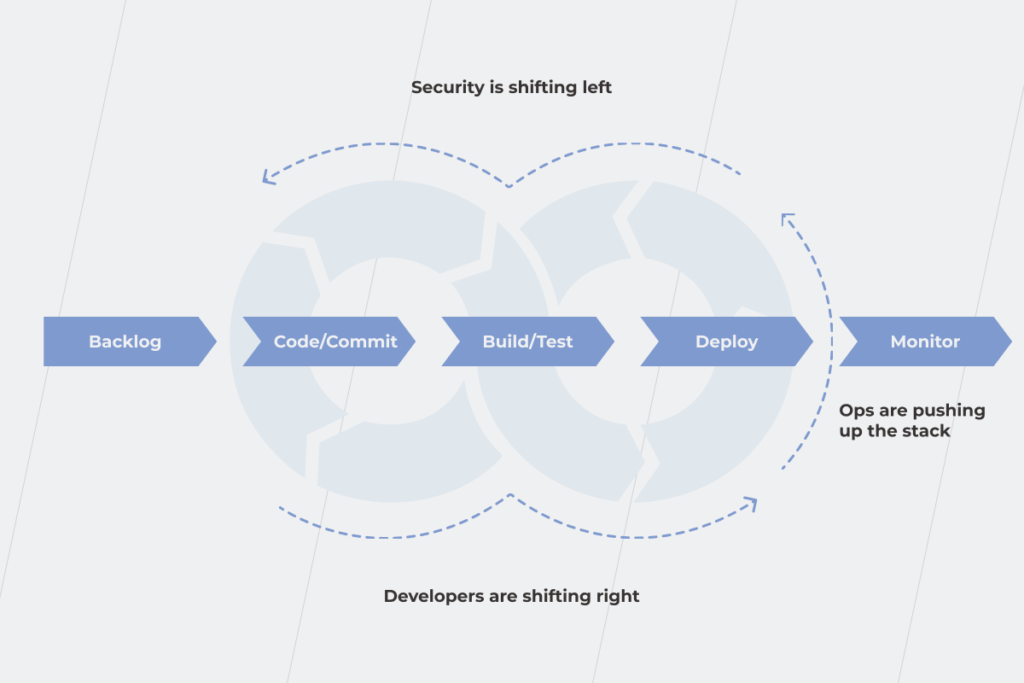
The shift from traditional release management to DevOps release management

DevOps release management

Symptoms of a poor release management process:

Now, how to assess the current state of your release management against efficient DevOps release management? Let’s scan through the symptoms below. 

  • Releases are infrequent and happen whenever, usually, not during working hours. If your company needs to make a release schedule, notify all the employees about the new deployment in advance, or stop all the operations during the release. A failure to do so is the first sign your release management process requires enhancement.
  • Your release process is manually configured. Some release managers have to perform the same manual activities over and over again. They start to write a script, and then they write another script, and then another one. Also, they might be checking in a spreadsheet for calling someone and asking if they’ve done it. 
  • There’s only one person on your team that everyone relies on when it comes to deployment. Organizations have a release manager spread across 20 different teams. These teams are trying to cobble together a picture from lots of different sources.
  • You’re not sure that the feature/software will work, you just hope it will. This happens due to many reasons. One of them is making the production environment the source of truth. But it’s the version control system that is. To remind, the version control allows tracking changes and versioning data. Thus, the upcoming release stays compliant, and the teams can meet the business requirements of the auditors. 
  • New releases tend to negatively affect users if a team didn’t fix blind spots in deployments and proceeded to production. The latter is the result of the lack of actual data, metrics of delivery, metrics around flows, work in progress, defect rates, types of work that are being done, efficiency, cycle time, lead time, a lot of other value stream metrics.

DevOps techniques for release management:

Transitioning to DevOps release management best practices can be a game-changer. Here are the most effective techniques to implement.

  • Leverage Infrastructure as Code (IaC): Unlike manual configuration, IaC is not error-prone or hard to track. It suggests an automated process of installing and configuring software that leads to more reliable releases. Thus, deployments are well-tested and well-rehearsed, and the pipelines well-vetted. Release processes become more repeatable. Since the scripts are version-controlled, a manager can see how they’ve changed over time. 
  • Make disaster recovery a part of your normal operating procedure by exploiting phoenix servers. In software development, adding configuration updates is a common practice. Phoenix servers help the team run the configuration drifts smoothly. These immutable servers allow new infrastructure changes without breaking existing functionality.
  • Ensure no disruption in service thanks to a Blue-Green deployment strategy. It suggests running two similar production environments—Blue and Green. At some point, only one of them is live and serves all the production traffic. The other one is idle. When preparing a new version of an app, deployment and the final phase of testing are held in an idle environment. This helps tackle downtime that could happen because of software deployment and reduce the risk of damaging a new version of the app if something unexpected happens. 
  • Streamline CI/CD pipeline with “shifting left”, which enables quality assurance standards, continuous testing at all the phases of the development life cycle. DevOps claims to take over the traditional SDLC, mostly in terms of full automation.
  • Test, test, and then… test again. Developers, when building declaratively, make sure that what they build is right. To assure this, the team needs to have a testing plan. There’s an industry-standard guideline for implementing automated software testing, called the testing pyramid. It operates at three levels: unit tests, integration tests, and end-to-end tests. The bottom layer is presented by unit tests, the ones that need to happen most frequently. Intended to provide small units of code, they deliver value to the team multiple times a day, and are least expensive to write and maintain. This type of test is used to validate the functioning of individual components in isolated conditions. To check how this code interacts with other code, which forms the entire software, integration tests need to be done. They are slower than unit tests and require a pre-production environment. And, finally, to ensure that the entire application is working without a hitch, you need to run end-to-end tests. Beyond the testing pyramid, there are non-functional tests such as performance tests, load tests, stress tests, etc., which verify how well the software works. Having your testing strategy in place will help your team get the job done faster, achieve better results, and, consequently, increase ROI.
  • Don’t put quality over quantity. Businesses strive to release software as quickly as possible, yet Quality Assurance shouldn’t be an afterthought. It is still directly related to customer satisfaction. That’s why, to reach needed standards at the speed required, the team should embed QA in the specified requirements of any ongoing software development phase.
  • Automate release management processes. When release planning in DevOps, rating current pipelines based on their level of automation might be a game-changer. In DevOps, frequent releases are key, and enabling test automation throughout the pipeline can help significantly. Other types of automation include requirements, design, development, deployment, operations, etc. 
  • Be proactive in tracking changes and fixing the issues. In the context of DevOps best practices, the developers use version control as the source of truth. It allows managing changes to code versions, splitting them into different threads to be routinely tested prior to its release to a production environment. This is where all the amendments are tracked. Thus, developers can still remain agile, declaratively configure, build, test, and fix bugs, and release changes while it’s all being tracked. 

Best release management tools in DevOps according to *instinctools engineers:

The best tools for the DevOps methodology are business-critical, mission-critical, or, in other words, the lifeblood of your business to function. Here’s a shortlist provided by *instinctools experts.

  • Ansible allows teams to rapidly deploy, iterate, and test their systems in production. It also integrates with a large number of tools already used by DevOps teams.
  • Github Actions is all about optimizing workflows that are used to deploy code. It enhances continuous integration and release management and can be used for anything from triggering an alarm to orchestrating complex security test automations.
  • Octopus ensures reliable, secure and automated releases of your .NET applications into various environments of your software development no matter whether they are: on premises or in the public cloud. It provides audit information of all your past deployments which can further help in yearly audits for certificates and regulation.

How to get started with DevOps release management?

It takes a lot of work to put building blocks in place to effectively maintain the release management practice in an organization. Traditionally, IT companies have a business analyst or product owner who develops some large back-right PRDs handed off to a developer. Then they plan out the next six to eight months of development. But it doesn’t work well in today’s economic environment. 
Fortunately, there are agile release management frameworks you can use to deploy faster and quickly remediate any issues that arise on the way. DevOps release management breaks down work into small chunks. The methodology ensures frequent releases and further testing for defect elimination, optimized lead time, reduced MTTR, and a full scope of automation.

Want to know how to release valuable apps faster while maintaining the level of security and quality that makes sense for your business?

Book a call

DevSecOps: How to Integrate Security into DevOps

With data shaping the business landscape today more than ever before, security issues are at the forefront of everything a business does. Being ignorant about the risks of system vulnerability is detrimental no matter which industry you’re working in, but especially when you’re dealing with large amounts of consumer data. Financial, healthcare, and many other organizations are required to undergo obligatory security certification processes to prove they are compliant with all the necessary industry standards and regulations. 

However, security checks are often considered a bottleneck to deployment because they typically happen at the end of the delivery lifecycle or even after release. These checks are often manual; detecting issues means unplanned work for dev, test, and ops teams, causing delays and frustration.

Fortunately, there’s a way to make security cheaper and, at the same time, avoid time-consuming processes and hindering system development. The solution is DevSecOps. It aims to achieve a secure SDLC and a CI/CD pipeline all the way through from start to finish by shifting security “left” to the earliest stages of the project so that the reliability of your system is no longer an area of concern.

DevSecOps vs DevOps: a fresh look at the security problem or the same thing with another name?

There are two opinions on the term DevSecOps and its place in DevOps.The first one is that to include security in the software development lifecycle from the very beginning, we need an explicit call to action. Many people take the “DevOps” label too literally and think that it encompasses only development and operations. Hence, creating “DevSecOps” looks like a good opportunity to highlight the importance of the security role.  

Good symbols, labels, and stories change the world. The pithiness of “DevOps” drove mass adoption and actual improvement far more than the “Agile System Administration” movement that preceded it. DevSecOps is fine.

— Nigel Kersten, Field CTO, Puppet  

The second view is that DevSecOps shouldn’t exist as a separate label because security is an integral part of DevOps already. 

If we keep putting every responsibility people should do in the name, we’ll run out of room for the hashtag. “DevSecOps” is dumb. #DevSecITSMTestAutomation­­MonitoringObservability­­­PeopleFinanceMarketingQAOps.

— Michael Stahnke, Director of Engineering, Puppet

Sometimes the idea of shifting security to the left may go as far as contradicting SecDevOps vs. DevSecOps. Perhaps you’re thinking: “What?! Are you kidding me?” No, we aren’t actually. Anyway, let’s not juggle the words and just agree with Bill, not Gates, but Shakespeare, “…that which we call a rose by any other name would smell as sweet.” The real issue to solve here is how to deal with the silos between security and DevOps teams? Because perhaps, only in a parallel universe could engineers and developers be okay with waiting for 48 hours while the security team runs their tests. So, then what are the middle ground solutions that DevSecOps practices can offer? 

Fighting against the deadly waterfall: why DevSecOps is a savior

With a traditional development method, such as the waterfall model, you usually can’t go back to the previous steps to modify a project. Security testing is tucked at the end of the SDLC. 

But, what are the consequences of such an approach? Significant security problems are detected only at the last stage of software development. Fixing them is painful for the team, and costly for the business owners as it results in delayed delivery. To deal with this problem, the agile methodology was invented. It allows businesses to minimize risk when adding new functionalities. And with an iterative method, it’s easier to be aware of security during the whole development process because you can go back to the previous stage and quickly fix a bug, monitor cost overruns, or change requirements earlier. With such an approach, you minimize the risk of a small mistake turning into a snowball that cripples the whole project, as it happened with SolarWinds. The company reported that up to 18,000 of its clients installed insecure updates and became vulnerable to hackers. Considering SolarWinds has many high-profile customers, such as agencies in the US government and Fortune 500 companies, the situation was quite critical for the organization and incredibly beneficial for its competitors. 

Outcomes of integrating security into DevOps in the long term:

  • Accelerating deployment frequency. Even if initially it doesn’t seem like that, the more you learn how to interact with security throughout the entire SDLC, the more frequent your deployments to production become. The case of NIAID proves that DevSecOps practices such as IaC (infrastructure-as-code) and automated testing are helpful in shortening the lead time to deliver software and patch critical defects. But as usual, when you’re changing how you work, things get worse before they get better. Early stages of integration are troublesome as security practices are introduced into stages where they weren’t before. Delivery speed takes a hit, too, and that’s frustrating for all involved. After all, who is happy about deployment time being increased by a third? These problems eventually go away as teams collaborate more smoothly to embed security in the delivery cycle, refine their processes, and see the positive outputs of their work. 

Do you need expert's advice on how to implement DevSecOps into your SDCL?

Let's talk
  • Decreasing time to remediate critical vulnerabilities thanks to DevSecOps automated security testing. Meanwhile, without DevOps or DevSecOps integrated into an organization’s development lifecycle, error fixing is manual or, at most, only semi-automated.
  • Easier risk mitigation and flaw prevention. You are more likely to stop a known-vulnerable code being pushed to production by giving this responsibility not to a centralized security team but to a delivery team. Thus, you make the process faster by removing a bureaucratic constituent and improve decision-making by relying on people from the delivery team who use their knowledge of both the technology and the business to do what is best for the company and the customer. When responsibility for security is shared across delivery teams, rather than siloed within one team, security issues are caught earlier — there are more eyes looking for potential security threats. It costs much more to fix a bug found during regular maintenance than to fix one identified during the design.
DevSecOps integration

Building a DevSecOps pipeline within a SDLC: theory and reality 

Efficient security implementation into the DevOps pipeline is a tricky task. According to the GitLab global survey results, 72% of 4,300 respondents described their security level as good or strong. Simultaneously, in almost a third of organizations (30.73%), only the security team is in charge of security. So, organizational silos are still a relevant problem.

There are two options for creating a DevOps security pipeline:

  • Using a traditional DevOps pipeline with security checking tools implemented at every stage: Plan – Code&Build – Test – Release – Deploy – Operate&Monitor.
  • Building a DevSecOps pipeline: Threat modeling – Scan – Analyze – Remediate – Monitor. 

In theory, it’s easier to create a pipeline with integrated security when you are only starting the project rather than implementing security checks into the existing DevOps pipeline as security becomes a matter of routine from the beginning. But let’s face the reality, the thing is that barely anyone truly cares about security before the preproduction stage.

According to the Sonatype survey, 48% of developers know security is important but don’t have enough time to spend on it. It doesn’t mean that it’s deemed unnecessary, but a lot of other issues with a high business priority and value are waiting to be resolved. So, then how does the process work?

When you start building a pipeline, you only have an idea of the final product. So you have to code and build something as fast as possible. It means, first of all, a business owner invests money in development, operational, and sales teams. DevOps security, at this stage, is only a rainbow unicorn perspective. Security implementation from the start is too costly for businesses. It requires specific tools and specialists to set them up. It’s hard to find additional thousands of dollars just for security when you don’t know if the product will be successful. 

The desire to turn a blind eye to security checks when you are caught in the crossfire of deadlines and frustrated employees is totally understandable. You may sleep well for many years with your software functioning just fine until one day you awaken to mind-boggling downtime instead of peace and quiet.

DevSecOps integration

Basic actions you can take for DevOps pipeline security in any case 

Underlining the obvious importance of integrating security into DevOps is a kind of “thanks, Captain Obvious” advice. It’s easy to say and hard to master. That’s why our goal is to show how to integrate security into the DevOps pipeline seamlessly without creating a drag in release times and hold up the deployment cycle, and, of course, without spending a huge part of the project’s budget on it. 

Do threat modeling and risk assessment

This practice will help you deepen the understanding of the weak points in your DevOps security, the types and sensitivities of your assets, and how to protect them. You can do threat modeling even before you shift to DevSecOps. It’ll provide you with:

  • Inventory of sensitive data
  • List of vulnerabilities with possible migration options
  • Summary of potential attack scenarios

With threat modeling, you kill two birds with one stone: eliminate vulnerabilities in the DevSecOps pipeline and improve the security knowledge within the development and operational teams. At first sight, threat modeling may seem quite a time-consuming process that affects the speed of deployment. But it won’t be an obstacle if you analyze which types of attacks are more likely to happen beforehand and choose the appropriate security checking tools. 

Tools to check how secure your SDLC and CI/CD pipeline

Automated security testing is a key component of the successful implementation of DevSecOps. With that, the speed of deployment will be affected minimally. Specially designed tools can provide you with static, dynamic, and interactive analysis of CI/CD pipeline’s security.

What are these tools specifically?

  1. SAST (static analysis security testing) software is used for white-box security testing (the “developer approach”) to check the security of the DevOps pipeline from the inside out during the building phase. You have access to the underlying framework, design, and implementation of the software. 
  2. DAST (dynamic analysis security testing) tools are needed for black-box security testing (the “hacker approach”) to prove the system’s security from external attacks outside its environment during the testing phase. In this case, you don’t have access to the underlying framework, design, and implementation of the software.
  3. IAST (interactive analysis security testing) works inside the product and analyzes code for security vulnerabilities in real-time during the QA or testing phase. It may seem like a win-win situation as far as you check security and don’t add extra time to your CI/CD pipeline. But remember that IAST tests aren’t always suitable for testing a codebase or an entire application. They only check whatever is exercised by the functional test, so you can select the activity that is a part of continuous integration, and check how secure it is. The best use for IAST tools is in combination with QA tests. 
SDLC pipeline

Define why your company needs continuous security monitoring for DevOps because security for security’s sake is a trap and a waste of time and money. First of all, specify your security priorities, choose testing tools accordingly, and decide on the phases of the DevOps pipeline where you’d like to implement them.

DevSecOps automated security testing is a heavy hitter in any sphere but there are three industries where security plays a crucial part: Finance, Healthcare, and Politics. The worst thing that can happen to a bank or a medical lab isn’t downtime. It’s data leakage. That’s why bank staff may not even have permission to install unrequired programs on computers. And if a database of a medical laboratory is attacked, executives are likely to shut down the whole infrastructure until the breach is found. It means that customers won’t get the results of their analyses or be able to book an appointment for 1-2 days minimum. But the risk of a hacker publishing customers’ data or using it against them is much worse than negative reviews.

Finding the middle ground between security level and deployment speed 

By putting speed-to-market on a pedestal while ignoring other DevSecOps objectives, you risk leaving a lot of value on the table and, more importantly, you imperil your entire business by jeopardizing customers’ data. Without security incorporated into your SDLC, users will suffer from repercussions caused by the unreliability of your system. That’s why prioritizing security is the key to better outcomes overall.

In theory, the ways of seamless integration security into the DevOps pipeline are clear and understandable. But once you start putting them into practice on your own, reality might kick in. If you have fallen into the trap of security implementation challenges, *instinctools security experts are ready to help.

FAQ:

What is a DevSecOps pipeline?

A DevSecOps pipeline is a set of security practices integrated into different stages of SDLC to recognize the security threats faster and earlier in the workflow and fix them straight away. The steps may differ according to your goals and the peculiarities of the industry. E.g., in healthcare, continuous security monitoring for DevOps is relevant, therefore security requirements are high and implemented from the very first stage. Meanwhile, some companies prefer completing penetration tests at the pre-production stage because security implementation at the very beginning might slow down deployment time.

How is DevSecOps implemented?

Integrating security into DevOps is not as easy as putting two and two together. Firstly, answer the question: “What do you expect from a secure SDLC and CI/CD pipeline?” Solutions will vary depending on the answer. You may build a DevSecOps pipeline from scratch or implement security into your existing DevOps pipeline. In both cases, you’ll need to unite dev, sec, and ops teams’ expertise and use specific tools for security checks.

Why Every Company Needs a Big Data Strategy and How to Build it

Big Data is gaining traction among various industries. According to IBM, people produce 2,500 trillion bytes of data daily. 50 billion IoT and other connected devices gather, analyze, and share it (as CISCO states). Big Data unlocks an excellent opportunity for big insights — available for companies of any domain and size. And this is where an efficient Big Data strategy becomes pivotal. 

It’s like aiming at a target and getting a 99% hit because you know where, when, and how to shoot in the most optimal way possible. Big Data makes those “shots” laser-focused, which brings about much more appealing results.

Why is a Big Data strategy important?

Big Data Analytics

Big Data should no longer be regarded as an afterthought. Using the information outside your company’s own data sources, it perfectly fits in your business intelligence solutions and expands the comprehension of the market and customers. The companies that will stay afloat — and ultimately lead the pack — will be the ones that put Big Data amongst such priorities as revenue, profitability, and customer experience. 

According to the Broadcast Audience Research Council, Big Data solutions contributed to better decision-making (69%), improved customer experience (52%), and significant cost decrease (47%). What’s more, companies bragged about an 8% increase in revenue and a 10% cost reduction because they treated their Big Data properly.

Therefore, adopting a proper Big Data business strategy makes all the difference in the directions that define business success. But how is this exactly? Let’s find out. 

Data-driven decisions

At present, most companies analyze 12% of the information they gather from different sources, while 88% of it stays untapped. Had it been analyzed, it would remove the guesswork and improve the decision-making significantly.

Let’s take an example from marketing. 99% of organizations consider data an integral part of marketing success. Marketers can work out plans strategically based on constant insights from a broad range of meaningful data sources. 

As for sales, an effective Big Data business strategy allows sales leaders to operate with more factual sales forecasting data. There’s an immense value in revamping time use among the sales team, enabling them to concentrate on clients most likely to purchase. 

Improved internal operations

It takes tons of hours or even days for employees to find the necessary data and process it. When asked to retrieve data to make a decision, only 3% of employees can do it quickly. Big Data, herewith, streamlines operations, exposes inefficiencies, enhances quality control, and drives improvements in every line of business. 

Customer service, warehouse management, inventory management, sales — any department can benefit from improved operational processes ensured by a viable Big Data strategy.

Customer-centric approach

Customer-level data sets allow mapping and tracking customer behaviors, needs, and wants across interactions, operations, and transactions. They embrace the whole customer base and span the customer journey, which allows companies to grasp a perfect understanding of customer experiences (CX). That’s why, after scrutinizing its 100 million subscribers, Netflix managed to influence 80% of content consumed by viewers thanks to proper data insights.

When combined with analytics, Big Data sheds light on outcomes such as loyalty, revenue, the cost to serve and helps predict individual customer satisfaction and business efficiency. What’s more, CX management can evaluate the ROI for specific CX investments and align CX initiatives with business outcomes.

The flip side though is that the more available personal data becomes, the more anxiety-provoking the situation is for users. In an age when personal information is the currency that people give for online content and services, innocent competition for customers’ attention has turned into obsessive spying on them. And this is definitely not where Big Data should be headed. 

Apple was one of the tech giants who decided to change the direction and give users the choice of whether to be tracked or not, by introducing a pop-up window for iPhones that asks people for their permission to share their information with third parties.

Meanwhile, Facebook messed up (again). The company’s WhatsApp was fined nearly $270 million for not being transparent about how it uses data collected from people using the service.

Not to grapple with fallouts of putting users’ personal information at risk, businesses need to be privacy-conscious while implementing Big Data. Partnering with technology companies, which ensure their solutions comply with privacy policies seems like the best bet. 

Reduced costs

Business intelligence strategy and Big Data analytics can change the costs landscape drastically. Executives face storage costs, processing costs, people costs, software costs, etc. Big data deals with these torrents of data in near real-time, pinpoints waste and helps define accurate costs. 

A great example is ad campaigns. It’s always essential to have proper market strategies that appeal to end customers. Big data makes this understanding possible. Otherwise, companies have the risk of wastefully spending their precious ad dollars.

Five key steps to deploying a Big Data strategy

Big Data Strategy

Big Data adoption might seem challenging primarily due to the lack of relevant expertise within the organization. Executives feel anxious over finding, hiring, and training Big Data professionals. Besides, there’s a particular difficulty in aligning a new business trajectory with the existing goals of the organization. Here are five steps that might help with the Big Data implementation project plan.

Define your business goals or business problems you’d like to solve

Before embarking on Big Data adoption across the organization, the C-suite should ask where exactly Big Data is needed in the first place. How does it help with that specific problem? Or, does it contribute to the overall business goals? 

As Big Data is designed to deliver value by leveraging data, the Big Data strategy needs to tackle key business problems and contribute to the corporate business goals. Here are the initiatives where Big Data can be applied:
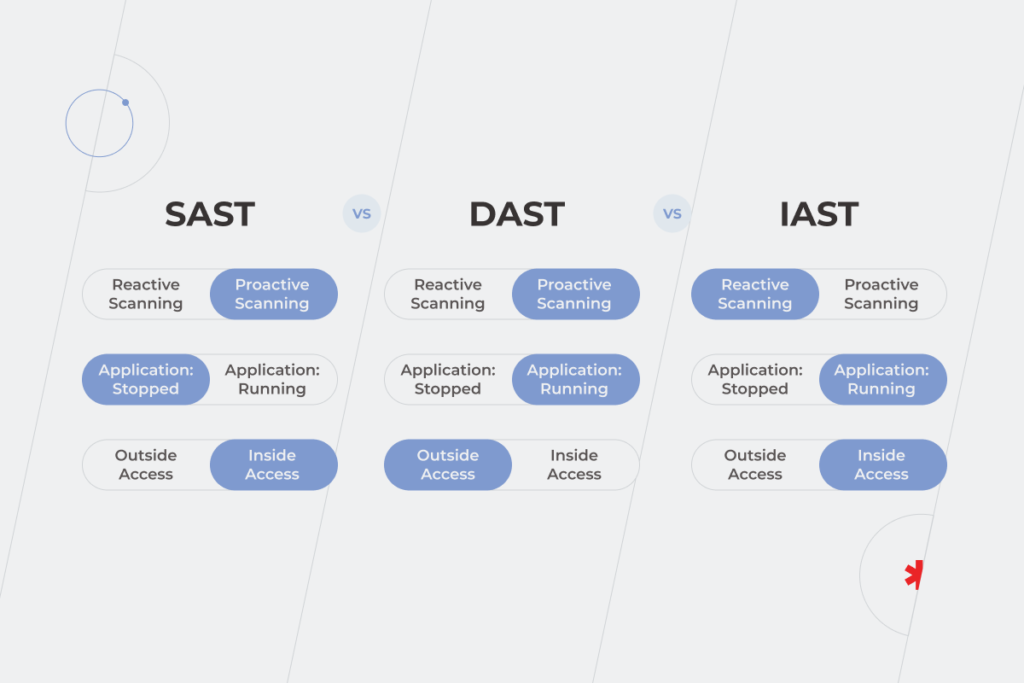
  • Understanding customer persona
  • Prediction of sales
  • Analysis of data from different sources
  • Identification of financial risks
  • Pinpointing of fraud activities or logs
  • Tracking of feedback on socials, customer loyalty, Ecomm marketing metrics
  • Identification of correlations between many independent data sources

Get a highly skilled team

The right distribution of roles and skill acquisition is integral to Big Data strategy. This is where the HR department is a king. First, it would be wise to assess employee resources. You shouldn’t underestimate your current employees — reskilling and upskilling usually make sense. However, if you feel like you don’t have enough talent to build an in-house Big Data dream team, there’s always the option to attract BI consultants from outside that will help you leverage your data to the fullest. 

Execute a current state assessment

An estimation of your company’s current state might address the organization’s assets, sources, processes, capabilities, policies, etc. It is essential to develop an accurate data strategy roadmap that supports what the company aims to be in the future and describes what it is now. Usually, this process requires consultations or interviews with key employees, especially those from clientele targeting and retention, IT functions, and marketing. 

For instance, it would be reasonable to gain a good understanding of existing and potential customers when it comes to customer outreach. This becomes doable by evaluating business processes, data architecture and assets, data gathering capabilities, and different policies that affect customer attention and retention. 

In the case of data safety, you should start the process of a thorough investigation of current data processes, infrastructure, and policies to build an effective strategy. 

Identify what data you need to answer your questions

Deciding on what data is necessary depends on the blind spots businesses need to uncover. What are they? This could be the lack of a full understanding of a customer profile to appeal to when launching custom campaigns. Or, sales leaders might need answers here and now about current critical aspects of business processes.

The operations side of the company, for example, must answer tons of questions that come down to inventory, production, and the supply chain. This data is being captured in an environment enterprises support and manage. The finance department is going through the same processes. Thus, all departments have different use cases, different information, different questions based on revenue costs and clientele. 

Choose the right technology for every stage of your data strategy roadmap

According to Forbes, 95% of organizations need to do something about unstructured data. This is where Big Data software, CRMs, and different productivity tools come in handy. Here’s what the roadmap includes:

  • Collecting data. The companies gather data from tons of sources like business transactions, industrial gear, socials, IoT devices, and so on. Thus, finding the right technology for this very step is crucial.
  • Storing data. Big Data projects require powerful resources for storage. This is where Big Data technologies meet cloud computing for a better, cost-efficient way to deal with all kinds of data. 
  • Processing data. The tools that allow this could be a real-time distributed tool for capturing data streams, open-source NoSQL database, etc.
  • Communicating insights from data. Nowadays, the term ‘democratization of data’ has appeared in the arena. This means not only should data be captured, ‘digested,’ and stored, it needs to be available to all involved in the most optimal manner possible. 

Start generating business value with Big Data 

Big Data

The use of Big Data for the competitive advantage of the company is not optional today. It proved its efficiency across departments and processes long ago. That’s why a good Big Data strategy is simply a must to make well-informed business decisions, improve internal operations and customer experiences, and drastically reduce costs in every business line.
Yet, many companies grapple with the lack of expertise in the domain and need proper assistance from the zero phases to freewheeling. 73.4% of organizations confess to having struggles with the integration of Big Data and AI initiatives. So turning to experts, who are good at creating value with big data analytics, might become a game-changer. Our BI team will develop a Big Data strategy that aligns with business goals, capacities, and resources and will be there at every adoption phase.

FAQ:

What is a Big Data strategy?

First and foremost, Big Data is useless without a Big Data strategy. The latter defines the ways data will be exploited in practice and what kind of data management might need to reach particular corporate objectives.

Since more and more data is created and gathered, Big Data is becoming increasingly complex. The only way to benefit from it for particular business goals is to develop a Big Data strategy intentionally.

How is Big Data analytics implemented?

The implementation might comprise the following stages:
1. Deciding on the data analytics strategy
2. Aggregating the right data
3. Selecting the right productive tools
4. Mapping out an analytical process
5. Teaming up with useful services like cloud computing for better storage, etc.
6. Running a pilot initiative
7. Embedding analytics into decision-making
8. Making essential data available to the whole team
Note, the best practices for Big Data analytics might vary according to a business’s particular nature and this is normal. 

How to use Big Data analytics to grow your business?

To make a business shine amongst competitors, you can use Big Data in the following ways:
– To fix inefficiencies and spot opportunities for growth
– To contribute to innovation and improved design
– To revamp customer experience
– To tackle risks and fraudulent activities

SRE VS DevOps: Rivals or Allies?

The ever-accelerating business world has been obsessed for quite a while with the word “agility” when it comes to IT product development. And it’s not hard to see why: the prospect of getting the much-desired solution to fix your pain points ASAP is and always will be enticing. 

However, the COVID-19 pandemic has shown that simply being Agile may not be good enough anymore: ever since the world was forced to adopt a remote working model, MTTR (mean time to repair) has increased, while downtime rates have grown.  

Now, how does one ensure that agility will no longer hamper reliability? Meet DevOps and Site Reliability Engineering (SRE). These concepts that have been around for quite some time and, considering the challenges posed in the wake of the pandemic, are more relevant than ever. 

The difference between SRE and DevOps

SRE

DevOps and SRE were designed in the early 2000s to find an equilibrium between development agility and system stability. However, they are terms that are often misused: some think these are the same; some think they’re competing ideas. Most believe that a company always has to choose between them. So let’s dig deep into what DevOps and SRE are and whether a DevOps vs SRE debate even makes sense.

DevOps is, at its core, a methodology that reduces silos between development, testing, QA, and operations teams to accelerate application development, improve software quality, increase infrastructure availability, maximize application performance, and reduce costs. Now, all of this sounds awesome. There is one problem, though. DevOps is basically a set of abstract principles, some of which many companies struggled to put them into practice. And, to help everyone end this struggle, in 2016 Google published a book called “Site Reliability Engineering”, shedding light on their internal DevOps practices, but most importantly, giving easy-to-understand practical advice on how to make DevOps work.  

So, in a nutshell, while DevOps is a philosophy, SRE is one good way of implementing that philosophy.

How does SRE add to DevOps methodology?

If you look at the DevOps manifesto, you’ll probably find that there are 5 key categories that DevOps is broken into, the methodology’s mantras, if you like, which could be put as: 

  • Removing organizational silos
  • Accepting failure as normal
  • Deploying small incremental changes
  • Benefiting from tooling and automation
  • Measuring everything

All of these are undoubtedly integral to a team’s success in finding a proper balance between agility and reliability, and we’re about to find out why. But, again, as neat as they sound, they don’t look like concrete instructions (“Measuring everything”? Well, of course!). So let’s go through these principles one by one and see where the difference between DevOps and SRE truly lies. 

DevOps ideas and SRE implementation

Removing organizational silos

DevOps idea: the communication between people who do coding (developers) and people who provide maintenance services (operators) must be seamless so as to prevent quick changes in code from damaging the infrastructure and creating major threats to the system’s stability. Initially aimed to break the wall between dev and ops teams, DevOps has rapidly spread beyond the software delivery pipeline to areas, such as security, finance, HR, marketing, sales, etc., where collaboration is vital.

SRE implementation: you need to build a tight-knit cross-functional team not only by bringing developers and operators together but also by expanding synergy-provoking practices to finance, human resources, executive leadership teams, and more. The culture of better communication and knowledge sharing, that DevOps and SRE inherently demands, can be created via frequent stand-ups, while integration and automation are to be deployed with special toolsets. 

Accepting failure as normal

DevOps idea: no man-made system can be 100% reliable, so a failure of the said system shouldn’t be perceived as a disaster by any company, but instead, should be treated as normality… as long as a lesson is learned in the process. 

SRE implementation: you need to internally agree on the amount of downtime that is acceptable in given circumstances and be prepared to swiftly deal with system failures (since they are inevitable and shouldn’t come as a surprise); one way to do that is to hold so-called “blameless post-mortems,” where time won’t be wasted on seeking whom to blame for the failure. Instead, the team, in a routine manner, figures out ways of improving the system, focusing on the future, not the past.

Deploying small incremental changes

DevOps idea: making frequent, but small changes to the code help react to issues faster and fix bugs easier. Why? It’s simple. Looking for a bug in 100 lines of code is far easier than in 100,000 lines of code. It also enables the development process to be generally much more flexible and alert to sudden changes. 

SRE implementation: you need to note that it’s not the actual number of deploys per day that matters. Striving for an inordinate amount of deploys just for the sake of them is wasted effort. You should indeed deploy often, but also make these deploys count—the more sensible the nature of the deploy is, the easier it is to fix a potential bug, thus reducing costs of failure. 

Benefiting from tooling and automation

DevOps idea: human nature doesn’t allow us to perform massive monotonous tasks efficiently. In the same way that it takes a lot of time and energy to manually address crucial workflows, companies that leverage tooling and automation can improve these processes exponentially.

SRE implementation: you should consider what long-term improvements to the system need to be made and automate the tasks that will be done regularly in a year or a couple of years’ time (SRE calls this “automating this year’s job away”). In doing so, you avoid investing in short-term gains and focus on long-term automation. 

Measuring everything

DevOps idea: having tangible metrics that measure different aspects of your development process not only helps to tell whether the company is working on a certain project successfully but also provides justification for this or that business decision. 

SRE implementation: you should adopt the use of Service-Level Agreement (SLA), Service-Level Objective (SLO), Service-Level Indicator (SLI), keep track of the system’s Mean Time Between Failures (MTBF) and Mean Time To Recovery (MTTR), and have a defined Error Budget. These will help your project run much more efficiently.

We’ll soon elaborate on what some of the notions in the paragraph above actually entail, but the rest of the picture should be more than clear by now. DevOps was created to make IT development better. Meanwhile, SRE was meant to show HOW exactly we should do that. As many SRE specialists like to say, “ SRE implements DevOps.”

SRE Metrics

SRE metrics

SRE, as a concept, is next to impossible to imagine without Service-Level Agreement (SLA), Service-Level Objective (SLO), Service-Level Indicator (SLI). As stated above, these are the core notions that relate to the measurement of your SRE implementation success in many ways. And, much like the names of these concepts, their natures are very similar to each other, yet with some crucial differences: 

  • SLA is referred to as an agreement between the service provider and the customer about such metrics as uptime, downtime, responsiveness, responsibilities, etc. In other words, it acts as a set of promises made to the customer and represented by various metrics, and a set of consequences if these promises are not lived up to;
  • SLO is, in turn, referred to as an agreement within an SLA about one specific metric i.e. uptime or response time. Basically, an SLO is an individual promise made to the customer. So, in this respect, it’s possible to see an SLA as a certain set of SLOs;
  • Lastly, SLI is an indicator that shows whether the system is functioning in compliance to this or that SLO.

A typical example of all these three notions working together would be something along these lines: an SLA you made with your customer states that the system will be available 99.9% of the time (the so-called “three nines of availability”), so it would have the SLO in it that would be 99.9% uptime, and the SLI would be the actual measurement of the system’s uptime.

Which types of companies need SRE and DevOps?

Considering that DevOps and SRE are there to assist development teams with securing great system stability whilst still being very agile, it’s relatively safe to say that any dev company should, to some extent, have a grasp of what DevOps/SRE techniques are and how to implement them. They’re modern software development essentials. 
In our previous pieces, we’ve already looked at how beneficial DevOps can be for large-scale manufacturing business and at the massive impact it had on financial services’ giants, but the sheer brilliance of DevOps and SRE is in their universal applicability — your business does NOT have to be a software development business to reap benefits from these practices; as long as you’re dealing with update roll-outs, infrastructural changes, growth and upscaling, feel free to delve into this philosophy.

And, effectively, there’s no team that’s too small for DevOps/SRE, either. You don’t even need to have a dedicated SRE specialist if you’re a small company. In this case, it may pay to train one of your team members to use the SRE methodology as the learning curve is not that massive.  

So taking all of that into account, we can easily make a case that the ideas and concepts behind DevOps and SRE are there for every business to relish — large enterprise or a small start-up, IT or non-IT, they’re for everyone.

DevOps or SRE? You can leverage them both

In an attempt to settle the Site Reliability Engineering vs. DevOps debate, we now can say for certain that there’s no point in either-or statement. In fact, how can we be talking about a debate here if the two things we are desperately trying to contrast are virtually the same, with one being a vital part of the other? 
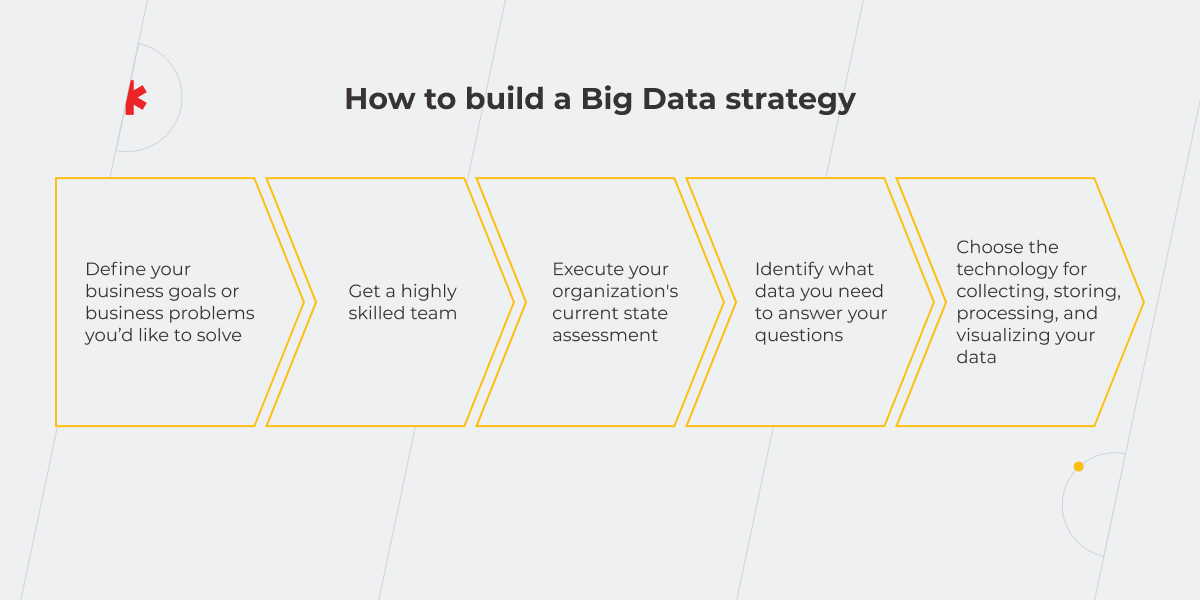
If you say that you can do DevOps well, chances are you do that with the help of SRE principles. 

If you say that you can do SRE well, you should realize that we’re technically talking about DevOps.

So it’s not a “red pill–blue pill” scenario at all, both DevOps and SRE are to be embraced and we’re very excited to see how they both develop in years to come.

Excited about SRE and DevOps? Talk to our experts to find out how DevOps and SRE can help you uncover new business opportunities.

Some Reasons for DevOps failures. Based on Statistics, Real-World Cases, and Common Sense

Everyone wants to do DevOps, however, history proves that far from everyone is successful at it.  And although there’s nothing bad about failures – at least, that’s what DevOps philosophy advocates, they shouldn’t slip away unnoticed. We decided to delve deep into some statistics and DevOps failure case studies not to point fingers but to get to the bottom of the cause and let you learn from the mistakes of others. 

Why DevOps Doesn’t Work  

The consequences of DevOps failures might be so extreme that they immediately hit the headlines and are being discussed long afterward. Have you heard about Knight Capital that went bankrupt in 45 minutes because of a failed deployment? To be fair, there are only a handful of stories like that. And just because they are rare we tend to think that it’ll never happen to us. Indeed, there’s a long shot for that. However, DevOps fails not only when the damage is done, but when the organization can’t leverage it in the way it’s supposed to. According to Gartner, by 2023, staggering 90% of DevOps initiatives will have failed to meet expectations. Businesses that don’t want to become part of this statistic need to understand what they’re doing wrong and how to fix it.

Failing to identify the importance of organizational culture

Perhaps, one of the biggest misconceptions about DevOps is to think that it’s only an IT initiative. In fact, the problems organizations need to solve are a combination of culture and technology. Sometimes DevOps is equated with automation or cloud, but it’s so much more than either of those. While delivering a successful DevOps practice without using cloud technology or automating repetitive tasks would be difficult, it doesn’t automatically (pun intended) make you good at DevOps. Instead, good DevOps comes from a cultural shift toward better communication, collaboration, and integration across the company. In addition, companies need to address organizational and team concerns, including helping teams clarify their mission, primary customers, interfaces, and what makes for healthy interactions with others.

In the interview with InfoWorld, Bryan Dawson, DevOps evangelist, shared one of his first experiences in DevOps, which resulted in the failed application release. Working as a consultant for a U.S. government agency, he took part in the deployment of a new supportive DevOps platform, which was supposed to help with planning, coding, building, and releasing the app. At first, the project seemed promising, but soon it became clear that tooling alone is not enough to succeed. Being focused on tools, the team lost sight of the people and processes and literally supported legacy practices with modern instruments.

So one of the biggest blockers for the organizations to use DevOps to its full potential is failure to create an appropriate culture. As cheesy as it may sound, the best results are achieved when we start viewing DevOps as a cultural paradigm. However, simply talking about culture won’t help if it doesn’t evolve into certain actions. DevOps is a verb – it’s not something you have, it’s something you do.

According to Puppet State of DevOps 2021 Report, DevOps really works out when the leadership makes it a priority. In terms of DevOps evolutionary levels, 60% of highly evolved organizations say that the top management actively promotes DevOps. It’s both top-down and bottom-up work: the practices are set from above and are supported by the whole staff.

Apart from passive leadership, other cultural reasons for companies to be stuck in a rut with DevOps are risk management practices of infrequent deployments, unclear responsibilities, and limited knowledge sharing. So what can be done to change that?

Too many organizations, when seeking cultural change, focus too much on these surface elements—add a foosball table and a few bean bags in the office and suddenly everyone will start acting like we’re an innovative start-up, right? That’s not the way it works.

— Stephen Thair, CTO, DevOpsGroup

You may start with the following:

  • Change leadership behavior at every level by generating meaningful conversations with your team and enabling them to understand why the status quo is no longer good enough.
  • Hire new people with new ideas, for whom agile techniques is not an empty phrase.
  • Think about what you can do to nudge your staff in the right direction, such as rewarding the behaviors that move the company forward or challenging ones that don’t align with the direction you are trying to go.
  • Introduce agile ways of working, like Scrum or Kanban, to visualize workflow and speed up business value delivery. You may also try to apply the idea of “pair programming” to the areas besides programming – and if pairs are chosen right, not only will the quality of work increase, but also interpersonal skills will develop significantly and knowledge sharing will be established.

Trying to do a new thing in the old ways

2nd Watch’s DevOps survey found that just 22% of organizations are engaged in DevOps in its purest form, while 78% of organizations, which are supposed to be doing DevOps, continue having separate management for infrastructure/operations and engineering teams. However, DevOps can’t exist without a truly collaborative environment, which breaks the silos across the whole organization. All the stakeholders, including business people, developers, operations teams, security teams, and QA must be engaged in creating the product and in getting it out of the door.

team management

Another thing the survey revealed is that more than a third of the respondents manage infrastructure manually. Besides contradicting the DevOps philosophy, this approach increases the risk of human errors, leading to wasted time that could, instead, be spent on generating compelling ideas. It also undermines the work of sysadmins turning them into angry burned-out folks ready to blow it all up. When infrastructure expands, the process slows down even more, while the risks of errors skyrockets. Moreover, companies can miss out on the most useful practices, like well-organized scaling. For instance, for an online store at night, when there are few if any customers, one server might be enough, otherwise the price for cloud infrastructure that you don’t even need will arise. Meanwhile, with an automatic approach, your cloud infrastructure will scale down by default whenever it’s needed.

One more blast from the past that holds Devops back in at least a quarter of companies is having little or no code testing processes in place. In today’s competitive market, where development and release cycles get shorter, winning the race of continuous delivery is impossible without making continuous testing an integral part of CI/CD pipelines. If testing isn’t run properly, it won’t be long before application crashes and customer service issues occur. As it was in the case with an already mentioned U.S. government agency, launching a web application. Right after the application was released it experienced critical and very public failures. That’s because it hadn’t been properly tested during the delivery process. It took the tech team multiple weeks to deal with the issue and get the site operational. Can you imagine how much cheaper it would have been for the agency if the bugs had been identified at an early stage of development?

To accelerate release cycles and, at the same time, ensure error-free outputs, testing must stop being a segregated stage at the end of delivery, but become an integral DevOps activity that covers development, integration, pre-release, production, delivery, and deployment.

The legacy of ‘legacy’

In this year’s State of DevOps survey, Puppet found out that for 28% of respondents, legacy architecture is one of the main barriers to better DevOps practiсes.

These legacy systems, they’re just like these hairballs that the cat coughed up.

— Charity Majors, CTO and Co-founder, Honeycomb.io

Working on things designed decades ago is arduous. Fortunately, they still can take advantage of modern practices and a pinch of agility. Sometimes simply moving an application into a virtualized environment allows for better test coverage, which enables faster and more confident changes.

Anyway, ‘leave it alone’ attitude only grows the gap between the current state of the organization and its future improvement, and paves the way for DevOps failures. As tough as modernization might be, the survival of the companies that were not born digital depends on it. But labeling your organizational dynamics problem as ‘legacy’ without identifying the specific issues is far from being useful. To make progress in modernizing obsolete systems, you need to analyze them, sort them into easily understood categories, and set explicit goals and action plans. 

Automation is a double-edged sword

automation

Anything that you do more than twice has to be automated.

— Adam Stone, CEO, D-Tools

Automation is key in the DevOps movement. There’s a lot of work, like installing packages, building docker containers, monitoring, logging, alerting, etc., that just shouldn’t be made manually, first of all, because they don’t scale, and another thing is that humans are not really good at doing the same things over and over again – that’s what computers are for. ‘So why not leverage them?’ – DevOps adherents ask rhetorically. No reason. Though such a powerful tool as automation must be treated with awe.

The fall of Knight Capital group can serve as a cautionary tale when it comes to automation. Knight was, at one point, the largest US-based equities trader. To send orders to the market for execution, Knight had been using an automated application, known as SMARS, which had many outdated parts in its codebase. Eventually, the company decided that one such part — old, unused code referred to as “Power Peg” — should be replaced. After the new code was written, it unintentionally activated the Power Peg functionality, which was still in the codebase. Because of the system that was sending automated, high-speed orders into the market and wasn’t being tracked, Knight experienced 45 minutes of hell. This time was quite enough for the app to make around 4 million transactions worth 3 billion dollars. Just like that, automation turned into a knightmare, resulting in a $460 million loss and bankruptcy. 

Anyone who has used Netflix has probably noticed that some streams (e.g. ‘Trending Now’ or ‘Popular or Netflix’ ) occasionally disappear. This happens because the instance group that serves this stream is down. Meanwhile, the app itself isn’t suffering any deterioration in performance and the company is not losing customers.

DevOps failure

Perhaps, the main lesson to be learned from this story is that you should automate not as much as possible, but as much as reasonable. In that case, it would have been reasonable to turn software releases into a repeatable and reliable process by implementing an automated deployment system. Had Knight known that, the fatal error could have been avoided.

Talk to one of our solutions experts to begin your DevOps journey the right way

Book a free consultation

Bonus: Netflix DevOps case study. If you can’t beat failure, automate it

For those who got tired of reading about DevOps failures, here’s an example of Netflix that shows how a fundamental understanding of DevOps can help make failure a friend rather than an enemy.

Netflix is made up of hundreds of microservices hosted on the cloud. To provide uninterrupted video streams for the customers across a wide array of devices, Netflix engineers have to ensure all the components are working together properly. Nonetheless, it’s barely possible to find a system that is 100% reliable. Instead of resisting the obvious, Netflix acted in a truly DevOps style – they accepted that failure was going to happen, planned it in advance, and went even further by automating it.

netflix devops

It’s possible thanks to the Chaos Monkey, a tool invented by Netflix to test the resilience of its infrastructure. The tool randomly shuts down server instance groups to check how remaining systems respond to the outage. The artificially created ‘chaos’ allows developers to better prepare for the real one rather than just waiting for a disaster to strike. Such an approach encourages engineers to design modular, testable, and highly resilient systems from the start.

Get prepared for your DevOps journey

Having a deep understanding of what DevOps is and being ready to make a shift to a new workflow, new mindset, and new culture are essential constituents of success in DevOps. What’s for failure, it’s not something to be terrified of. Despite a number of things that can go wrong you have a great chance to avoid them by planning recovery in advance and learning the lessons your predecessors have taught. 

Anna Vasilevskaya
AI modified real photo
Anna Vasilevskaya
Account Executive

Get in touch

Drop us a line about your project at
[email protected] or via the contact
form below, and we will contact you soon.