Cloud Change Management: How to Make Changes Work For You

Successful enterprise management goes hand in hand with change. The latter allows businesses to stay resilient and keep up with evolving customer and internal needs. However, if these changes are poorly managed, they can cripple your serene existence by incurring project delays, budget overruns, dips in productivity, customer dissatisfaction, and other painful mishaps. Alternatively, change management in a cloud environment can help you cope with the shifting landscape and blaze a trail of less worry and more success.

The problem isn’t change, per se, because change is going to happen; the problem, rather, is the inability to cope with the change when it comes.

Yet, cloud-based change management doesn’t make us immune to the common pitfalls of modifications. Therefore, careful planning for the possible changes is a mandate in any case.

According to McKinsey & Company, the failure rate of change management initiatives is around 70%. Today, the stakes are even higher as changes are occurring at a faster pace.

In this post, we’ll flesh out the difference between cloud change management and traditional change management in IT infrastructure, as well as share some actionable tips on making your cloud change management policy more effective.

But first, let’s discuss the types of changes each business has to deal with when modifying software applications.

Change management basics: types of changes

Change management has evolved into an incredibly important, but often misunderstood concept in the IT industry. Essentially, it refers to a set of policies and actions that ensure change is properly managed throughout every stage of the process. The importance of consistent change management is obvious as it helps you minimize the risks of change collisions and roll out updates without affecting your operations.

According to Prosci’s Best Practices in Change Management report, an effective change management strategy allows 93% of organizations to successfully achieve predefined objectives. But how to ensure this strategy works? That’s where cloud change management comes in.

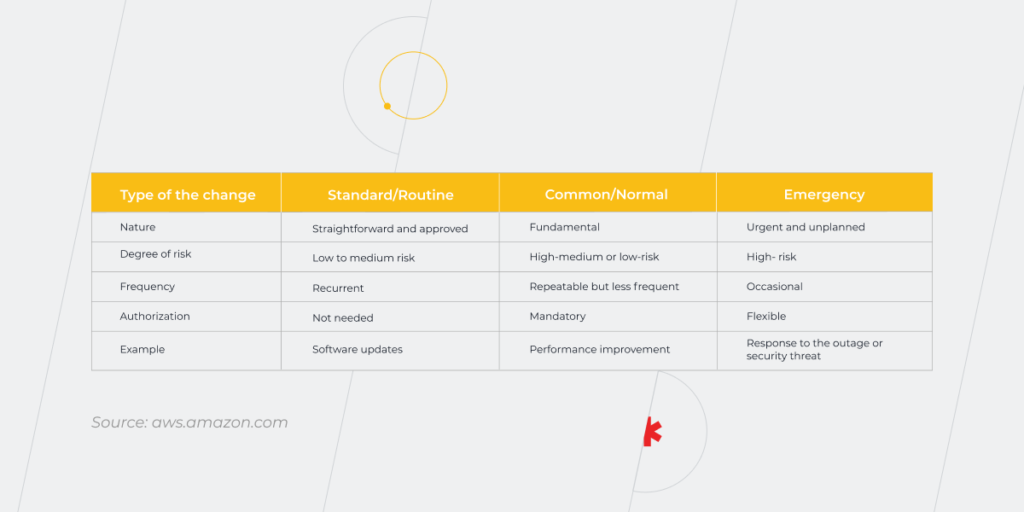
Let’s see how cloud technologies can help you tackle the three types of updates that commonly occur.
Cloud Change Management

Within the traditional change management models, all three groups of modifications require resource-intensive manual input. In this case, the focus is placed on disruption and static plans with updates booked in a specific window. Therefore, business owners lack flexibility and are more susceptible to the human-error factor.

Conversely, common change management models in cloud computing bring more automation and make update roll-outs trouble-free. That said, let’s take a look at how different types of changes are addressed within the two approaches.

Traditional vs cloud change management

Launching continuous and reversible changes is core to driving agility. But do standard management practices pass muster at all nowadays? Let’s see.

Slow vs high speed of change implementation

Introducing any type of an update into a traditional setup can often be unnecessarily slow, process-heavy, and overburdened. Let’s not forget bureaucratic and painstaking planning related to the high risks of traditional change launches. Lengthy, manual approvals can take lots of time to document and include in a ticketing system. Also, changes have to be processed through a slew of committees, levels of management, and mandatory waiting periods. As a result, any type of change depends on the people with little to no awareness of change reasons, its impact, and the cost of delay.

However, it’s different for cloud environments where a built-in selection of automation and deployment software eliminates the need for robust tech infrastructure and related effort to introduce the update. The cloud also allows us to transform common changes into normal changes by removing complexities linked with the planning and implementation of such changes.

This advantage can be better illustrated by the hardware migration that is common in the traditional model. Without cloud capabilities, you have to perform rigorous upfront planning, including necessary investments, setup, and app migration, just to boost your computing resources. Within cloud management, you can step up your resources just by tweaking and executing your code. This way, the complex hardware overhaul is treated as the standard change performed virtually.

Change control vs change enablement

Once an innovation driver, traditional command-and-control practices are now considered a burden for modern DevOps-based philosophy. And, since Agile and DevOps are now the acknowledged benchmarks for cloud development, the control aspect must give way to an enabling mindset. The cloud, on the contrary, resets your perspective to the best practices of change enablement.

In this case, all innovations are effective, safe, and timely, while ensuring compliance and risk management. Cloud-based change enablement minimizes the risk linked with introducing changes by automating them and making them more visible. Less rigid control also means that low-risk models can be fully automated, while high-risk zones will be forwarded for approval.

Manual scaling vs autoscaling

Traffic spikes are one of the reasons why your digital assets may break down due to inefficiently scalable infrastructure. For an existing application, manual scaling is a daunting task that may require upfront planning, code changes, software updates, and a lot of monitoring.

However, scaling your application in the cloud factors in all the minute-by-minute changes in demand and traffic by automatically adjusting the app’s resources to avert performance problems or outages. This means you can scale up, down, and back in a few clicks on demand.

CAB change authorization vs greater autonomy

Traditionally, fundamental and costly changes are submitted to a Change Advisory Board  (CAB). The CAB acts as an advisory committee to help guide the change management process and to ensure the success of the project. This lengthy approval process is typically done in the name of increased quality and added scrutiny.

However, as demonstrated in Accelerate by Nicole Forsgren, external approvals take a toll on deployment frequency and restore time. In contrast, the cloud computing change management process allows for more autonomy by promoting peer reviews. When done in the cloud, all changes lean towards early and automated detection, visibility, and fast feedback. Besides, monitoring dashboards allow for greater autonomy for the teams since higher-level authorities have a holistic overview of regulation compliance, metrics, and others.

Manual risk assessment vs automatic risk management

According to IBM, changes are among the main reasons for service outages. And with more companies migrating to the cloud, the volume and rate of change have gained unprecedented heights. This shift makes manual risk assessment a dicey proposition. Moreover, manual rollback will require some hypothesis testing, which could stretch your outage for hours or days.

Automation, on the contrary, can dramatically minimize the business risk associated with change as most cloud services allow for auto-recovering from failure and instant rollbacks.

As you can see, cloud-based change management makes all the difference by allowing you to introduce all types of updates in an automated and agile-friendly way. Moreover, a record of change also acts as the main troubleshooting reference when dealing with emergency changes.

Now that we’ve compared two change management approaches, let’s see whether cloud migration is worth it for change management.

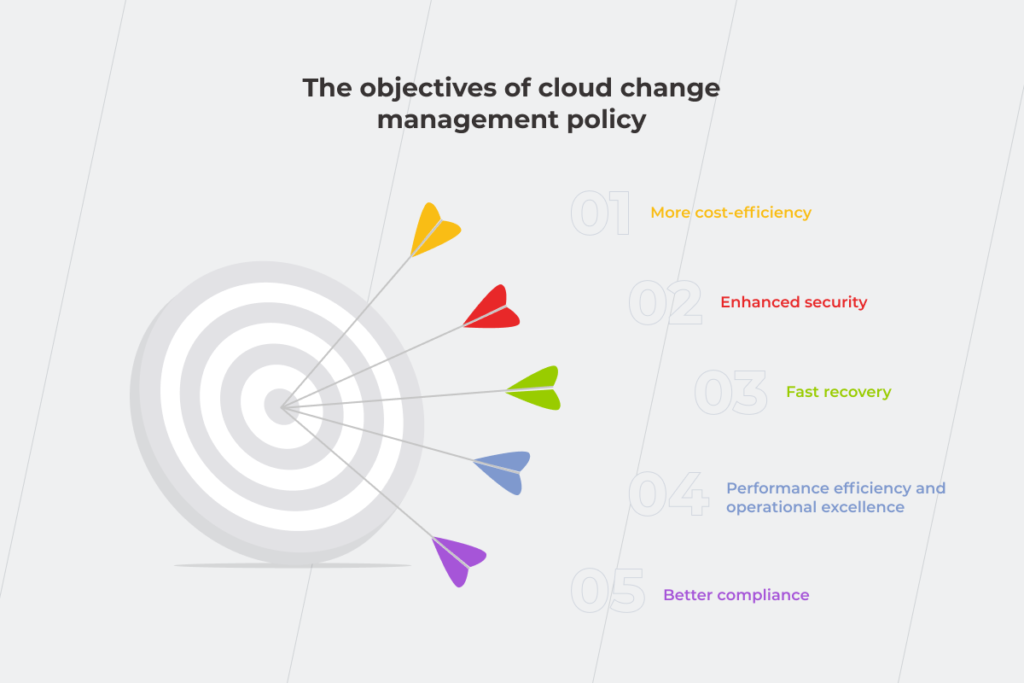
The objectives of cloud change management policy

An overriding goal of the change management process is to ensure all updates leave your critical processes and assets intact as well as meet internal guidelines. Cloud transition can take these expectations to the next level, while also providing added business value.
Cloud Change Management

More cost-efficiency

There are quite a few ways to optimize your cloud bills and reduce the total cost of ownership. You can leverage your cloud resource on a pay-as-you-go model. This computing billing method allows organizations to pay exclusively for the data they use each month (just like the electricity bill). Also, cloud environments help bring down the cost of on-prem infrastructure by taking it to virtual servers.

Enhanced security

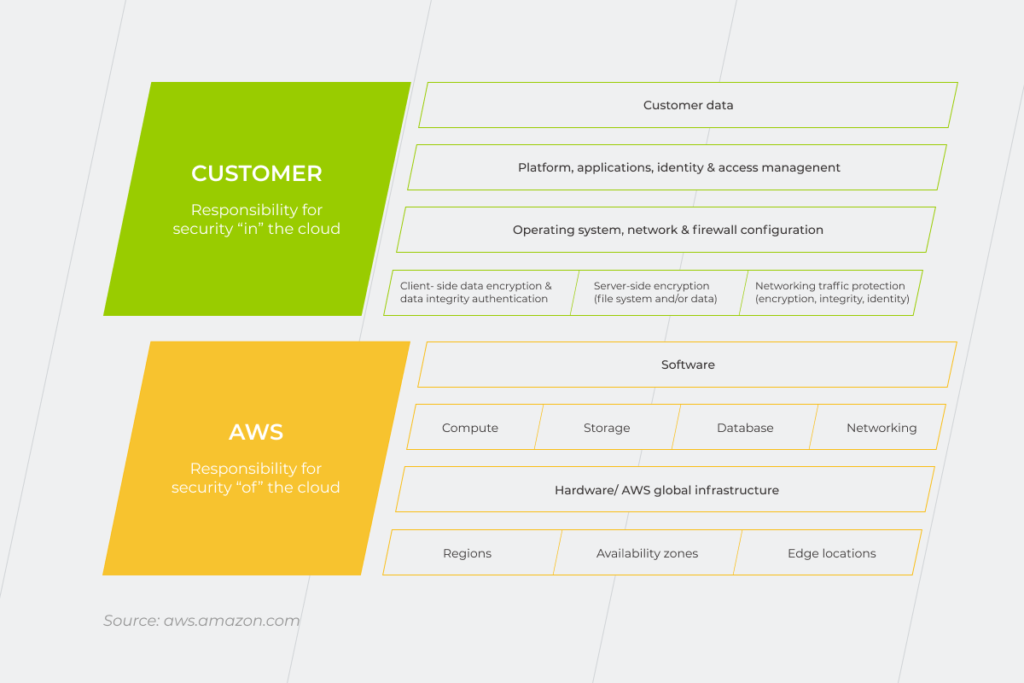
Cloud infrastructure also has a positive impact on data security compared with local data centers. Thanks to a shared responsibility model, your cloud provider takes over infrastructure security, while your in-house team shoulders risks linked with policies, configurations, and data migration.
Cloud Change Management

Fast recovery

Your cloud space can be set up to provide alerts on the changes to the environment (e.g. monthly updates, one-off patches, etc.). More visibility can also be facilitated by keeping all configurations in version control. In both cases, your engineers won’t have to allocate time on tracking havoc-wreaking changes.

Performance efficiency and operational excellence

Although specific cloud efficiency yardsticks will vary by company. There’s one thing that holds true for all cloud infrastructures. And that is the luxury of more flexibility and scalability when it comes to your computing needs. In doing so, you can easily spin up your environment to accommodate increased business needs.

Better compliance

Almost every company now abides by some form of governmental regulation, be it healthcare or finance. Therefore, any update is subject to rigid requirements imposed by HIPAA, PCI-DSS, or others. Cloud change management is inherently compliance-friendly, easing the regulation strain on your organization. Thanks to authentication and access controls, data compliance, encryption, and other cloud practices, you can support industry-specific compliance easier than with on-site change management.

How to do cloud change management at top speed?

Change is a blessing… unless it takes an eternity. The hallmark of cloud change management is automation (and, ultimately, speed). But it takes a bit more to accelerate your automated change regimen. Here’s how you can speed up change management processes in the cloud without sacrificing testing or compliance:

  • Bring more automation for added speed

The more you can automate the validation flow and other tasks in the cloud-powered environment, the more transparency you get. Saving more time. Cloud tools that can handle configuration updates and follow the approval process can be tweaked to accept or reject new configuration changes. Automatic auto-approval of low-risk changes, for example, will minimize the effort and boost change management.

  • Leverage service catalogs to facilitate compliance, promote auto-approvals, and minimize exceptions

Service catalogs will amplify the alignment of your cloud infrastructure with your business requirements. They will allow you to manage your deployed IT services by implementing enterprise standards, introducing new technologies, and imposing default regulatory requirements. This service also provides consistent management and compliance, giving you the ability to quickly deploy only the approved IT services you need.

  • Connect changes back to a user story to prioritize the customer

A user-first mindset is a cornerstone for making the most of your changes. That is why those changes that aren’t fit for auto-approval should be retraced to a user story to assess the value it provides to the end-user. This practice will also help you achieve a complete audit trail, preventing added costs for shutdown resources and similar instances.

  • Have corporate policies in place and secure them with automation

Since some services might not be listed in your catalog, it’s important to ensure integrity and privacy. You can do that by establishing policies that will be set in motion automatically. This means the system can send notifications each time a specific error pattern is entered into the infrastructure (e.g., EC2 instance with no tag).

  • Adopt DevOps practices and tools to amplify change management

DevOps and fluid change management go hand in hand. Therefore, new changes should ideally be introduced through a stable flow of continuous integration and deployment to eliminate friction between team hand-offs. Then, a powerful combo of DevOps-minded teams and cloud automation tools will further bolster automated configuration management, making your change routine faster, more reliable, and enabled. But keep in mind that an ideal set of automation will vary from cloud provider to cloud provider.

On Cloud Nine

Cloud technologies have revolutionized the way businesses deliver services. Change management, in particular, has seen a makeover with the advent of cloud computing. From autoscaling to better enablement, effective cloud change management can eliminate the internal chaos of introducing standard modifications and nurture more agility across departments.

If you’re struggling with your cloud transition, *instinctools experts are ready to help you with change management implementation in the cloud.
OMG, ERP! Implementation Risks & Challenges You Hadn’t Thought About

Enterprise resource planning (ERP) implementation offerings are full of reassuring promises about improving the company’s productivity and efficiency, reducing operating and labor costs, getting a single source of truth for all departments and enhancing the customer experience. Computer Weekly study revealed that 53% of respondents consider ERP implementation one of the prime areas for investments. But ERP is a massive undertaking.  No wonder it’s associated with particular risks and challenges. But why do 55% to 75% of all projects fail to meet their objectives and how to avoid common risks of ERP implementation? Our experts in digital transformation provide you with hands-on guidance on how to minimize these risks and meet the challenges the new system brings. 

Selection challenge in implementing ERP

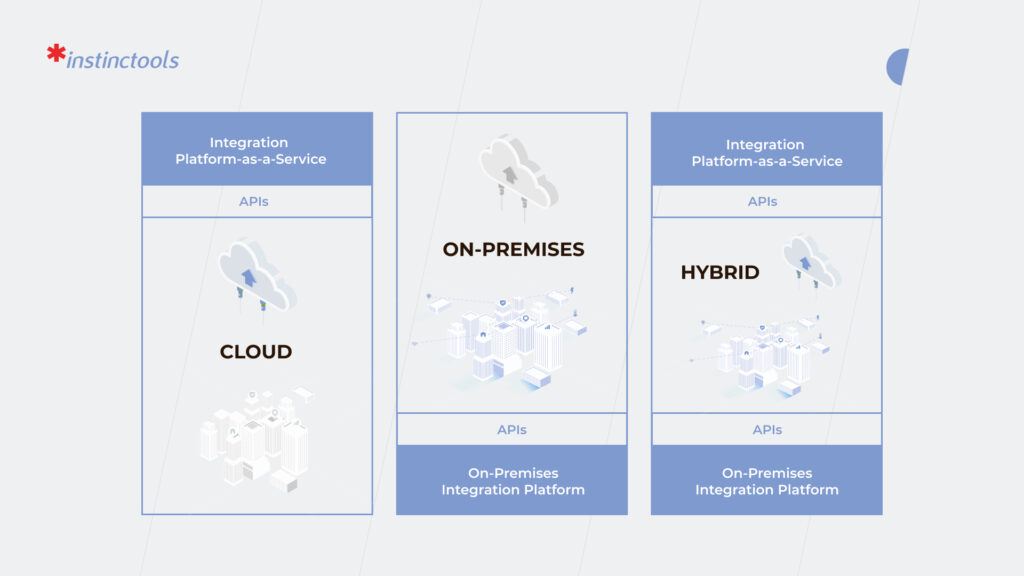
Keep in mind the specificities of your business and which functionalities your organization will need in at least the next couple of years. Being clear about your digital strategy, requirements to the system, and understanding your current and future business goals will help you choose the best fit for the company. You can opt for on-premise, cloud, or hybrid enterprise resource planning solutions depending on your business needs and possibilities. For instance, an organization’s size and its security demands are basic things to consider while choosing an ERP system. 

Cloud ERP

Solutions hosted in the cloud look attractive because you don’t have to spend a lot of money on your software from the start, not to mention that there’s no need for hardware investments. Patching, managing, and updating the software becomes your cloud provider’s business. That’s why the cloud is a good option for organizations that don’t want to freeze resources into servers and prefer a flexible approach in terms of users’ number and software functionality. However, if you decide in favor of a cloud ERP instead of an on-premise one, it still requires a team of experts in ERP consulting services that are aware of all the nuances of your cloud provider and know exactly how to optimize your cloud costs, so that your budget won’t be hit by unexpected costs. 

Thanks to the cloud ERP, your employees can shift their focus from managing IT to more meaningful tasks such as innovation and growth.

A cloud enterprise resource planning system can be secure enough if you choose a reliable cloud provider or a certified cloud partner that will put your cloud solution on the right track.

On-premise ERP

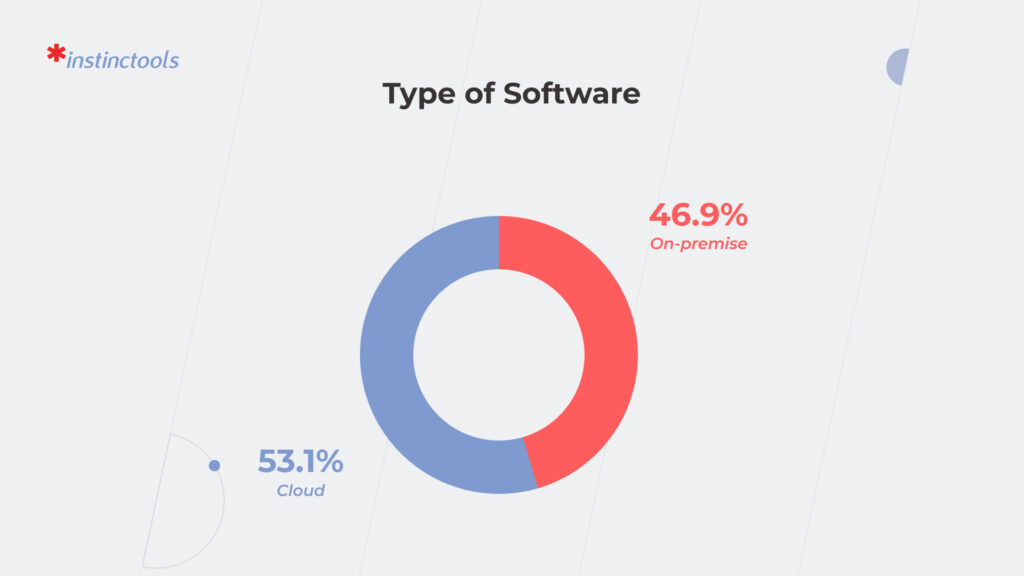
According to the Panorama ERP report, 46.9% of respondents still use on-premise software.

types of software

Companies seek these types of solutions because:

  • Enterprises need the highest level of security. Data-based businesses have very strict security and data storage requirements. They want to ensure only a certain group of employees will have access to the proprietary information. From that standpoint, time and resources spent on installation and maintenance of the on-premise ERP is something you have to put up with anyway.
  • Big organizations want to be confident that the system runs uninterrupted. There are industries, such as healthcare or finances, where information must be available 24/7. In this case, the choice between on-site and cloud solutions gravitates more towards the former option. 

On the one hand, if your software is hosted by a reliable cloud provider, you don’t have to deal with the technical consequences of downtime, system failures, and natural disasters by yourself. Delegating saves you tons of headaches, but on the flip side, if something bad happens in the cloud, all you can do is wait and see. With your own servers, the responsibility is all yours, which is overwhelming but also comforting as you can take action instead of just sitting around. The thing with implementing on-premise ERP is that you should have skilled IT staff to install, manage, and upgrade the system for it to run smoothly. The cost of ownership is also not the last detail that counts. And while on-premise ERPs are more budget-intensive systems than cloud ones, you still have options to choose from. For instance, in the Odoo vs. SAP stand-off, Odoo wins as it doesn’t require a license fee.

Hybrid ERP

The hybrid ERP, which combines the features of both the on-site and cloud software, can be either a destination or a transitional phase while switching between the two solutions. However, the latter option is costly in terms of development and setting up new processes, and it’s possible to get by with an intermediary solution for quite a long time. You can leave the basis as it is and bolster your ERP with some cloud-based integrations, for example, with CRM. It’s more justifiable than trying to modernize an on-premise resource planning with on-premise facilities, which requires additional hardware. Give a hybrid solution a try if your company needs to implement a new business process that can’t be supported by the existing system (you change a product or introduce a new product configuration), but other parts of the process, such as a customer database, remain the same.

Hybrid ERP

Since shifting from an on-premise ERP to the cloud is pricey, it’s important to choose the right technical contractors to ensure all your requirements to the system will be met and its implementation won’t be stretched out endlessly.

Still hesitant about the type of ERP to opt for?

Reach out

Three-headed dragon of ERP: implementation risks

Enterprise resource planning solutions can be deployed on-premise, in the cloud, or by uniting both options, but the risks they face during the implementation are, for the most part, the same for all the system types. These risks can be broken into three groups, namely: organizational, business-related, and technological ones. Let’s dig deeper into each of them. 

Organizational risks

Changing the company’s mindset is always the hardest part of any transformation. Processes and technologies follow people’s changes, not the other way around. You can build perfect technological solutions but if rejected by your employees, they will lead your company nowhere.

  • Unclear goals and unrealistic expectations

Enterprise resource planning isn’t a cure-all. Custom ERP 100% adjusted to your business needs can’t replace basic business logic. If you don’t have a clear idea about the exact business value and outcomes of a new system for your business, it won’t work out.
You’re likely to make quite a number of ERP implementation mistakes if your goals of the system’s adoption or modernization are unsettled. For instance, you risk choosing the wrong vendor or implementation partner or going with an inappropriate implementation approach. 

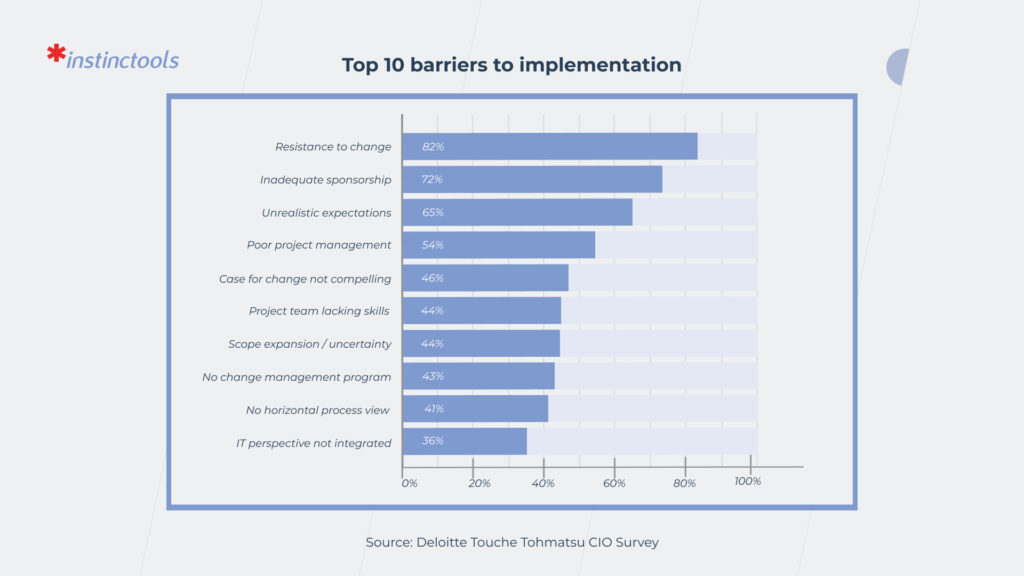
ERP implementation barriers

Lack of change management 

There is another serious organizational risk of ERP implementation, related to the employees’ desires, or, rather, reluctance, to absorb the associated changes. Naturally, staff would prefer to stay with the habitual system — people don’t understand why to replace or improve something that’s not broken. 

Thus, except for aligning project goals with the organization’s global business strategy and reviewing them through the implementation process, decision-makers have to explain the value of a system implementation or modernization to the employees. 

To persuade your staff that the new or modernized system will simplify their day-to-day tasks:

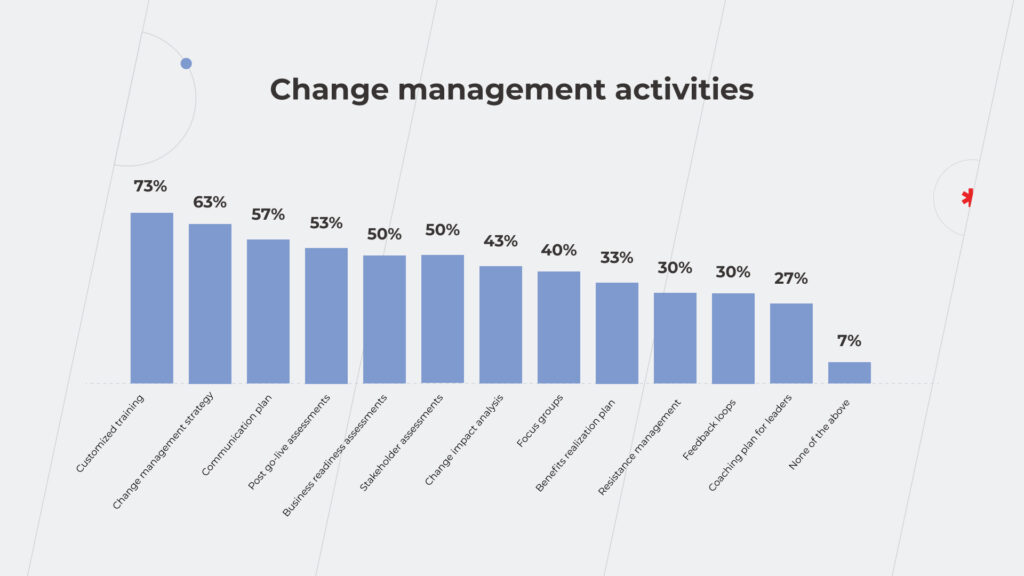
  • Inform your employees about the novelties and milestones as the project progresses and establish reliable feedback channels. By doing this, you’ll be able to turn the opponents of an ERP project into its strongest advocates. 
  • Give your employees a chance to test the system before the final implementation. Let them get used to the system and understand that switching to a new solution is not as inconvenient as it might initially seem. This approach can also help you uncover ERP implementation mistakes at the early stages.
  • Organize reskilling and role-based training on both systems and processes. That way, you’ll ensure end users can work effectively in the new environment and sustain the implemented changes.
ERP implementation risks

These risks of ERP implementation arise from organizational misunderstandings and lead to costly business consequences. Note them down so that you won’t repeat the story of the National Grid, a utility company that got into huge trouble when 15,000 invoices couldn’t be processed and financial reporting was so bad that the company couldn’t get short-term loans necessary for its cash flow.

  • Misleading cost analysis 

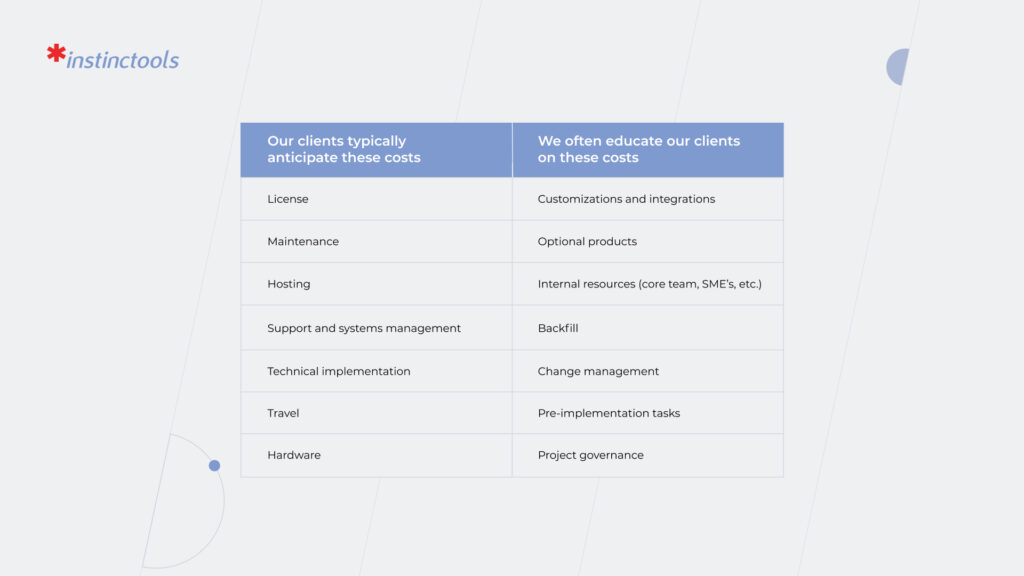
The total cost of ownership (TCO) isn’t equal to the purchase price of a system. Conduct a thorough TCO analysis in advance not to be appalled by overall expenditure. Don’t disregard: 

  • Testing. Putting untested software into production and, then, fixing issues in the already implemented system is more expensive than testing it throughout the entire software development lifecycle and handling problems as they arise. 
  • Employees’ training. The probability that your staff will accept the new system with ease on the first day of ERP implementation is close to zero. That’s why you shouldn’t skimp on your training budget.
  • ERP customization. The more you adjust an out-of-the-box system to your business needs, the more it costs in terms of maintenance and support. Panorama indicates that only 62% of organizations have completed their ERP implementation projects on or under budget. The others experienced overruns of 66% on average.
ERP
  • Over-customization 

Over-customization is a common risk of ERP implementation both for enterprises and mid-size organizations. It can seriously postpone the system’s go-live date and increase its maintenance costs. 

Customization is great as long as it focuses only on areas that are crucial for your business success and doesn’t contribute to the undue complexity of your system. For a manufacturer, such an area might be inventory management that allows tracking raw materials necessary for further work: which do you have on the shelf, how quickly can they be delivered to the manufacturer, and how long does it take to request a new material supply? 

  • Violations of regulatory compliance 

Your data may turn out to be inconsistent with regulatory compliance. For example, some regulations can prohibit storing data about your customers’ gender. In that case, you’ll lose some marketing opportunities, such as the possibility to send targeted letters to your customers.

You’ll have to improve the system at a significant cost if it doesn’t align with all the required laws and obligations at the early stages of the ERP implementation as it happened with Woolworths. The company hadn’t been properly documenting its data for six years, and consequently, had no opportunity to verify whether the data complied with the regulations. What started as a promising $200 million ERP implementation ended a few years later as a tremendous failure that cost the company more than $766 million due to non-compliance with laws and regulations, and other business-related and technological issues. 

Technological risks

Along with operational and business-related risks of ERP implementation, you should pay attention to the technical part of the project. Don’t forget to properly organize the data migration process, set aside enough time for system’s testing, take care of security, and make sure you have experts to maintain the new solution.

  • Data migration issues

Data migration is one of the key things to consider during the ERP implementation process. The problem with it often occurs when the data stored in the source system is represented by both structured and unstructured information. If you transfer unstructured data from the source documents, this information will require additional processing and verification for accuracy and authenticity before being exported to an ERP software. And the more operations you have to perform, the higher the system’s maintenance cost is.

Sometimes the information can’t be transferred to the new ERP in the same format as it doesn’t fit into any category. In that case, the risk of data loss increases. To mitigate it, you should think ahead about the data categories you’ll need for the new system and the data categories you actually have. That’s why working with an experienced partner in enterprise software development is crucial for businesses that haven’t previously encountered the building or modernization of ERP systems.

Another factor that undermines data quality is duplicated data from multiple sources, which is a serious productivity killer and the reason for potential inaccurate reports and wrong business decisions. If you’ve been using different CRMs for company-wide tasks and for the sales department and haven’t sorted out this issue before ERP implementation, the information on your customers can be transferred to the new system twice, badly affecting the accuracy of sales and marketing analysis. 

  • Lack of testing on the pre-production stage

Testing helps keep a finger on the pulse of the system’s workflow and technicalities to leave no room for a mishap and ensure the system is set in line with your company’s needs. Good testing happens when the QA engineer delves deep into your business processes and comes up with relevant tests. For an organization that sells goods, the testing team can check what the system does if a customer takes the product back or how it reacts if a purchase is returned to storage A instead of storage B, etc.

  • Poor security control

The major point about the security challenges in implementing ERP is that segregation of duties should lie at the heart of user access. Such an approach decreases the probability of data breaches because of employees’ ignorance and, as a result, the need for a costly system redesign. Furthermore, establishing strong authentication rules as weak authentication can cause open network shares and, thus, data leakage that might cost you a fortune in terms of money and reputation loss. 

  • Lack of skills 

Just as people become the primary concern when it comes to ERP implementation, they are also the cornerstone regarding the development process. If you are not sure about the technical mastery of your in-house tech team, then it’s worth reaching out to an experienced ERP software company. Working with business analysts and developers who have strong expertise in similar projects will spare you the risk of wasting the time figuring out the nuts and bolts of the system. Also, consider the level of employee turnover in the vendor’s company. The more people are replaced, the more expertise goes away. That’s why at least key team members should stay to guide the others through the challenges in implementing ERP. Even if a new specialist has the same level of expertise as the former team member, it takes time to sort out why the system works the way it does. 

ERP implementation mistakes to avoid from our *instinctools’ expert

The desire to complete the transformation quickly is understandable — organizations want to benefit from the new solution faster. But rush causes shortsightedness which, in its turn, leads to three common mistakes in ERP implementation:

  • Decision-makers are unable to prove the value of change to the staff. It’s always a business idea that drives ERP implementation. But if there’s no agreement between C-suites and other employees, you run the risk of getting a solution that won’t be viable. That’s why discussing the future ERP with the stakeholders throughout all the departments is paramount to succeed in this transformation. 
  • Desire to roll out the system straight into production. Before the ERP is launched, your employees should have the opportunity to get acquainted with the system and to give feedback about it. Is it convenient? Can some parts of it be designed in another way? Using the collective brain power of your team can save you time and money in the future. 
  • System’s inability to scale and change. Your business processes as well as the input data can change and so should your system. It will be more problematic and expensive to rebuild it in the pre-production stage if you don’t make the provision for changes at the beginning of the project. 

Top 3 questions for an ERP consultant

To minimize the number of ERP implementation challenges, ask your vendor the following questions:

  • Can the source code be provided and is it included in the price of ERP development? By having the system’s full source code, you’ll be free from dependency on the vendor that initially provided you with the software. 
  • What programming language is the ERP system written in? There might be two issues here: the first one is an outdated language that is no longer supported by the language developer or ERP system itself. Another problem is a language developed exclusively for the ERP system, so it’s difficult to find an alternative programmer, and chances are that the developed solution won’t be compatible with your software. 
  • How is the technical support organized? Choosing custom ERP development, you have the possibility to keep in touch with the project team as part of maintenance and support services even after the system implementation. Meanwhile, with a ready-made solution, you risk going through the circles of hell being kicked from one operator to another and explaining the essence of the problem multiple times to the people who have nothing to do with the ERP development. 

Start with the people and processes, then get to the  technical part, not the other way around

To get through all the challenges in implementing ERP and reap the benefits the system offers, first handle the issues around your employees’ awareness about the ERP implementation to ensure everyone within the company is on the same page. Then deal with the technical stuff such as security measures, data migration, quality issues, and so on.

If all this seems like too much to have on your plate, *instinctools experts are ready to take it from there — drop us a line.

FAQ

What could be the barriers to ERP implementation?

Challenges in implementing ERP refer to the three types of barriers: organizational, business-related, and technological. Without considering the ERP risks of all three types you won’t succeed in implementing enterprise resource planning. People-related issues are considered to be the most difficult to overcome, so fix them first and then move on to technological challenges.

What is the biggest challenge with ERP systems?

Selecting an ERP type suitable for your business is one of the serious challenges in implementing ERP. There are on-premise, cloud, and hybrid solutions. You should choose an option depending on your organization’s internal processes and the answers to the following questions: How important is data security to you? Can you manage your own server center? Do you have to build a totally new system or is the modernization of the old one enough?

When Data Fails To Tell a Story: Data Visualization Mistakes

A chart should clarify, not confuse. Yet data visualization errors slip into dashboards and reports more often than most teams realize, quietly steering decisions off course. You’ve seen examples of bad data visualization firsthand: truncated axes that dramatize trivial changes, pie charts with too many slices, or color choices obscuring the very patterns they should reveal.

Most of these blunders are preventable, and our data experts are here to share practice-proven tips on how to avoid common pitfalls of data visualization.

Key highlights

  • Real-world data visualization mistakes examples range from the ​​wrong chart type to overloaded graphs to deceptive color schemes and other subtler flaws that are easier to miss but just as damaging.
  • GenAI can produce charts fast, but without a human in the loop it only adds to data visualization errors.
  • Misleading visualizations quietly erode stakeholder trust and undermine informed decision-making across the organization.

What is bad data visualization?

In short, poor data visualization is any graphic that violates core visualization principles, turning data into noise instead of insight.

  • Unclear. Overcrowded visual elements without clear labels make the chart hard to read at a glance.
  • Inaccurate or deceptive. Manipulated scales or omitted context mislead viewers and produce invalid conclusions.
  • Inconsistent. Shifting baselines or clashing color schemes undermine comparison across data points.
  • Overloaded. Trying to cram too much information into a single visualization, overwhelming viewers instead of guiding them to key insights.

What price does your business pay for bad data visualizations?

The thing with bad graphical representation of data is that you can’t say it’s bad until you fail to get anywhere using it. Such a situation is risky: with all these pie charts scattered all over your reports and tons of descriptive text, you may have an illusion that you’ve successfully handled the ever-growing amount of data, whereas, in reality, this data fails to tell the story. Whether you rely on Power BI dashboards or simple spreadsheet charts, the consequences of bad data visualization impact your business routine and decision-making processes in several ways. 

Can’t tell a clear story with your data 

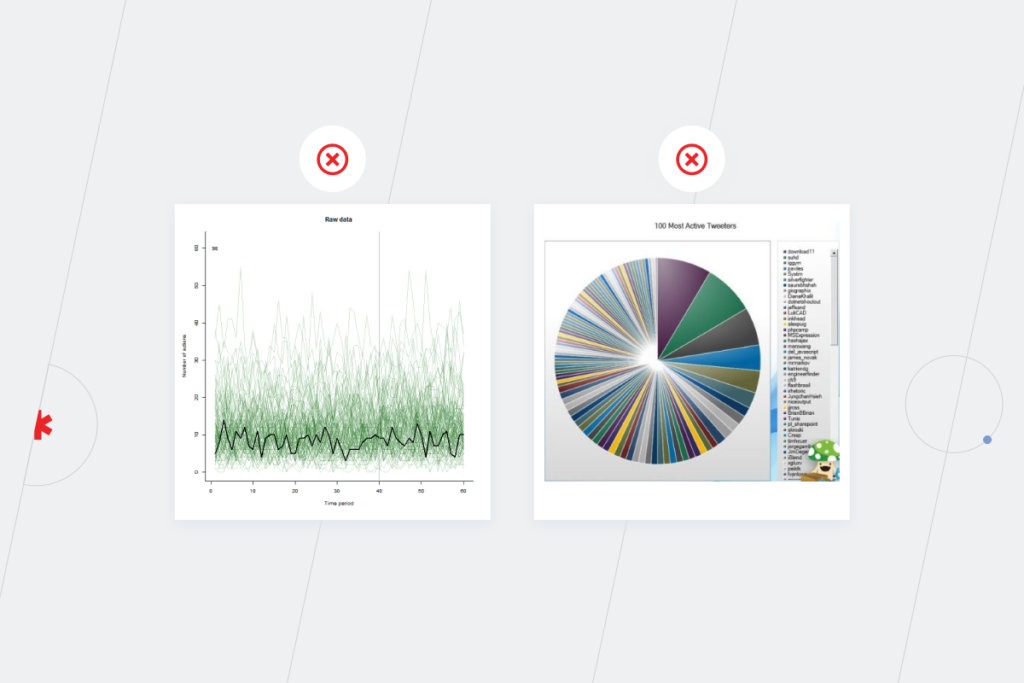
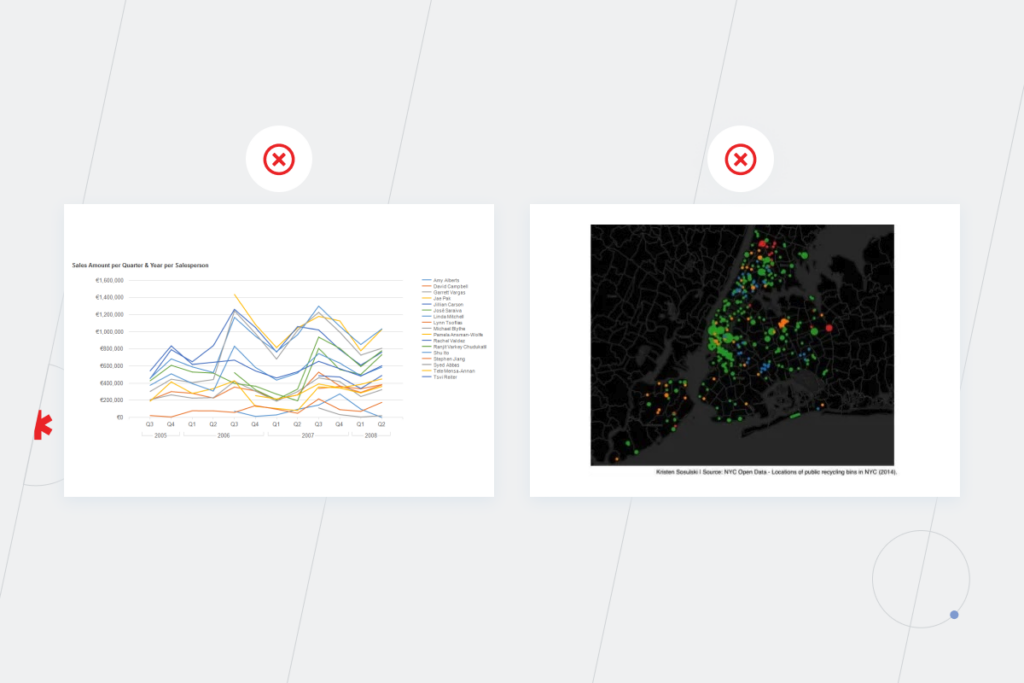
Imagine you’re in a sales meeting, expecting a clear visualization showing revenue across your company’s top five markets so you can decide where to invest. But you get a line chart with all the markets where your company is present instead. It’s virtually impossible to compare data at a glance and quickly get high-level insights when you see 20+ lines. A single chart trying to show everything at once buries the key message instead of revealing it.

You may say that at least some kind of visualization is better than no visualization at all. Not really. Unclear visualization doesn’t carry out its functions, so you still have to dive into the spreadsheets to connect important data points and make sense of your raw data. 

Get invalid insights that lead to wrong decisions

Say you’ve tested several new markets and one region’s profits jumped significantly. Does that make it the best pick? Not necessarily. What about advertising costs there — were they the highest too? Did they pay off? Without factoring in ROI, you’re flying blind. How many customers came through ads versus other channels? If your chart shows revenue but ignores advertising costs, the picture is lopsided. You might pour a huge budget into a region that only looks profitable on the surface, while a cheaper market with better returns gets overlooked.

Still, there’re times when a couple of graphs aren’t enough to get a good grasp of a situation. To make a well-informed decision, you might need as much as a custom dashboard to seamlessly track multiple data metrics in one place and understand trendsover time.  

— Andrei Haurylau, UI/UX Designer, Instinctools

Fail to uncover hidden correlations between different data sets 

Weaknesses to improve, anomalies to correct, unobvious interrelationships won’t be revealed with bad visualizations. For organizations, this means the loss of potential revenue and the inability to change the perspective to see new possibilities for development and growth. With misleading data, you won’t be able to define the room for improvement and notice probable pitfalls. For example, you might overlook ineffective marketing campaigns and keep spending your budget on them. Experienced data analysts know that surfacing these hidden patterns in complex data is one of the core reasons visualization exists in the first place.

Check our list of common misleading data visualization examples that our data visualization specialists have prepared if your relationship with translating data into images is kind of “continually-trying-to-figure-things-out.”

8 examples of common mistakes in data visualization, fixed 

It’s unlikely that you’ll make flawless decisions 100% of the time unless you are The Sorting Hat from “Harry Potter”. But it’s possible to minimize the risk of your data being misleading. Below are the worst data visualizations patterns we see again and again, along with practical fixes.

1. Choosing the wrong visualization method 

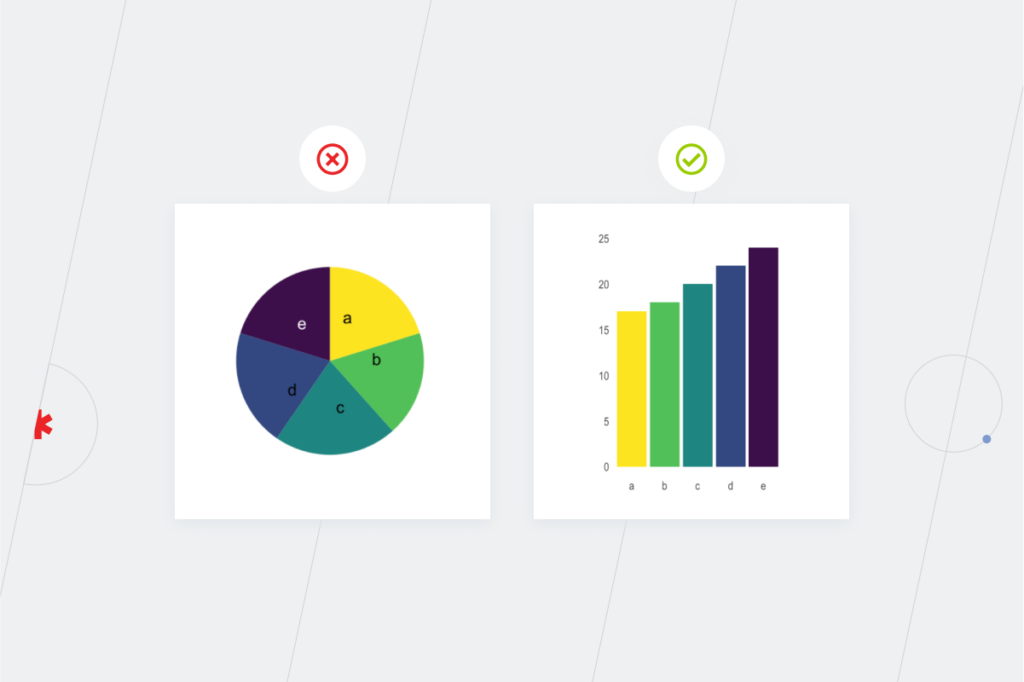
There are two tricky moments here. We’ll show them using pie charts as an example:

  • Viewers can’t see the difference between slice sizes and, thus, compare them. When the numbers don’t vary much, it’s better to visualize them in a bar chart.
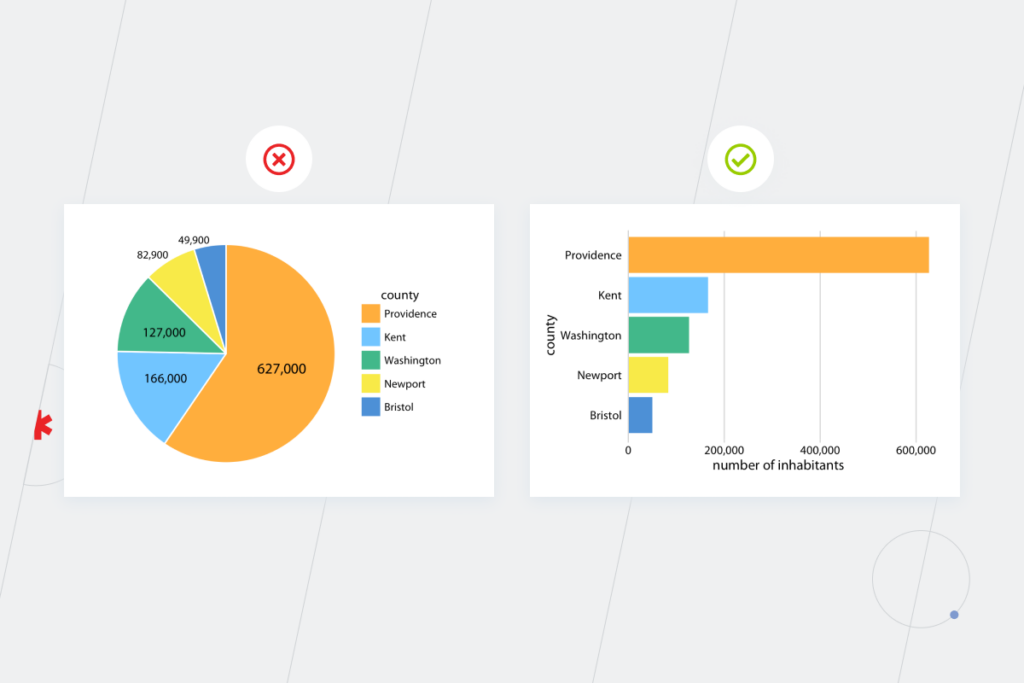
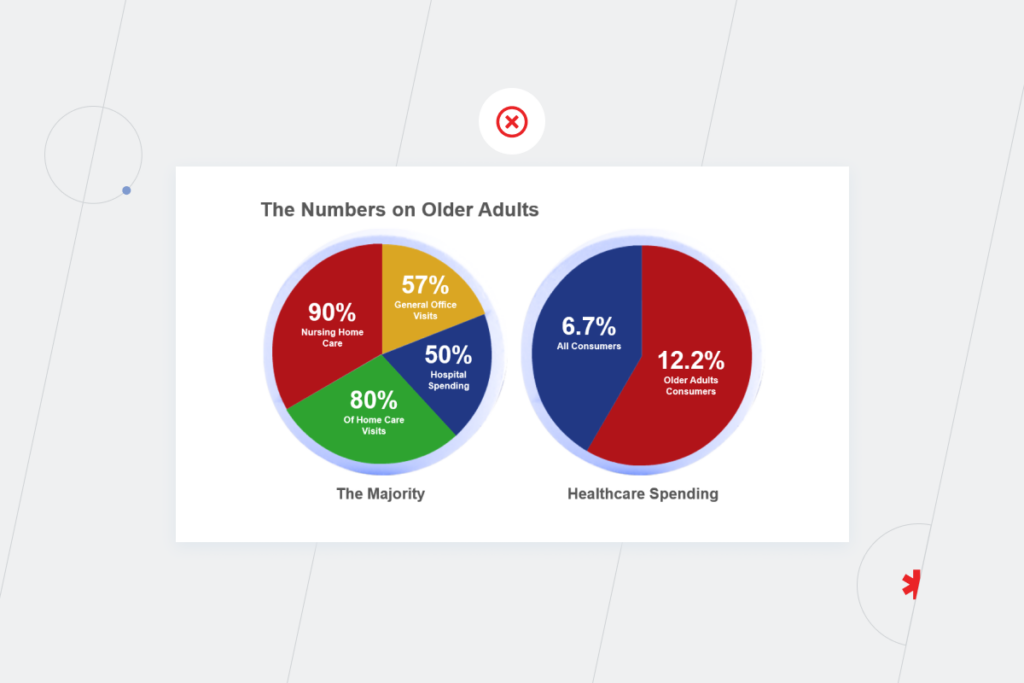
  • Viewers can’t get the real dependencies between the objects of correlation. Pie charts are usually used for the comparison of the different parts of a whole. They are suitable for survey results or budget breakdowns (the same pie). But if you use them to compare separate datasets (different pies), you get a bad chart, and data becomes misleading. 

For instance, a pie chart isn’t a bright idea for comparing the number of inhabitants in different areas. It’s better to use a bar plot because human perception primarily judges distances and not areas.

The rule of thumb is to choose a visualization technique according to the data’s nature: quantitative data requires charts or histograms, while qualitative information is better presented in pie charts or bar graphs. And make sure the sectors add up to 100% because otherwise viewers will get a math stroke from your visualization.

— Andrei Haurylau, Lead UI/UX Designer, Instinctools

2. Overloading viewers with data

The human brain processes images 6x-600x faster than words. Given the fact that during the next three years, the amount of human-made information is going to triple, the role of a good visualization is only becoming more important. Presenting data in graphics and charts allows us to process huge amounts of information, understand it better, and get insights faster. 

But the processing capacity of our conscious mind is still only 10 bits per second. “And what does it have to do with bad graphs?” you may ask. Such a limit for data traffic means that we can’t properly concentrate on the highly-detailed visualizations for a long time. In the case of charts, if there are too many variables, choose 5-6 more essential ones. Graph views with more than 15 items distract attention and may be as frightening as an Excel table with dozens of rows.

3. Selecting unconventional colors

This mistake comes in three forms.

  • Absolute vs. relative coloring 

The function of color is to add extra meaning or dimension. Going for absolute colors, you may miss meaningful nuances. 

In US presidential elections, maps use red for states won by Republicans and blue for states won by Democrats. Such an approach results in maps like the one on the left. It gives an impression of an unquestionable victory of the Republicans, ignoring the fact that in one state people voted for representatives of both parties. 

Relative coloring allows the viewers to see a more detailed picture. Looking at the map on the right you can see the proportion of the counties that voted for the Republicans or Democrats against the total number of votes in each county. That way, the situation no longer seems so straightforward.

  • Unusual colors 

Green commonly means something positive, while red is used for negative cases. So if you use them in the reverse way, it may become an example of misleading data visualization. 

Check out these two flood hazard maps. The one on the left uses a green palette to show risk zones along a river. At a glance, the area looks harmless since green reads as “safe.” The map on the right shows the same data in shades of blue. The danger zones register immediately, and the darker the shade, the higher the risk.

Map charts usually leverage different shades of one color family: the lighter the shade, the smaller the number, and vice-versa. A solution with different colors instead may confuse the viewers. And take into consideration the chance that viewers may be colorblind, so don’t use misleading colors.

— Andrei Haurylau, Lead UI/UX Designer, Instinctools

  • Invisible color on a white/black background. Don’t choose yellow for crucial metrics in a line graph, as it’s easy to miss them on a white screen. The same is true for the picture on the right, where you can’t properly see the borders of the black area on the gray background.

4. Using uncertain scales

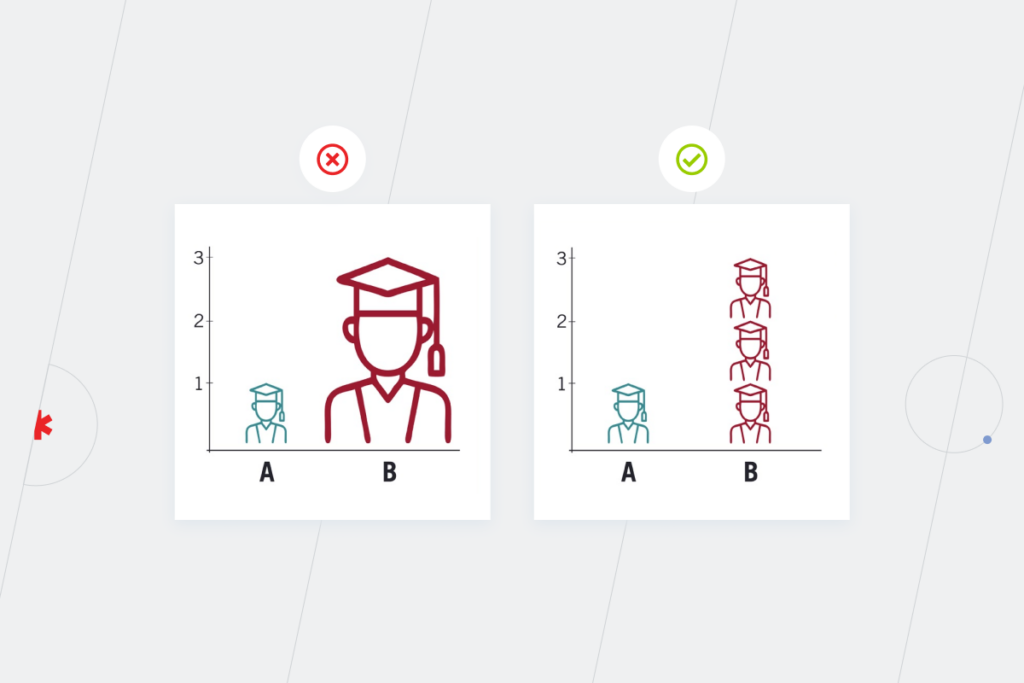
It’s challenging to compare figures with different scales straight away. Inconsistent scale can mislead and confuse viewers. For instance, the visualization on the left is an example of a bad graph because with it, you aren’t able to assess the scope, it’s not immediately obvious that one figure is four times bigger than another. You should look at the Y-axis and count, whereas good visualization should exempt you from unnecessary calculations.

5. Omitting data

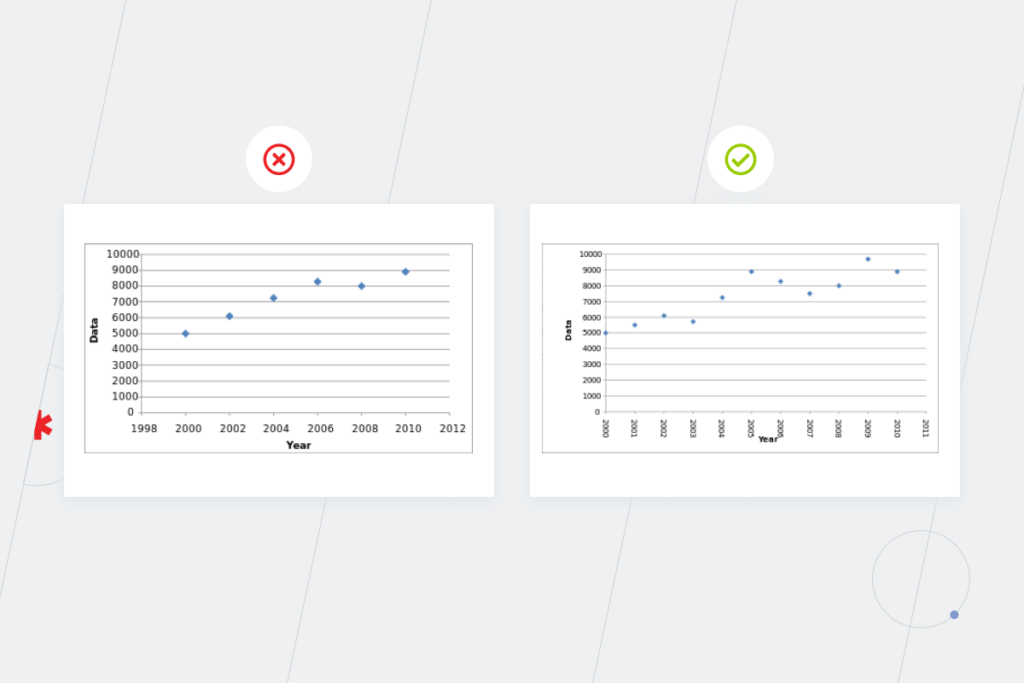
Excluding some information, you miss the context. Such an attitude can affect data interpretation. Look at these two graphs: in one case, information is tracked every second year, in another, each year. The left scatter plot is a perfect example of a bad graph because it gives the impression of stable growth, while in reality there’re dips and spikes.

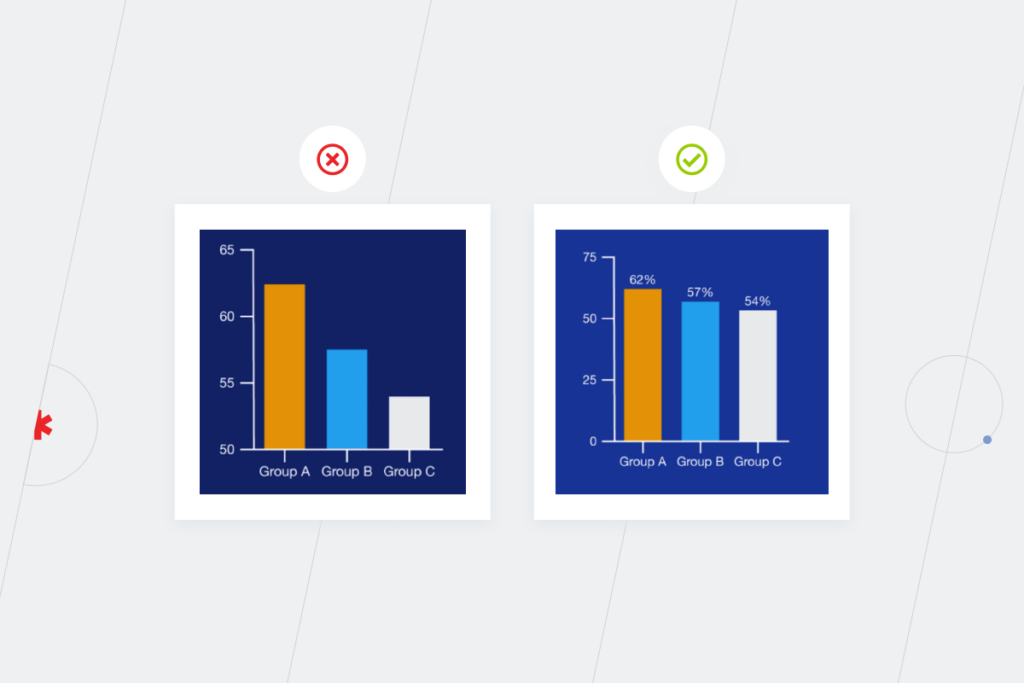
6. Truncating Y-axis

This type of misleading data visualization occurs when the Y-axis doesn’t start from 0. The result of the scale compression is an increasing difference between bars. That way, small variations may look paramount. 

7. Operating 3D graphics in an improper way

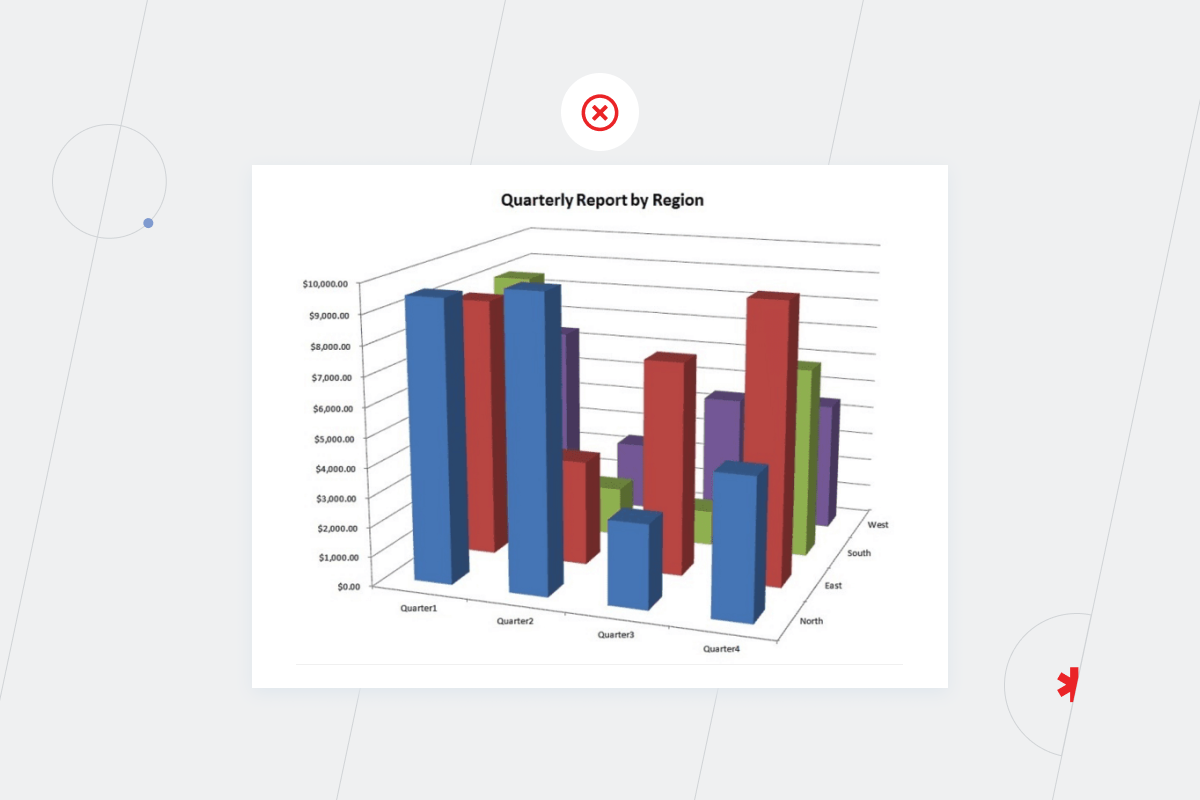
3D data visualizations are entertaining and fascinating but the creating them might not be worth the effort. It’s nearly impossible to follow the height of each bar to the correct Y-value on a multidimensional bar chart below. Moreover, you can’t see the values of the bars hidden behind more prominent columns. If these indicators aren’t necessary, exclude them from the data visualization. If they are crucial, use a simple bar chart instead of a 3D one. 

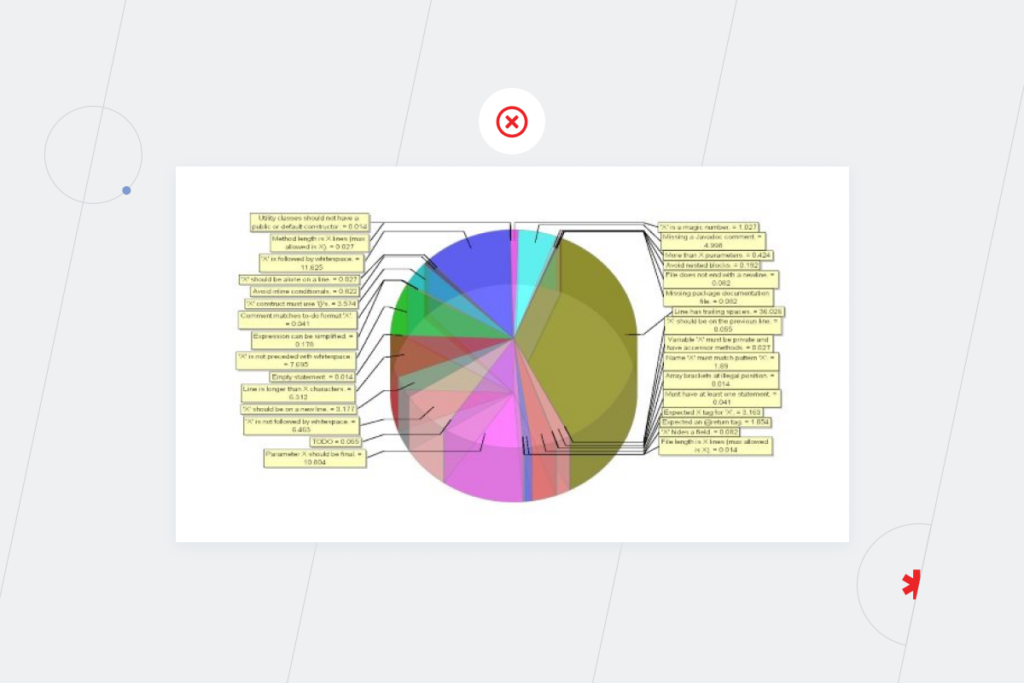
3D donut charts and pie charts are also more like “hmm” than “hooray” solutions for data visualization. Here is an example of a useless pie chart in 3D. Tilting the pie distorts the image of transparent slices. You can’t define the borders of slices and see how each slice relates to the others and the whole. Additionally, you can’t read labels and figure out which one goes with which slice. 

Honestly, if Bear Grylls hosted “Running Wild” in the business analytics world, transcribing this pie chart would be in one of the episodes. But you can benefit from the assistance of seasoned BI experts to beat misleading data visualization and create charts that matter. 

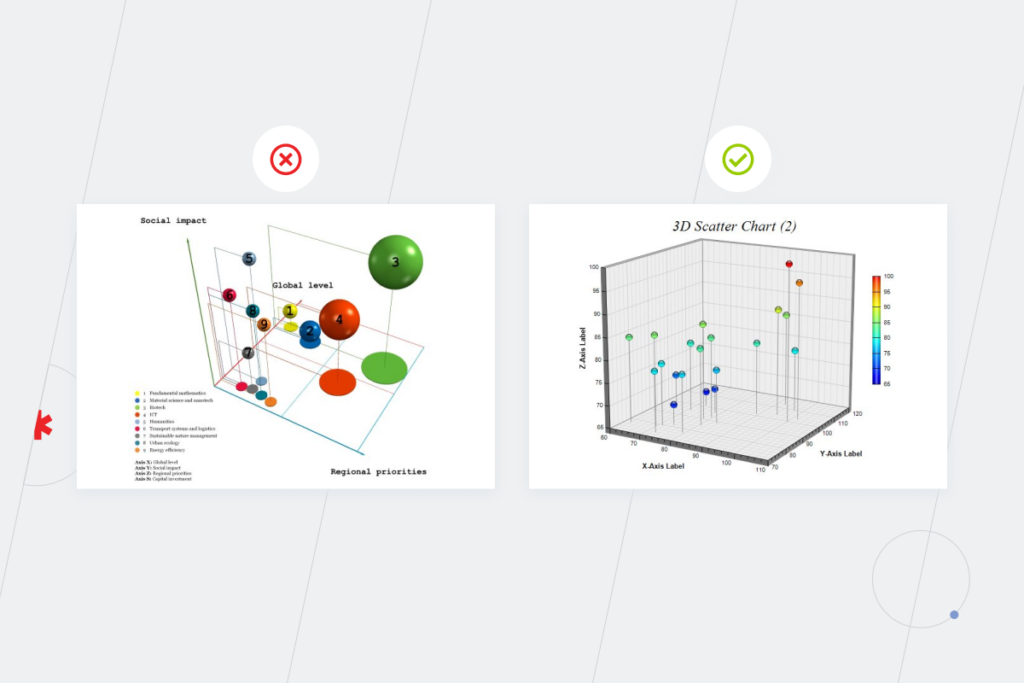
Three-dimensional graphics are rare in visualization since not everyone can easily think in volumes. Such graphs appear mainly in finance, where bubble charts show correlations between funds, stocks, or a stock and the broader market. Financial data often involves more than two data series, calling for a third axis to display additional information.

Since the task is more complex, be especially aware of common data visualization mistakes. Otherwise, you risk ending up with an unreadable bubble chart where it’s difficult to understand if a sphere is larger according to the S-axis or if it seems more prominent because it is closer to the viewers on the Z-axis.

8. Generating visualizations with AI and no human oversight  

GenAI’s ability to produce charts in seconds comes with a caveat – low reproducibility, as taming LLM’s probabilistic nature remains one of the top AI adoption challenges. Even identical prompts can yield different colors, label placements, odd cropping, etc., making it tough to standardize visuals across reports and dashboards. 

A human-in-the-loop approach is essential to engineer the right context for the model, craft precise prompts to keep outputs consistent, and review every final chart before it reaches stakeholders. 

— Pavel Klapatsiuk, AI Lead Engineer, Instinctools

Data visualization best practices checklist

Before publishing any chart or dashboard, run through these questions. They map directly to the mistakes we’ve described and will help you catch problems before your audience does.

  • Does the visualization use the right chart type for the data’s nature (for example, bar chart for comparisons, line chart to understand trends)?
  • Is the chart focused on one key message, or is it trying to show too many things at once?
  • Are the axes consistent, clearly labeled, and starting from an appropriate baseline?
  • Do the colors follow conventional meaning (for example, red for negative, green for positive) with enough color contrast for accessibility?
  • Have you included all relevant time periods and data points without omitting context?
  • Is the visualization free of unnecessary 3D effects that could distort perception?
  • Can a viewer grasp the main takeaway within a few seconds, without diving back into raw data?
  • Does every element on the chart serve a purpose, or can you remove anything without losing meaning?
  • If the chart was generated by AI, has someone reviewed it for reproducibility and visual consistency with your other dashboards?

Fix your charts before they break your decision making

Being aware of widespread mistakes can’t level up your business decision-making power all by itself. But just as good visualization accelerates your organization’s growth, poor charts can quietly derail it. Bad graphs aren’t the kind of failure you learn from; they simply lead to wrong decisions you never see coming. If your calls keep missing the mark, check whether you’re using the right techniques for presenting your data. 

With the right data visualized the right way, you can digest large volumes of data fast, track changes in real time, and gain a fresh perspective on growing your business.

Have difficulties with getting actionable insights from your data?

Drop us a line

FAQ

Which factors can result in a poor data visualization?

Bad data visualization is usually a consequence of avoidable design choices, such as wrong chart types, cluttered layouts, misleading axes, weak labeling, and colors that hide or distort the pattern the chart is supposed to reveal. Among less obvious issues teams tend to overlook is poor data quality due to the lack of attention to data preparation. In other words, what shows up on the dashboard might only be the visible edge of a deeper data problem.

How can data visualization be misleading?

Whether data gives incorrect insights or is just hard to understand, it results in poor business decisions that affect your company’s revenue. Visualizations are bad if they don’t tell a clear story and don’t give the opportunity to uncover unobvious patterns between data sets.

What is the most common data visualization mistake?

Choosing the wrong chart type is one of the most common mistakes to avoid in data visualization. Pie charts used for comparisons across separate datasets, line charts packed with 20+ variables, 3D effects that obscure values are the bad chart examples teams run into most often.

Are misleading charts always unethical?

Not necessarily. Most examples of misleading data visualization stem from inexperience rather than intent. Someone picks a green palette for negative-coded data or skips a few years on the X-axis without realizing the impression it creates. This results in flawed decisions and eroded trust.

Why are truncated axes so problematic?

When the Y-axis doesn’t start at zero, small differences between bars look enormous. A 2% variance can appear as a dramatic gap, leading viewers to misread the scale of change. It’s a classic entry in any list of misleading graph examples. If truncation is genuinely needed for detail, call it out with a clear axis break so viewers aren’t deceived.

How can I tell if a chart is misleading?

Start with the basics: check the axis scales, look for omitted time periods, and see if colors follow conventional meanings. If the chart feels dramatic or too clean, dig into the underlying numbers. The common mistakes to avoid in data visualization, like overloaded visuals, inconsistent scales, and missing context, are also the quickest red flags to scan for.

It’s Never Too Late Until It Is: Making Most of Cloud Computing Performance Testing

Cloud computing delivers significant benefits to its users. It enables the scalability, speed, and agility crucial for delivering exceptional digital experiences. However, does this mean that you can gain all these advantages by simply moving to the cloud? No. Your cloud provider simplifies many details, of course. However, to leverage cloud possibilities to their fullest and not to be caught off guard by unanticipated challenges, you shouldn’t overlook a critical component: performance testing of cloud-based applications.

What happens if you don’t test your cloud performance?

What’s the worst that can happen if your cloud performance is not tested in an appropriate way? It depends, but the options are not promising at all. No more than six hours was enough for Facebook to lose about $65 million and taint its reputation — the company’s family of apps, including WhatsApp, Messenger, and Instagram, were unavailable all over the world. The problems that Facebook faced, no pun intended, or maybe, just a little, refer not only to social media giants. Even if your company is not that big and the downtime costs are not that tremendous, losing money and business opportunities is still frustrating and disappointing. 

So, by escaping the testing stage, you jeopardize your business in three ways: operational, financial, and reputational. 

1. Resources need careful monitoring; otherwise, you miss the chance to scale them appropriately to reduce costs

Without regular testing, you won’t be able to prove that your system is reliable and scalable. If you don’t find the bottlenecks in time, you won’t be able to make the right decision to evaluate and change your disaster recovery plan. And this is fundamental for minimizing downtime and the impact on the end-users of the app. 

Using cloud providers such as AWS, Google Cloud, Microsoft Azure, OVHcloud, etc. without understanding the limits of your application might be too costly due to the possibly unnecessary power. Knowing your systems’ “turning points” helps to understand the real capacity needed and, thus, choose an appropriate server. Without performance testing, you won’t find the infrastructure’s limitations, and, in the case of issues, you will most likely have to request a more powerful server from the hosting provider to boost the capacity. But it’s about paying extra money. 

Conversely, adopting performance testing as part of cloud computing allows a business to shorten the time to release new features and improve the system’s flexibility due to cloud providers’ development of new solutions. 

2. Downtimes happen more frequently, and you lose money

Reports indicate that 55% of companies experience downtimes at least once a week. You can look for another statistic in the hope of consolation, but according to Gartner, the average IT downtime costs $5,600 per minute and this money could be used in a much more effective way. Earlier, in the article about the reasons for DevOps failures, we’ve mentioned the case of Knight Capital that went bankrupt in 45 minutes due to failed deployment. It’s a vivid example of when skipping the performance testing phase for the cloud-based application became critical for a business beyond the cloud migration process.

Downtimes might cripple your business, by allowing your competitors to outperform you. E.g., during the six-hour outage of Facebook and WhatsApp, 70 million new users registered in messaging app Telegram, wilfully abandoning the network in favor of quick communication.

Speaking of Facebook, testing is crucial for apps fueled by ads. 98% of its revenue comes from advertisers’ contributions. The outage of the system affects the company by losing advertisers. Also, the organization loses its employee confidence, as they may begin to think of finding a stable company to work in. 

However, it’s not only tech giants who suffer serious repercussions because of system failures. Imagine you roll out a large-scale advertising campaign right before the Christmas season, getting ready for an overwhelming flow of customers and unprecedented revenue increase, but your website or app crashes. Don’t let your opportunities, time, and money go down the drain and ensure a high level of stability for your system.

3. Poor usability pushes customers away, and, guess what, you lose money

The early 2010s, when users could close their eyes to app-related bloopers are long gone. Don’t cross-testing off your priority list if you don’t want to bleed money because of poor performance or suffer public embarrassment after a system crash. 
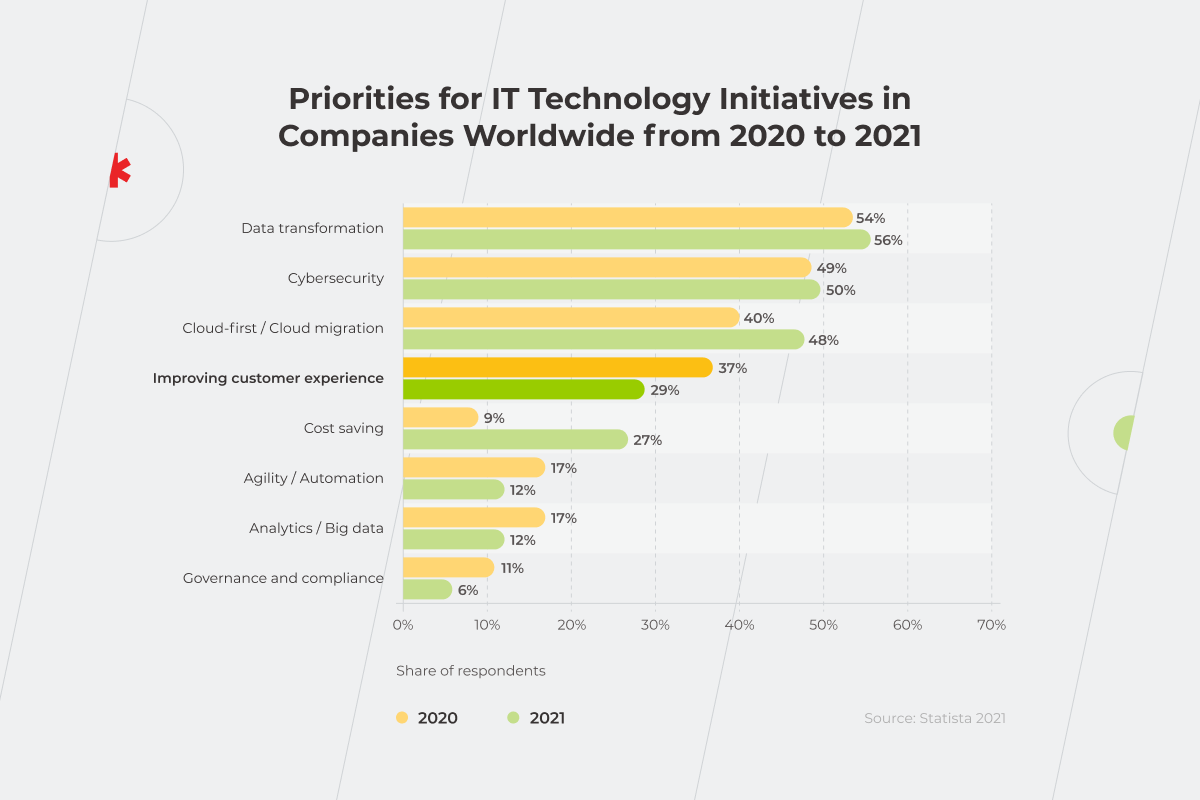
Thanks to performance testing of cloud-based applications, testers can set aside time for in-depth inspections in the security and accessibility of the app for end-users. Don’t miss the chance to make your app more user-friendly and, thus, improve customer experience, which ranks highly as the fourth priority for IT technology initiatives in companies worldwide from 2020 to 2021 after digital transformation, cybersecurity, and cloud migration. 

How to test cloud applications? It’s natural to choose cloud testing instead of in-house performance testing. In this case, you don’t need to pay for the maintenance of a whole infrastructure and pay only for the time of using the infrastructure resources, saving you money overall.

Priorities for IT Technology Initiatives

The cloud performance testing process in six steps

When you’re ready to switch from “Why do we need performance testing?” to “How do we implement it in our workflow?”, it’s time to follow this algorithm. 

  1. Set testing objectives and choose the relevant types of tests 

Speed, scalability, and stability are three key parameters that you should check during testing. Finding bugs is essential, but you should also look for bottlenecks. You can’t see how quickly the app responds, understand the maximum user load it can handle, and check its stability under changeable workload without performance testing. 

Choose the types of tests to run first according to your goals: 

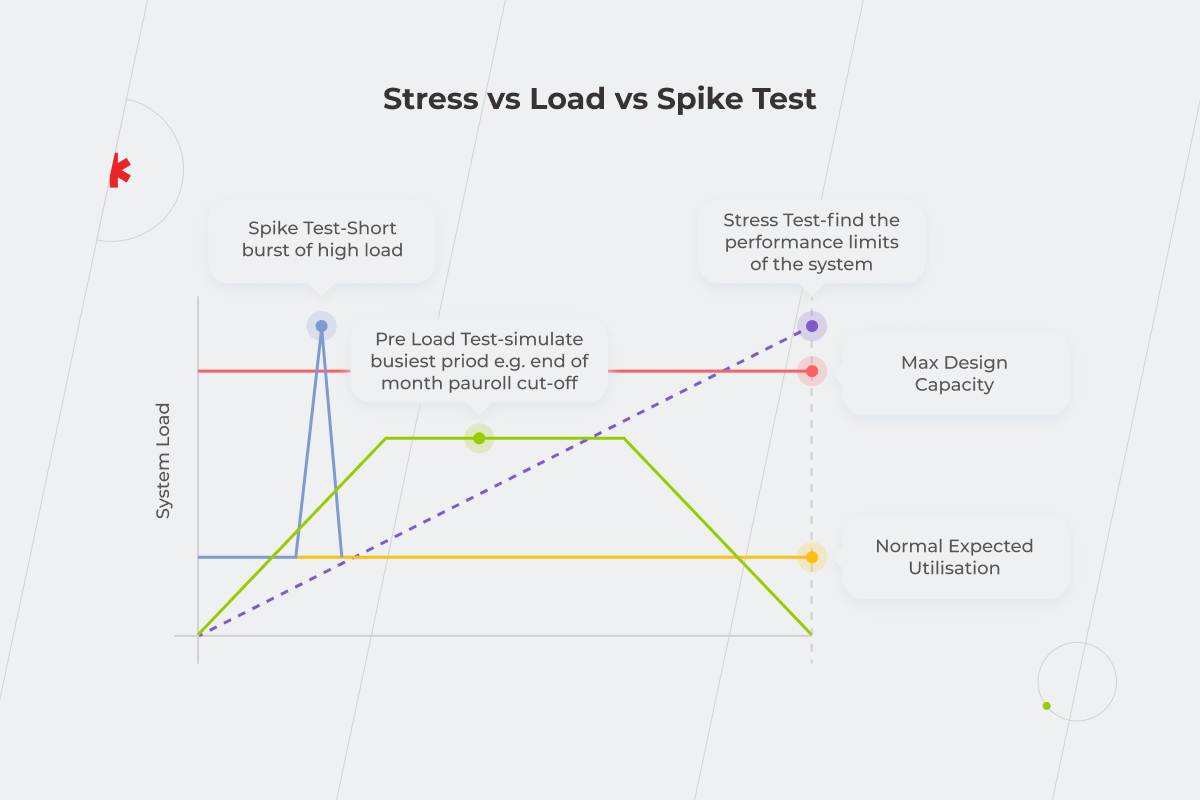
  • Load testing in cloud computing is used to verify the system’s quality criteria. Is your system’s performance on the right level to be used by multiple users simultaneously? Find out with a load test in which testers induce a normal or expected workload to the system and observe its general behavior, throughput, and latency. 
  • Stress testing is about a steadily increasing higher-than-expected workload on the system. To describe the application capacity, QA engineers need to know when, where, and how your system breaks.
  • Spike testing is similar to the previous types, but it identifies how the app can handle rapid traffic overload. Such an approach helps take a fresh look at the usage of the elasticity of the cloud. 
  • Failover testing in performance testing is needed to prove or disprove if the app can provide extra resources and replace a failed component under the heavy traffic load. At the same time, the end user’s experience shouldn’t be affected, and that’s the main focus here. 
  • Scalability testing is a series of stress tests to measure if the system can translate additional resources into additional capacity. So, you can define and remove bottlenecks or just use more resources to temporarily fix scalability issues.
  • Availability & Resilience testing is needed to check specific processes under the load. E.g., testers can audit if database migration, deployments, or automatic scaling environments are doable under variable workload levels.

Take advantage of cloud consulting with *instinctools experts to identify the most relevant types of tests for your business to run.

Test types

2. Design user scenarios

With the help of product owners and stakeholders, you should select relevant user roles for cloud computing performance testing. Based on this information, test engineers design user scenarios for the key user roles. E.g., for an e-commerce solution, you can define the roles of a guest or logged-in user, new buyer, or regular customer. According to this, you can use such basic scenarios as registration or signing into an account, searching for products and viewing detailed information on their pages, adding items to the cart, or reviewing previous purchases to focus the tests on.

3. Identify key performance metrics and design the tests

There are several essential metrics to track:

  • Requests per minute

When should you boost the capacity of the cloud resources to use them most beneficially? To adapt your system to a changeable workload, you first need to define the cyclic increase of requests rate in different periods and predict the following increases. 

  • Time to acknowledge

Knowing the time it takes for your system to respond to a request is necessary to uncover problems with load balancers. Also, a slow time to acknowledge may mark that the system is underprovisioned. Keep an eye on each cloud region since latency issues can differ from one cloud region to another. This approach will save you time and help pinpoint any issues. If the system is running well, you can go the extra mile and think about minimizing latency. For this, compare the time to acknowledge when a given request is handled and not directed by a content delivery network (CDN). 

  • Response duration

 Being defined by load testing in cloud computing, this metric represents the time it takes the system to respond to a request and helps indicate if the application can handle the incoming workload. Apart from that, response duration can uncover issues with internal communication, such as the inability to communicate between different microservices inside the system.

  • Error rates and types of errors

 You can use them to keep track of the application’s overall health and the cloud hosting environment.   

  • Servers and nodes available

You should monitor the number of available servers within the total amount that you have. It’s better not to rely only on cloud orchestration and automation tools. Although they might be good at redistributing workloads from servers that crash to well-functioning ones, you need to ensure that the number of available servers doesn’t fall below 90% of the total deployed. Because if it does, there’s a problem with your cloud server instances that you can’t ignore. 

Note that you don’t necessarily need to constantly keep a check on all these metrics. But instead, focus on the ones most crucial to your business. 

4. Configure the test environment

Performance testing of your cloud-based application won’t be effective if the test environment isn’t as close to the real conditions as possible. At this stage, you should also arrange tools to run near-realistic tests.

Real users’ activity may change the test results and it would be problematic to identify reasons for bottlenecks, and, thus, eliminate them. So, don’t forget to make sure the test environment is isolated.

5. Run the tests

Run the tests, collect the data, and ensure that testing is a mandatory stage of every release of your app. It will save you money and your reputation in the long run. 

6. Analyze. Improve. Retest

Analyze the data to get insights into the robustness, availability, and scalability of the system. To identify bottlenecks, check the results in every iteration, and share them with your team to think of ways to remove barriers, improve performance and the system as a whole. Then, tune the test plan, change the application’s infrastructure if needed, and test again. Still have something to improve? Repeat the cycle.

The reliability of test results: how to ensure them?

There are three tips to be done:

  • Make sure that test and production environments are as close to each other as possible. E.g., the test environment should include the same number of database records as the production environment. Think of a cloud-based test environment because, in that case, setting up a test environment is cheaper and faster — you can reduce costs and save time.  
  • Take care of sufficient network bandwidth. Its low level can undermine the results of testing because of time-out errors due to user requests.
  • Consider removing the proxy server from the network path. While it’s running, the users will get data from the cache and stop requesting the server. This situation can lead to a slower response time. It means you won’t be able to run the near-realistic tests. Cloud computing performance testing is a heavy hitter only if it gives you a valuable result. You can resolve this issue in two ways: transfer the web server to a secluded environment or strike directly to the web server (include server IP address to the HOSTS file).    

Cloud computing performance testing tools: *instinctools suggestions

The tools can differ according to their accessibility. Some are suitable both for small companies and enterprises, and others are targeted mostly at tech giants. So, be aware of your organization’s size and the most frequent types of performance tests. Here are the recommendations of our engineers to help you choose the tools that match your needs:

  • Apache JMeter. With it, you can test Java-scripted and web applications for both static and dynamic resources. Consider this option if you need to simulate a heavy load on a server or a group of servers, objects, or networks to analyze its performance under various load conditions or test its sustainability and scalability. Due to the open-source format, this tool is accessible to software organizations of all sizes, from start-ups to enterprises. 
  • BlazeMeter. It’s an enterprise-ready tool. Except for creating new load tests, it allows you to reuse existing scripts. To improve your software performance, use BlazeMeter’s detailed historical reports. 
  • Gatling. This open-source tool for performance testing of cloud-based applications is able to simulate thousands of requests just with a few load generators. Gatling’s dynamic automated reports can be useful even for employees without data-oriented hard skills because the information is organized in an easy-to-understand way.
  • LoadStorm. Test and manage the performance of your entire cloud infrastructure under excessive load. It’s useful for stress and failover testing. 

Take care of in-depth performance testing of cloud-based applications to secure your business

Here’s the thing with the digital era: performance is EVERYTHING. Whenever your application or a website fails, so does your company. It’s not enough to choose the proper tools for the successful implementation of cloud computing performance testing. Define the goals to select the relevant types of tests to run and metrics to monitor. 

Want to make sure that whatever happens your system can function without any hiccups?

Drop us a line!

FAQ:

What is cloud performance testing?

Cloud performance testing is an alternative to in-house testing. It allows organizations to check how stable and scalable their application is without influencing the end-users experience and usability. Performance testing of cloud-based applications can be used to monitor the general behavior of an application and find bottlenecks and “turning points” to understand the capabilities of the system. 

What performance test tools are not available over the cloud?

Generally speaking, all current performance testing tools are available for testing in the cloud. Otherwise, they’ll lose in the competition for the customers. Here are some tools that support both cloud and on-premises testing:
– WebLOAD
– Kobiton 
– StresStimulus, etc.

How to Make a Successful IT Integration Strategy for Mergers and Acquisitions

Mergers and acquisitions aren’t just all about dotting the i’s and crossing the t’s when it comes to your legal documents and finances. The success of the M&A depends on how quickly and efficiently you can integrate IT systems, data and processing workflow.

According to a Harvard Business Review report, between 70 and 90% of M&A projects fail. One of the reasons is the neglect of a proper IT integration strategy for mergers and acquisitions—an essential step for any business to ensure a flawless transition. Planning for IT integration in advance minimizes the risks of downtime, interruption to business processes, ensures data integrity throughout the process, and, in general, makes for a smoother transformation. Unfortunately, many enterprises do not adequately prepare.  

Pre-M&A due diligence and preparation steps

Before you start your M&A, you’ll need to follow a few steps to start off on the right track. Here are some of the stages you should adhere to get your merger and acquisition started right:

Collect all the relevant information

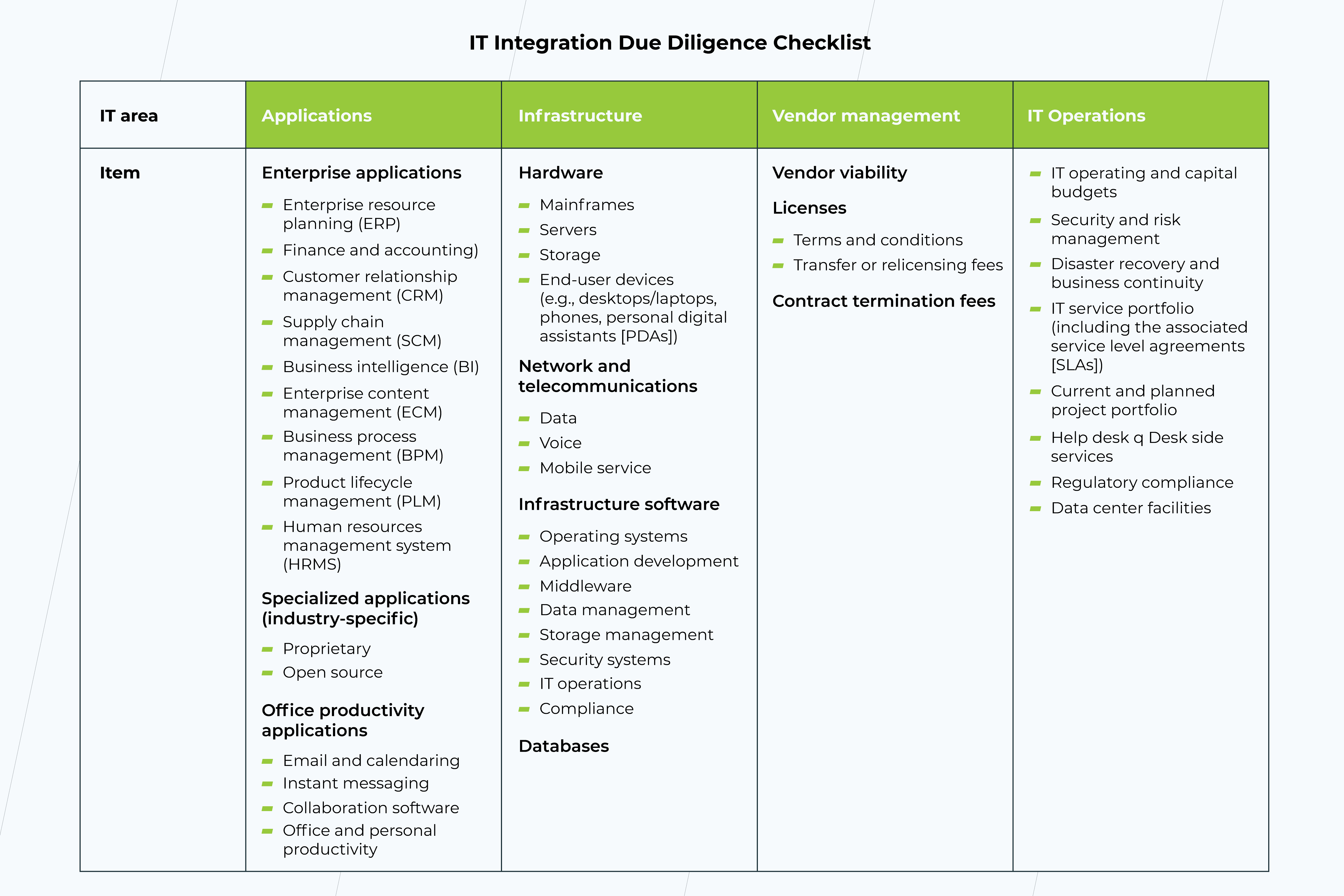
Time to look under the technology hood. This may include collecting the information about applications, infrastructure, vendors, and IT operations. Delving into a technical due diligence process is crucial both for the seller – to identify the issues that might affect the deal – and for the buyer – to make sure that none of the critical areas have been overlooked.

it integration due diligence checklist
Source: M&A Information Technology Best Practices, Edited by Janice M. Roehl-Anderson

Analyze the situation 

Where do you stand in terms of IT? At this stage, you should take note of the current resources and systems that you have. And what needs to happen to make this integration successful? Here, you don’t need to have a full integration plan, it’s enough to know the basic steps to take next. Consider if you need to make any changes to your systems to get them ready. Now, think about if you will need any additional resources to make your M&A transition successful. Here you should consider whether you have sufficient internal resources or you need to onboard an outsourcing provider to help you. 

Be transparent

By being transparent about the current risks, situation, and expected challenges, you allow your team and the one involved in your M&A to address them more effectively. Hidden or undeclared information can jeopardize an M&A before it gets off the ground.

Weigh up the risks

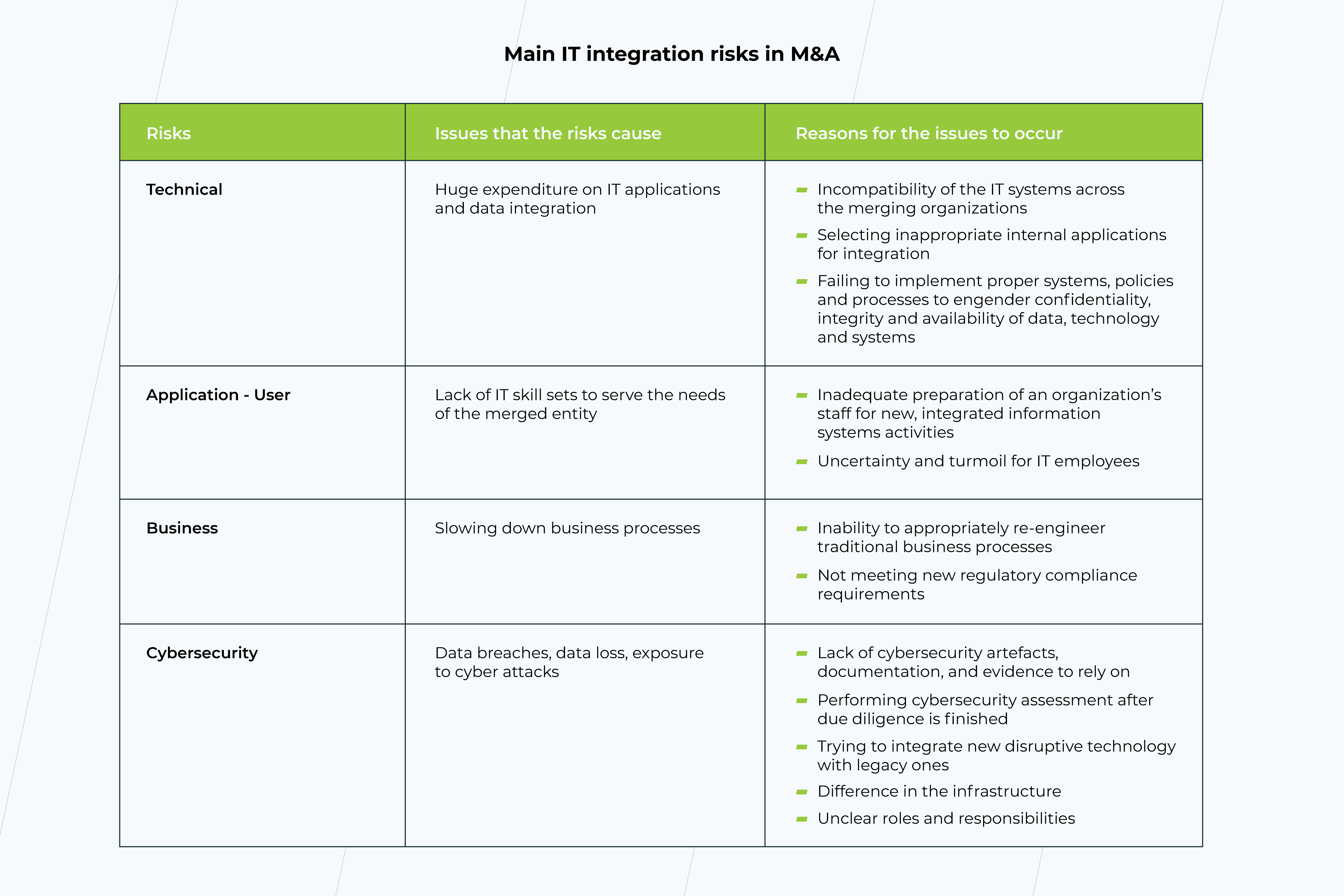
Risks are a normal part of any business process, by noting them in advance, you will best set yourself up for resolving challenges before they happen. Open and transparent risk assessment is one of the key factors that make for successful M&A integrated solutions. However, often businesses fail to address these risks adequately and unexpected issues might occur. This can be anything from incompatible software to conflicts between PC and Mac, tech debt, or even human factors. One of the main benefits of engaging a special M&A IT team for integration is more accurate risk prediction.

IT integration risks

Take account of your assets

From your human resources to finances to expertise, knowing your assets will help you map out your integration strategy and identify any areas of weakness that you may need external help for. For example, during the integration process, you may notice that a system, crucial to the integration, was skipped at the inventory stage. This could cause the entire process to slow down or even change the trajectory of the integration. Taking account of assets in advance and doing a full inventory, puts you in the best position to get started while minimizing the risk.

Allocate roles and responsibilities 

While you may have outlined these at the previous stage, it’s essential that the roles and responsibilities within your M&A are well outlined and defined. Any M&A is a time of change, and that’s true for your team too. Their roles may be changing, at least temporarily, or they may need to cooperate with outside providers. In any case, you’re likely to need these specialists to your team:

  • Integration Manager;
  • Integration Architect;
  • Integration Engineers (+ SysAdmins);
  • Integration Analyst;
  • Integration QAs.

They will ensure the work is completed to the highest standards when it comes to IT integration. Note, that by managing the process from the very beginning, you set your team up for success. 

Do you need a team of IT experts?

Book a call

Create a strategy 

Now that you know the risks and your assets, it’s time to start forming a strategy on paper. This should be a well-mapped-out and achievable plan to integrate your IT assets in the most effective way, and include all the points above. Here you will need to make some decisions. For example, you may choose to:

  • Keep your IT environments separate
  • Adopt the other company’s IT structure
  • Create a whole new combination of both

There is no ideal answer here. Your solution will depend on your individual business needs and your assets. Note: Don’t forget to ensure you include who or what team is responsible for what, during an M&A this is essential to ensure that everyone knows their role.

IT integration approaches

As they say, the proof is in the pudding. Before you kick your IT integration strategy into action, it’s vital you validate it first, use well-established business tools and metrics, such as risk assessments, business planning, stakeholder analyses, and TCO analysis, to ensure your plan will work.   

Planning the budget

According to Deloitte IT M&A Study, approximately half of the transaction implementation budget is associated with IT activities. Thus, getting IT costs right becomes a crucial component of the overall deal, whereas failing to estimate them might result in significant IT integration delays, cost overruns, and, ultimately, post-deal disputes.

Successful IT budget planning starts at the target screening phase. Although at this point, it relies partly on notably limited information, partly, as a rule of thumb, the initial forecast still needs to be done to support early-stage deal evaluation and negotiation efforts.

The target screening integration cost estimates are to be refined during the due diligence phase. The accuracy of the cost analysis here is in direct proportion to how meticulously the due diligence has been performed. A complete and thorough analysis of the entire IT ecosystem, including applications, infrastructure, etc., is required so that all the possible cost-related issues will be identified and addressed early on. It may turn out that you’ll have to replace legacy systems or invest in additional infrastructure resources, like servers, network equipment, etc. By taking care of all that in advance and focusing on longer-term needs rather than ‘quick wins,’ you have a great chance to avoid unexpected costs down the line.  

What makes successful integration when acquiring tech start-ups?

Now that you know the essentials of what to prepare for when it comes to an M&A IT integration let’s talk specifics. Today, one of the most common requests we receive in terms of mergers and acquisitions is when it comes to companies seeking to purchase tech start-ups. Often this happens because a company wants to acquire some cutting-edge technology or innovation, which should be fully integrated into their systems to become a prized asset to their business. 

These types of M&As come with both technological and cultural nuances that enterprises need to be aware of. Here are our top tips for start-up M&As:

  • Consider the tech implications. When companies acquire tech start-ups, it can be difficult to assess the resources needed due to the technology’s proprietary nature. In this case, it’s vital to get the other team on-board at the start to see how they believe their technology can be best integrated, how long it will take, or if it even can be fully integrated or will remain a standalone feature.
  • Be prepared to allow autonomy to your M&A team. Tech start-ups, by nature, are agile environments and subject to constant change—this is what makes them so good at what they do. Often, they are used to autonomy and making decisions. Even during an M&A, it can be challenging to give up these characteristics, and in fact, can impact the work of the team post-M&A. By allowing a certain level of defined autonomy in decision-making, you set yourself up for a better working relationship long-term.
  • Develop goals and strategies for everyone. An M&A shouldn’t be two teams working in parallel. It should be two teams working together. Creating shared goals, strategies, and processes for achieving these means that everyone feels involved and can use their expertise effectively to advance your business without engaging in in-fighting.
  • Expect complications. Nothing worth having comes without hard work, and this is particularly true for start-up M&As. Proprietary technology is by nature unique, and the typical IT processes won’t always work. Use the knowledge and expertise. You must ensure a tailored approach is taken for ultimate M&A success.  

Your M&A IT integration checklist

To help you keep your M&A as seamless as possible and ensure your IT strategy will work for you, we’ve created this easy-to-follow checklist for any business entering into an M&A.

IT integration checklist

Getting started with your M&A the right way

Mergers and acquisitions can be a stressful time for any business, no matter how many times you’ve done this before, or even if it’s the first time. Each M&A requires a lot of work and coordination for various departments to get it done in a way that works for you. When it comes to your IT assets and your newly acquired ones, it’s essential that you ensure that all is in order before the merger begins. Getting the right specialists involved at the get-go if you don’t have them on your team, ensures that your M&A will be completed right. Avoid errors before they happen and tick those boxes when it comes to your M&A IT integration.

Learn more about the role of BI in Mu0026A deals

Register to our online meet-up

Cloud Migration Team: Why Build It and Whom to Include

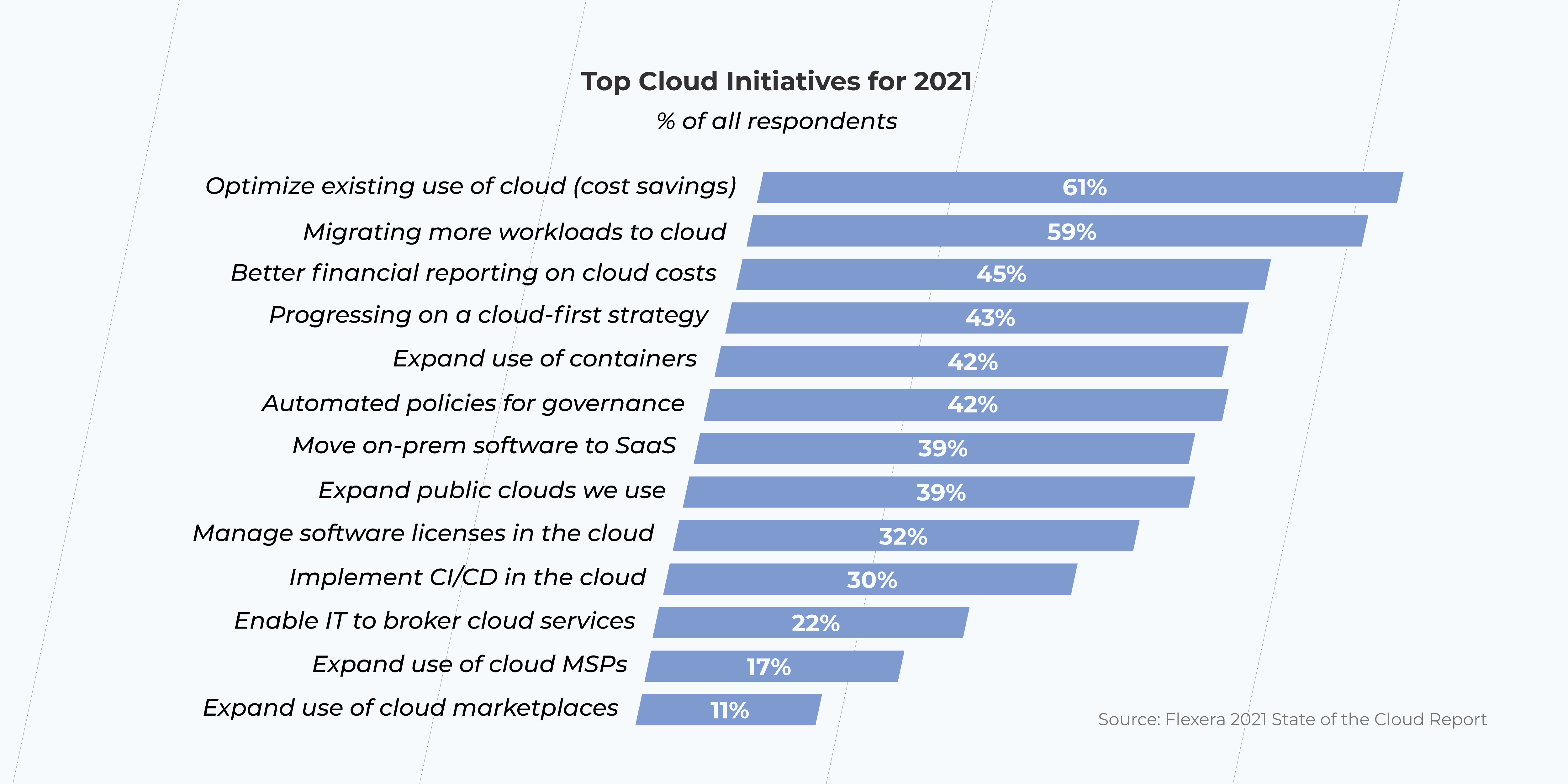
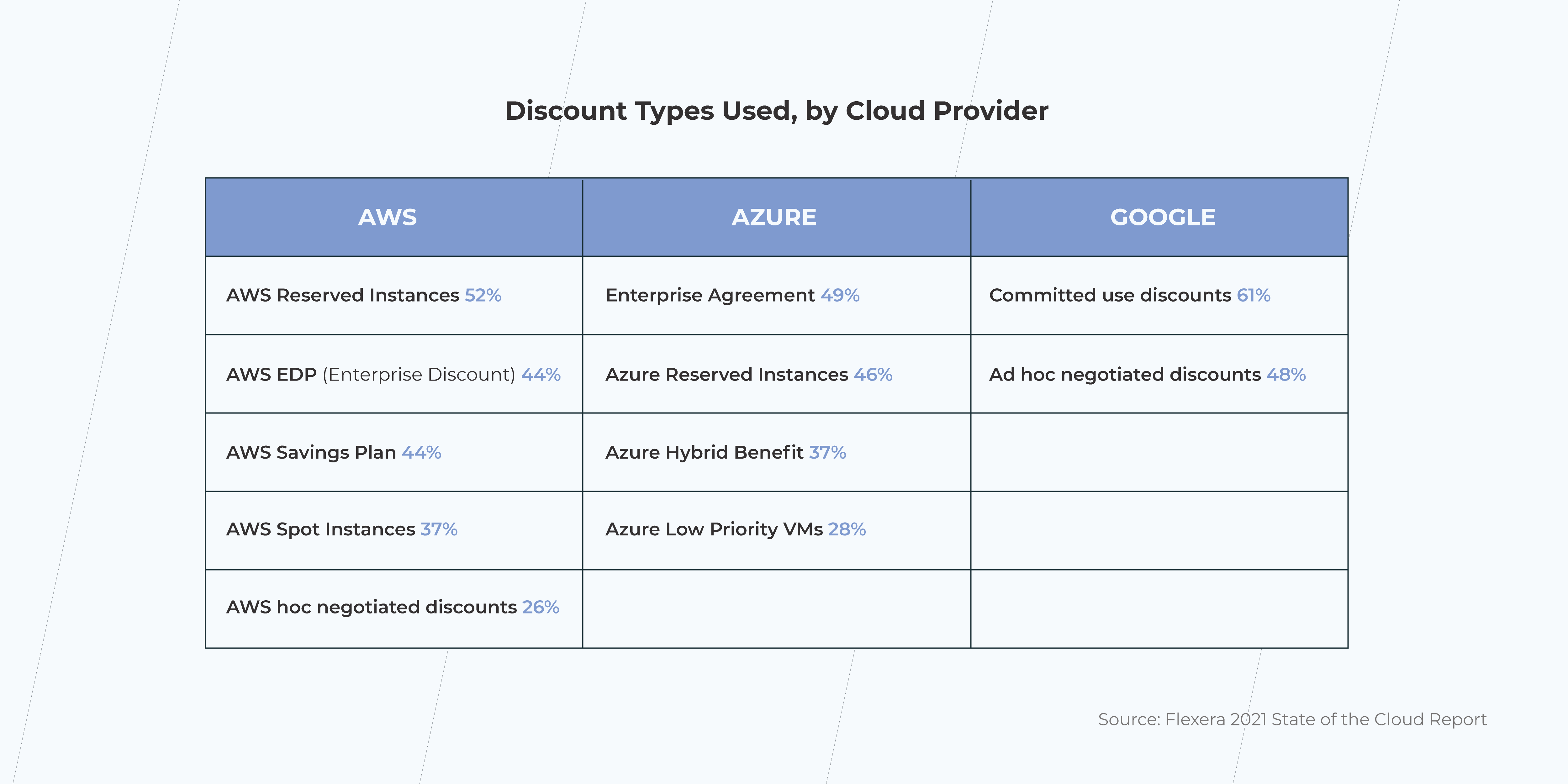
With the global shift to remote work, cloud migration has turned from a distant prospect to the indisputable reality for most businesses. According to Flexera 2021 State of the Cloud Report, 59% of organizations plan to focus on cloud migration. At the same time, Cloud Guru survey (2020) shows that more than 80% of cloud leaders point out lack of internal talent as a top barrier to cloud success. Not only do these numbers indicate the growing need for strong cloud migration teams, but also make it absolutely clear that cloud adoption gets nowhere without the people who execute it.

We’ve already discussed the benefits of cloud migration, highlighted the hidden costs it might entail, and deep dived into the cloud models to help you choose the right one for your business. Now it’s high time to talk about the importance of having dedicated cloud experts who will bring your cloud-related ambitions to life.

Why do you need an experienced cloud migration team?

  • Saving money, time, and tons of headaches

You take your car to the service when your transmission is blown, and hire a construction team to build a house for a reason – you believe that experts know best. It’s nice to apply the same principle to cloud migration, as there are many nuances your in-house team might be unaware of. For example, do you know what size of the Virtual Machine (VM) is optimal for your workload? Selecting the VM which is more powerful than you actually need is fraught with unnecessary expenses. It’ll turn out that you’ll spend a fortune and believe that the cloud is “too expensive,” when the trick is that you just need to approach it wisely.

Cloud migration

The biggest misconception regarding cloud migration is to think that it’s a piece of cake, whereas it’s definitely not for people with no relevant experience. We’ve recently had a client who reached out to us to figure out what was wrong with their cloud expenses. It turned out that they’d been testing Azure Databricks and had written a test script to see how the platform worked and what data could be analyzed. But to make the script work, it was necessary to create a Databricks cluster, which implied using Virtual Machines. However, the user can’t have known that, because those VMs were configured in Databricks interface not Azure itself. Eventually, without realizing it, our customer created an auto-scaling cluster that made them blow 50% of their total cloud costs and, on top of that, wasn’t even used for production needs.

– Petr Spirichkin, Cloud Engineer at *instinctools

Those, who aren’t experienced in cloud computing, will barely pay due attention to Service Level Agreements (SLA), however, they really should. SLA is the document where both the client and the provider agree to the terms and conditions for provisioning and consuming the cloud service. It defines the level of services to be delivered by the provider and compensation in case the specifications are not met. Although to the untrained eye, cloud services might seem quite forthright, with little variations, there are always areas to customize and details to negotiate, such as data retention, or pricing and compensation.

Cloud migration

For 61% of companies, optimizing cloud spend is the top initiative for the year ahead (Flexera 2021 State of the Cloud Report). Meanwhile, 30% of users admit to wasted cloud spend. Indeed, cloud provider pricing structure might seem confusing and difficult to decode, but careful examination of the discounts can uncover opportunities to reduce costs.

discount types
  • Ensuring security

If losing the chance to decipher cost reduction opportunities is unpleasant, yet bearable, dealing with security issues is another story. Cloud migration means shifting to a completely new operational model, so it’s natural that not only does the approach to security needs to change but the expertise itself has to be different as well.

Ensuring your organization’s cloud security becomes only possible if your team knows how API and CLI tools work, understands the principles of cloud identity and container security, and, in general, has a clear, undistorted vision of your cloud state.

You might not know about replication, failover, and a recovery plan and think everything is ok until it’s not and the data center goes down. Datacenter outages result in downtimes, financial costs, and, sometimes, even data loss. As frightening as it sounds, this issue can be tackled by replicating your Virtual Machine to a different region. For example, Microsoft offers a built-in recovery service – Azure Site Recovery, that helps ensure business continuity by keeping business apps and workloads running during outages.

– Petr Spirichkin, Cloud Engineer at *instinctools
  • Staying on track

It’s easy to get off track if the route is not mapped out. The same goes with cloud migration – without a careful plan, there’s a high probability to get caught up in the maze of a completely new operational model. That’s why a well-defined cloud migration strategy is a must. It outlines all the key stages of the cloud adoption process and addresses the risks that may occur on the way. Developing a solid plan is not that simple at all and you are unlikely to do it without the help of experienced specialists, as there’s no universal solution – one common method cannot be used to move all your IT assets to the cloud. A coherent strategy aims to answer the questions of what, how, and in what order has to migrate.

  • Preventing delays in business

Keeping a relentless eye on your cloud migration project is great unless it’s to the detriment of your company, that still has to be run. Losing focus on your direct responsibilities may end up with some serious delays in business. Turning to a cloud migration consultant, you buy yourself time to concentrate on what matters most and eliminate the risk of dealing with migration issues on your own. 

What is a cloud migration team structure?

cloud migration team

The structure of the team varies according to many factors, like cloud migration approaches, which, in their turn, depend on the size of the company and the data you want to migrate. So let’s put it this way – if you just want to give it a try and shift a couple of applications to the cloud, hiring a whole squad isn’t necessary – one cloud engineer will probably be enough. On the other hand, shifting the entire workload to the cloud requires a solid team of experienced specialists.

Aside from the people on your end responsible for major decision-making, here are the experts that will pull your cloud adoption off.

Cloud architect

It wouldn’t be an exaggeration to say that a cloud architect plays a vital part in cloud success. It’s the person responsible for designing and building environments in the cloud. Someone, who not only has in-depth knowledge of cloud technology but can also look at the project from above to see a full picture of it. 
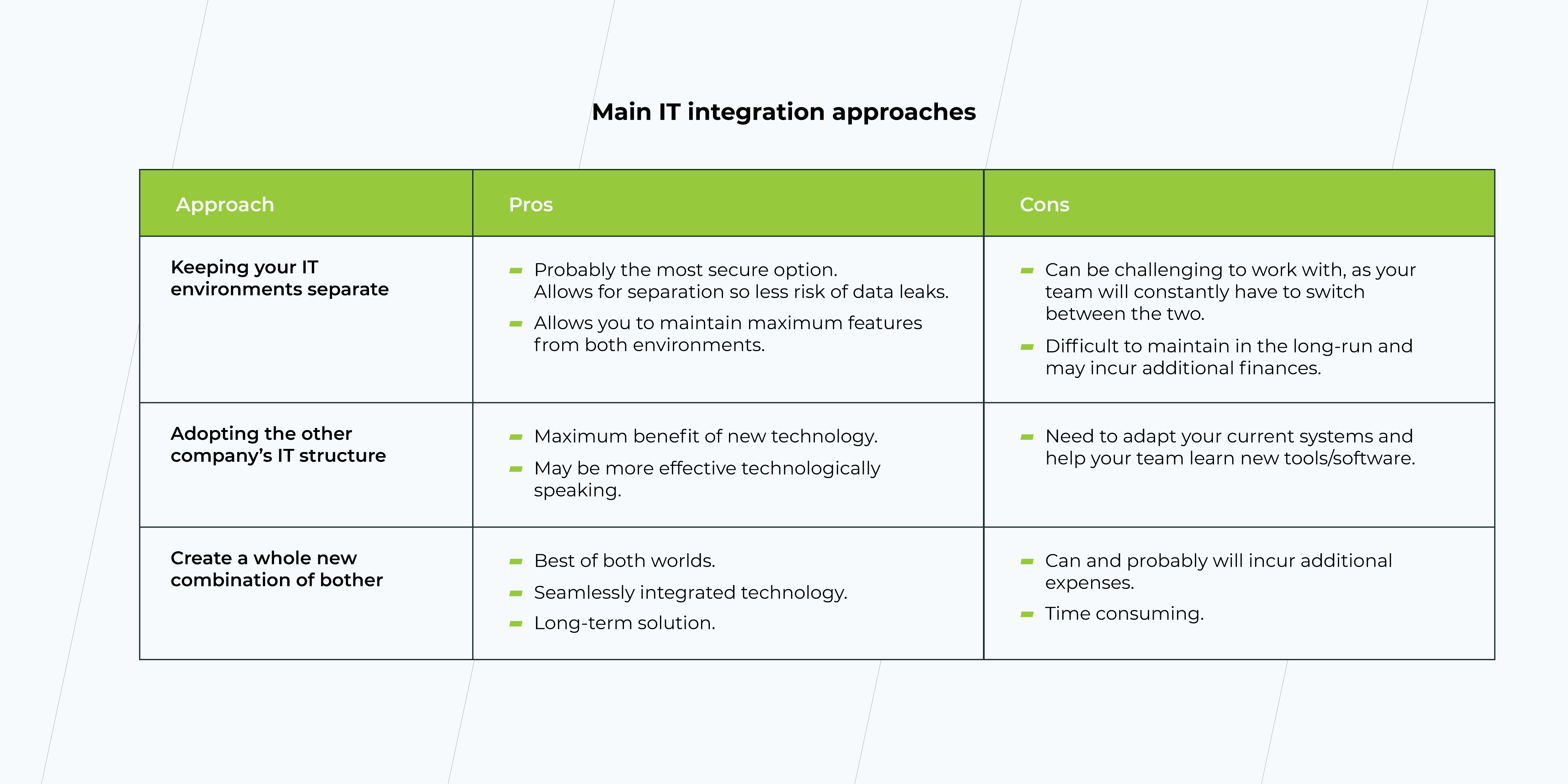
What does a cloud architect do:

  • Develops a cloud strategy
  • Develops and coordinates cloud architecture
  • Evaluates cloud infrastructure costs
  • Designs cloud infrastructure
  • Supervises security in terms of privacy and incident response planning

Being aware of the options and limitations of cloud services, a cloud architect will help you to dodge ‘gotcha’ moments during your migration journey.

Cloud engineer

A Cloud engineer is a universal soldier who performs technical duties related to cloud computing. 

What does a cloud engineer do:

  • modifies and improves existing systems
  • develops and maintains software to run on virtual systems
  • manages software and hardware connected with the use of cloud-based services
  • investigates, creates, and recommend technologies that will provide security for cloud-based digital platforms

Smaller businesses are likely to get by with a cloud engineer as a generalist, whereas larger organizations need specialists with more specific expertise. Accordingly, the role of a cloud engineer can be broken down into several positions with their own responsibilities each: cloud software engineers, cloud systems engineers, cloud network engineers, and cloud security engineers. 

Project manager

There are plenty of possible snags that can prevent you from staying on time and on budget during your cloud migration project. Dealing with obstacles and keeping the team to milestones and timelines is the project manager’s job.

What does a project manager do:

  • creates a cloud migration project plan
  • delivers cloud migration within scope, schedule, and budget
  • manages the process of translating IT strategic goals, roadmaps, and business requirements into future state architectures
  • identifies roadblocks to migrating and offers solutions
  • ensures alignment across teams

Should I migrate to the cloud with my team?

If you are a lucky devil with a proficient, committed team of the experts above – go ahead! But if you lack cloud specialists or doubt their skills you’d better either table your migration plans or hire a cloud migration consultant.

Sticking to the DIY concept during cloud migration can lead to tons of wasted time at best. While at worst…Wait, let’s not even go there.

Not having a team with a decent plan results in stumbling over many problems companies don’t initially expect to face. That being the case, there’s a long shot to get everything done properly on the first try.

However, cloud migration is fast, safe, and cost-effective for those who have the right team with the right skills. 

Looking for highly qualified professionals to support your cloud initiatives?

Cloud Migration Strategy: The Decisions to Be Made

When rationalizing cloud migration, the first question all CEOs encounter is the risks and benefits of migrating. A lot has been said about the added value, speed, and competitiveness acquired along with cloud technology. Yet, some of the doubts that need to be addressed firsthand, are infrastructure compatibility, staff cloud-training, public cloud visibility, data security and encryption, keys to the cloud and storing your user data, etc. 

As you weigh all the pros and cons of cloud migration, it’s time to get to a cloud migration strategy. Let’s find out what exactly it is, how to prepare one, and what personnel is needed from your side.

What is a Cloud Migration Strategy? 

cloud migration

A cloud migration strategy is a master document that describes the purpose, business outcomes, and key stakeholders of the cloud within an organization. It contains the decision points of the cloud migration strategy, involving applications, IT systems, and infrastructure migration. The document also incorporates the key takeaways on the technology pathways and decisions from the cloud adoption and cloud migration plans. However, it’s just different from them and plays a very important role in the whole process of migration.

Why Do You Need a Cloud Migration Strategy?

A cloud migration strategy defines the roles and decisions about the cloud in your organization. It identifies the key services consumed by the cloud provider and determines the amount of code to be written and refactored. 

A cloud migration strategy serves as a guidebook for cloud service adoption, addressing technology silos, non-standard solutions, non-optimized costs, and exposing risks from poorly configured environments.

A cloud migration strategy document is a bible project shared between all the stakeholders, tech staff, and other key decision-making personnel, serving as a go-to resource when aligning with the current state of the company’s technology, and projecting the state of the cloud for the years to come. It’s a living document that reflects the digitalized company’s growth factors. 

That being said, a lack of cloud migration strategy will leave the team with little to no coherent guidance for cloud service adoption in your organization. This can result in a number of challenges.

cloud migration challenges

What Should a Cloud Migration Strategy Include?

When elaborating on the cloud migration strategy document, here are a few suggestions that would be beneficial to include for everyone in your company to stay on the same page. The list we are sharing below is meant to give you a general idea of what belongs to the cloud migration strategy. Feel free to add some crucial elements and decisions pertaining to your company’s unique culture and evolutionary path to accommodate more positive development scenarios in the long term. Your experience, vision, and gut feeling are the best guidance in this process. Here’s where you can start:

1. An Overview

State the larger purposes of the transition, such as new business objectives, and allocation of the funding, and the consumer requirements. Reveal the motivation behind the move, including new business perspectives and goals supported by the novel technology.

2. Business Outcomes

Narrow the business goals down to which application innovations are going to improve what customer experience and how it’s going to affect the growing market share seen in figures. Include predictions, statistics, and examples for data, IoT, and AI-driven innovations and experiments. 

3. Projected State of The Cloud for the next 2-5 years

The list of the cloud services which currently support your company’s infrastructure will likely vary quarterly based on the experiments and analysis of the cloud consumption, patterns, and security updates. This section is meant to provide a clear vision of what practices can be validated and supported further based on the performance criteria.

4. Additions

Introduce the list of the required documents crucial for successful cloud adoption and management. For example, data classification and governance, cloud environment policies, and ‘IT chargeback’ and ‘showback’ models.

5. Migration Specifications & Technology Dependencies

Include the data that needs to be re-hosted, code that needs refactoring, and every other thing that has to be re-architected, rebuilt, and replaced. Choose the small batch for your first migration cycle. Define technology dependencies for the IT department to look up and synchronize to.

6. Timing

It’s necessary to outline the milestones for migration by marking important business events and some end dates, like contracts terminations and renewals. Any cycles related to technology release, up and running for end purpose need to be clear-view displayed for successful migration planning. 

6. Cloud Roles & Responsibilities

Include the key decision-makers to request, consult, and sign-off the cloud services. Assign the roles for the in-house IT team and cloud consulting vendors, such as assessing, migrating, optimizing, securing, and managing the process of migration. State the chosen cloud partners, so that the IT department could work with their tools and configure the features using best practices.

Who is Going to Make the Decisions and About What?

Your cloud team is going to be the specialists, vendors, partners, and decision-makers and will be centered around Cloud Architect. A Cloud Architect is the IT specialist who defines and communicates a chosen cloud strategy. They work with leadership, business units, security, and technology teams. 

However, for the needs of the cloud migration strategy, we will identify the stakeholders and their responsibilities. Their roles and names can vary from business to business. And here are some hints to help you determine the main actors for the cloud migration strategy and people who are going to reinforce your team. The three pillars of the decision-making process for the cloud will typically be: 

  • Business Decision Maker (BDM). The Final Decision Maker.

A Business Decision Maker is also a CEO/CFO, the person who is in charge of the TCO and ROI. Their decisions are influenced by end-user requests. While a CIO makes final recommendations for BDM, IT Decision Maker (ITDM) supplies ideas and advice on technical implementation, based on their expertise.

business decision maker
  • Chief Information Officer (CIO). The Key Decision Maker.

The Chief Information Officer is responsible for Buy-ins & Resources. They make final recommendations for the CEO/CFO. Their decisions are influenced by ITDM in terms of input and research and BDM’s requests for capabilities.

chief information officer
  • IT Decision Maker (ITDM). Holds Veto Power.

An IT Decision Maker is involved in most cloud decisions. They are responsible for implementations and work on resources and risks. Their decisions are influenced by the CIO who sets the strategy, BDM who requests support, and Developers who request new solutions to build with.

ITDM

Conclusion

A cloud migration strategy is a document that defines the ‘why’, ‘who’, ‘what’, and ‘how’ of the cloud migration. It serves as the guide to a successful legacy infrastructure modernization and scaling up your business. 

If your company has the decision-makers to take the roles in the cloud migration process, the next logical step is to have your cloud consultant on board. A dedicated cloud team will help with your initial applications’ assessment and will identify the challenges associated with cloud adoption in your organization.

Looking for help with cloud migration strategy?

Why You Can’t Skip the Data Preparation Process in Data Discovery

In the modern world, data is king. It tells us everything we need to know about, well, just about everything. Data finds its usage in all spheres, from governmental processes to business, multinational enterprises, and more. But how does one go about analyzing data? Despite all the technology available, it’s not as simple as inserting some digits into a computer and getting all the answers you need. There are a few stages in between. Below we’ll talk you through data discovery and data preparation as part of it.

What is data discovery?

Before we get into the ins and outs of the data preparation steps, let’s backtrack a little and look at what the overall process of data discovery is. The data discovery process is a vital step in the business problem-solving framework or any data-requiring solution, and data preparation is a step within data discovery. 

Data discovery is often connected with business intelligence, meaning it is used to help companies make smarter, data-based decisions. But what happens in the data discovery steps? At this stage of data processing, data discovery tools compile multiple data sources together, creating a singular unified base of data. 

From there, the company undertaking the data discovery process develops its initial data model. It then utilizes it to test various hypotheses or discover valuable insights. One data discovery example would be a company using the power of data discovery in big data to uncover vital company insights that would help the project progress and meet market needs. For instance, a new feature to be added to an app, or designing an entirely new piece of software. 

How is data discovery generally done?

As we said previously, data discovery is a process undertaken in the broader problem-solving framework. Here’s how it fits:

  • Business issue understanding — at this stage, the issue at hand is defined. This allows the data scientists to refine which questions they need to answer from the data they will use. If done right, the data will support the project. If not, then it might be time to start from scratch.
  • Data understanding — here, all the required is defined and brought together from various databases to be collected and used for further processing.  
  • Data preparation — at this stage, data becomes refined and prepared for further analysis.
  • Analysis and modeling — using the prepared data, the first round of analysis is undertaken, and models built for data analysis.
  • Validation — the trained model is tested using a defined data set to check if the model is valid.
  • Visualization and presentation — here, the final results of the analysis are available and ready for data scientists to present them. Visualization tools help make data more understandable and readable to the human eye.

Can any data be used for data discovery, or do I need big data?

Data processing can be used at almost any stage of the company’s growth process, and you don’t need big data to get started—although it does help. In theory, to begin analyzing data, all you need are a few hundred rows of data, which can be collected via customer surveys, company dashboards, Google analytics, and more. What’s important here is the quality of the data, and that is where the data preparation comes into play.

What is data preparation?

Data preparation is one of the most time-consuming phases of a data-based project. According to studies, it covers 70%-90% of all project time. With automation, however, and we’ll talk a little bit more on that later, this can be reduced to around 50%. Automating then leaves more time to polish data models and focus on getting the best analysis from the data. 

So, what is data preparation anyway? Data preparation is a process of enriching and cleansing data, making it more useful to give quality analytics. One way to look at it is by thinking of a diamond in the rough. When it comes out of the mine, it’s rough, dirty, but once polished. It becomes a beautiful stone that can be used to make a valuable piece of jewelry. But in this data preparation example, the diamond in the rough is data, and the polishing is the data preparation process. The result is valuable insights.

Why do you need data preparation?

Data processing and preparation may seem time-consuming, and indeed it is. However, that doesn’t mean it isn’t worthwhile. Quite the opposite. Instead, many companies find that employing the right data processing tools gives them the insights they require. Some of the benefits they boast are:

  • Improved decision-making capabilities
  • Easier data access on the whole
  • Increased analytical efficiency and flexibility
  • Time saved for making decisions
  • Comprehensive view of relevant data

Although it’s important to note that data science is an evolving profession, and as technology advances, so do the results. As we continue to refine the available data using the latest methods, more information will become available. 

What are the steps involved in data preparation?

When it comes to data science, the tools involved are only as powerful as the quality of the data, and that’s what makes data preparation so essential. So what’s involved in data preparation? To understand that, let’s take a look at the data process steps:

1. Collecting the data. While this is closely associated with data understanding, it’s also the first step in data preparation—getting the data you need to do the work.

2. Assessing the data. Each dataset within the data should be discovered. This means knowing its purpose and context before you go any further.

3. Cleansing and validating the data. Now the hard work begins. In this time-consuming process, data is cleaned, and gaps are uncovered. Using manual and automated tools, such as machine learning (ML), data scientists can remove outliers, fill in data gaps, check if data conforms to a pattern, or review if data-protection issues have occurred.

4. Transforming and enriching data. At this stage, data may be formatted or further defined to ensure a better analytical outcome. Enriching may also occur, which means adding data or connecting the dots to unveil hidden insights for analysis.

5. Storing data for future usage. Once the data has been prepared, it must be stored the right way. Taking into account data protection requirements, such as GDPR, and the future usage of this data, it’s essential to store it correctly.  

What are the challenges of data preparation?

No technology or process is without its challenges. Here are some of the issues companies find when engaging in data preparation and processing.

Companies remain unsure how to use the data

Data is great, and having lots of it can empower your business with market conquering insights, but only if you know how to use it in the right way. Many businesses struggle to define the exact data they need, what it shows, and how to effectively implement it in business decisions. Getting the right people on board at the beginning can help your business make better use of the data it has to support your business goals and get that competitive edge. 

Biased data can slip through the cracks

Although AI technology has come on in leaps and bounds, it is built by humans, and therefore the algorithms it uses may be subject to bias. For example, exclusion bias means holding back info from the data set, leaving it incomplete. This means the data assessment will be flawed. Or consider selection bias. For example, data collected may differ from the target group, making data meaningless. Addressing these challenges means undertaking comprehensive data preparation to ensure data is suitable for use. 

Planning to take advantage of your data?

Learn how BI can contribute to your company

How to do data the right way?

  • Collaborate. Data science isn’t a one-team job. By collaborating between departments, for example, IT and business, companies find themselves getting results that are closer to actual business needs, not data for data’s sake.
  • Ensure good data governance. Data management is key, and this isn’t just a question of data security. Effectively managing your data means putting into action processes for data storage, data use and clearly defining the responsibilities of the teams that use the data. A little bit of organization goes a long way to getting the best results.
  • Get the right tools at your fingertips. The world of data has grown in recent years, far beyond Excel spreadsheets. Instead, it often requires advanced software or tools to help complete increasingly complex tasks. But that shouldn’t mean fear of technology. Getting the right tools on board early boosts the chances of good data and analytic outcomes. 

How to get the most from your data for your business?

With data science specialists some of the most elusive IT specialists on the market and vacancies set to grow by an estimated 15%, it may seem that getting the right person on your team is next to impossible. But there is a solution. Data discovery services can be covered by a skilled outsourcing provider. At the same time, you search for your data superstar, or perhaps you’d like to continue to outsource and take advantage of access to a team of knowledgeable data professionals.

Choose The Right Cloud Model For Your Business: IaaS, PaaS, and SaaS

Today’s world is flooded with anything-as-a-service. Restaurants provide meals-as-a-service, travel agencies offer holidays-as-a-service, landlords – accommodation-as-a-service, taxis are cars-as-a-service… The list is endless.

Can you imagine how much more difficult our lives would be if we couldn’t buy services? For sure, it’s great to have your own car, not to mention an apartment, or have enough time to cook food all by yourself. But – there’s always a ‘but’, you know, – it either requires huge money infusions or tons of effort; oftentimes both.

The same goes with IT. Back in the day, companies had to spend a fortune on the hardware and hire specialists to maintain it – the privilege that small and medium-size businesses couldn’t afford. 

However, thanks to cloud computing, the way of delivering IT services has changed. We no longer need to own cumbersome equipment to enjoy the benefits of cutting-edge technologies.

The main cloud computing models are:

  • IaaS – Infrastructure as a service. It offers pay-as-you-go infrastructure for a company.
  • PaaS – Platform as a service. It’s ‘something in between’ IaaS and SaaS. Apart from infrastructure, it also provides a variety of tools to create applications.
  • SaaS – Software as a service. It’s ready-to-go software available over the internet.

Each is unique in its own way. So the choice of ‘the right one’ should be made in accordance with business requirements and the number of tasks you are ready to delegate to the provider.

Infrastructure-as-a-Service

IaaS

IaaS is the most basic form of cloud computing. With IaaS, a client rents a variety of infrastructure components such as data centers, servers, cloud storage, and networking solutions from a provider.  Basically, IaaS offers access versus ownership. An IaaS provider takes responsibility for the infrastructure, whereas users are in charge of installing, managing, maintaining, and supporting their apps and operating systems.

Advantages of IaaS

  • Cost reduction: having switched to an IaaS platform, you no longer need to worry about purchasing and maintaining hardware as well as about the uptime for your equipment. 
  • Easy scalability: IaaS provides users with the ability to scale the computing resources up and down according to their needs. It becomes a total must if your business is a part of an industry prone to fluctuations in sales and profits. You can expand data storage capacity or increase the number of software applications and pay for them only during the period of utilizing them with no residual cost.
  • The possibility to focus on other tasks: as employees don’t have to take care of upgrading and maintaining infrastructure, they free up time for other tasks that are important for your business growth. Moreover, using IaaS obviates the need to hire and train new IT staff, since it’s the provider, who handles the workload within the infrastructure.   

Who Needs IaaS 

IaaS can be a great choice for:

  • startups and small business with no money to invest in their own infrastructure;
  • companies that grow too fast to define their needs once and for all;
  • companies that want to apply a pay-by-use model not to waste budget on the resources they don’t use.

Platform-as-a-Service

PaaS

PaaS provides a platform with built-in software components and tools for application development.  PaaS vendors manage infrastructure and data centers, operating systems updates, security patches, and backups. Meanwhile, clients handle application development without worries about the above-mentioned aspects. In a nutshell, PaaS accelerates software development and significantly simplifies this process. 

Advantages of PaaS 

  • Faster development: speed often plays a crucial part in the development process. However, it usually turns out to be a stumbling block for the team, if they have to manage in-house resources. While using PaaS you don’t need to spend time setting up and maintaining the core stack, which means there are more chances for the project to be completed on time without putting its quality at risk.
  • Cross-platform capabilities: unlike many on-site development platforms, PaaS solutions aren’t tied to one type of device. Apps and programs designed with PaaS can be accessed on computers, tablets, and mobile phones.
  • Access to the best tools: in most cases, on-premises platforms are confined to in-house technologies. It means one day the staff will have to deal with outdated tools, which requires considerable effort and doesn’t guarantee the right results. Thanks to the cloud-based nature of the PaaS model, developers get access to the best tools that are updated and upgraded automatically. 
  • Remote work: being available on any device anywhere at any time, PaaS solutions make it easy for employees to log in, work on applications and collaborate with co-workers whenever they want and wherever they are.

Who Needs PaaS

You should opt for PaaS, if:

  • your project requires multiple developers and vendors;
  • you want to create customized applications;
  • it’s essential for you to improve time-to-market.

Software-as-a-Service

SaaS

Remember the times when we used to buy and install programs on our personal computers? SaaS has nothing to do with that. It’s a model of cloud computing that delivers the software to users without them having to install it on local servers or computers. The only thing you need to get access to the applications is a reliable Internet connection. The rest is taken over by the vendor. SaaS vendors manage all the tedious tasks from sustaining hardware solidity to providing proper app functioning, while users simply open the apps in a browser.

Advantages of SaaS

  • Cost-effectiveness: since SaaS is subscription-based and already located on the Internet, it eliminates costs, concerning the purchase, installation, and maintenance of the software. Besides, you don’t need to pay for the full version of the app right away and can try flexible payment methods such as pay-as-you-go models.
  • Ready to use: you can start leveraging SaaS solutions in no time. There’s no need to go through a long deployment process, as the software is installed and configured on the cloud. Thanks to out-of-the-box functionality, all it takes to get started is to sign up for the service.
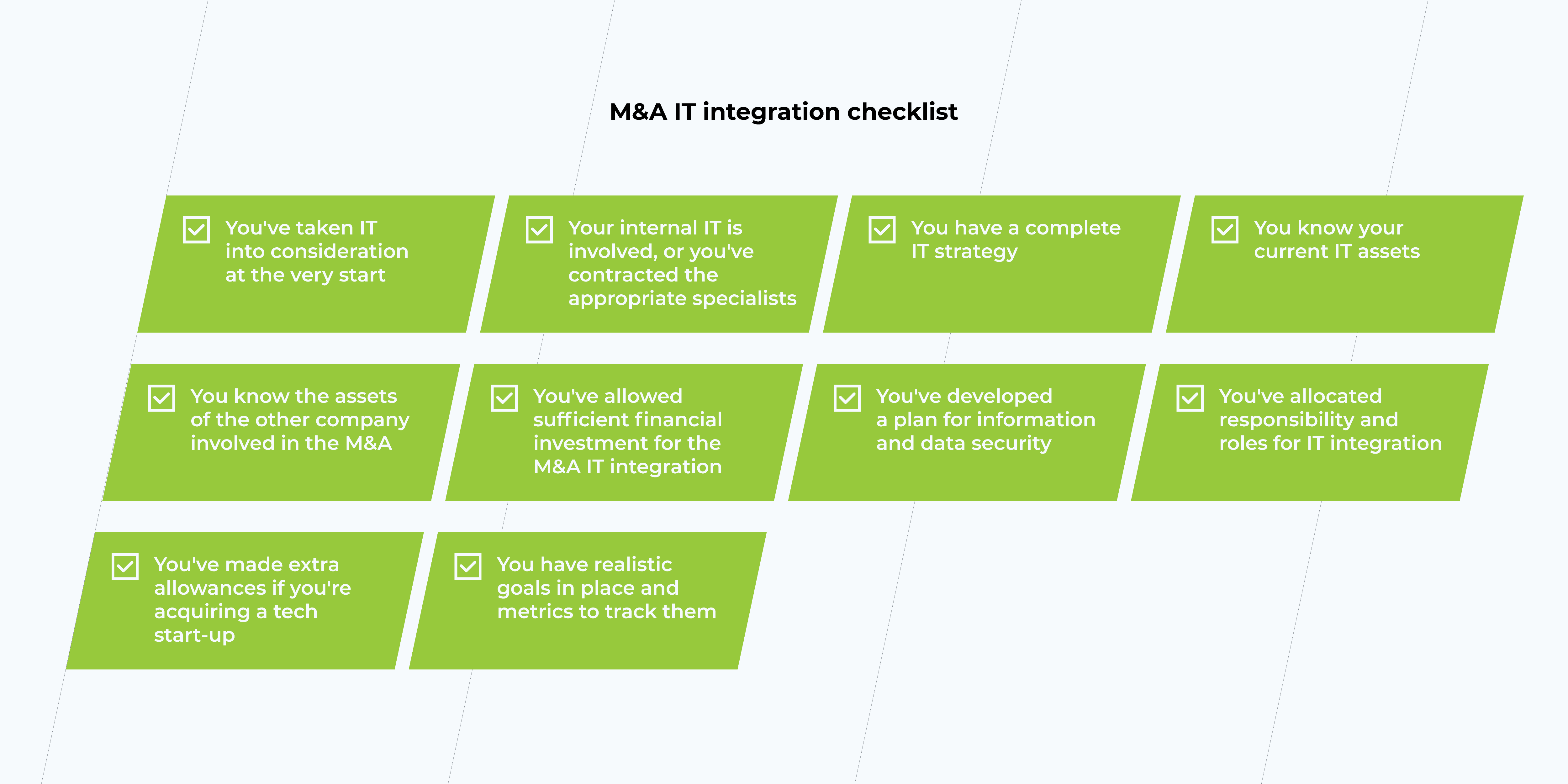
  • High level of scalability: SaaS is a perfect fit to accommodate fast-changing business needs. For example, if you’re suddenly swamped with new users, SaaS allows you to rapidly increase your capacity.  Not only can SaaS scale up and back down, but it also provides integrations with other SaaS offerings. 
  • Recovery option: while migrating to the cloud, there’s a risk of data breaches or unexpected disasters. So data protection becomes an issue of primary concern. In SaaS models, data is stored in multiple locations, so if data is lost, vendors have an option of backup and recovery to prevent data loss.
  • Accessibility: with SaaS, you can run applications 24/7 from anywhere. All you need is an internet connection, and with the wide availability of broadband and high-speed networks, this is a feasible condition.
  • Data storage: data is routinely stored in the cloud, which saves the memory of your computers. 
  • Analytics: SaaS provides access to data reporting and business intelligence tools. It encourages fast and efficient decision-making, which is, for sure, beneficial practically for all the areas of your business such as finance, marketing, project management, HR, etc.

Who Needs SaaS

SaaS solutions are beneficial to:

  • startups, small, and mid-sized business that want to have access to the software they wouldn’t be able to afford because of costly licensing fees;
  • companies that need to free up cash flow to support other areas of business;
  • short-term projects that imply collaboration.

Whichever cloud model you go for, it will take some time to adapt to it. Migrating your existing technology to a new cloud platform and training your team to manage it might turn out more demanding than you initially pictured. So, it can’t hurt to have an experienced managed service provider by your side, who is able to evaluate and prioritize your business needs, deliver a wide range of cloud services, and make sure your new environment operates properly.
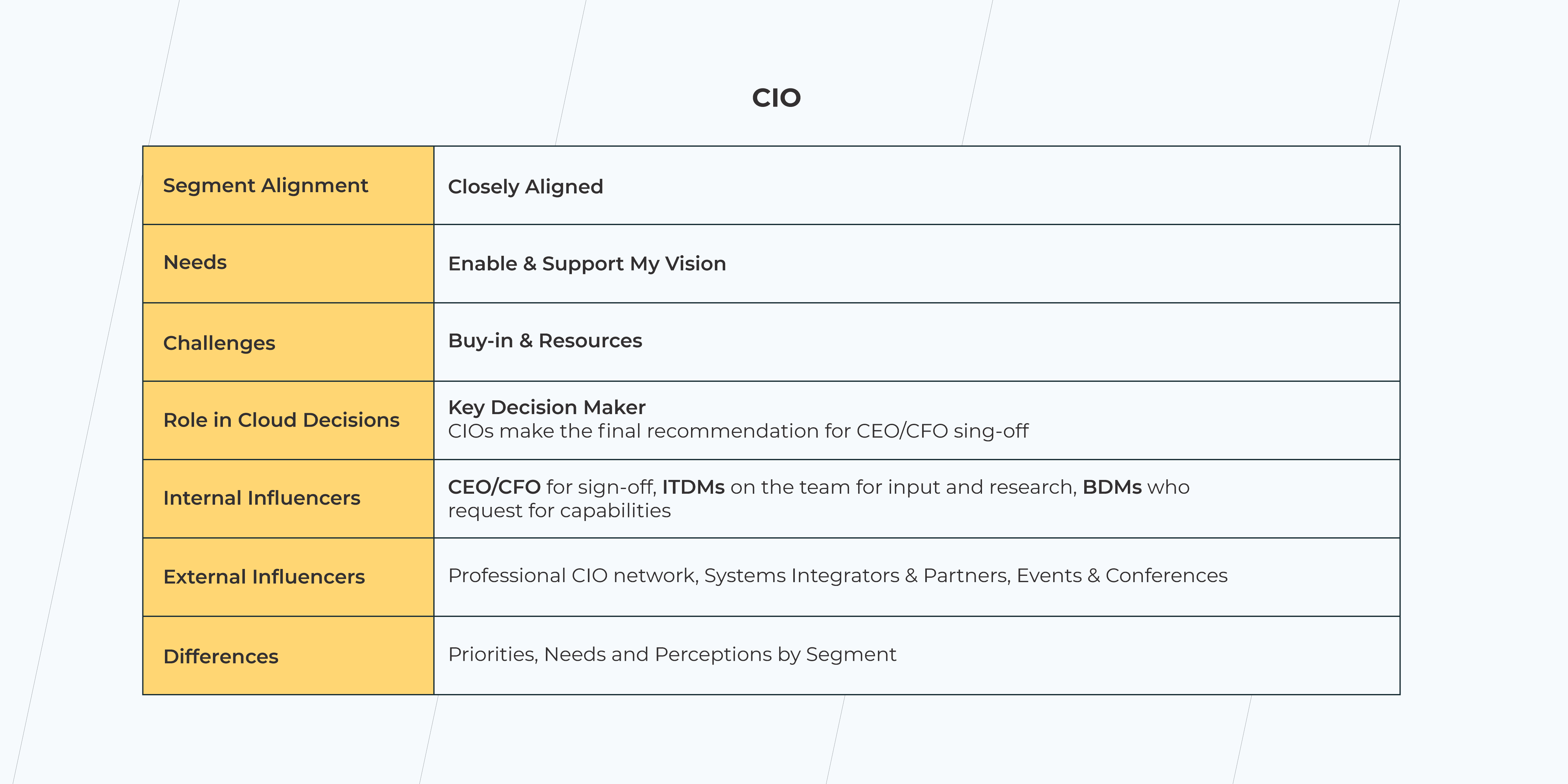
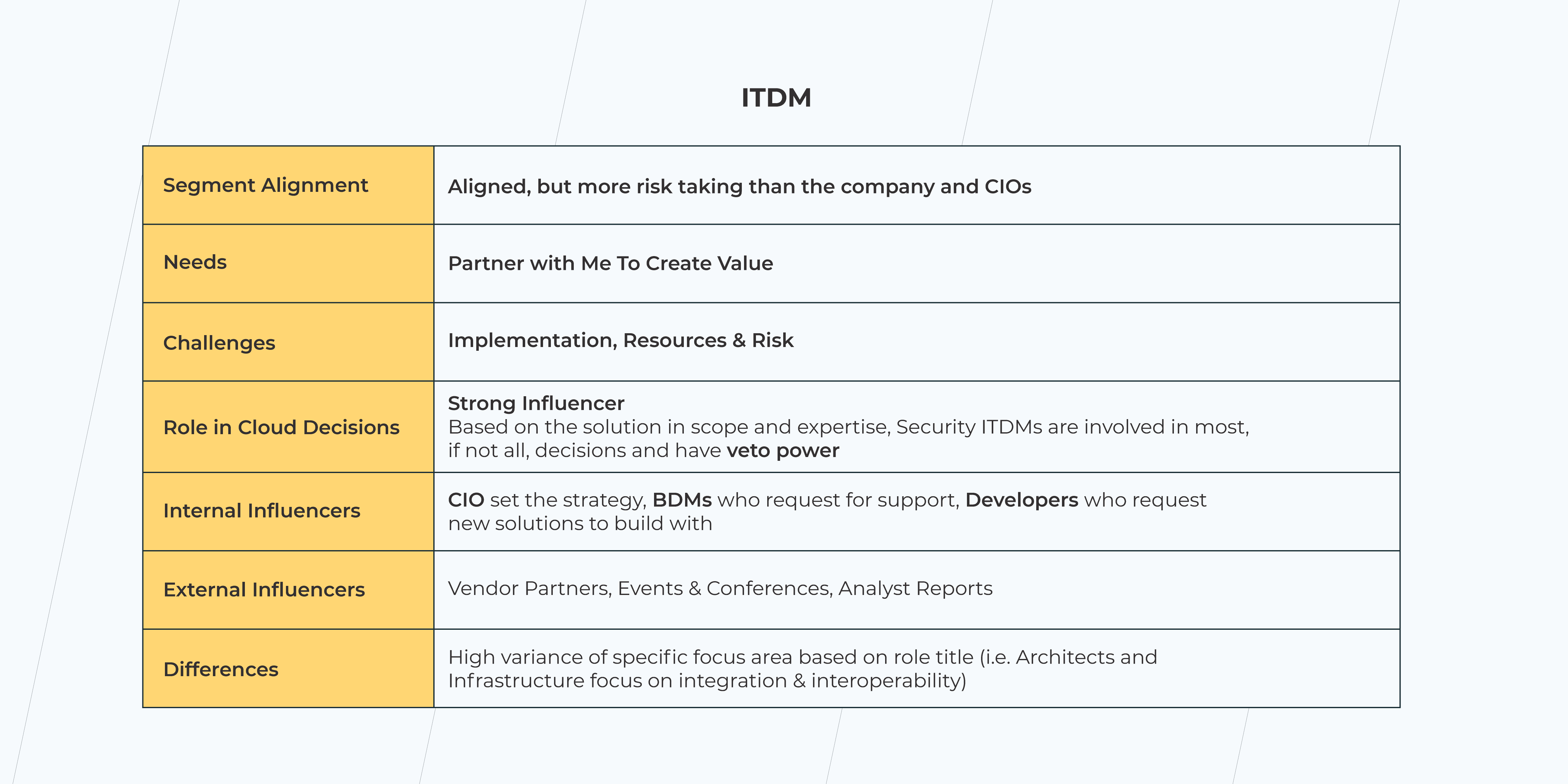
Contact us to know how to leverage the flexibility of cloud models to full extent.

6 Hidden Costs Of Cloud Migration

Control over expenses has always been one of the main promises of cloud computing. Unfortunately, cloud migration is far from a simple process. Without rigorous planning and an in-depth understanding of how it should be done, companies may run into pitfalls they didn’t initially expect. 

According to Capita, 56% of the surveyed IT decision-makers admit the cloud is more costly than they thought. Yet, the majority (86%) of respondents are satisfied with cloud computing. For more than three-quarters (76%) of organizations, moving to the cloud has led to an improvement in IT service levels, while two-thirds (67%) report the cloud has proven more secure than on-premise.

These numbers clearly indicate two things. The first is that the benefits of cloud migration are compelling enough to outweigh its downsides. The other one – enterprises should know exactly what to get ready for.

Cloud migration issues you haven’t been aware of

Vendor lock-in

There are situations where the cost of changing a vendor is so high that the customer is unwillingly stuck with the original vendor. Remember the early days of iTunes when Apple locked consumers into using the service because music bought via iTunes could only be played within the iTunes App?

The same ‘lock-in’ can take place when it comes to cloud service providers. There are good reasons to prove why this is bad. It might be the inability of the current provider to meet the new requirements of your growing business. Or, if your cloud provider goes out of business, your servers are gone too.

The truth is that most cloud migrations if planned and executed diligently, go pretty smoothly. However, if something goes wrong, cloud-to-cloud migration has become quite big of an issue. Here are some tips to mitigate vendor lock-in risks:

  • do your homework: figure out your cloud migration goals, assess your current IT situation, determine necessary cloud components;
  • make an ‘exit’ plan: no matter how weird planning to quit may seem at the beginning of your cloud journey, it’s an important step to protect your company in case your ‘plan A’ goes adrift;
  • maximize the portability of your data by avoiding proprietary formatting and make sure that your cloud vendor provides a way to extract data without difficulty;
  • consider a multi-cloud strategy to be able to choose the best offering from each cloud provider;
  • implement DevOps tools to maximize code portability.  

Overprovisioning

The word “provisioning” speaks for itself. As much as stocking up with essentials works for camping, it can also be perfectly applied to cloud computing, except the essentials in this case are not thermoses, sleeping bags, or tents. Provisioning is equipping cloud instances with everything it needs to run IT services.The problem is  there’s always a risk to either overestimating your needs or underestimating them.

Overprovisioning is buying more of something than you need and paying for power you don’t use. Meanwhile, the price of what you really need and what you pay for may differ significantly. There are a couple of things you can do to avoid this expensive mistake. First of all, size up your servers correctly. It’s a good idea to set up a baseline of how much power you use and start from there, monitoring and sizing up the resources as you go. Secondly, terminate idle instances. To lower the cost of your monthly cloud bill, don’t leave underutilized servers switched on. With IaaS, you don’t pay for instances that are turned off.

A fragmented approach to the migration process

Sometimes companies view migration from the bottom up when each department manages it in a vacuum. Such a strategy impedes the transformational process and causes the duplication of effort, which, at the end of the day, increases the cost of migration. To lessen the struggle with individual departments pulling time and resources in opposite directions, you need to unify your cloud migration strategy.

We have 20+ years of experience in performing digital transformations

Straight lift-and-shift approach 

Moving to the cloud will only save you money, if you know how your applications need to be changed, that is. As tempting as it may initially seem, the lift-and-shift approach doesn’t work as you expect it to with applications that are not cloud-friendly. It usually brings about degraded performance or operational issues. Moreover, without code optimization, configuration, or refactoring there’s little chance to maximize long-term cloud cost savings. Thus, identifying the critical features of the application is the crucial thing to do before the migration. Otherwise, it’ll be impossible to take full advantage of cloud implementation.

Support issues

If an online presence is critical for your business to operate smoothly, support issues should be of primary concern. If something goes wrong with your applications in the cloud, you can’t speak directly to the engineer or expect that your problem will be resolved in no time – cloud providers have their workforce limitations and expanding customer-base. Having to wait for the issue to be resolved takes its toll in terms of downtime and inability to serve end-users.

As long as customers can’t control infrastructure from their end, they have to be really careful about choosing a trusted cloud vendor that is capable of providing the level of support and protection you need. 

Lack of extra skills

Without a doubt, a team with a strong technical background is a must for carrying out cloud migration. But it’s not only your staff’s tech knowledge that can save you money. Non-technical skills are of equal importance:

  • proper project management

Planning and tracking, organizing and overseeing a lot of moving parts are essential when it comes to cloud computing success. So these are the abilities a good project manager should possess.

  • business knowledge

Understanding core business processes and being able to explain them to programmers ensures all the necessary business requirements will be met in the course of the cloud project.

  • understanding legal implications

Employees who can provide legal advice on cloud computing are invaluable for the company. Having some knowledge of rules and regulations around cloud providers can significantly improve decision-making.

Every migration journey is unique. For some companies that were ‘born digital,’ it’s likely to be short and easy, for others – longer and more complex.

Whichever path you’re meant to take, the destination can be reached with the help of partners who embrace your uniqueness. We lead and support companies in their cloud migration journey providing IT consulting and cloud computing services. Drop us a line if you have challenges with your cloud migration project.

Anna Vasilevskaya
AI modified real photo
Anna Vasilevskaya
Account Executive

Get in touch

Drop us a line about your project at
[email protected] or via the contact
form below, and we will contact you soon.