3D Room Scanning and AR Visualization

3D Room Scanning and AR Visualization Solution

How a luxury furniture retailer enhanced both the online and offline shopping experience by letting customers preview furniture in their own rooms, capture precise measurements automatically, and explore products in immersive 3D showrooms, ultimately raising the customer satisfaction score by 25%.

Business challenge

When it comes to luxury shopping, customers expect more than polished web pages and more than white-glove service in-store. That is the entry ticket. When every serious competitor delivers excellence by default, the real challenge is differentiation.

One lever not every luxury brand has mastered is innovation through technology. Applied correctly, they can strengthen both digital and physical customer touchpoints.

A high-end furniture retailer for whom we’ve already built a tailored ecommerce ecosystem, chose to lean into that opportunity.

The goals were to:

  1. Help customers visualize furniture in their own homes, so they can understand how pieces will fit and look in real spaces.
  2. Recommend optimal furniture dimensions for each room using an intelligent matching algorithm, reducing uncertainty about scale and fit.
  3. Handle cases where no catalog item fits perfectly by suggesting safe and feasible size customizations of existing models.
  4. Enable 3D exploration in showrooms for visitors to experience items that cannot be physically displayed due to space constraints.

To meet those objectives, Instinctools’ dedicated team was brought in to design a suite of innovative solutions that could remove friction from both online and in-store shopping experiences.

Solution

Our team designed and implemented the scanning app, matching algorithm, and holographic web application. Each solution was built to integrate seamlessly with the client’s existing workflows and data structures, ensuring a smooth end-to-end customer journey from scanning a room to selecting the right configuration and completing a purchase.

  1. Building a mobile app for room scanning 

We built a mobile app that reconstructs a room as a dimensionally accurate 3D model from LiDAR depth data. Computer vision algorithms detect structural elements such as walls, doors, and windows, while AR technology is used to visualize the reconstructed space in real time.

Once a user scans the room, the app analyzes the available space and generates optimal furniture recommendations from a catalog. Users can further customize items to match their personal preferences. The matching algorithm ensures that every suggested piece is compatible with the room’s exact dimensions, avoiding guesswork or manual measurements.

To keep the experience truly frictionless, our team integrated the app with the client’s Odoo-based ecommerce ecosystem so scan results and calculated dimensions flow directly into it. 

We’ve enabled real-time product selection and faster purchasing through creating a continuous path:
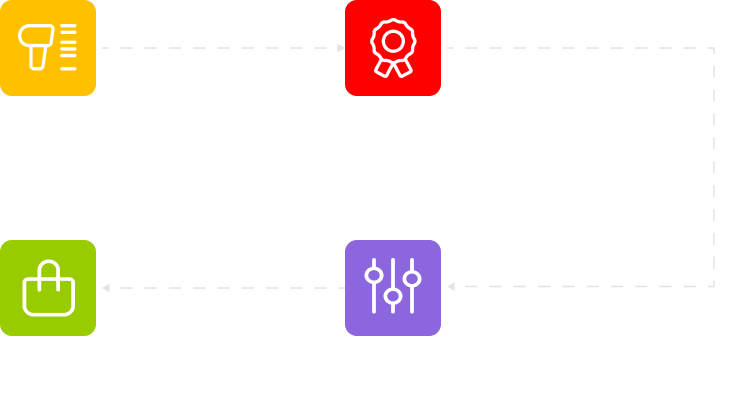
A flowchart with four colored boxes: yellow Scan with a barcode icon, red Recommendation with a ribbon icon, green Checkout with a shopping bag icon, and purple Configuration with a sliders icon. Text and icons are on a light gray background.

By combining AR visualization, precise spatial analysis, and automated product matching, the app delivers a frictionless experience for users and a data-driven tool for the retailer, enhancing both engagement and conversion.

A person holds a smartphone, using an app to preview a yellow sofa in a living room. The real room has brown leather furniture, shelves, plants, and large windows. The phone screen shows the yellow sofa on a rug in the same space.

Calculating optimal furniture dimensions from scanned spatial data to suggest in-stock items or custom-sized/MTO options

At the core of the room scanning app is a purpose-built matching engine designed to bridge the gap between a customer’s space and their desired furniture. The system starts with processing the room’s dimensions, captured through a 3D scanning feature.

The algorithm’s logic is built around dimensional compatibility. For each furniture category, such as sofas, tables, or armchairs, the system calculates an optimal size range based on the  room’s proportions and available space. It then filters the catalogue accordingly, showing only the items that fall within those parameters, so customers see options that actually fit rather than a generic product grid.

Where it gets especially valuable is in situations when no standard catalog item matches the room. In these cases, the algorithm identifies the customer’s preferred model and proposes a feasible, custom-sized option, suggesting adjusted dimensions to achieve a perfect fit and preserve design integrity.

From concept to client-ready solution

This feature started as a client’s Proof of Concept for how a size-aware recommendation engine should work. Using it as a blueprint, our backend developer delivered the first working version. After the demo, the client requested several modifications and provided additional requirements to align the logic more closely with their specific workflow. Following the update, the client’s subsequent testing confirmed that the final implementation matched their expectations perfectly, validating both the concept and its execution.

  1. Enabling immersive in-store product showcase through a holographic application

To make the showroom visit as premium and memorable as the products themselves, we developed an integrated solution that pairs a custom web application with Holobox holographic displays. The client acquired two Holobox units from Holoconnects – specialized hardware that uses a strategically positioned high-definition screen to create the illusion of a floating, three-dimensional image from 2D content, delivering a striking ‘hologram-like’ effect.

Technology foundation

Holobox runs on a proprietary operating system that boots directly into a full-screen Chromium instance. This setup effectively turns the entire holographic display into a web-rendering engine: any content loaded in the browser is instantly broadcast as a hologram.

We built a dedicated web application that serves as the brain of this experience. The app is designed to respond to user interactions in real-time, creating a seamless bridge between a handheld device and the large-format display.

Interactive workflow

In-store, customers can explore pieces that aren’t physically on the floor due to space constraints. For example, they can rotate a sofa, switch colors/finishes, and evaluate the look and presence of the product before committing.

The user journey is simple but powerful:

  1. A customer approaches the Holobox in the store and picks up a paired tablet.
  2. The web application loads on the tablet, presenting a browsable product catalog.
  3. As the user scrolls or selects an item on the tablet, the app transmits a signal to Holobox.
  4. The Chromium browser on the Holobox  updates instantly, displaying a high-resolution, holographic visualization of the selected product.

From a technical standpoint, this required implementing a robust, low-latency communication channel (using WebSockets) to ensure the holographic display feels like a direct extension of the tablet. The result is an immersive, interactive experience which also helps customers make more informed decisions.

Before

  • Inability to picture furniture at home
  • Manual guesswork about furniture fit
  • Physical showroom space limitations

After

  • Realistic AR visualizations for confident decisions
  • Intelligent matching algorithm calculating optimal size ranges per room and proposing safe customization when no SKU fits perfectly
  • Immersive holographic product display via Holobox hardware, powered by a dedicated web app

Business value

  • Premier buying experience offline and online
  • +20% online sales growth
  • +25% CSAT increase

Odoo-based Ecommerce Ecosystem

Odoo-based Ecommerce Ecosystem for a Luxury Furniture Retailer

How a high-end furniture retailer grew online sales by 20% and improved CSAT by 25% by launching an Odoo-based ecommerce ecosystem.

Business challenge

Hardly a surprise, purchasing habits are drifting online. By most metrics, luxury retail is already there. Online sales of premium furniture, for instance, have been climbing by roughly 30%* year over year.

At the same time, many high-end buyers remain charmingly old-school, insisting on touching fabrics and performing a slow lap around the showroom before committing to a five-figure sofa. But even when the final transaction happens offline, the decision rarely does. Nearly 80%** of luxury sales today are digitally influenced: shoppers engage with one or more digital touchpoints before they buy.

*McKinsey

**Grand Research Store

This leaves established luxury brands in a constant balancing act: preserving their heritage and boutique experience while adapting to modern ecommerce expectations.

That omnichannel tension was at the core of our client’s concerns, a high-end furniture and housewares retailer. They sought a robust ecommerce solution that could complement their boutique sales and digitize operations across multiple premium manufacturers, including those offering made-to-order furniture.

Impressed by the portfolio of completed ecommerce implementations by Instinctools, the retailer secured a dedicated team for the end-to-end development of their own ecosystem.

Solution

We proposed an ecommerce solution built on ready-made, specialized components, while fully tailored to the client’s business specifics. As a foundation, we picked up the Odoo platform, which best met the client’s requirements in terms of cost and functionality. To accelerate delivery and keep costs under control, we assembled the system from proven, ready-made building blocks: ERP, CRM, CMS, etc, allowing us to move fast without compromising reliability.

  • An online storefront with an exquisite, minimalist interface that highlights high-resolution, artistic product imagery, paired with a purchasing journey that feels exclusive, polished, and perfectly on-brand.
  • A centralized ERP system uniting a CRM module, order management, quality control panel, and logistics module under its hood for synchronized, hitch-free back-office processes orchestration.
  • A dedicated manufacturing portal for seamless communication and collaboration with external production partners.
  • A mobile room scanning app powered with an intelligent size-matching algorithm for calculating optimal furniture dimensions and suggesting either in-stock or Made-to-Order options.
  • A custom web-based holographic app for immersive in-store product showcase.
  1. Core system components in detail

Below is a closer look at the key components of the solution and how they work together across commerce, operations, and fulfillment.

Equipping internal users with feature-rich functionality to deliver a premier shopping experience

Our team developed a Next.js-based ecommerce frontend that supports customer optional sign-up, appointment booking, and end-to-end purchasing in one consistent customer journey across both online and in-store touchpoints.

Operational capabilities covered in the storefront:

  • Catalog management
    • Creating and structuring product categories
    • Configuring main-menu navigation
    • Creating, updating, and assigning products to categories
    • Building and publishing collections, including product videos
    • Managing product attributes (e.g., size, color) to support complex configurations
  • Pricing, regions, and promotions
    • Creating and managing price lists
    • Setting region-specific pricing and mapping it to country groups
    • Configuring and maintaining discount and loyalty programs
  • Order management
    • Searching and reviewing online orders with full visibility into key sales-order data (customer, order lines, pricing, taxes, totals, statuses, delivery and invoicing details, payment terms, and shipping method)
    • Updating order details when business rules allow
    • Linking historical orders made by guest users to a newly created customer account
    • Creating orders manually (for assisted sales), generating payment links, and triggering transactional emails when an order is posted

By bringing online and in-store shopping into a single system and keeping catalog, pricing, and customer data connected, the storefront simplifies day-to-day operations, improves the buying experience, and gives the business tighter control over regional pricing and promotions while remaining flexible for future growth.

Orchestrating back-office operations within a centralized ERP system

Before embarking on a full-scale retail digital transformation, the client’s online presence was limited to a basic Shopify storefront. Behind the scenes, almost everything that happened after checkout was handled manually, making fulfillment slow, error-prone, and largely opaque, with no real-time visibility into production. Within the Odoo-based ERP portal we designed, teams can now manage the full back-office cycle from customer data and order orchestration to production control, quality gates, and delivery coordination.

  1. Customer relationship management

    A CRM module consolidates all customer data in a centralized repository. Here, the team can view detailed customer profiles, including purchase history and preferences, create new customer entries, update contact information and account status in real time, and add private internal notes to track specific client requirements or conversations.

  1. Orders processing and production handoff

    Once the quotation is confirmed either by a customer completing payment online, or by a sales representative confirming it on behalf of a customer in-store, it becomes a Sales Order (SO). SO contains a series of attributes that provide comprehensive details about the order, including the item name, its manufacturer, optional product details, quantity, unit price, taxes, delivery option, etc.

Sales order workflow

Quotation

The initial draft is created, sent for approval, or shared with the customer.

  • generated automatically (when a customer places an order online)
  • Created manually by the Admin for specific customer requests
Confirmation

Once confirmed, the order moves to Sales order status.

Invoicing

Invoices are generated and payments are recorded.

Delivery

The furniture item is prepared, shipped, and marked as delivered.

Once the Sales Order is confirmed and payment is received, the workflow automatically shifts into production. If the item is out of stock or requires customization, the system generates a corresponding Purchase Order (PO). Before it’s sent to the manufacturer linked to the product, a sales manager validates that the PO meets production standards by:

  • Checking that the Purchase Order contains all the necessary details about the piece of furniture to be manufactured, including product specifications, sizes.
  • Checking that the purchase order contains all the necessary production files (e.g. CAD, renderings, assembly instructions, etc.)

If a sales manager thinks that files or notes for the manufacturer are needed, they can add a message to the purchase order.

After all the checks and PO confirmation, the status of the purchase order changes to “Awaiting Manufacturer” and becomes available to the manufacturer in a Manufacturer portal.

The order processing module gives sales and production managers a dedicated workspace to:

  • View all pending orders in a prioritized queue
  • Break down orders into manufacturing requirements (materials, dimensions, finishes).
  • Assign jobs to specific manufacturers
  • Track the progress of each order through the production lifecycle
  1. The quality control
    of the manufactured products

    Since quality is central to the client’s brand, we embedded quality control (QC) directly into the production workflow. For each manufactured item, designated quality controllers can:

  • Log inspection results against predefined quality checklists
  • Capture and attach photos of finished items for visual verification and auditability
  • Flag defects or non-conformities and automatically trigger rework, where needed
  • Approve products for delivery only after they meet the required standards

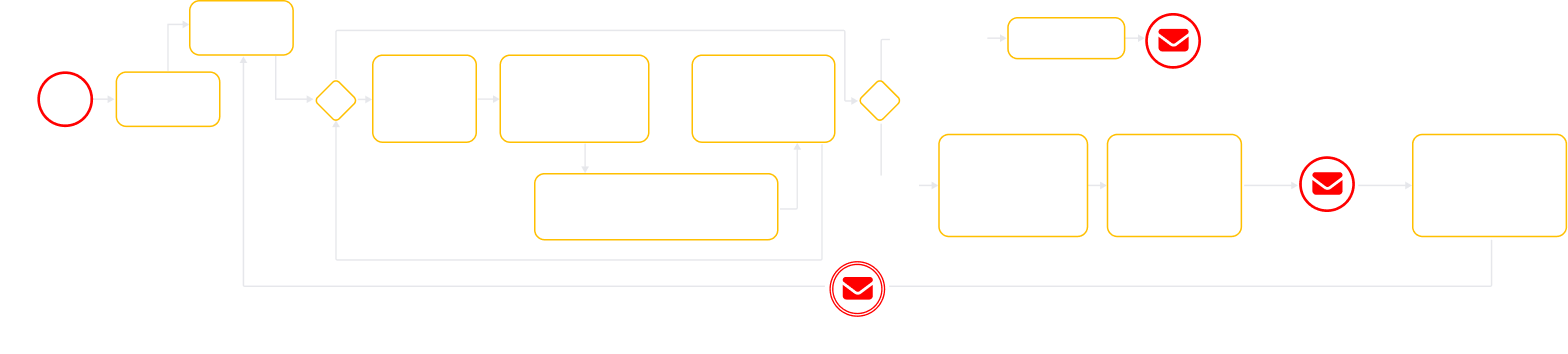
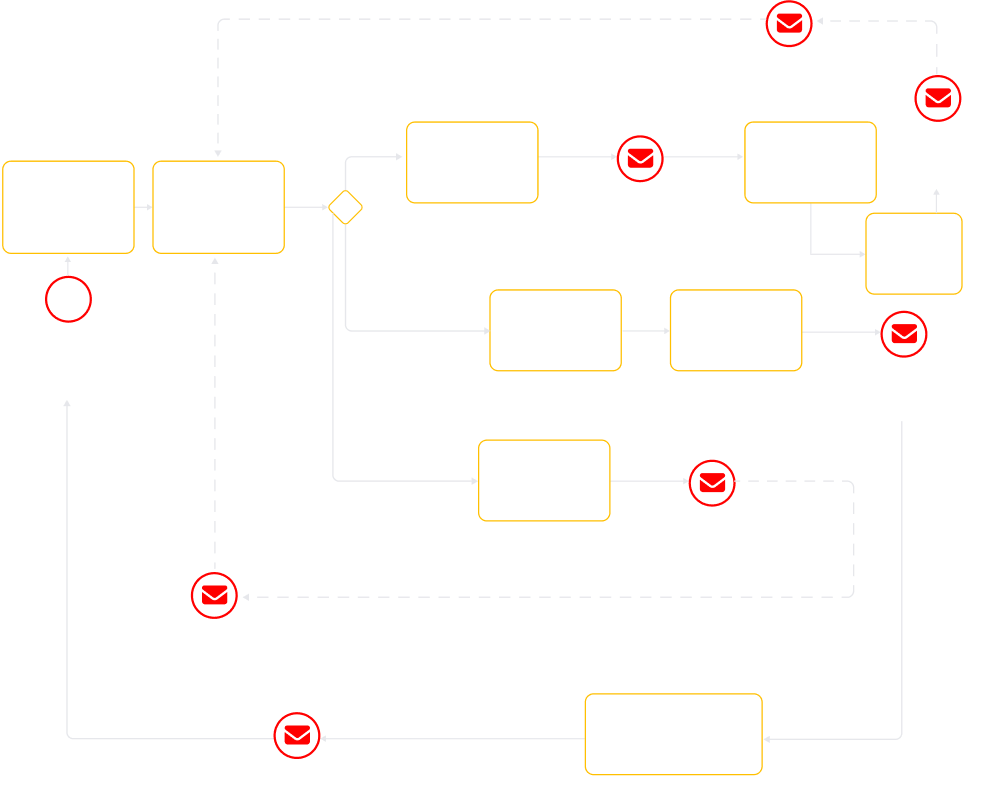
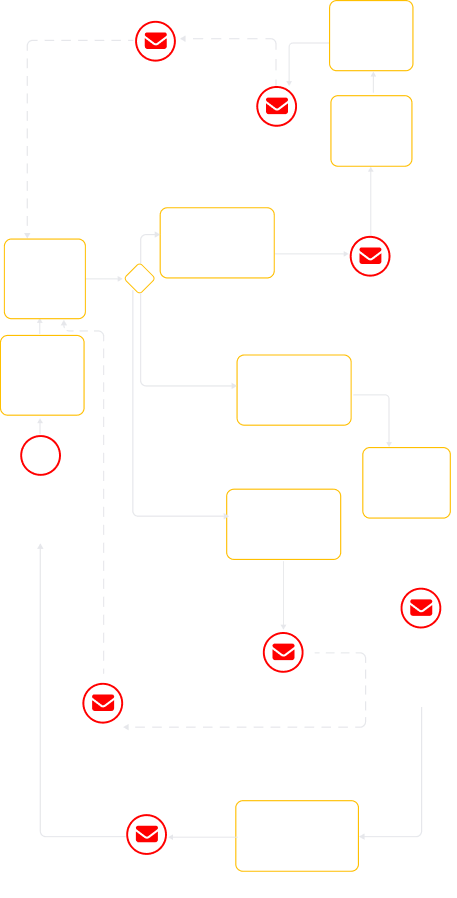
Quality control workflow

A flowchart outlines an order process. Key actions include logging in, viewing orders, selecting items, conducting checks, attaching images, submitting for QA, adding rejection reasons, and communicating issues. Red envelope icons mark communication steps.
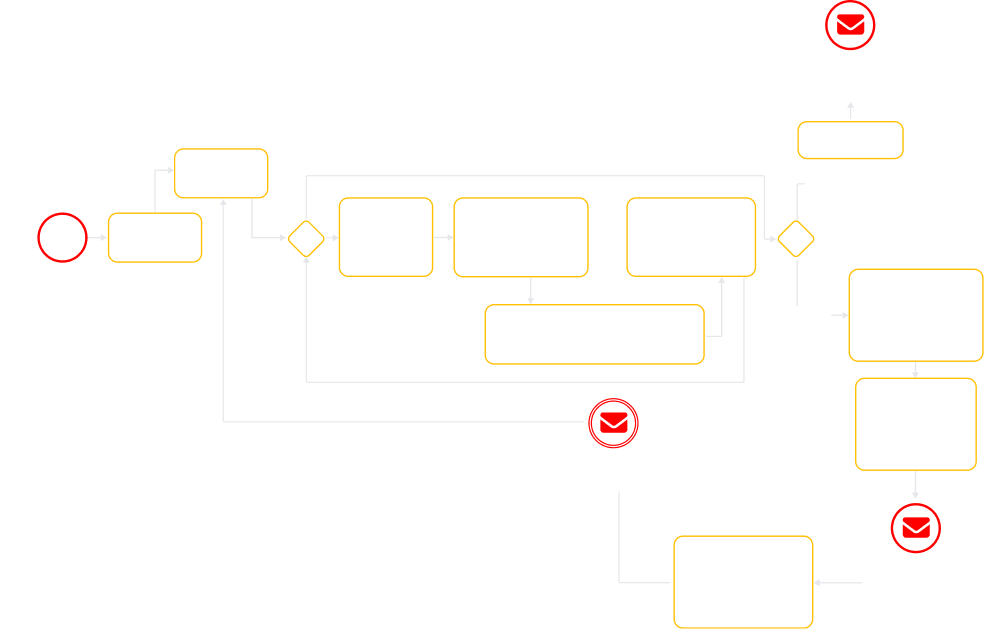
Faded flowchart with yellow and white boxes connected by arrows. Red icons with envelopes highlight three steps: Click on the Link in Email Notification, Review notification that order is assembled, and System sends instructions to Manufacturer.
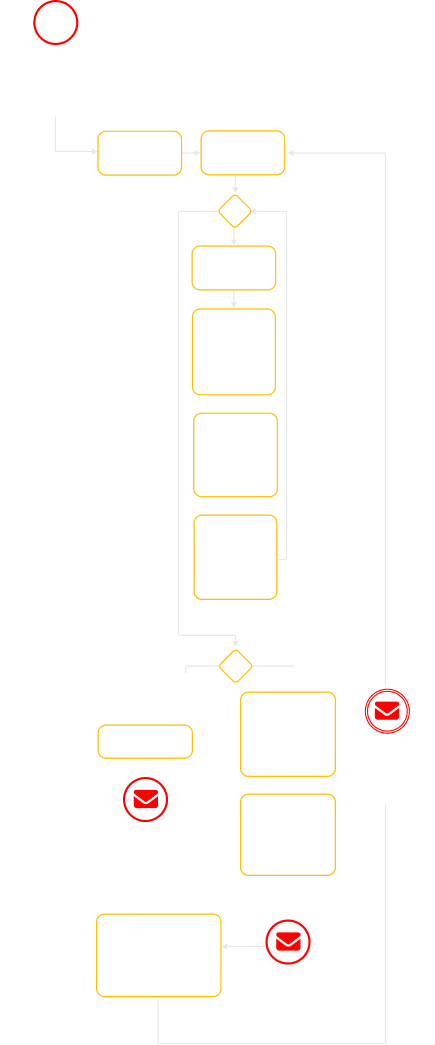
A vertical flowchart with yellow boxes and diamond shapes outlines a process that includes steps like Log in, View the order, and other subsequent tasks. Several red envelope icons are overlaid at decision points. The flowchart fades towards the bottom.
  1. Product delivery management

    The delivery module ensures that approved products leave the manufacturing facility and arrive at the customer’s doorstep on-time. Logistics coordinators begin by confirming the shipping address and verifying key order details, such as order lines, delivery dates, or pricing, making manual adjustments if needed. This blend of automation and manual flexibility ensures timely, accurate deliveries while handling real-world logistics exceptions.

Empowering production partners through an easy-to-use and secure manufacturer portal

To close the loop between sales and production, we built a dedicated web interface for the client’s manufacturing partners. Just as registered customers have their own personal account with the history of purchases, each manufacturer is invited to the system via a secure login, gaining access to a tailored portal that connects them directly to the orders they need to fulfill.

Secure, role-based access

When a manufacturer is onboarded, they receive an invitation to create their account. Upon login, they see only the data relevant to them, namely, the purchase orders assigned to their workshop. This role-based access ensures that sensitive customer or business information remains protected while giving manufacturing partners exactly what they need to do their jobs.

Order management at their fingertips

Once inside, the manufacturer is presented with a clear, intuitive interface for managing their workload. Key capabilities include:

  • Viewing purchase order lists. A comprehensive list of all assigned orders, providing a snapshot of current and upcoming work.
  • Viewing purchase order details. Deep visibility into each order, including product specifications, materials, dimensions, and customer notes.
  • Searching for purchase orders. A robust search function to quickly locate specific orders by ID, customer name, or date.
  • Sorting purchase order lists. Flexible sorting options to prioritize orders by deadline, status, or value.
  • Processing purchase orders. The ability to accept new orders and move them through production stages, updating the status in real time, from “Accepted” to “In Production” to “Completed.”
  • Downloading furniture unique code. Access to unique identifiers for each piece of furniture, which can be printed or scanned to track items through production and delivery.
Profile management

Manufacturers can also manage their own profile settings within the portal, keeping their contact information, business details, and preferences up to date.

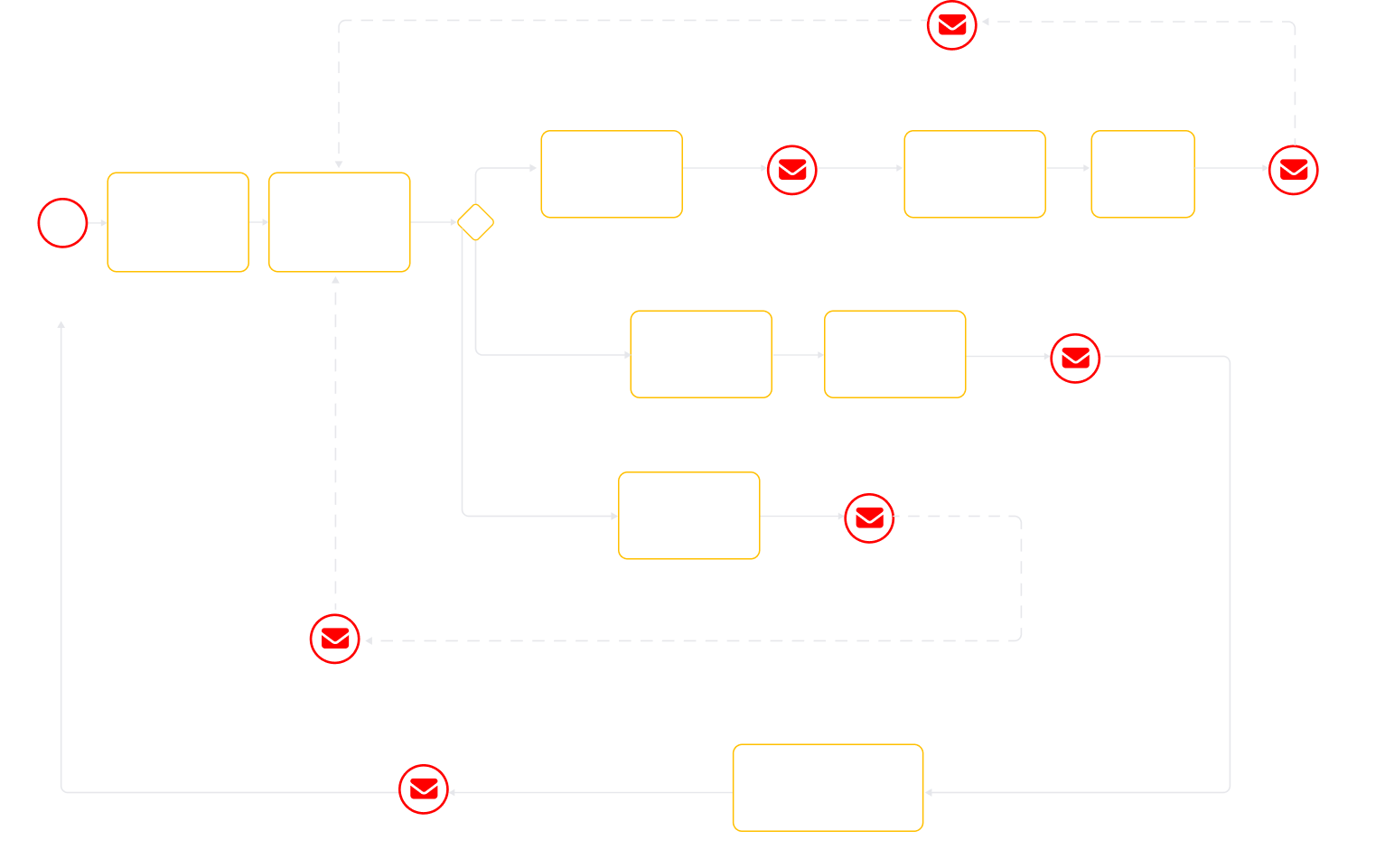
User story within the Manufacturer portal

A flowchart with yellow boxes and arrows on a light background, showing steps like “Authorize at Manufacturer Portal,” “View the Order,” “Accept the Order,” and “Download outlook for every item,” with red email icons marking communication steps.
A flowchart showing order processing steps with rectangles outlined in yellow. Red mail icons appear at steps like View the Order, Authorize at the Manufacturing Portal, Accept the Order, and Reject the Order. Some paths and text are faded gray.
A vertical flowchart with yellow-outlined boxes and diamond shapes, red mail icons marking steps. Boxes describe steps like Accept the Order, View the Order, Reject the Order, and Offline communication with Admin.” Lines connect steps.

Enriching the client’s ecommerce ecosystem with room scanning and holographic apps

Alongside ecommerce development, our engineers built a suite of complementary digital solutions to support the client’s non-standard ecommerce workflows:

  • A mobile app that analyzes a room’s dimensions, recommends catalog items that fit perfectly, and suggests size customizations.
  • A web app for Holobox displays, letting customers view products in 3D, rotate them, and change colors via a paired tablet.
  1. The technical choices behind speed, savings, and long-term resilience

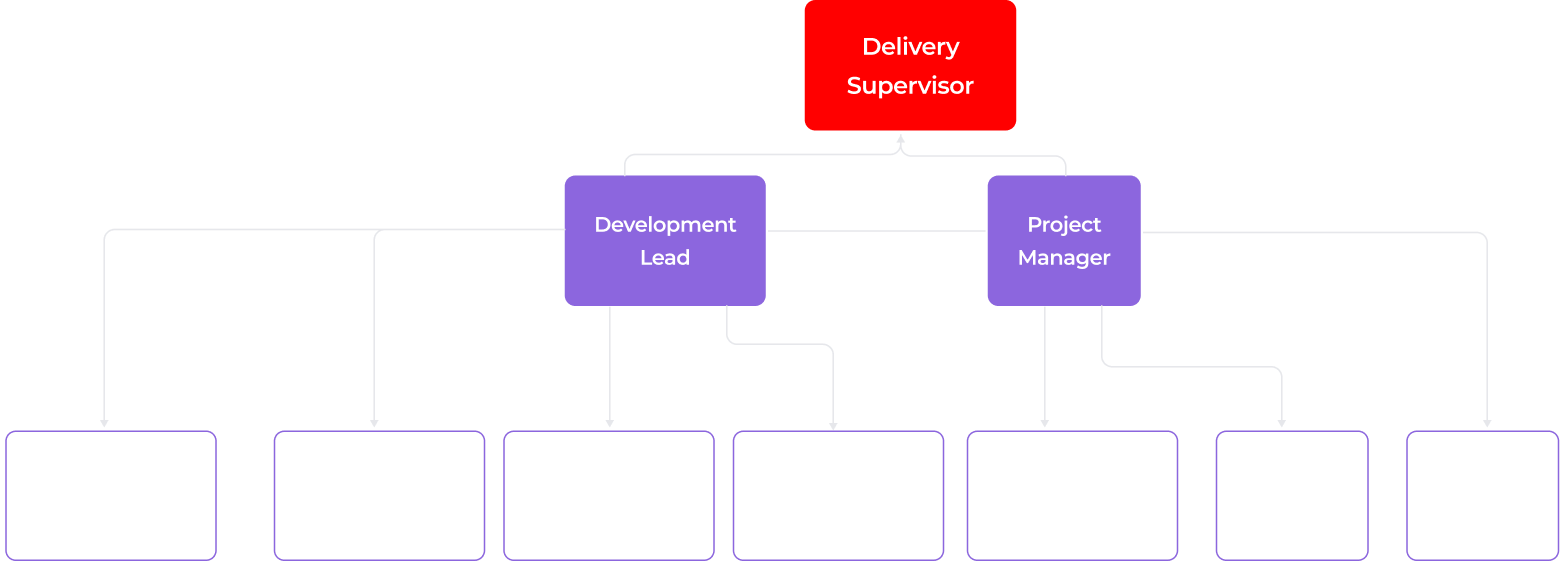
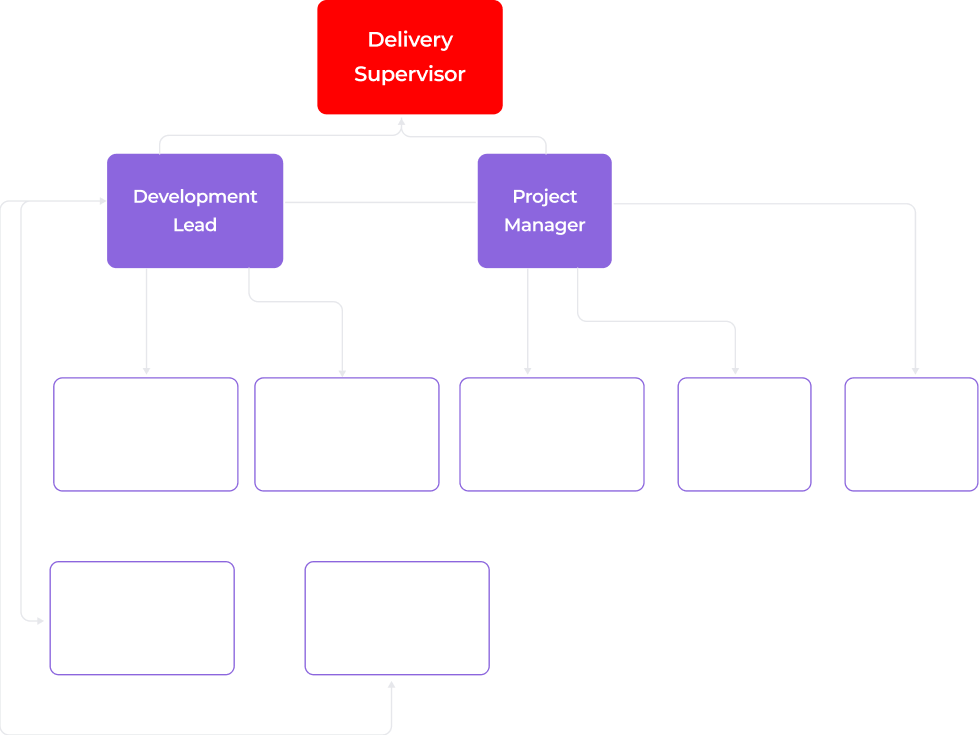
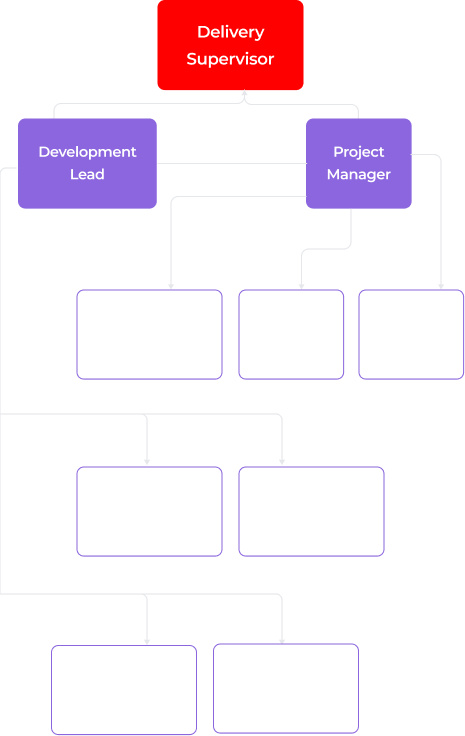
During a thorough discovery phase, led by our Business Analyst and supported by key team members, we investigated requirements, constraints, design, and technical architecture to shape the budget and development roadmap. With this foundation, we then assembled a cross-functional team of 8 specialists.

An organizational chart shows a red box labeled Delivery Supervisor at the top, connected to two purple boxes: Development Lead and Project Manager. Below, six faded boxes list various developer and analyst roles, connected under the purple boxes.
An organizational chart with a red box labeled “Delivery Supervisor” at the top. Below it, two purple boxes read “Development Lead” and “Project Manager.” Under them are faint, linked roles such as Developer, Engineer, Analyst, and Designer in lighter purple boxes.
An organizational chart with Delivery Supervisor in a red box at the top. Below are Development Lead and Project Manager in purple boxes, each branching to faded boxes for roles: Business Analyst, QA Engineer, UX/UI Designer, DevOps, React Native, Frontend, Backend.

Deciding on the software linchpin

To define a scalable, delivery-ready architecture, we aligned on several core technology decisions early in the project:

  1. Choosing platforms capable of supporting both ecommerce and manufacturing workflows as a unified foundation. The solution needed to go beyond standard ecommerce flows and involve manufacturers, QA, and production logic, so we extended the architecture to include ERP- and CRM-like capabilities, rather than treating manufacturing as a bolt-on.

Non-standard ecommerce flows to support high-end customer experience:

A white icon of two overlapping rectangles, one above the other, is centered on a red square background with rounded corners. The design is simple and geometric, suggesting layers or stacking.
Selective access
to collections

The platform must dynamically manage access to some collections or limited-edition pieces available only to specific clients, without creating friction for other users.

A white dollar sign is centered inside a scalloped circular badge on a bright yellow background. The badge and icon are simple, with clean lines, conveying a money or price symbol.
Payment before
final customizations

The system should secure payments for made-to-order products in advance, allowing for post-purchase adjustments without overcommitting manufacturing or violating accounting rules.

A white gear icon with six teeth is centered on a bright green square background with rounded corners, symbolizing settings or configuration options.
Post-purchase configuration adjustments

The ability to adjust selections, such as fabric or finish after purchase, while staying within production constraints and maintaining accurate invoicing and inventory management.

  1. Prioritizing existing platforms, services, and infrastructure to accelerate delivery. With strict deadlines, reusing proven components reduced engineering effort and compressed the time to market without sacrificing reliability.
  1. Building the solution on open-source software with a custom service layer to ensure long-term scalability. This approach keeps the system flexible for post-MVP scaling, letting us expand workflows and functionality without being constrained by rigid platform limits.

To meet the client’s ambitious quality objectives and accommodate the unique demands of non-standard ecommerce flows, we selected Odoo as the foundation for the solution.

Odoo is a Python-based open-source platform that supports multiple business domains, including ecommerce, ERP, CRM, accounting, and more. This makes it the perfect choice for a hybrid commerce-manufacturing system.

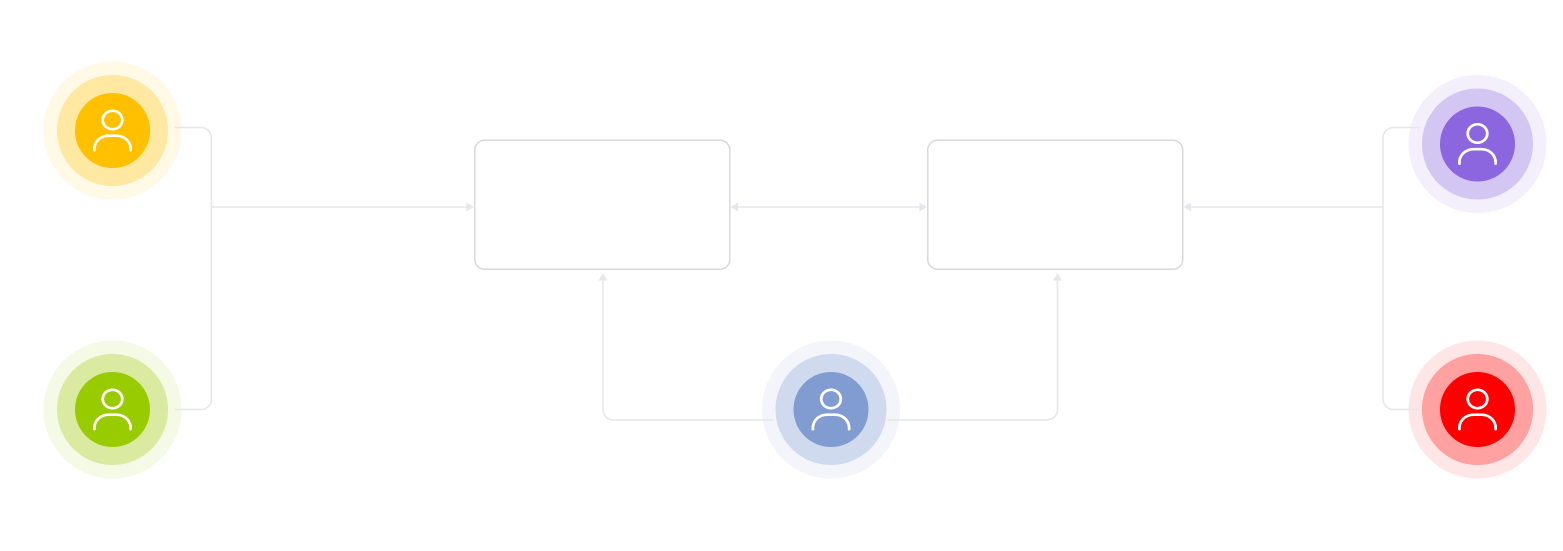
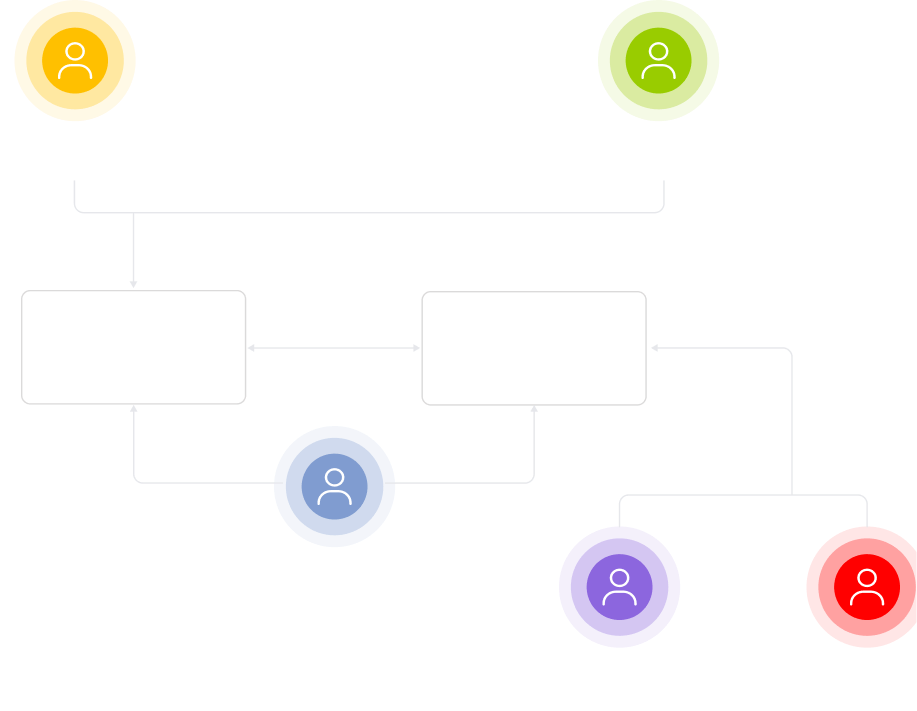
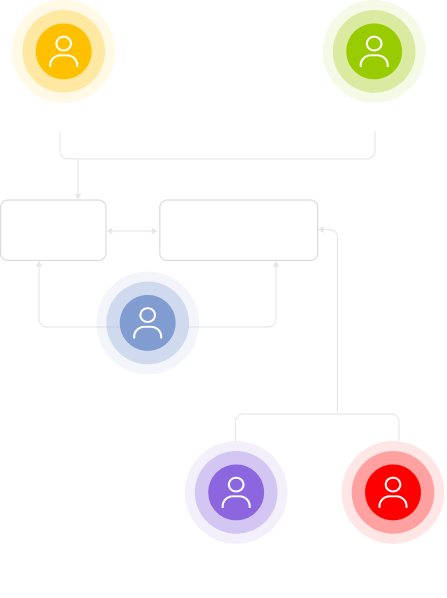
High-level solution architecture
A flowchart with six colored circles labeled: Customer (yellow), Sales assistant (green), Admin (blue), Manufacturer (purple), Quality controller (red). Central boxes “E-store” and “Manufacturer portal” connect these roles, illustrating an interaction process.
A flowchart with six colored circles labeled: Customer (yellow), Sales assistant (green), Admin (blue), Manufacturer (purple), and Quality controller (red). E-store and Manufacturer portal boxes connect these roles with arrows, showing workflow steps.
A flowchart with six colored circles labeled: Customer (yellow), Sales assistant (green), Admin (blue), Manufacturer (purple), Quality controller (red). Faded boxes labeled E-store and Manufacturer portal connect some roles.

Migrating the commerce stack from Shopify to Odoo

At first, we considered retaining the client’s existing Shopify setup for ecommerce and integrating Odoo as a manufacturing portal. Shopify’s SaaS model offered straightforward, out-of-the-box ecommerce features and its POS offline capabilities seemed ideal too, minimizing the need for a custom POS layer.

However, it soon became clear that the project’s non-standard ecommerce flows would have required heavy customization around Shopify:

  • Customer access control: Shopify POS lacks granular control over customer visibility, meaning sales assistants could view all customer profiles, which is an unacceptable limitation for privacy and security.
  • Appointment booking: The existing Shopify plugins did not cover the required appointment booking logic, making custom development unavoidable.
  • User limits: The client’s Shopify plan supported only 15 users, which would quickly become a bottleneck as new boutiques were onboarded.
  • Payment and measurement flow: Shopify’s order model didn’t support the required process of ‘pay first, finalize measurements later’, preventing updates to paid orders with actual measurements.

With all those constraints, we determined that the benefits of maintaining Shopify for a limited set of functions, such as catalog, orders, and customer management, didn’t outweigh the potential complexity and risks of extensive customizations. Instead, together with the client, we made the strategic decision to migrate fully to Odoo, leveraging its flexibility to build a tailored, scalable solution that better aligned with the company’s long-term needs.

Handling integration quirks

Since the client was on Odoo Community (vs. Enterprise), we were working with a pretty limited feature set out of the box. To deliver a seamless experience, we had to extend, modify, and sometimes completely rebuild standard connectors.

Twilio: predictable messaging without platform constraints

Odoo’s native integration with Twilio required purchasing additional tokens just to send SMS messages, which added recurring costs and limited flexibility.

We eliminated this dependency by building a custom integration that communicates directly with Twilio’s API. This gave the client full control over messaging costs and functionality, from order confirmations to delivery alerts.

DHL Express: making shipping rates and validation resilient

The DHL integration presented the most challenges, requiring numerous adjustments to make it reliable.

  • Rate calculation on holidays. DHL could return no live rates during non-business days. We adjusted the logic to automatically check the next available business day, so shipping costs are always available at checkout and in back-office flows.
  • Address validation discrepancies. DHL’s location data sometimes differed from common sources like Google Maps or Wikipedia, causing validation failures. We implemented more tolerant matching to prevent unnecessary customer friction.
  • Verification and compliance. We went through an extensive verification process because DHL requires strict data accuracy for international shipments. Even minor errors in customs declarations can result in fines, holds, or delivery delays. To address this, we implemented an API-driven declaration flow: customs declarations are generated via DHL’s API only after our system pre-validates all line items and required shipment data, ensuring everything passes DHL’s checks before submission.
Stripe: modern checkout with multiple payment methods

Odoo’s default Stripe component was outdated, exposing too few payment options in the UI. The business needed credit cards, digital wallets, and local payment methods to maximize conversion.

We developed a custom express checkout component from scratch, creating a modern, flexible interface that met the client’s requirements and improved the user experience.

Decoupling the storefront UI for enhanced performance and flexibility

Although Odoo offers an out-of-the-box storefront builder for easy customization, relying on it introduces potential performance risks. Since Odoo renders pages on the server, page load speed directly depends on its current resource utilization and processing capacity.

To avoid future performance constraints, we suggested implementing the ecommerce application as a standalone Next.js (React) application integrated with Odoo via REST API. While Next.js uses server-side rendering, hosting it as a separate storefront keeps site speed independent of Odoo’s workload and lets use prerendering and caching to deliver pages faster.

Besides, the client was not satisfied with the built-in builder’s limited customization options for style, fonts, colors, and layout. To ensure every page matched the client’s vision, our UX/UI designer reworked each of them, and, once approved, our frontend engineer turned the static mockups into functional, performant, and accessible user interfaces. Some elements, such as the booking calendar and the customer address section in the user account were built completely from scratch because they were not supported natively in Odoo.

Mitigating long-term architectural and delivery risks

A monolithic approach (combining ecommerce and manufacturing portal into a single service) accelerates development speed but increases long-term risks, such as architectural complexity, codebase entropy, and scalability constraints. To tackle these risks, the team followed best engineering and architectural practices:

  • Source control (Git). All source code was hosted in a Git-based repository. While Instinctools could run a dedicated GitLab environment for the project, we recommended the client maintain its own repository on GitHub, GitLab, or another Git platform to retain long-term ownership and access control.
  • Code review. All merges into the main branch were reviewed by at least one of our engineers. By keeping merge requests small and focused, we minimized review complexity and reduced the risk of overlooking important issues.
  • Automated testing. Although there was no mandatory test coverage requirement, we recommended that automated testing be considered for critical features, provided the timeline and scope allowed, to ensure the highest level of functionality and stability.
  • Coding standards. The solution was built on Odoo (Python) and React (JavaScript). Our team followed internal coding standards for both Python and JavaScript.

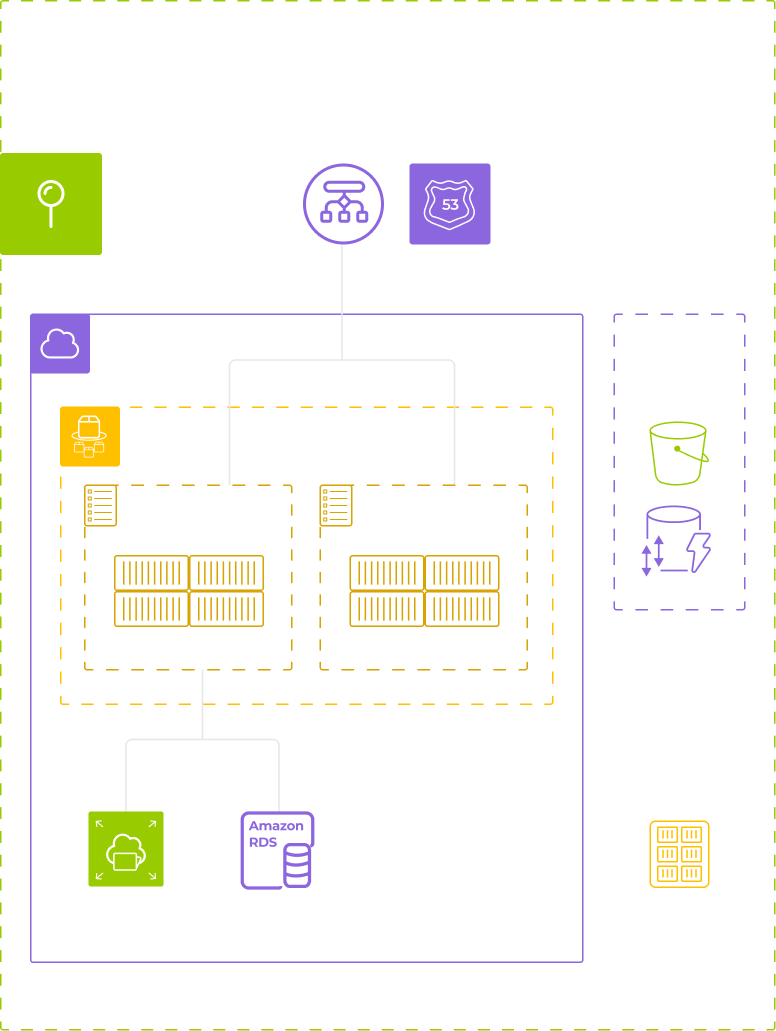
Deploying infrastructure on AWS

Leaning on native AWS services allowed us to obtain core infrastructure features, such as autoscaling, backups and recovery, observability, and security controls, out of the box, reducing operational complexity and long-term maintenance overhead.

  • ECS Fargate runs application containers and enables seamless horizontal scaling without the burden of managing servers.
  • Amazon Aurora PostgreSQL is used as a fully managed relational database, providing high availability and scaling capabilities.
  • The solution is deployed within a Virtual Private Cloud (VPC) with isolated public and private subnets to enforce security boundaries and controlled exposure.
  • Amazon EFS provides shared, multi-AZ file storage to ensure durable and scalable application workloads.
  • Amazon ECR stores and distributes private container images securely and efficiently.
  • Sensitive credentials are protected by AWS Secrets Manager. Administrative access is controlled via a bastion host deployed in a private subnet.
  • All infrastructure is provisioned and managed using Terraform to ensure reproducibility and controlled change management.
Diagram of AWS-based infrastructure deployment view: shows components like VPC, ECS Fargate (running Odoo and a frontend SPA), Amazon RDS, EFS, S3, ECR, and Terraform state, organized in colored outlined boxes with icons representing each service.

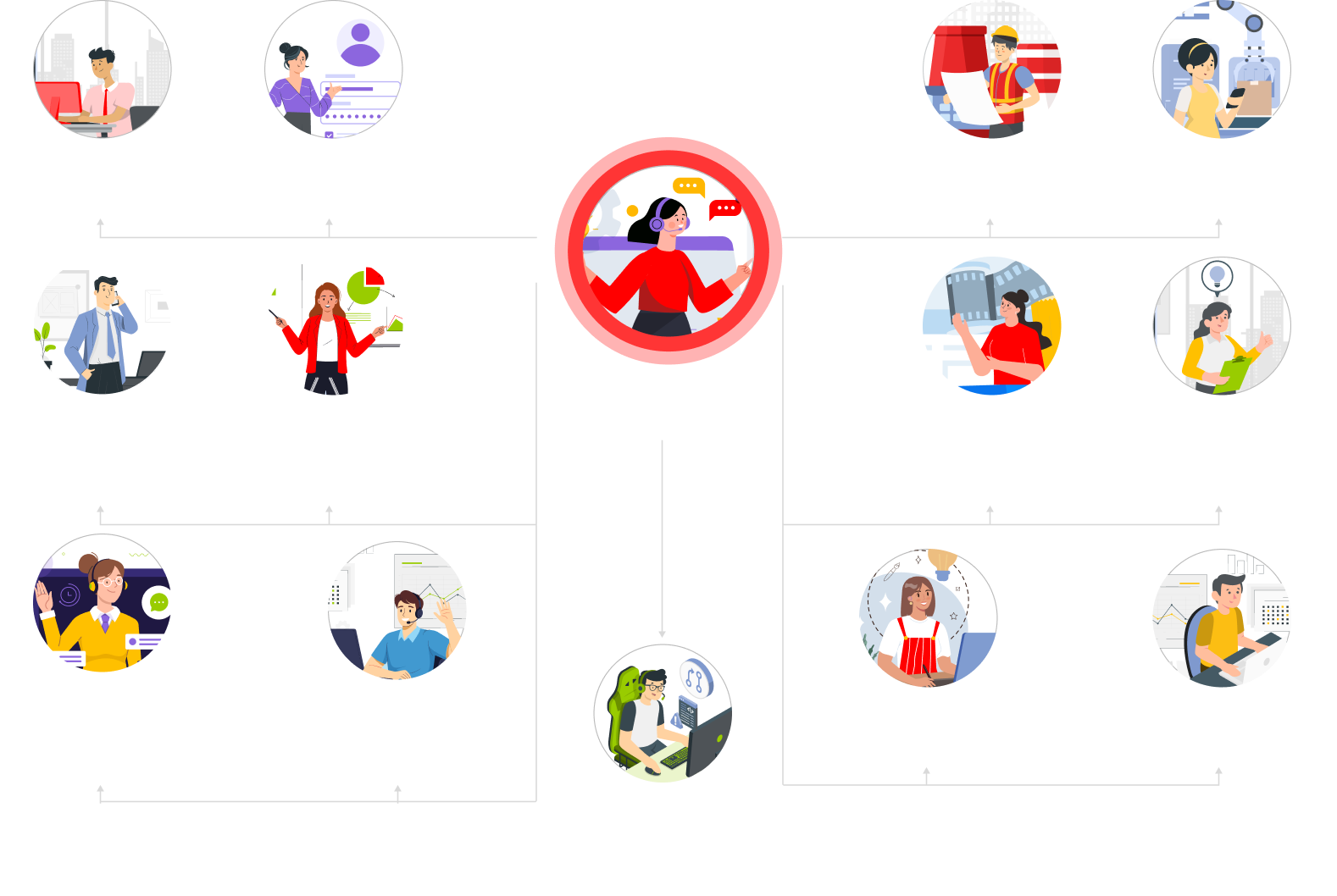
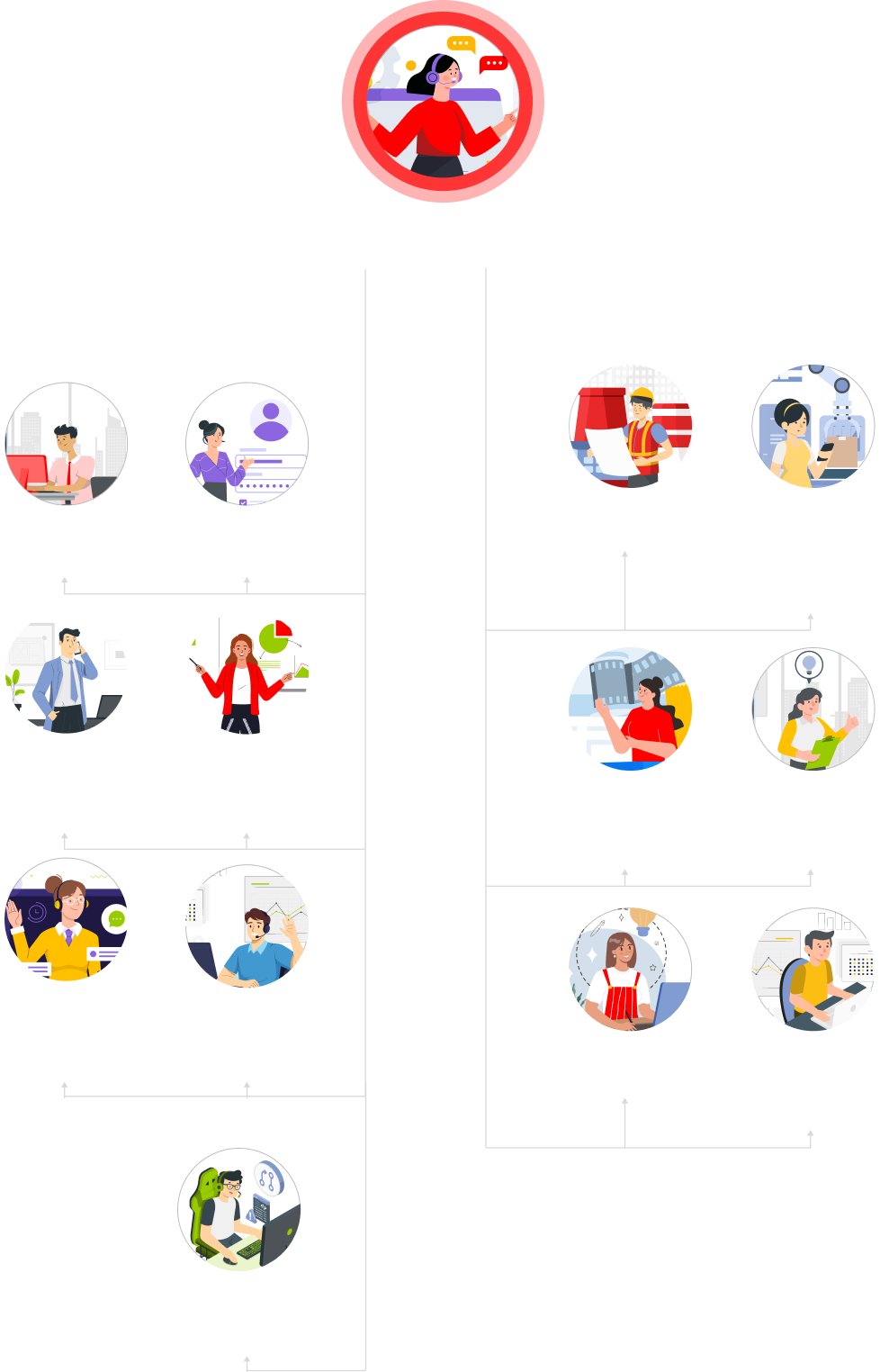
Roles overview

Every function and workflow of the client’s business finds its place in the ecommerce ecosystem. Here’s the full picture:

A hierarchical chart showing roles in a system. At the center is a Super admin with full access, highlighted in red. Surrounding roles include Guest, Registered user, Manufacturer, Manager, Sales, Ecommerce, Quality controller, Customer service, Store manager, Designer, and Accountant.
Organizational chart with illustrated icons for roles: super admin (center top), branching to guest, registered user, admin, sales, store, customer service managers, sales rep, sales director, manufacturer, production manager, e-commerce manager, designer, accounting, and quality controller.
A top red circle with a crossed line overlays a woman holding many items, symbolizing multitasking. Below are icons of individual roles: project manager, recruiter, researcher, marketer, client manager, and accountant, each illustrated by a separate person at work.

Before

  • A basic Shopify storefront handling standard catalog and checkout flows
  • Disconnected ecommerce and production processes
  • No structured quality control before shipment
  • Manufacturers operating outside the client’s visibility, with fragmented and reactive communication

After

  • A fully integrated Odoo ecommerce ecosystem, built to reflect the prestige of the brand online
  • Automated purchasing flow linking sales orders to purchase orders, manufacturers, QA, and logistics in a single system
  • Embedded quality control workflow with digital checklists, defect-triggered rework
  • A dedicated manufacturer portal with secure role-based access and real-time production status updates

Business value

  • +20% online sales growth
  • +25% CSAT increase

  • Operational unification across ecommerce, production, and logistics

MVP Development For a Fintech Startup

Full-scale MVP Development For a Fintech Startup

How running a discovery workshop saved a fintech startup tens of thousands of dollars on needless software development and enabled the company to craft a trailblazing MVP for venture funds and investors. 

Industry:
Fintech

DevOps Services

UX and design

Web Development

Software Product Development

Business challenge

Securing a top-notch development team when building a software product is only one part of the equation. The key lies in defining what kind of product you want to create, who for, and what problems of the target audience it will address. For those operating in highly demanding niches, like our client, this precision represents both a challenge and an opportunity.

Instinctools was approached by a European venture capital company with €800m+ in assets under management. They planned to launch a fintech startup and develop a web platform to consolidate information for VC investors and funds. 

The envisioned solution was supposed to:

Present investors with concise, visually appealing information about potential investment opportunities and their terms, rather than extensive 50-page reports

Provide a secure space for communication between funds and investors moving away from traditional emailing

Offer a comprehensive experience for investors, eliminating the need to switch between several systems

Empower funds with automated back-office functions, significantly reducing staff hours.

This innovative and far-reaching B2B2C solution had the potential to take the market by storm even as an MVP. However, the haphazard approach to its implementation put the whole project at stake.

Initially, the client worked with another tech partner who had offered to set up a developers-only team for the project. Specifying the requirements and prioritizing features fell under the client’s purview.

Here is how it played out. The client outlined the platform’s core idea to their contractor and continued to pile up features throughout the development process. Not surprisingly, those efforts didn’t hit the mark the client was aiming for.

It turned out the client had been draining their budget crafting a solution that veered far from their original vision. Letting multiple stakeholders from different departments define the project requirements on a whim and the lack of a unified product vision between the product owners and dedicated team resulted in a deep chasm between expectations and reality. The developed solution looked like a nice visualized Excel spreadsheet instead of being a 
top⁠-⁠of⁠-⁠the⁠-⁠line digital fundraising platform.

Despite developing some of the intended features, the team couldn’t pull the whole solution together, and the situation was being exacerbated with each new feature implementation. The web platform benefited no one: not funds and investors, not the client. 

The problem required input from a skilled Product development consultant, and since the previous contractor couldn’t provide one, the client started to look for a new tech ally. This time, they decided to search among vendors whose expertise in information security and quality management was backed with ISO 27001:2022 and ISO 9001:2015 certificates. And that’s how *instinctools entered the scene. 

In the project, the main puzzles were lurking at the pre-development stage. Our team had to:
Process the information

received from the client and create the project’s Vision&Scope documentation

Gather and clear up

business requirements along with technical and non-technical constraints

Prioritize

the solution’s features

Shape the project’s

iterations in line with the features it should have

Evaluate

the current product against the updated requirements

Solution

At *instinctools, we know how to address the problems of clients who turn to us after dismal cooperation with other tech partners. Sometimes, the situation can be completely muddled. There may be no basic documentation on the project, and it can be challenging for the stakeholders to define how they see the final product. In such cases, we suggest conducting a discovery workshop before diving into the development to frame the product vision into a set of specific actions that would ensure the project’s success. 

What was the value of a discovery workshop for the client?
  • Clearly defined business requirements and product vision

The client obtained a Vision&Scope document, where all functional and non-functional requirements for the project were captured. That information ensured all the participants involved in the development process were on the same line and had similar expectations regarding the final product. 

Additionally, with Vision&Scope in hand, the client could seamlessly transition to another tech partner — if they felt the need to do so — without going back to square one.

  • Balanced development scope and business value

Following the here-and-now principle in developing product features, trying to implement every single idea you come up with is a sure way to oversaturate your product with flashy components at the expense of vital ones. It’s a slippery slope, especially for an MVP. By chasing excessive functionality, it’s easy to lose the crux of the MVP, resulting in missed deadlines, and wasted budget.

A proper evaluation and prioritization of features with the solution architect empowered the client to balance business value, development cost, and time.

  • Potential for product enhancement

All artifacts created at the discovery workshop were documented. And anything that didn’t make it into the MVP could be put into the subsequent product releases. That way, the client got a backlog primed for future development after the minimum viable product rollout.

  • Aligned product vision between the client and the dedicated team

Cooperating closely with our stakeholders empowered us to sculpt the product seamlessly within the projected time and budget.

  • Decreased time to market

Although a discovery workshop took some time, working out requirements, prioritizing features, and developing a common vision of the project paid off. It allowed the team to move at a rapid pace through the development phase as they had a well-defined action plan and could fully focus on product development and testing.

  1. Behind the scenes: how did the discovery workshop go?

The number and duration of workshop sessions depends on the project’s complexity and the scope of issues that need to be clarified before starting development. In our client’s case, we proposed two three-hour sessions. 

What did they cover?

Examining the existing solution with the product owners and gathering up-to-date business requirements and constraints
of the product

Within the first workshop, our dedicated team collected and analyzed the information about:

  • Problem, task, and business opportunity
  • As-is state of the product
  • Success criteria
  • Stakeholders
  • Our product
  • Risks
  • Functional and non-functional requirements
  • Target audience
  • Competitors
  • Unique value proposition
  • Constraints

For example, one of the client’s concerns was that the solution wouldn’t be secure enough to manage documents with sensitive financial data from venture funds and investors. 

To guarantee that Fort-Knox security level, we offered to tighten requirements for authorization on the platform and offered to conduct training on using and managing the solution for the client’s employees.

After an in-depth discussion, our team spent a week processing the collected data, brainstorming possible strategies to put the project back on the right track, and preparing a Vision&Scope document for the second workshop.

Vision&Scope presentation to highlight our idea of revamping the existing solution according to the updated requirements

Instead of scrapping the existing software we decided to breathe new life into it, moving gradually:

Transition phase to take on the project

Alpha release of the product’s demo version to fix already implemented linchpin features

MVP Block 1 release to develop mandatory core features for the fund user (investor) role within the platform

MVP Block 2 release to add secondary core features for the fund admin role within the solution

Future releases to hone the product functionality

After their previous tech partner delivered a final solution that deviated significantly from the initial idea, the client appreciated our iterative and incremental approach.

Furthermore, that strategy allowed the client to use the product’s beta version to reel in future platform users – investors and funds. Engaging customers is way easier if you have a demo version they can click through to get an idea of the platform’s functionality.

During the second workshop, we also introduced to the client how we see the product’s:

  • Business goals
  • Scope decomposition
  • Milestones
  • Timeline

The scope decomposition discussion allowed us to prioritize the order of the features’ implementation. Some of them, such as two-factor authentication (2FA), were moved to the Alpha release, while others were postponed for later stages. For example, the client wanted to include integrated analytics for the Opportunities page in the Alpha release, but they needed integration with Tableau to do so. Therefore, this functionality was shifted to future releases.

We also suggested reconsidering the team composition and strengthening it with our classic triad of a business analyst, solution architect, and UX/UI designer, typical for an *instinctools’ product approach. That way, our experts ensured creating the product centered around customer experience. 

The client appreciated the businesslike approach of the *instinctools team. They approved our ideas, and so we jumped right into work on the next stage.

  1. Transition phase

At this stage, we focused on:

  • Auditing the current platform. We reviewed the client’s functionality as the Fund admin and end-user’s functions for the Fund user (Investor) role implemented on the platform before cooperation with *instinctools. That way, we determined which of the already developed features to include in the Alpha release.
  • Troubleshooting and bug fixing. We evaluated bug fixing priorities. For example, authentication, notification system, and chat had to be fixed first.

The transition phase resulted in creating a joint value-based development model with described stages, milestones, and releases. As we’ve elaborated the scope for the Alpha release, we moved on to it. 

  1. Alpha release

Our primary goal was to establish a base for future development. The Alpha release included a limited set of core features to speed up the product’s time to market and provide maximum business value with minimum effort and cost.

Instinctools’ team covered:

  • Conducting code refactoring. We eliminated the spaghetti code inherited from the client’s former tech partner to simplify the process of uncovering bugs and vulnerabilities and hone the product’s efficiency and maintainability.
  • Implementing necessary fixes to current features. Only manual logout had been available earlier, so we added auto logout for the Fund User (Investor) role.
  • Reviewing UX/UI. The current platform looked more like a visually appealing Excel spreadsheet, while the client wanted to put a premium on innovation and make the product up-to-the-minute in look and feel.

The Alpha release led to crafting the product’s version with updated core features and design ready to be tested by early adopters.

  1. MVP release

The client showcased the demo from the Alpha release to one of the funds. It was a sort of validation milestone for our client, which they passed. Therefore, we moved to fine-tuning the product, considering feedback from the early adopter, and added new features to the platform to provide more tangible value to customers.

First, we extended the functionality for the Fund user role. The following features were included in MVP Block 1:

  • 2FA. In line with best practices and the client’s desire to raise the bar on the platform’s security, we implemented two-factor authentication for fund users.
  • Manage documentation. Fund users can open, read, and download docs in various formats unlike in the platform’s version, provided by the previous contractor, where users could only see the list of documents.
  • See the full picture of investment activity. Fund users can check the invested money and the remaining amount they can invest.

At the MVP Block 2 stage, we enhanced the functionality for the Fund admin role:

  • Oversee investor organizations users. Fund admin can delete the investor organization users, activate, and deactivate user accounts. In the past version, the admin could only create and edit users.
  • Manage Opportunities. Fund admin is allowed to add new Opportunities, set their visibility, edit, or deactivate them. Previously, admins could only view the Opportunities the platform owner published.
  • Handle documentation. Fund admin can search and filter docs, while they could only view a list of documents earlier.

The main deliverable of the MVP stage was launching the product to the public.

  1. Future releases

Based on the feedback from end users, we’ve planned updates that are sure to captivate both funds and investors:

  • Benefit from third-party integrations

IIntegration with Tableau is at the top of the list to provide end users with embedded analytics within the platform.

  • Prepare the data for internal and external purposes

Summarize investments and generate reports to make back-office tasks a breeze.

  • Manage Opportunities

Automated notifications for investors about changes in Opportunities to help them keep an eye on the offers they are interested in.

  • Communicate with investors

Secure in-app messaging instead of emailing.

Before

  • Confusion about where the project is going and when it will be finished
  • Doubts about whether the goal is worth pursuing any further
  • Lack of understanding between the development team and product stakeholders
  • Random order of the features’ implementation
  • Budget drained on the creation of an undercooked product
  • Half-finished product with no value for the client or end users

After

  • Clear project roadmap with a blow-by-blow description of each stage
  • Shared vision of the future product
  • Step-by-step feature rollout, prioritizing what matters most
  • A robust MVP that not only fits the bill but also turn heads of user

Client’s testimonial

The product owner says how expectations align with reality when partnering with the *instinctools team:

Key features

Consistency

Laser-focused strategy adherence.

Cohesion

Continuous collaboration between the stakeholders and the dedicated team. 

Efficiency

Delivering the solution that is profitable even as an MVP.

Business value

  • Balanced development scope to provide maximum value with minimum investment
  • Decreased time to market
  • Fail-safe MVP, ready to conquer the venture capital market

Ecommerce Ecosystem Development

Ecommerce Ecosystem For an Eyewear Company

How developing a comprehensive ecommerce ecosystem helped an optical company withstand severe economic headwinds and grow their store chain from 8 to 24 eyewear boutiques across France. 

Industry:
Manufacturing

Mobile App Development

Software Product Development

Web Development

Data Visualization

Business challenge

For highly competitive industries, such as ecommerce, being able to adjust to ever-changing market conditions in a blink of an eye is the only way to retain customers and win new ones. In this respect, COVID-19 became an inflection point at which only the most resilient companies could stay in the saddle, while others had no other choice than to ride off into the sunset.

When the pandemic began, companies were forced to rethink their business vision, look for new value and revenue-creation opportunities, and find ways to satiate consumers’ needs in unanticipated circumstances. The situation was the same for our client – an eyewear company with its own production and a chain of physical stores across France.

The client first reached out to *instinctools to create a mobile app for sales assistants. However, the coronavirus meddled in their business strategy, forcing them to move at a rapid clip and develop an additional sales channel aimed directly at consumers. That’s how the idea of a shopping app for customers arose.

When a company wants to drive revenue growth, banking only on a customer-facing solution isn’t enough. Internal processes also have to be enhanced. In the case of our client, the necessity to adapt to the changing ecommerce realm unveiled issues with order registration and processing, stock inventory, and logistics.

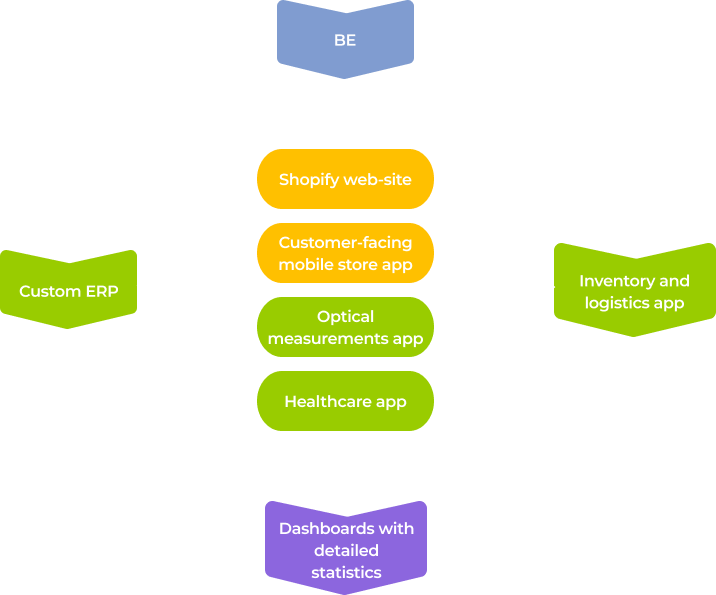
After analyzing the market and gathering the client’s requirements, we proposed developing a comprehensive ecommerce ecosystem of mobile and web solutions with a shared back end and multiple front ends.

Solution

As we’ve mentioned, the client initially approached *instinctools to craft one small application for internal usage. However, the retail industry upheaval, along with evolving consumer needs, forced them to reconsider an erstwhile firm view of ecommerce as a bolt-on to the main business. For over six years of cooperation, our dedicated team has developed four apps for the company’s staff, one customer-facing application, and a new website on Shopify.

Why did we develop niche applications one by one instead of crafting one multipurpose solution? Such an approach provided several benefits:

  • Maintaining and updating several small apps is much easier

than taking care of a large-scale solution with complex business logic.

  • Ensuring ease of use for the client’s staff

as each mobile or web solution is tailored to a specific role within the company.

  • Rolling out new functions apace

to attract new customers and retain existing ones.

All the applications, except for the one related to the local insurance system, are written in React Native. That way, our client isn’t limited to devices with a particular OS and can reach a larger pool of potential buyers.

Let’s zoom in on each of the solutions in the order of their occurrence.

  1. Eyewear measurements app for consultants in physical stores

When the client started the business, far from all processes were digitized. For instance, the in-store consultants used to mark out an eyeglasses frame for a buyer and then manually calculate the lens diameter and fitting distance to ensure that the glasses had the lenses at the correct distance from the customer’s pupil.

With such an approach, the probability of an error caused by the human factor increases manifold. The problem became more evident as the client’s store chain was expanding. Therefore, they decided to digitize and automate this task with a simple mobile application for internal usage. 

Developing the app in React Native became the starting point of our cooperation with the client. How does it work?

After a customer chooses a frame in the store, a consultant finds it in the catalog in the app.

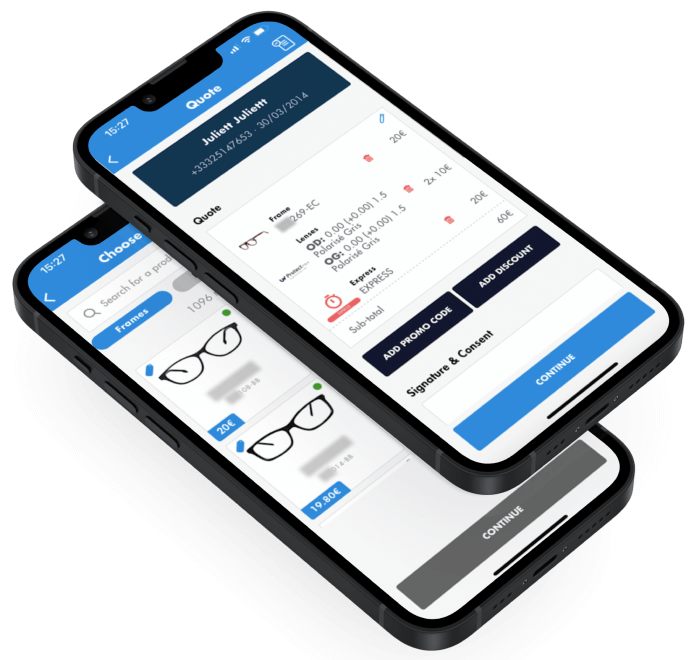
Then, the consultant opens the camera on the device and points it at the customer’s face to determine control points – the center of the pupils, considering their vertical position.

Finally, the app automatically calculates the position of the optical center so that the geometrical center of the frame and the buyer’s pupil coincide to ensure the glasses are comfortable to wear.

Besides eliminating the possibility of calculation errors, such automation has speeded up order processing by five minutes per order. It turned out to be a real breakthrough, as the client’s business model focuses on serving many visitors in a short time – the speed of order-making is even mentioned in their slogan. Therefore, at the client’s scale, even such a seemingly small improvement meant a 33% acceleration of order processing.

  1. Customer-facing mobile store app

Before 2020, the client launched new stores in several French cities and planned to develop new applications specifically for physical locations, such as kiosks for self-ordering of glasses.

However, the pandemic and the following quarantine with a strict ban on leaving home drastically changed the client’s business strategy. Magnifying their digital presence and providing customers with an app where they can select, order, and pay for the glasses became the client’s primary focus. That’s why our team switched from developing software solutions for internal usage to crafting a mobile ecommerce eyewear store for customers. It was also written in React Native to be apt consumers with iOS and Android devices. 

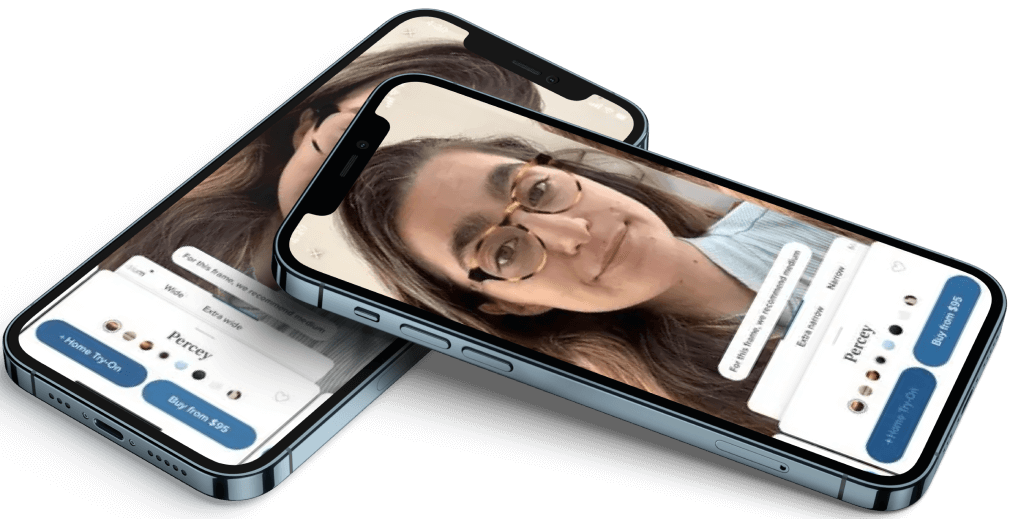
Given the impossibility of physical presence in the store, we added a feature of a virtual frame fitting. It gives a rough idea of how different frames would look on a person’s face. Even long after the lockdown, this function remains popular among the app’s users. 

  1. Custom ERP for internal usage

We inherited the enterprise resource planning project from the client’s previous tech partner who hadn’t been able to provide a no-fuss hiring process and unlimited scalability on demand.

After discussions with the client, it was decided to finalize the custom solution another team had been working on instead of adopting and customizing a ready-made ERP such as Odoo, SAP, etc., for two reasons:

  • The client didn’t need all the features that off-the-rack software provides, so it would have been unwise to overpay for it.
  • Only a bespoke system could guarantee perfect alignment with the client’s processes.

What roles does the web app cover within the company, and what functionality does it provide?

  • Sales person

has access to the customers’ database to create and edit consumer information.

  • HR

can create and edit staff accounts to make managing employees whole-company scale easier.

  • C-suite

can leverage advanced statistics to back up their decisions with up-to-the-minute data. We created dashboards to visualize the data about the number of orders in general and by cities, customers’ gender and age, lens type, and a raft of other parameters.

  • Technician

the employee responsible for assembling glasses — signs in the ERP to see the list of orders to be produced, delivered, etc. Moreover, each technician is assigned to a certain store and can see only the data related to their location.

  • In-store consultant

registers orders made by customers in the physical stores.

As the ERP automatically records status changes after each operation with an order, the client obtains a fully-transparent production and delivery process. And easy-to-grasp dashboards empowered them to make well-informed decisions based on vast amounts of data and keep a laser-sharp focus on the changing customer demands to adjust production accordingly as fast as possible.

  1. Mobile app for inventory and logistics

As the number of the chain stores was growing, our client faced the palpable need for a solution that would ensure centralized and automated stock monitoring, logistics, and inventory. That’s what became a driving force in launching a new project – a mobile application on React Native integrated with RF and RFID scanners, used for inventory, goods receipt, and shipping.

The app we developed simplifies the tasks for employees involved in inventory management and in-store consultants who receive orders.

It allowed the client to:

  • Digitize inventory management and logistics and therefore speed up related tasks, such as order picking
  • Automate stock and inventory management
  • Get a detailed view of the stocks in near real-time
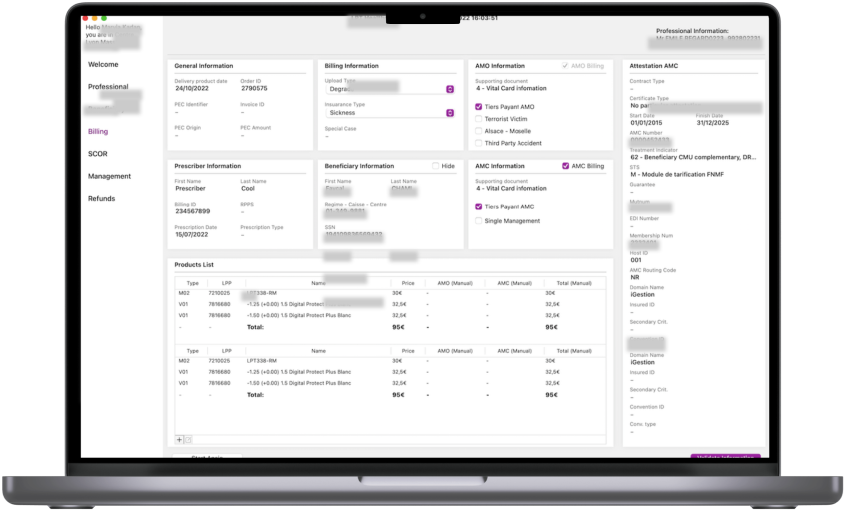
  1. Healthcare software for simplified cooperation with insurance companies

One of the hallmarks of the client’s business is the direct cooperation with public and private insurance companies in France. It’s convenient for the consumers, but the client also wanted to facilitate the process for their employees. Therefore, our dedicated team developed an insurance processing application for internal usage.

There are physical terminals in the client’s stores where consultants swipe customers’ insurance cards. The terminal reads the data and sends it to the app, which automatically matches this information with the data the insurance companies provide and displays:

  • what type of order the consultant can create for a client
  • how much of the order’s cost can be covered by insurance

Insurance regulations in France require choosing one OS for insurance processing with mandatory certification of the software before its rollout. As the client had already bought iMacs for their brick-and-mortar stores, we designed the healthcare solution for MacOS.

The app’s implementation allowed the client to automate the routine task of insurance processing and completely cut out the possibility of human error.

  1. Website on Shopify

The client’s former website used to run on WordPress, bolstered with the WooCommerce plugin. The problem was that as the website was expanding and new plugins were being added, the solution became overly complicated to be managed efficiently.

Tons of spaghetti code slowed down the pages’ loading speed — it could take up to six seconds — a parameter that, in 70% of cases, influences consumers’ willingness to buy from an online retailer*.

*Source: Unbounce, Think Fast: The Page Speed Report

Redesign and modernization of the old website would have taken too much time, so the client decided to switch to Shopify – a hosted SaaS solution — so that the provider would handle most of the technical issues and it would be easier to scale further.

Moreover, the out-of-the-box Shopify solution offers functionality that is missing in the off-the-shelf WooCommerce module:

  • a multi-currency plugin
  • a wide range of payment options
  • an automatic country-by-country tax calculator

With the former website, all of that had to be either coded manually or achieved through installing additional modules, which slowed down the solution.

Shopify adoption has also allowed the client to gather more detailed customer analytics thanks to the connection with Google Analytics, Google Tag Manager, and Meta Ads.

However, despite Shopify being an all-in-one ecommerce platform, our team had to work through some of its limitations. For example, it was impossible to specify more than three product options in a description. Check how we solved these issues in a detailed case study.

By switching to Shopify, the client got a user-friendly and easy-to-manage online store with 6x higher loading speed and access to detailed analytics.

Here’s the client’s final ecommerce ecosystem with all the mobile and web applications we’ve developed for internal and external usage.

Before

  • Unoptimized business operations
  • Manual processes
  • High influence of human factor
  • Absence of an online ecommerce eyewear store for customers
  • Lack of tools for efficient data collection, analysis, and visualization
  • Draft version of a custom ERP that wasn’t released
  • Heavyweight and slow WordPress website with loads of spaghetti code

After

  • Digitized order processing, inventory, and logistics
  • Automated optical measurements and insurance-related tasks
  • Minimized possibility of human error
  • Eye-catching and user-friendly mobile app for online consumers
  • Insightful dashboards with detailed statistics
  • Full-fledged custom ERP 
  • Speedy and easy-to-maintain website on Shopify
  • Transparent and flexible ecosystem of lightweight software solutions

Key features

Adaptability

A comprehensible suite of lightweight applications allows the client to remain flexible and swiftly respond to any market changes. Such an approach also simplifies apps’ maintenance and support, not to mention the ease of use for the client’s employees.

Extensiveness

The custom B2B ecommerce ecosystem we’ve created encompasses software solutions that provide a seamless customer experience and streamline the client’s internal processes.

Customizability

Custom software aligns with the client’s business needs perfectly. Moreover, each solution for internal usage is targeted to a specific role within the company to simplify its management for the client’s employees.

Business value

  • 33% faster order processing
  • 6x boost in page loading speed on the website
  • Fully digital inventory management and logistics
  • Complete transparency of the operations within the company
  • Automated insurance processing
  • Eliminated possibility of a human error

Multiplier effect

A well-designed ecommerce ecosystem enhances your customers’ experience and turns them into regulars. 

Any B2C or B2B software solution is often a part of a larger ecosystem that includes internal business tools and external channels of interaction with potential customers. To hit it big down the line, you should adhere to a holistic approach to building software for your company’s needs. 

This principle plays out in any industry, from ecommerce, entertainment and media to healthcare, fintech, and manufacturing. Bank on comprehensive strategic solutions instead of one-off fixes to stay ahead of the pack and win over more customers.

Loan Management With an Automated Scoring System

Loan Management With an Automated Scoring System

How transforming the SME lending process with fully digital identification and an automated credit scoring system enabled a German fintech startup to cut loan approval time from 5–7 working days to 15 minutes, capturing 38% of their target market within two months after their product launch.

Domain:
Fintech

Challenge

The idea was to create a convenient, time- and effort-saving loan management system, which would help small and middle-sized businesses to pay their bills and invoices instantly.

Task

We had to make a solid, well-functioning software product, which would provide:

convenience in applying for a loan

high speed of processing the application so that the client could see its status faster

safety of clients’ personal information

security of transactions

Our customer emphasized that they wanted us to use an agile approach while working on the project. The requirement seemed utterly reasonable and efficient as it was supposed to help our team deliver high-quality shippable increments with necessary updates according to schedule.

Solution

*instinctools team has managed to develop a simple – on the outside – and fast solution that helps its users to get loans to pay for their purchases in practically no time. Clients can enjoy the benefits of the product by making just three steps:

  • submitting the invoices they want to finance;
  • getting the goods or services from the supplier;
  • paying back on agreed terms and conditions.

We have streamlined the traditional, out-dated lending process by employing the following key features:

  • automatic recognition of PDF files and images of different formats with Rossum (Artificial Intelligence), so that no more manual data entry is needed;
  • sync with SalesForce (a CRM platform)
  • a multi-currency system
  • automatic client`s credit scoring counting
  • fulfillment of financial commitments

Value

The implemented solution has made it possible to speed up a lending process and turn it into a transparent and personalized experience based on each loan seeker’s needs. Compared to traditional banks, this system is not biased, more convenient, and carries less privacy and data security risks. Being a high-quality, up-to-date product, it helped our customer to automate their in-house processes and gain clients’ loyalty, which led to faster ROI and rapid growth of the business.

Technologies

Back-End:
NodeJS
MongoDB
AWS: S3
DynamoDB

Front-End:

React
Redux
MaterialUI
Styled components
Webpack
Babel
Integrations with external systems:
Rossum
SalesForce

Custom BI Dashboards For The Sales Department Of a EU Corporation

Custom BI Dashboards For The Sales Department Of a EU Corporation

How the adoption of Tableau with six custom dashboards for sales analytics, planning, and forecasting empowered a manufacturing corporation to back up sales strategies with real-time data and increase the number of won deals by 54% and upselling deals by 16%.

Challenge

Our customer’s business has been expanding rapidly for the past decade: new brands have been launched, new chains have been opened, new offices have popped up. In these circumstances, without proper up-to-date instruments, following the company’s processes turned out to be a real problem. It was all the more obvious when came to the sales department. The existing methods of navigating through sales performance – with reports prepared on a monthly or quarterly basis – appeared to be ineffective and time-consuming.

Our customer wanted to improve the overall visibility of analysis and reporting activities across different business units and get a centralized view of the massive volumes of data.

Tasks

  • to bring all the business units together to have a single source of information in an integrated set of tools
  • the ability to “slice and dice” the information according to the user’s needs
  • to provide data security
  • the possibility to scale up the solution as the business grows

Solution

We’ve developed a sales performance management solution, which not only contains all the necessary data but also combines analytics, planning, and forecasting capabilities.

The complexity of the whole sales optimization process has been wrapped into 6 dashboards, integrated with different sources of information. Each dashboard fulfills its own functions.

  • A customer overview
    Contributes to building up a complete, explicit view of the customer by collecting data from contract billing, the CRM and ERP systems, so that the sales representatives can easily identify the information, which is useful for their daily sales processes and customer relationship management.
  • Sales Pipeline
    Brings visibility to all the stages of a sales process within different channels or lines of business and makes overseeing and directing future sales much more data-based than they used to be.
  • Sales process optimization
    Takes the data out of the CRM system, measures these data against the targets, showing what activities need to be done to achieve the assigned goals.
  • Salesperson focus
    Clusters the information on customer sales activity and converts it into a user-friendly format. It shows sales representatives their month-to-date and year-to-date results and how these results correlate with their objectives.
  • Account coverage
    Helps to stick to customer retention strategy through the analysis of certain KPIs.
  • Sales forecasting
    Estimates the accuracy of sales forecasts, comparing them against actual results for both individual sales representatives and the whole teams.

Key features

an integrated set of tools

self-service analysis and reporting

scalability

data security

cloud solution

Value

The BI solution allows our customer to explore the data without a hitch. Fragmented and disintegrated reports are replaced by one set of tools where all the necessary information is gathered. Thus, user groups get quick and easy access to real-time data and the analysis tailored to their needs, which increases the chances of the right decision making. The visibility that has been brought to each stage of the sales cycle along with end-to-end analytics helps managers identify blind spots and, therefore, improve the performance.

“With *instinctools solution, it’s become possible to get a complete and honest answer to the question: “How are things?” either on a unit level or on the level of the whole company. We’re happy to have accurate, up-to-date information on our sales processes and keep all our units in sync”.

Judging by enthusiastic reviews of our customer, data harmonization within the sales department was a giant step (but just the first one) on the way to digital transformation. Apparently, there’s more to come.

Technologies

React
NodeJS
Python
Tableau
AWS

EdTech Mobile App

EdTech Mobile App

How developing a mobile learning app with an ML-powered recommendation engine to provide each student with a relevant mentor empowered a US startup to set a foundation for a future educational ecosystem and increase students’ engagement by 43%.

Challenge

The customer was looking for an IT partner – a technological and methodological expert who could help not only to create the product but also would assist in its market entry strategy. The idea was to develop an ecosystem which would fulfil the following functions:

  • giving everyone an opportunity to get a full-fledged academic education;
  • giving a possibility to get competencies that are in demand through the concept of bite-sized learning;
  • providing recruiters with access to the app so that they could estimate students’ competencies and soft skills at an early stage and make a decision about interviewing the candidates.

Tasks

Having a good idea, the customer, however, didn’t have any preliminary developments or a mere vision of how this idea can be embodied. The project was vague in terms of the interim goals, requirements, and technologies. Therefore, our team got a vast area of responsibility: we had to work out the vision and the business case of the product, deliver the design and, all in all, take part in the development as product owners.

As a part of a 3-day Pre-Discovery Workshop, our team dealt with the customer’s questions that had been piling up, plunged into their business context and aims, and, thus, together with the customer we prioritized the queries, built the plan and defined the scope of work for the next stages.

The app was supposed to be the first fragment of the future ecosystem and was expected to:

  • help the students get the necessary information in a particular domain;
  • help the students choose people who might become their mentors;
  • have a motivational constituent for the users who can be mentors.

Team

A line-up always matters but it becomes of vital importance on projects characterized by a high level of ambiguity. In order to ensure the optimal communication from the very beginning, we provided the customer with a wide range of team roles who are highly qualified experts specialized in solving particular classes of tasks: Business Analyst, UX/UI designers, Backend Tech Lead, Data Scientist, Solution Architect and Project Manager.

Solution

During the Discovery Phase we developed the solution which implied:

  • the possibility to publish the materials on the app and share them with other students;
  • chat functions, enabling students to interact with each other;
  • a machine-learning model which takes into account the views of learning materials, other users, “likes”, etc. and, based on this information, recommends the most relevant mentors;
  • the content management functionality;
  • the system of rewards with gamification elements and a gradual immersion of the user into the platform.

Key features

machine-learning module

chat functionality

Value

In the result of close collaboration with the customer, *instinctools team has created a mobile application which provides access to all sorts of educational materials and allows to get consultations from people, whose career is a matter of interest for the users. Moreover, our company has gained excellent experience in developing recommendation systems that seek to predict the “rating” or “preference” a user would give to an item. Being welcomed in a variety of areas by giants such as Netflix, YouTube, Amazon etc., the benefits of these systems are now available for *instinctools clients.

Technologies

Legacy Software Modernization For a US Top Market Research Holding

Legacy Software Modernization For a US Top Market Research Holding

How shifting from an outdated system to Apache Spark and AWS cloud services allowed a leading market research company to speed up data processing threefold and decrease software maintenance costs by 34%.

Challenge

Succeeding in today’s market is tough. Innovation is where breakthrough opportunities reside. But an innovative approach cannot be implemented without using up-to-date technologies.

Our customer embraces innovation just as we do. They needed to jump on the new technology bandwagon to operate optimally. That’s why they decided to migrate from legacy technologies to modern cloud infrastructure.

Tasks

  • Migration to Spark. Spark is used in a wide range of organizations for large-scale data processing. It allows running workloads faster, writing applications quickly in Java, Scala, Python, R, and SQL, combining SQL, streaming and complex analytics, and also facilitates custom Java software development. Spark runs on Hadoop, Apache Mesos, Kubernetes, standalone, or in the cloud. It can access diverse data sources.
  • Validation of business logic, which is critical to keep things running smoothly. Publishing data is actually pretty easy. There are a lot of ways to do that. But securing and organizing your data is an important task that requires some thought.
  • Data correctness verification. Accurate data is the backbone of any database. Rigorous, objective and transparent verification processes are vital to establishing and maintaining high-quality data.
  • Performance improvement in general and reducing data processing time in particular, which, by the way, speak for themselves.

Solution

The solution involved taking the data prepared by the company’s different teams from the cloud storage (S3) and executing the project code to message, consolidate and filter data to perform further calculations. Code execution results are recorded in a file that can be used either for the company’s other projects or for making reports.

The solution includes:

  • orchestration of all jobs (tasks);
  • migration to AWS cloud services;
  • refactoring of the code to handle increased data volume;
  • the possibility of sharing the transformed data with different teams and using it within various company projects.

Key features

Data verification

(data qualitatively and clearly coincides with what is expected)

Each job (task) gives the expected result

Runtime reduction

Maintenance cost reduction

Modifiability improvement

Value

Thanks to the solution implemented by *instinctools, the users got an opportunity to manage the revisions of documents and correlate them with all the necessary regulations in a moreefficient way. It allowed our customer to attract more clients, which increased the business profitability

Technologies

Scala
HDFS
AWS EMR
AWS Lambda
AWS RDS
AWS SQS
Spark
Grafana
S3
Kubernetes
Airflow

Legacy software modernization

is the key to adapt, grow and remain competitive for any organization. In close cooperation with your company, we will work out the best strategy for this process!

DITAworks Cloud – Efficiency in Technical Writing

DITAWORKS CLOUD – EFFICIENCY IN TECHNICAL WRITING

Publish Technical Documentation efficiently

Ready-to-use DITA Component Content Management System

Hosted Solution in Europe and Asia

Domain:
Technology

Team:
4 BE Engineers, 3 FE Engineers, Project Manager, Business Analyst, QA Expert

DITAworks – The Product

Cloud-based DITAworks solution helps to save tremendous amounts of time and money which are needed to build the CMS infrastructure in-house or to buy an expensive DITA CMS. It counters the problem of procuring budget and personnel used to build a competent and comprehensive solution for structured, reusable technical documentation and to always keep it up to date.

Challenge

Darwin Information Typing Architecture (DITA) is a standard XML-based architecture for representing documents, supporting content modularity, content reuse, and interoperability of DITA documents. On the other hand, DITA brings new challenges of content organization by increased complexity, amount, and granularity. A DITA CMS is a niche application, involving very specific knowhow and relatively high cost for purchasing, implementation and maintenance.

Solution

DITAworks helps authors to master the challenge of managing a DITA based documentation array by providing features like fast creation, link management, managing versions and branches, workflows for review, translation, and publishing.

DITAworks Cloud is ready-to-use: no need to install anything, just access the comprehensive DITA CMS via browser and start writing professional documentation.

Deliverables of *instinctools team:

Consulting on:

  • adopting DITA XML
  • developing content strategies
  • building information models
  • preparing for migration
  • Architecture of DITAworks and DITA solutions including 3rd party tools
  • Full Cycle Development DITAworks and DITA solutions including 3rd party tools
  • Managed Operations DITAworks Cloud
  • Product Ownership of DITAworks
  • DevOps DITAworks Cloud

Customer Benefits:

  • Fast access to fully featured DITA CMS
  • No worries about purchasing and installing hardware and software
  • Frequent updates of DITAworks
  • Scalable
  • Operating resources and skills not required on customer’s side
  • No maintenance on customer’s side
  • No vendor lock: data can be exported and used with on premises CMS any time

Technologies

Cloud:

Custom CRM For a Canadian Marketing Company

Custom CRM For a Canadian Marketing Company

How developing a custom CRM system allowed a marketing and promotions company to unlock deep drill-downs into customer data and boost advertising campaigns’ conversion rate by 34% while cutting down cost per lead by 21%.

Industry:
Retail & E-commerce

Duration:
3 years

Team:
full-stack engineer, tech lead, project manager, QA specialist, designer

Context

Until 2020 our client’s business was mainly offline. They placed easels with signed items or rare collectibles on various locations (restaurants, sporting events, shopping malls, etc.) and accepted via them paper bids that were processed manually by the company’s personnel.

At that time, the company addressed *instinctools to help them move the process of accepting bids and buying unique items online. As more offline businesses have gone digital after 2020, our client needed to create a unified platform for placing bids online and increasing online sales of unique goods by moving sales to eBay and Amazon platforms.

Challenge

The main task for the *instinctools team was custom CRM development with the core functionality allowing to support and process large volumes of data. The following key requirements were set regarding the use case of the software:

  • An easy & convenient way to create contacts;
  • Inventory support and basic tracking for collectibles;
  • The ability to systematically add bids into the system;
  • Reports creation and management.

After a while, when the business set a goal to reach a new market and expand its target audience, the requirements for the CRM solution were extended with new features and integrations. Furthermore, our client wanted to give end customers a single user-friendly website to find easels’ catalogs and locations, choose interesting items and place bids online.


So the *instinctools dedicated team was augmented with two more full-stack engineers and a designer to start working on the online auction system creation and a CRM optimization with the integration of e-commerce platforms and payments systems.

Solution

A web-based CRM solution is mainly built on Angular with the object-relational database system PostgreSQL.

Our solution is synchronized with e-commerce platforms: Shopify and eBay, and gathers all the information about customers and their purchases in one single data storage, significantly simplifying the sales reporting process. Sales managers now can generate detailed reports in the CRM, drilling down various parameters: team efficiency and KPIs, commission rates, etc.

Earlier all employees entered inventory, sales, customers, and other data into the system manually. We automated this process and integrated an all-in-one inventory management software, inFlow, synchronized with the CRM system.

Key features

Web-based CRM:

  • Easy-to-use interface for adding new bids into the system and their later processing.
  • Automatic contacts creation after adding new bids.
  • Reports generation and management with export to MS Excel function.

Inventory management:

  • Keep records on the stock balance of collectibles.
  • Manage collectibles (adding new, editing, deleting options, etc.).
  • Create requests for full-cycle product items processing (request / shipment / delivery confirmation / returns / return confirmation).

Online bidding platform:

  • Auction map with locations of easels.
  • Possibility to place bids without registration.
  • User-friendly and SEO-optimized page.

Business Value

Moving online, the client expanded their business offering to B2B and B2C customers all over the country and successfully increased their revenue and market share.

With automated workflows of accepting and processing bids from the landing page and easels, the client has increased employees’ capacity and reduced their workload, focusing on other activities, such as marketing and promotion.

Technologies

Angular
AWS
NodeJS
eBay
Shopify
PostgeSQL
Anna Vasilevskaya
AI modified real photo
Anna Vasilevskaya
Account Executive

Get in touch

Drop us a line about your project at
[email protected] or via the contact
form below, and we will contact you soon.