Agentic Operating System GENiE
Your AI agents perform actions here and there. But can they run an entire business process across real systems, data, and operational rules? An agentic operating system is what carries agents over that line. Instinctools designs and implements GENiE – an agentic OS for complex enterprise workflows, so AI can scale safely beyond isolated pilots.




Orchestrate agents
across your
entire tech stack
From modern SaaS to decades-old legacy systems, an agent operating system connects internal tools, external services, data sources, and AI models under one roof. Agents execute workflows across the broader technology estate without tying the architecture to a single vendor, and you stay free to replace models, platforms, or components as requirements evolve.

Match every task to the
right
execution model
Not every workflow step should be handled by an LLM. Financial calculations, compliance checks, and strict validation often require deterministic logic, while research, reasoning, summarization, and content generation benefit from language models. An agentic OS coordinates both approaches, routing each task to the model, rule engine, service, or human expert best suited to handle it.

Reuse proven components
to deploy faster
Reusable agent templates, connectors, workflow patterns, tools, and governance controls reduce the amount of engineering required for every new use case. Instead of rebuilding common capabilities from scratch, teams can configure and combine proven components, lowering implementation effort and shortening the path to ROI.

Give every agent a
shared,
governed
context
At the heart of an OS for AI agents is a shared context layer with fine-grained short- and long-term memory management. It gives agents a whole-picture view of business objects and the ways of handling them across workflows. As a result, agents can preserve continuity between tasks, coordinate their actions, and make decisions using the same current, governed context.
Featured success
stories




01

Ontology
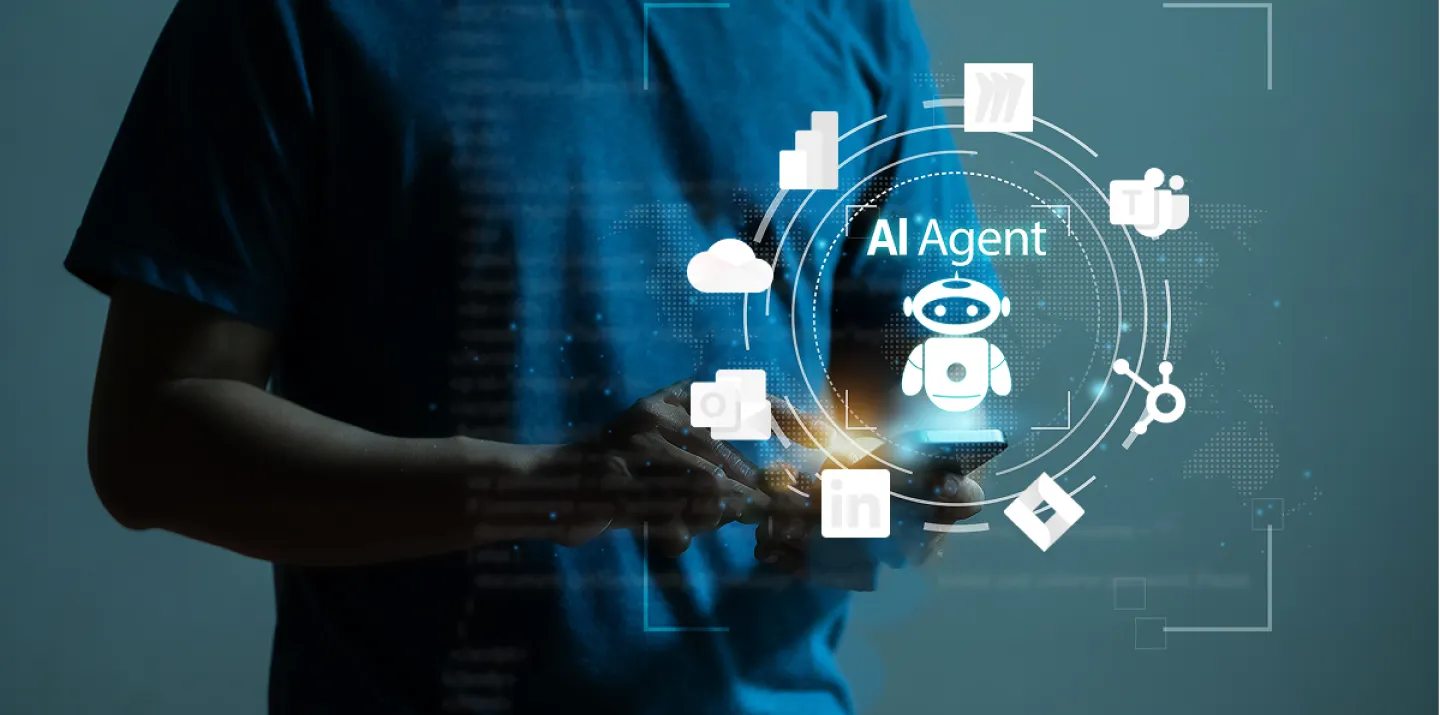
A shared model of your business connects every customer, order, project, document, and policy along with the relationships and rules that give them meaning. Agents draw on the ontology to read what the data represents, so their decisions match your business logic.
02
Business processes
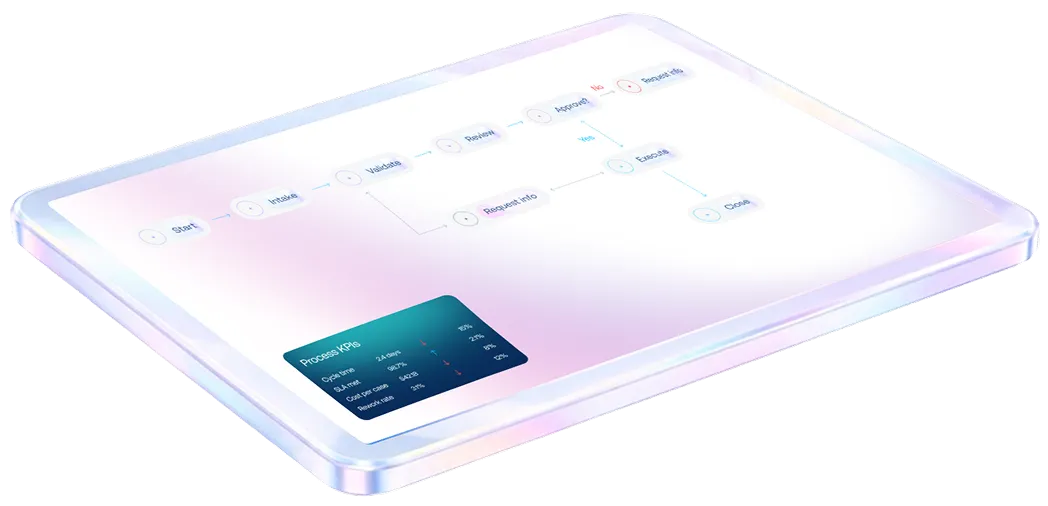
Encode a workflow once, and the agentic AI OS can coordinate it from beginning to end, keeping each task, stage, role, and KPI in place. Operational steps that used to be buried in corporate wikis and employees’ heads become executable logic. An OS for AI agents can run the process, track its progress, and measure the outcome against the metrics that matter.
03
AI agents
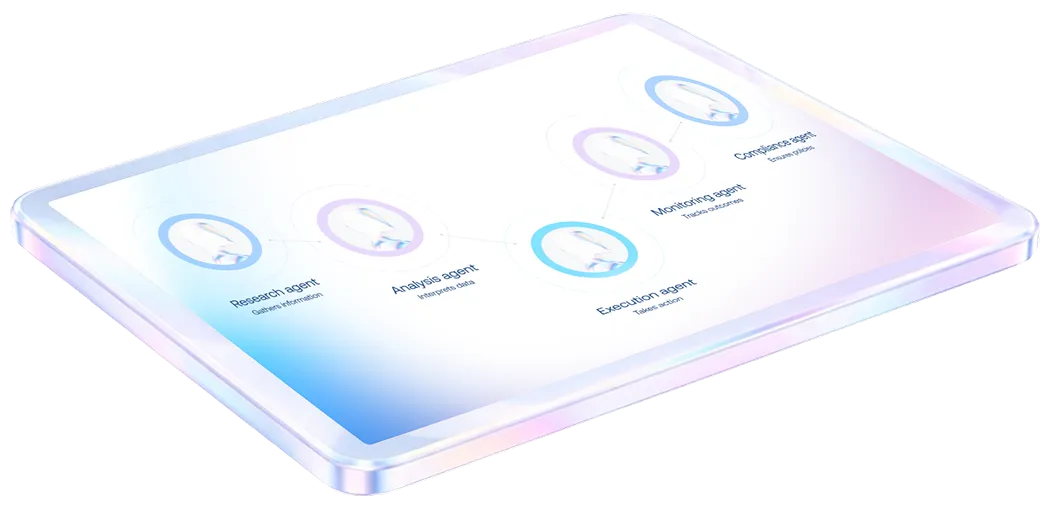
Informational agents gather knowledge distributed across systems and turn it into relevant answers, summaries, and recommendations. Process agents move work forward: triggering actions, coordinating steps, updating systems, and handing tasks between agents and people. Both act without waiting to be asked, heading off errors before they land.
04
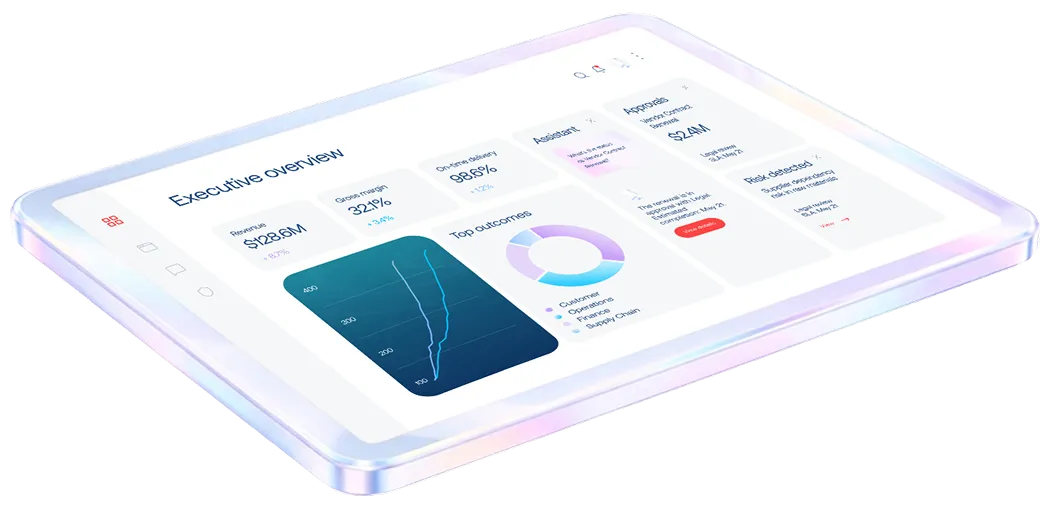
User interface
The interface gives people visibility and control without forcing them to manage every individual action. Live dashboards, chats, and approval flows reveal what is happening, explain recommendations, and flag risks early, while humans set goals, adjust rules, and approve actions that require judgment or sign-off.
What our
clients say
clients say


The expectations for the quality of the initial product were very high. I think Instinctools did a great job ensuring those expectations are met. We met the developers we were going to be working with and it quickly became apparent that they are very qualified and were able to deliver the vision that we had from our side for the product. They clearly told us what they were going to do, and if there were questions or problems along the way, they clarified them really quickly thanks to transparent communication.


We had a tight delivery deadline and *instinctools has been able to find another developer and assign him to our project from one day to another. And we’ve been able to successfully deliver this project. When the partner is good, things are just getting done. And that was the case with *instinctools.


We genuinely had a very positive experience working with the Instinctools team. They were responsive, collaborative, adaptable, and highly supportive throughout the project. Even as the scope evolved and the technical complexity increased, they remained committed and solution-oriented. Overall, we were very satisfied with the collaboration and the quality of work delivered; and frankly speaking, we find them to be the dream team!!


The quality has been good. It’s been on the expected level: things come on time, we have a good visibility on the things that *instinctools developers are doing and performing for us, communication is good. Wherever we see that we need some more exra resources, we have found *instinctools to be a good partner in helping us out on those areas.


I’ve been impressed by the available skillset, the flexibility to ramp up resources quickly, and the scalability to extend development teams on short notice. I look forward to continue collaboration with *instinctools and their contribution to our projects.


People at *instinctools are quite tech heads, which I like. They have used very advanced libraries, advanced techniques, advanced coding paradigms. So the advantage is that we get reusable code, that we get well-testable code, we get well-maintained code.


The *instinctools team exhibits the flexibility and professionality required for young companies. You can rely on their tested structures and processes that integrate nicely with your internal workflows. Being able to grow your team quickly with experienced professionals that start delivering value immediately and without a long interview process is a huge help. And personally, you will be working with a team of kind and interesting people.


The team is dependable when it comes to managing time and finances, consistently staying within the designated budget. We’re pleased with *instinctools. Their business analysts are exceptional. They serve as the spokespeople between technology and business, representing both sides effectively.


Instinctools is good at understanding the technical issues – once an issue is outlined, they do not need repeated explanation. They also do not simply accept a proposed solution, but they think about it and propose a better solution. I was really impressed by the custom interface they built for us – we outlined the requirements, and they implemented them in a user-friendly way that makes the interface a pleasure to use.


Instinctools does deliver on time and budget. The company proactively asks how they can support our efforts and provide ideas how to help us with very good candidates with expertise that either we requested or that instinctools identified to be missing.


The team demonstrated effective project management, timely delivery, and responsiveness to our needs. They established open communication to facilitate ongoing dialogue and held regular sprint meetings to keep stakeholders informed and engaged throughout the development process.


Instinctools delivered everything on time and was very flexible towards changes in scope during the project work. The team was easy to work with and had a quick response time.


Instinctools will make your objectives their sole focus, and have a team of professionals that will abstract away all the operational parts of the partnership to allow you to focus on your business. What made them a great partner was their capacity to proactively find the right fit and solutions based on the particularities of our needs.








Cross-system workflows
Industry-specific logic
Complex approval processes
Legacy system integration
Custom data models
Strict compliance requirements
Flexible vendor choices
Deep process customization
Long-term architectural control
Our agentic OS implementation framework
An agent operating system can go wrong in a handful of predictable ways: the wrong workflow is chosen, a design that ignores approvals, integrations that fail against legacy systems, or governance is left until too late. Our structured delivery model addresses each issue early before you find yourself in a pilot limbo.

01
Discover high-value workflows
- Use case discovery and prioritization
- Data and system mapping
- Risk assessment
- ROI hypothesis
- Feasibility analysis
02
Design the agentic architecture
- Agent roles and responsibilities
- Workflow logic
- System integrations
- Data access model
- Human approval paths
- Security requirements
- Monitoring and governance model
03
Build and integrate the agentic OS
- Custom AI agents
- Multi-agent workflows
- Enterprise system connectors
- RAG and knowledge retrieval
- API integrations
- Admin and monitoring dashboards
- Human-in-the-loop interfaces
04
Govern, measure, and improve
- Performance monitoring
- Error tracking
- Usage and spend analytics
- Compliance controls
- Feedback loops
- Workflow optimization
- Scaling roadmap