Abstract wave of translucent, iridescent colors on a white background.

Claude Code development for enterprise-scale systems

What turns Claude Code toy projects into governed systems that think like your A-list engineers? Architecture, operational governance, and a team of Claude Code experts who know how to wield the tool in production. At Instinctools, we help enterprises steer their Claude Code builds to get controllable systems that run within defined lines and produce decisions you can trace.


Claude Code outcomes, engineered for enterprise-grade control

Most LLM-based coding tools crack under the enterprise pressure. But not Claude Code. When implemented with rigor, it runs circles around the field, because it’s designed for the “messy” reality of production environments. The gains harvested by our enterprise clients can attest to that.

Up to 79%

faster time-to-market 

for new features

2-5x

velocity gains in AI/ML-heavy organizations

2-4x

increase in throughput for routine backend, infrastructure, testing, and documentation tasks

99.9%

policy enforcement coverage when guardrails are implemented at the agent layer

A translucent, geometric, crystal-like structure shaped like a stylized letter G.

Why Claude Code implementations fall short in real projects, and how Instinctools fixes that

Claude Code makes the initial act of building tools unprecedentedly easy. But to bridge the gap between a functional demo and production-grade infrastructure, you need governance, integrations, observability, and adoption patterns that can survive the long tail of enterprise production. We know where Claude Code initiatives typically lose traction and address them with specific engineering practices from our hard-earned Claude Code remote development playbook.

01

Security, compliance, and governance are harder to navigate

Most Claude enterprise projects hit a dead end because they throw high-stakes risks into the mix, which organizations don’t have the chops and tools to account for. As your tech partner, we take uncertainty out of your Claude Code implementations, surrounding them with enterprise-grade controls, observability, and agent definitions.
How we help:
  • Secure architecture to set the execution boundaries
  • Access controls to define who can tweak the agent workings
  • Audit trails to make sure agentic decisions are 100% traceable
  • Data isolation to avoid leakage
  • Internal and external evaluation loops to correct the production behavior
  • Interpretable logic to meet compliance and audit requirements
02

No integration with your real data and workflows

If your agents aren’t plugged into the internal context, their solutions won’t align with your company’s unique standards, best practices, and internal frameworks. Our Claude Code remote development team embeds Claude Code directly into your engineering ecosystem for it to be aligned with how your teams build and ship software.
How we help:
  • Role- and environment-based access controls that let Claude Code retrieve only the context it is authorized to use across dev, test, UAT, and production environments
  • CI/CD and automation pipeline integration to bring Claude Code into everyday engineering processes
  • Event-driven workflows to set up automated agent triggers based on system changes and operational signals
  • System-to-system communication to make Claude Code a native part of your broader infrastructure
03

Promising prototypes don’t become a production success

Company-wide agentic success comes from reliable scale-ups, but you can’t expect standalone vertical apps to somehow stitch into a unified production force on their own. Production utility demands a horizontal platform with multi-agent coordination, ground-truth company data, and shared governance. Our Claude Code developers will help you build one.
How we help:
  • Connected, system-level architectural design for production AI vs standalone solutions
  • Multi-agent workflow orchestration
  • Production monitoring and fallback controls to prevent risky agent actions
  • Performance optimization that covers latency, cost, reliability, and efficiency of your agents
04

Lack of a reusable knowledge foundation for agentic workflows

Without a shared intelligence layer, your agents suffer from token-heavy amnesia every new session. Decisions don’t get reused, context doesn’t carry over, and engineering patterns do not compound over time, which costs you time and money. Our team builds the system’s memory and reference layer to make every output an evolution, not a reset.
How we help:
  • Structured context management to keep and reuse system and engineering knowledge
  • Prompt templates that standardize inputs and reduce variance
  • Knowledge persistence layer that turns isolated outputs into reusable organizational memory
05

Teams struggle to adopt Claude Code at scale

Claude Code can push the envelope if you know your way around it. But “learning your way around it” is a whole prerequisite course your team might have never signed up for, so the tool becomes hard to scale across organizations. Or you can just collaborate with our Claude Code experts and skip the learning and adoption curve.
How we help:
  • Hands-on expertise on demand to guide real production use cases
  • Proven implementation patterns instead of trial-and-error experimentation
  • Standardized workflows and best practices tailored to your engineering org
  • Enablement support to help teams use Claude Code confidently

Turn raw agentic power into a scalable, secure, and predictable force

Why
Instinctools
01
Increase speed to
market
02
Reduce development cost
03
Assure information security
04
Get high-quality software
05
Scale team up and down
Glassy, light purple code brackets icon with floating spheres.

Services delivered
by our Claude Code experts

Our engineers have hands-on experience implementing Claude Code across projects of all calibers: be it first use-case exploration, formalizing AI-assisted development, or scaling agentic workflows across teams. We meet you where you are and bring the expertise needed to make Claude Code stand up to production complexity.

Two interlocking translucent chain links.

End-to-end engineering

Our team becomes your dedicated Claude Code remote development unit that owns the full technical setup and turns Claude Code into a reliable engineering capability aligned with your standards.

  • System design and architecture based on your enterprise DNA and scaling initiatives
  • Implementation of Claude Code agent workflows across real engineering environments
  • Integration with data, tools, and CI/CD pipelines for production-grade execution
  • Operationalization with monitoring, evaluation, and fallback mechanisms
  • Continuous tuning and optimization as usage and complexity grow
A translucent magnifying glass.

AI SDLC audit

Thinking about an AI SDLC leap but not sure about the A-to-Z plan? Our Claude Code experts run a full audit of your development lifecycle to uncover high-leverage implementation areas, potential bottlenecks, and the highest-impact opportunities for agent integration across your engineering stack.

  • Full SDLC assessment across engineering, QA, and delivery workflows
  • Agent opportunity mapping (code review, testing, refactoring, release cycles)
  • ROI-driven prioritization of where Claude Code delivers immediate impact
  • Roadmap to AI-native development with phased, low-risk adoption
Iridescent cloud-shaped decorative tray.

DevOps automation with Claude Code

We configure Claude Code to handle your cloud infrastructure, including Terraform, Kubernetes, AWS, and Azure deployments, feeding it with your deployment context and operational intent. Instead of giving agents uncontrolled access to critical systems, we design a governed DevOps setup where Claude Code can propose, validate, document, and help execute infrastructure changes under human oversight.

  • CLI-based workflows for reviewing, generating, and improving infrastructure code
  • CI/CD pipeline assistance for troubleshooting, optimization, and workflow automation
  • Context-aware security remediation for infrastructure, configuration, and deployment issues
  • Approval-based controls for high-impact infrastructure changes
A translucent, iridescent shield icon.

Custom tooling and MCP integration

If Claude Code can’t securely access the right tools and context, you won’t be able to squeeze maximum value out of it. Our Claude Code developers build the connectors, MCP servers, and custom tool integrations that let your agent-driven workforce speak to your internal systems without compromising control or compliance.

  • Integration of MCP servers to unify access across cloud, data, and DevOps systems
  • Development of custom tools that connect internal services with
  • Claude Code agents
    Integration of legacy systems and modern platforms into a shared agent layer
  • Secure and governed tool-calling for production workflows
Certified to
the highest
ISO standards
Graphic of concentric thin grey circles on a white background.
A faint, white oval shape on a light gray background.
ISO 27001
Data Security
ISO 9001
Quality Management
ISO 37001
Anti-bribery
ISO 45001
Health & Safety
ISO 14001
Environmental Care

Solutions we implement with Claude Code

With 25+ years of software development experience and a team of over 30 AI engineers, Instinctools brings enterprise-grade stability and governance alignment to every Claude Code implementation.

01
A gear icon centered between two overlapping circles with arrows indicating rotation.

Digital product and enterprise app development

Our Claude Code experts design and deliver solutions, both end-to-end and point ones, that have Claude Code implanted into their engineering lifecycle. From AI-assisted prototyping to feature delivery and continuous product improvement, we integrate Claude Code into your existing toolchain, so it’s easier to pick up by your team and doesn’t disrupt your security practices.
02
A user icon centered inside concentric circles connected by a horizontal line.

Agentic systems

Using our proprietary agentic solution accelerator, we design and deploy full-blown systems that coordinate a constellation of AI agents to execute your complex engineering workflows. Our agentic systems are also augmented with built-in governance, auditability, and policy enforcement to meet your company’s compliance requirements as well as contextual intelligence to handle multi-layer dependencies that are unique to enterprises.

03
A solid line looping upward among several dashed horizontal arrows.

Modernization accelerators for legacy systems

We leverage Claude Code to tear through at-scale modernization with the help of agent-assisted refactoring, migration automation, and dependency-aware transformation. Our engineers help preserve business logic while breaking legacy components into modular architectures, managing cross-stack migrations, and keeping every change aligned with regulatory, timing, and operational constraints.

04
Three overlapping circles connected by arrows pointing toward the center.

Internal developer tools

Unlike generic assistants, our customized frontier copilots become a native extension of your development workflows. Trained on your engineering standards, system architecture, and internal documentation, they can speak your engineering language, bringing productivity gains with an outsized impact.

05
Two circular arrows indicating a rotation or cycle.

Data platform engineering

Develop production-level data platforms minus the usual overhead and manual engineering touch. We connect an agentic engineering layer to your data stack with MCP, so agents can comb through the live context to support pipeline development, metadata management, lineage tracking, schema synchronization, and governance enforcement.

06
A horizontal spiral line ending in an upward arrow.

Claude Code-powered QA workflows

With Claude Code, your QA team will no longer have to play catch-up with your release cycles. Our tailored council of agents runs your entire testing pipeline on autopilot, from your acceptance criteria and test specs. Specialized agents generate test cases, cover edge cases and regression paths, support QA planning, detect flaky tests, and run validation loops with traceable reasoning behind every action for compliance purposes and your peace of mind.

Our Claude Code-based agentic tools transform the way you work, not add to the pile

Claude Code capability
What 
GENiE adds
Business 
value
Reads and edits code
Context hierarchy and memory strategy
Better output consistency
Runs commands and tests
Verification loops and workflow guardrails
Fewer AI-generated errors
Integrates with tools via MCP
Cross-platform integration architecture
Less tool fragmentation
Automates development tasks
Multi-agent orchestration patterns
Scalable AI-powered SDLC
Works autonomously
Governance, observability, monitoring
Safer enterprise adoption
Claude Code capability
Reads and edits code
Runs commands and tests
Integrates with tools via MCP
Automates development tasks
Works autonomously
What 
GENiE adds
Context hierarchy and memory strategy
Verification loops and workflow guardrails
Cross-platform integration architecture
Multi-agent orchestration patterns
Governance, observability, monitoring
Business 
value
Better output consistency
Fewer AI-generated errors
Less tool fragmentation
Scalable AI-powered SDLC
Safer enterprise adoption

Here’s how we operationalize your Claude Code capabilities

Dropping Claude Code into the stack is fairly easy. But what about taking it to the production level? GENiE, our proprietary agentic operating system, extends what Claude Code can do. Built around advanced context engineering, multi-agent orchestration, cross-platform integration, and built-in AI governance, GENiE gives Claude Code the operating layer to work at enterprise scale and helps deliver agentic solutions 2x faster than the mid-market average.

Make Claude Code’s powers enterprise-ready

We build custom AI agents that never lose context, respond on the spot, and operate across data-ownership boundaries in multi-vendor architectures. How?
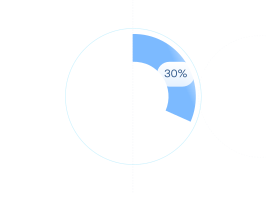
Save up 30% on tokens
  • 01 Field-proven methodology
  • 02 Well-thought-out agentic orchestration
  • 03 Built-in AI governance and compliance
  • 04 Cross-platform integration
  • 05 High-fidelity data preparation
  • 06 Goal-oriented context engineering
GENiE

Our Claude Code implementation process: 6-10 weeks to production

Speed is the most immediate lever you can pull, but you also need structure. Our proven delivery model is both, taking your projects from system mapping to governed deployment without breaking things.

01
Discovery and AI readiness
  • Evaluating codebase and workflows
  • Mapping your current architecture
02
Architecture design
  • Defining agent workflows
  • Integration mapping
03
Implementation
  • Configuring Claude Code
  • Building automation pipelines
04
Optimization
  • Performance tuning
  • Feedback loops
05
Scale and support
  • Continuous improvement
  • Monitoring and updates
Awards &
recognition
Clutch 1000 2025
Feedbax Top Company AI Development 2025
TechBehemots Winner Custom Software Development 2025
TopDevelopers Top Software Developers 2023
SelectedFirms Top Web & Software Development Company
DesignRush Top Web Development Companies 2023
GoodFirms Top Blockchain Technology Companies 2018
Techreviewer Top Enterprise App Developers 2021
Iridescent, glass-like question mark symbol.

FAQ

What is Claude Code implementation?

Claude Code implementation is the process of integrating  Claude Code into your engineering environment to accelerate production development work. In a mature setup, Claude Code isn’t used as a code assistant, but becomes a native part of the company’s SDLC: connected to repositories, workflows, tools, standards, and governance mechanisms that let teams use it safely beyond early experiments.

How long does it take to integrate Claude Code?

It takes our Claude Code experts from 6 to 10 weeks to bring Claude Code into your workflows. We accelerate the process with our proprietary agentic framework, which provides a ready foundation for agent orchestration, observability, workflow integration, and responsible AI controls across heterogeneous software ecosystems.

Is Claude Code suitable for enterprise and legacy systems?

Claude Code is more suitable for enterprise and legacy systems than any other coding agent. Inherent contextual understanding makes it well-suited for environments bound by multi-layer dependencies. It also has interpretable logic, which is non-negotiable for a regulation-heavy organization. On the operational side, Claude Code aligns well with existing CI/CD, versioning, and review workflows,  making it a reliable option for system overhauls.

What's the difference between Claude Code and GitHub Copilot?

GitHub Copilot and Claude Code both support AI-assisted software development, but they take different paths to enterprise adoption. GitHub Copilot is tightly connected to the GitHub ecosystem, which is a major advantage for organizations already running their development workflows there. Teams can use Copilot across GitHub-native environments and collaborate with agents through familiar interfaces without introducing much additional tooling. Claude Code, by contrast, is more agent-centric than platform-centric. It is designed to work through the developer’s environment and can be adapted to broader engineering workflows, toolchains, repositories, and automation patterns without tying the entire operating model to one development platform.

How do you measure ROI from Claude Code?

To measure ROI from Claude Code, you can track direct metrics across three dimensions, which are delivery speed gains, cost optimization, and quality or governance impact. Benchmark these against your pre-AI baseline and redo the math as your agentic systems mature. 

Anna Vasilevskaya
AI modified real photo
Anna Vasilevskaya
Account Executive

Get in touch

Drop us a line about your project at
[email protected] or via the contact
form below, and we will contact you soon.