




Quality Management System

SaaS Quality Management App For a Leading Maritime Software Provider

How broadening their industry-specific software pool with a quality management system (QMS) for maritime companies allowed a world-class SaaS software provider to win new customers.

Industry:
Ecommerce

Web Development

SaaS Development

Software Product Development

Enterprise Automation

Business challenge

Is there a more common and widespread bottleneck than paper-based workflows? Despite the seemingly ubiquitous focus on technology-enabled business transformation, non-digital-born companies across industries still depend on paper documentation.

Such an approach leads to flawed records, delayed updates, etc., which overcomplicates the quality management process. When quality-related debacles take place at the enterprise scale, companies have to pay for them, not rarely with something more valuable than money — their reputation.

This was the weak spot our client aimed to tackle to help their customers move quickly and confidently down the digitalization path. A world-class maritime software provider with several solutions for streamlining industry-specific processes contacted *instinctools to widen their offering with a cloud-based SaaS quality management system (QMS).

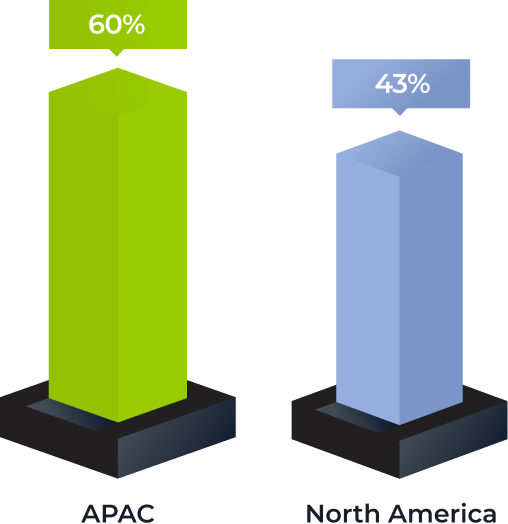
What percentage of organizations depend on paper-based processes?

*Source: Forrester, Digital Documents Necessity

What issues did maritime enterprises face while managing quality documents mostly manually?
Delays at all stages of working with documentation
Failure to keep quality management documents updated
Lack of traceability within quality management processes
Risk of overlooking updated standards and compliance requirements in time
Human error in full bloom

Our client wanted to fix these problems with robust software that spans quality, health, safety, and environment (QHSE) processes by:

Digitizing

and streamlining all document-related operations, including creation, editing, etc.

Ensuring

compliance with general and maritime-specific standards

Providing

a centralized repository with role-based access to allow users to work with quality documents anywhere, anytime, without compromising security

Automating

quality management workflows, such as authoring, reviewing, approving, notifying, etc., to free employees from mundane rule-based tasks and eliminate the possibility of human error

Fostering

transparency of quality management processes thanks to the detailed audit trail

Solution

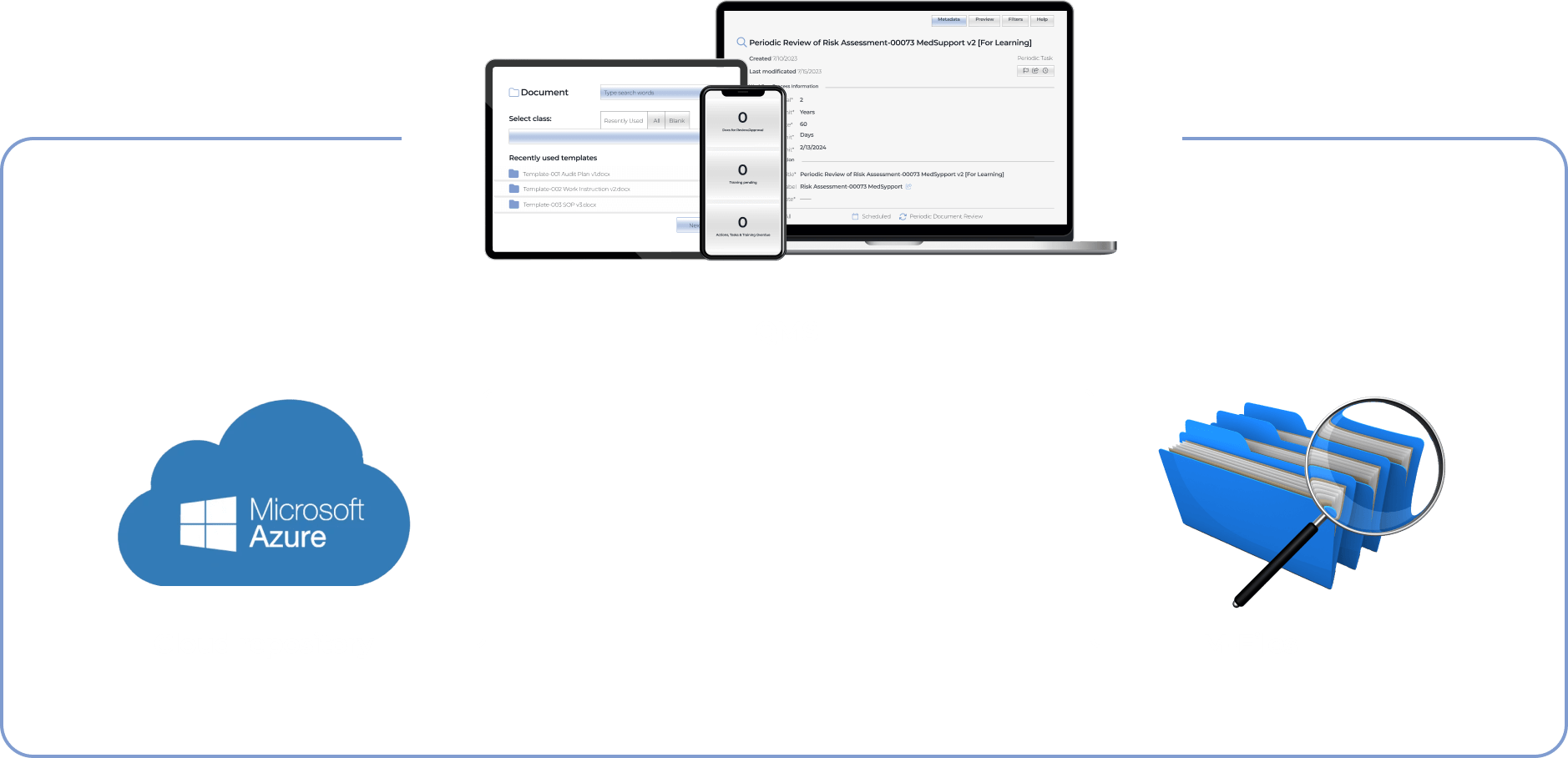
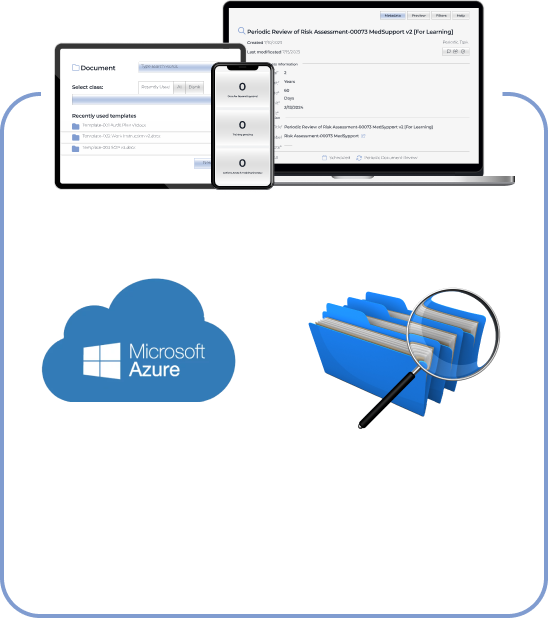
The client has been delivering solutions for enterprises using Microsoft 365 products. Therefore, our dedicated team went with Microsoft Azure as a cloud repository for the QMS. The system also needed a metadata-driven document management platform to automate document creation workflows. We’ve chosen M-Files with out-of-the-box integration with Microsoft Azure.

  1. Packing the QMS with broad functionality

Banking on the rich off-the-shelf functionality for their customers was at the core of the client’s strategy. Therefore, we’ve crafted the software with multiple out-of-the-box modules that go beyond simple document creation and review and cover regulatory compliance, audits, and risk management tasks.

Document creation module

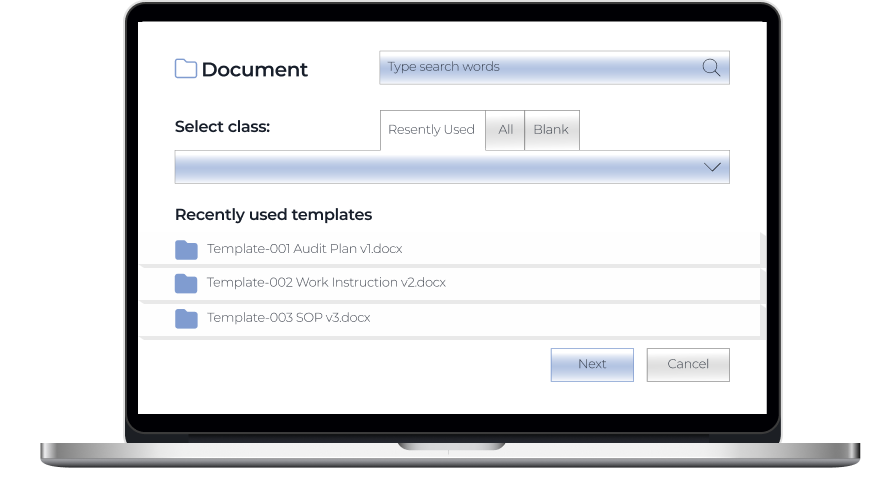
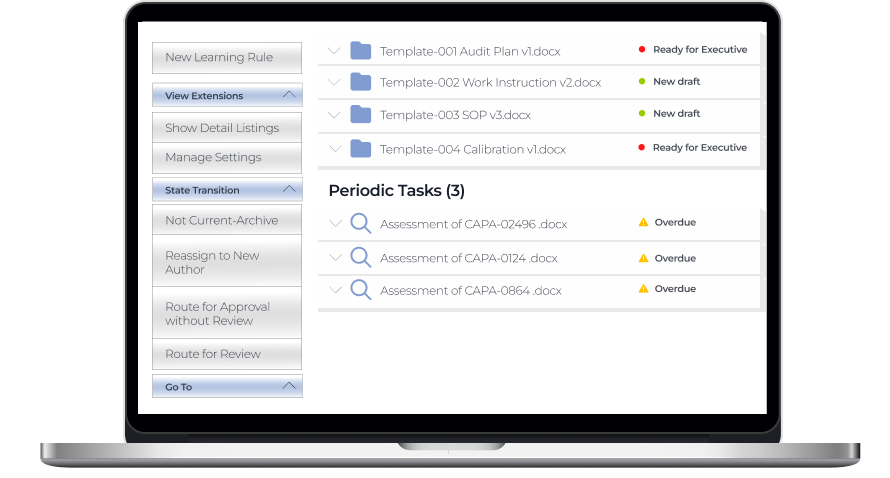
Users can create a document using templates or drag and drop existing Word, Excel, PPTX, HTML, and PDF files directly into the system.

Review and approval module

Drafted documents are sent for review or approval.

If there are several reviewers and approvers, they can collaborate on document editing using track changes.

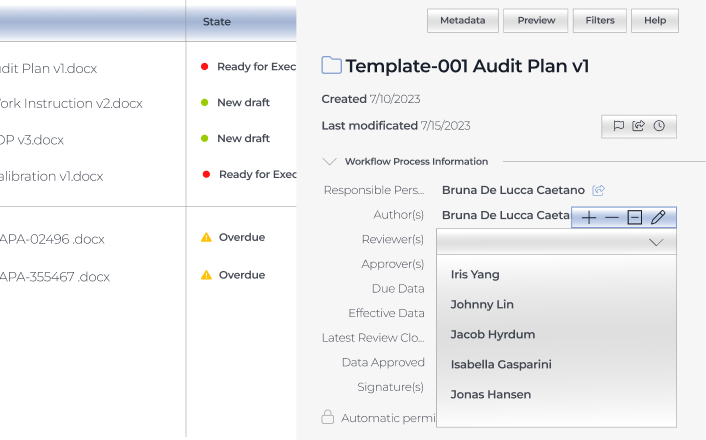
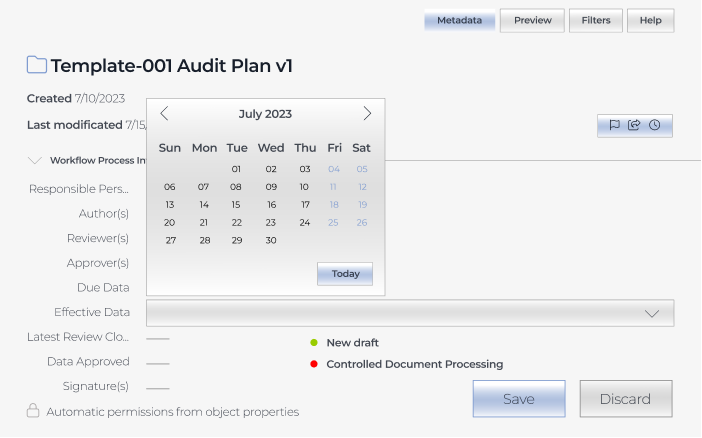
Authors can set a deadline for reviews or approvals.

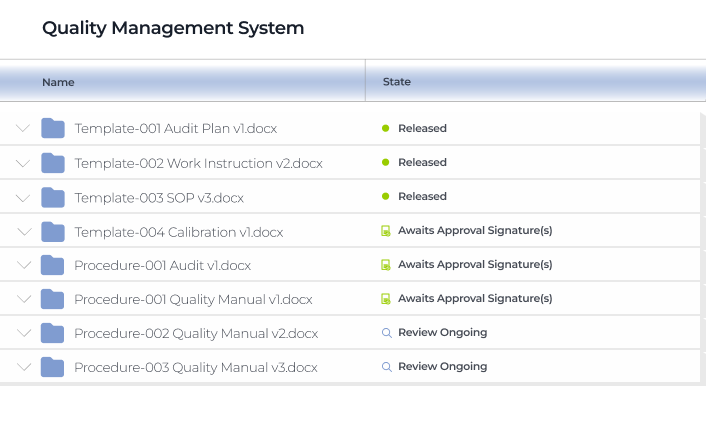
Assigners have real-time visibility into the state of reviews and approvals.

Assignees get email auto notifications about the documents waiting for their review or approval. Assigners also get auto alerts about suggestions and comments in the documents and when assignees mark them as reviewed or approved.

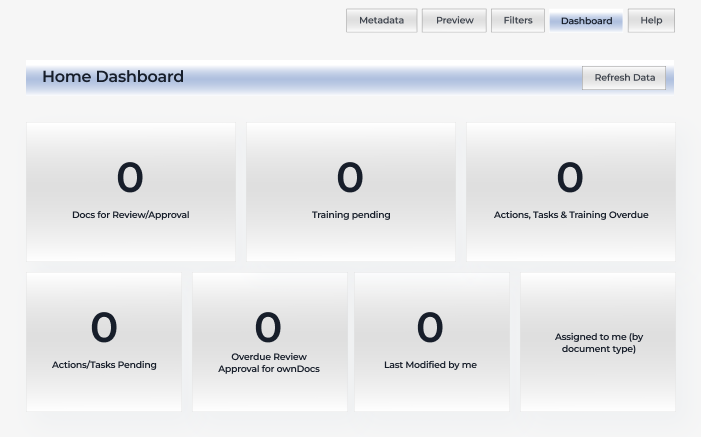
All users have personal dashboards as an easy way to access the files for review and approval, last modified documents, etc., just by clicking on the corresponding section.

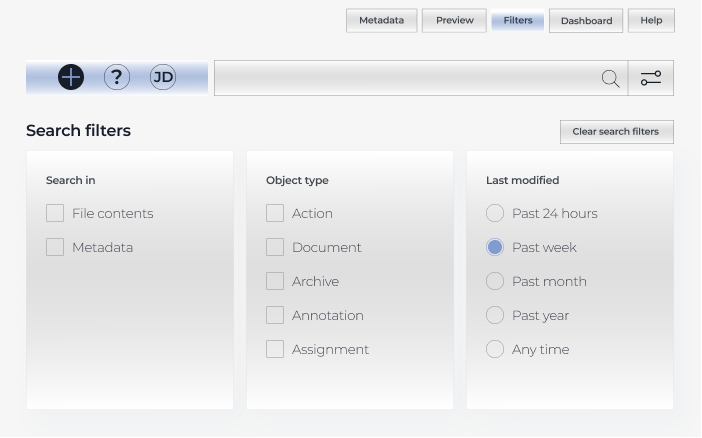
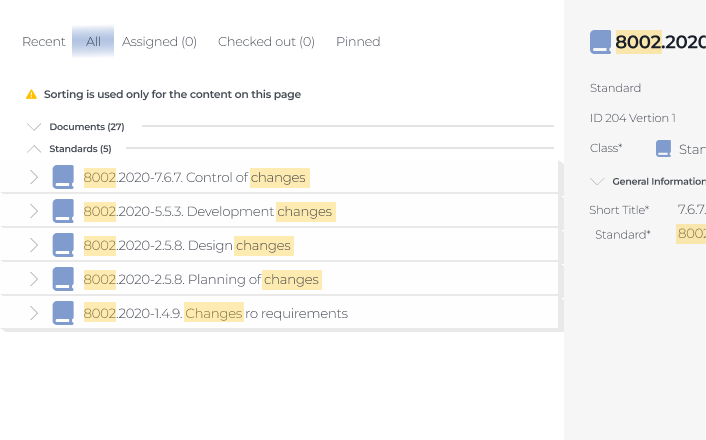
Also, all users can look for documents across the system with an intuitive search bar.

It provides the possibility to search for exact words matching the titles and content of the files.

Regulatory compliance module

This module is the heart of the whole system. The QMS is compliant with the following standards by default:

ISM (International Safety Management) guidelines define the safe operation of ships and address preventing pollution.

ISPS (International Ship and Port Facility Security) is designed to uncover and prevent criminal threats, such as piracy, acts of terrorism, etc.

ISO 9001 (Quality Management System) establishes requirements for a QMS

ISO 14001 (Environmental Management System) clarifies best practices that companies should follow to reduce their environmental footprint

ISO 45001 (Occupational Health and Safety Management System) determines physical, chemical, biological, ergonomic, and psychosocial hazards to minimize their impact on the employees’ health and safety
Audit module

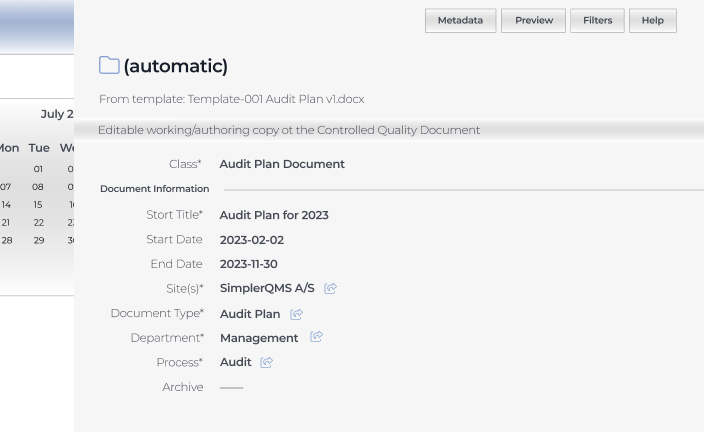
The client wanted to ensure complete traceability across the system, as keeping the company’s documentation in order is one of the success factors contributing to smooth external audits. Therefore, we crafted a system where any document changes are recorded, and users have a time-stamped audit trail and the history of each document at their fingertips.

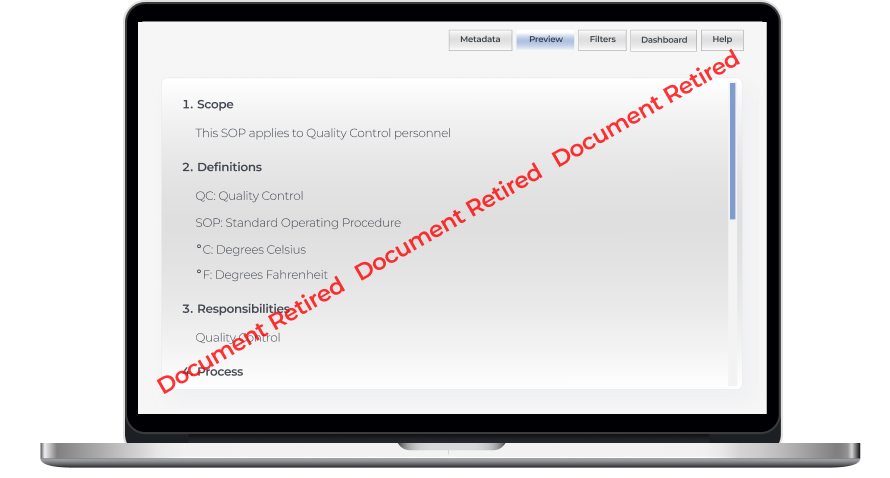
While the QMS always suggests the most recent file version, all roles have access to the previous ones. Document owners can set up auto retirement of the document’s previous versions when the new one is released.

Internal audits and regulatory checks also become a breeze for maritime organizations with this QMS. 

Our development team provided a complementary document template package for:

  • Creating audit plans
  • Scheduling internal audits
  • Assigning responsible personnel and reviewers

Both authors, assignees, and reviewers can attach evidence related to the audit findings, making it easier to unearth and fix alarming issues internally.

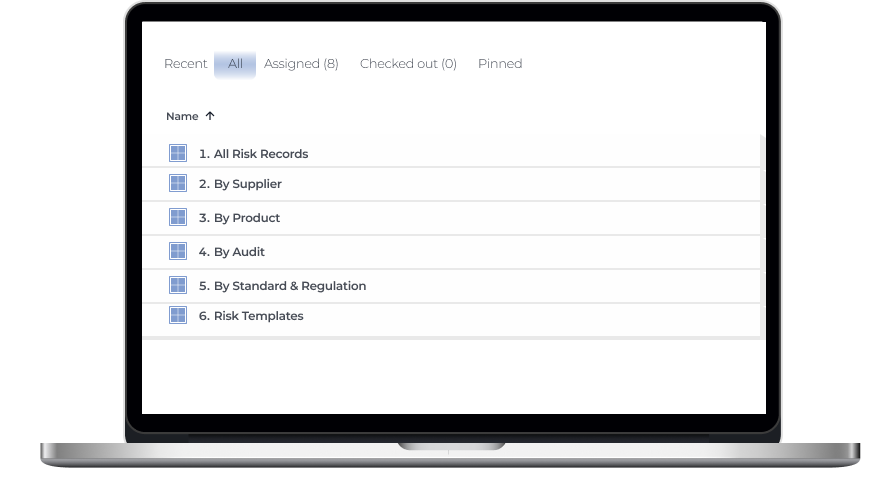
Risk management module

The QMS we’ve developed enables companies to foresee dangers and prevent or minimize their negative impact

  • Connect information within the quality management system

Users can connect risk management documents with audit data, records related to suppliers and products, and other items within the system to enhance traceability of potential hazards.

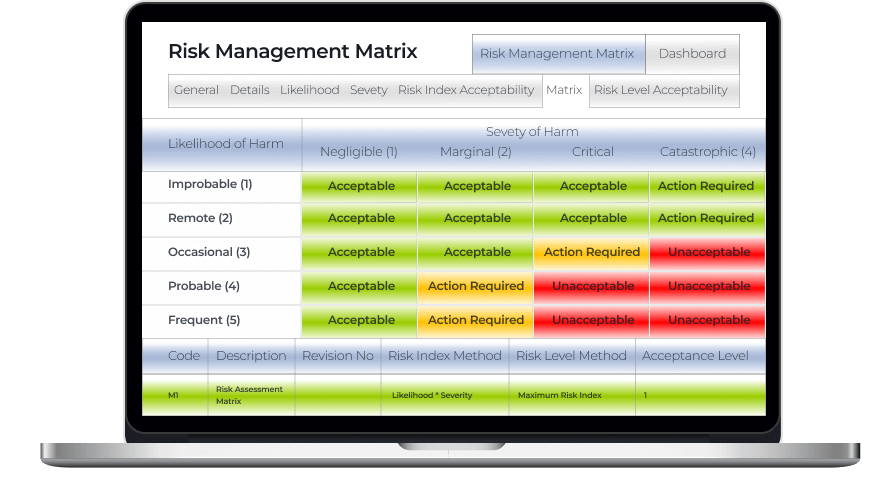
  • Identify possible hazards with a risk management matrix

Spotting risk-prone issues as early as possible helps cover them before they snowball into severe threats and cause noticeable accidents. The risk management matrix is color-coded so that users can immediately see if there are any catastrophic and critical events that have to be addressed ASAP.

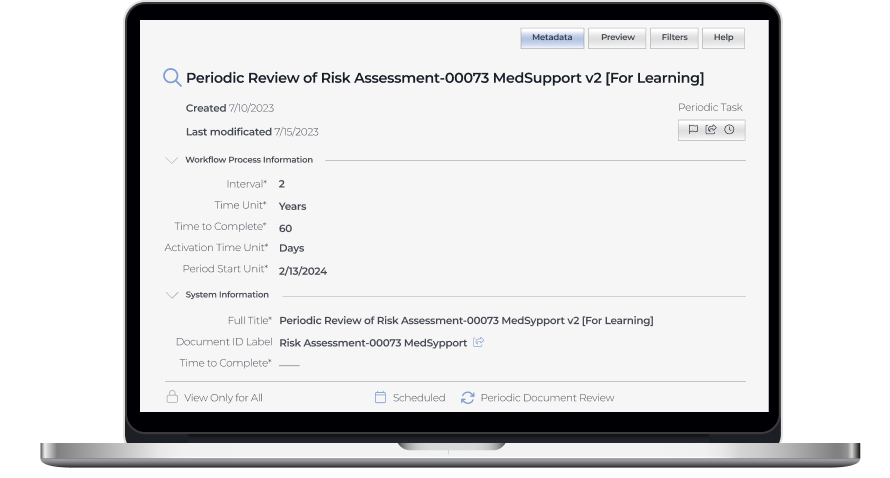
  • Schedule periodic risk assessments

Risk assessment is an area with high automation potential, and we didn’t miss the chance to take full advantage of it, empowering users to set periodic risk assessments within any time frame.

  1. Ensuring integrability with any corporate systems

Our software developers wrote APIs for data synchronization with external tools to allow the client’s customers to seamlessly incorporate the web app into their existing software landscape and facilitate efficient data flow between the QMS and other systems, such as ERP, CRM, IMS, etc.

Business value

Before

  • Underdigitized quality management workflow
  • Scattered quality management data
  • Non-automated workflows
  • Delays at all stages of working with documentation
  • Lack of visibility into quality management processes
  • High probability of human error

After

  • Fully digitized quality management processes
  • Single source of documentation
  • Minimized manual effort with automated workflows
  • Streamlined audit-related activities
  • Complete traceability thanks to time-stamped audit trail
  • Reduced human error

Client’s testimonial

Hear about the project’s progress and outcomes directly from its product owner:

Tim Rosenberger

Director, Global R&D at SpecTec

I was impressed by the developers’ skills and by the ability of *instinctools to extend the team on really short notice. I’m looking forward to the collaboration with *instinctools on our upcoming digital transportation projects

LMS Architecture Modernization For a SaaS Company

LMS Architecture Modernization For a SaaS Company

How dividing legacy monolithic architecture into microservices helped a global LMS producer to hop on the train of remote work with their updated LMS application for staff training and raise the number of customers worldwide by 37% without risking business continuity.

Industry:
Education

Duration:
11 months

Budget:
$200 000+

Team:
three FTE engineers, two QA specialists, project manager, business analyst

Context

With the client’s LMS platform, users can access up-to-the-minute data, staff training results, average test scores, personal tests, performance appraisals, surveys, and financial data with comparative reporting. It allows every manager to train, track and communicate with employees, plus control company compliance nationally and globally.

Challenge

Our client has been planning to modernize some parts of their LMS for a while and, as is often the case, they haven’t gotten around to it until recently. However, the delay was no longer an option since Adobe Flash, where one of the modules was written, was on its way out. Major browsers have been slowly pulling support for years now, and Adobe itself has announced that it would be stopping the development and support of Flash at the end of December 2020.

So, at that point, modernization turned from a vague long-running goal into a clear necessity, that would prevent the loss of customers. At the same time, the client wanted to leverage the situation and not only make an updated application, supported by all browsers, but also implement a bunch of new features, that would be beneficial for end-users.

The client chose *instinctools since they wanted to lift the burden of managing the project off their shoulders and put it on a Tech partner providing a dedicated team, who would take responsibility for what they do and where the project goes.

Objectives:

  • Make a module for presentation editing supported by all browsers
  • Implement a new proposed design that improves the UX
  • Implement a working product by the end of December 2020
  • Keep performance on thе same level
  • Switch from Flash to modern technology
  • Turn the presentation tool into a standalone application, that will function as a separate microservice.

Solution

*instinctools dedicated team has developed a cross-browser application supporting mobile devices and tablets. The solution was based on new secure and scalable technologies. At the final and most challenging stage of the project, we migrated all the digital assets from a legacy system to a new structured microservice application without any loss.

Key features

  • modern and engaging design
  • completely customizable assets
  • ability to export presentations as printable documents (PDF)
  • ability to undo/redo most recent actions
  • copying, pasting, deleting, and rearranging multiple slides simultaneously
  • selecting and manipulating multiple elements at the same time
  • copying selected elements from one slide to another while maintaining the original positioning of each element from the original slide
  • ability to use keyboard shortcuts

Business Value

With the brand-new version of the application delivered just in time when remote work was a rising trend, it’s become possible for its users to create inspiring and meaningful content that makes remote or in-person activities way more impactful than they used to be. It helped our client to increase loyalty to a product and gain new customers globally.

Encouraged by our collaboration, the client plans to continue improving the software module by adding new features in subsequent phases.

Technologies

Custom CRM For a Canadian Marketing Company

Custom CRM For a Canadian Marketing Company

How developing a custom CRM system allowed a marketing and promotions company to unlock deep drill-downs into customer data and boost advertising campaigns’ conversion rate by 34% while cutting down cost per lead by 21%.

Industry:
Retail & E-commerce

Duration:
3 years

Team:
full-stack engineer, tech lead, project manager, QA specialist, designer

Context

Until 2020 our client’s business was mainly offline. They placed easels with signed items or rare collectibles on various locations (restaurants, sporting events, shopping malls, etc.) and accepted via them paper bids that were processed manually by the company’s personnel.

At that time, the company addressed *instinctools to help them move the process of accepting bids and buying unique items online. As more offline businesses have gone digital after 2020, our client needed to create a unified platform for placing bids online and increasing online sales of unique goods by moving sales to eBay and Amazon platforms.

Challenge

The main task for the *instinctools team was custom CRM development with the core functionality allowing to support and process large volumes of data. The following key requirements were set regarding the use case of the software:

  • An easy & convenient way to create contacts;
  • Inventory support and basic tracking for collectibles;
  • The ability to systematically add bids into the system;
  • Reports creation and management.

After a while, when the business set a goal to reach a new market and expand its target audience, the requirements for the CRM solution were extended with new features and integrations. Furthermore, our client wanted to give end customers a single user-friendly website to find easels’ catalogs and locations, choose interesting items and place bids online.

So the *instinctools dedicated team was augmented with two more full-stack engineers and a designer to start working on the online auction system creation and a CRM optimization with the integration of e-commerce platforms and payments systems.

Solution

A web-based CRM solution is mainly built on Angular with the object-relational database system PostgreSQL.

Our solution is synchronized with e-commerce platforms: Shopify and eBay, and gathers all the information about customers and their purchases in one single data storage, significantly simplifying the sales reporting process. Sales managers now can generate detailed reports in the CRM, drilling down various parameters: team efficiency and KPIs, commission rates, etc.

Earlier all employees entered inventory, sales, customers, and other data into the system manually. We automated this process and integrated an all-in-one inventory management software, inFlow, synchronized with the CRM system.

Key features

Web-based CRM:

  • Easy-to-use interface for adding new bids into the system and their later processing.
  • Automatic contacts creation after adding new bids.
  • Reports generation and management with export to MS Excel function.

Inventory management:

  • Keep records on the stock balance of collectibles.
  • Manage collectibles (adding new, editing, deleting options, etc.).
  • Create requests for full-cycle product items processing (request / shipment / delivery confirmation / returns / return confirmation).

Online bidding platform:

  • Auction map with locations of easels.
  • Possibility to place bids without registration.
  • User-friendly and SEO-optimized page.

Business Value

Moving online, the client expanded their business offering to B2B and B2C customers all over the country and successfully increased their revenue and market share.

With automated workflows of accepting and processing bids from the landing page and easels, the client has increased employees’ capacity and reduced their workload, focusing on other activities, such as marketing and promotion.

Technologies

Angular
AWS
NodeJS
eBay
Shopify
PostgeSQL

Document Management System For a Healthcare Company

Document Management System For a Healthcare Company

How adopting new features empowered a HealthTech company to take their DMS software to the next level, fully automate document management, and put an extra coat on personal information protection.

Challenge

The company’s app was under active development. The client wished to extend the app functionality with these features:

  • Editing Microsoft Office documents
  • Upload / download file structure
  • Uploading files to the system using e-mail
  • DevOps services
  • Protection of personal information (POPI)
  • Printing / faxing documents
  • Implementing pass-through authentication (Single Sign-On)
[arrowsection-dmhealthcare]

Solution

This is what we introduced to reach the client’s goals:

  • Integration with Microsoft Office 365 (WOPI)
  • POPI: converting documents (including both pdf and rtf) to a tuple of images
  • POPI: option for editing images and downloading them as a pdf file)
  • Upload / download file structure module (node fs, zlib)
  • Integration with the Scrypt Sfax service (for printing / faxing)
  • Integration with MailGun (uploading files via e-mail)
  • End user authentication (SAML)
  • Continuous integration: Jenkins + Docker + AWS infrastructure

Key features

As a result, the application now has a number of advantages:

Automated workflow for an institution’s documents (editing, uploading & downloading, printing & faxing and implementing pass through authentication (Single Sign On))

Personal information protection

Possibility of converting files to a tuple of images

Integration with Microsoft Office 365, the Scrypt Sfax service and MailGun

Possibility of editing images and downloading them as a pdf file

Technologies

Server Side:
DB:
Front Side:
Other:

Healthcare Management System (HIPAA compliant)

Healthcare Management System (HIPAA compliant)

How transforming HMS’s MVP into a full-featured SaaS solution allowed a US company to automate 86% of manual processes, create monthly reports in a click, simplify HIPAA compliance checks, and streamline calculating NHSN reporting metrics while wiping out the possibility of a human error.

About the project

The customer is a U.S. based early-stage healthcare startup established at the beginning of 2016. Their main goal is to help healthcare organizations simplify and automate occupational healthcare management. The founders have years of experience working with large hospitals and healthcare systems.

They discovered a better way of getting rid of manual processes, streamlining data collection for immunizations, fitness tests, TB tests, and quickly rolling out reports for internal and external use.

Challenge

The main challenge for *instinctools was to transform the MVP into a full-featured product – a robust and easy-to-use tool that would efficiently reduce the administrative burden and workload.

Solution

In close communication with the customer, *instinctools team offered the following solutions to assist with achieving the company’s main goal:

  • Enterprise Hierarchical Adjustability
  • Full Configurability
  • All-round Monitoring
  • Cloud-based web + backend
  • Modern Technologies

Maximum Data Security:

  • Multi-tenancy
  • Isolated data
  • Encryption
  • Leakage protection
  • Role-based data access

The project is still in the development stage, but we’ve already successfully delivered many important features.

Result

The customer is pleased with the efficiency of communications and the quality of work delivered, and plans to take cooperation to the next level by entrusting more work to *instinctools in the coming months.

Key features

Full enterprise SaaS solution:

Monitors compliance at the enterprise level

Tracks and reports staff immunization requirements, tests, and health events

Standardizes immunization requirements by job code and title

Drills down immunization status from department to individual in one click

Flags compliance gaps and upcoming requirements

Automatically notifies staff when immunizations are about to expire

Complies with HIPAA

Integrates with existing HR systems to eliminate duplicate entries and automatically deactivate associates

Creates monthly reports instantaneously

Easily calculates NHSN reporting metrics that can be easily cut and pasted directly into reports

Technologies

ASP.NET
Web API, MVC
MS SQL
Entity Framework
Bootstrap
Angular JS
Azure

Patient Identification Software For a US Healthcare Company

Patient Identification Software For a US Healthcare Company

How developing a wallet-friendly, BioTech-based patient identification software for healthcare institutions (HI) allowed an HDM company to cut out identification errors and record duplicates and grow its HI-base by 32%.

About the project

The idea to develop the product for patient identification came to our customer because of the acute problem of personal identification in the field of healthcare.

The fact is that there occur different problems in the registry during identification of a person: inaccuracies, identification errors, and duplication of registration details. In such cases, employees spend a lot of time looking for the correct patient records.

There are more accurate ways of personal identification. These are biometric technologies, such as fingerprint scanners or vein scanners. However, such methods are poorly distributed because of their high cost.

The product for patient identification solves the problem of identification efficiently and relatively cheaply: with the help of face identification technology. This requires the use of cheap devices, such as smartphones and tablets.

Challenge

The customer tasked our company with the development of this patient identification software. The company required us to develop an application that could be further distributed to healthcare institutions (HI).

The structure of the application should be as follows:

  • Using the application, the patient registers for an appointment with the doctor.
  • After registration, a message with a QR code comes to their phone. This code is used to verify the patient’s identity before the appointment.
  • When the patient comes to the HI, they need to scan the QR code on the device provided by the HI for verification (for example, an info kiosk or tablet).
  • Then the patient needs to approach the camera and pass face recognition.
  • After such verification, the device shows the number of the room where the patient’s appointment will take place, or an invitation to go to the registry.

Solution

We suggested developing a web and a mobile application.

We developed a mobile application (on iOS and Android platforms) for patients. It can be installed via a QR code. After installing the application, one has to enter their personal data and upload a photo. This application helps to make an appointment and receives notifications and QR codes for verification at the HI.

We have developed a web-based face recognition app for use in an HI. It is installed on the device the patient passes through during identification. The web application serves to read the QR code and recognize the patient’s face. After verification is completed, the web application shows the patient what room to go to. If the QR code does not work, the application notifies the patient of the need to approach the registry.

Moreover, a part of our work was the development of a UX/UI design.

Solution

The web-based face recognition app allows the user to:

Shoot a photo via the device camera

Enter confirmation information

Read a verification pass QR code from a smartphone

Use the app on a tablet

The mobile app allows the user to:

Sign up

Enter a set of required personal data, including a series of selfie images

Edit content entered

Keep information about appointments and other events

Save pass QR codes for each event

Integrate with a client’s server

Technologies

Web technologies:

Mobile technologies:

Nutrition Monitoring Apps For a US Fitness Centers Chain

Nutrition Monitoring Apps For a US Fitness Centers Chain

How introducing iOS and Android apps for seamless diet monitoring with a personalized recommendation system helped a Californian fitness chain attract 16% new customers to their gyms.

About the project

Famous coaches from customer’s fitness centers have worked out their own low-calorie diet plan to help clients stick to healthy nutrition. Though it proved to be effective, it wasn’t quite convenient to follow as people had to address their notes all the time to count the eaten calories. Therefore *instinctools team got the task to create a user-friendly app (on iOS and Android platforms) that would simplify the process of counting calories.

Challenge

The main goal was to create an application that would digitalize the process of how users follow the diet plan by counting calories and weight tracking using their smartphone.

Solution

*instinctools team developed mobile apps for iOS and Android platforms that would meet customer’s business objectives under a PM’s supervision.

  • Show energy value and characteristics of a vast list of products;
  • Organize quick search within the products list;
  • Indicate the exact quantity of the eaten product and count its energetic value;
  • Deploy an intuitive and user-friendly interface;
  • Combine the calorie counting process with the product nutritional value estimating.

Solution

Close collaboration of our development team, UX designers, QA and PM with the medical coordinators and coaches on customer’s side let us deliver a high-quality product within 2 months.

Get access to a huge database of products including both raw food & cooked meals

Track personal weight changes

Search quickly within the products list

Set reminders to follow the diet

Receive recommendations on what to eat next and how to cook it best way

Being motivated to stick to the diet through gamification elements

Business profit

Coaches presented their diet plan to a wide range of people and proved its effectiveness with the help of Calorie Calculator. It helped to raise the number of visitors interested in diet implementation by 16% what significantly affected the income of the organization.

Technologies

Security Analysis Tool For US Tech Company

Security Analysis Tool For US Tech Company

How running code refactoring of the Eclipse plugin at the heart of their vulnerability detection tools provided a US software company with an x50 faster code scanner.

About the Project

An analysis tool we had worked with is a client and server-side software, integrated into such development environments as Eclipse, Visual Studio and IntelliJ IDEA. Developers can be sure of building security from the very start and of detecting vulnerabilities as they appear, hence they can be fixed immediately. This analysis tool is a lightweight static analysis tool that detects vulnerabilities automatically and provides just-in-time security guidance to your developers in the process of coding. With this tool you can eliminate common security errors before they are committed to the code base or released to the public.

Challenge

  • Implement a plugin from the very beginning until the end with very strict deadlines of product delivery (5 months)
  • Creating plugins for IntelliJ IDEA was not a piece of cake, as it’s quite a narrow specialization area. It was new for us, but the challenge was handled successfully, meeting all customer objectives
  • We had to carry out a huge refactoring of the Eclipse plugin code to make the code scanner much faster than it was. And we’ve achieved magnificent improvements: about 50 times faster

Fast analysis

Analysis tool plugins can scan large projects with thousands of files in just a few seconds

Fits a Modern Agile Process

Sustain the tight feedback loops that you need for a modern agile environment

Builds Security Skills Every Day

Educate your developers about best practices in secure coding without leaving the coding environment

Customizes to your Organization

Create custom rules and guidance to support your enterprise-specific policies

Technologies

TeamCity
Java 7/8
Java Concurrency.
Java FX
Angular
Spring
Eclipse
Visual Studio
IntelliJ IDEA
MySQL

E-Book Platform For a Swedish Publishing House

E-Book Platform For a Swedish Publishing House

How developing a multifunctional e-library with social media elements, such as chat and a rating system, provided a virtual publishing house with a 36% growth in the flow of new readers and authors.

Challenge

The main aim was to develop an e-library similar to Amazon Reader. The app had to be interesting for a wide range of users: both authors and readers. The e-library was required to be multifunctional, and contain lots of possibilities, such as chat, convenient reading, sharing, and publishing.

Solutions

  • Development of the library/chat sections with the elements of social networks, authors’ rating system
  • Adaptation of the e-book reader
  • Development of print functionality
  • Possibility to order a book even with a one copy edition
  • Choice of book format/ type and the nearest printing office

Publisher features

Transform your text in three clicks into a professionally-designed book

No need to print a great number of copies to get an author's edition – order even just one

Choose your own edition design – font, text & pictures, decorative fixtures, etc

Share links to your books – let your readers & colleagues make you famous!

Keep your copyrights effectively protected: with this e-library be sure that nobody will be able to steal the results of your book writing

Let your book work for you: get fair remuneration for your piece of art

Reader features​

Find editions of every trend in the catalogue (even sector-specific texts)

Read books in a convenient format – on paper or on any device

Be an expert, share your opinion on works you like, let it find its target audience and be an interesting subject for discussion

Work with information, know your onions – leave your mark, highlight quotations, write comments directly in a book, share your thoughts with friends and likeminded people

Technologies

PHP
YII framework
MySQL
NetCat
HTML
CSS
JS, Ajax
WebAPI

Mobile Staff Management Platform For a Danish Company

Mobile Staff Management Platform For a Danish Company

How launching a mobile platform for briefing and training the non-desk employees empowered a Danish company to bridge the gap between the head office and the shop floor, speed up onboarding by 11%, and boost staff engagement by 13%.

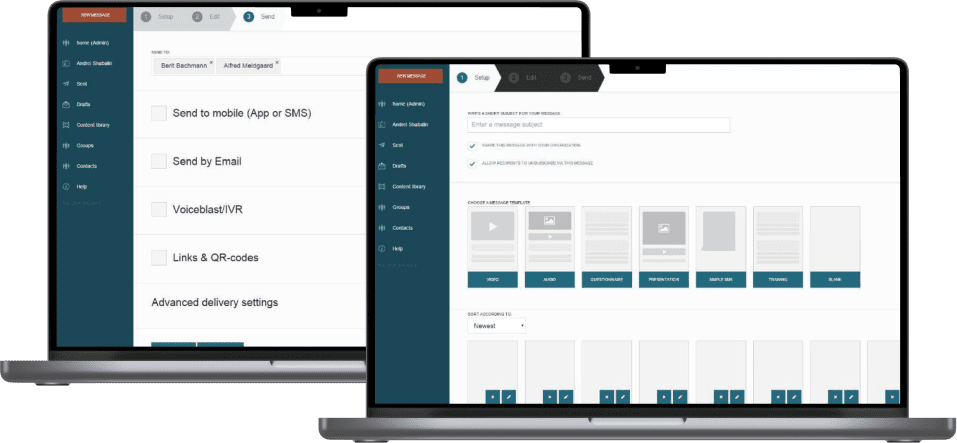
Remote briefing and training service

Lack of two-way conversation between head office and the shop floor is bad for business. Stuff should be always engaged with personalised, relevant information. Such engagement motivates staff by defining their role in product launches.

To cover enterprise needs on all levels, solution should:

  • Broadcast targets to end point employee
  • Be reachable everywhere
  • Track their reaction and feedback in real-time
  • Have support for pep talks
  • Broadcast work/decision results to all team/company members

Challenge

  • Solution should be cross platform and work on enormous device models in the same manner
  • Solution should be available 24/7
  • No downtimes is allowed
  • High load expected

Solution

C0F90649-DCBA-4040-9CC5-B72EFCE1CB45Created with sketchtool.

Node.js as main platform

78FC13DA-BB97-468C-85FB-F70C775A0981Created with sketchtool.

Advanced caching with Redis

F200465C-D304-4CFC-935C-206BB87ABEEDCreated with sketchtool.

Clustering

Technologies

PHP
NodeJs
Angular
Python
MySQL
Anna Vasilevskaya
AI modified real photo
Anna Vasilevskaya
Account Executive

Get in touch

Drop us a line about your project at
[email protected] or via the contact
form below, and we will contact you soon.