Agentic Operating System GENiE

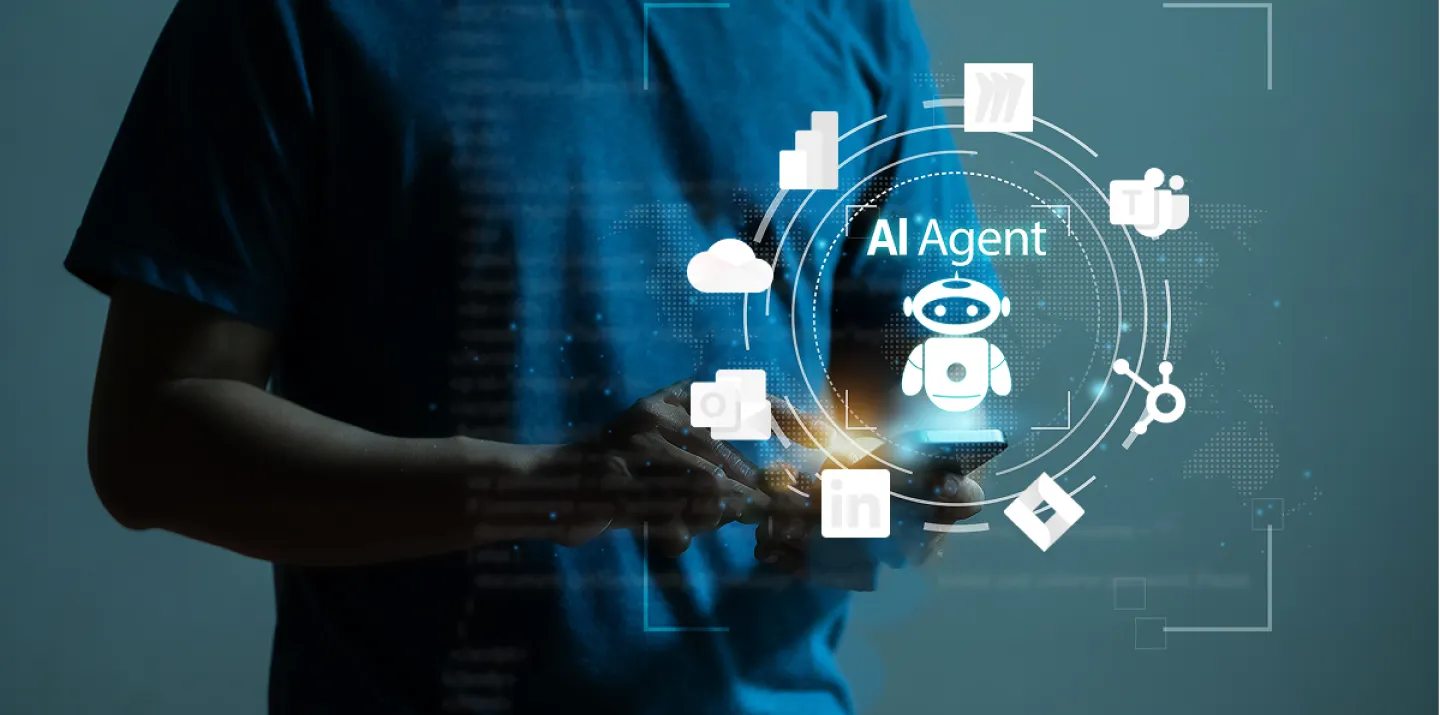
Your AI agents perform actions here and there. But can they run an entire business process across real systems, data, and operational rules? An agentic operating system is what carries agents over that line. Instinctools designs and implements GENiE – an agentic OS for complex enterprise workflows, so AI can scale safely beyond isolated pilots.


An agentic operating system is not a standalone OS in the traditional sense

LLM agent operating systems aren’t here to replace iOS, Windows, and Linux. In the enterprise context, Agentic OS is an AI orchestration layer that enables autonomous agents and copilots to plan, coordinate, and execute work across systems, data, and business processes in production environments, improving results over time through evaluated outcomes and feedback loops.

Don’t count your
AI agents. Make your
AI agents count

Once the agentic OS is in place, improvements begin to reinforce one another across everyday work.
01
Greater process
transparency

Teams and managers can see where work stands, what is blocking it, who needs to act, and what should happen next.

02
Better coordination
of people and systems

Employees, applications, documents, approvals, and external partners stay aligned around the same process state, reducing delays and fragmented handoffs.

03
More effective
employees

Staff spends less time searching for information, copying data, checking statuses, and chasing approvals, and more time analyzing, communicating, and making decisions.

04
Fewer errors
and incidents

The system detects missing information, conflicting inputs, process deviations, and risks early enough for teams or agents to intervene.

Certified to
the highest
ISO standards
ISO 27001
Data Security
ISO 9001
Quality Management
ISO 37001
Anti-bribery
ISO 45001
Health & Safety
ISO 14001
Environmental Care

Four agentic OS capabilities behind enterprise-scale AI

Agents fail not for the lack of intelligence, but that of proper orchestration, operational context, and smart routing. Core capabilities of the agent OS address the problems that stop agents from graduating past the pilot.

01

Orchestrate agents
across your

entire tech stack

From modern SaaS to decades-old legacy systems, an agent operating system connects internal tools, external services, data sources, and AI models under one roof. Agents execute workflows across the broader technology estate without tying the architecture to a single vendor, and you stay free to replace models, platforms, or components as requirements evolve.

02

Match every task to the
right
execution model

Not every workflow step should be handled by an LLM. Financial calculations, compliance checks, and strict validation often require deterministic logic, while research, reasoning, summarization, and content generation benefit from language models. An agentic OS coordinates both approaches, routing each task to the model, rule engine, service, or human expert best suited to handle it.

03

Reuse proven components
to deploy faster

Reusable agent templates, connectors, workflow patterns, tools, and governance controls reduce the amount of engineering required for every new use case. Instead of rebuilding common capabilities from scratch, teams can configure and combine proven components, lowering implementation effort and shortening the path to ROI.

04

Give every agent a
shared,
governed
context

At the heart of an OS for AI agents is a shared context layer with fine-grained short- and long-term memory management. It gives agents a whole-picture view of business objects and the ways of handling them across workflows. As a result, agents can preserve continuity between tasks, coordinate their actions, and make decisions using the same current, governed context.
Stop adding more agents and start connecting the work

How the enterprise agentic operating system works

Agentic OS architecture is designed as a layered system with each layer having a distinct responsibility.
01

Ontology

A shared model of your business connects every customer, order, project, document, and policy along with the relationships and rules that give them meaning. Agents draw on the ontology to read what the data represents, so their decisions match your business logic.
02
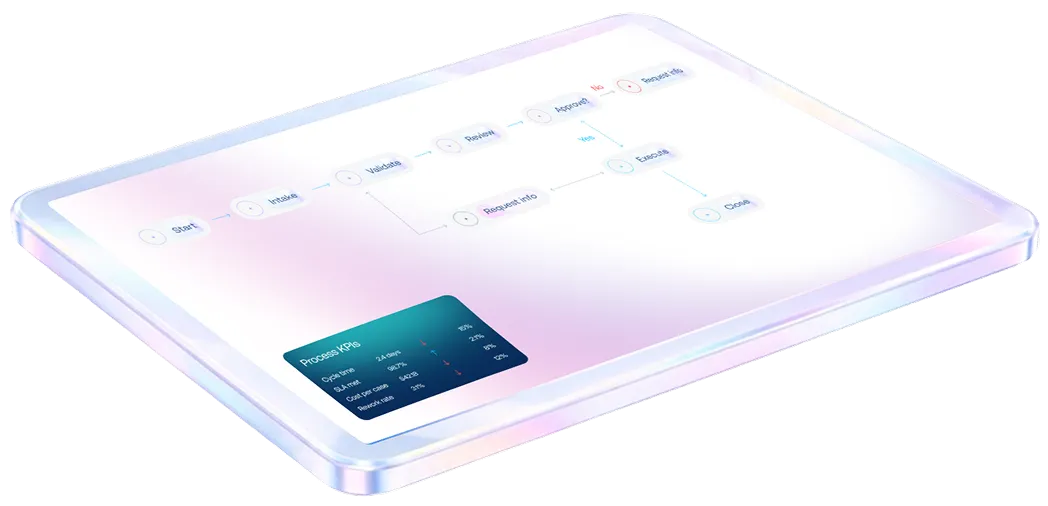
Business processes

Encode a workflow once, and the agentic AI OS can coordinate it from beginning to end, keeping each task, stage, role, and KPI in place. Operational steps that used to be buried in corporate wikis and employees’ heads become executable logic. An OS for AI agents can run the process, track its progress, and measure the outcome against the metrics that matter.
03
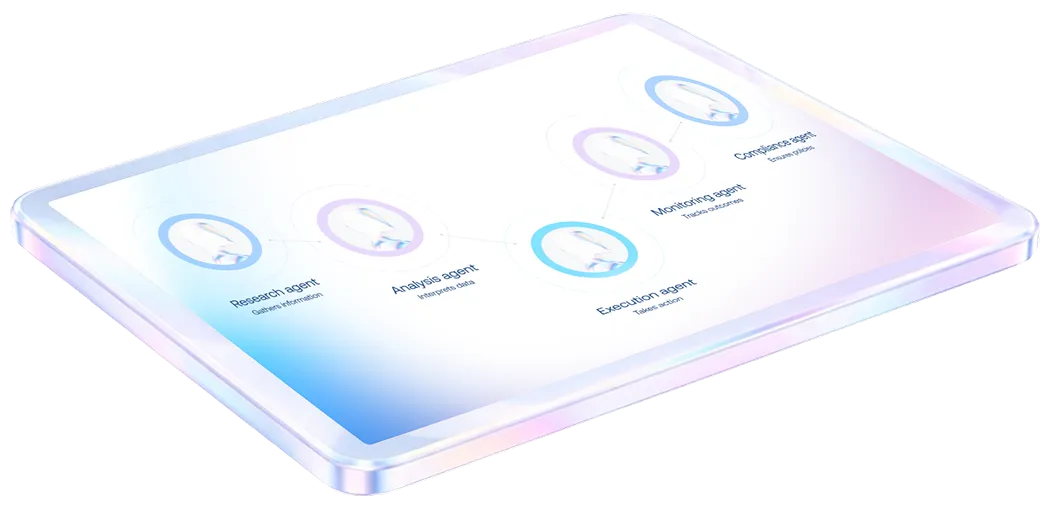
AI agents

Informational agents gather knowledge distributed across systems and turn it into relevant answers, summaries, and recommendations. Process agents move work forward: triggering actions, coordinating steps, updating systems, and handing tasks between agents and people. Both act without waiting to be asked, heading off errors before they land.
04
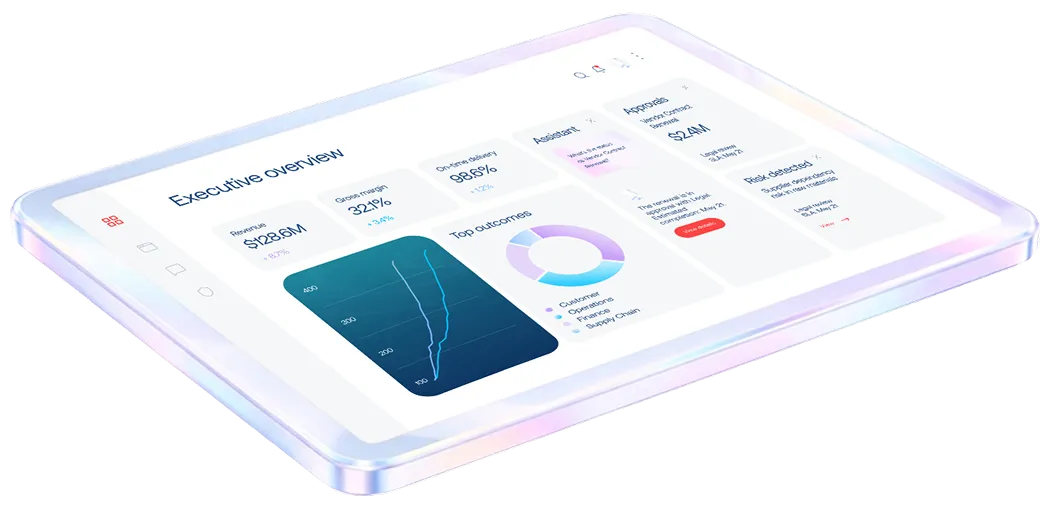
User interface

The interface gives people visibility and control without forcing them to manage every individual action. Live dashboards, chats, and approval flows reveal what is happening, explain recommendations, and flag risks early, while humans set goals, adjust rules, and approve actions that require judgment or sign-off.
What our
clients say
Patrick Reich
Patrick Reich
Co-Founder & CEO

The expectations for the quality of the initial product were very high. I think Instinctools did a great job ensuring those expectations are met. We met the developers we were going to be working with and it quickly became apparent that they are very qualified and were able to deliver the vision that we had from our side for the product. They clearly told us what they were going to do, and if there were questions or problems along the way, they clarified them really quickly thanks to transparent communication.


Dimitri Popolov
Dimitri Popolov
Research Data and Systems Manager

We had a tight delivery deadline and *instinctools has been able to find another developer and assign him to our project from one day to another. And we’ve been able to successfully deliver this project. When the partner is good, things are just getting done. And that was the case with *instinctools.


Sally Maddah
Founder

We genuinely had a very positive experience working with the Instinctools team. They were responsive, collaborative, adaptable, and highly supportive throughout the project. Even as the scope evolved and the technical complexity increased, they remained committed and solution-oriented. Overall, we were very satisfied with the collaboration and the quality of work delivered; and frankly speaking, we find them to be the dream team!!


Matti Vesterinen
Matti Vesterinen
Solution Development Manager

The quality has been good. It’s been on the expected level: things come on time, we have a good visibility on the things that *instinctools developers are doing and performing for us, communication is good. Wherever we see that we need some more exra resources, we have found *instinctools to be a good partner in helping us out on those areas.


Tim Rosenberger
Tim Rosenberger
Director, Global R&D

I’ve been impressed by the available skillset, the flexibility to ramp up resources quickly, and the scalability to extend development teams on short notice. I look forward to continue collaboration with *instinctools and their contribution to our projects.


Richard Lohwasser
Richard Lohwasser
Co-Founder & CEO

People at *instinctools are quite tech heads, which I like. They have used very advanced libraries, advanced techniques, advanced coding paradigms. So the advantage is that we get reusable code, that we get well-testable code, we get well-maintained code.


Dr. Jonas Block
Dr. Jonas Block
Product Owner

The *instinctools team exhibits the flexibility and professionality required for young companies. You can rely on their tested structures and processes that integrate nicely with your internal workflows. Being able to grow your team quickly with experienced professionals that start delivering value immediately and without a long interview process is a huge help. And personally, you will be working with a team of kind and interesting people.


Nadine Walther
Nadine Walther
Co-Founder & CEO

The team is dependable when it comes to managing time and finances, consistently staying within the designated budget. We’re pleased with *instinctools. Their business analysts are exceptional. They serve as the spokespeople between technology and business, representing both sides effectively.


Jeanine Shepstone
Jeanine Shepstone
Senior Technical Writer

Instinctools is good at understanding the technical issues – once an issue is outlined, they do not need repeated explanation. They also do not simply accept a proposed solution, but they think about it and propose a better solution. I was really impressed by the custom interface they built for us – we outlined the requirements, and they implemented them in a user-friendly way that makes the interface a pleasure to use.


Sebastian Belle
Sebastian Belle
VP of Engineering

Instinctools does deliver on time and budget. The company proactively asks how they can support our efforts and provide ideas how to help us with very good candidates with expertise that either we requested or that instinctools identified to be missing.


Alisa Delikatna
Alisa Delikatna
COO

The team demonstrated effective project management, timely delivery, and responsiveness to our needs. They established open communication to facilitate ongoing dialogue and held regular sprint meetings to keep stakeholders informed and engaged throughout the development process.


Detlef Ragnitz
Detlef Ragnitz
Engineering Director

Instinctools delivered everything on time and was very flexible towards changes in scope during the project work. The team was easy to work with and had a quick response time.

Thanasis Rigopoulos
Thanasis Rigopoulos
Product Manager

Instinctools will make your objectives their sole focus, and have a team of professionals that will abstract away all the operational parts of the partnership to allow you to focus on your business. What made them a great partner was their capacity to proactively find the right fit and solutions based on the particularities of our needs.


GENiE, a custom operating system
for AI agents
on your terms

Most AI platforms expect your organization to adapt to their ecosystem, architecture, and operating model. At Instinctools, we take the opposite approach by implementing GENiE OS, shaped around your tech stack and everyday business reality.

Freedom to choose the right technology

We don’t force your business into a single vendor ecosystem. Our team helps you choose and combine the technologies that best fit your use cases, architecture, security requirements, and long-term plans.

Integration with the systems you already use

An agentic OS should strengthen the systems you already rely on, including legacy ones. Instinctools designs around your CRM, ERP, data platforms, ITSM tools, collaboration software, and internal applications, extending the value of your existing technology estate, not requiring you to rebuild it.

Focus on processes that create measurable value

Which processes should be agentized first? Our AI engineers identify workflows with meaningful operational impact, clear ownership, measurable outcomes, and a realistic path to adoption. This keeps the initiative centered on use cases that can deliver tangible value rather than experimentation for its own sake.

Governance embedded from the start

Governance added late rarely survives real operational pressure. GENiE anchors security, compliance, auditability, human control, and policy-governed agent-to-agent communication in the agentic OS architecture from square one.

Built-in cost controls

Push quality and security high enough, and cost usually follows. But it doesn’t have to be that way. GENiE balances all three, keeping an operating system for AI agents from pricing itself past what a business can afford. Model routing, spend caps, and live usage monitoring hold the line.

Full-lifecycle support

Instinctools moves you from the agentic AI OS concept to a production system: strategy and architecture first, then development, integration, testing, and deployment, and steady improvement as your processes change.

See for yourself how GENiE transforms enterprise operations

We give your AI
agents the structure
they need to work
safely inside
production

You’ve probably got several agents live already. Here’s what changes when you shift from running them in isolation to coordinating them through a shared agentic AI OS.

Standalone AI agents

GENiE
agentic AI operating system

Agents solve isolated tasks, but the workflow still breaks between them.

Agents support end-to-end execution, coordinated around business workflows, process goals, roles, KPIs, and outcomes.

AI sits beside the process, while people chase the next step across tools, teams, and approvals.

AI operates inside the process, with agents connected to enterprise systems, approvals, rules, and escalation paths.

Each agent sees only a slice of context: a document, a chat thread, a CRM record, or a knowledge base article.

A shared and structured context layer connects business objects, decisions, documents, and process state into one interpretable model.

When an agent produces conflicting output, responsibility is unclear.

Accountability is built into roles, permissions, approval gates, audit trails, and escalation rules.

Managers supervise people and tools separately.

Managers orchestrate human-agent workflows by setting goals, adjusting rules, monitoring exceptions, and improving performance.

Teams spend time searching for information, validating outputs, updating systems, and clarifying what should happen next.

Employees move into decision mode and problem-solving, with agents surfacing context, next steps, risks, and recommendations.

Every team ships its own assistants, and agent sprawl sets in: duplicated logic, clashing behavior, and growing governance complexity.

Every agent runs in sync on one agentic OS, so the whole arrangement stays coherent as you add workflows, agents, teams, and business units.

Value is measured by agent activity: how many summaries are generated, tickets classified, messages drafted, or questions answered.

Value is measured by workflow outcomes: cycle time, throughput, fewer manual touchpoints, reduced incidents, better decisions, and cost per completed workflow.

Want to try
GENiE agentic OS?

Build vs. buy: custom
agentic OS
development

Many enterprise AI platforms offer useful capabilities. But most organizations need more than a packaged solution. Drawing on GENiE’s agentic OS foundation, Instinctools helps you combine the right platforms, frameworks, models, and custom components into one coherent operating layer that checks multiple boxes:
01

Cross-system workflows

02

Industry-specific logic

03

Complex approval processes

04

Legacy system integration

05

Custom data models

06

Strict compliance requirements

07

Flexible vendor choices

08

Deep process customization

09

Long-term architectural control

Let’s talk through a custom build

Our agentic OS implementation framework

An agent operating system can go wrong in a handful of predictable ways: the wrong workflow is chosen, a design that ignores approvals, integrations that fail against legacy systems, or governance is left until too late. Our structured delivery model addresses each issue early before you find yourself in a pilot limbo.

01

Discover high-value workflows

  • Use case discovery and prioritization
  • Data and system mapping
  • Risk assessment
  • ROI hypothesis
  • Feasibility analysis
02

Design the agentic architecture

  • Agent roles and responsibilities
  • Workflow logic
  • System integrations
  • Data access model
  • Human approval paths
  • Security requirements
  • Monitoring and governance model
03

Build and integrate the agentic OS

  • Custom AI agents
  • Multi-agent workflows
  • Enterprise system connectors
  • RAG and knowledge retrieval
  • API integrations
  • Admin and monitoring dashboards
  • Human-in-the-loop interfaces
04

Govern, measure, and improve

  • Performance monitoring
  • Error tracking
  • Usage and spend analytics
  • Compliance controls
  • Feedback loops
  • Workflow optimization
  • Scaling roadmap

Skip agentic AI pilot purgatory

Awards &
recognition
Clutch 1000 2025
Feedbax Top Company AI Development 2025
TechBehemots Winner Custom Software Development 2025
TopDevelopers Top Software Developers 2023
SelectedFirms Top Web & Software Development Company
DesignRush Top Web Development Companies 2023
GoodFirms Top Blockchain Technology Companies 2018
Techreviewer Top Enterprise App Developers 2021

FAQ

What is an agentic operating system?

The meaning of an agentic OS boils down to a software layer that coordinates and governs several AI agents running multi-step business processes. A shared context keeps every agent working from the same facts, so they act as one system.

What is the difference between an agentic OS and a multi-agent framework?

A multi-agent framework, such as LangGraph, CrewAI, and their brethren, is a developer library for building agents. An agentic AI OS like GENiE is the operating layer that keeps them reliable in production thanks to covering memory and context management, governance, and observability.

What LLMs and tools does an agentic OS support?

A well-built LLM agent operating system stays model-agnostic, offering access to commercial models by Anthropic, OpenAI, and other SaaS providers, open-weight models you host, or a mix per step. It connects to your CRM, ERP, data platforms, and internal apps via APIs and open standards like MCP and A2A.

What components does an agentic OS include?

A typical agentic OS architecture has four layers: an ontology, business processes, AI agents, and user interface. Vendors may name them differently, but the work they do stays the same.

Which enterprises need a custom agentic OS?

If a packaged tool forces a company to reshape its processes around it, a custom build tends to cost less over time. So businesses that run workflows across many systems, under strict compliance, with heavy legacy or industry-specific rules usually need a custom operating system for AI agents.

How long does it take to build a custom agentic OS?

The timeline for a custom agentic AI OS depends on how many systems it connects to and how strict its controls are. The core layer (orchestration, governance, integration) can be in production within a few months, then scale to new processes and teams without a rebuild.

Anna Vasilevskaya
AI modified real photo
Anna Vasilevskaya
Account Executive

Get in touch

Drop us a line about your project at
[email protected] or via the contact
form below, and we will contact you soon.