3D Room Scanning and AR Visualization

3D Room Scanning and AR Visualization Solution

How a luxury furniture retailer enhanced both the online and offline shopping experience by letting customers preview furniture in their own rooms, capture precise measurements automatically, and explore products in immersive 3D showrooms, ultimately raising the customer satisfaction score by 25%.

Business challenge

When it comes to luxury shopping, customers expect more than polished web pages and more than white-glove service in-store. That is the entry ticket. When every serious competitor delivers excellence by default, the real challenge is differentiation.

One lever not every luxury brand has mastered is innovation through technology. Applied correctly, they can strengthen both digital and physical customer touchpoints.

A high-end furniture retailer for whom we’ve already built a tailored ecommerce ecosystem, chose to lean into that opportunity.

The goals were to:

  1. Help customers visualize furniture in their own homes, so they can understand how pieces will fit and look in real spaces.
  2. Recommend optimal furniture dimensions for each room using an intelligent matching algorithm, reducing uncertainty about scale and fit.
  3. Handle cases where no catalog item fits perfectly by suggesting safe and feasible size customizations of existing models.
  4. Enable 3D exploration in showrooms for visitors to experience items that cannot be physically displayed due to space constraints.

To meet those objectives, Instinctools’ dedicated team was brought in to design a suite of innovative solutions that could remove friction from both online and in-store shopping experiences.

Solution

Our team designed and implemented the scanning app, matching algorithm, and holographic web application. Each solution was built to integrate seamlessly with the client’s existing workflows and data structures, ensuring a smooth end-to-end customer journey from scanning a room to selecting the right configuration and completing a purchase.

  1. Building a mobile app for room scanning 

We built a mobile app that reconstructs a room as a dimensionally accurate 3D model from LiDAR depth data. Computer vision algorithms detect structural elements such as walls, doors, and windows, while AR technology is used to visualize the reconstructed space in real time.

Once a user scans the room, the app analyzes the available space and generates optimal furniture recommendations from a catalog. Users can further customize items to match their personal preferences. The matching algorithm ensures that every suggested piece is compatible with the room’s exact dimensions, avoiding guesswork or manual measurements.

To keep the experience truly frictionless, our team integrated the app with the client’s Odoo-based ecommerce ecosystem so scan results and calculated dimensions flow directly into it. 

We’ve enabled real-time product selection and faster purchasing through creating a continuous path:
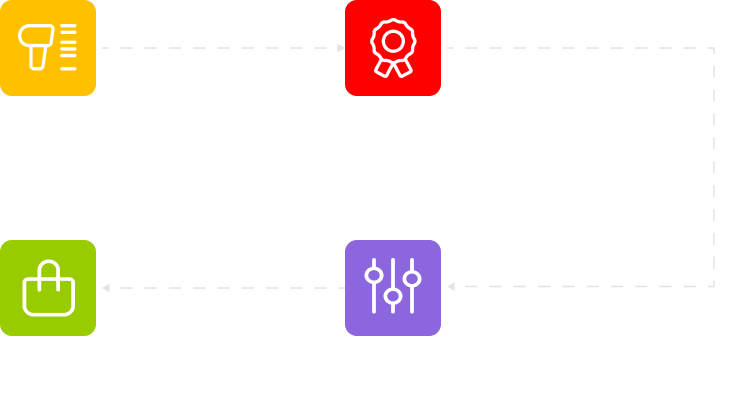
A flowchart with four colored boxes: yellow Scan with a barcode icon, red Recommendation with a ribbon icon, green Checkout with a shopping bag icon, and purple Configuration with a sliders icon. Text and icons are on a light gray background.

By combining AR visualization, precise spatial analysis, and automated product matching, the app delivers a frictionless experience for users and a data-driven tool for the retailer, enhancing both engagement and conversion.

A person holds a smartphone, using an app to preview a yellow sofa in a living room. The real room has brown leather furniture, shelves, plants, and large windows. The phone screen shows the yellow sofa on a rug in the same space.

Calculating optimal furniture dimensions from scanned spatial data to suggest in-stock items or custom-sized/MTO options

At the core of the room scanning app is a purpose-built matching engine designed to bridge the gap between a customer’s space and their desired furniture. The system starts with processing the room’s dimensions, captured through a 3D scanning feature.

The algorithm’s logic is built around dimensional compatibility. For each furniture category, such as sofas, tables, or armchairs, the system calculates an optimal size range based on the  room’s proportions and available space. It then filters the catalogue accordingly, showing only the items that fall within those parameters, so customers see options that actually fit rather than a generic product grid.

Where it gets especially valuable is in situations when no standard catalog item matches the room. In these cases, the algorithm identifies the customer’s preferred model and proposes a feasible, custom-sized option, suggesting adjusted dimensions to achieve a perfect fit and preserve design integrity.

From concept to client-ready solution

This feature started as a client’s Proof of Concept for how a size-aware recommendation engine should work. Using it as a blueprint, our backend developer delivered the first working version. After the demo, the client requested several modifications and provided additional requirements to align the logic more closely with their specific workflow. Following the update, the client’s subsequent testing confirmed that the final implementation matched their expectations perfectly, validating both the concept and its execution.

  1. Enabling immersive in-store product showcase through a holographic application

To make the showroom visit as premium and memorable as the products themselves, we developed an integrated solution that pairs a custom web application with Holobox holographic displays. The client acquired two Holobox units from Holoconnects – specialized hardware that uses a strategically positioned high-definition screen to create the illusion of a floating, three-dimensional image from 2D content, delivering a striking ‘hologram-like’ effect.

Technology foundation

Holobox runs on a proprietary operating system that boots directly into a full-screen Chromium instance. This setup effectively turns the entire holographic display into a web-rendering engine: any content loaded in the browser is instantly broadcast as a hologram.

We built a dedicated web application that serves as the brain of this experience. The app is designed to respond to user interactions in real-time, creating a seamless bridge between a handheld device and the large-format display.

Interactive workflow

In-store, customers can explore pieces that aren’t physically on the floor due to space constraints. For example, they can rotate a sofa, switch colors/finishes, and evaluate the look and presence of the product before committing.

The user journey is simple but powerful:

  1. A customer approaches the Holobox in the store and picks up a paired tablet.
  2. The web application loads on the tablet, presenting a browsable product catalog.
  3. As the user scrolls or selects an item on the tablet, the app transmits a signal to Holobox.
  4. The Chromium browser on the Holobox  updates instantly, displaying a high-resolution, holographic visualization of the selected product.

From a technical standpoint, this required implementing a robust, low-latency communication channel (using WebSockets) to ensure the holographic display feels like a direct extension of the tablet. The result is an immersive, interactive experience which also helps customers make more informed decisions.

Before

  • Inability to picture furniture at home
  • Manual guesswork about furniture fit
  • Physical showroom space limitations

After

  • Realistic AR visualizations for confident decisions
  • Intelligent matching algorithm calculating optimal size ranges per room and proposing safe customization when no SKU fits perfectly
  • Immersive holographic product display via Holobox hardware, powered by a dedicated web app

Business value

  • Premier buying experience offline and online
  • +20% online sales growth
  • +25% CSAT increase
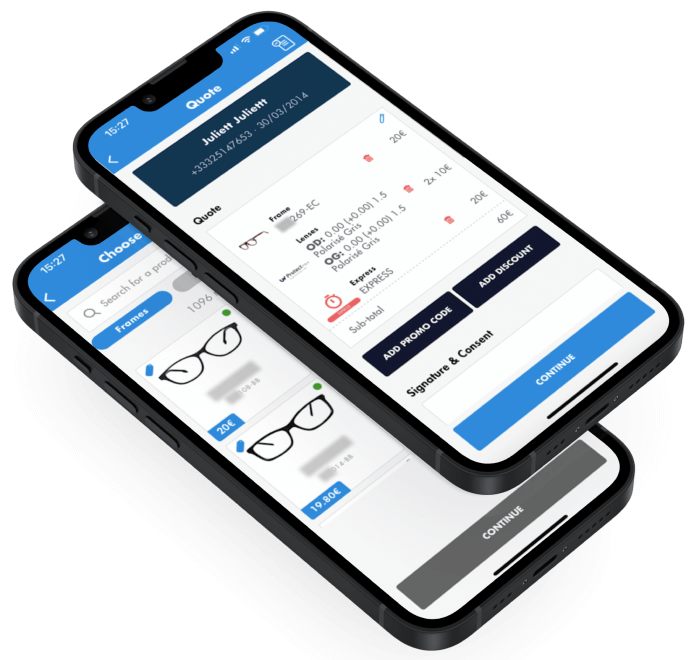
Custom Inventory Management System

Rewiring Inventory For an Eyewear Manufacturer
And Retailer

How replacing an overpriced SaaS inventory system with a custom, feature-rich IMS enabled a French eyewear manufacturer and retailer to double the RFID scanning speed and accelerate tag verification x3.

Industry:
Ecommerce

Enterprise Automation

Software Product Development

Data Visualization

Business challenge

Retail companies know better than anyone that inventory is a part that can make or break your business’s success. Understocking at critical times and locations can lead to dissatisfied customers. Meanwhile, maintaining a large stockpile brings its own challenges, including storage and insurance costs, the hazards of spoilage, theft, and damage. The ability to strike the balance between having ‘too much’ and ‘not enough’ hinges on inventory management. That’s why it’s critical to take care of its accuracy, transparency, and sustainability.

However, despite the abundance and diversity of ready-made inventory products, finding the one that fits your budget and completely fits your needs is still tricky. For companies that strive for flexibility and full control over the inventory management system (IMS), custom software development is more likely to be the best bet.

Getting inventory in order was the ultimate goal of our client – a French eyewear manufacturer and retailer. It was their fourth project with *instinctools – our team had previously developed several applications for the client’s ecommerce ecosystem.

Their inventory processes were already automated and relied on barcode and RFID scanners, but the SaaS software the client used was costly and feature-limited, failing to cover the company’s operational needs.

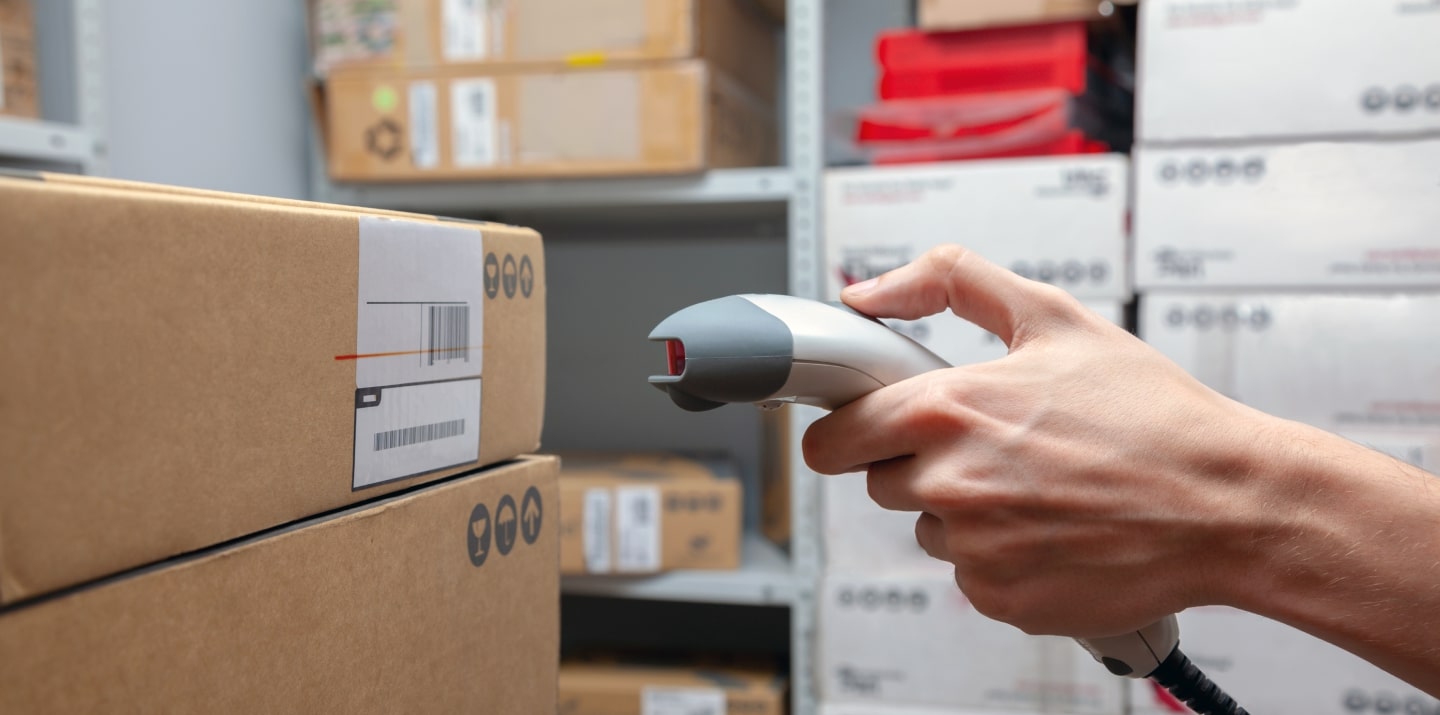
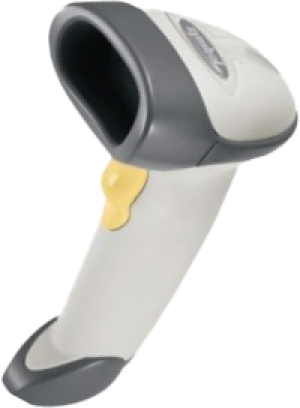
Barcode scanners

are designed for line-of-sight scanning within one to two feet; they’re a go-to option for individual product locating and tracking.

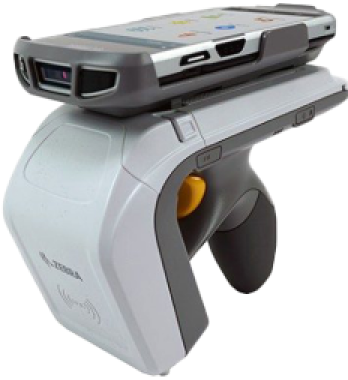
Radio frequency identification (RFID) scanners

read data with in an up-to-20-feet range and can near-simultaneously scan multiple tags, but they lack accuracy compared to barcodes. They’re the perfect fit for large-scale tasks such as warehouse management.

As their unmet requirements for IMS functionality kept snowballing, the client faced a dilemma, whether to pour money into adding new features to their current system or invest in a custom solution.

To escape the vendor lock, they decided to opt for their own feature-rich software with unlimited scalability potential.

Solution

The client needed a device-agnostic solution that wouldn’t cost a fortune. Therefore, we went with the idea of a cross-platform app. As other client’s applications were already written in React Native, there were no doubts about the tech stack for the inventory software.

What challenges did our dedicated team face and overcome while crafting a powerful app that fully covered the client’s inventory-related workflows?

  1. Stabilizing third-party libraries
    and writing custom ones

Robust libraries are the backbone of smooth integration with barcode and RFID scanners. There are plenty of ready-made options.; However, you should have a seasoned development team able to spot the relevant ones, and write custom libraries to cover your specific inventory functionality.

To provide the client with a stable and easy-to-maintain solution, we followed four key principles when working with the libraries:

  • Avoiding a cumbersome collection of libraries

The more libraries you have, the more challenging it is to keep them up to date, resolve conflicts between them, and manage a diverse set of dependencies.

  • Preventing solution architecture complexity

Tight coupling of the software modules and dependency conflicts contribute to crafting a jerry-rigged solution with poor performance and excessive memory consumption.

  • Stabilizing third-party libraries

Ready-made options can bring critical bugs to the production code, or they may join the ranks of neglected libraries that are no longer supported. In both cases, fine-tuning is a must.

  • Striking the balance between third-party and custom libraries

Writing custom libraries takes way more time than calibrating the ready-made ones, so for the sake of development speed, it’s better to build them only for highly specific functionality not covered by the existing elements.

With the aforementioned points in mind, our team selected suitable open-source libraries for barcode scanners:

  • Capture JS for Socket Mobile
  • React Native BLE (react-native-ble-plx) for Netum

Capture JS is a stable library with detailed documentation, so it was ready to use right away, while React Native BLE was in beta and, therefore, required debugging and stabilization. Since open-source libraries provide full access to their code, *instinctools’ developers fixed it, honing performance and minimizing the overall risk of a third-party element adoption.

Meanwhile, integration with RFID scanners requires custom native libraries. For this purpose, our team utilized React Native Bridge, which works as a communication layer between native modules in Java and the client’s app in React Native with JavaScript code.

  1. Incorporating tabletop RFID readers into the overall hardware ecosystem

Alongside handheld scanners, the client also has tabletop RFID readers. Those devices were much older than the rest of the client’s warehouse and in-store hardware.

Given their age, the tabletop RFID readers:

  • Lacked basic documentation
  • Worked with byte messages
  • Ran on a .NET library, while the rest of the client’s hardware used SDK libraries

The only artifact the client had for these readers was a configuration program. Due to this, *instinctools software engineers had to:

  • Decompile the configuration program
  • Investigate the code to understand the requests the program uses for communication with tabletop devices
  • Configure the same requests in JavaScript

These actions helped standardize the tech stack for all the client’s scanners.

  1. Fighting for the app’s speed

The client wanted to seize RFID scanners’ ability to read large amounts of data and accelerate tag processing. The previous software could handle 300 tags/sec, while their RFID scanners could read 600 tags/sec. Given 15,000+ tagged items in each of the 24 eyewear boutiques across France and Belgium, the client wanted to leverage the scanners’ full capacity.

*Instinctools’ team selected asynchronous caching with scheduled cache refresh to scan the maximum number of tags per second without data streaming hiccups, rendering lags, and other performance glitches. Here’s how it works:

Thanks to using the native Java cache, the app can seamlessly handle 600 elements per second, which is twice the capacity of the client’s previous solution.

Besides doubling tag scanning speed, we’ve accelerated the tag validation process. Our team tripled the speed of data reconciliation between the back end and brick-and-mortar stores by taking advantage of native Java code.

  1. Providing integration with RFID printers

The client decided to take the enhancement of their hardware ecosystem a step further and broaden it with RFID printers. This decision allowed the company to achieve independence from the suppliers of RFID tags and save on printing costs in the long run.

To ensure everything runs smoothly on the tech side, we designed the inventory app that could integrate seamlessly with various RFID printers, from Zebra and SATO to Toshiba, to name a few. That way, the client wasn’t limited in inventory equipment options and could print RFID tags entirely in-house.

  1. Achieving inventory transparency with custom dashboards

Before cooperating with *instinctools, the client didn’t have any dashboards to track inventory levels and, therefore, lacked transparency and traceability of the relevant processes.

Ensuring data tells a clear story is one of our areas of expertise, so the dedicated team bolstered the app’s functionality with a data visualization feature.

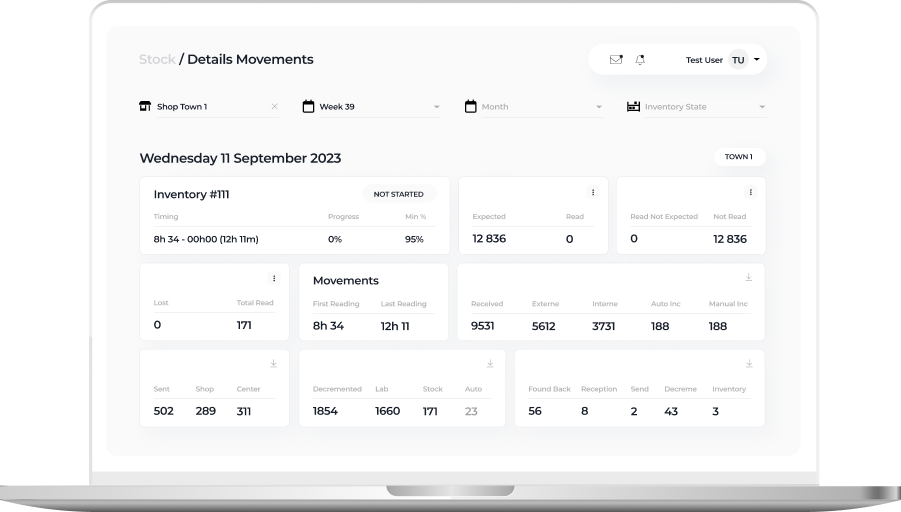
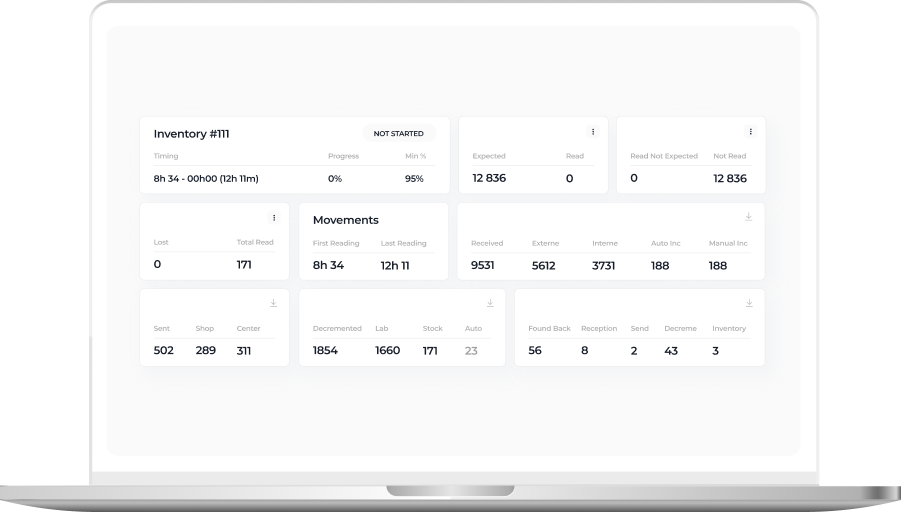
Detailed view of a daily inventory state within a particular eyewear shop

On this tab, in-store admins can check the status of inventories conducted in their store:

  • In progress
  • Closed
  • Device issues
  • Validated
  • Missing

The staff can also see the number of expected, received, lost, and found back items, and inventory time.

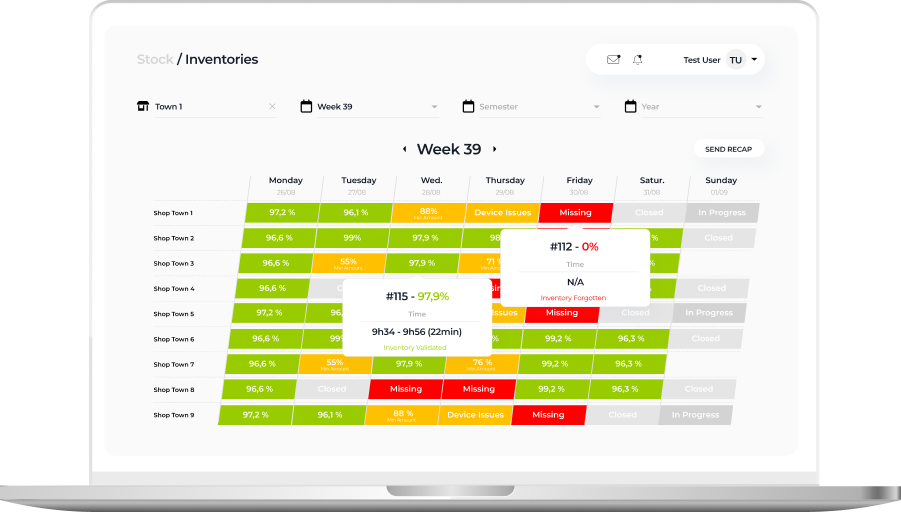
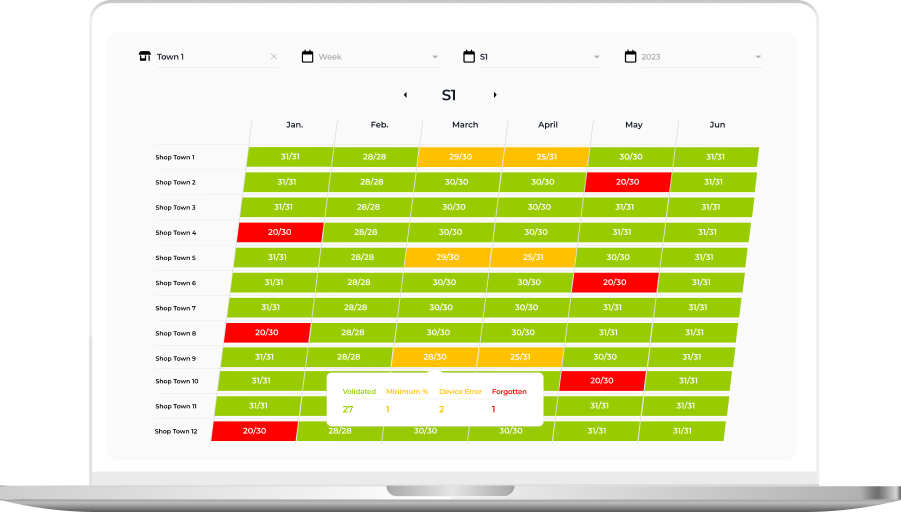
Week or Semester view with inventory state over a longer period

This tab provides higher-level information about inventory status in weeks and months. Thanks to intuitive UI with color-coded table cells, it’s easy to spot inventories calling for detailed analysis:

  • Successful inventories with more than 95% of items scanned and validated by the system are green
  • Processes with device issues are orange
  • Procedures with unidentified items are red
  • Inventory-free days are gray

These custom dashboards provided the client with much-coveted traceability of inventory processes and empowered them to uncover and nip alarming issues in the bud.

Business value

Before

  • Overpriced inventory software under the vendor lock-in
  • Tabletop RFID readers run on legacy software
  • Inability to use the full capacity of RFID readers
  • Low tag validation speed
  • Lack of visibility into the inventory flow

After

  • The budget-friendly and flexible app is fully tailored to the client’s manufacturing and inventory workflows
  • Standardized and easy-to-maintain tech stack
  • Boosted RFID scanners’ reading capacity from 300 to 600 tags per second
  • x3 tag validation speed
  • Full transparency and traceability of inventory-related processes thanks to custom dashboards

Client’s testimonial

Here’s how the client’s product manager evaluates the outcomes of collaboration with *instinctools:

CANet healthcare platform

E-Health Product —
a Revolution for Canadian Cardiac Care

How crafting a virtual healthcare platform for clinics, research centers, and patients empowered a pan-Canadian healthcare association to rewire research and monitoring of high-risk cardiac patients with ICDs (implantable cardiac defibrillators), run 78% of check-ups remotely, and reduce the number of cardiac-related emergency hospitalizations by 21%.

Industry:
Healthcare

Software Product Development

Mobile App Development

Web Development

Business challenge

Establishing robust, consistent communication has its sway in any industry. However, in healthcare, this becomes a life-and-death matter. The regular collection of patient data enhances scientific knowledge about diseases, and constant health status monitoring of high-risk patients can literally save their lives.

Nevertheless, even though patients, clinics, and research labs are parts of the healthcare ecosystem, they are still very siloed, and so is their data. Moreover, healthcare institutions can’t keep up with the growth of medical-related data, often failing to process it effectively to get the valuable insights needed for treatment and research.

Under-digitalization and under-communication within the Canadian healthcare system were in the spotlight of our client – the Cardiac Arrhythmia Network of Canada (CANet). The association wanted to address the hurdles faced by various parties within the healthcare ecosystem.

Patients:
  • Aren’t in control of their personal health data
  • Need a budget-friendly remote alternative to costly and time-consuming post-surgery follow-ups at the clinic
  • Don’t have a credible and easy-to-access source of up-to-date information related to their diseases
Clinics:
  • Lack of systematization in electronic record-sharing when collecting patient data from other healthcare facilities
  • Unable to keep up with the current workload without remote monitoring and a specialized digital solution for it
Research centers:
  • Don’t have access to a regular source of relevant data
  • Waste employees’ time processing heterogeneous data to find valuable information

Our client intended to rewire the state of the Canadian healthcare system and decided to test the waters with a product for a specific patient group, clinics, and research centers (RC). It was planned that the project would have these elements:

  • Android and iOS apps for the patients
  • Web apps for healthcare providers and research centers

After evaluating several potential tech partners, CANet opted for *instinctools because of our proven expertise, European-based location, and readiness to set up a 13-person project team in less than three days.

Client’s goals

Facilitate communication between the patients, clinics, and research centers within a cohesive healthcare platform.

“We wanted to create a constant feedback loop between the patients, clinics, and research centers.”

Dr. Anthony Tang, CEO and Scientific Director, CANet

“Our platform – VIRTUES® – utilizes state-of-the-art diagnostics with advanced analytics and wireless connectivity to provide cardiac patients access to affordable on-demand virtual care.”

Dr. Anthony Tang, CEO and Scientific Director, CANet

Create a trailblazing patient-centered healthcare solution in Canada.

Reduce the number of non-mandatory visits to the clinics by up to 80%.

Minimize hospitalizations and emergency department visits by up to 20%.

“Another milestone we’ve set for VIRTUES® was reducing cardiac-related workload on clinics.”

Dimitri Popolov, Research Data & Systems Manager, CANet

Solution

As time-to-market was critical for the client, we suggested banking on cross-platform options. Flutter and React Native were top choices, but as CANet also needed web apps, our team decided to leverage React Native for mobile apps and React JS development for web apps.

This combo yielded triple wins:

  • Budget-friendly cost

As React Native is a React JS-based framework, the client didn’t need two separate teams to create mobile and web applications.

  • Fast-track development

Core React concepts are the same, which empowers the dedicated team to move through the whole process faster.

  • Simplified maintenance of all solutions

Relying on programming languages of the same type, with similar development approaches and code styles, makes software support a walk in the park.

  1. The tech groundwork
    of the platform

Before getting into the look and feel of the applications, we had to check all the boxes regarding regulatory compliance to ensure a smooth launch for VIRTUES®.

Every healthcare-related software product targeted at the Canadian market has to comply with the Personal Health Information Protection Act (PHIPA) and Privacy Impact Assessment (PIA) regulations.

Moreover, CANet wanted to take into account the HL7® FHIR® (Fast Healthcare Interoperability Resources) standard that has become a global best practice for a fast and secure health data exchange between healthcare applications.

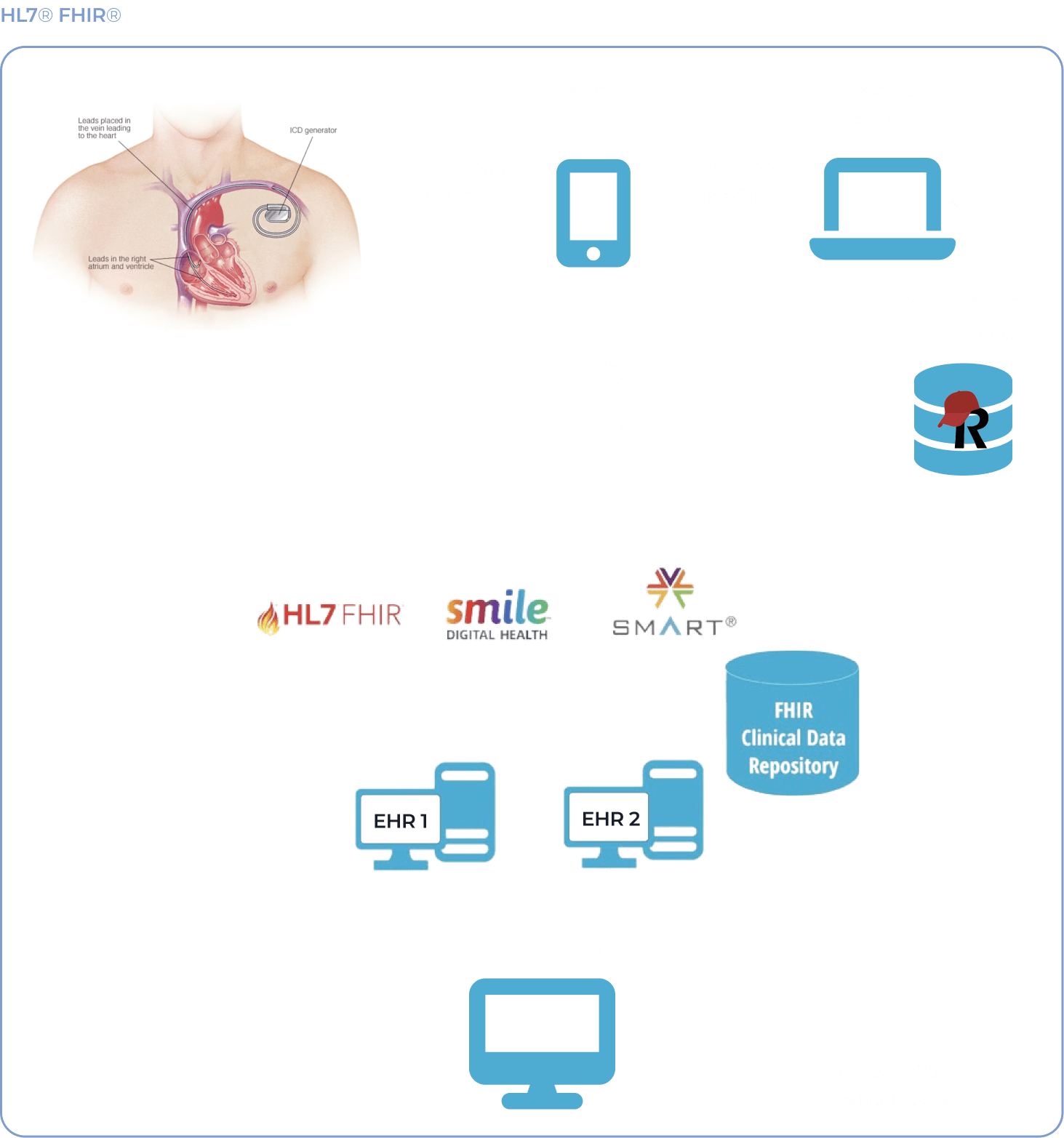
These compliance goals required the selection of a relevant tech stack for the VIRTUES® data architecture. As all the components had to be FHIR-compliant by design, CANet ended with this set of software solutions:

  • SMART on FHIR as a healthcare-oriented platform with a plethora of open-source tools for crafting robust and secure clinical and patient-facing apps. It helps easily integrate apps with electronic health records (EHRs) and other healthcare software and standardizes data access.
  • Smile Clinical Data Repository (CDR) as a data repository for managing and maintaining the HAPI-FHIR Library that enables faster development cycles and allows the running of multiple clinical and research studies.

The system has an in-built OAuth2/OpenID Connect server, providing the client with the possibility to hone PHI safety while leveraging ready-made SMART applications instead of building their own solutions from scratch.  

  • Research Electronic Data Capture (REDCap) with the module Clinical Data Interoperability Services (CDIS) as a tool for collecting data from EHRs. It’s a standard for healthcare research programs that ensures top-level security of databases with Protected Health Information (PHI).

CDIS module supports batch data pulls from the EHRs and internal CANet clinical studies, providing research centers with data processing speed that was beyond the reach before.

Instinctools’ team was in charge of VIRTUES® integration with REDCap and Smile on the clients’ way to building an all-encompassing healthcare ecosystem with adequate engagement of all the parties:

  1. Mobile applications for patients’ monitoring

VIRTUES® is targeted at patients with an increased risk of sudden cardiac death (SCD). All the patients have cardiac implantable electronic devices (CIED) that require constant performance monitoring.

However, regular check-ups at the clinic are time-consuming and costly. Offering patients a solid healthcare digital solution for remote self-monitoring could have ensured high-level, affordable healthcare services for Canadians. This idea became the foundation for the patient-targeted iOS and Android apps developed by our dedicated team.

Implantable cardioverter defibrillator (ICD) performance monitoring

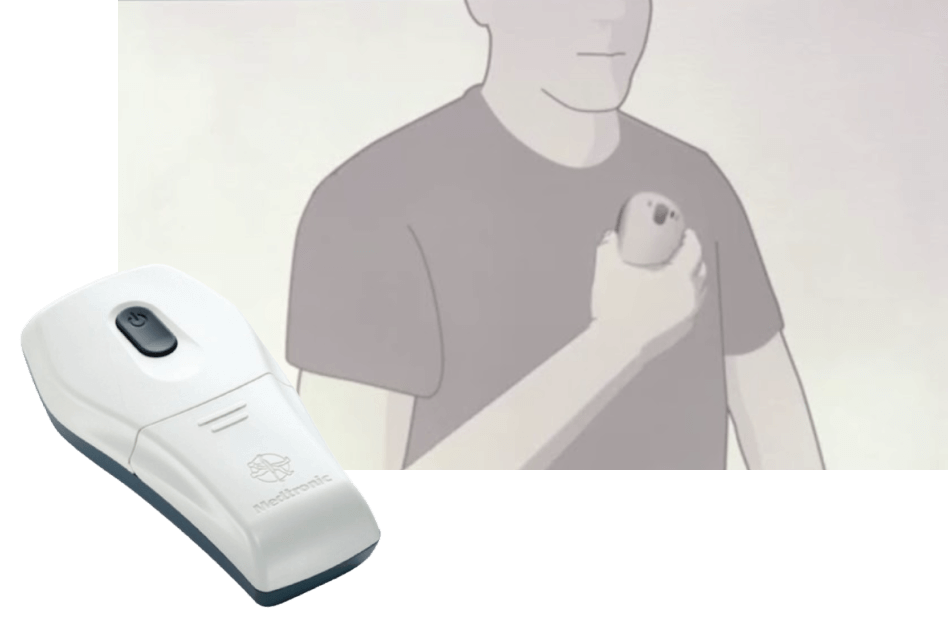
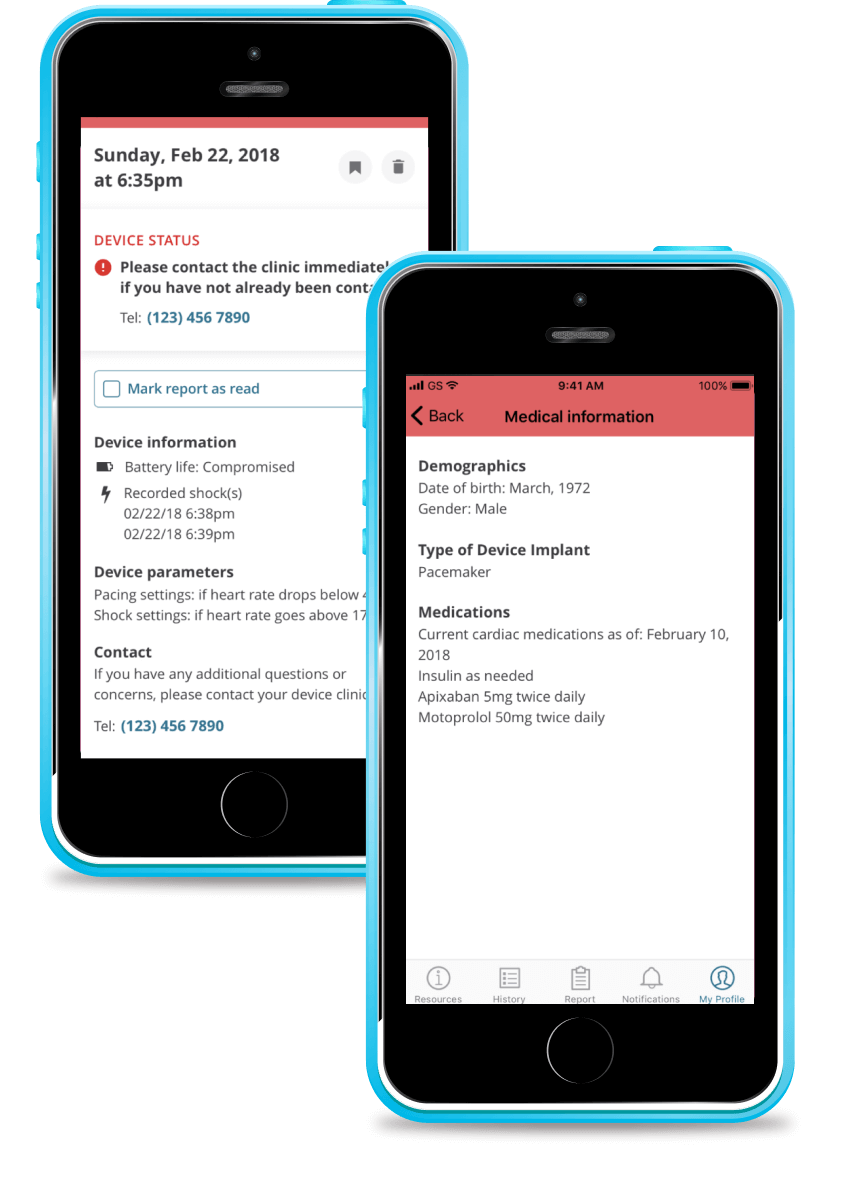
Aside from having Medrtonic’s cardioverter defibrillators implanted in their body, patients are given a specialized device reader to capture the data ICD produces. Then, the Bluetooth-powered reader transfers data to the mobile and web apps.

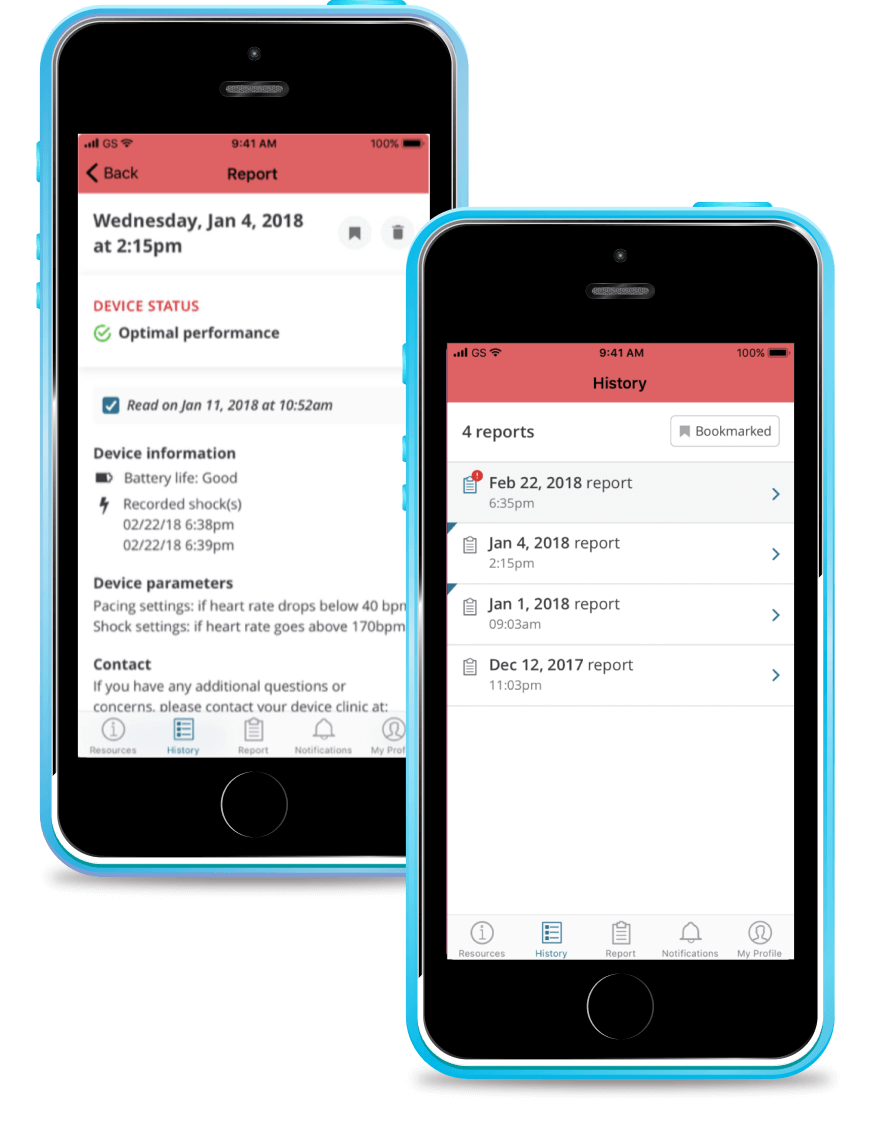
To ensure patients were able to take agency over their own healthcare when communicating with their physician, we designed mobile app reports in an easy-to-understand way. They contain:

  • Basic ICD information, such as current battery life, pacing and shock settings
  • Timesheet of recorded shocks, if any where delivered to a patient

As all the trial patients belong to a high-risk group, we added a notification function, enabling the patient to contact the clinic immediately, especially if there are any issues with a person’s ICD status. As the clinic receives the same report automatically, they are also able to get in touch with the patient without delay.

Our business analyst also suggested adding the category “Medications” to a section with medical information, so that users always have their current prescriptions on hand.

Library with expert-directed materials about cardiac diseases

Additional patients’ pain point VIRTUES® addresses is a lack of a credible and easy-to-access source of up-to-date information related to cardiac diseases. The mobile app has a library of educational materials in various formats — images, videos, PDFs — all verified by unbiased CANet experts.

  1. Web app for clinics

According to CANet, there are over 97,000 cardiac patients across Canada. Daily tracking of each individual’s overall health status and ensuring their implants work hassle-free was beyond the reach, given the 1,000+ emergency departments in Canada. Therefore, they needed a digital health solution to ensure adequate care for all the patients.

VIRTUES® web app aimed to cover this gap. The pilot trial involved 1,400 patients across 15 clinical sites throughout Canada.

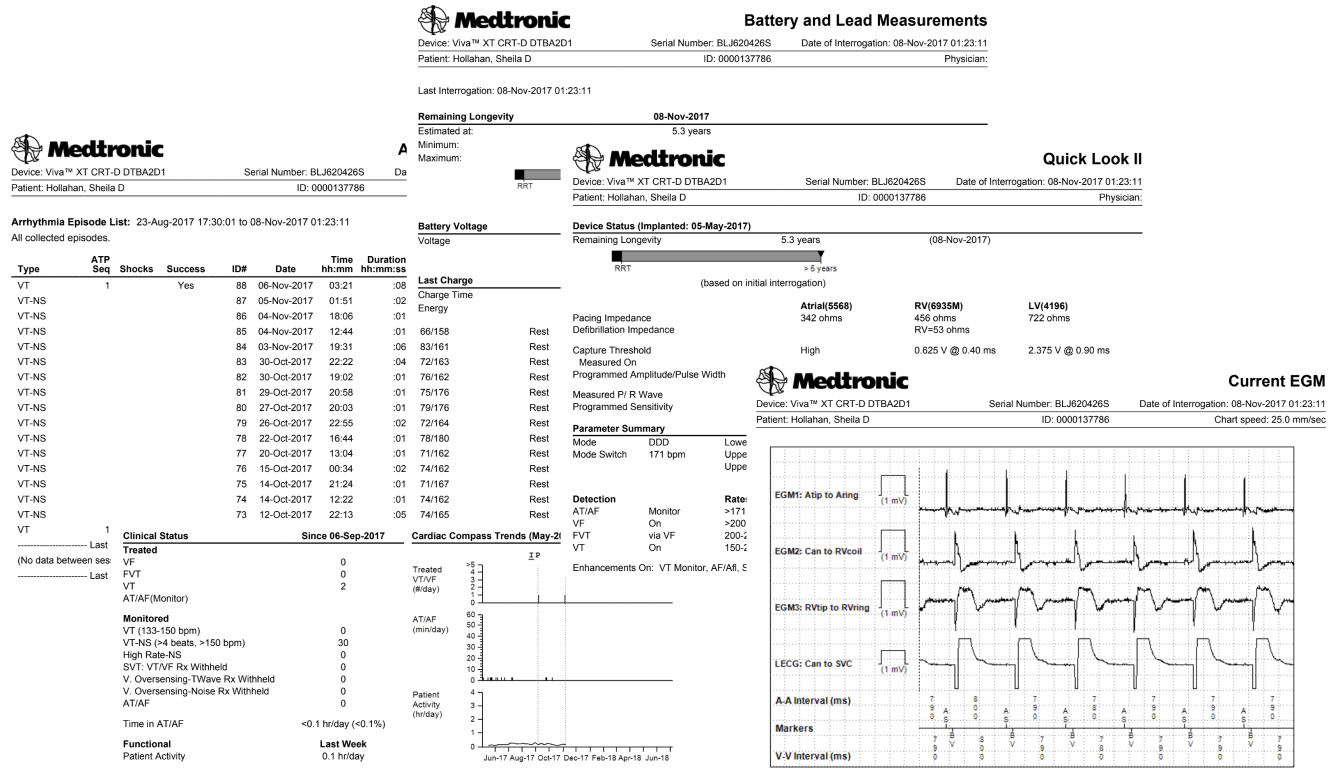
As mentioned earlier, healthcare providers automatically receive reports about the patient’s ICD status. They include:

  • Patient’s personal data, such as name and date of birth
  • ICD data, such as its type and model, battery longevity, and patient-specific settings

Unlike summaries in patient-facing mobile apps, these reports are more detailed and contain cardiograms recorded by the reading device. Here are several examples:

Moreover, this data is coupled with the patient’s health information from the EMRs, allowing for a broader picture of the individual’s current health condition and enabling doctors to spot the problem areas faster.

On-field tests proved this digital solution is highly scalable. Before VIRTUES®, clinicians spent at least 45 minutes per patient for a standard intracardiac electrogram (EGM). Given the high number of patients, cardiologists across the 15 trial clinics had a 57-hour workweek on average.

With the VIRTUES® web app, they don’t have to invest their time in the EGM procedure, as data is recorded remotely and automatically. All the doctors need to do is interpret the EGM results and contact the patient in case of abnormal patterns. The digital platform made it possible to relieve healthcare professionals of excessive workload.

Now, one cardiologist can easily manage 25+ remote patients daily without compromising the healthcare quality, while earlier, the maximum per doctor was seven high-risk individuals.

  1. Web application for research centers

As the ongoing research of cardiac diseases helps to hone overall healthcare, CANet invested efforts into developing a solution for the research centers (RC) within the VIRTUES® platform.

Instinctools’ team created a web application that receives the data from the patients’ app and EMRs’ records and transforms this information into reports for research purposes.

RCs get de-identified files, where patients only have study IDs. Here’s an example of an anonymized report header:

Cardiovascular reports include:

  • Patient’s date of birth and study ID.
  • Individual’s type of heart disease, CABG, NYHA class, etc.
  • Information about their current cardiac medication, recent cardiovascular investigations, and hospitalizations.

Paired with data from the other studies conducted by the CANet association, this information has become the backbone of this leading-edge cardiac research in Canada.

Before

  • Patients, clinics, and research centers are separate entities of the healthcare system
  • Inability of the healthcare providers to ensure all the patients get timely and more accessible medical care
  • Patients with ICDs have to visit clinics for monthly check-ups
  • Scarcity of expert educational materials for patients
  • Сardiologists suffer from excessive workload
  • Lack of a constant source of relevant data about cardiac patients

After

  • Consistent communication between patients and healthcare providers
  • User-friendly platform for remote patient self-monitoring
  • Patients need to visit their healthcare provider only when unusual patterns are spotted instead of regular monthly check-ups
  • Scientifically credible educational materials about cardiac diseases at the patients’ fingertips
  • Precautionary approach to managing health status of high-risk cardiac patients
  • Decreased workload
  • Ever-flowing stream of research-valuable data to the RCs

Business value

  • Remote patient monitoring capabilities for the patients and healthcare providers
  • Decrease in the amount of cardiac-related emergency hospitalizations by 21% thanks to a precautionary approach to health management
  • The number of mandatory in-clinic visits reduced by 78%
  • Cardiologists’ working week has been shortened from 57 to 42 hours
  • Increase in the number of patients a cardiologist manages daily from 7 to 25+ thanks to remote monitoring

Client’s testimonial

Here’s how the company’s CTO evaluates the project outcomes:

Ecommerce Ecosystem Development

Ecommerce Ecosystem For an Eyewear Company

How developing a comprehensive ecommerce ecosystem helped an optical company withstand severe economic headwinds and grow their store chain from 8 to 24 eyewear boutiques across France. 

Industry:
Manufacturing

Mobile App Development

Software Product Development

Web Development

Data Visualization

Business challenge

For highly competitive industries, such as ecommerce, being able to adjust to ever-changing market conditions in a blink of an eye is the only way to retain customers and win new ones. In this respect, COVID-19 became an inflection point at which only the most resilient companies could stay in the saddle, while others had no other choice than to ride off into the sunset.

When the pandemic began, companies were forced to rethink their business vision, look for new value and revenue-creation opportunities, and find ways to satiate consumers’ needs in unanticipated circumstances. The situation was the same for our client – an eyewear company with its own production and a chain of physical stores across France.

The client first reached out to *instinctools to create a mobile app for sales assistants. However, the coronavirus meddled in their business strategy, forcing them to move at a rapid clip and develop an additional sales channel aimed directly at consumers. That’s how the idea of a shopping app for customers arose.

When a company wants to drive revenue growth, banking only on a customer-facing solution isn’t enough. Internal processes also have to be enhanced. In the case of our client, the necessity to adapt to the changing ecommerce realm unveiled issues with order registration and processing, stock inventory, and logistics.

After analyzing the market and gathering the client’s requirements, we proposed developing a comprehensive ecommerce ecosystem of mobile and web solutions with a shared back end and multiple front ends.

Solution

As we’ve mentioned, the client initially approached *instinctools to craft one small application for internal usage. However, the retail industry upheaval, along with evolving consumer needs, forced them to reconsider an erstwhile firm view of ecommerce as a bolt-on to the main business. For over six years of cooperation, our dedicated team has developed four apps for the company’s staff, one customer-facing application, and a new website on Shopify.

Why did we develop niche applications one by one instead of crafting one multipurpose solution? Such an approach provided several benefits:

  • Maintaining and updating several small apps is much easier

than taking care of a large-scale solution with complex business logic.

  • Ensuring ease of use for the client’s staff

as each mobile or web solution is tailored to a specific role within the company.

  • Rolling out new functions apace

to attract new customers and retain existing ones.

All the applications, except for the one related to the local insurance system, are written in React Native. That way, our client isn’t limited to devices with a particular OS and can reach a larger pool of potential buyers.

Let’s zoom in on each of the solutions in the order of their occurrence.

  1. Eyewear measurements app for consultants in physical stores

When the client started the business, far from all processes were digitized. For instance, the in-store consultants used to mark out an eyeglasses frame for a buyer and then manually calculate the lens diameter and fitting distance to ensure that the glasses had the lenses at the correct distance from the customer’s pupil.

With such an approach, the probability of an error caused by the human factor increases manifold. The problem became more evident as the client’s store chain was expanding. Therefore, they decided to digitize and automate this task with a simple mobile application for internal usage. 

Developing the app in React Native became the starting point of our cooperation with the client. How does it work?

After a customer chooses a frame in the store, a consultant finds it in the catalog in the app.

Then, the consultant opens the camera on the device and points it at the customer’s face to determine control points – the center of the pupils, considering their vertical position.

Finally, the app automatically calculates the position of the optical center so that the geometrical center of the frame and the buyer’s pupil coincide to ensure the glasses are comfortable to wear.

Besides eliminating the possibility of calculation errors, such automation has speeded up order processing by five minutes per order. It turned out to be a real breakthrough, as the client’s business model focuses on serving many visitors in a short time – the speed of order-making is even mentioned in their slogan. Therefore, at the client’s scale, even such a seemingly small improvement meant a 33% acceleration of order processing.

  1. Customer-facing mobile store app

Before 2020, the client launched new stores in several French cities and planned to develop new applications specifically for physical locations, such as kiosks for self-ordering of glasses.

However, the pandemic and the following quarantine with a strict ban on leaving home drastically changed the client’s business strategy. Magnifying their digital presence and providing customers with an app where they can select, order, and pay for the glasses became the client’s primary focus. That’s why our team switched from developing software solutions for internal usage to crafting a mobile ecommerce eyewear store for customers. It was also written in React Native to be apt consumers with iOS and Android devices. 

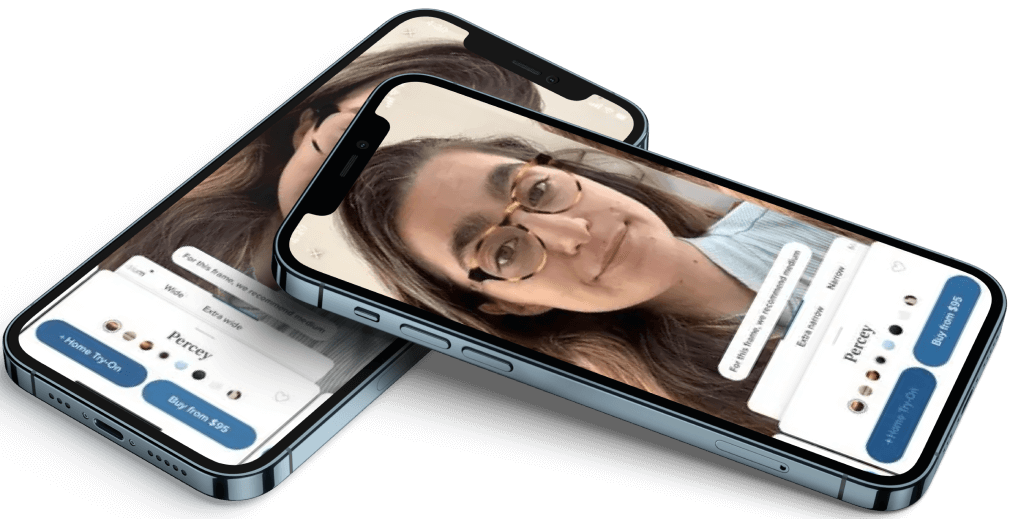
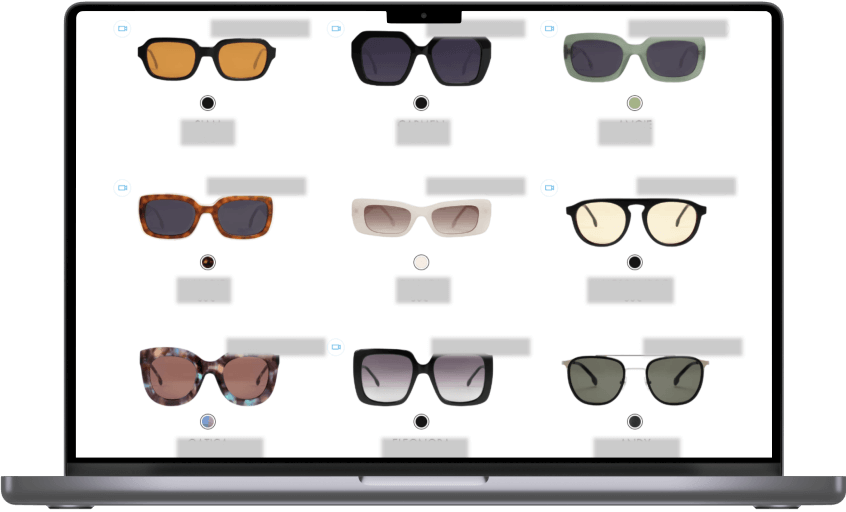
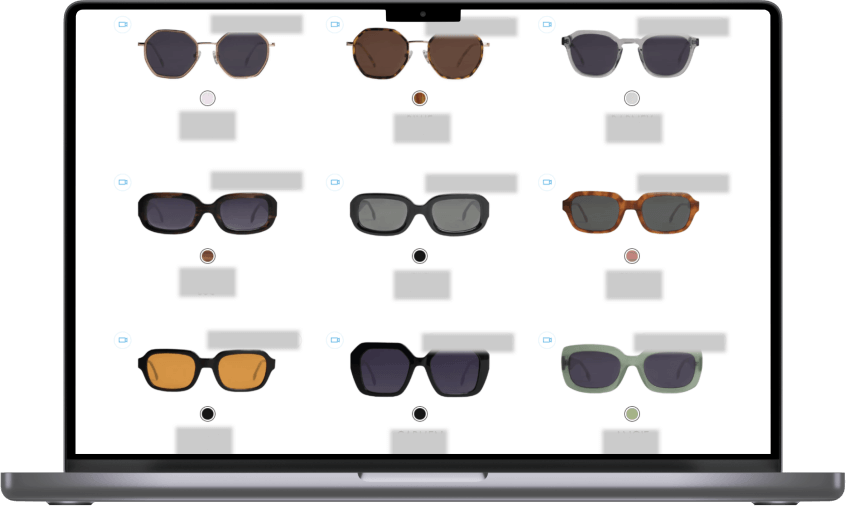
Given the impossibility of physical presence in the store, we added a feature of a virtual frame fitting. It gives a rough idea of how different frames would look on a person’s face. Even long after the lockdown, this function remains popular among the app’s users. 

  1. Custom ERP for internal usage

We inherited the enterprise resource planning project from the client’s previous tech partner who hadn’t been able to provide a no-fuss hiring process and unlimited scalability on demand.

After discussions with the client, it was decided to finalize the custom solution another team had been working on instead of adopting and customizing a ready-made ERP such as Odoo, SAP, etc., for two reasons:

  • The client didn’t need all the features that off-the-rack software provides, so it would have been unwise to overpay for it.
  • Only a bespoke system could guarantee perfect alignment with the client’s processes.

What roles does the web app cover within the company, and what functionality does it provide?

  • Sales person

has access to the customers’ database to create and edit consumer information.

  • HR

can create and edit staff accounts to make managing employees whole-company scale easier.

  • C-suite

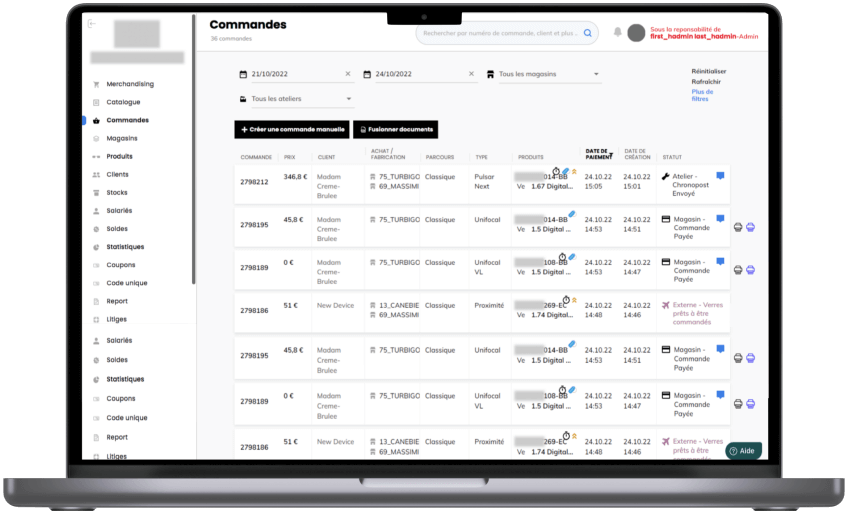
can leverage advanced statistics to back up their decisions with up-to-the-minute data. We created dashboards to visualize the data about the number of orders in general and by cities, customers’ gender and age, lens type, and a raft of other parameters.

  • Technician

the employee responsible for assembling glasses — signs in the ERP to see the list of orders to be produced, delivered, etc. Moreover, each technician is assigned to a certain store and can see only the data related to their location.

  • In-store consultant

registers orders made by customers in the physical stores.

As the ERP automatically records status changes after each operation with an order, the client obtains a fully-transparent production and delivery process. And easy-to-grasp dashboards empowered them to make well-informed decisions based on vast amounts of data and keep a laser-sharp focus on the changing customer demands to adjust production accordingly as fast as possible.

  1. Mobile app for inventory and logistics

As the number of the chain stores was growing, our client faced the palpable need for a solution that would ensure centralized and automated stock monitoring, logistics, and inventory. That’s what became a driving force in launching a new project – a mobile application on React Native integrated with RF and RFID scanners, used for inventory, goods receipt, and shipping.

The app we developed simplifies the tasks for employees involved in inventory management and in-store consultants who receive orders.

It allowed the client to:

  • Digitize inventory management and logistics and therefore speed up related tasks, such as order picking
  • Automate stock and inventory management
  • Get a detailed view of the stocks in near real-time
  1. Healthcare software for simplified cooperation with insurance companies

One of the hallmarks of the client’s business is the direct cooperation with public and private insurance companies in France. It’s convenient for the consumers, but the client also wanted to facilitate the process for their employees. Therefore, our dedicated team developed an insurance processing application for internal usage.

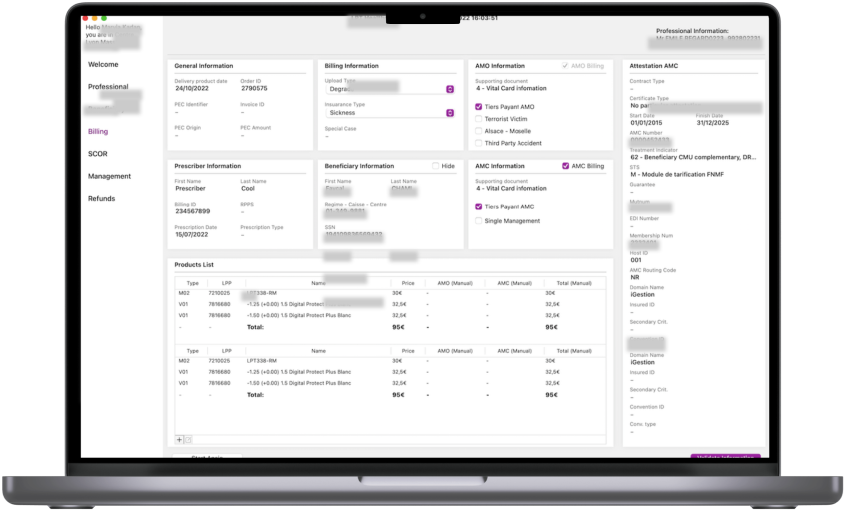
There are physical terminals in the client’s stores where consultants swipe customers’ insurance cards. The terminal reads the data and sends it to the app, which automatically matches this information with the data the insurance companies provide and displays:

  • what type of order the consultant can create for a client
  • how much of the order’s cost can be covered by insurance

Insurance regulations in France require choosing one OS for insurance processing with mandatory certification of the software before its rollout. As the client had already bought iMacs for their brick-and-mortar stores, we designed the healthcare solution for MacOS.

The app’s implementation allowed the client to automate the routine task of insurance processing and completely cut out the possibility of human error.

  1. Website on Shopify

The client’s former website used to run on WordPress, bolstered with the WooCommerce plugin. The problem was that as the website was expanding and new plugins were being added, the solution became overly complicated to be managed efficiently.

Tons of spaghetti code slowed down the pages’ loading speed — it could take up to six seconds — a parameter that, in 70% of cases, influences consumers’ willingness to buy from an online retailer*.

*Source: Unbounce, Think Fast: The Page Speed Report

Redesign and modernization of the old website would have taken too much time, so the client decided to switch to Shopify – a hosted SaaS solution — so that the provider would handle most of the technical issues and it would be easier to scale further.

Moreover, the out-of-the-box Shopify solution offers functionality that is missing in the off-the-shelf WooCommerce module:

  • a multi-currency plugin
  • a wide range of payment options
  • an automatic country-by-country tax calculator

With the former website, all of that had to be either coded manually or achieved through installing additional modules, which slowed down the solution.

Shopify adoption has also allowed the client to gather more detailed customer analytics thanks to the connection with Google Analytics, Google Tag Manager, and Meta Ads.

However, despite Shopify being an all-in-one ecommerce platform, our team had to work through some of its limitations. For example, it was impossible to specify more than three product options in a description. Check how we solved these issues in a detailed case study.

By switching to Shopify, the client got a user-friendly and easy-to-manage online store with 6x higher loading speed and access to detailed analytics.

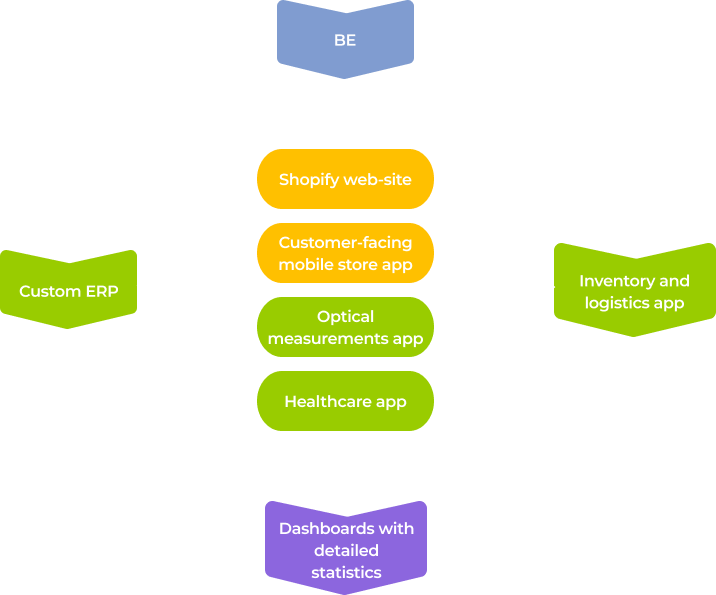
Here’s the client’s final ecommerce ecosystem with all the mobile and web applications we’ve developed for internal and external usage.

Before

  • Unoptimized business operations
  • Manual processes
  • High influence of human factor
  • Absence of an online ecommerce eyewear store for customers
  • Lack of tools for efficient data collection, analysis, and visualization
  • Draft version of a custom ERP that wasn’t released
  • Heavyweight and slow WordPress website with loads of spaghetti code

After

  • Digitized order processing, inventory, and logistics
  • Automated optical measurements and insurance-related tasks
  • Minimized possibility of human error
  • Eye-catching and user-friendly mobile app for online consumers
  • Insightful dashboards with detailed statistics
  • Full-fledged custom ERP 
  • Speedy and easy-to-maintain website on Shopify
  • Transparent and flexible ecosystem of lightweight software solutions

Key features

Adaptability

A comprehensible suite of lightweight applications allows the client to remain flexible and swiftly respond to any market changes. Such an approach also simplifies apps’ maintenance and support, not to mention the ease of use for the client’s employees.

Extensiveness

The custom B2B ecommerce ecosystem we’ve created encompasses software solutions that provide a seamless customer experience and streamline the client’s internal processes.

Customizability

Custom software aligns with the client’s business needs perfectly. Moreover, each solution for internal usage is targeted to a specific role within the company to simplify its management for the client’s employees.

Business value

  • 33% faster order processing
  • 6x boost in page loading speed on the website
  • Fully digital inventory management and logistics
  • Complete transparency of the operations within the company
  • Automated insurance processing
  • Eliminated possibility of a human error

Multiplier effect

A well-designed ecommerce ecosystem enhances your customers’ experience and turns them into regulars. 

Any B2C or B2B software solution is often a part of a larger ecosystem that includes internal business tools and external channels of interaction with potential customers. To hit it big down the line, you should adhere to a holistic approach to building software for your company’s needs. 

This principle plays out in any industry, from ecommerce, entertainment and media to healthcare, fintech, and manufacturing. Bank on comprehensive strategic solutions instead of one-off fixes to stay ahead of the pack and win over more customers.

Anna Vasilevskaya
AI modified real photo
Anna Vasilevskaya
Account Executive

Get in touch

Drop us a line about your project at
[email protected] or via the contact
form below, and we will contact you soon.