AI Operational Platform for a Professional Services Firm

A Modular AI Operational Platform for a Multi-Entity Professional Services Firm

How creating a company-wide AI operational layer with several AI agents and governance by design enabled a German professional services group to accelerate request processing by 72%, cut fee proposal preparation time by 65%, and free each employee from 6 hours of repetitive administrative work weekly.

Business challenge

Professional services firms in law, finance, and consulting run on trust, context, and responsiveness. In legal, tax, and accounting, the difference between a good client experience and a missed opportunity often comes down to how quickly the right person understands the request, connects it to the right matter, and moves it forward.

But as such companies grow beyond a single practice, the operating model often becomes harder to control. What works for a compact law firm starts to strain when several business units share clients, brand equity, and expertise, but not the same workflows, systems, or view of client history.

Our client, a Germany-based professional services group with assurance, tax, legal, and management consulting business units, had reached that inflection point. Around 100 full-time professionals and part-time consultants across the country supported a shared client base, while customer tracking and project management remained fragmented across business units.

The friction showed up in several places at once:

  • Email as the de facto operating system. Client requests, project updates, document exchanges, internal coordination, and cross-unit referrals all originated and evolved inside email conversations. What they lacked was structured intake, routing logic, and a quick, unified way to track what came in, who owned it, or what happened next.
  • Manual operations. Even routine requests required attention from senior lawyers, tax advisors, auditors, and consultants, pulling highly qualified professionals into administrative work. Moreover, with most of the proposal fee preparation done by hand, the client’s customers waited for days for what competitors with proper automation delivered in hours.
  • Informal and under-structured workflows across business entities. Cross-unit coordination happened ad hoc rather than through structured processes. A legal client asking a tax-related question would trigger a phone call or a forwarded email, as there was no controlled workflow.
  • Low visibility into projects and matters. Each team maintained its own matter records in simplified Excel sheets and DMS templates, leaving the company without a unified view of active matters, ownership, and status.
  • AI adoption lagging behind. While aware that incorporating artificial intelligence into their daily operations was no longer a nice-to-have, the client still lacked a cohesive plan for implementing it.

With these problems snowballing and no in-house expertise to tackle them, the client turned to Instinctools’ AI Center of Excellence.

Solution

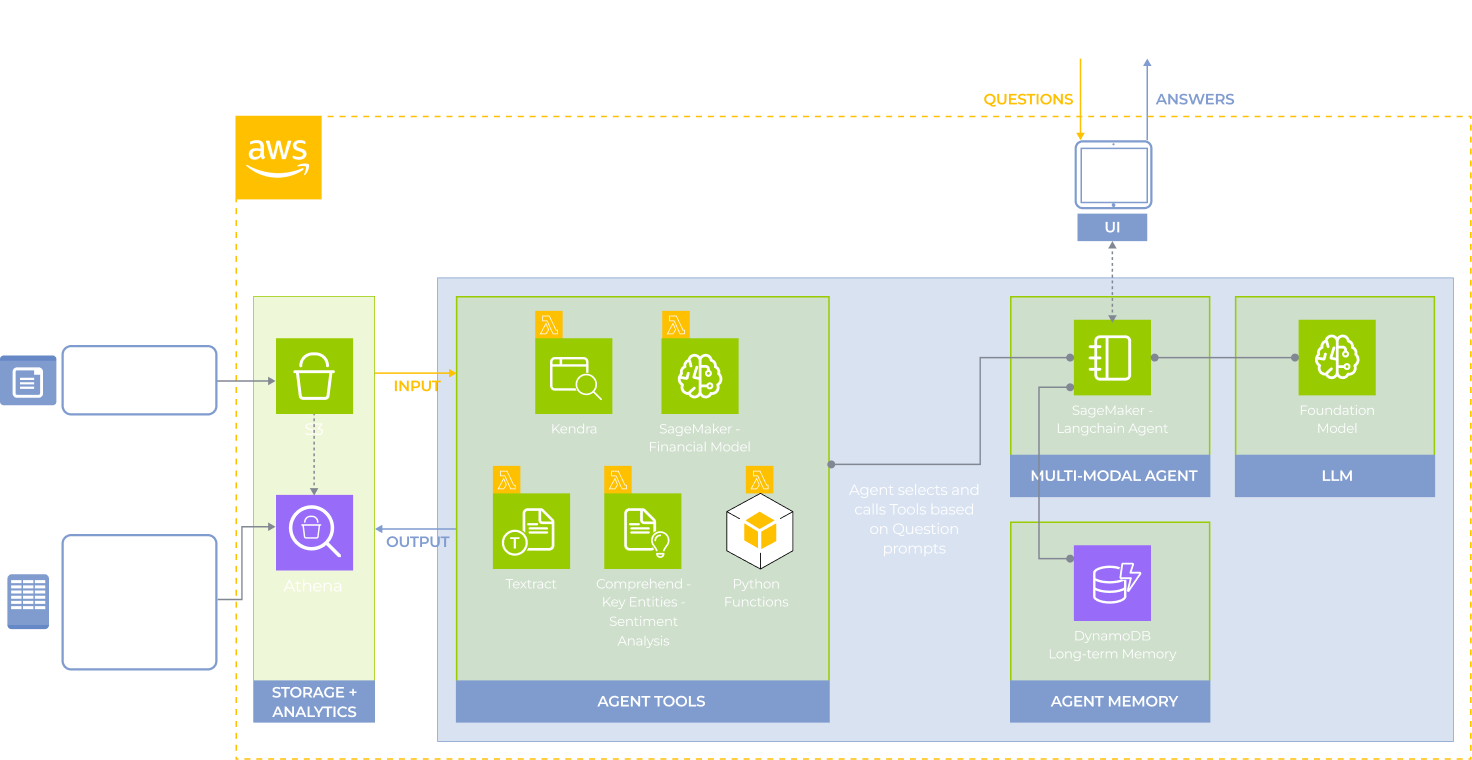
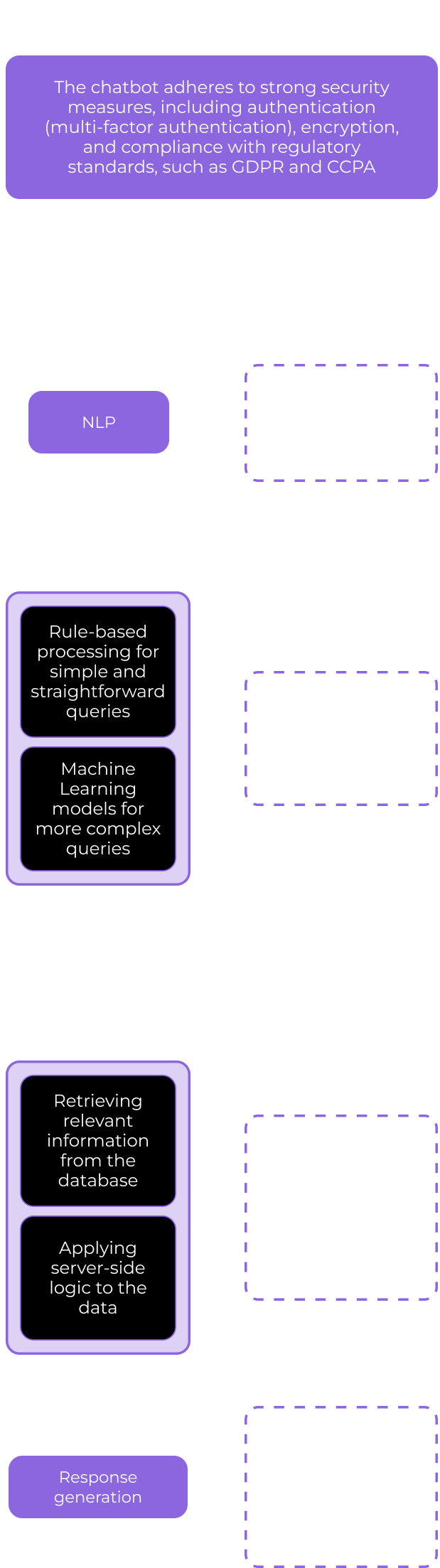
From the beginning, the project was not treated as a chatbot implementation, where another isolated AI tool sits on top of already fragmented workflows. The client needed a controlled AI operating layer that could connect inboxes, documents, matter data, internal systems, and human decision-making into one governed workflow.

For law firms, confidential AI solutions with data privacy and compliance built in aren’t optional, as lawyers, auditors, tax advisors, and consultants work with sensitive client data and carry personal responsibility for the advice they provide. AI could help reduce repetitive operational work, but only if every output remained traceable and reviewable.

Considering that context, Instinctools designed the solution around three principles:

  • Sensitive client data must remain under the client’s control
  • AI outputs must be auditable and explainable enough for professional review
  • Every AI-assisted workflow must keep a qualified human in the loop

The platform was built to support four core capabilities from the start:

  • Email intake and matter management 
  • Employee support
  • Quoting support
  • Advisory document analysis
  1. Choosing a platform approach over one-off AI tools

The client wanted to move quickly, but they also needed the solution to scale across several business units. Building one AI tool at a time would have solved individual problems, but it would also have recreated the same fragmentation the company was trying to overcome.

Instinctools proposed a platform-based approach powered by GENiE, our proprietary agentic AI framework. The idea was to build the foundation once (integrations, context layer, agent orchestration, governance, auditability, and data access) and then reuse it across every subsequent AI module.

What exactly did this approach bring to the table?

  • Centralized AI governance inheritance. With governance, auditability, and compliance controls embedded at the platform level, every new AI solution inherited them automatically.
  • Data platform with adapters. Pre-built connectors unified the company’s DMS, accounting platform, time-tracking tool, and Microsoft 365 services into a single queryable layer.
  • Cross-agent context synchronization. It is what makes agentic AI for law firms workable in practice: all AI agents operate within a shared context that connects customers, matters, relationships, and services. Besides eliminating duplicate data entry, this approach enables richer operational intelligence over time.
  1. Starting with what hurt most: email intake and matter management

The first of the AI agents for the law firm’s operational layer our team developed was the email intake and matter management agent.

Much of the company’s work began in Microsoft 365 inboxes: new client requests, follow-ups, internal referrals, document exchanges, administrative questions, and updates on existing matters. Our team connected the platform to the client’s mailboxes and built a processing pipeline that frees lawyers, tax advisors, auditors, and consultants from repetitive triage work.

When an email comes in, the agent:

  • Classifies the intent (new engagement, follow-up, internal referral, or administrative request)
  • Identifies whether the sender is an existing client or a new prospect
  • Determines which business unit should handle the request
  • Checks whether the email relates to an active matter or suggests creating a new matter record when no match is found
  • Surfaces deadlines, obligations, and required next steps for professional review

The agent processes emails in German and English.

Getting the classification right across four business units with different vocabularies was one of the project’s tough puzzles. Tax advisors, lawyers, consultants, and assurance specialists may describe similar work differently or use the same term to mean different things. To address this, our business analyst collaborated with domain experts from each unit to map service categories, routing rules, and matter hierarchies. Where the business units adhere to common logic, the system uses shared classifications. Where they diverge, it maintains unit-specific configurations.

The agent was first tested with a champion group of 10 users. Initial classification accuracy reached around 74%. Through few-shot tuning with real company emails and structured feedback from the early adopters, we raised the accuracy to 87%, exceeding the client’s initial 85% target.

After validation, the email intake and matter management agent was rolled out across all business units. This gave the client a structured intake mechanism and created the foundation for a big-picture dashboard showing active matters, task ownership, and engagement status across the entire company. That way, the AI platform brings multiple practice areas into a single workspace, saving managing partners from calling around or digging through email threads to find out what’s happening.

  1. Broadening AI usage across the company

After the email intake and matter management agent proved stable in production, we began extending the AI systems across the professional services firm’s law, consulting, and finance operations.

Employee assistant chatbot in 2 weeks

Before rolling out AI agents for higher-stakes operations like quoting or advising, we wanted the company’s staff to get comfortable with AI-assisted workflows in a low-risk setting.

We designed and deployed an assistant chatbot that gave employees a controlled environment to interact with AI in everyday scenarios. It operates in German and English, matching the company’s working languages, and answers routine internal questions about leave policies, expense procedures, onboarding steps, IT access, and more, drawing from the company’s HR documentation and operational FAQs. When it can’t answer with sufficient confidence, it routes the query to the right person with context already attached, so nobody has to re-explain the question.

A dashboard shows a chat with a knowledge assistant about travel and business expenses. The left menu lists Dashboard, Names, Requests, Messages, and Knowledge Assistant. The right panel highlights “Travel and Expenses” with statuses: Awaiting response and Answered.

Beyond building trust in AI across the workforce, the chatbot absorbed the stream of repetitive questions that used to land on managers and office admins, freeing each for up to 6 hours of meaningful work a week.

Quoting agent in 3 weeks

Next, Instinctools’ team built an enterprise AI agent for the law firm’s quoting process, turning manual fee proposal preparation into a structured, step-by-step workflow. When a new client request is confirmed through the email intake agent, the quoting agent takes over:

  • Reading the client request and mapping it to the company’s services (tax structuring, legal review, due diligence, etc.)
  • Finding the right people for the job based on skills and experience
  • Checking who’s free through the client’s time-tracking system
  • Drafting a fee proposal based on the company’s rate cards for manager review

What used to be an email back-and-forth across partners, associates, and office admins now runs through a single structured workflow, with AI laying the groundwork and the professionals making the final call.

Advisory agent in 4 weeks

Due diligence packages, regulatory filings, and contract portfolios are the kind of high-stakes documents where volume makes manual review unacceptably slow. To ease the daily burden of the client’s advisory and assurance teams, we built an agent that took on the heavy lifting. It runs within the AI platform built specifically for law firm operations:
  • Ingesting PDF, DOCX, and XLSX documents up to 200 pages long
  • Producing summaries at the level of detail the professional needs, from a quick overview to a section-by-section breakdown
  • Cross-referencing findings across multiple documents to surface non-obvious patterns, contradictions, and gaps

Every AI-generated finding links back to the exact source document, page, and section, so advisory and assurance staff can verify the evidence in seconds.

On the data handling side, the agent classifies documents by sensitivity level:

  • Publicly available materials like regulatory filings, published financial statements, and industry reports are processed through the cloud inference layer under the existing no-retention agreement.
  • Highly sensitive documents, such as materials covered by attorney-client privilege or pre-announcement M&A data, are processed entirely on-premises and never leave the client’s servers.

Setting up the governance framework and platform foundation took six weeks. The multi-agent system with the assistant chatbot, email intake, quoting, and advisory agents was ready in 14 weeks, bringing the entire delivery timeline down to five months, well ahead of the client’s original 8-10-month estimate.

Banking on GENiE showed in the numbers
  1. Cost-effective governance by design

For the platform to operate safely across all business units, we set up a robust AI governance framework from the get-go. 

  • All application servers, databases, and data pipelines run on the company’s own infrastructure. Customer data, matter records, and document embeddings never leave the premises.
  • Only anonymized, tokenized fragments are sent to Azure OpenAI EU West for inference, under an enterprise agreement that guarantees no retention or training on the company’s data.
  • The framework defines how AI document review works for law firms operating under strict confidentiality: AI outputs are treated as working drafts until reviewed and approved by a qualified professional. This keeps human oversight built into the workflow and reflects professional liability requirements under German laws such as BRAO, StBerG, and WPO, as well as the EU AI Act’s human-oversight expectations.
  • Every action any AI component takes is captured in a mandatory audit trail with a 12-month retention period: what decision was suggested, how confident the model was, and whether a professional approved or overrode it. This data can be pulled at any time in a format ready for regulators and auditors.

Here’s how NDAs, engagement letters, and service agreements are handled within the AI operational layer.

Flowchart with two faded boxes on top labeled “Matter record” and “Company templates.” The center green box says, “AI generates first draft. Flags missing or inconsistent fields.” Below is a purple box, “Professional review. Tracked-changes interface.”.

For a company that bills by the hour and watches margins closely, AI spend transparency was a practical concern from day one. To keep inference costs predictable and deliver robust governance without breaking the bank, our team built a cost-tiered AI gateway that routes routine classification to small, lightweight models and assigns complex analysis and document generation to larger models.

The client’s priority wasn’t “governance at any cost”

Before

  • Email inboxes as the company’s informal operating system led to transparency and coordination challenges
  • Manual customer intake, matter handling, and quoting wasted senior professionals’ billable time
  • Client history, matter context, and referral opportunities stayed fragmented across teams and individuals
  • No real-time visibility into active matters, ownership, workloads, and engagement status

After

  • An AI operational layer with strong governance unlocked transparency and seamless cross-unit coordination
  • AI agents took over administrative groundwork, freeing professionals for higher-value expert work
  • Shared operational context unified customer and matter knowledge across business units
  • Managing partners gained real-time visibility into workloads, matter ownership, active engagements, and cross-unit coordination

Business value

  • Real-time cross-unit visibility thanks to a company-wide AI operational layer
  • + 72% in request processing speed
  • – 65% in fee proposal preparation time
  • – 6 hours/week of repetitive administrative work per employee

Multiplier effect

The productivity loss this project addressed goes far beyond legal, tax, and finance. In any knowledge-intensive business, highly qualified people spend too much time on coordination work: routing requests, reconstructing context, chasing updates, preparing drafts, and pulling information from scattered systems.

An AI operational layer with governed multi-agent systems is a way of automating those tasks without sacrificing visibility or control. AI agents take on the groundwork, so your staff spends less time chasing information and more time on the work you hired them for. Companies can start with the biggest time sink and, then, expand gradually as each use case proves its value.

Overhead view of people working at a table with laptops, tablets, charts, and notebooks. A glowing “AI” graphic and digital icons are superimposed, symbolizing artificial intelligence and data analysis. Hands are busy typing or writing.

3D Room Scanning and AR Visualization

3D Room Scanning and AR Visualization Solution

How a luxury furniture retailer enhanced both the online and offline shopping experience by letting customers preview furniture in their own rooms, capture precise measurements automatically, and explore products in immersive 3D showrooms, ultimately raising the customer satisfaction score by 25%.

Business challenge

When it comes to luxury shopping, customers expect more than polished web pages and more than white-glove service in-store. That is the entry ticket. When every serious competitor delivers excellence by default, the real challenge is differentiation.

One lever not every luxury brand has mastered is innovation through technology. Applied correctly, they can strengthen both digital and physical customer touchpoints.

A high-end furniture retailer for whom we’ve already built a tailored ecommerce ecosystem, chose to lean into that opportunity.

The goals were to:

  1. Help customers visualize furniture in their own homes, so they can understand how pieces will fit and look in real spaces.
  2. Recommend optimal furniture dimensions for each room using an intelligent matching algorithm, reducing uncertainty about scale and fit.
  3. Handle cases where no catalog item fits perfectly by suggesting safe and feasible size customizations of existing models.
  4. Enable 3D exploration in showrooms for visitors to experience items that cannot be physically displayed due to space constraints.

To meet those objectives, Instinctools’ dedicated team was brought in to design a suite of innovative solutions that could remove friction from both online and in-store shopping experiences.

Solution

Our team designed and implemented the scanning app, matching algorithm, and holographic web application. Each solution was built to integrate seamlessly with the client’s existing workflows and data structures, ensuring a smooth end-to-end customer journey from scanning a room to selecting the right configuration and completing a purchase.

  1. Building a mobile app for room scanning 

We built a mobile app that reconstructs a room as a dimensionally accurate 3D model from LiDAR depth data. Computer vision algorithms detect structural elements such as walls, doors, and windows, while AR technology is used to visualize the reconstructed space in real time.

Once a user scans the room, the app analyzes the available space and generates optimal furniture recommendations from a catalog. Users can further customize items to match their personal preferences. The matching algorithm ensures that every suggested piece is compatible with the room’s exact dimensions, avoiding guesswork or manual measurements.

To keep the experience truly frictionless, our team integrated the app with the client’s Odoo-based ecommerce ecosystem so scan results and calculated dimensions flow directly into it. 

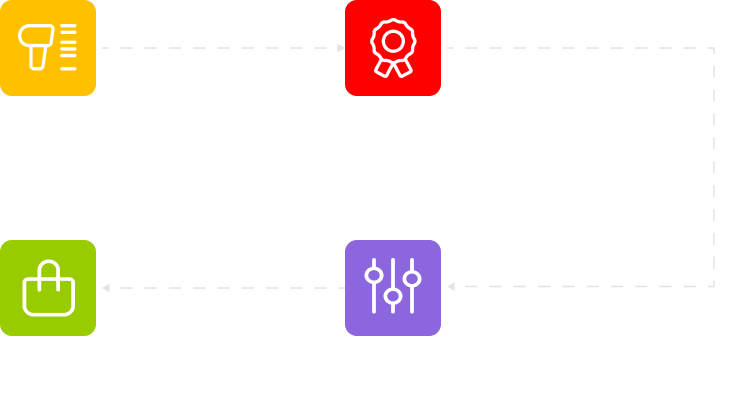
We’ve enabled real-time product selection and faster purchasing through creating a continuous path:

A flowchart with four colored boxes: yellow Scan with a barcode icon, red Recommendation with a ribbon icon, green Checkout with a shopping bag icon, and purple Configuration with a sliders icon. Text and icons are on a light gray background.

By combining AR visualization, precise spatial analysis, and automated product matching, the app delivers a frictionless experience for users and a data-driven tool for the retailer, enhancing both engagement and conversion.

A person holds a smartphone, using an app to preview a yellow sofa in a living room. The real room has brown leather furniture, shelves, plants, and large windows. The phone screen shows the yellow sofa on a rug in the same space.

Calculating optimal furniture dimensions from scanned spatial data to suggest in-stock items or custom-sized/MTO options

At the core of the room scanning app is a purpose-built matching engine designed to bridge the gap between a customer’s space and their desired furniture. The system starts with processing the room’s dimensions, captured through a 3D scanning feature.

The algorithm’s logic is built around dimensional compatibility. For each furniture category, such as sofas, tables, or armchairs, the system calculates an optimal size range based on the  room’s proportions and available space. It then filters the catalogue accordingly, showing only the items that fall within those parameters, so customers see options that actually fit rather than a generic product grid.

Where it gets especially valuable is in situations when no standard catalog item matches the room. In these cases, the algorithm identifies the customer’s preferred model and proposes a feasible, custom-sized option, suggesting adjusted dimensions to achieve a perfect fit and preserve design integrity.

From concept to client-ready solution

This feature started as a client’s Proof of Concept for how a size-aware recommendation engine should work. Using it as a blueprint, our backend developer delivered the first working version. After the demo, the client requested several modifications and provided additional requirements to align the logic more closely with their specific workflow. Following the update, the client’s subsequent testing confirmed that the final implementation matched their expectations perfectly, validating both the concept and its execution.

  1. Enabling immersive in-store product showcase through a holographic application

To make the showroom visit as premium and memorable as the products themselves, we developed an integrated solution that pairs a custom web application with Holobox holographic displays. The client acquired two Holobox units from Holoconnects – specialized hardware that uses a strategically positioned high-definition screen to create the illusion of a floating, three-dimensional image from 2D content, delivering a striking ‘hologram-like’ effect.

Technology foundation

Holobox runs on a proprietary operating system that boots directly into a full-screen Chromium instance. This setup effectively turns the entire holographic display into a web-rendering engine: any content loaded in the browser is instantly broadcast as a hologram.

We built a dedicated web application that serves as the brain of this experience. The app is designed to respond to user interactions in real-time, creating a seamless bridge between a handheld device and the large-format display.

Interactive workflow

In-store, customers can explore pieces that aren’t physically on the floor due to space constraints. For example, they can rotate a sofa, switch colors/finishes, and evaluate the look and presence of the product before committing.

The user journey is simple but powerful:

  1. A customer approaches the Holobox in the store and picks up a paired tablet.
  2. The web application loads on the tablet, presenting a browsable product catalog.
  3. As the user scrolls or selects an item on the tablet, the app transmits a signal to Holobox.
  4. The Chromium browser on the Holobox  updates instantly, displaying a high-resolution, holographic visualization of the selected product.

From a technical standpoint, this required implementing a robust, low-latency communication channel (using WebSockets) to ensure the holographic display feels like a direct extension of the tablet. The result is an immersive, interactive experience which also helps customers make more informed decisions.

Before

  • Inability to picture furniture at home
  • Manual guesswork about furniture fit
  • Physical showroom space limitations

After

  • Realistic AR visualizations for confident decisions
  • Intelligent matching algorithm calculating optimal size ranges per room and proposing safe customization when no SKU fits perfectly
  • Immersive holographic product display via Holobox hardware, powered by a dedicated web app

Business value

  • Premier buying experience offline and online
  • +20% online sales growth
  • +25% CSAT increase

Odoo-based Ecommerce Ecosystem

Odoo-based Ecommerce Ecosystem for a Luxury Furniture Retailer

How a high-end furniture retailer grew online sales by 20% and improved CSAT by 25% by launching an Odoo-based ecommerce ecosystem.

Business challenge

Hardly a surprise, purchasing habits are drifting online. By most metrics, luxury retail is already there. Online sales of premium furniture, for instance, have been climbing by roughly 30%* year over year.

At the same time, many high-end buyers remain charmingly old-school, insisting on touching fabrics and performing a slow lap around the showroom before committing to a five-figure sofa. But even when the final transaction happens offline, the decision rarely does. Nearly 80%** of luxury sales today are digitally influenced: shoppers engage with one or more digital touchpoints before they buy.

*McKinsey

**Grand Research Store

This leaves established luxury brands in a constant balancing act: preserving their heritage and boutique experience while adapting to modern ecommerce expectations.

That omnichannel tension was at the core of our client’s concerns, a high-end furniture and housewares retailer. They sought a robust ecommerce solution that could complement their boutique sales and digitize operations across multiple premium manufacturers, including those offering made-to-order furniture.

Impressed by the portfolio of completed ecommerce implementations by Instinctools, the retailer secured a dedicated team for the end-to-end development of their own ecosystem.

Solution

We proposed an ecommerce solution built on ready-made, specialized components, while fully tailored to the client’s business specifics. As a foundation, we picked up the Odoo platform, which best met the client’s requirements in terms of cost and functionality. To accelerate delivery and keep costs under control, we assembled the system from proven, ready-made building blocks: ERP, CRM, CMS, etc, allowing us to move fast without compromising reliability.

  • An online storefront with an exquisite, minimalist interface that highlights high-resolution, artistic product imagery, paired with a purchasing journey that feels exclusive, polished, and perfectly on-brand.
  • A centralized ERP system uniting a CRM module, order management, quality control panel, and logistics module under its hood for synchronized, hitch-free back-office processes orchestration.
  • A dedicated manufacturing portal for seamless communication and collaboration with external production partners.
  • A mobile room scanning app powered with an intelligent size-matching algorithm for calculating optimal furniture dimensions and suggesting either in-stock or Made-to-Order options.
  • A custom web-based holographic app for immersive in-store product showcase.
  1. Core system components in detail

Below is a closer look at the key components of the solution and how they work together across commerce, operations, and fulfillment.

Equipping internal users with feature-rich functionality to deliver a premier shopping experience

Our team developed a Next.js-based ecommerce frontend that supports customer optional sign-up, appointment booking, and end-to-end purchasing in one consistent customer journey across both online and in-store touchpoints.

Operational capabilities covered in the storefront:

  • Catalog management
    • Creating and structuring product categories
    • Configuring main-menu navigation
    • Creating, updating, and assigning products to categories
    • Building and publishing collections, including product videos
    • Managing product attributes (e.g., size, color) to support complex configurations
  • Pricing, regions, and promotions
    • Creating and managing price lists
    • Setting region-specific pricing and mapping it to country groups
    • Configuring and maintaining discount and loyalty programs
  • Order management
    • Searching and reviewing online orders with full visibility into key sales-order data (customer, order lines, pricing, taxes, totals, statuses, delivery and invoicing details, payment terms, and shipping method)
    • Updating order details when business rules allow
    • Linking historical orders made by guest users to a newly created customer account
    • Creating orders manually (for assisted sales), generating payment links, and triggering transactional emails when an order is posted

By bringing online and in-store shopping into a single system and keeping catalog, pricing, and customer data connected, the storefront simplifies day-to-day operations, improves the buying experience, and gives the business tighter control over regional pricing and promotions while remaining flexible for future growth.

Orchestrating back-office operations within a centralized ERP system

Before embarking on a full-scale retail digital transformation, the client’s online presence was limited to a basic Shopify storefront. Behind the scenes, almost everything that happened after checkout was handled manually, making fulfillment slow, error-prone, and largely opaque, with no real-time visibility into production. Within the Odoo-based ERP portal we designed, teams can now manage the full back-office cycle from customer data and order orchestration to production control, quality gates, and delivery coordination.

  1. Customer relationship management

    A CRM module consolidates all customer data in a centralized repository. Here, the team can view detailed customer profiles, including purchase history and preferences, create new customer entries, update contact information and account status in real time, and add private internal notes to track specific client requirements or conversations.

  1. Orders processing and production handoff

    Once the quotation is confirmed either by a customer completing payment online, or by a sales representative confirming it on behalf of a customer in-store, it becomes a Sales Order (SO). SO contains a series of attributes that provide comprehensive details about the order, including the item name, its manufacturer, optional product details, quantity, unit price, taxes, delivery option, etc.

Sales order workflow

Quotation

The initial draft is created, sent for approval, or shared with the customer.

  • generated automatically (when a customer places an order online)
  • Created manually by the Admin for specific customer requests
Confirmation

Once confirmed, the order moves to Sales order status.

Invoicing

Invoices are generated and payments are recorded.

Delivery

The furniture item is prepared, shipped, and marked as delivered.

Once the Sales Order is confirmed and payment is received, the workflow automatically shifts into production. If the item is out of stock or requires customization, the system generates a corresponding Purchase Order (PO). Before it’s sent to the manufacturer linked to the product, a sales manager validates that the PO meets production standards by:

  • Checking that the Purchase Order contains all the necessary details about the piece of furniture to be manufactured, including product specifications, sizes.
  • Checking that the purchase order contains all the necessary production files (e.g. CAD, renderings, assembly instructions, etc.)

If a sales manager thinks that files or notes for the manufacturer are needed, they can add a message to the purchase order.

After all the checks and PO confirmation, the status of the purchase order changes to “Awaiting Manufacturer” and becomes available to the manufacturer in a Manufacturer portal.

The order processing module gives sales and production managers a dedicated workspace to:

  • View all pending orders in a prioritized queue
  • Break down orders into manufacturing requirements (materials, dimensions, finishes).
  • Assign jobs to specific manufacturers
  • Track the progress of each order through the production lifecycle
  1. The quality control
    of the manufactured products

    Since quality is central to the client’s brand, we embedded quality control (QC) directly into the production workflow. For each manufactured item, designated quality controllers can:

  • Log inspection results against predefined quality checklists
  • Capture and attach photos of finished items for visual verification and auditability
  • Flag defects or non-conformities and automatically trigger rework, where needed
  • Approve products for delivery only after they meet the required standards

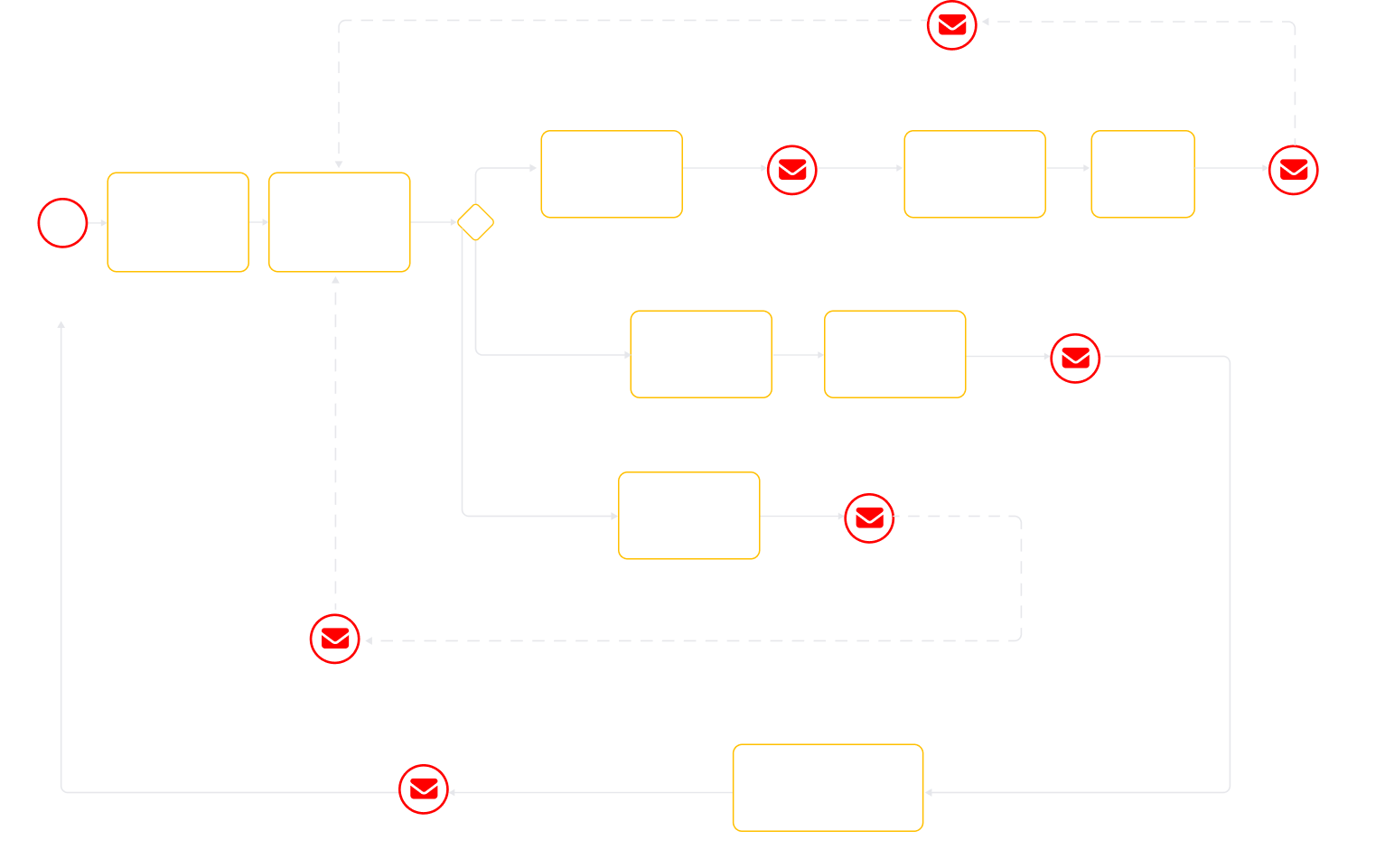
Quality control workflow

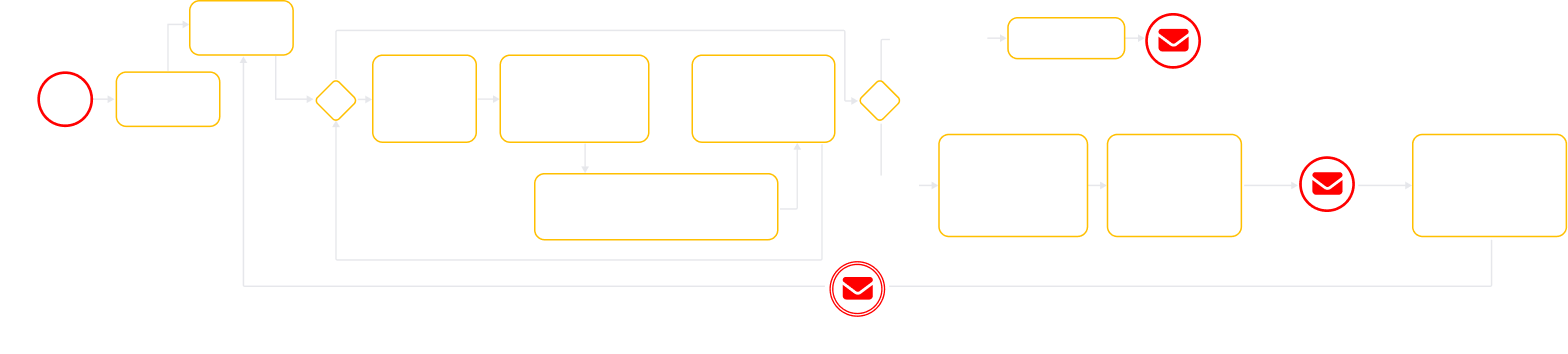
A flowchart outlines an order process. Key actions include logging in, viewing orders, selecting items, conducting checks, attaching images, submitting for QA, adding rejection reasons, and communicating issues. Red envelope icons mark communication steps.
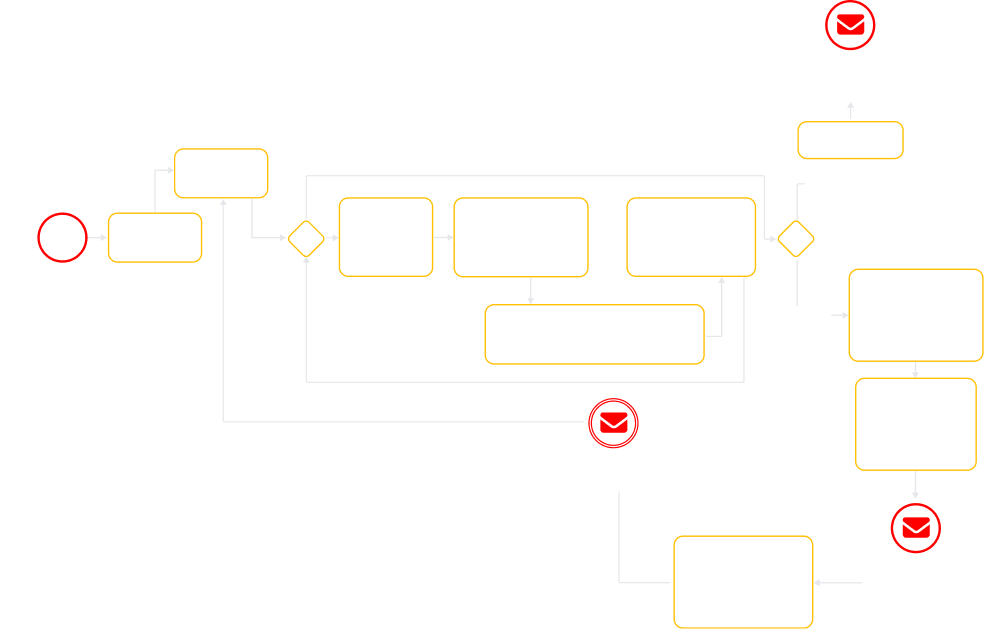
Faded flowchart with yellow and white boxes connected by arrows. Red icons with envelopes highlight three steps: Click on the Link in Email Notification, Review notification that order is assembled, and System sends instructions to Manufacturer.
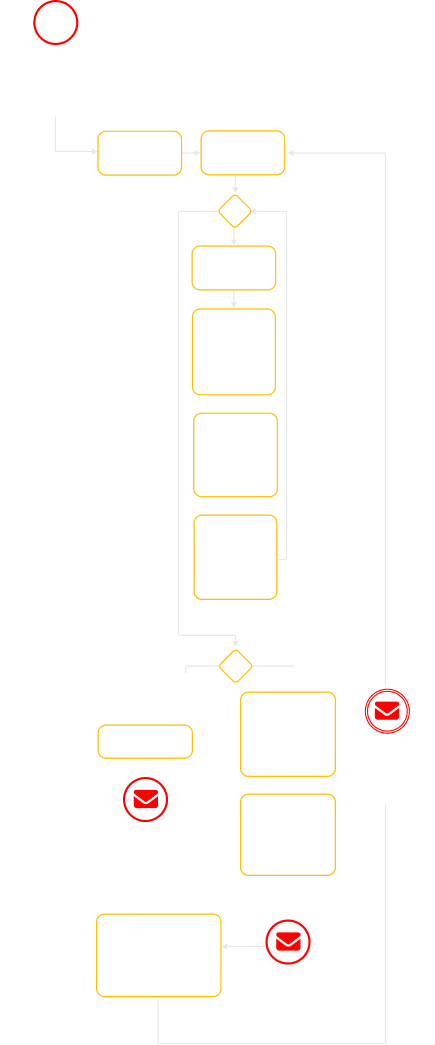
A vertical flowchart with yellow boxes and diamond shapes outlines a process that includes steps like Log in, View the order, and other subsequent tasks. Several red envelope icons are overlaid at decision points. The flowchart fades towards the bottom.
  1. Product delivery management

    The delivery module ensures that approved products leave the manufacturing facility and arrive at the customer’s doorstep on-time. Logistics coordinators begin by confirming the shipping address and verifying key order details, such as order lines, delivery dates, or pricing, making manual adjustments if needed. This blend of automation and manual flexibility ensures timely, accurate deliveries while handling real-world logistics exceptions.

Empowering production partners through an easy-to-use and secure manufacturer portal

To close the loop between sales and production, we built a dedicated web interface for the client’s manufacturing partners. Just as registered customers have their own personal account with the history of purchases, each manufacturer is invited to the system via a secure login, gaining access to a tailored portal that connects them directly to the orders they need to fulfill.

Secure, role-based access

When a manufacturer is onboarded, they receive an invitation to create their account. Upon login, they see only the data relevant to them, namely, the purchase orders assigned to their workshop. This role-based access ensures that sensitive customer or business information remains protected while giving manufacturing partners exactly what they need to do their jobs.

Order management at their fingertips

Once inside, the manufacturer is presented with a clear, intuitive interface for managing their workload. Key capabilities include:

  • Viewing purchase order lists. A comprehensive list of all assigned orders, providing a snapshot of current and upcoming work.
  • Viewing purchase order details. Deep visibility into each order, including product specifications, materials, dimensions, and customer notes.
  • Searching for purchase orders. A robust search function to quickly locate specific orders by ID, customer name, or date.
  • Sorting purchase order lists. Flexible sorting options to prioritize orders by deadline, status, or value.
  • Processing purchase orders. The ability to accept new orders and move them through production stages, updating the status in real time, from “Accepted” to “In Production” to “Completed.”
  • Downloading furniture unique code. Access to unique identifiers for each piece of furniture, which can be printed or scanned to track items through production and delivery.
Profile management

Manufacturers can also manage their own profile settings within the portal, keeping their contact information, business details, and preferences up to date.

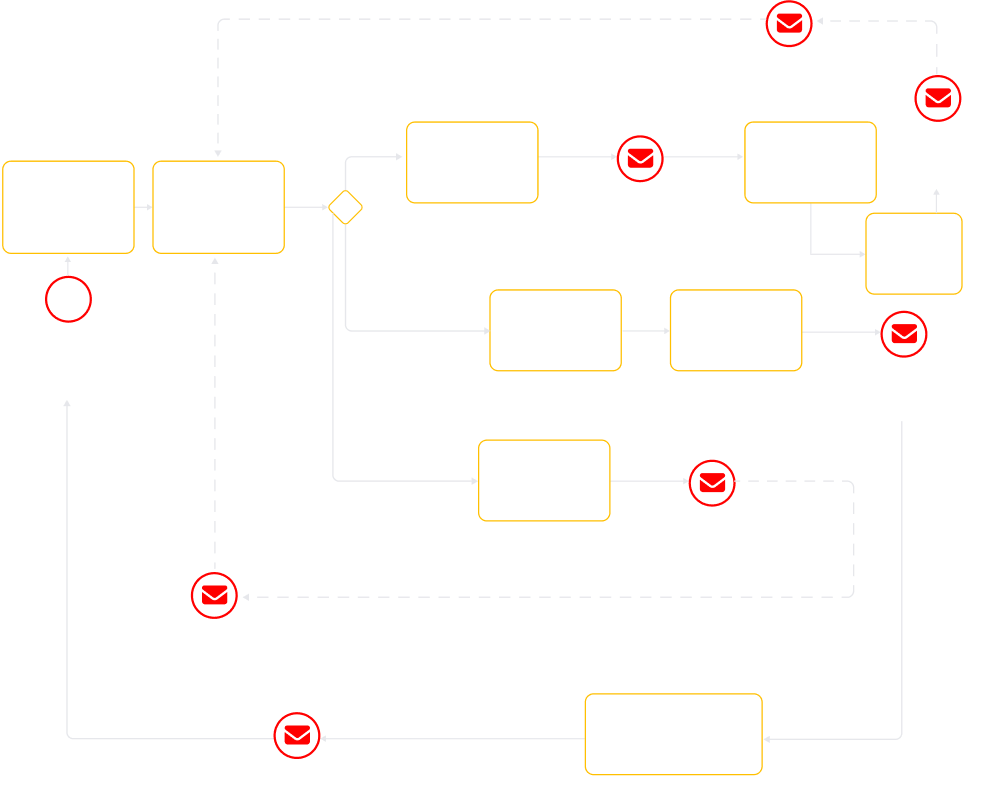
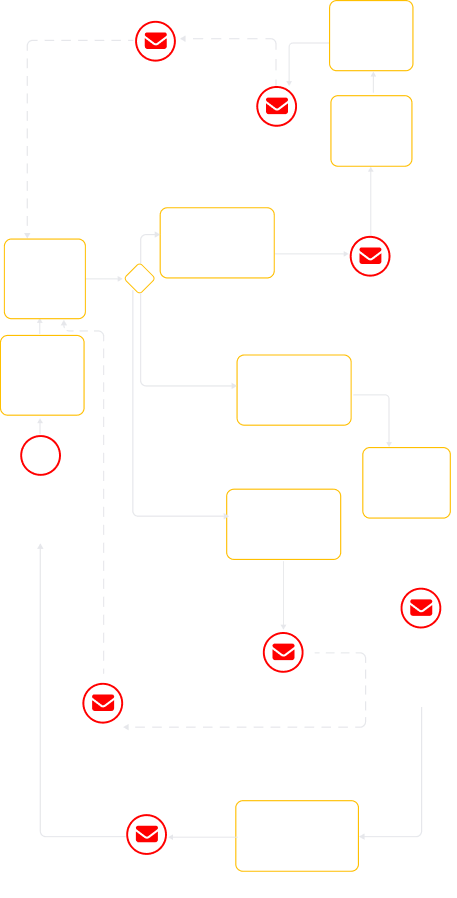
User story within the Manufacturer portal

A flowchart with yellow boxes and arrows on a light background, showing steps like “Authorize at Manufacturer Portal,” “View the Order,” “Accept the Order,” and “Download outlook for every item,” with red email icons marking communication steps.
A flowchart showing order processing steps with rectangles outlined in yellow. Red mail icons appear at steps like View the Order, Authorize at the Manufacturing Portal, Accept the Order, and Reject the Order. Some paths and text are faded gray.
A vertical flowchart with yellow-outlined boxes and diamond shapes, red mail icons marking steps. Boxes describe steps like Accept the Order, View the Order, Reject the Order, and Offline communication with Admin.” Lines connect steps.

Enriching the client’s ecommerce ecosystem with room scanning and holographic apps

Alongside ecommerce development, our engineers built a suite of complementary digital solutions to support the client’s non-standard ecommerce workflows:

  • A mobile app that analyzes a room’s dimensions, recommends catalog items that fit perfectly, and suggests size customizations.
  • A web app for Holobox displays, letting customers view products in 3D, rotate them, and change colors via a paired tablet.
  1. The technical choices behind speed, savings, and long-term resilience

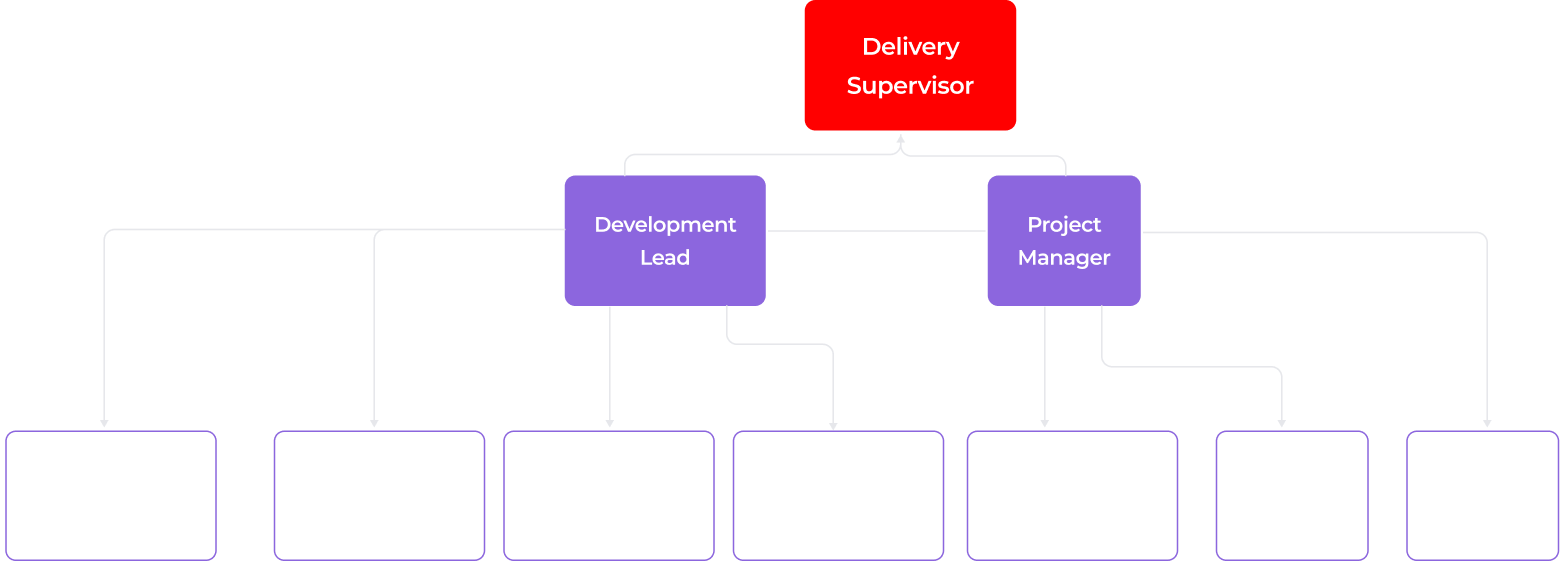
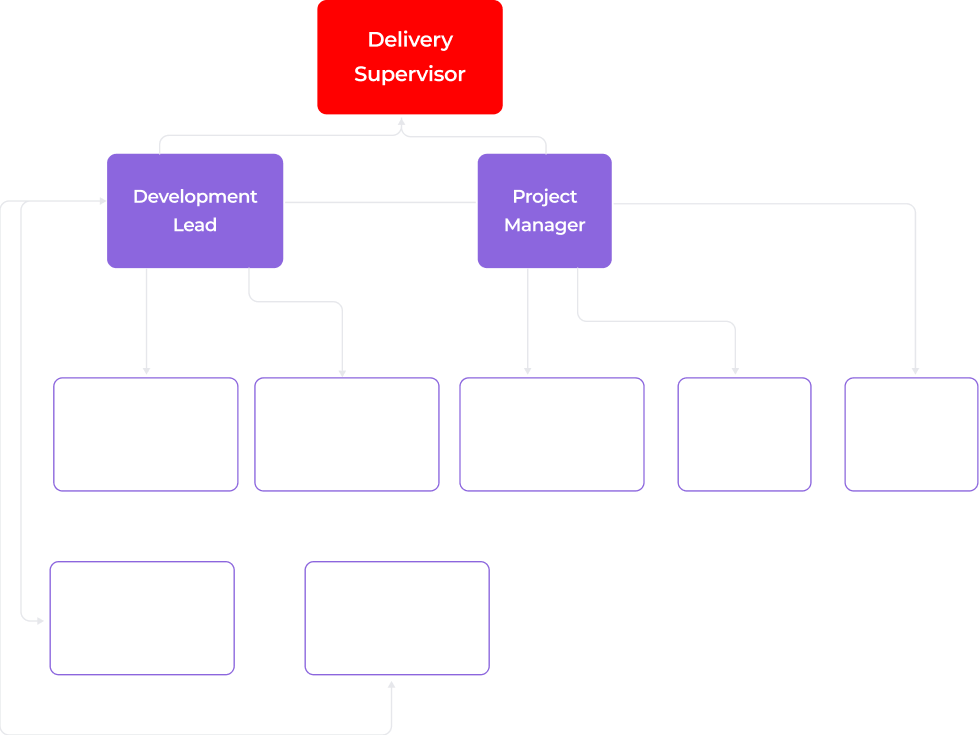
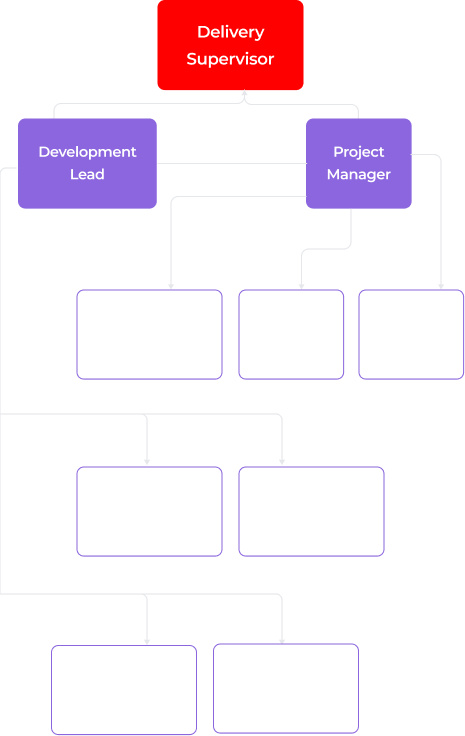
During a thorough discovery phase, led by our Business Analyst and supported by key team members, we investigated requirements, constraints, design, and technical architecture to shape the budget and development roadmap. With this foundation, we then assembled a cross-functional team of 8 specialists.

An organizational chart shows a red box labeled Delivery Supervisor at the top, connected to two purple boxes: Development Lead and Project Manager. Below, six faded boxes list various developer and analyst roles, connected under the purple boxes.
An organizational chart with a red box labeled “Delivery Supervisor” at the top. Below it, two purple boxes read “Development Lead” and “Project Manager.” Under them are faint, linked roles such as Developer, Engineer, Analyst, and Designer in lighter purple boxes.
An organizational chart with Delivery Supervisor in a red box at the top. Below are Development Lead and Project Manager in purple boxes, each branching to faded boxes for roles: Business Analyst, QA Engineer, UX/UI Designer, DevOps, React Native, Frontend, Backend.

Deciding on the software linchpin

To define a scalable, delivery-ready architecture, we aligned on several core technology decisions early in the project:

  1. Choosing platforms capable of supporting both ecommerce and manufacturing workflows as a unified foundation. The solution needed to go beyond standard ecommerce flows and involve manufacturers, QA, and production logic, so we extended the architecture to include ERP- and CRM-like capabilities, rather than treating manufacturing as a bolt-on.

Non-standard ecommerce flows to support high-end customer experience:

A white icon of two overlapping rectangles, one above the other, is centered on a red square background with rounded corners. The design is simple and geometric, suggesting layers or stacking.
Selective access
to collections

The platform must dynamically manage access to some collections or limited-edition pieces available only to specific clients, without creating friction for other users.

A white dollar sign is centered inside a scalloped circular badge on a bright yellow background. The badge and icon are simple, with clean lines, conveying a money or price symbol.
Payment before
final customizations

The system should secure payments for made-to-order products in advance, allowing for post-purchase adjustments without overcommitting manufacturing or violating accounting rules.

A white gear icon with six teeth is centered on a bright green square background with rounded corners, symbolizing settings or configuration options.
Post-purchase configuration adjustments

The ability to adjust selections, such as fabric or finish after purchase, while staying within production constraints and maintaining accurate invoicing and inventory management.

  1. Prioritizing existing platforms, services, and infrastructure to accelerate delivery. With strict deadlines, reusing proven components reduced engineering effort and compressed the time to market without sacrificing reliability.
  1. Building the solution on open-source software with a custom service layer to ensure long-term scalability. This approach keeps the system flexible for post-MVP scaling, letting us expand workflows and functionality without being constrained by rigid platform limits.

To meet the client’s ambitious quality objectives and accommodate the unique demands of non-standard ecommerce flows, we selected Odoo as the foundation for the solution.

Odoo is a Python-based open-source platform that supports multiple business domains, including ecommerce, ERP, CRM, accounting, and more. This makes it the perfect choice for a hybrid commerce-manufacturing system.

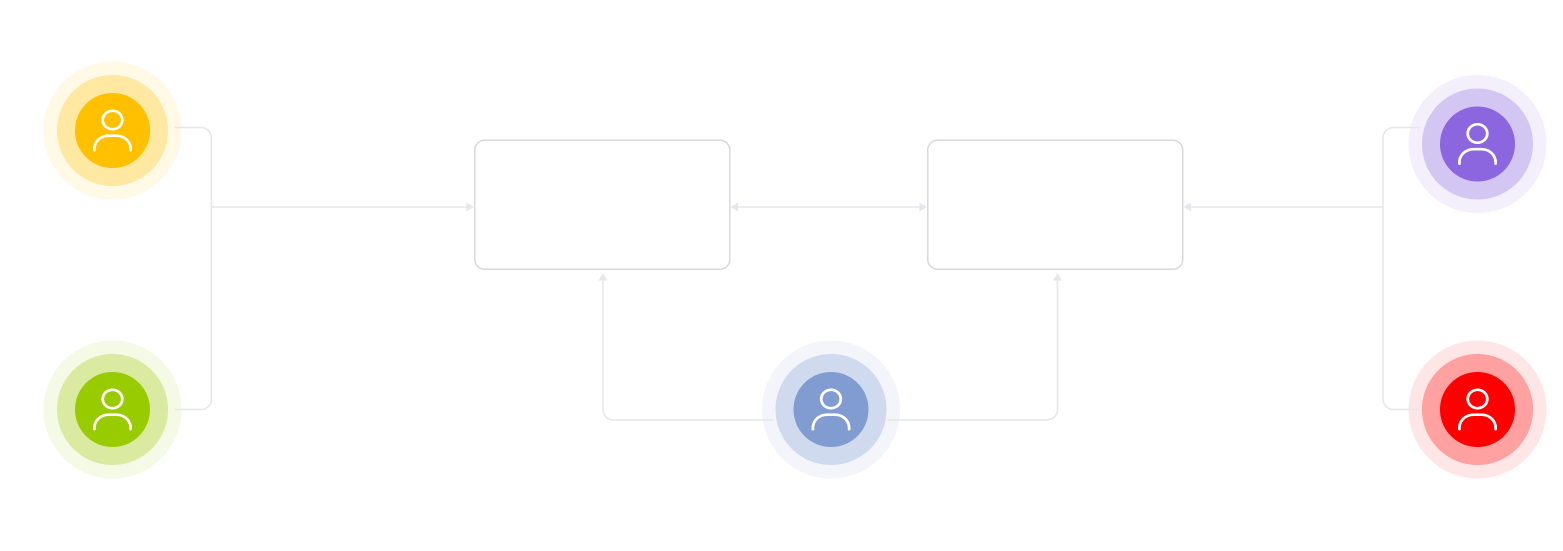
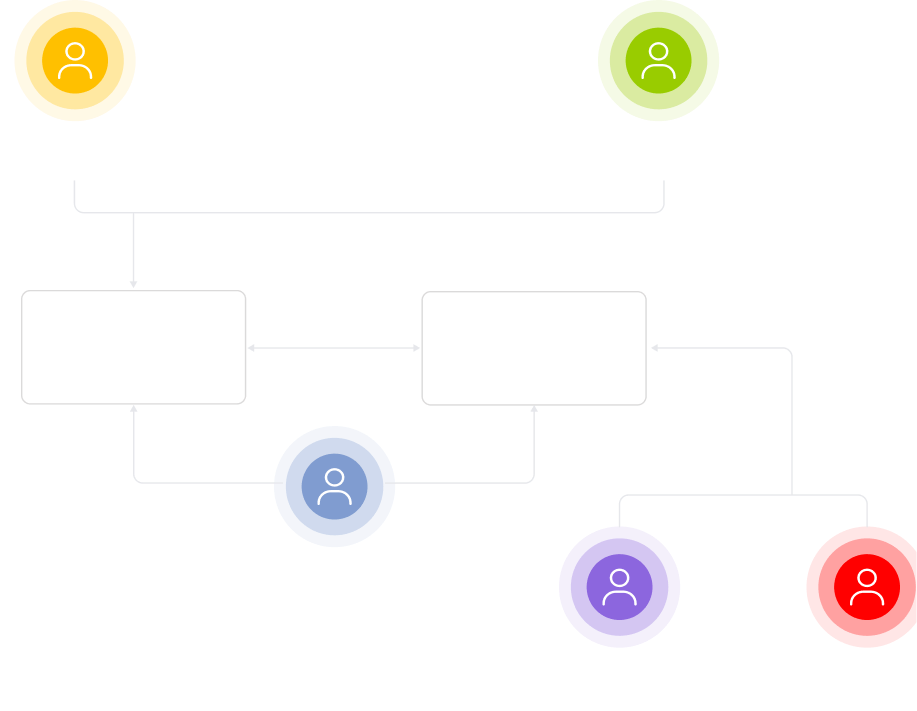
High-level solution architecture
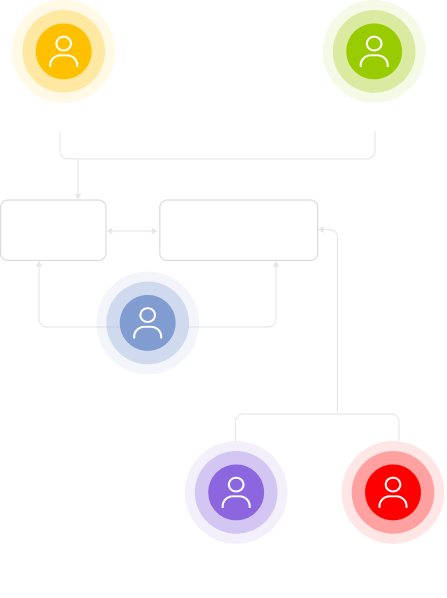
A flowchart with six colored circles labeled: Customer (yellow), Sales assistant (green), Admin (blue), Manufacturer (purple), Quality controller (red). Central boxes “E-store” and “Manufacturer portal” connect these roles, illustrating an interaction process.
A flowchart with six colored circles labeled: Customer (yellow), Sales assistant (green), Admin (blue), Manufacturer (purple), and Quality controller (red). E-store and Manufacturer portal boxes connect these roles with arrows, showing workflow steps.
A flowchart with six colored circles labeled: Customer (yellow), Sales assistant (green), Admin (blue), Manufacturer (purple), Quality controller (red). Faded boxes labeled E-store and Manufacturer portal connect some roles.

Migrating the commerce stack from Shopify to Odoo

At first, we considered retaining the client’s existing Shopify setup for ecommerce and integrating Odoo as a manufacturing portal. Shopify’s SaaS model offered straightforward, out-of-the-box ecommerce features and its POS offline capabilities seemed ideal too, minimizing the need for a custom POS layer.

However, it soon became clear that the project’s non-standard ecommerce flows would have required heavy customization around Shopify:

  • Customer access control: Shopify POS lacks granular control over customer visibility, meaning sales assistants could view all customer profiles, which is an unacceptable limitation for privacy and security.
  • Appointment booking: The existing Shopify plugins did not cover the required appointment booking logic, making custom development unavoidable.
  • User limits: The client’s Shopify plan supported only 15 users, which would quickly become a bottleneck as new boutiques were onboarded.
  • Payment and measurement flow: Shopify’s order model didn’t support the required process of ‘pay first, finalize measurements later’, preventing updates to paid orders with actual measurements.

With all those constraints, we determined that the benefits of maintaining Shopify for a limited set of functions, such as catalog, orders, and customer management, didn’t outweigh the potential complexity and risks of extensive customizations. Instead, together with the client, we made the strategic decision to migrate fully to Odoo, leveraging its flexibility to build a tailored, scalable solution that better aligned with the company’s long-term needs.

Handling integration quirks

Since the client was on Odoo Community (vs. Enterprise), we were working with a pretty limited feature set out of the box. To deliver a seamless experience, we had to extend, modify, and sometimes completely rebuild standard connectors.

Twilio: predictable messaging without platform constraints

Odoo’s native integration with Twilio required purchasing additional tokens just to send SMS messages, which added recurring costs and limited flexibility.

We eliminated this dependency by building a custom integration that communicates directly with Twilio’s API. This gave the client full control over messaging costs and functionality, from order confirmations to delivery alerts.

DHL Express: making shipping rates and validation resilient

The DHL integration presented the most challenges, requiring numerous adjustments to make it reliable.

  • Rate calculation on holidays. DHL could return no live rates during non-business days. We adjusted the logic to automatically check the next available business day, so shipping costs are always available at checkout and in back-office flows.
  • Address validation discrepancies. DHL’s location data sometimes differed from common sources like Google Maps or Wikipedia, causing validation failures. We implemented more tolerant matching to prevent unnecessary customer friction.
  • Verification and compliance. We went through an extensive verification process because DHL requires strict data accuracy for international shipments. Even minor errors in customs declarations can result in fines, holds, or delivery delays. To address this, we implemented an API-driven declaration flow: customs declarations are generated via DHL’s API only after our system pre-validates all line items and required shipment data, ensuring everything passes DHL’s checks before submission.
Stripe: modern checkout with multiple payment methods

Odoo’s default Stripe component was outdated, exposing too few payment options in the UI. The business needed credit cards, digital wallets, and local payment methods to maximize conversion.

We developed a custom express checkout component from scratch, creating a modern, flexible interface that met the client’s requirements and improved the user experience.

Decoupling the storefront UI for enhanced performance and flexibility

Although Odoo offers an out-of-the-box storefront builder for easy customization, relying on it introduces potential performance risks. Since Odoo renders pages on the server, page load speed directly depends on its current resource utilization and processing capacity.

To avoid future performance constraints, we suggested implementing the ecommerce application as a standalone Next.js (React) application integrated with Odoo via REST API. While Next.js uses server-side rendering, hosting it as a separate storefront keeps site speed independent of Odoo’s workload and lets use prerendering and caching to deliver pages faster.

Besides, the client was not satisfied with the built-in builder’s limited customization options for style, fonts, colors, and layout. To ensure every page matched the client’s vision, our UX/UI designer reworked each of them, and, once approved, our frontend engineer turned the static mockups into functional, performant, and accessible user interfaces. Some elements, such as the booking calendar and the customer address section in the user account were built completely from scratch because they were not supported natively in Odoo.

Mitigating long-term architectural and delivery risks

A monolithic approach (combining ecommerce and manufacturing portal into a single service) accelerates development speed but increases long-term risks, such as architectural complexity, codebase entropy, and scalability constraints. To tackle these risks, the team followed best engineering and architectural practices:

  • Source control (Git). All source code was hosted in a Git-based repository. While Instinctools could run a dedicated GitLab environment for the project, we recommended the client maintain its own repository on GitHub, GitLab, or another Git platform to retain long-term ownership and access control.
  • Code review. All merges into the main branch were reviewed by at least one of our engineers. By keeping merge requests small and focused, we minimized review complexity and reduced the risk of overlooking important issues.
  • Automated testing. Although there was no mandatory test coverage requirement, we recommended that automated testing be considered for critical features, provided the timeline and scope allowed, to ensure the highest level of functionality and stability.
  • Coding standards. The solution was built on Odoo (Python) and React (JavaScript). Our team followed internal coding standards for both Python and JavaScript.

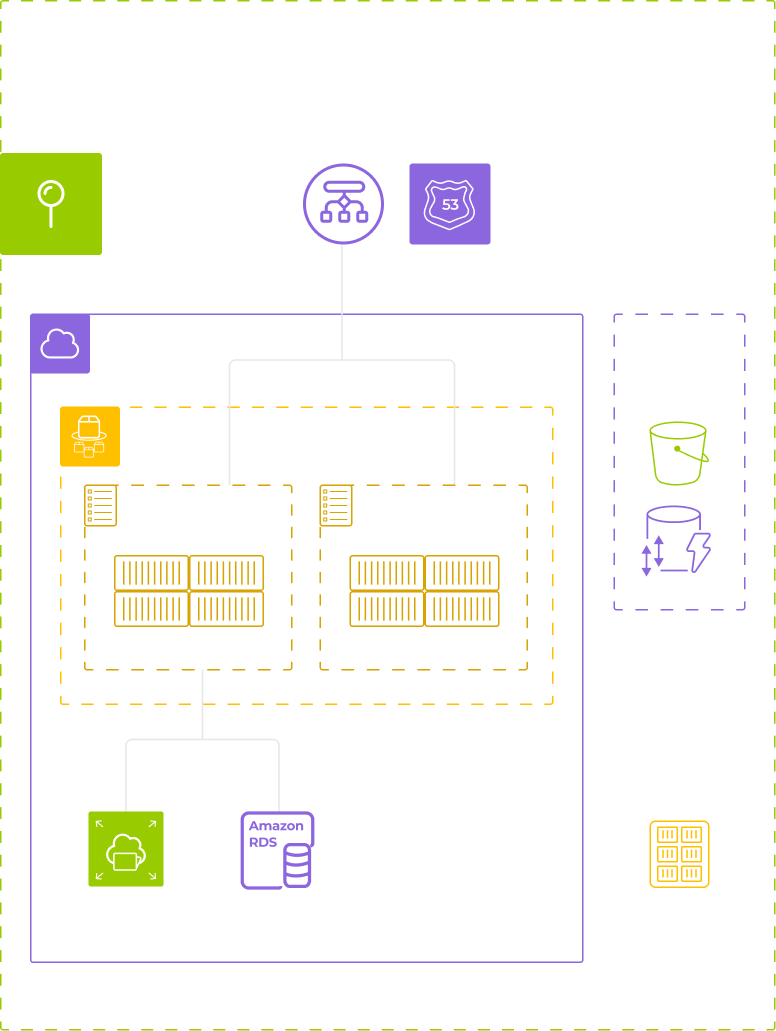
Deploying infrastructure on AWS

Leaning on native AWS services allowed us to obtain core infrastructure features, such as autoscaling, backups and recovery, observability, and security controls, out of the box, reducing operational complexity and long-term maintenance overhead.

  • ECS Fargate runs application containers and enables seamless horizontal scaling without the burden of managing servers.
  • Amazon Aurora PostgreSQL is used as a fully managed relational database, providing high availability and scaling capabilities.
  • The solution is deployed within a Virtual Private Cloud (VPC) with isolated public and private subnets to enforce security boundaries and controlled exposure.
  • Amazon EFS provides shared, multi-AZ file storage to ensure durable and scalable application workloads.
  • Amazon ECR stores and distributes private container images securely and efficiently.
  • Sensitive credentials are protected by AWS Secrets Manager. Administrative access is controlled via a bastion host deployed in a private subnet.
  • All infrastructure is provisioned and managed using Terraform to ensure reproducibility and controlled change management.
Diagram of AWS-based infrastructure deployment view: shows components like VPC, ECS Fargate (running Odoo and a frontend SPA), Amazon RDS, EFS, S3, ECR, and Terraform state, organized in colored outlined boxes with icons representing each service.

Roles overview

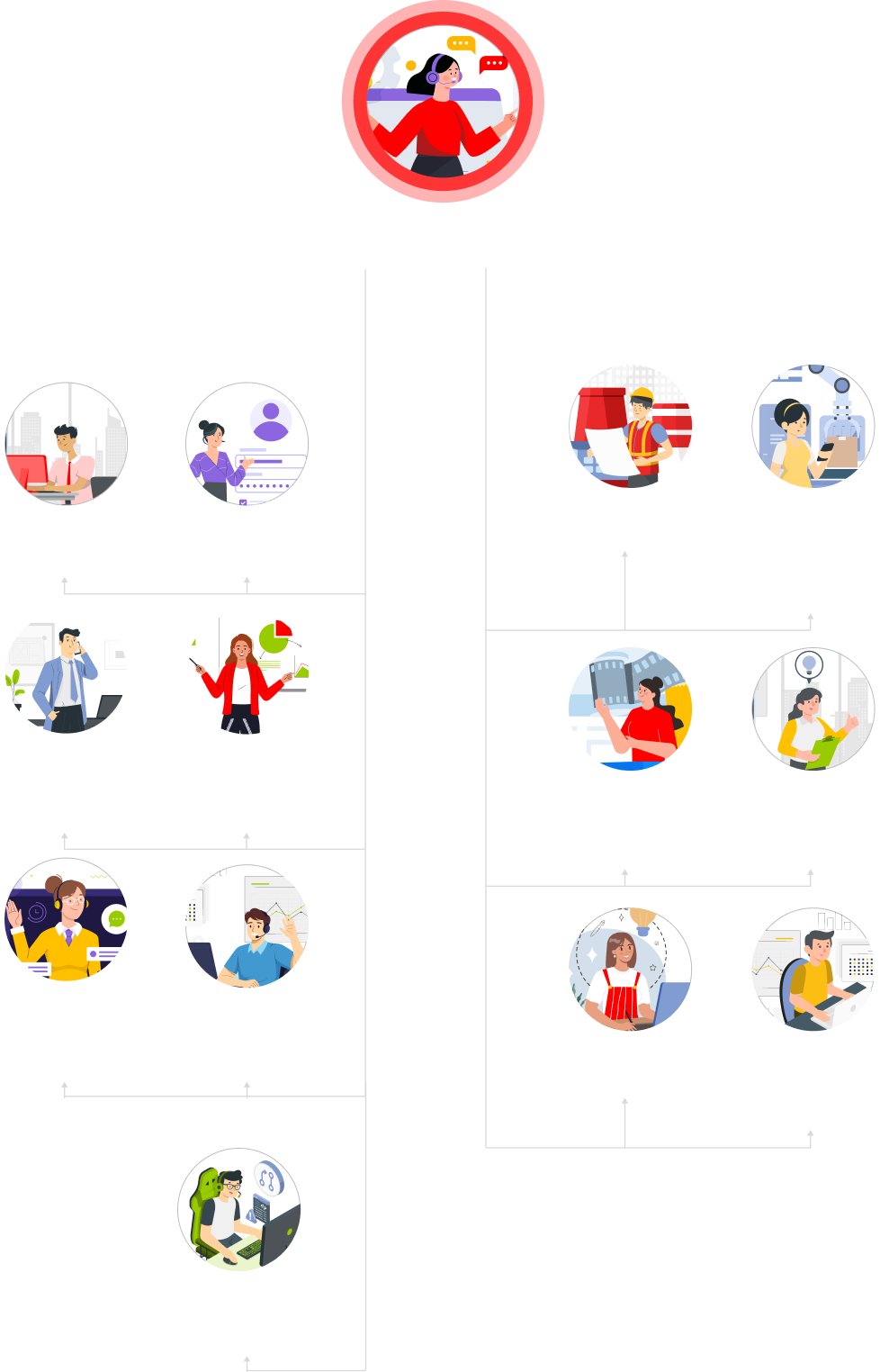
Every function and workflow of the client’s business finds its place in the ecommerce ecosystem. Here’s the full picture:

A hierarchical chart showing roles in a system. At the center is a Super admin with full access, highlighted in red. Surrounding roles include Guest, Registered user, Manufacturer, Manager, Sales, Ecommerce, Quality controller, Customer service, Store manager, Designer, and Accountant.
Organizational chart with illustrated icons for roles: super admin (center top), branching to guest, registered user, admin, sales, store, customer service managers, sales rep, sales director, manufacturer, production manager, e-commerce manager, designer, accounting, and quality controller.
A top red circle with a crossed line overlays a woman holding many items, symbolizing multitasking. Below are icons of individual roles: project manager, recruiter, researcher, marketer, client manager, and accountant, each illustrated by a separate person at work.

Before

  • A basic Shopify storefront handling standard catalog and checkout flows
  • Disconnected ecommerce and production processes
  • No structured quality control before shipment
  • Manufacturers operating outside the client’s visibility, with fragmented and reactive communication

After

  • A fully integrated Odoo ecommerce ecosystem, built to reflect the prestige of the brand online
  • Automated purchasing flow linking sales orders to purchase orders, manufacturers, QA, and logistics in a single system
  • Embedded quality control workflow with digital checklists, defect-triggered rework
  • A dedicated manufacturer portal with secure role-based access and real-time production status updates

Business value

  • +20% online sales growth
  • +25% CSAT increase
  • Operational unification across ecommerce, production, and logistics

Computer Vision Deepfake ID Detection

Computer Vision Deepfake ID Detection For a Dutch Digital Bank

How adding a custom computer vision layer to the existing SaaS ID verification platform empowered a Dutch digital bank to keep up with the evolving threat landscape and stop 30% more AI-generated identity fraud, while reducing false positives for real users by 60% and decreasing manual document review workload by 40%.

Business challenge

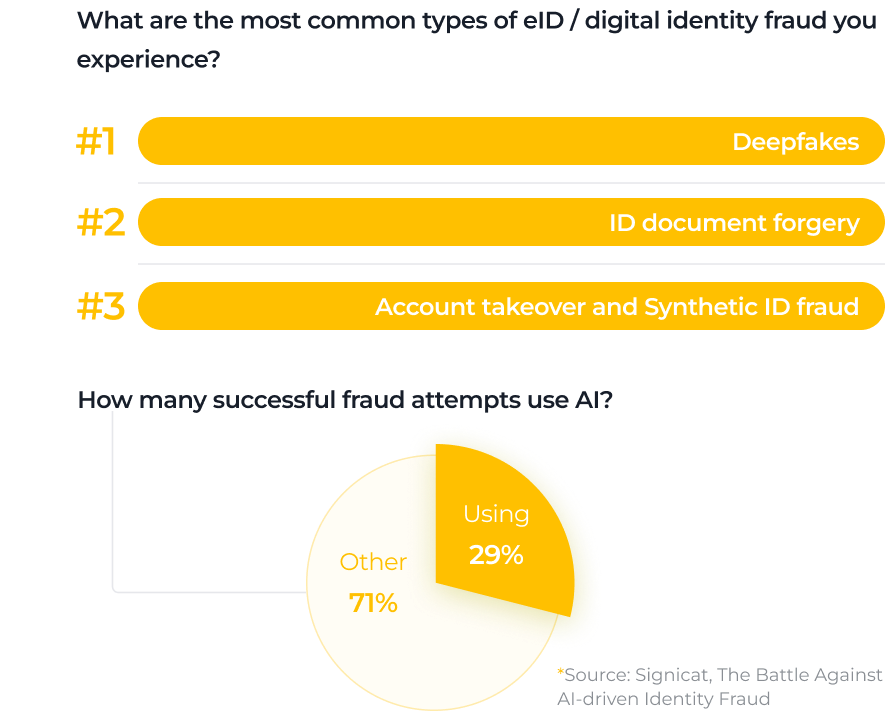
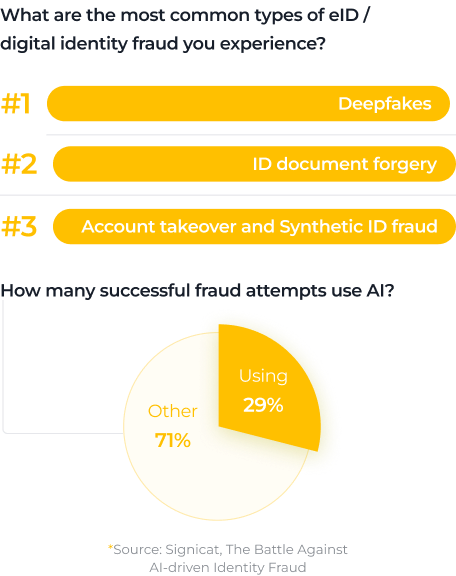
Bar chart listing common types of digital identity fraud: 1. Deepfakes, 2. ID document forgery, 3. Account takeover & synthetic ID fraud. Pie chart: 29% of successful fraud uses AI, 71% uses other methods. Source: Syntiant.
A graphic showing the top three eID/digital identity fraud types: #1 Deepfakes, #2 ID document forgery, #3 Account takeover and synthetic ID fraud. A pie chart shows 29% of successful fraud uses AI, while 71% is categorized as “Other.”.
A graphic lists the top three eID/digital identity fraud types: #1 Deepfakes, #2 ID document forgery, #3 Account takeover and Synthetic ID fraud. A pie chart shows 29% of successful fraud attempts use AI, while 71% are other types. Source: Signicat.

When GenAI emerged as a viable tech capability, businesses weren’t the only ones who went for it. So did cybercriminals who used the technology to create highly realistic deepfakes and pass Know Your Customer (KYC) onboarding at digital banks. Since the mass adoption of artificial intelligence, the number of AI-generated identity fraud cases in fintech has increased by 2137%. Now, 1 in 15 attacks involves deepfakes, and 29% of them succeed.

Our client, a Netherlands-based digital bank serving customers across the European Economic Area, chose to be one step ahead of fraudsters. As the bank onboards 4-5 million new users annually, they must protect real customers from account takeover, not to mention safeguarding brand trust in a highly competitive digital banking market.

At the time, the client relied on a third-party SaaS identity verification (IDV) platform with OCR and NFC/RFID technologies at its core, which fell short on several fronts:

  1. Failures in detecting AI-generated identity documents. Passports with AI-altered images or completely fake documents could pass through the checks if they visually match the templates of authentic IDs.
  2. Slow speed of adaptation to fraud patterns. The SaaS IDV was tied to the vendor’s release cycles, meaning weeks of waiting for new reported fraud cases to be updated in the system’s detection logic, while the new attack patterns kept snowballing.
  3. Limited control over the deepfake detection mechanism. The client’s team didn’t have direct access to the underlying algorithm and couldn’t strengthen the SaaS IDV’s forgery detection and analysis by training it on their own fraud samples.

For a bank operating at a multi-million-user scale, the gap between their needs and software capabilities posed significant financial and reputational risk. They needed a tech partner with proven expertise in finance to address the issue.

Solution

Instinctools’ dedicated team looked into ways to strengthen the client’s identity verification algorithm. Investing in a custom computer vision-based deepfake detection to run alongside the SaaS IDV proved to be the most beneficial option, as it enabled hotfixes and retraining on confirmed internal fraud cases within days.

Our computer vision experts took full ownership of the system’s design, training, calibration, and production rollout.

  1. Assembling a fraud-realistic dataset

The effectiveness of the custom CV detection mechanism hinged on the quality of the training data. Generic examples of ID fraud, that the off-the-shelf IDV platform had covered, were not enough. Therefore, our team prioritized assembling a solid dataset.

  • Doubling down on data preparation (exploration, cross-source collection, cleanup) to reduce training time.
  • Defining attack taxonomy that reflected the most relevant fraud patterns, from partial manipulations of photos, textual and numerical data to fully AI-generated documents.
  • Building a dataset that included the fake IDs the staff caught during KYC checks, partly and completely synthetic documents, and legitimate but low-quality photos and scans of passports.
  • Increasing the share of hard negatives in the dataset through data augmentation. Valid documents with blur, glare, or perspective distortion often triggered false alarms in the SaaS IDV platform, and we wanted to avoid this issue by training the custom CV algorithm to accurately distinguish poor capture quality from actual manipulation.
  • Labeling the data based on different criteria (real document vs. fake, fraud location, etc.).
  1. Designing an ID-focused CV pipeline

What is YOLO?

YOLO (You Only Look Once) is a computer vision object detection model. It’s an example of a leading-edge single-stage detector, known for its ability to locate and classify objects in a single pass through the network and, therefore, a go-to option for real-time object detection.

Our team built the solution around a single, well-controlled YOLO-based computer vision pipeline, tailored for identity document analysis. The model excels at:

  • Detecting the presence of a document
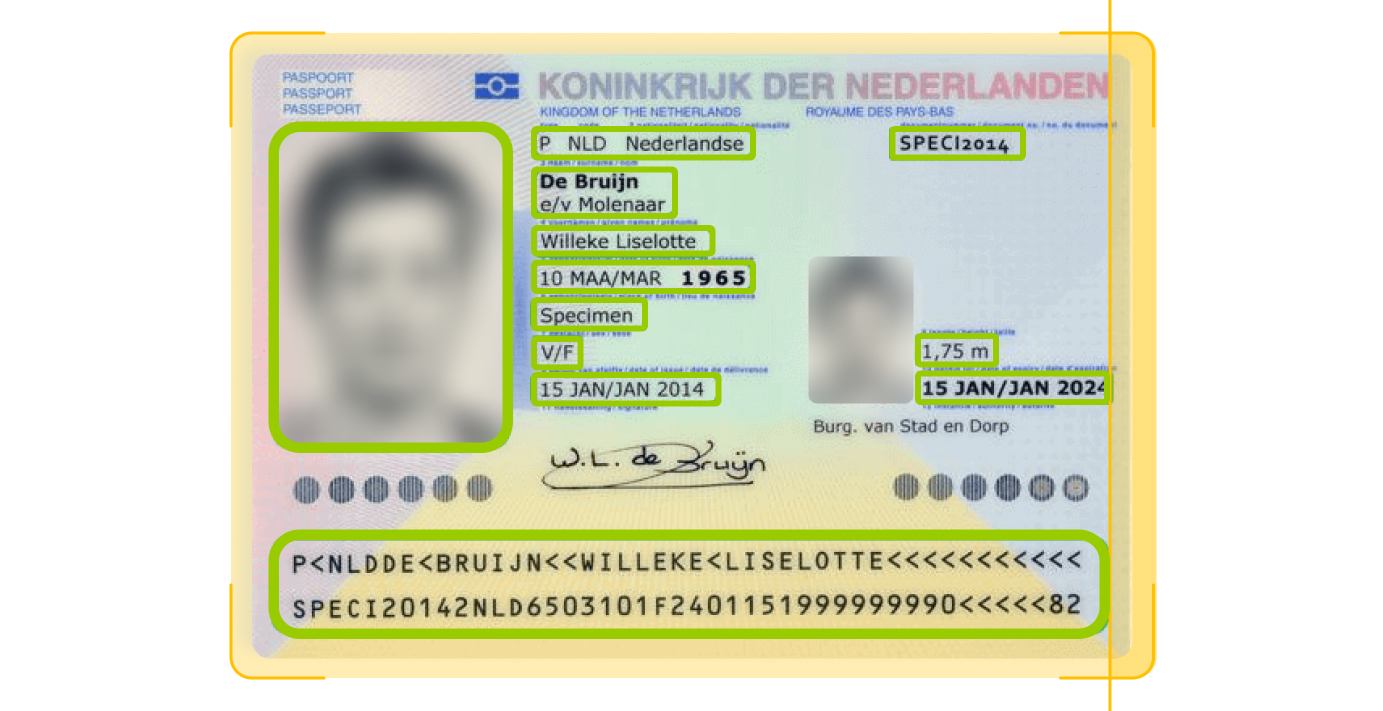
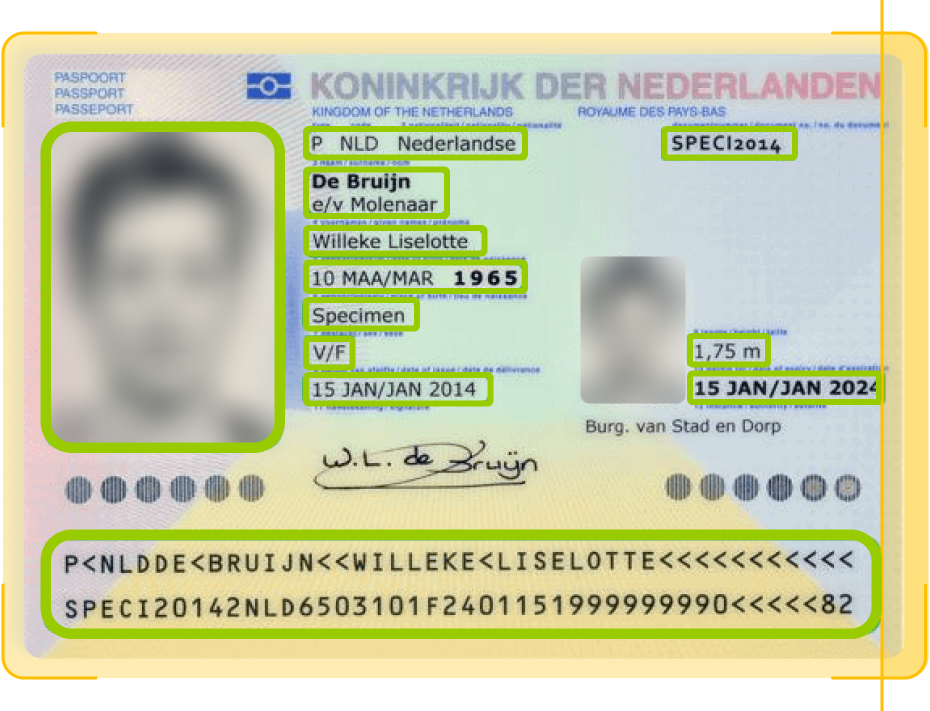
  • Localizing and analyzing in a single pass critical document regions, such as the data page, portrait area, and MRZ code
  • Highlighting suspicious area(s) of the document
  • Providing a risk score for each problematic element to simplify and speed up the review process

This approach ensured consistency while keeping inference fast enough for real-time KYC flows.

A sample Dutch passport shows personal details: a blurred photo, name “WiIieke Liselotte De Bruijn,” date of birth 10 March 1965, height 1.75m, and expiry date 15 January 2024. Text is in Dutch and English with blue and orange highlights.
A Dutch passport for Willeke Liselotte de Bruijn with personal details, passport photo, and security features. The passport text is in Dutch and English, and highlighted sections include name, birth date, height, gender, and document number.
  1. Ensuring the detection is reliable beyond known fraud patterns

To avoid building a system that works only for already known fraud tricks, we focused on how well the solution would hold up when attackers change their techniques and tools. Therefore, we deliberately checked it against document manipulations and generation methods it hadn’t seen before.

The test dataset included:

  • Data created by the same top 10 deepfake generation tools we used when assembling the training dataset, but with different faces and parameters
  • Data generated by other tools that weren’t used for creating the training dataset

This approach ensured the detection logic wasn’t tied to a specific deepfake tool or editing technique, but rather to the visual inconsistencies that tend to appear across AI-generated and manipulated documents, so the custom CV system remains effective even if fraudsters switch to new image generators.

  1. Decision threshold calibration

One of the key challenges with the SaaS IDV platform was the sensitivity of its fraud calibrator, which sometimes caused it to reject legitimate customers due to minor issues (like glare in a photo) while overlooking more serious fraud attempts. To address this problem, we linked the decision thresholds to the risk scores.

The custom CV layer now follows a tiered decision logic:

  • Low-risk cases continue through onboarding automatically, without any additional steps
  • Middle-risk cases trigger targeted step-ups, such as an NFC scan, requesting  an extra selfie or a short video
  • High-risk cases are flagged for manual review or outright rejection

This approach helped the client strengthen fraud controls and decrease the workload of human reviewers while ensuring fast onboarding for legitimate users.

  1. Seamless integration
of the CV layer into the client’s KYC flow

To keep the onboarding experience unchanged for customers, we deployed the custom computer vision system as a decision microservice within the existing onboarding pipeline. 

Still, before letting it influence real onboarding decisions, the team ran the custom CV system in observation mode. At this stage, it processed live KYC traffic alongside the existing systems, but its outputs were not used to approve or reject customers. 

Once we validated that the model behaved as expected with real-world data, we rolled it out gradually by feeding it controlled portions of traffic, expanding coverage step by step. This phased approach ensured that the new detection layer strengthened fraud controls without unintended consequences, such as over-flagging legitimate users or missing edge cases.

Here’s how the client’s updated KYC flow works:

  1. A user submits their documents (and, if required, a selfie or short video)
  2. The existing SaaS IDV platform performs its standard checks, such as OCR, MRZ reading, and NFC validation
  3. The custom computer vision system analyzes the same inputs in parallel
  4. The higher-level KYC orchestrator then collects and combines the results from both systems and applies the bank’s decision logic to determine the next action (approval, step-up verification, or manual review)

Since all checks run behind the scenes and in parallel, customer experience stays the same, with no extra waiting time or redundant requests. Meanwhile, under the hood, confirmed fraud cases are auto-labeled and folded into retraining cycles within days, enabling hotfixes. As a result, deepfake document detection had shifted from a static vendor capability to a living, bank-owned system evolving at the same pace as the threat landscape.

Before

  • Deepfake document detection depends entirely on a third-party SaaS IDV platform
  • AI-generated or partially manipulated documents highly resembling valid ID templates the SaaS platform was trained on could pass checks, while low-quality documents from real customers could have been rejected as synthetic
  • Time-intensive manual reviews due to the software’s unreliability
  • Weeks-long response to new deepfake techniques due to vendor-controlled update cycles

After

  • Custom, bank-owned computer vision layer added on top of the existing SaaS IDV platform
  • The CV system is trained on a high-quality dataset and follows tiered decision logic to perfect deepfake detection without affecting legitimate customers
  • Reduced review workload on the humans in the loop thanks to the well-calibrated decision logic
  • Adaptation to new deepfake patterns within days thanks to hotfixes

Business value

  • + 30% in detected synthetic document fraud
  • – 60% falsely flagged legitimate users
  • – 40% in manual review workload

Client’s testimonial

Multiplier effect

Computer vision threat detection use cases extend far beyond digital banking. Any company that relies on document checks or user verification, from insurance and healthcare to travel and ecommerce, faces the same growing risk from AI-generated identities and forged documents. A custom computer vision system trained on real-world fraud patterns can help businesses react faster than when relying on generic vendor tools.

A person in a dark blue shirt holds a smartphone in one hand and types on a laptop with the other. Digital facial recognition icons and a checkmark appear, indicating successful facial authentication on the phone. The background is blurred.

Computer Vision Defect Detection

Computer Vision Defect Detection For an Electronics Manufacturer

How switching from a rule-based machine vision system to an advanced computer vision solution for early-stage defect detection on the production line helped an electronics manufacturer reach 97,4% accuracy in identifying flaws and save $2.4 million annually thanks to a drop in warranty claims.

Business challenge

Our client is a Saudi-based electronics manufacturer producing laptops for the MEA region in partnership with one of the global tech leaders. Years earlier, we had created digital twins of their factories, so when new challenges surfaced, the client turned to us again. 

The company had long moved from fully manual defect detection on the production line to an automated, non-contact product quality inspection. However, their automated optical inspection (AOI) in the conveyor video surveillance system was too demanding, rigid, and costly, posing numerous limitations. 

  • Overdependence on consistent imaging. The system cannot function efficiently if lighting and camera positioning aren’t stable.
  • Inflexibility. AOI operated on strict “if-else” rules, making the system unable to perform continuous trend analysis and adjust dynamically to enhance both speed and accuracy of defect detection. 
  • Slow adaptability. Every time the component configuration, size, or color changed, the system required recalibration. 
  • Low scalability. One AOI system couldn’t simply be replicated across multiple factories. Each production line will require extensive manual parameter tuning. 
  • Costly maintenance. Traditional machine vision systems like AOI require highly specialized experts to take over routine manual inspections, regular calibrations, software updates, and hardware repairs. 

The client needed a more flexible, scalable, and budget-wise form of computer vision at the core of their conveyor video surveillance system.

Solution

Our development team ensured the smooth shift from basic AOI to advanced computer vision.

  1. Shaping up the tech stack

We decided to rely on a pre-trained object detection and image classification model. Then, we had to choose between single- and two-stage detectors to perform object detection. The scale was tipped in favor of a single-stage algorithm due to its several advantages:

  • Faster inference
  • Lower computational demand
  • Easier maintenance

Having experience with various single-stage detectors, we settled on YOLO over CenterNet, SSD, RetinaNet, and FCOS, as it offers superior inference speed, ensuring truly real-time performance. Despite YOLOv10 being available, we used YOLOv8, as it was the most tested and stable version at the moment.

  1. Optimizing the training dataset

The client’s previous pre-computer vision system relied on a three-tier defect classification framework: “definitely defective,” “borderline,” and “definitely non-defective”. Rather than discarding the existing dataset, we capitalized on it by strengthening defect coverage and enforcing consistent, high-quality labeling.

Augmenting data to address the class imbalance issue

The original dataset was limited in size, with a maximum of 200 images per defect category. In addition, different defect types weren’t represented equally. For example, issues such as missing components and incorrect placement appeared far more frequently than subtler issues like misalignment, solder defects, open circuits, or lifted leads.

To address both the small dataset size and class imbalance, we applied data augmentation techniques:

  • Random photo cropping and flipping
  • Controlled blurring and noise injection
  • Tweaking lighting
  • Changing the background

That way, we multiplied the dataset tenfold while ensuring balanced representation across all defect categories.

Improving labeling consistency and reliability

Given the diversity of subtle defects, high-quality labeling was a must-have. Our AI engineers focused on refining the labeling process to: 

  • Reduce annotation noise
  • Improve consistency across classes
  • Enable more statistically reliable quality assessments

In addition, we ensured the dataset included images both with and without the target object, improving the model’s ability to distinguish true defects from background artifacts and, thus, reducing the false positive rate.

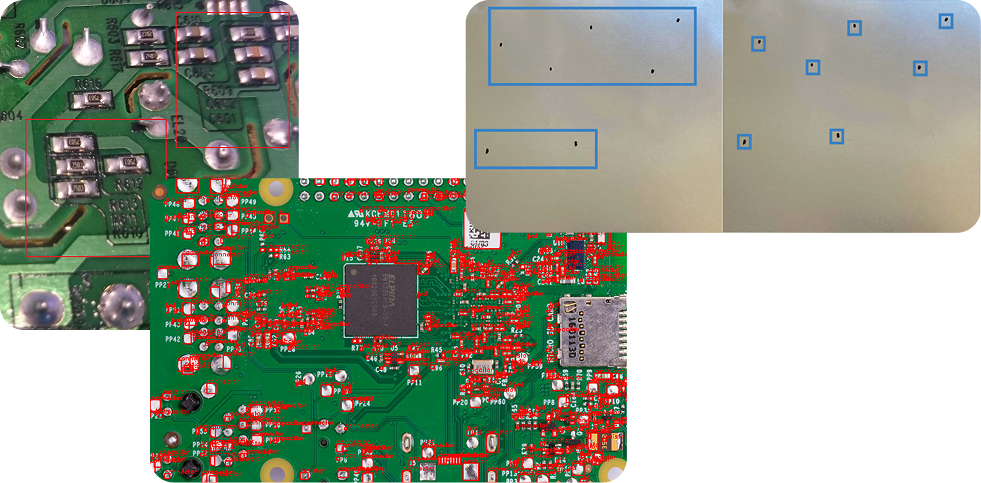
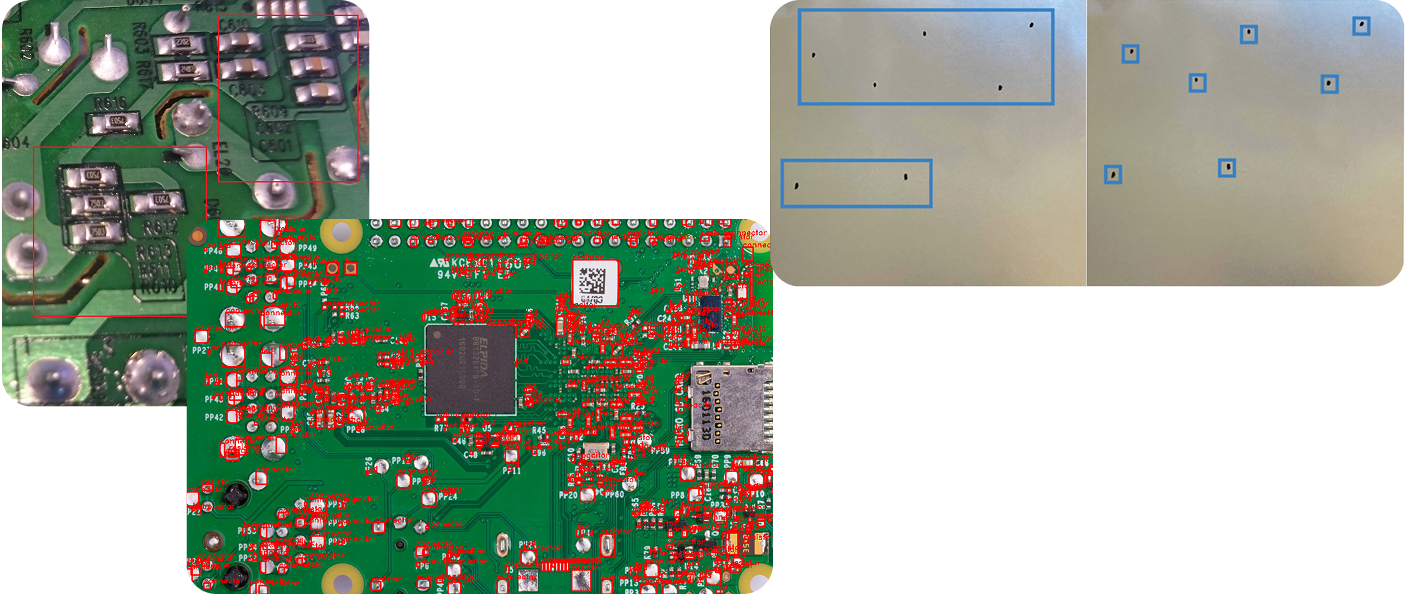
A collage showing two close-up images of green circuit boards with various electronic components and solder points, and one image of a metallic surface with blue rectangular and square outlines marking different areas. Text is faintly visible in the bottom right corner.
Three images: a close-up of a green circuit board showing silver solder joints; a larger green circuit board with many red and silver components and a central microchip; and a metallic panel with blue-outlined rectangular and square cutouts.

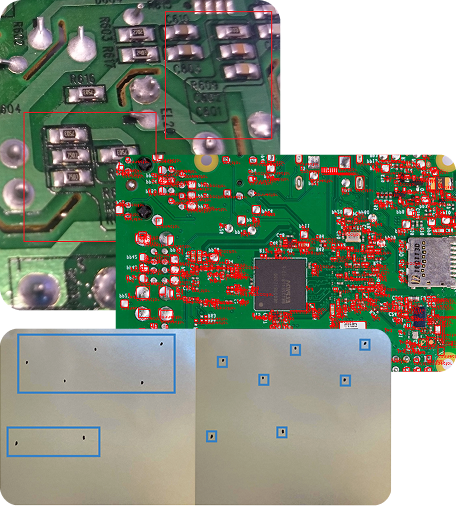
More consistent labeling enhances the reliability of bounding boxes, teaching the model to distinguish every little part and defect as a separate entity, rather than group several objects within a single bounding box.

A collage of three images shows close-ups of green circuit boards with red components and microchips, overlaid with a photo of a metal plate featuring multiple cutouts and small square and rectangular holes highlighted in blue.

More consistent labeling enhances the reliability of bounding boxes, teaching the model to distinguish every little part and defect as a separate entity, rather than group several objects within a single bounding box.

  1. Running model transfer learning on the enhanced dataset

Models for object detection and classification like YOLO are already trained on hundreds of millions of general images. However, to accurately address the client’s specific needs, it had to undergo additional training on the updated dataset.

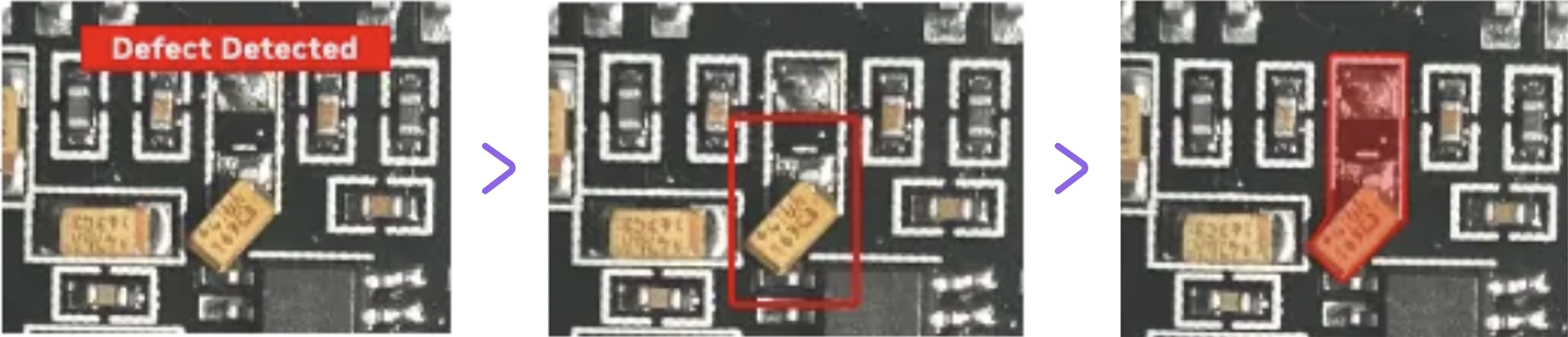
Instinctools’ AI engineers took an efficient approach to tackle this challenge. They resorted to transfer learning as an ML training technique to improve the model’s performance:
  1. Started with a pretrained YOLO model
  2. Used PyTorch to remove the default classifier head
  3. Replaced the model’s classifier head with the enhanced dataset

After that, YOLO was able to instantly detect and classify all the specific defects relevant to the client’s production line.
What is transfer learning in computer vision?
 
Transfer learning is a machine learning training technique, which capitalizes on the pre-trained model’s general knowledge (the ability to detect different defects on various surfaces) instead of training the model from scratch.
 
With transfer learning, you only retrain the model on your task-specific dataset (examples of external and internal defects of the client’s laptops), enabling the model to adapt its existing knowledge to your reality. This method significantly reduces training time and computational resource consumption.
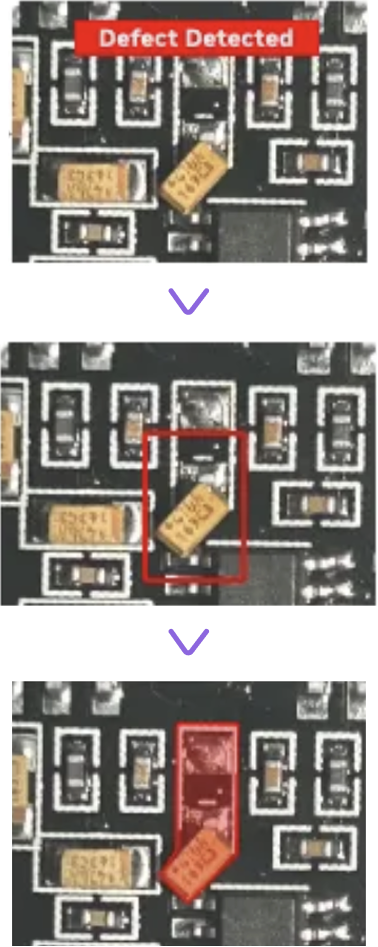
Three images show a circuit board section. The first has a red “Defect Detected” label, the second outlines a component in red, and the third highlights the component with a red overlay, indicating the defect’s location. Purple arrows separate each step.
Three stacked images of a circuit board: 1. Top image highlights a component with a red “Defect Detected” banner above. 2. Middle image shows the same area outlined with a red box. 3. Bottom image shades the component in red, marking it as defective.
  1. Calibrating defect inspection thresholds 

Defining a defect is only part of the process. Next, our dedicated team helped minimize the number of items wrongly discarded at the production stage through:

  • Raising a confidence threshold ratio from 0.5 to 0.85 to prevent the model from flagging low-certainty cases as sure defects 
  • Setting up detailed defect severity scoring to minimize false positives while not letting critical defects slip further
  • Adjusting NMS (Non-Maximum Suppression) parameters so that the model always chooses one clean, highest-confidence box per object instead of overlapping bounding boxes
  1. Going the extra mile for near-100% defect detection accuracy 

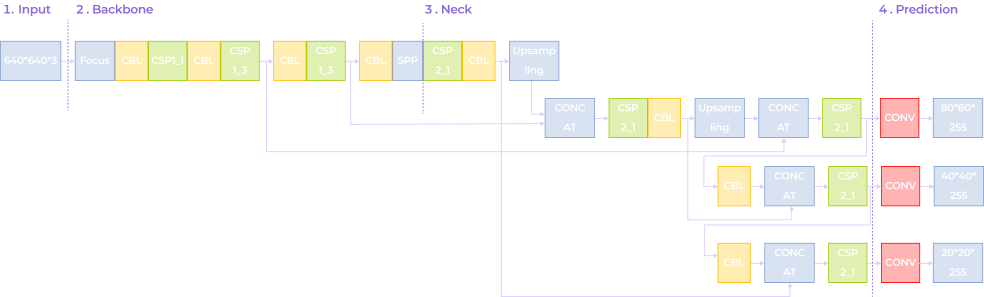
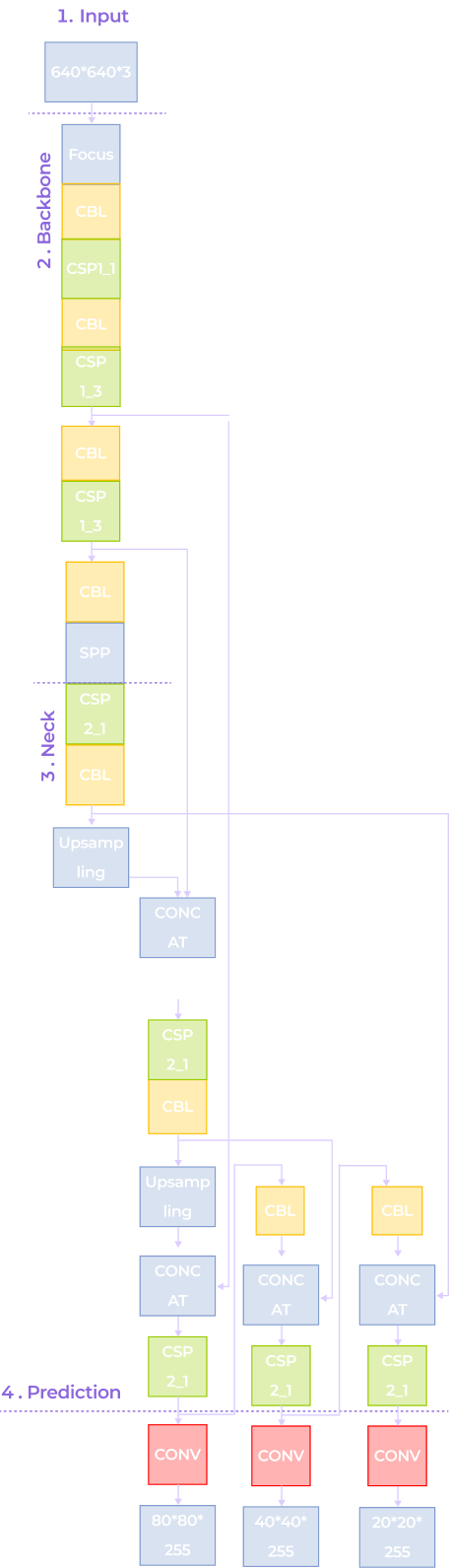
After transfer learning and threshold calibration, the model’s accuracy reached 86,5% which was already more than 15% higher than with the previous AOI system. Still, our team aimed for as close to 100% accuracy as possible.

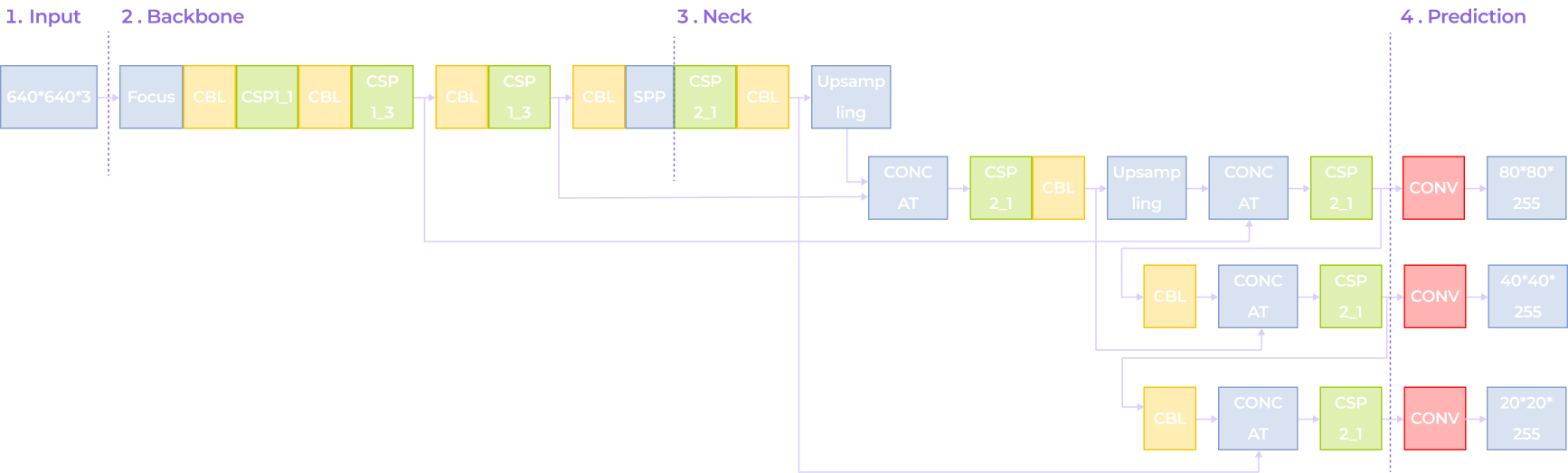
Instinctools’ AI experts enhanced YOLO-based defect detection capabilities by applying:

A flowchart showing a neural network architecture with four stages: Input (640x640x3), Backbone, Neck, and Prediction. Colored blocks represent layers like Focus, CBL, CSP, SPP, and CONV, with branching paths for multi-scale predictions.
A flowchart of a neural network architecture with four sections: Input (640x640/3), Backbone (Focus, CBL, CSP, SPP), Neck (CSP, Upsampling), and Prediction (Conv layers with outputs: 80*80/255, 40*40/255, 20*20/255).
A vertical neural network diagram with four labeled sections: Input (640×640×3), Backbone (Focus, Conv, CSP1, SPP), Neck (Upsampling, Concat, CSP2), and Prediction (Conv layers with outputs: 80×80×255, 40×40×255, 20×20×255).
  • Depthwise Separable Convolution (DSConv) to accelerate the model’s inference speed
  • The Cross-Stage Partial Network (C3 module) to combine low-level detailed information with high-level semantic data, enhancing the model’s adaptability to target scale variations and improving detection accuracy
  • The Bidirectional Feature Pyramid Network (BiFPN) to enable the model to identify fine features of small targets, improving its recognition capability
  • The DySample upsampling operator to minimize detail loss and boost accuracy for small targets

With these enhancements, the new CV defect detection system consistently hits the 97,4% accuracy benchmark.

  1. Integrating the CV mechanism into the client’s manufacturing execution systems (MES)

The computer vision solution was installed at one of the client’s facilities. There, it underwent further model training based on collected metadata and outputs generated by the system during operation. Those adjustments helped align the system with real-world production conditions and replaced AOI at each critical juncture:

  • Post-solder paste application. The system verifies if paste volumes are adequate and properly aligned.
  • Post-component placement. The solution validates whether each component is present, oriented correctly, and positioned within acceptable tolerances.
  • Post-reflow. Software runs a final check for defects such as tombstoning, bridging, and cold solder joints.
The result is an all-encompassing, multi-class defect classification, with all defects categorized by type and severity.
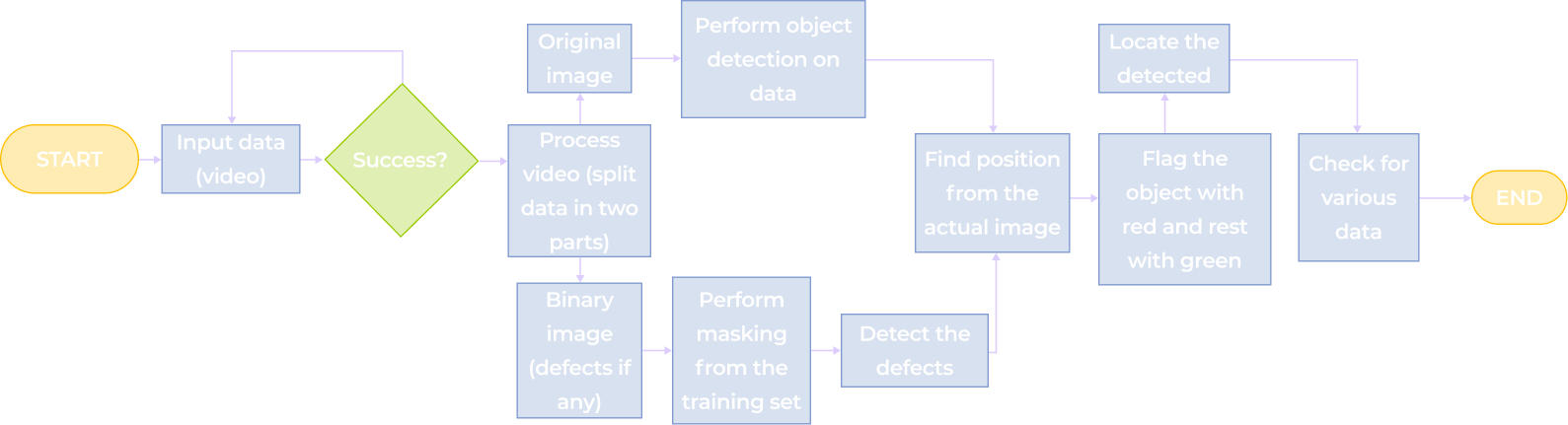
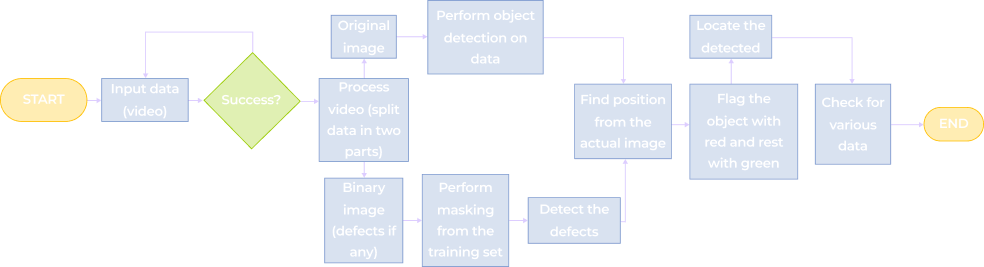
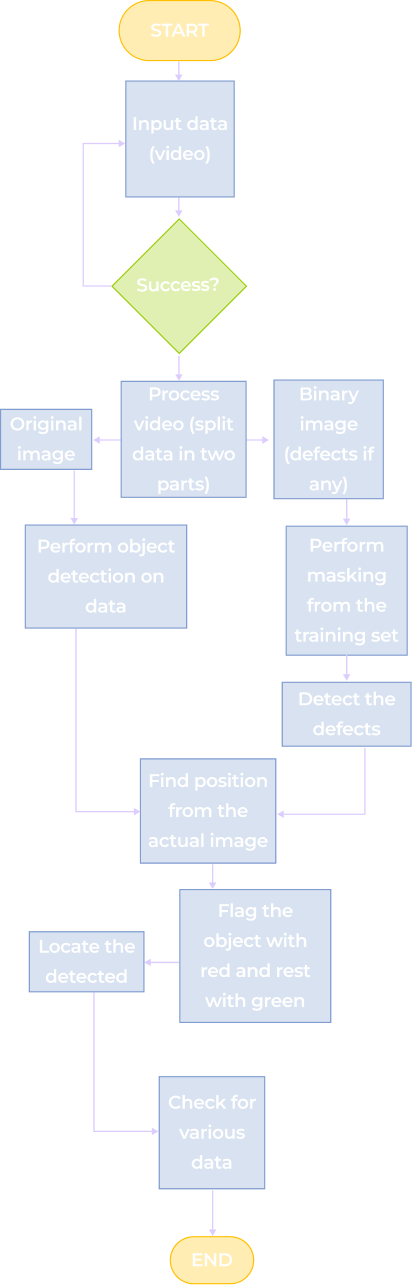
A flowchart for video object detection: Starts with Input data (video), checks Success?, then branches to process the image or video, detects defects, locates them, flags with red and green, checks for various actions, and ends the process.
A flowchart for object detection in video: start with video input, check for success; if yes, process original image and video; create binary image, mask defects, then perform object detection, locate defects, flag objects, and check results to end.
A vertical flowchart shows steps from inputting video data, processing and splitting the video, detecting objects and defects, flagging objects, checking data, and ending. Steps are in colored rectangles with directional arrows connecting them.

As the solution features cloud connectivity, our team can remotely perform model updates, configuration changes, and CV algorithm optimizations. 

Before

  • A rigid and costly machine vision system that has to be configured for each production line
  • Real-time defect detection is only possible under perfectly stable lighting 
  • 70% accuracy of defect detection
  • Items falsely discarded as defective

After

  • Flexible and highly scalable computer vision system that can be reused across production lines
  • Real-time defect detecting under any lighting conditions
  • 97,4% accuracy of defect detection
  • < 0,5% discarded items

Business value

Operational impact:
  • + 27,4% accuracy of production line inspections 
  • + 24% in production throughput due to immediate defect detection
  • < 2% false positive rate
  • < 0,5% discarded items 
  • – 67% defect-related warranty claims
Financial impact:
  • – $1.2 million in waste-related costs
  • + $2.4 million annually due to the drop in warranty claims 
  • – 26% in quality control labor costs

Client’s testimonial

Multiplier effect

Stronger quality-control systems on a production line lead to fewer defective products reaching customers and ruining their experience. With the stakes as high as one in three customers* leaving a brand after a single bad experience involving defective products, playing it safe becomes essential for business survival.

Computer vision can be the key to achieving higher-quality products and improved customer satisfaction. 

*According to PwC

A diverse group of six people sit around a table with papers, coffee, and devices, engaged in discussion. Overlaid text reads Customer Feedback: Connect with your friends. Notification icons and messages appear around the image.

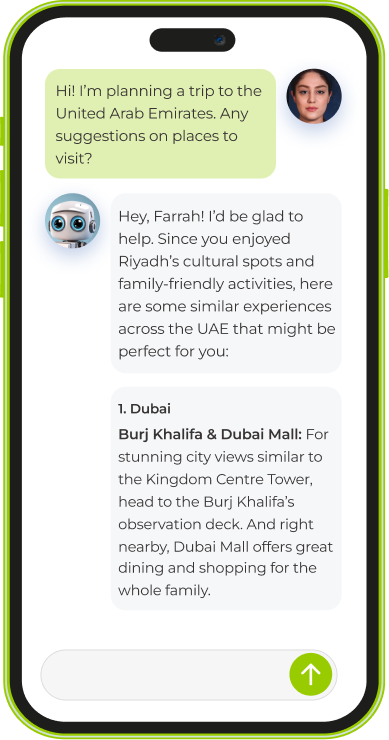
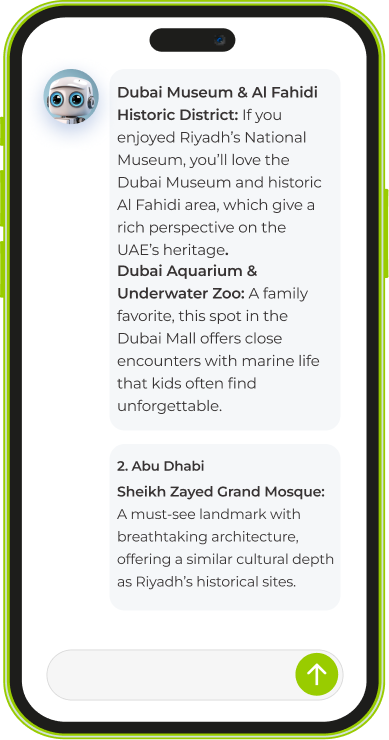
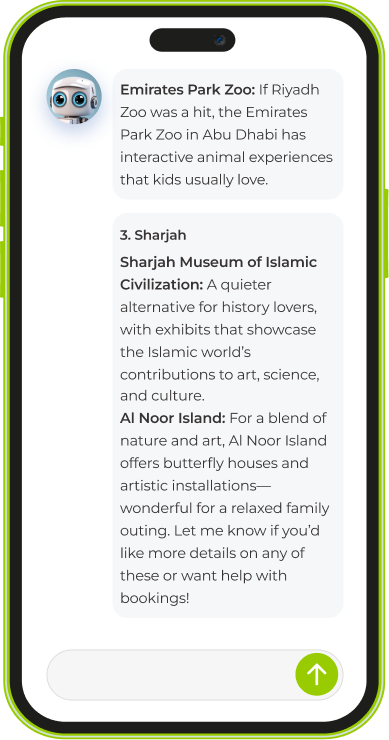
AI Virtual Assistant For a Travel App

AI-Fueled Virtual Assistant For a Travel Planner App

How upgrading their existing travel planner app by replacing a basic rule-based chatbot with a powerful AI-driven virtual agent enabled a GCC-targeted travel and hospitality agency to unlock hyper-personalization, resulting in a 15% increase in booking conversions and a boost in the annual retention rate from 28% to 41%.

Industry:
Travel and Hospitality

Software Product Development

AI Development

Business challenge

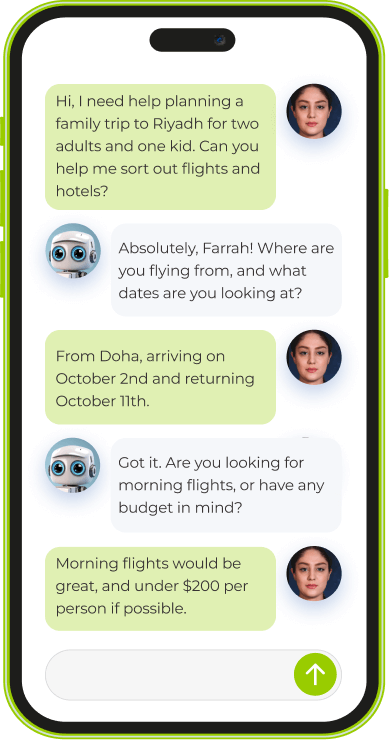
Just as the introduction of jet engines disrupted the travel industry in the 1950th, generative AI keeps thriving and upending travel planning in the same fundamental way. What’s more, conversational AI is also gaining momentum, ushering in a new era for customer experience. With the joint power of conversational and gen AI, previously reactive rule-based chatbots can be replaced with intelligent and proactive virtual assistants smart enough to act on the user’s behalf.

Our client, a digital travel and hospitality agency in the GCC region, didn’t miss a bit. With a wide partner network spanning local airlines, hotels, taxi services, cultural venues, restaurants, etc., they jumped at the chance to pull ahead.

Have you ever used an all obe travel planning app?

In fact, a diagnostic survey among their customer base, including casual travelers, travel hobbyists, and digital nomads, revealed that 91% of users were juggling multiple apps to handle their trip needs, despite a strong demand for a convenient, all-in-one solution.

Therefore, they decided to strike while the iron is hot and upgrade their existing application for managing flights, accommodations, attractions, and other actions by replacing the in-app rule-based chatbot with Travel Ally, a frontline AI-powered travel assistant.

The enhanced solution was supposed to support users at every stage of their journey, with capabilities like:
Hassle-free booking

for accommodations, restaurants, museums, amusement parks, etc.

Real-time itinerary adjustments

to unexpected situations, such as lost documents, medical emergencies, and so on.

Trip researching and planning, all in-app

from choosing a destination and flight price tracking to checking weather conditions and selecting places to visit.

Collecting and analyzing post-trip feedback

to level up next travel experience.

Instinctools’ team worked side-by-side with the client’s in-house IT department, bringing in hands-on machine learning and generative AI expertise to help make their big bet on hyper-personalization and customer experience pay off.

Solution

Since the client was already using Amazon products, such as S3, Lambda, Athena, etc., it was agreed to build on this foundation, adding SageMaker and Bedrock.

  1. Deciding on the AI linchpin: multi-agent system (MAS)

A single AI agent couldn’t handle the range of tasks the client had in mind, therefore, our AI & ML team suggested a cooperative multi-agent system (MAS) where agents with different skill sets address different types of data and tasks.

The system was designed to process different types of data, as the specifics of the travel planning virtual assistant required agents to be well-versed in working with both unstructured data, such as customer reviews, and structured tabular data, such as financial data on flight and accommodation costs, etc.

Our technology stack included:

  • Amazon Bedrock with a wide selection of high-performing foundational models (FMs) to access advanced AI capabilities right away, without the hassle of data preparation, model building, or infrastructure management. We opted for the open-source Llama 2 as it excels in the precise detection of user intent.
  • Amazon SageMaker to customize, optimize, and deploy an FM model of our choice within a fully secure ML hub that seamlessly integrates with AWS Identity and Access Management (IAM) services for access control and governance.

Here’s the high-level scheme of the solution’s architecture.

The virtual assistant follows a plan-and-execute flow: the planner maps out steps to answer the user’s query, while the executor activates the agent and tools needed for the task. For example, when processing structured financial data, the assistant relies on the LangChain framework. When dealing with unstructured information, such as reviews, the software invokes Amazon Kendra and the Python compute tool.

  1. Choosing the must-haves for the virtual assistant

Our intelligent travel assistant helps users create end-to-end travel plans that factor in:

  • Destination
  • Flight and accommodation cost
  • Vacation type (solo, family, business trip)
  • Activity preferences

Below, there are a few examples of how Travel Ally handles conversations with a user planning a family trip across the Middle East.

Trip preparations tend to be overwhelming, with all the research and planning to ensure a comfortable journey. Travel Ally does its best to save users from getting bogged down in different airline and hotel offerings and filling in personal information manually.

Here, Farrah gets the best-fit itinerary within minutes.

Do you have any specific requirements for accommodation options? Travel Ally got it covered.

Tailored recommendations on past-time activities are also just a query away.

If any emergency crops up during the trip, Travel Ally can rearrange your plans right away.

Tracking all travel-related expenses is also a walk in the park — providing a grand total is a part of post-travel experience and one of the top queries asked by all sub-categories of users. Travel Ally automatically counts every transaction executed by the underlying AI agents and also takes into account user queries made during the trip, such as “I went to a movie and paid for the ticket in cash, add these $15 to the expenses.”

The best bit of the AI-driven virtual assistant is that it remembers previous conversations. Therefore, the user’s next trip planning automatically relies on this data, providing personalized recommendations even when not asked for them directly in the prompt. For example, Travel Ally already remembers that Farrah travels mostly with a family and offers places to visit similar to the ones she approved for the prior journeys.

The planner was rolled out in March 2024, achieving results the client once thought were out of reach. For instance, last-minute cancellations decreased by 12%, the average transaction value stepped up by 15% thanks to wise cross- and upselling, and the annual retention rate spiked from 28% to 41%.

However, providing highly relevant, personalized responses would be impossible without optimizing the foundational model. See how we approached perfecting the assistant’s output.

  1. Optimizing the assistant’s output with retrieval-augmented generation

Even though pre-trained models like Llama 2 are capable of answering general queries, they still call for custom touch to fully adapt to a particular domain. Fine-tuning is one of the LLM optimization techniques that can be run for this purpose, but it relies on the knowledge learned during training on a static set of the client’s data. Meanwhile, the client wanted their system to give real-time responses based on the latest data.

To reach this, our AI development & ML experts have chosen retrieval-augmented generation (RAG), as this approach allows:

  • Keeping responses fresh, as a language model can be connected directly to any frequently updated data sources.
  • Bypassing retraining the entire model, since the LLM can access the new data in real-time.
  • Providing answers with source attribution, such as citations or references to sources, thus increasing the assistant’s credibility.

Nevertheless, at scale, single-agent RAG can be associated with a challenge of latency when reasoning over diverse information sources. Therefore, we addressed the issue head-on by setting up a multi-agent RAG flow.

It benefits the virtual assistant in two ways:

  • Asynchronous operation reduces latency by parallelizing retrieval, so slower operations don’t block faster ones.
  • Modular architecture enables easy horizontal scaling and adding new data sources, as well as more agents to cover a broader spectrum of tasks.

Before

After

Business value

  • The very first all-in-one AI-powered virtual assistant for seamless travel planning in the GCC region
  • 13% growth in the annual retention rate over a year
  • 15% increase in booking conversions, with users finding options that closely match their interests
  • 40% drop in the time required to complete a booking
  • 12% decrease in last-minute cancellations, as travelers feel more informed and supported
  • 15% boost in the average transaction value driven by users being presented with relevant add-ons

Client’s testimonial

Hear about the project directly from the CTO:

Multiplier effect

Travel and hospitality isn’t the only industry ripe for next-level customer experience with the help of generative and conversational AI. Anywhere customer service comes into play, companies can wring value from AI-driven chatbots and virtual assistants.

Given the rapid evolution of this tech, it’s not a question of nice-to-have anymore, but a requirement to follow if you want to meet the high expectations of today’s customers.

Conversational AI Chatbot For a Bank

Conversational AI Chatbot For a European Bank

How strengthening their existing chatbot for customer support with GPT-4 capabilities and voice assistance empowered a Czech bank to boost their 30-day retention rate by 7%, Net Promoter Score (NPS) by 34%, and First Contact Resolution (FCR) by 60%.

Industry:
Finance

Software Product Development

AI Development

Business challenge

The worldwide shift from brick-and-mortar banks with face-to-face interactions to online banking in the 1990s was a major disruption of the banking industry. Since then, it has been one of the technologies shaping the future of finance.

However, customer expectations have evolved over the decades. Customers of all generations shifted towards resolving their queries through a chatbot in a banking app rather than making a call, emailing, or visiting a physical location.

Most-used banking communication channels among different generations

Source: American Bankers Association, 2023

The gen AI boom became one of the main contributors to the rise of customer demands. End users were starving for more human-like, efficient, and fast communication in mobile banking, especially with chatbots as a leading communication channel. And banks had to shape up or ship out.

Our client – a trailblazing Czech bank – saw it as a golden opportunity and didn’t miss the chance to capitalize on it. They have been pushing the frontiers of local banking since 2015, and when the gen AI spike started, the client’s center of excellence immediately concentrated on quick-win strategies of implementing conversational AI in finance services. Enriching their existing chatbot functionality with natural language processing (NLP) and generative AI capabilities became one of the projects at the top of their priority list.

To undertake the initiative, the client needed an AI-savvy tech partner by their side to confidently and safely integrate the new tech. With data security being a high-stakes issue, they were looking for a vendor conformed to the ISO 27001:2022 standard. Instinctools’ data scientists and software engineers took the lead in crafting a stable and secure conversational AI chatbot.

Solution

The client envisioned a gen AI-powered chatbot with an intelligent Siri-like voice assistant. Such an ambitious solution required in-depth knowledge of large language models (LLMs), pattern and speech recognition, and other frontier technologies.

  1. Choosing the project’s AI linchpin

The client’s app has over 100,000 users, and they needed an LLM capable of handling a large volume of customer queries simultaneously. ChatGPT 4.0 was a go-to option, as it can process 12,000+ inquiries and transactions per second even in peak hours. Moreover, this pre-trained language model is well-versed in basic banking concepts and doesn’t require extensive fine-tuning, enabling swift project development.

However, finance institutions can’t hop on the open-source large language model right away due to restrictions of compliance regulations, such as GDPR, CCPA, etc. Banks had to use private models running in a controlled environment.

Hence, we deployed a private instance of GPT-4 within the client’s Azure tenant, connected their initial platform-based chatbot to the LLM through the API, and proceeded with rewiring the banking chatbot’s functionality.

  1. Stepping up text chatting patterns

Moving forward, we provided the LLM access to a sanitized dataset of internal banking data, such 
as answers to the FAQs, information about bank offerings, user guidelines for performing various operations, etc. As a result, human-like conversations have covered finance and card management, transactions, loan management, investing, savings account creation, credit score monitoring, filing insurance claims — the list can go on and on.

Here’s a high-level scheme of how GPT-powered banking chatbot works:

Integrating GPT-4 capabilities for customer support enabled the bank to solve user queries at least four minutes faster than with their previous middling chatbot. LLM implementation also helped decrease the number of requests that escalated to human support from 37% to 2% and step up First Contact Resolution (FCR) by 60%.

  1. Enabling full digital banking capabilities at the tip of a finger… and tongue

Motivated by their rapid gains, the client doubled down on reimagining user experience with conversational AI for finance. They announced pre-subscription to the new trailblazing features for their existing customers, who give explicit consent to access some of their profile data. In exchange, users were offered to be the first testers of a highly intelligent feature, a personalized virtual financial advisor. By analyzing customer data, their saving and expense patterns, the chatbot provides tailored insights, proactively helping users reach their financial goals.

Another grand step was the adoption of automatic speech recognition (ASR). Customers can now effortlessly manage their finances with simple, conversational commands. With voice-activated banking, users can send money, check balances, and more, all with the ease of a casual conversation. For example, if a user says, “Send €150 to my mom,” the bot will immediately generate a confirmation form for this request.

Pattern recognition under the hood of the chatbot enables it to anticipate the user’s needs, spotting keywords, such as “pay”, “send”, “transfer”, etc.

Here’s, for instance, how the software reacts to the word “send” based on the user’s spending habits.

Other examples of operations the voice assistant covers include managing users’ cards, monthly budgeting, creating savings accounts with goal setting, making investments, and much more, all directly from the dialog box.

Here’s an example of a conversation for reporting and blocking a lost card. The assistant guides a user through identifying the missing card and provides information for the next steps, including ordering a new card at the nearest branch.

An experimental AI-driven chatbot has been a resounding success with users, resulting in a 7% boost in a 30-day retention rate. After making this feature available for all the users, our client also saw a noticeable increase in customer loyalty and satisfaction, measured in Net Promoter Score (NPS), which went up by 34%.

Before

  • Old chatbot could cover only the most rudimentary user queries
  • 37% of queries escalated to human support
  • Text-based communication with the application

After

  • Advanced demand forecasting with a deep learning engine at its core
  • New chatbot can serve as a personal financial advisor
  • 2% of user queries get to the client’s call center
  • Interaction with the app through a voice assistant

Business value

  • The first gen AI-driven personal financial advisor in the Czech mobile banking market
  • 60% step-up in First Contact Resolution (FCR)
  • 75% increase in Query Deflection Rate
  • 7% boost in a 30-day retention rate
  • 34% rise in Net Promoter Score (NPS)

Multiplier effect

As much as conversational AI in finance is reshaping the banking sector, it’s also changing the game for other domains, from healthcare and ecommerce to manufacturing and logistics. If your app implies communicating with end users, it has room for gen AI adoption.

Conversational AI enables your app to intelligently process users’ needs on the fly. Just like saying “I’ve lost my card” initiates a card-blocking procedure, AI streamlines critical processes in other industries.

Quality Assurance for a Custom LMS

Top-Notch Quality Assurance for a Custom LMS

How implementing end-to-end manual and automated testing enabled an EdTech company to detect x40 more bugs at the early stage, speed up development cycles x5, cut down the cost of fixing errors and bugs x160, and bring down overall software maintenance costs by 16%.

Industry:
Education, Technology

Software Product Development

SaaS Development

Business challenge

Only 10% of startups can keep up with a current highly competitive market — and there’s a reason for that. Newcomers tend to adopt a ‘we can take care of it later’ mindset, often skimping on crucial areas of SDLC, such as requirements analysis, project documentation management, software testing, etc.

Startup succes & failure rate

Nevertheless, as your solution evolves, these shortcuts inevitably stab you in the back, sometimes putting at risk the overall success of your product.

That’s exactly where our client found themselves. An EdTech company providing a custom SaaS LMS with gamified courses had put software testing and project documentation on the back burner at the outset. Several years after the rollout, their e-learning library had ballooned to 40+ courses in 30+ languages, and their initial issues started to backfire. The client’s LMS became unstable, underperforming, plagued with errors and bugs, and expensive to maintain.

A closer look revealed even more issues:

  • The system was overcomplicated and non-transparent, even for the admins. Managers, not engineers, were steering the project regarding all technical decisions, including tech stack and architecture planning.
  • The platform lacked standard LMS UI elements like notifications and progress bars to easily track user progress.

Realizing that doing nothing would lead to losing customers, the client decided to turn things around by adopting software testing, documenting their projects, and enhancing the platform’s UX/UI.

The benefits they aimed to achieve included:

  • More user-friendly LMS, both for admins and end users
  • Greater customer satisfaction from enhanced UX/UI
  • Transparent SDLC processes
  • Higher software quality due to making QA a mandatory pre-release step
  • Faster development cycles through automated testing

However, the client’s internal team couldn’t carry out these tasks on their own due to the lack of top-tier QA expertise and their already heavy workload. Therefore, they opted for IT staff augmentation services and partnered with *instinctools. We provided them with a senior-level QA engineers and frontend developers.

Solution

Before getting to user experience setbacks, we focused on adequate functional testing as a straight way to boost the LMS’s quality and accelerate development cycles.

  1. Setting up manual functional testing

For the client to fully cash in on the perks of automation, it was necessary to make sure that their manual processes run like clockwork.

Therefore, starting with the basics, our QA engineers mapped out a clear workflow for various types of manual functional testing, including unit, integration, interface, system, smoke, sanity, acceptance, and regression tests.

We’ve hit the ground running with the Cucumber testing framework as one of the leading options in the market, and during the first two months of cooperation, our QA specialists covered:

  1. Extending QA capabilities by adding automated functional testing

With manual testing paving the way, automation was the next natural step.

We blended the Cucumber framework with the WebDriverIO automation framework as this combo is not only powerful enough for large and technically sophisticated projects but also free of charge.

Thanks to our dedication during the manual testing phase, the transition to automation was hitch-free. Our automated functional testing now covers:

  • LMS database
  • APIs
  • User interface
  • Communication between the server and clients

We blew past the client’s expectations — automated tests now handle 85% of the LMS functionality, 25% more than the initial 60% target.

  1. Leveling up UX/UI

Our developers teamed up with the client’s UX/UI designers to upgrade the platform’s interface and functionality. The revamped LMS now boasts intuitive notifications and progress bars for users and admins.

We continue working on test automation, implementing non-functional tests, and supporting the client’s in-house team in handling the rising scope of the platform’s interface makeover tasks.

Before

  • Overcomplicated system
  • Absence of adequate software testing
  • Inability to fix defects
  • Lack of project documentation
  • Questionable software quality
  • Skyrocketing maintenance cost

After

  • Well-thought-out and user-friendly system
  • End-to-end manual and automated functional testing
  • Clear workflow for fixing any issues that arise
  • Documented test cases
  • Enhanced software quality
  • Decreased maintenance cost

Business value

  • Catching defects x40 earlier in the SDLC before they play havoc on the bottom line
  • Slashing bug repair costs x160
  • Speeding up development cycles x5 to get features to market quicker
  • Bringing down LMS maintenance expenditures by 16%
  • Minimizing the possibility of costly human error

Client’s testimonial

The client’s VP of Engineering highlights cooperation with *instinctools:

Multiplier effect

Cutting corners on quality assurance is like setting yourself up for a sure failure. In 2024, businesses can’t afford bad software.

It’s never too late to bridge the gaps in your existing software testing with a comprehensive QA strategy and add powerful automation to your manual testing for maximum impact.

Web App For Robotics Manufacturer

Intuitive Web App For Robotics Manufacturer

How crafting a web app with an easy-to-grasp interface and flexible architecture empowered a manufacturer of warehouse driverless forklift systems to unlock new value-creation opportunities and reach SMB customers.

Industry:
Logistics, Manufacturing

Enterprise Automation

UX and Design

Web Development

MVP Development

Software Product Development

Business challenge

Under-automated or under-digitized intralogistics inevitably affects a company’s profits. However, sometimes the bottlenecks aren’t that obvious, and even organizations with warehouse-specific software and robotics in place struggle to achieve the much-coveted outcomes of intelligent automation.

The issue may lie in having overcomplicated software designed for tech-savvy users that holds down the company’s capabilities in efficient control and optimization of the goods flow within a manufacturing facility, warehouse, or distribution center.

For example, navigating the driverless forklift systems in small spaces is quite a challenge, as such robots are usually designed for large warehouses. The equipment can neither go near fire exits nor stop near them by default. However, following these settings is tricky in small spaces with little room for maneuvering. Hence, when the robot has no other way than to make a path near the fire exit, it stops before reaching it. Such cases require manual human input to restart the system with an updated route.

Our client, Bleichert, an automation machinery manufacturer, wanted to address two pain points of their customers seeking warehouse robotics:

‘By engineers, for engineers’ approach in designing the software

Lack of targeted solutions for small and midsize businesses (SMB) in the market overloaded with enterprise-grade products

To reach SMB customers and provide them with user-friendly software for warehouse robotics, they decided to broaden their offering with an innovative model of their driverless forklift systems that move loads autonomously by following a pre-configured circuit. Bleichert partnered with NODE Robotics and integrated their software modules into the experimental forklift. However, they needed a reliable tech ally to create a web app with an easy-to-grasp interface for warehouse operators and managers.

Instinctools, with its comprehensive expertise shored up by a set of ISO certifications, filled the bill perfectly. Our dedicated team created an MVP with interactive features for the demo presentation at LogiMat – the International trade show for intralogistics solutions – in just seven weeks.

Solution

When reaching out to *instinctools, the client specified their requirements for the future application.

Architecturally significant requirements (ASRs) included:

  • Accessibility via common browsers, such as Google Chrome, Safari, Microsoft Edge, etc. with an identical look and feel
  • Flexible architecture to support and manage multiple robots in the future
  • Real-time updates of a robot mission

Non-functional requirements (NFRs) encompassed:

  • Quick and easy navigation with the rule of thumb “max three levels to reach the goal”
  • Less than 0.4 sec response to the user input
  • Color-coded interface to simplify operators’ work and avoid any possible costly mistakes

Detailed documentation empowered us to jump into development right away. Our software architects started with establishing a robust tech stack.

  1. Deciding on a tech stack

We zeroed in on the client’s requirements to shape an easy-to-maintain tech stack for the web app development.

  • Seamless compatibility with NODE OS. Bleichert already installed the autonomy OS for mobile robots on the experimental forklift system to handle map management and interact with the robot’s systems and sensors. Since the operational system with related plugins uses Python, we suggested sticking to this programming language and FastAPI framework for server development for the sake of tech stack consistency.
  • Fast user interface response times. Besides ensuring the mandatory ease of use for the warehouse operators, we had to take care of the app’s interface speed. Our frontend developers suggested going with a single-page application (SPA) using React JS for user interface development, as the framework’s component-based architecture and virtual DOM allow crafting UI with lightning-fast render times. By leveraging React JS development services, we ensured optimal performance and a seamless user experience.

Here’s the high-level scheme of the future web app.

  1. Taking into account long-term usage scenarios from the onset

The MVP was tailored to user interaction with one robot (Master Robot) within a pre-configured environment. However, outlining the long-term project vision at the early stages is a best practice our team follows to eliminate head-scratchers in the future and enable a hitch-free development process.

Therefore, in our conversations with the client, we discussed two strategies their customers can choose from in the future when the app will operate multiple robots (Master Robots and Servant Robots).

  • Seamless compatibility with NODE OS

Such an approach provides end users with a single point of control for all forklift systems within the warehouse. However, the main drawback of this method is its high dependence on the Master robot. In case of its malfunctions, Servant robots won’t be able to perform their tasks.

  • The app runs on each of the Servant robots with one Master robot for covering managing tasks

In this case, Servant robots are highly independent, eliminating the risk of a work stoppage due to the issues with the Master robot, but high-level management becomes trickier.

The bone of the architecture at the heart of the web app is its flexibility. It can be tailored to either of these two options, depending on the client’s customers’ feedback on the innovative forklift model.

  1. Engineering and designing a user-friendly web app

Moving forward according to our Delivery Framework, we proceeded with iterative development, covering user roles, robot management, and more.

User roles within the app

The system has authorization and authentication mechanisms, but they aren’t mandatory, and non-authorized users can access the web app. Thus, we provided two modes within the system:

  • Basic user, designed for the rank-and-file warehouse operators with no authorization required
  • Key user, accessible only by authorized employees, for high-level warehouse operators and managers

However, the capabilities of authorized and unauthorized users greatly vary. As you can see on a high-level app vision, Basic users can only view the list of existing robot missions and launch them, while Key users are allowed to create new routes and missions, add restrictions, view the history, check the robot’s status, etc.

Now, let’s dive deeper into the robot-related features.

Robot mission management

Each mission has the following attributes:

  • Name
  • Starting point of interest (POI)
  • Destination POI

A Key user can add any mission from the list to the queue by clicking the “Play” button. The mission will appear at the last position after a five-second pause, during which the list of missions is locked. Then, the operator will be notified whether queuing the mission was successful or failed.

There are four mission statuses:

  • Active
  • Queued
  • Completed
  • Deleted

A Key user can remove any missions in the queue except the active ones.

Both Basic and Key users get toast notifications about events related to the robot’s operation. The alert about the robot charging is shown until the process is completed.

The opportunity to pause the robot is available from any application page for both roles.

One of the client’s fundamental requirements was tracking a robot mission in real time, so we set the execution time to update every second.

A Key user can change the order of queued missions.

Mission removal is available for a Key user. They need to click the appropriate menu item and follow the additional action confirmation.

Only a Key user can access the History of missions and filter them by date:

  • Today
  • Week
  • Month

All missions are shown by default.

That’s what the clickable prototype looks like.

Dashboard for monitoring robot condition

The complex interface wasn’t the only reason the client’s customers considered previous forklift systems not user-friendly enough. They also strived to have simple visualizations of the robot’s status to detect and fix machine maintenance issues before they snowball.

A dashboard with widgets and actual information about the robot’s state empowered users to switch to the ‘danger foreseen is half avoided’ principle and, thus, decrease machinery maintenance costs.

  1. Writing a test emulator for the app

The client’s web app is an example of an embedded solution that strongly depends on the hardware. In such cases, software testing takes a special place in SDLC. There are two ways to perform it:

  • Running the app directly on the robot. However, this was a no-go option, as the client wanted to fine-tune the new model’s sensors before the trade show. Transporting the forklift back and forth between their headquarters in Osterburken and our development hub in Warsaw would totally mess up the project’s timeline.
  • Testing software on an emulator. The client didn’t have an emulated environment that imitates the robot’s behavior, so we offered our help and built it.

As we were working on the emulator ourselves, the increased project scope could have put the *instinctools team in a tight spot, given the strict deadline. However, we managed to deliver the robust version of the app on the dot. Moreover, our emulator served as a temporary substitute for the solution’s service for the robot coordination, making it possible for the client to showcase the trailblazing forklift model at the trade show.

  1. Shaping the post-MVP backlog

Satisfied with the MVP results, the client decided to proceed with our partnership at the post-MVP stage, during which our team will broaden the functionality related to these three areas:

  • User management
  • Mission improvements
  • Mission assignment

Before

  • Complicated app meant for employees with an engineering background
  • Lack of visualization
  • Partly manual control over a forklift robot on-site

After

  • Intuitive app sets new standards in user-friendliness of robotics management software
  • Easy-to-grasp dashboards
  • Fully remote control of the forklift robots

Business value

  • Trailblazing warehouse solution for the SMB segment
  • Highly user-friendly UI suitable for non-technical staff makes the software stand up from the crowd of solutions designed for tech-savvy employees
  • Simplified software support due to a homogeneous tech stack
  • Interface with no more than three clicks to reach any feature
  • Less than 0.4 sec response to the user input
  • Real-time updates of the robot missions
  • Easy-to-use dashboards for tracking a robot’s state
  • Decreased robot maintenance cost thanks to detecting malfunctions before they turn into serious issues

Client’s testimonial

MVP Development For a Fintech Startup

Full-scale MVP Development For a Fintech Startup

How running a discovery workshop saved a fintech startup tens of thousands of dollars on needless software development and enabled the company to craft a trailblazing MVP for venture funds and investors. 

Industry:
Fintech

DevOps Services

UX and design

Web Development

Software Product Development

Business challenge

Securing a top-notch development team when building a software product is only one part of the equation. The key lies in defining what kind of product you want to create, who for, and what problems of the target audience it will address. For those operating in highly demanding niches, like our client, this precision represents both a challenge and an opportunity.

Instinctools was approached by a European venture capital company with €800m+ in assets under management. They planned to launch a fintech startup and develop a web platform to consolidate information for VC investors and funds. 

The envisioned solution was supposed to:

Present investors with concise, visually appealing information about potential investment opportunities and their terms, rather than extensive 50-page reports

Provide a secure space for communication between funds and investors moving away from traditional emailing

Offer a comprehensive experience for investors, eliminating the need to switch between several systems

Empower funds with automated back-office functions, significantly reducing staff hours.

This innovative and far-reaching B2B2C solution had the potential to take the market by storm even as an MVP. However, the haphazard approach to its implementation put the whole project at stake.

Initially, the client worked with another tech partner who had offered to set up a developers-only team for the project. Specifying the requirements and prioritizing features fell under the client’s purview.

Here is how it played out. The client outlined the platform’s core idea to their contractor and continued to pile up features throughout the development process. Not surprisingly, those efforts didn’t hit the mark the client was aiming for.

It turned out the client had been draining their budget crafting a solution that veered far from their original vision. Letting multiple stakeholders from different departments define the project requirements on a whim and the lack of a unified product vision between the product owners and dedicated team resulted in a deep chasm between expectations and reality. The developed solution looked like a nice visualized Excel spreadsheet instead of being a 
top⁠-⁠of⁠-⁠the⁠-⁠line digital fundraising platform.

Despite developing some of the intended features, the team couldn’t pull the whole solution together, and the situation was being exacerbated with each new feature implementation. The web platform benefited no one: not funds and investors, not the client. 

The problem required input from a skilled Product development consultant, and since the previous contractor couldn’t provide one, the client started to look for a new tech ally. This time, they decided to search among vendors whose expertise in information security and quality management was backed with ISO 27001:2022 and ISO 9001:2015 certificates. And that’s how *instinctools entered the scene. 

In the project, the main puzzles were lurking at the pre-development stage. Our team had to:
Process the information

received from the client and create the project’s Vision&Scope documentation

Gather and clear up

business requirements along with technical and non-technical constraints

Prioritize

the solution’s features

Shape the project’s

iterations in line with the features it should have

Evaluate

the current product against the updated requirements

Solution

At *instinctools, we know how to address the problems of clients who turn to us after dismal cooperation with other tech partners. Sometimes, the situation can be completely muddled. There may be no basic documentation on the project, and it can be challenging for the stakeholders to define how they see the final product. In such cases, we suggest conducting a discovery workshop before diving into the development to frame the product vision into a set of specific actions that would ensure the project’s success. 

What was the value of a discovery workshop for the client?
  • Clearly defined business requirements and product vision

The client obtained a Vision&Scope document, where all functional and non-functional requirements for the project were captured. That information ensured all the participants involved in the development process were on the same line and had similar expectations regarding the final product. 

Additionally, with Vision&Scope in hand, the client could seamlessly transition to another tech partner — if they felt the need to do so — without going back to square one.

  • Balanced development scope and business value

Following the here-and-now principle in developing product features, trying to implement every single idea you come up with is a sure way to oversaturate your product with flashy components at the expense of vital ones. It’s a slippery slope, especially for an MVP. By chasing excessive functionality, it’s easy to lose the crux of the MVP, resulting in missed deadlines, and wasted budget.

A proper evaluation and prioritization of features with the solution architect empowered the client to balance business value, development cost, and time.

  • Potential for product enhancement

All artifacts created at the discovery workshop were documented. And anything that didn’t make it into the MVP could be put into the subsequent product releases. That way, the client got a backlog primed for future development after the minimum viable product rollout.

  • Aligned product vision between the client and the dedicated team

Cooperating closely with our stakeholders empowered us to sculpt the product seamlessly within the projected time and budget.

  • Decreased time to market

Although a discovery workshop took some time, working out requirements, prioritizing features, and developing a common vision of the project paid off. It allowed the team to move at a rapid pace through the development phase as they had a well-defined action plan and could fully focus on product development and testing.

  1. Behind the scenes: how did the discovery workshop go?

The number and duration of workshop sessions depends on the project’s complexity and the scope of issues that need to be clarified before starting development. In our client’s case, we proposed two three-hour sessions. 

What did they cover?

Examining the existing solution with the product owners and gathering up-to-date business requirements and constraints
of the product

Within the first workshop, our dedicated team collected and analyzed the information about:

  • Problem, task, and business opportunity
  • As-is state of the product
  • Success criteria
  • Stakeholders
  • Our product
  • Risks
  • Functional and non-functional requirements
  • Target audience
  • Competitors
  • Unique value proposition
  • Constraints

For example, one of the client’s concerns was that the solution wouldn’t be secure enough to manage documents with sensitive financial data from venture funds and investors. 

To guarantee that Fort-Knox security level, we offered to tighten requirements for authorization on the platform and offered to conduct training on using and managing the solution for the client’s employees.

After an in-depth discussion, our team spent a week processing the collected data, brainstorming possible strategies to put the project back on the right track, and preparing a Vision&Scope document for the second workshop.

Vision&Scope presentation to highlight our idea of revamping the existing solution according to the updated requirements

Instead of scrapping the existing software we decided to breathe new life into it, moving gradually:

Transition phase to take on the project

Alpha release of the product’s demo version to fix already implemented linchpin features

MVP Block 1 release to develop mandatory core features for the fund user (investor) role within the platform

MVP Block 2 release to add secondary core features for the fund admin role within the solution

Future releases to hone the product functionality

After their previous tech partner delivered a final solution that deviated significantly from the initial idea, the client appreciated our iterative and incremental approach.

Furthermore, that strategy allowed the client to use the product’s beta version to reel in future platform users – investors and funds. Engaging customers is way easier if you have a demo version they can click through to get an idea of the platform’s functionality.

During the second workshop, we also introduced to the client how we see the product’s:

  • Business goals
  • Scope decomposition
  • Milestones
  • Timeline

The scope decomposition discussion allowed us to prioritize the order of the features’ implementation. Some of them, such as two-factor authentication (2FA), were moved to the Alpha release, while others were postponed for later stages. For example, the client wanted to include integrated analytics for the Opportunities page in the Alpha release, but they needed integration with Tableau to do so. Therefore, this functionality was shifted to future releases.

We also suggested reconsidering the team composition and strengthening it with our classic triad of a business analyst, solution architect, and UX/UI designer, typical for an *instinctools’ product approach. That way, our experts ensured creating the product centered around customer experience. 

The client appreciated the businesslike approach of the *instinctools team. They approved our ideas, and so we jumped right into work on the next stage.

  1. Transition phase

At this stage, we focused on:

  • Auditing the current platform. We reviewed the client’s functionality as the Fund admin and end-user’s functions for the Fund user (Investor) role implemented on the platform before cooperation with *instinctools. That way, we determined which of the already developed features to include in the Alpha release.
  • Troubleshooting and bug fixing. We evaluated bug fixing priorities. For example, authentication, notification system, and chat had to be fixed first.

The transition phase resulted in creating a joint value-based development model with described stages, milestones, and releases. As we’ve elaborated the scope for the Alpha release, we moved on to it. 

  1. Alpha release

Our primary goal was to establish a base for future development. The Alpha release included a limited set of core features to speed up the product’s time to market and provide maximum business value with minimum effort and cost.

Instinctools’ team covered:

  • Conducting code refactoring. We eliminated the spaghetti code inherited from the client’s former tech partner to simplify the process of uncovering bugs and vulnerabilities and hone the product’s efficiency and maintainability.
  • Implementing necessary fixes to current features. Only manual logout had been available earlier, so we added auto logout for the Fund User (Investor) role.
  • Reviewing UX/UI. The current platform looked more like a visually appealing Excel spreadsheet, while the client wanted to put a premium on innovation and make the product up-to-the-minute in look and feel.

The Alpha release led to crafting the product’s version with updated core features and design ready to be tested by early adopters.

  1. MVP release

The client showcased the demo from the Alpha release to one of the funds. It was a sort of validation milestone for our client, which they passed. Therefore, we moved to fine-tuning the product, considering feedback from the early adopter, and added new features to the platform to provide more tangible value to customers.

First, we extended the functionality for the Fund user role. The following features were included in MVP Block 1:

  • 2FA. In line with best practices and the client’s desire to raise the bar on the platform’s security, we implemented two-factor authentication for fund users.
  • Manage documentation. Fund users can open, read, and download docs in various formats unlike in the platform’s version, provided by the previous contractor, where users could only see the list of documents.
  • See the full picture of investment activity. Fund users can check the invested money and the remaining amount they can invest.

At the MVP Block 2 stage, we enhanced the functionality for the Fund admin role:

  • Oversee investor organizations users. Fund admin can delete the investor organization users, activate, and deactivate user accounts. In the past version, the admin could only create and edit users.
  • Manage Opportunities. Fund admin is allowed to add new Opportunities, set their visibility, edit, or deactivate them. Previously, admins could only view the Opportunities the platform owner published.
  • Handle documentation. Fund admin can search and filter docs, while they could only view a list of documents earlier.

The main deliverable of the MVP stage was launching the product to the public.

  1. Future releases

Based on the feedback from end users, we’ve planned updates that are sure to captivate both funds and investors:

  • Benefit from third-party integrations

IIntegration with Tableau is at the top of the list to provide end users with embedded analytics within the platform.

  • Prepare the data for internal and external purposes

Summarize investments and generate reports to make back-office tasks a breeze.

  • Manage Opportunities

Automated notifications for investors about changes in Opportunities to help them keep an eye on the offers they are interested in.

  • Communicate with investors

Secure in-app messaging instead of emailing.

Before

  • Confusion about where the project is going and when it will be finished
  • Doubts about whether the goal is worth pursuing any further
  • Lack of understanding between the development team and product stakeholders
  • Random order of the features’ implementation
  • Budget drained on the creation of an undercooked product
  • Half-finished product with no value for the client or end users

After

  • Clear project roadmap with a blow-by-blow description of each stage
  • Shared vision of the future product
  • Step-by-step feature rollout, prioritizing what matters most
  • A robust MVP that not only fits the bill but also turn heads of user

Client’s testimonial

The product owner says how expectations align with reality when partnering with the *instinctools team:

Key features

Consistency

Laser-focused strategy adherence.

Cohesion

Continuous collaboration between the stakeholders and the dedicated team. 

Efficiency

Delivering the solution that is profitable even as an MVP.

Business value

  • Balanced development scope to provide maximum value with minimum investment
  • Decreased time to market
  • Fail-safe MVP, ready to conquer the venture capital market
Anna Vasilevskaya
AI modified real photo
Anna Vasilevskaya
Account Executive

Get in touch

Drop us a line about your project at
[email protected] or via the contact
form below, and we will contact you soon.