Ticketing Platform

Full Revamp of a Ticketing Platform for Officina

Nowr

How rebuilding a flawed ticketing platform’s prototype from scratch helped an Italian startup accelerate software development by 40%, reduce infrastructure and DevOps overhead by 25%, 
and get a production-ready solution.

Business challenge

Every growing product carries the weight of early-stage decisions. What accelerates launch in year one can quietly constrain scalability by year two. Our client, Officina s.r.l., an Italian startup, was no exception.

After launching as an offline event platform, the company decided to enter the regulated online ticketing market by obtaining SIAE certification, a mandatory requirement for selling tickets to music events online in Italy.

To move fast with this new project – NOWR – and reduce certification time, they made some tradeoffs that later shaped the platform’s operational and technical constraints and became hard to ignore.
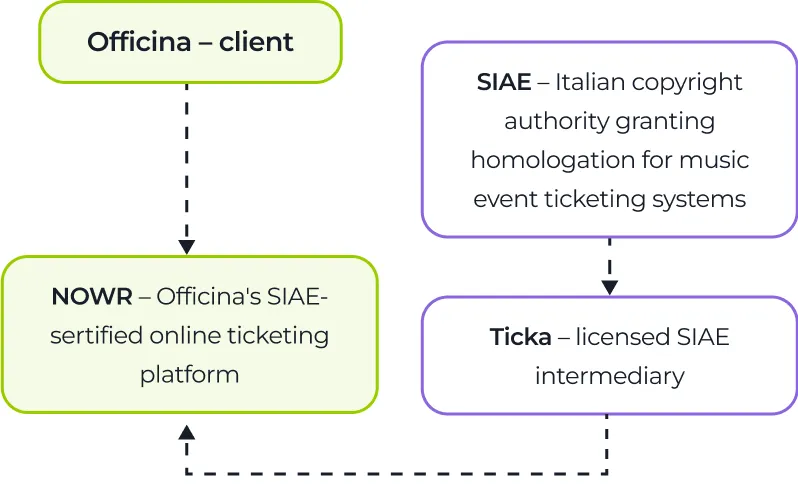
A flowchart with four labeled boxes: Officina – client at top, NOWR – Officina’s SIAE-certifed online ticketing platform below it, SIAE – Italian copyright authority granting homologation for music event ticketing systems to the right, and Ticka – licensed SIAE intermediary below SIAE. Dashed arrows connect the boxes.

Ticka-imposed limitations

Instead of pursuing direct SIAE regulatory approval of their own ticketing infrastructure, Officina chose to operate through Ticka, a licensed SIAE intermediary. While this decision reduced time-to-market, it also meant a few technical bottlenecks:

  • No smooth integration path. Connecting the platform via API simply wasn’t on the list. Operations had to rely on export/import files and manual copy-paste.
  • No built-in booking or refund logic. Critical safeguards had to be implemented outside Ticka.

Rigid architecture and self-contradictory infrastructure

Although outsourcing software development has numerous benefits, you reap none of them if you partner with an unreliable company. That’s what initially happened to Officina. Their previous contractor walked away leaving:

  • A monolithic, hard-to-scale architecture
  • A mix of Google Cloud and AWS infrastructure
  • Three separate backends
  • Fragmented frontend drafts
  • No CI/CD pipeline
  • Multiple code repositories

Torn between operational constraints and a brittle technical foundation, the client needed a trusted tech partner to assess what could be preserved, what required rebuilding, and how to work around Ticka-related limitations. Instinctools’ dedicated team proved to be up to the task.

Solution

After evaluating the development artifacts, it became clear that rewriting the platform from scratch would be faster, safer, and more future-proof than continuing to patch up and reuse the legacy core.

  1. Replacing a rigid monolith with flexible and secure microservices

Once the decision to rebuild was made, the question was how to design a platform that would not collapse under its own growth again. That’s why, we deliberately chose a microservices architecture as the structural backbone of the new NOWR platform.

What it meant in practice:

  • Clear function boundaries
  • A dedicated database per service
  • No shared internal logic
  • Service-to-service communication via REST and message queues

As Officina’s business model depends on third-party providers, including SIAE intermediaries like Ticka and payment operators like Stripe, staying flexible is a tough call. We designed every external integration as an isolated microservice, so that if the client’s providers change, the platform can adapt without undergoing another full rewrite.

Our delivery stack included:

  • NestJS to structure scalable backend services
  • Nx mono repository to maintain development speed without sacrificing modular boundaries
  • REST for fast frontend iteration
  • Message queues for asynchronous service coordination
  • Separate databases per microservice to prevent tight coupling

The outcome was strategic optionality. NOWR is no longer locked into architectural decisions made under time pressure years ago. The new foundation supports experimentation, provider replacement, and controlled scaling, all without destabilizing the entire system.

  1. Moving from two clouds to one

Ticket sales, especially for SIAE-regulated events, require strict ordering. Any inconsistency brings the risk of customer disputes, compliance violations, and revenue loss. Officina’s fragmented infrastructure simply wasn’t built for that level of rigor.

With some components running on Google Cloud and others on AWS, it caused operational inconsistencies and hindered scaling initiatives, not to mention the cost of maintaining two setups. As Officina already used AWS S3 as their primary cloud storage, we consolidated the rest of the stack on AWS to standardize operations and ensure correct processing order and resilience under load:

  • Amazon SQS/SNS for queued workflows and event notifications
  • EC2 with Elastic Load Balancing (ELB) to seamlessly scale server performance
  • Asynchronous processing for non-blocking operations

As part of the consolidation, we migrated operational services and related datasets from Google Cloud to AWS S3. This included transferring application data, reconfiguring storage, and aligning networking and access policies.

Operationally, shifting to a single cloud environment instead of juggling two partially integrated ecosystems also simplified DevOps activities, from monitoring deployment pipelines to managing cloud permissions and handling incident response.
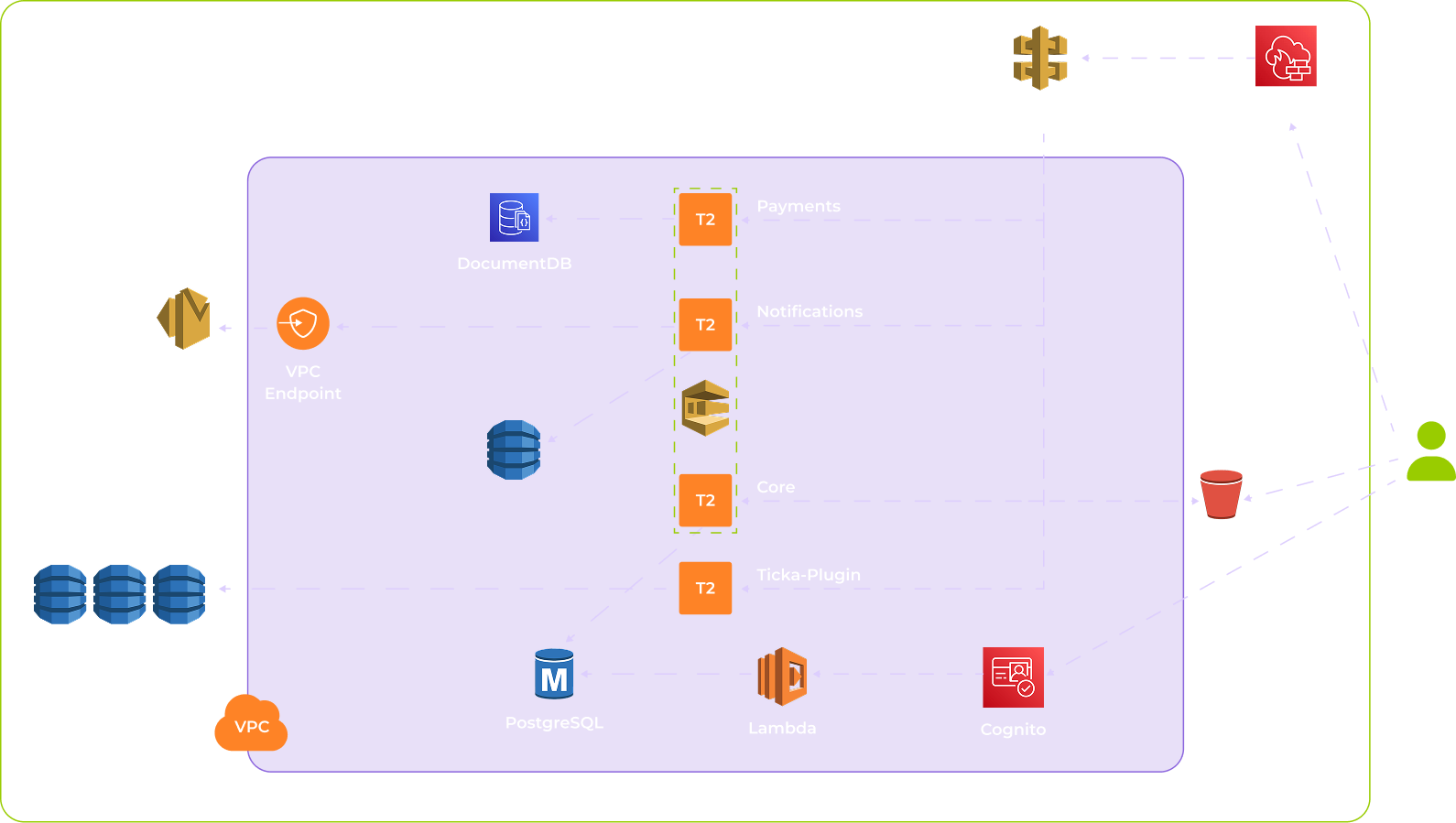
A cloud architecture diagram showing AWS services: DynamoDB, SES, DocumentDB, PostgreSQL, Lambda, Cognito, API Gateway, WAF Captcha, S3, and a VPC. Services are grouped in a purple box with labeled components: Payments, Notifications, Core, and Tickla Plugin.
  1. Building a Ticka synchronization plugin to ease regulatory constraints

Fast SIAE certification with Ticka without full direct regulatory approval came at the price of tooling restrictions  For instance, our dedicated team had to bypass the lack of flexible APIs and limited automation capabilities. Since full API-level automation was off the table, we designed a viable workaround that eliminated the majority of manual steps, reduced copy-paste errors, and caught inconsistencies before they could affect ticket sales. 

Instead of embedding Ticka logic directly into the business core, we isolated it behind a dedicated Ticka synchronization plugin that serves as a controlled integration layer:

  • Pulls SIAE-certified events and tickets from Ticka
  • Synchronizes them with NOWR’s internal data structures
  • Automates export/import routines wherever technically possible
  • Validates incoming data before it enters the core system

That way, Ticka is encapsulated within its own service boundary and can’t leak constraints into the rest of the NOWR’s architecture.

  1. Ensuring compliant fiscal flows across the NOWR platform

Operating within a restricted certification scope meant that fiscal and commission handling required logic beyond Ticka’s approved tooling could support. To keep the platform compliant without slowing down ticket sales, we engineered safeguards around fiscal and payment workflows.

One of the critical challenges was monetizing ticket commissions in a tightly regulated environment while maintaining clear separation between organizer revenue and platform fees. To address it, we built a compliant fiscal backbone through integration with fiscal.com.

  • Real-time fiscalization of transactions, with compliant fiscal records generated automatically
  • Separate fiscal treatment of platform commissions, ensuring intermediary revenues were handled correctly
  • Clear audit trails for full transaction reconciliation
  • End-to-end traceability connecting each ticket sale to its fiscal record
  1. Derisking ticket purchase flow

When moving to a unified AWS-based infrastructure, we also reworked the ticket purchase flow. Previously, it ran synchronously: meaning, if any downstream component stalled or failed, the entire transaction was exposed to errors and duplication.
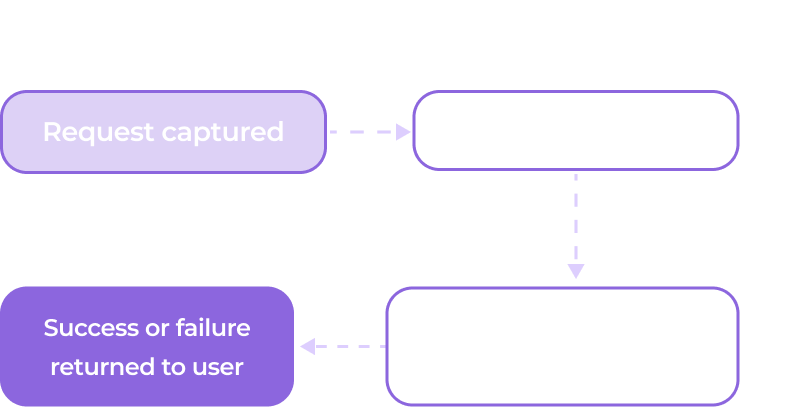
A simple flowchart titled Legacy flow in light gray. It has four boxes: Request captured, Direct call to provider, Immediate processing attempt, and Success or failure returned to user. Purple lines show the process sequence between boxes.

To minimize failed or duplicated transactions, we replaced direct synchronous calls with queued workflows.
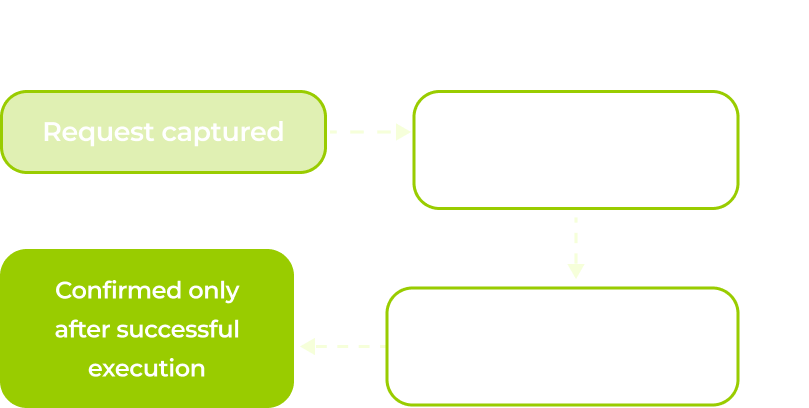
A flowchart with three boxes connected by dotted arrows. The first box, highlighted, says Request captured. The second, faded, says Placed in a controlled queue. The third, faded, says Processed in strict sequence. Below the first is Confirmed only after successful execution.
  1. Orchestrating multi-party payments

As NOWR evolved into a platform that connects ticket buyers with event organizers, one challenge became central: moving money reliably between multiple parties without adding friction to checkout.

Since the market of software systems purpose-built for such transactions is broad, there was no need to hardcode financial logic into the platform. We implemented Stripe Connect, purpose-built exactly for multi-party payment flows.
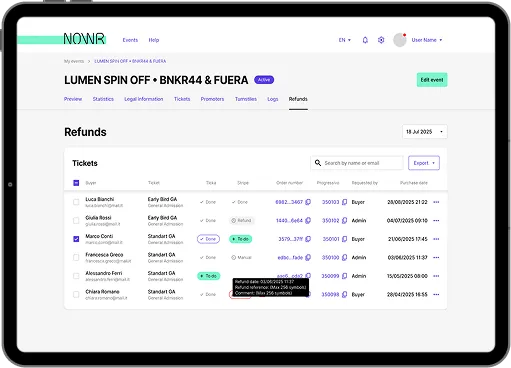
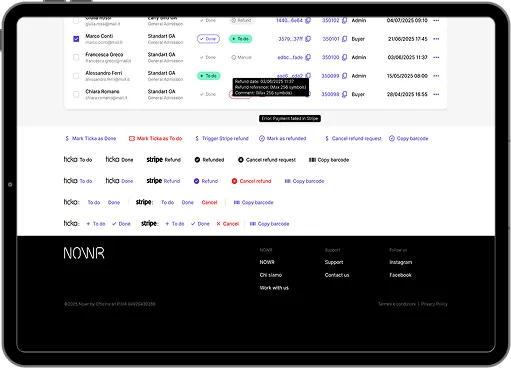
A tablet displays a ticket refund management dashboard for an event. The screen shows a table listing ticket holders, ticket types, status, refund amounts, and admin notes, with search and export options at the top right.
A tablet screen displays an admin dashboard with a list of user transactions, including names, status, dates, and roles. Below, there are buttons for various actions like Refund, Copy barcode, and Stripe refund. The NOONR logo and footer links are at the bottom.

But this isn’t just “accepting payments via Stripe.” Each organizer is onboarded as a separate sub-entity within Stripe that is guided through KYC verification and configured for controlled payout flows. Revenues are automatically split between organizers and the platform, with Stripe handling fund routing and regulatory checks on its end.

Such an approach allowed the client to:

  • Manage multiple organizers within a single infrastructure
  • Automate commission distribution
  • Maintain full financial transparency and traceability
  1. Delivering advanced ticketing mechanics

Once compliance and payment flows were in place, we focused on what makes a ticketing platform truly competitive: flexible, intuitive ticketing built for the operational complexity of real-world events.

To stand out against long-established players and give organizers real reasons to switch to NOWR, our team introduced:

  • Event scheduling

    An event is no longer limited to a single calendar entry. It can now include multiple schedules, allowing organizers to offer tickets for the same event across dozens of dates and time slots.

  • Event grouping

    Separate events can be brought together into a logical collection, for example, a three-day festival where each day is managed independently but presented as a single, cohesive experience.

  • Subscriptions and multi-event passes

    Multiple schedules, including those across grouped events, can be bundled into a single discounted pass, making it possible for users to purchase access to several dates in one transaction.

  • Promo code functionality

    Public and personalized discounts give organizers more room to experiment with pricing strategies and tailored ad campaigns.

  1. Building a solid admin panel

While building an MVP, we kept thinking strategically and planning for the time when NOWR will grow into a full-scale ticketing platform and compete with Italian market leaders like Ticketmaster and TicketOne.

To head off future bottlenecks, we focused on the back-office part of the platform, delivering a full-featured admin panel. At its core is a two-step moderation framework applied both to organizer onboarding and event creation. New organizers require approval before activation, and newly created events don’t go live automatically, but are routed to moderation first, where admins can edit, approve, or reject them.
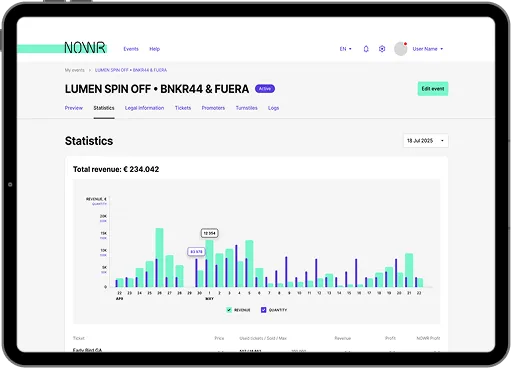
A tablet displays a statistics dashboard for the event “LUMEN SPIN OFF + BNKR44 & FUERA.” A bar chart below shows monthly revenue and quantity data, with a total revenue of €234,042 highlighted at the top.
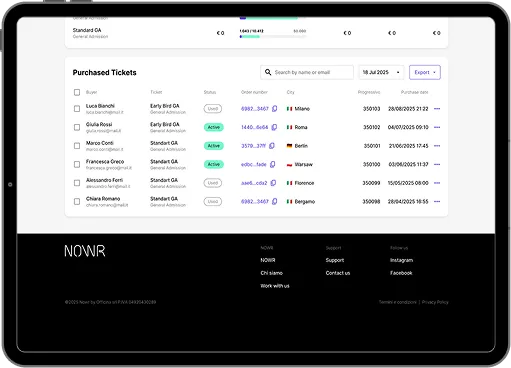
A tablet screen displays a ticket management page showing a list of purchased tickets with buyer names, ticket types, status, order numbers, cities, issue dates, and event dates. The interface also includes filter options, export button, and a navigation menu at the bottom.

This ensures tight operational control and strong platform governance, supported by:

  • Centralized management of accounts and event entities
  • Structured event editing and publishing
  • Real-time oversight of ticket availability and sales performance
  1. Refining brand identity alongside product development

Having contributed to the rollout of hundreds of digital products, we know that functionality alone is not enough to win users. A feature-rich, intuitive platform is only half a solution, but first, it has to catch the customer’s eye.

Going beyond engineering, we conducted a brand audit and proposed enhancing the platform’s logo and overall visual language to make it clearer and more cohesive:

  • Modernized the logo for better readability and responsive use
  • Standardized typography, spacing, and color usage across the interface
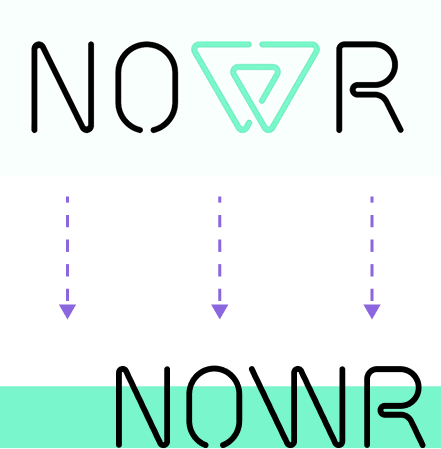
The image shows NOWR with the W as a turquoise geometric triangle. Below, three dashed arrows point down to a second NOWR, this time with a standard black W. The background has white and turquoise bands.

Before

  • Jerry-built prototype
  • Monolithic architecture with three separate backends and fragmented frontends
  • Mixed Google Cloud and AWS infrastructure
  • No CI/CD and code scattered across multiple repositories
  • Synchronous ticket purchase flow vulnerable to duplication and failures
  • Lack of foundation for compliant fiscal flows
  • No multi-party payments
  • Manual export/import workflows with Ticka
  • Baseline ticketing mechanics

After

  • Solid product
  • Microservices-based architecture with clear service boundaries
  • Fully consolidated AWS infrastructure
  • Structured mono repository with CI/CD pipelines
  • Queue-driven, asynchronous ticket purchase flow
  • Compliant fiscal flows
  • Smooth multi-party payments
  • Custom Ticka synchronization plugin acting as a controlled integration layer
  • Advanced ticketing mechanics

Business value

  • Scalable foundation for growth in a regulated EU ticketing market
  • Stronger platform governance thanks to a centralized admin panel with advanced moderation capabilities
  • + 40% in feature delivery speed thanks to independent microservice deployments
  • – 25% in infrastructure costs after shifting to a single AWS ecosystem

Multiplier effect

The constraints Officina faced, such as rigid legacy architecture, fragmented cloud infrastructure, and dependence on third-party providers with legacy integration options, are far from unique to the entertainment and media industry. Similar bottlenecks emerge in fintech, ecommerce, logistics, healthcare, and any integration-heavy domain where early technical shortcuts collide with long-term growth. If your team lacks the time or perspective to surface and fix them early, an experienced tech partner can step in before technical debt compounds.


Four young adults in a modern office work on laptops displaying code. One person stands, leaning over with a laptop, discussing something with the others, who are seated and listening attentively. Large monitors with code fill the background.

Taxi App For a Transportation Company

Mobile Taxi Booking App For a Transportation Company

How launching a feature-packed, AI-driven mobile taxi app put an Italian transportation company in the driver’s seat of their local market, with 78% of customer support requests resolved without human intervention and operational costs plummeting 24% below the industry average.

Industry:
Taxi

Mobile App Development

Software Product Development

UX and Design

AI Development

Business challenge

Uber, Lyft, Bolt, Cabify, Gett, DiDi, etc. — the market for mobile taxi booking apps is competitive. Still, new solutions keep emerging in response to the upsurge in the number of taxi app users. 

But how do you make your software stand out from the crowd when the market seems littered with a plethora of similar apps? You have to put a premium on user-friendliness and engaging customer experience.

Our client – an Italian transportation company – decided to win local customers with a taxi booking app that enables riders to choose a cab or a cargo van on the one hand and drivers to receive requests from customers on their mobile devices on the other hand.

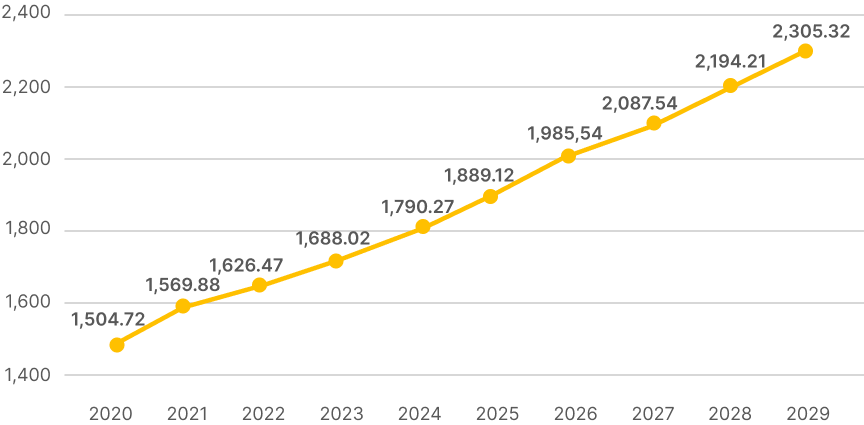
Number of users of mobile taxi apps worldwide from 2020 to 2029 (in millions)

Source: Statista

When the client approached us, they had a clear vision for their app. It needed to: 

  • Cover all the must-have features relevant for this type of software, such as demand-driven fare calculation, real-time driver and customer location tracking, and a solid rating system
  • Provide users with sought-after features, such as customizable ride options (child seat, pet-friendly drivers, and others)
  • Have a sleek, intuitive, and consistent interface

They also set out to transform what most taxi apps get wrong: clunky, rule-based chatbots, which are of not much help for users when it comes to customer support. To break the mold, it was decided to provide a smarter, more human-like experience with conversational and generative AI.

The client turned to *instinctools for a team of mobile developers and AI engineers. Our experts got to work, building a performant, high-ROI, and easy-to-maintain solution that would raise the bar on what a taxi app can be.

Solution

With GPS access and smartphone hardware integration being pivotal for taxi apps, we crafted native iOS and Android apps, bypassing the limitations of cross-platform development. This choice also allowed us to stay within platform-specific design, aligning with Human Interface Guidelines for iOS and Material Design principles for Android — ensuring a familiar and intuitive experience for every user.

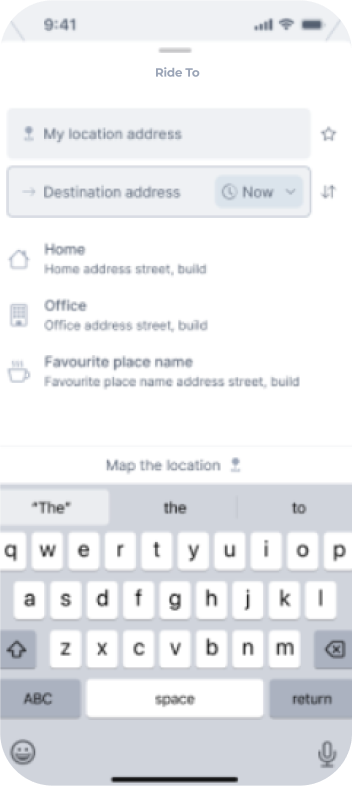
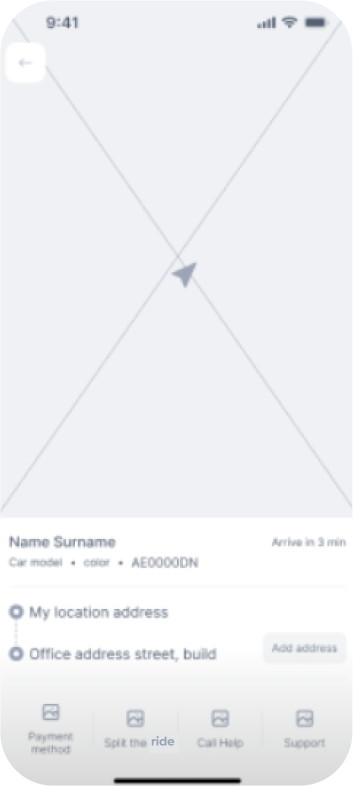
  1. Deciding on the app’s functionality and crafting wireframes

Given high competition in today’s mobile taxi-booking market, the client opted for a bold strategy: investing upfront to perfect the customer experience and deliver a full-scale product that could truly stand out.

Sticking to *instinctools’ tried-and-true product design framework, our business analyst, product designer, and solution architect collaborated from the onset to ensure first-rate customer experience and speed up the development process.

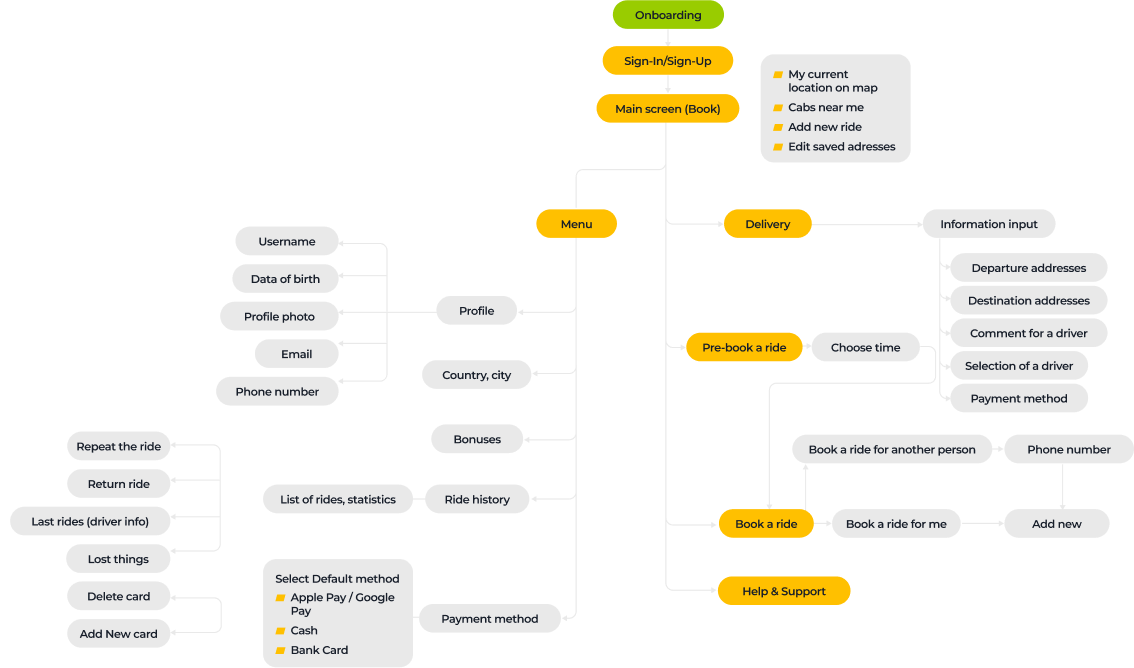
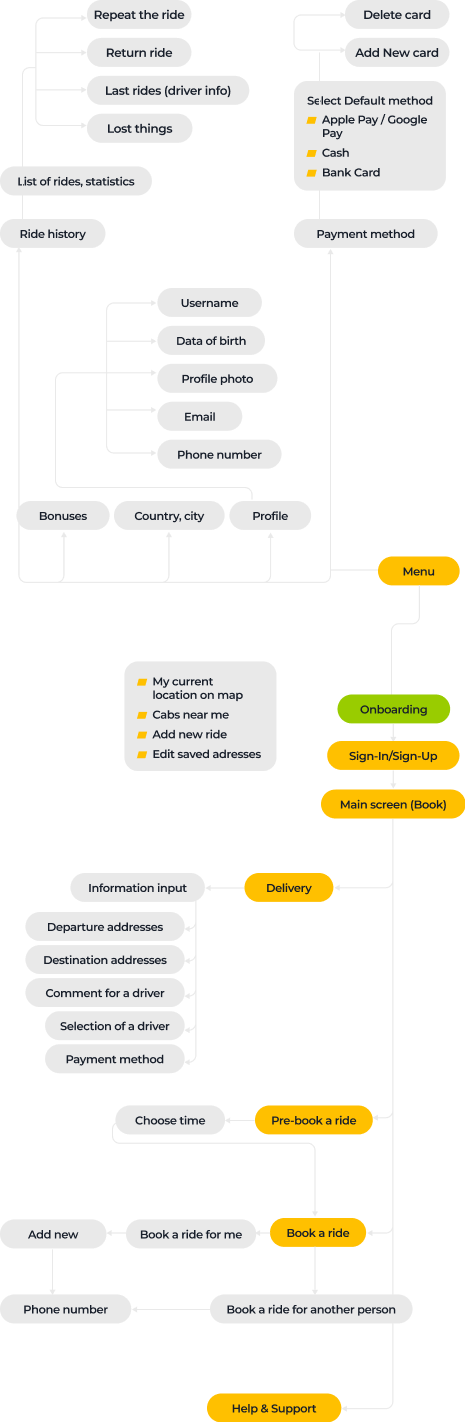
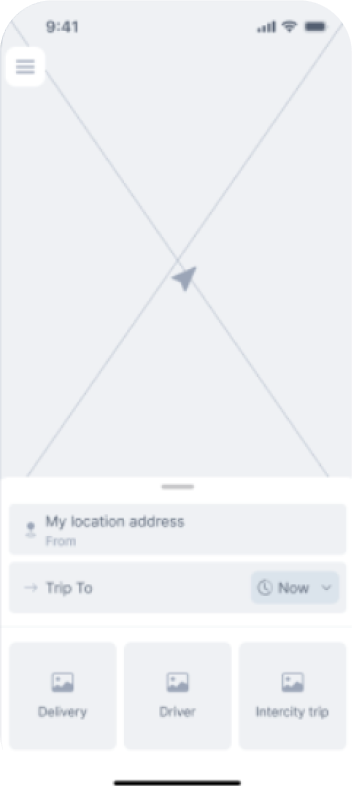
After gathering client requirements for app functionality and outlining its information architecture, we transformed the product vision into clear, actionable wireframes.

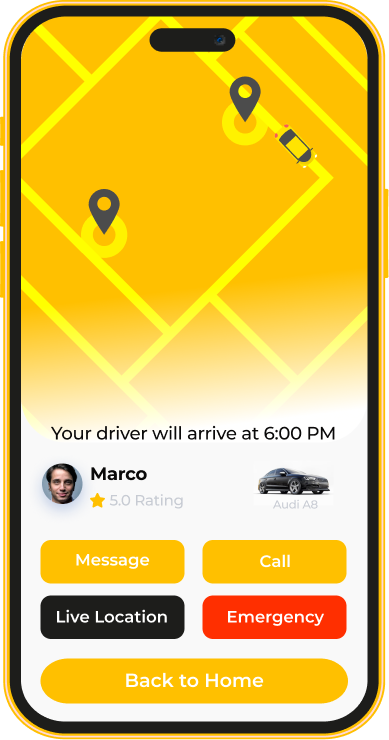
Both drivers and riders have been provided with the following shared features:

  • Registration via Google or Apple accounts, followed by phone verification for higher security
  • Profile management for easy updates and personalization
  • Real-time location tracking
  • In-app chat for seamless communication when needed

An additional set of features for riders includes:

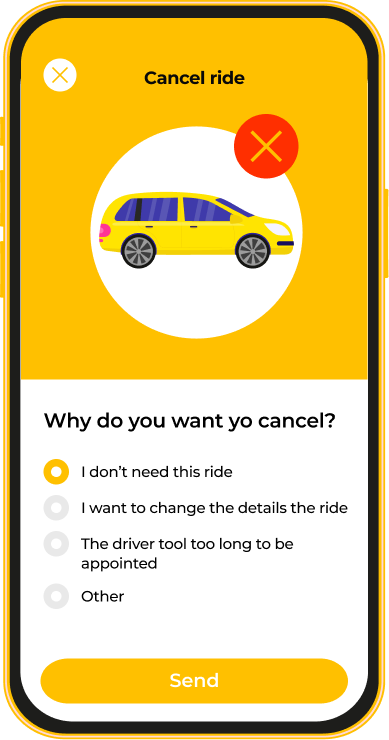
  • Ride scheduling, booking, canceling
  • Options for ride customization, such as child seats, pet-friendly cars, XL vehicles, electric cars, and others
  • Saving favorite locations like home or office
  • A driver rating and review system
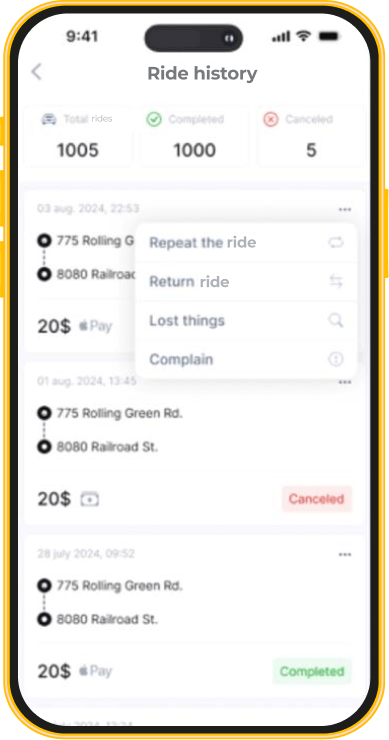
  • Ride history
  • A dynamic discount program
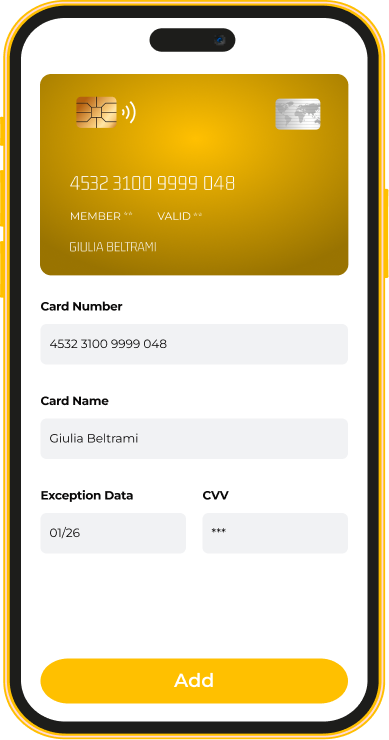
  • Multiple payment methods, including cards, Apple and Google Pay, or cash
  • Push notifications and alerts
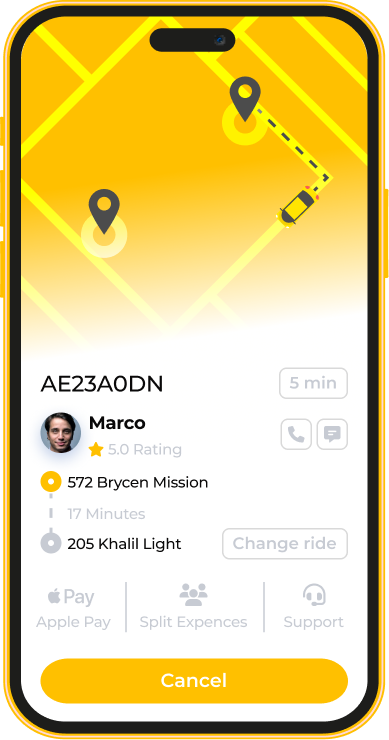
  1. Transforming wireframes into a simple and user-friendly interface

Moving forward with product design, our team got to work on high-fidelity clickable prototypes. Most ideas represented in the wireframes made it through to the final app version without a hitch.

That doesn’t mean though we were locked into a strict plan. Throughout the project, our design team had plenty of “aha” moments” and pitched them to a client. For example, we recommended adding emergency assistance as a must-have feature. The client was all in. Now, with just one tap, users can send an instant alert with their location to local emergency services, which is a big win for passenger safety and an easy way to build trust and loyalty.

We also reimagined the functionality of a “Ride history” feature. In a released app, users can easily repeat a past ride in one click.

  1. Transforming customer support with an AI-driven chatbot

Rudimentary, rule-based chatbots with pre-written responses feel more like talking to a wall than getting real help, leaving customers frustrated and craving human intervention. No wonder 86% of users prefer chatting with human agents.

But we knew it didn’t have to be that way. With natural language understanding and processing capabilities paired with generative AI to analyze customer queries and answer them, we could flip the script. By empowering the chatbot to understand and respond like a pro, our AI team helped cut down human agent sessions, slash support costs, and still deliver top-notch communication.

Choosing an LLM engine for the client’s conversational agent, we opted for an open-source Llama 2 that is free for commercial use. After connecting it to the in-app chatbot through API, our AI engineers trained it on the client’s customer support manuals to cover the top three common scenarios:

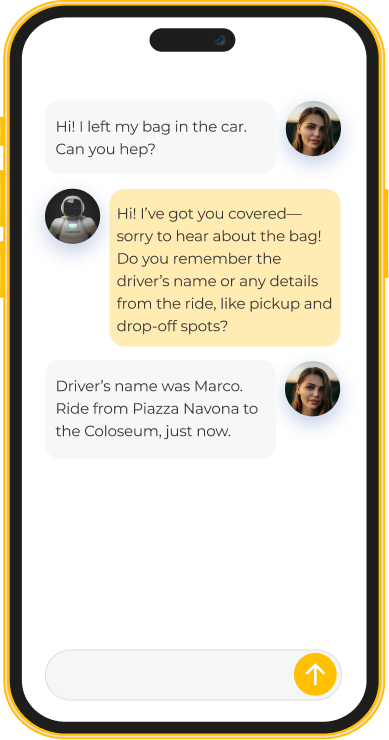
  • Belongings forgotten in a car and ways to retrieve them
  • Billing issues like being mischarged
  • Ride cancellations and associated problems

We accounted for over 100 variations of how users might phrase their requests, even with typos and misprints. Such a meticulous approach ensured highly accurate intent recognition – 97%.

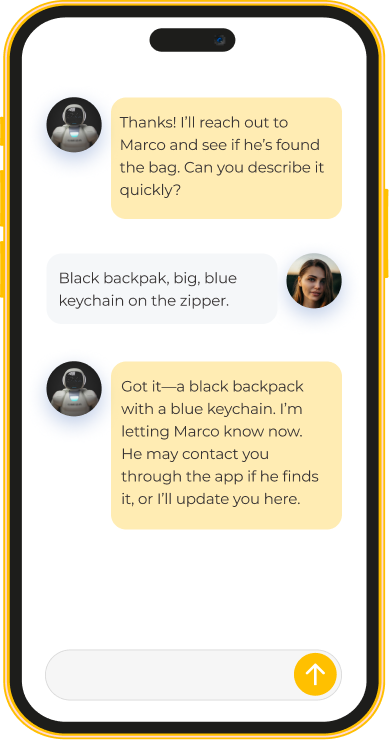
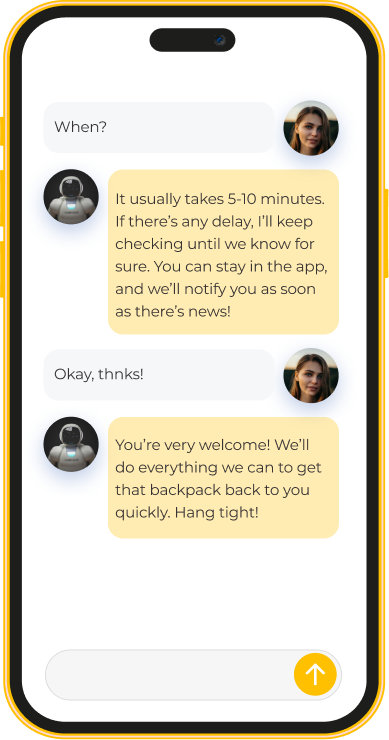
Here’s an example of a conversation with Giulia, who forgot her things in a taxi and needed help. The chatbot easily understands the user’s queries despite some misprints in her input and provides clear, actionable guidance.

A month after the app rollout, the chatbot covered 51% of support sessions without human intervention. After training the bot on less widespread user queries, we hit a new mark – 78% of customer support sessions were resolved without involving human agents.

Client’s testimonial

Here’s how the client’s VP of Engineering describes *instinctools’ contribution to the project:

Business value

  • An outstanding user-friendly and feature-rich solution in a market of generic mobile taxi booking apps
  • 97% accuracy in recognizing customer intent thanks to AI-powered chatbot for customer support
  • Operational costs are 24% below the industry average due to intelligent automation
  • 78% of customer support requests are resolved without human intervention
  • 4,8 ⭐ rating on the App Store and Google Play with frequent mentions of a high level of personalization

Ecommerce Ecosystem Development

Ecommerce Ecosystem For an Eyewear Company

How developing a comprehensive ecommerce ecosystem helped an optical company withstand severe economic headwinds and grow their store chain from 8 to 24 eyewear boutiques across France. 

Industry:
Manufacturing

Mobile App Development

Software Product Development

Web Development

Data Visualization

Business challenge

For highly competitive industries, such as ecommerce, being able to adjust to ever-changing market conditions in a blink of an eye is the only way to retain customers and win new ones. In this respect, COVID-19 became an inflection point at which only the most resilient companies could stay in the saddle, while others had no other choice than to ride off into the sunset.

When the pandemic began, companies were forced to rethink their business vision, look for new value and revenue-creation opportunities, and find ways to satiate consumers’ needs in unanticipated circumstances. The situation was the same for our client – an eyewear company with its own production and a chain of physical stores across France.

The client first reached out to *instinctools to create a mobile app for sales assistants. However, the coronavirus meddled in their business strategy, forcing them to move at a rapid clip and develop an additional sales channel aimed directly at consumers. That’s how the idea of a shopping app for customers arose.

When a company wants to drive revenue growth, banking only on a customer-facing solution isn’t enough. Internal processes also have to be enhanced. In the case of our client, the necessity to adapt to the changing ecommerce realm unveiled issues with order registration and processing, stock inventory, and logistics.

After analyzing the market and gathering the client’s requirements, we proposed developing a comprehensive ecommerce ecosystem of mobile and web solutions with a shared back end and multiple front ends.

Solution

As we’ve mentioned, the client initially approached *instinctools to craft one small application for internal usage. However, the retail industry upheaval, along with evolving consumer needs, forced them to reconsider an erstwhile firm view of ecommerce as a bolt-on to the main business. For over six years of cooperation, our dedicated team has developed four apps for the company’s staff, one customer-facing application, and a new website on Shopify.

Why did we develop niche applications one by one instead of crafting one multipurpose solution? Such an approach provided several benefits:

  • Maintaining and updating several small apps is much easier

than taking care of a large-scale solution with complex business logic.

  • Ensuring ease of use for the client’s staff

as each mobile or web solution is tailored to a specific role within the company.

  • Rolling out new functions apace

to attract new customers and retain existing ones.

All the applications, except for the one related to the local insurance system, are written in React Native. That way, our client isn’t limited to devices with a particular OS and can reach a larger pool of potential buyers.

Let’s zoom in on each of the solutions in the order of their occurrence.

  1. Eyewear measurements app for consultants in physical stores

When the client started the business, far from all processes were digitized. For instance, the in-store consultants used to mark out an eyeglasses frame for a buyer and then manually calculate the lens diameter and fitting distance to ensure that the glasses had the lenses at the correct distance from the customer’s pupil.

With such an approach, the probability of an error caused by the human factor increases manifold. The problem became more evident as the client’s store chain was expanding. Therefore, they decided to digitize and automate this task with a simple mobile application for internal usage. 

Developing the app in React Native became the starting point of our cooperation with the client. How does it work?

After a customer chooses a frame in the store, a consultant finds it in the catalog in the app.

Then, the consultant opens the camera on the device and points it at the customer’s face to determine control points – the center of the pupils, considering their vertical position.

Finally, the app automatically calculates the position of the optical center so that the geometrical center of the frame and the buyer’s pupil coincide to ensure the glasses are comfortable to wear.

Besides eliminating the possibility of calculation errors, such automation has speeded up order processing by five minutes per order. It turned out to be a real breakthrough, as the client’s business model focuses on serving many visitors in a short time – the speed of order-making is even mentioned in their slogan. Therefore, at the client’s scale, even such a seemingly small improvement meant a 33% acceleration of order processing.

  1. Customer-facing mobile store app

Before 2020, the client launched new stores in several French cities and planned to develop new applications specifically for physical locations, such as kiosks for self-ordering of glasses.

However, the pandemic and the following quarantine with a strict ban on leaving home drastically changed the client’s business strategy. Magnifying their digital presence and providing customers with an app where they can select, order, and pay for the glasses became the client’s primary focus. That’s why our team switched from developing software solutions for internal usage to crafting a mobile ecommerce eyewear store for customers. It was also written in React Native to be apt consumers with iOS and Android devices. 

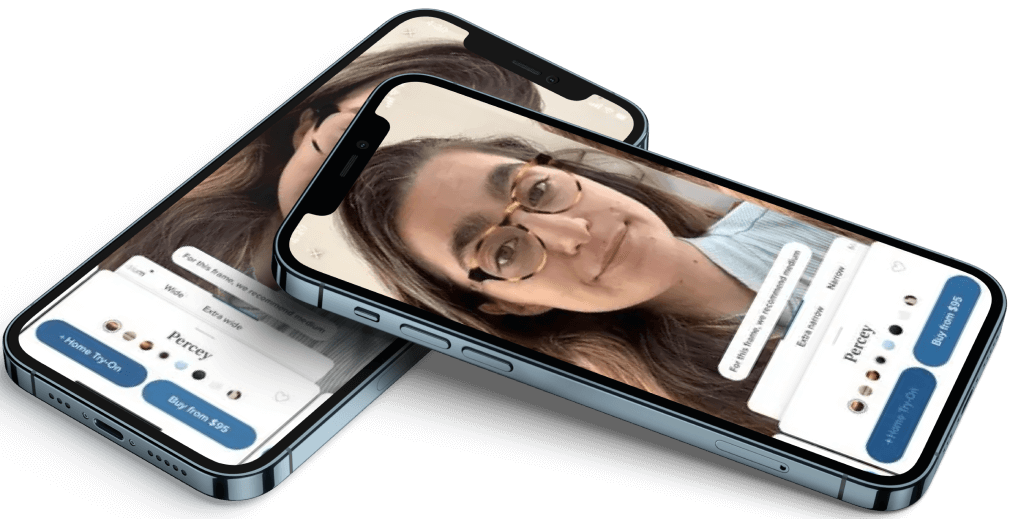
Given the impossibility of physical presence in the store, we added a feature of a virtual frame fitting. It gives a rough idea of how different frames would look on a person’s face. Even long after the lockdown, this function remains popular among the app’s users. 

  1. Custom ERP for internal usage

We inherited the enterprise resource planning project from the client’s previous tech partner who hadn’t been able to provide a no-fuss hiring process and unlimited scalability on demand.

After discussions with the client, it was decided to finalize the custom solution another team had been working on instead of adopting and customizing a ready-made ERP such as Odoo, SAP, etc., for two reasons:

  • The client didn’t need all the features that off-the-rack software provides, so it would have been unwise to overpay for it.
  • Only a bespoke system could guarantee perfect alignment with the client’s processes.

What roles does the web app cover within the company, and what functionality does it provide?

  • Sales person

has access to the customers’ database to create and edit consumer information.

  • HR

can create and edit staff accounts to make managing employees whole-company scale easier.

  • C-suite

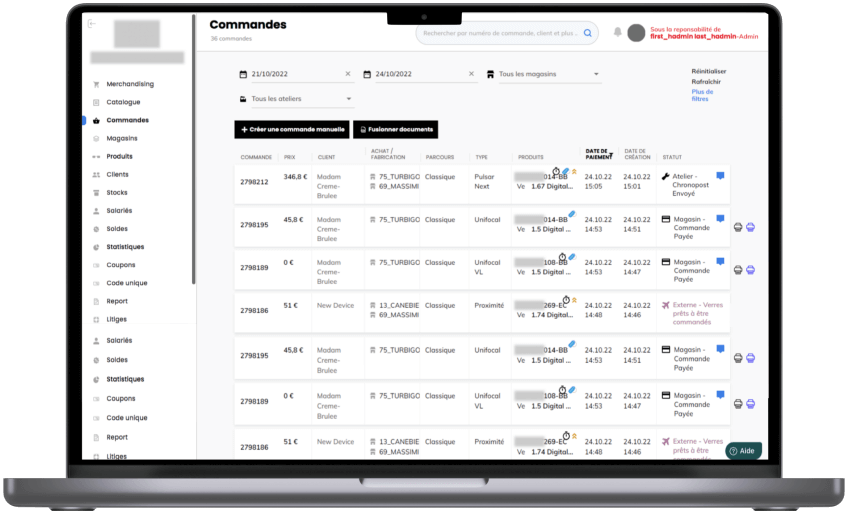
can leverage advanced statistics to back up their decisions with up-to-the-minute data. We created dashboards to visualize the data about the number of orders in general and by cities, customers’ gender and age, lens type, and a raft of other parameters.

  • Technician

the employee responsible for assembling glasses — signs in the ERP to see the list of orders to be produced, delivered, etc. Moreover, each technician is assigned to a certain store and can see only the data related to their location.

  • In-store consultant

registers orders made by customers in the physical stores.

As the ERP automatically records status changes after each operation with an order, the client obtains a fully-transparent production and delivery process. And easy-to-grasp dashboards empowered them to make well-informed decisions based on vast amounts of data and keep a laser-sharp focus on the changing customer demands to adjust production accordingly as fast as possible.

  1. Mobile app for inventory and logistics

As the number of the chain stores was growing, our client faced the palpable need for a solution that would ensure centralized and automated stock monitoring, logistics, and inventory. That’s what became a driving force in launching a new project – a mobile application on React Native integrated with RF and RFID scanners, used for inventory, goods receipt, and shipping.

The app we developed simplifies the tasks for employees involved in inventory management and in-store consultants who receive orders.

It allowed the client to:

  • Digitize inventory management and logistics and therefore speed up related tasks, such as order picking
  • Automate stock and inventory management
  • Get a detailed view of the stocks in near real-time
  1. Healthcare software for simplified cooperation with insurance companies

One of the hallmarks of the client’s business is the direct cooperation with public and private insurance companies in France. It’s convenient for the consumers, but the client also wanted to facilitate the process for their employees. Therefore, our dedicated team developed an insurance processing application for internal usage.

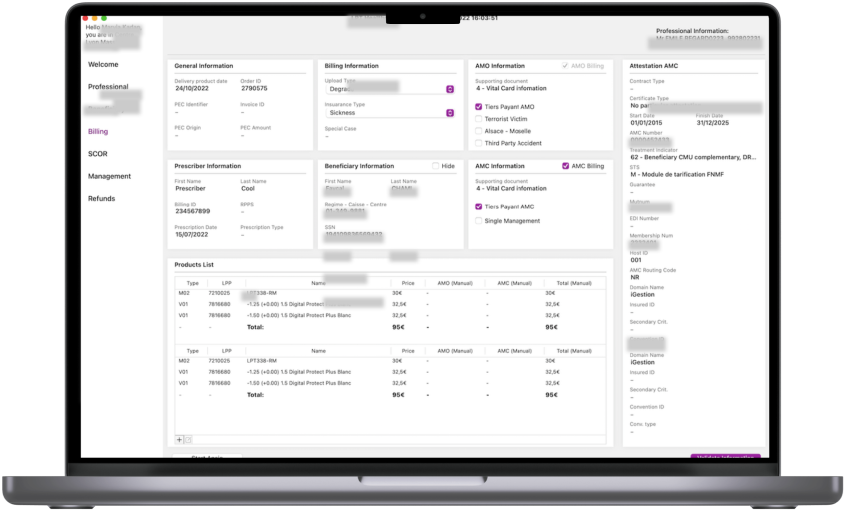
There are physical terminals in the client’s stores where consultants swipe customers’ insurance cards. The terminal reads the data and sends it to the app, which automatically matches this information with the data the insurance companies provide and displays:

  • what type of order the consultant can create for a client
  • how much of the order’s cost can be covered by insurance

Insurance regulations in France require choosing one OS for insurance processing with mandatory certification of the software before its rollout. As the client had already bought iMacs for their brick-and-mortar stores, we designed the healthcare solution for MacOS.

The app’s implementation allowed the client to automate the routine task of insurance processing and completely cut out the possibility of human error.

  1. Website on Shopify

The client’s former website used to run on WordPress, bolstered with the WooCommerce plugin. The problem was that as the website was expanding and new plugins were being added, the solution became overly complicated to be managed efficiently.

Tons of spaghetti code slowed down the pages’ loading speed — it could take up to six seconds — a parameter that, in 70% of cases, influences consumers’ willingness to buy from an online retailer*.

*Source: Unbounce, Think Fast: The Page Speed Report

Redesign and modernization of the old website would have taken too much time, so the client decided to switch to Shopify – a hosted SaaS solution — so that the provider would handle most of the technical issues and it would be easier to scale further.

Moreover, the out-of-the-box Shopify solution offers functionality that is missing in the off-the-shelf WooCommerce module:

  • a multi-currency plugin
  • a wide range of payment options
  • an automatic country-by-country tax calculator

With the former website, all of that had to be either coded manually or achieved through installing additional modules, which slowed down the solution.

Shopify adoption has also allowed the client to gather more detailed customer analytics thanks to the connection with Google Analytics, Google Tag Manager, and Meta Ads.

However, despite Shopify being an all-in-one ecommerce platform, our team had to work through some of its limitations. For example, it was impossible to specify more than three product options in a description. Check how we solved these issues in a detailed case study.

By switching to Shopify, the client got a user-friendly and easy-to-manage online store with 6x higher loading speed and access to detailed analytics.

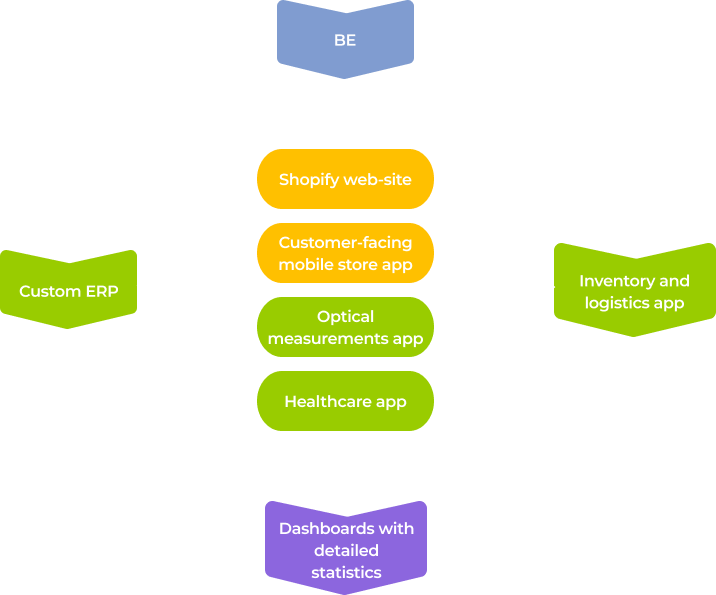
Here’s the client’s final ecommerce ecosystem with all the mobile and web applications we’ve developed for internal and external usage.

Before

  • Unoptimized business operations
  • Manual processes
  • High influence of human factor
  • Absence of an online ecommerce eyewear store for customers
  • Lack of tools for efficient data collection, analysis, and visualization
  • Draft version of a custom ERP that wasn’t released
  • Heavyweight and slow WordPress website with loads of spaghetti code

After

  • Digitized order processing, inventory, and logistics
  • Automated optical measurements and insurance-related tasks
  • Minimized possibility of human error
  • Eye-catching and user-friendly mobile app for online consumers
  • Insightful dashboards with detailed statistics
  • Full-fledged custom ERP 
  • Speedy and easy-to-maintain website on Shopify
  • Transparent and flexible ecosystem of lightweight software solutions

Key features

Adaptability

A comprehensible suite of lightweight applications allows the client to remain flexible and swiftly respond to any market changes. Such an approach also simplifies apps’ maintenance and support, not to mention the ease of use for the client’s employees.

Extensiveness

The custom B2B ecommerce ecosystem we’ve created encompasses software solutions that provide a seamless customer experience and streamline the client’s internal processes.

Customizability

Custom software aligns with the client’s business needs perfectly. Moreover, each solution for internal usage is targeted to a specific role within the company to simplify its management for the client’s employees.

Business value

  • 33% faster order processing
  • 6x boost in page loading speed on the website
  • Fully digital inventory management and logistics
  • Complete transparency of the operations within the company
  • Automated insurance processing
  • Eliminated possibility of a human error

Multiplier effect

A well-designed ecommerce ecosystem enhances your customers’ experience and turns them into regulars. 

Any B2C or B2B software solution is often a part of a larger ecosystem that includes internal business tools and external channels of interaction with potential customers. To hit it big down the line, you should adhere to a holistic approach to building software for your company’s needs. 

This principle plays out in any industry, from ecommerce, entertainment and media to healthcare, fintech, and manufacturing. Bank on comprehensive strategic solutions instead of one-off fixes to stay ahead of the pack and win over more customers.

Eyewear Measurements App For an Optical Company

Eyewear Measurements App For an Optical Company

How digitizing and automating eyewear measurement operations empowered a European eyewear company to accelerate in-store order processing by 67%.

Challenge

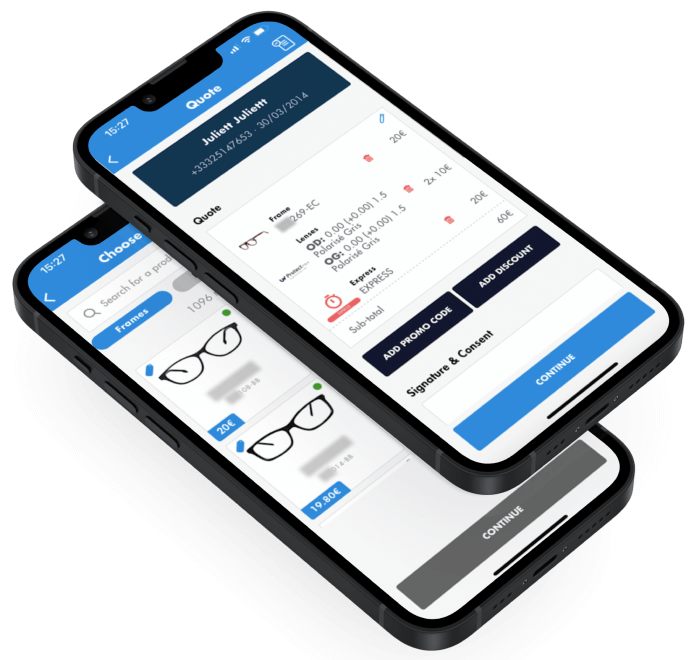
The customer contacted us with a request to build a native iOS application for their sellers. The application would be able to determine distances (in millimeters) between a customer’s pupils and heights (calculated between the bottom of the lens and the middle of the customer’s pupil) using the camera.

Solution

We have successfully accomplished the task that we were given. We have developed an optical measurements application based on iOS system. It can provide our customer with accurate values (in millimeters) of pupillary distances and heights.

A part of our work was also the development of a UX/UI design.

Key Features

  • accurate values (in millimeters) of pupillary distance and height.

Technologies

Anna Vasilevskaya
AI modified real photo
Anna Vasilevskaya
Account Executive

Get in touch

Drop us a line about your project at
[email protected] or via the contact
form below, and we will contact you soon.