AI Agents for Insurance

AI Agents for Partner Onboarding in Insurance

How a conversational, UI-driven multi-agent system helped a global insurance aggregator cut partner onboarding from 3-6 months to 2 weeks, enable multilingual self-service for carriers and brokers, and keep quality high at optimal cost through governed model selection.

Industry:
Fintech

Multi-agent AI

Enterprise Automation

Business challenge

Our client, a global insurance aggregator, scales by adding new partners (carriers, MGAs, regional brokers) across dozens of countries. Each partner comes with different APIs, schemas, languages (including non-Latin scripts and right-to-left layouts), and regulatory constraints.

Historically, onboarding a single partner took 3-6 months of cross-functional effort: clarifying requirements, interpreting sparse and heterogeneous documents, writing adapter code, preparing test data, iterating through compliance checks. Multiplied by hundreds of partners, the cost ballooned and timelines stretched.

The client needed to:

  1. Compress time-to-integration from months to weeks without compromising compliance or auditability;
  2. Accommodate variability in partner maturity: from bringing different API protocols (REST, SOAP, etc.) to a common denominator to handling multiple document types (PDFs, spreadsheets, or even email samples);
  3. Let non-technical partner representatives self-serve in their native language, with a guided, transparent flow;
  4. Stay model-agnostic and cost-efficient as the LLM landscape evolves.

Instinctools’ dedicated AI team took on creating a faster and smoother partner onboarding workflow.

Solution

We delivered a production-ready, UI-first, multi-agent system that turns partner inputs (documents, answers, samples) into working adapters and automated tests, finishing with a GitHub pull request. The solution combines a structured AI adoption process, an orchestration pipeline that thinks before it codes, and model governance from our AI Center of Excellence.

  1. Running an AI adoption workshop

To de-risk the initiative and align on outcomes, we started with the AI adoption workshop. Within it, our team:

  • Conducted business discovery, mapping the core flows (Quote → Bind → Endorsement → Cancellation → Claims/FNOL), the country-specific nuances, and the compliance checkpoints;

  • Identified process bottlenecks and time sinks, including document triage, field mapping, eligibility rules, error semantics, and under-specified specifications;

  • Defined clear success criteria and guardrails with a target of ~2 weeks per partner, compile-clean builds, minimum test-coverage thresholds, and audit-ready artifacts;

  • Produced solution blueprint around a three-phase agentic pipeline (Analyze → Plan → Generate) with human-in-the-loop validation.


  1. Selecting the right model

Before designing the agentic pipeline, our AI engineers tested multiple LLMs using reverse-engineered samples from existing API adapters to see which fits the client’s needs best. Among GPT, Gemini, Grok, and Anthropic (Opus and Sonnet), Claude Opus 4.1 delivered the most stable and production-ready output, especially when guided by structured prompts and incremental checkpoints.

Model governance by our AI Center
of Excellence
 
Choosing and re-choosing models is integral to value. Instinctools’ very own AI CoE runs a repeatable framework that evaluates models by code-gen accuracy, context window, speed, modality coverage, hosting options, API availability, cost per token, language coverage, and deployment constraints. Our experts continuously benchmark new releases and propose controlled switches (with cost deltas and risk notes), so the client benefits as the market shifts.
  1. Building an agentic pipeline

Agents don’t jump to code. They analyze inputs, plan the work with acceptance checks, then generate code and tests, looping until the build is clean.

Each adapter runs through a 13-step playbook where every output becomes the next input, while the agent distills patterns from the prior implementations into a consolidated guide for what to build. A short intake questionnaire captures the business rules the docs miss, and we seed the workspace with curated reference repos so the agent can “look up” proven approaches.

With an agentic approach, a large endpoint is typically completed in 2-3 hours for roughly $50-100 of model spend.

  1. Ensuring quality and auditability

Every step is pinned to hard checks, such as unit, contract (schema), and integration tests, a compile-fix loop, and smoke/HTTP probes that prove the service actually runs. Humans step in only at high-leverage moments, dedicating, on average, up to 20 minutes to polishing the output. 

Under the hood, we trace prompts, tool calls, inputs/​outputs, latencies, and token spend with Langfuse. That observability makes audits boring in the best way: each decision and artifact is tied to a PR with change logs and test evidence, ready for reviewers and regulators. 

Following our AI in SDLC practices, we’ve also baked drift controls into prompts (“out of scope” rules), keeping models focused on what’s required and nothing more. And when something slips, those traces collapse time-to-root-cause from hours to minutes, so the next run captures the fix by design.

  1. Putting a premium on AI security controls

For AI-powered onboarding to be safe and sound, we had to ensure compliance with a plethora of security policies by design:

  • Core security and privacy baselines, such as NIST and OWASP
  • Insurance and financial-sector cybersecurity regulations by region, such as the NYDFS 23 NYCRR 500 and the NAIC Insurance Data Security Model Law for the US, the DORA for the EU, the FCA/PRA Operational Resilience for the UK, and the APRA CPS 234 for Australia, among others
  • Data privacy laws, such as CCPA, PIPEDA, GDPR, PDPA, APPI, etc.
  • AI governance regulations, including NIST AI RMF and EU AI Act

To check all the boxes, our team zeroed in on:

  • Regional hosting options to store EU data within the EU, US data within the US, etc.
  • Role-based data access 
  • PII protection measures like field-level masking to ensure no sensitive data is fed to the model
  • Prompt “guardrails” to prevent the model from going off-scope or fabricating logic
  • Human-in-the-loop reviews of AI artifacts, with all of them linked to a GitHub PR for audit trails
  1. Designing self-service UI

Once the agentic approach proved consistent across 10 API adapters, our AI team wrapped the workflow in a simple web UI.

  • Partner-facing portal. Secure onboarding wizard and chat. Partners drag-and-drop PDFs/Swagger/​Postman/XLSX or describe their process in free text.
  • Multilingual by default. The agent converses in the partner’s language and normalizes vocabulary into the platform’s canonical model.
  • Progress and transparency. Step-by-step status, logs, downloadable reports, and validation results.

Human expertise still guides quality and regulatory soundness. The agent automates the mechanical steps, delivering a compile-clean adapter with unit tests and CI checks, which used to consume months of execution time.

Agent-powered partner onboarding with a human in the loop

At the end of each step of the workflow, a developer reviews the output before the model proceeds. Such application of human judgment where it matters most makes the agentic onboarding approach predictable and trustworthy, not a “black box”.

Stage Automated by agents Human touch
Partner intake and registration Self-service sign-up, chat onboarding in any language, guided file upload Provide access keys if required
Documentation ingestion Parses PDFs/​Postman collections, extracts relevant sections per step/​endpoint Upload docs, remove obviously irrelevant pages if flagged
Contract and reference analysis Builds reports on aggregator API contract; mines patterns from prior adapters Launch a quick sanity check for hallucinations on big reports
Implementation plan Scans repo, identifies existing services/​DTOs, proposes what to add/​change Approve/​adjust plan if edge cases
Code generation (per endpoint) Generates services/​DTOs/​mappers/​tests aligned to contract ––
Build and self-fix loop Compiles project, iterates on compile errors until green, starts app ––
Smoke checks and PR Optional HTTP smoke tests, opens a GitHub PR with artifacts Review PR, merge
Orchestration and audit One-click run from UI, step-by-step logs/​metrics (LangFuse) Monitor runs, rerun if a step stalls
Compliance and escalation Routes ambiguity/​questions via chat, escalates to legal/​SME when needed Answer a short checklist (e.g., coverage limits, exclusions, etc.)

Before

  • 3-6 months to onboard a new partner
  • Fragmented documentation in multiple languages and formats
  • Slow feedback loops and unclear ownership of quality gates
  • Client’s software engineers do all the groundwork manually 
  • Each adapter is treated as a one-off build

After

  • 2 weeks of onboarding time per partner, end-to-end, including review and PR
  • Governed model policy that keeps quality up and token costs down
  • Client’s engineers take on the human-in-the-loop role while agentic AI carries on the integration process step-by-step
  • Knowledge now compounds: the more adapters are built, the easier it is to build the next ones

Business value

  • Up to 12× faster partner onboarding
  • 10× decrease in operational costs
  • 80–90% less repetitive development work
  • Near-zero rework on recurring issues
  • Full auditability of AI actions for compliance

Multiplier effect

With the hard parts of partner onboarding automated and a model strategy that evolves with the market, the platform can expand faster into new countries and niches. As the library of reference adapters grows, each subsequent integration benefits from pattern reuse, shrinking effort even further.


A vibrant digital landscape with 3D grid waves in pink and blue, forming peaks and valleys on a dark background. Small dots and data points scatter around, evoking a sense of futuristic data visualization or network analysis.

AI Agents-Based Customer Support For an Online Store

AI Agents-Based Customer Support For an Online Store Serving 3+ Million Customers Yearly

How delegating the support ticket triage groundwork to an AI multi-agent system empowered a US online store to process support requests 4 times faster and accelerate first-response time by 75% without hiring more customer support specialists.

Industry:
Ecommerce

AI Development

Business challenge

When the number of customer support requests hits 5,000 per day and spikes up to 10,000 on Black Friday and holidays, mostly manual handling becomes a bottleneck. Delays, inconsistencies, and escalating costs snowball by the day. Our client, a US-based online store with over three million shoppers, felt the pressure where it hurt most: in operational efficiency and customer satisfaction score (CSAT).

What issues pushed them to look beyond simply hiring more people?
Slow and costly process

On average, consumers expect their query to be answered within 5 minutes*. In the client’s case, the waiting time could stretch to 12 minutes. This gap put the online store at risk of losing half their customer base, as only 1 in 2* shoppers is willing to stay with the company after a single poor support experience.

*According to Zendesk

Operational capacity lagged far behind demand on all fronts. Besides spending 6–12 minutes per request, the client’s support specialist managed to process only 50–70 tickets daily. Meanwhile, to satisfy the demand, they needed to cover 200+ tickets daily and at a much faster pace. Tripling the headcount might have closed the volume gap, but this costly measure still wouldn’t resolve the slow response time issue.

Error-prone ticket categorization and prioritization

Human agents sometimes mislabelled issues or overlooked important details when prioritizing tickets. These mistakes affected the first-response time, as the requests had to be recategorized and re-prioritized.

Slow knowledge scalability

Each time new communication guidelines, return and refund policies, and other updates came in, customer support staff needed time to adjust their daily routine accordingly.

The client considered using AI virtual workers to address the pressing issues, but needed a reliable AI engineering partner to act on the idea. Inctinctools proved to be the one up for the task and assembled a dedicated team of AI engineers, QA specialists, and a project manager.

Solution

Among the many forms AI virtual workers can take, we selected microservices-based agentic AI to transform the client’s customer support.

AI agents facilitate:

  • Real-time ticket triage. Tickets are categorized and routed in milliseconds upon arrival. Urgent issues are instantly flagged, improving the time to response.
  • Consistent categorization and prioritization. AI agents treat every ticket objectively against the same standards, reducing errors​.
  • Always up-to-date expertise. New guidelines, policies, and rules are embedded in the AI models’ databases and apply to support requests instantly.

Microservice architecture, where each agent is implemented as an independent microservice, enables:

  • Fast development. The dedicated team can craft several AI agents in parallel.
  • No tech stack lock-in. AI engineers build each agent using the ML models, programming languages, and libraries best suited for a particular role.
  • On-demand system scalability. Microservices auto-scale up and down, readjusting to the workload, and can process thousands of tickets per minute.
  • High system stability. If there’re issues with one of the AI agents, it can be isolated without bringing down the whole system.

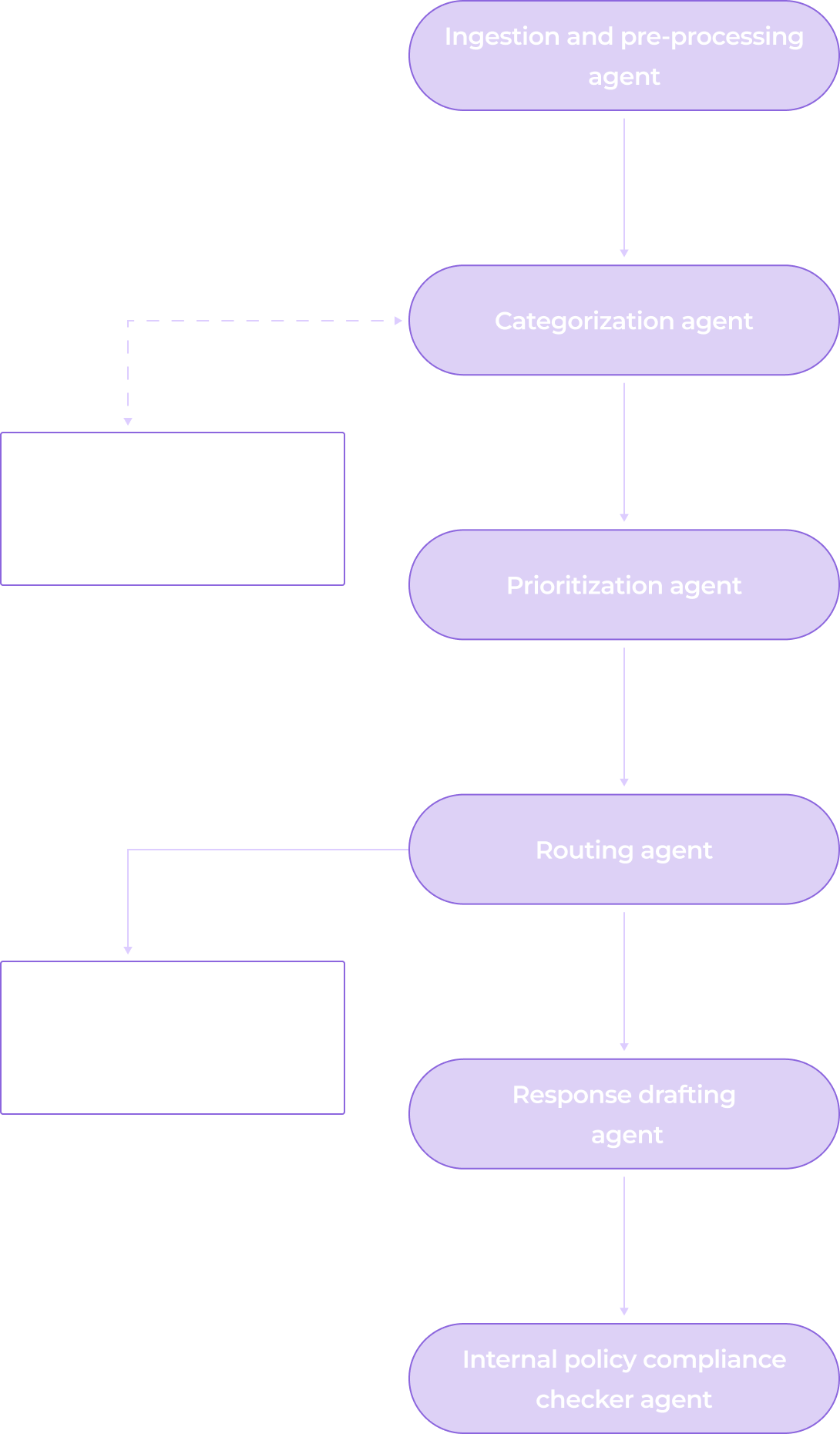
After analyzing the client’s customer support workflow, we suggested crafting six AI agents working within a multi-agent (MAS) pipeline:

  1. An ingestion and pre-processing agent removes personally identifiable information (PII) and other sensitive data and attaches metadata important for prioritization, such as account tier.
  2. A categorization agent analyzes the request and puts it into a relevant issue category, say, ‘wrong product,’ ‘delivery status,’ ‘billing issue,’ etc. If the query doesn’t fit the existing taxonomy, the agent escalates the ticket to human supervisors.
  3. A prioritization agent checks the text for urgency markers (words and phrases such as ‘ASAP,’ ‘immediately,’ ‘I’ve already written five times about this,’ etc.), factors in metadata from the ingestion agent, and assigns priority level from P1 (Critical) to P4 (Low).
  4. A routing agent determines which of the available support teams or individual agents fits best for addressing the issue and assigns the task.
  5. A response drafting agent outlines a preliminary answer to the customer’s query.
  6. An internal policy compliance checker agent inspects whether the proposed response aligns with the company’s guidelines on communication with customers and other policies applicable to the issue, for example, return and refund rules.
A vertical flowchart with purple rounded rectangles showing steps: Ingestion and pre-processing agent, Categorization agent, Prioritization agent, Routing agent, Response drafting agent, and Internal policy compliance checker agent. Side arrows point to Human agents and Support teams.
  1. Data classification and model training

Most AI agents mentioned above were trained on thousands of past customer support tickets. However, training the internal policy compliance checker required a different approach. There simply weren’t enough examples of requests that violated the company’s guidelines to train the model effectively. To solve this, we generated a synthetic dataset of 2,000 conversations that deliberately broke internal guidelines around customer communication, returns and refunds, accessibility and inclusion, and other policies.

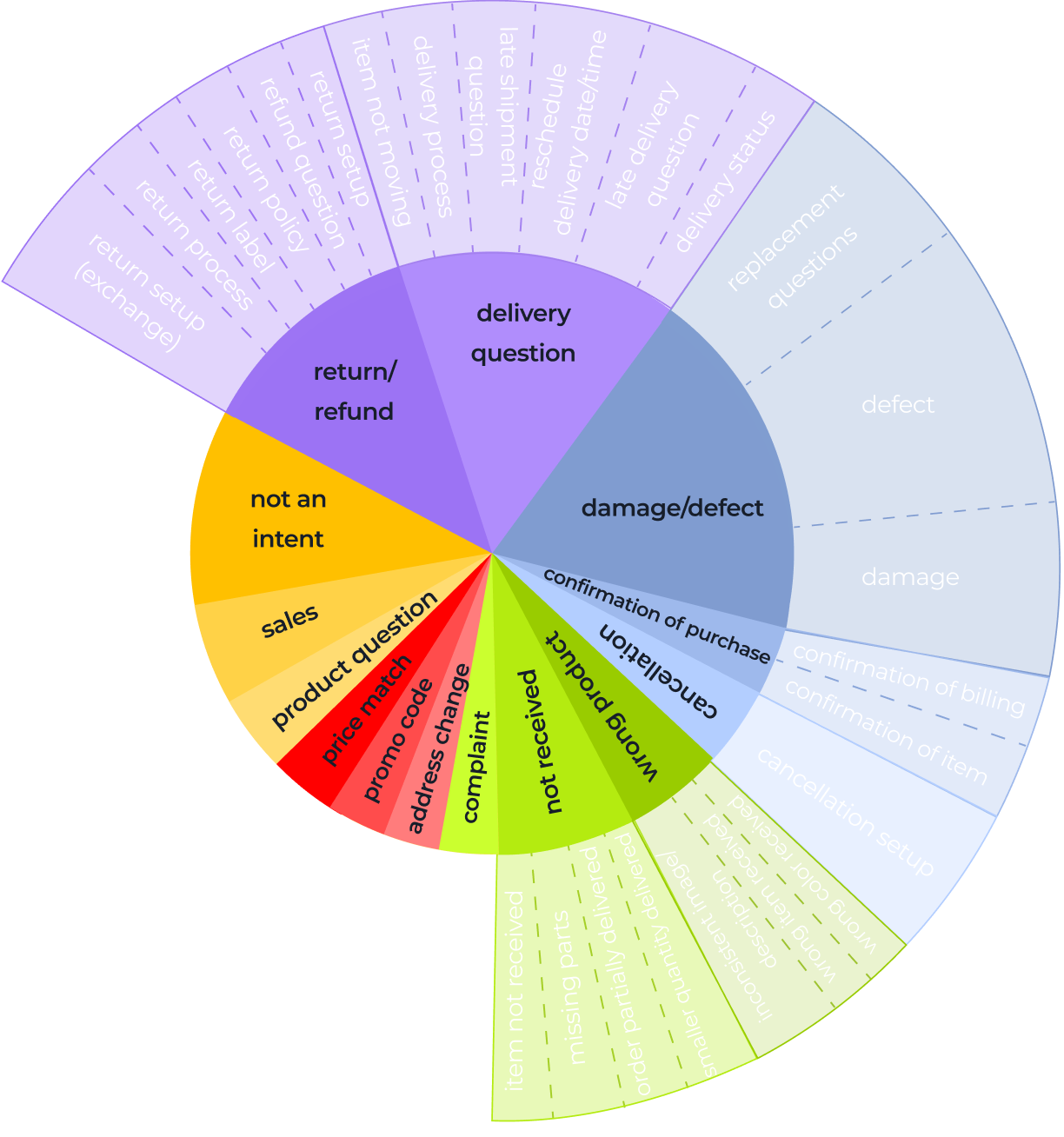
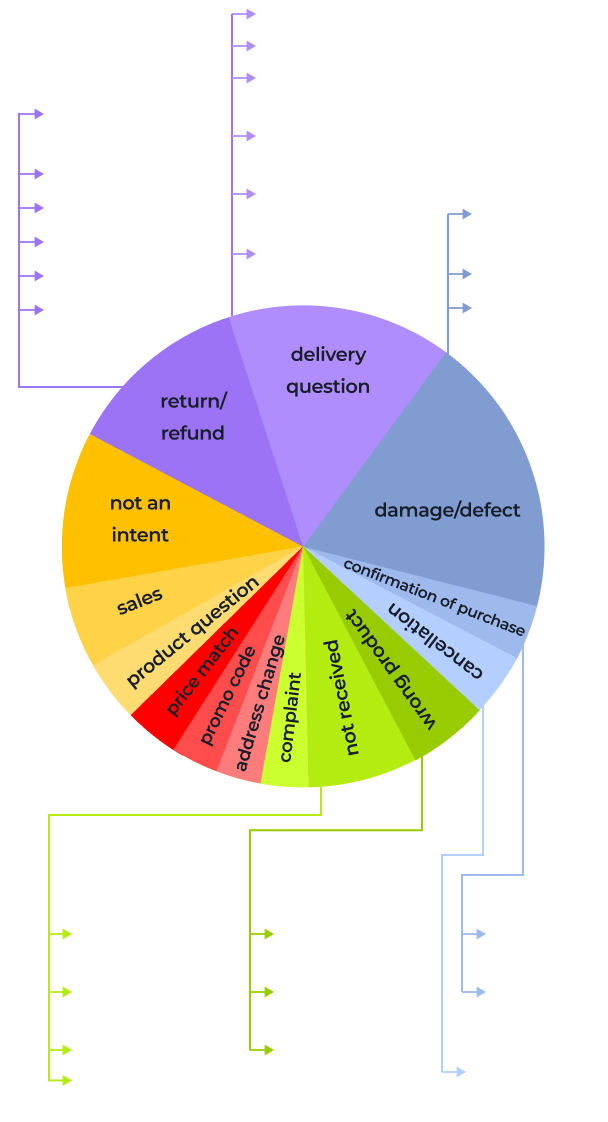
Once the datasets were ready, our team took on data analysis, classification, and labeling to create high-quality datasets for ML model training. As a result, we got a clear picture of the 14 broad categories of customer support requests with 75 subcategories.

A colorful, segmented radial chart shows customer inquiry categories, including delivery, returns, product issues, sales, and complaints, with each main category branching into specific topics such as return setup, product details, damage, cancellation, and billing.
A colorful pie chart categorizes customer inquiries: return/refund, delivery question, damage/defect, wrong product, not received, complaints, price match, product question, and sales. Each segment lists specific issue types, connected by lines with brief descriptions.

The labeled and categorized data then served as the foundation for training the ML models at the core of AI agents. We decided to leverage the pretrained models.

GPT was a perfect fit for drafting a response agent, as the LLM excels at generating polite and brand-safe answers out of the box.

BERT was a natural starting point for the other tasks, given that the model was already trained on the BookCorpus of 800M words and can outperform models like Claude, Llama, Mistral, and others on sentiment analysis tasks.

Nevertheless, BERT didn’t cut it as its inference speed (350 ms) wasn’t fast enough to ensure a seamless customer experience. Therefore, we reevaluated available ML models and switched to DistilBERT, which retains 97% of BERT’s language understanding but is 60% faster. In reality, the new model showed even better results — we decreased the inference speed to 98 ms.

Moving further, we evaluated the model’s performance. 
It showed 87% accuracy in categorization, prioritization, routing tasks, and policy compliance checks.

While this level of accuracy was sufficient, we didn’t stop there and leveraged retrieval augmented generation (RAG) to raise the bar even higher. For instance, we enabled more dynamic, context-aware reactions by allowing DistilBERT to access product reviews in real time. The accuracy of AI agents’ outputs spiked to 92%.

  1. How our AI multi-agent system works in practice

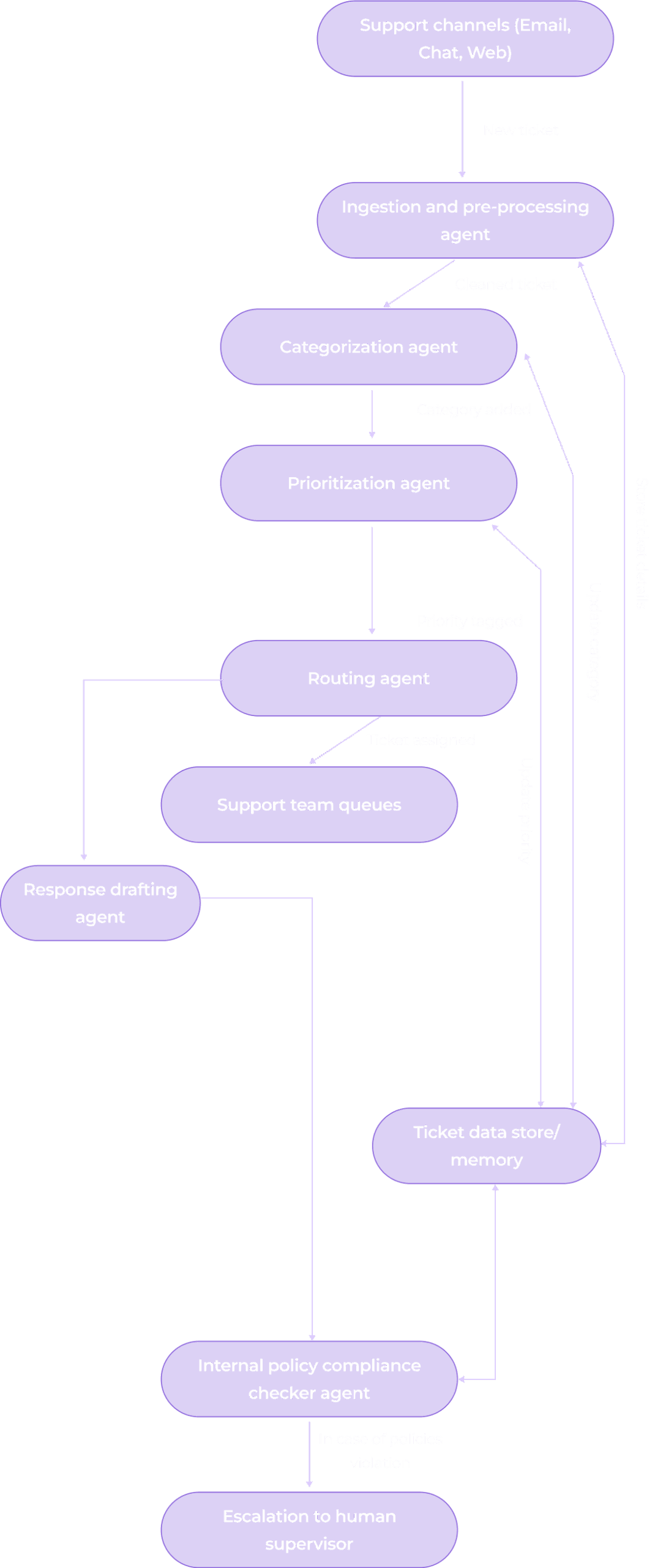
Here’s an example of our MAS handling a customer request.

A flowchart illustrates a customer support process, showing steps from support channels through ingestion, categorization, prioritization, routing, response drafting, policy checking, and possible escalation to a human supervisor. Steps are shown in rounded purple boxes.

A VIP customer wrote to customer support on the website:

Hello, I placed an order two weeks ago. #382911-A, under [email protected]. The tracking still says ‘label created’. I just checked my credit card statement and I’ve been charged twice — once on May 8 and again on May 9. My card ends in 3711. What’s going on? Better sort it out fast.

The ingestion and pre-processing agent removes the email and card’s last digits as it’s either personal or sensitive data. It also identifies the VIP account tier and attaches the corresponding meta tag to the request.

Moving further, the categorization agent identifies intent as billing issues and delayed shipment.

Next, the prioritization agent steps in and factors in metadata and urgency indicators in the customer’s request, such as “better sort it out fast.” Coupled with the VIP status, this ticket gets the highest priority level – P1.

From there, the routing agent takes on and finds the right team to resolve the customer’s issues. Since there’re two problems, it auto-creates two linked sub-tickets and routes them to the billing and logistics departments.

The response drafting agent generates a clear, action-oriented message designed to restore trust and resolve the issue quickly:

Hi Jane, thanks for reaching out, and I’m really sorry for the confusion and delay. I’ve located your order (#382911-A) and escalated it to our billing and logistics teams for immediate review. It appears you were accidentally charged twice, and we’re processing a refund for the duplicate charge. You’ll receive confirmation shortly. Meanwhile, I’ve flagged your shipment for manual tracking so we can get it moving ASAP. Thanks again for your patience — we’re on it!

The internal policy compliance checker agent verifies that the tone of voice adheres to brand standards, no PII is exposed, the refund policy is mentioned accurately, and handles the draft to a human in the loop.

All these operations, that previously took 6–12 minutes per each request, are now done within 
one (!) second. The customer support specialist only needs 1–3 minutes to review the AI-generated message and fine-tune it, if needed.

Such well-orchestrated human-AI agents collaboration enabled the client to reduce ticket handling time by 75%. An unaided support specialist could process a maximum of 70 tickets daily. With AI agents covering the groundwork, humans now each manage up to 250 tickets a day within the same working hours.

Before

  • Human error-prone support request categorization, prioritization, and routing
  • Ticket processing time is 6–12 min
  • A single customer support specialist can process 50–70 tickets daily, depending on their complexity
  • Need to triple the headcount of their support team to tackle the rising number of requests efficiently

After

  • Near-zero error rate at any stage of support request processing
  • Ticket processing time is 1–3 min
  • With an AI multi-agent system handling the groundwork, 
a single customer support specialist can now process 200–250 tickets daily
  • Support team seamlessly handles 4 times more tickets within the same working hours

Business value

  • Real-time ticket triage that was beyond the reach of mostly human-led customer support
  • ×4 faster overall support request processing without increasing the number of customer support specialists
  • 75% reduction in first-response time
  • 15% CSAT uplift

Multiplier effect

Customer support isn’t just a service touchpoint. It’s what turns one-time buyers into repeat customers. In fact, 93%* of consumers are more likely to make repeat purchases from companies that offer excellent customer service.

*According to HubSpot

This impact goes far beyond retail. For companies from any industry, from healthcare to banking to logistics, the speed, quality, and responsiveness of customer support directly affect customer retention, operational efficiency, and overall business profitability.

AI agents offer a smart and cost-effective path forward, helping companies scale support operations without growing headcount.

A person in a suit points at a glowing virtual button labeled “AI Agents,” surrounded by hexagonal icons with “AI” connected by digital lines, representing artificial intelligence networking and technology integration.

Conversational AI Chatbot For a Bank

Conversational AI Chatbot For a European Bank

How strengthening their existing chatbot for customer support with GPT-4 capabilities and voice assistance empowered a Czech bank to boost their 30-day retention rate by 7%, Net Promoter Score (NPS) by 34%, and First Contact Resolution (FCR) by 60%.

Industry:
Finance

Software Product Development

AI Development

Business challenge

The worldwide shift from brick-and-mortar banks with face-to-face interactions to online banking in the 1990s was a major disruption of the banking industry. Since then, it has been one of the technologies shaping the future of finance.

However, customer expectations have evolved over the decades. Customers of all generations shifted towards resolving their queries through a chatbot in a banking app rather than making a call, emailing, or visiting a physical location.

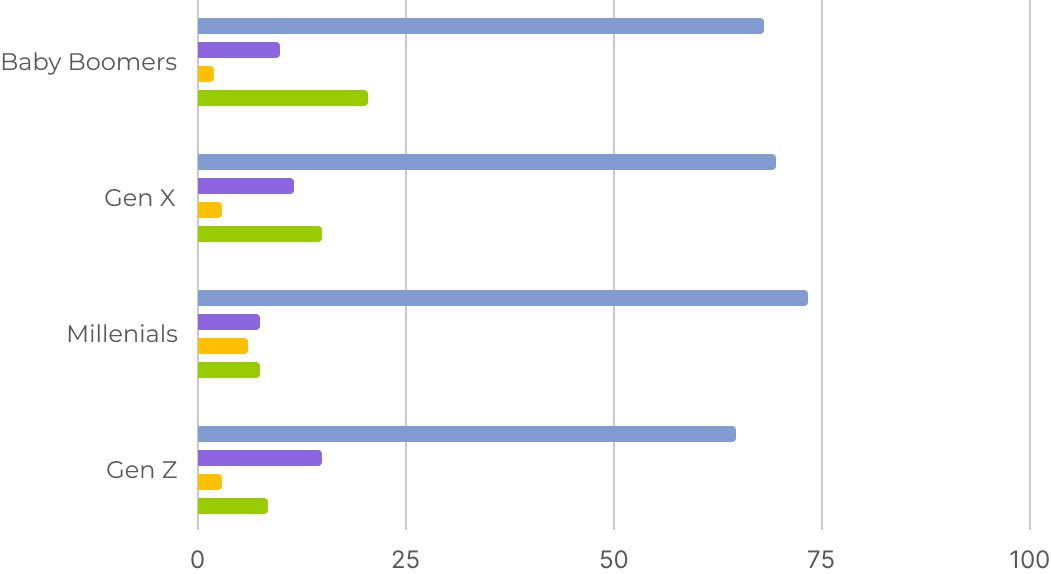
Most-used banking communication channels among different generations

Source: American Bankers Association, 2023

The gen AI boom became one of the main contributors to the rise of customer demands. End users were starving for more human-like, efficient, and fast communication in mobile banking, especially with chatbots as a leading communication channel. And banks had to shape up or ship out.

Our client – a trailblazing Czech bank – saw it as a golden opportunity and didn’t miss the chance to capitalize on it. They have been pushing the frontiers of local banking since 2015, and when the gen AI spike started, the client’s center of excellence immediately concentrated on quick-win strategies of implementing conversational AI in finance services. Enriching their existing chatbot functionality with natural language processing (NLP) and generative AI capabilities became one of the projects at the top of their priority list.

To undertake the initiative, the client needed an AI-savvy tech partner by their side to confidently and safely integrate the new tech. With data security being a high-stakes issue, they were looking for a vendor conformed to the ISO 27001:2022 standard. Instinctools’ data scientists and software engineers took the lead in crafting a stable and secure conversational AI chatbot.

Solution

The client envisioned a gen AI-powered chatbot with an intelligent Siri-like voice assistant. Such an ambitious solution required in-depth knowledge of large language models (LLMs), pattern and speech recognition, and other frontier technologies.

  1. Choosing the project’s AI linchpin

The client’s app has over 100,000 users, and they needed an LLM capable of handling a large volume of customer queries simultaneously. ChatGPT 4.0 was a go-to option, as it can process 12,000+ inquiries and transactions per second even in peak hours. Moreover, this pre-trained language model is well-versed in basic banking concepts and doesn’t require extensive fine-tuning, enabling swift project development.

However, finance institutions can’t hop on the open-source large language model right away due to restrictions of compliance regulations, such as GDPR, CCPA, etc. Banks had to use private models running in a controlled environment.

Hence, we deployed a private instance of GPT-4 within the client’s Azure tenant, connected their initial platform-based chatbot to the LLM through the API, and proceeded with rewiring the banking chatbot’s functionality.

  1. Stepping up text chatting patterns

Moving forward, we provided the LLM access to a sanitized dataset of internal banking data, such 
as answers to the FAQs, information about bank offerings, user guidelines for performing various operations, etc. As a result, human-like conversations have covered finance and card management, transactions, loan management, investing, savings account creation, credit score monitoring, filing insurance claims — the list can go on and on.

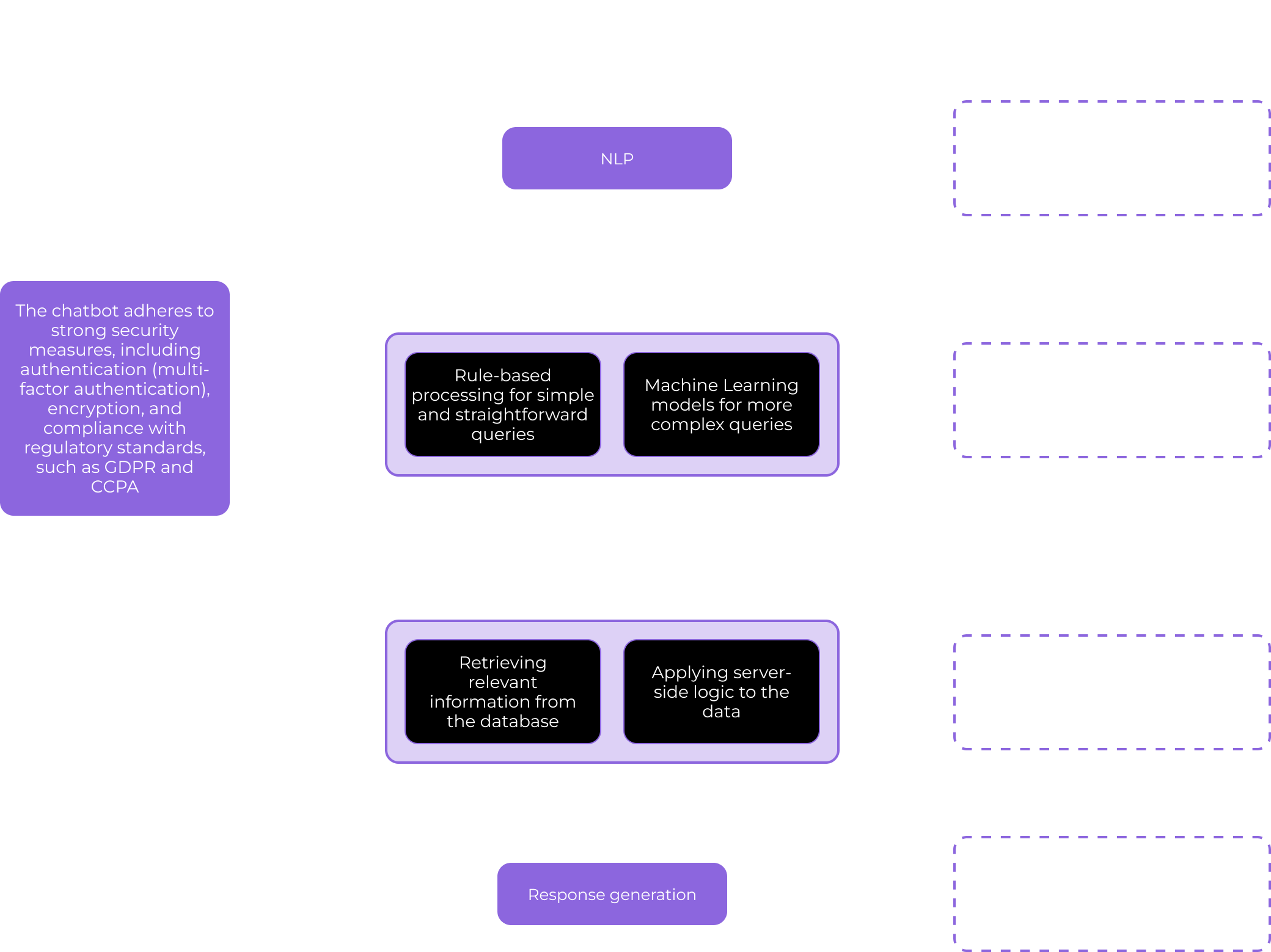
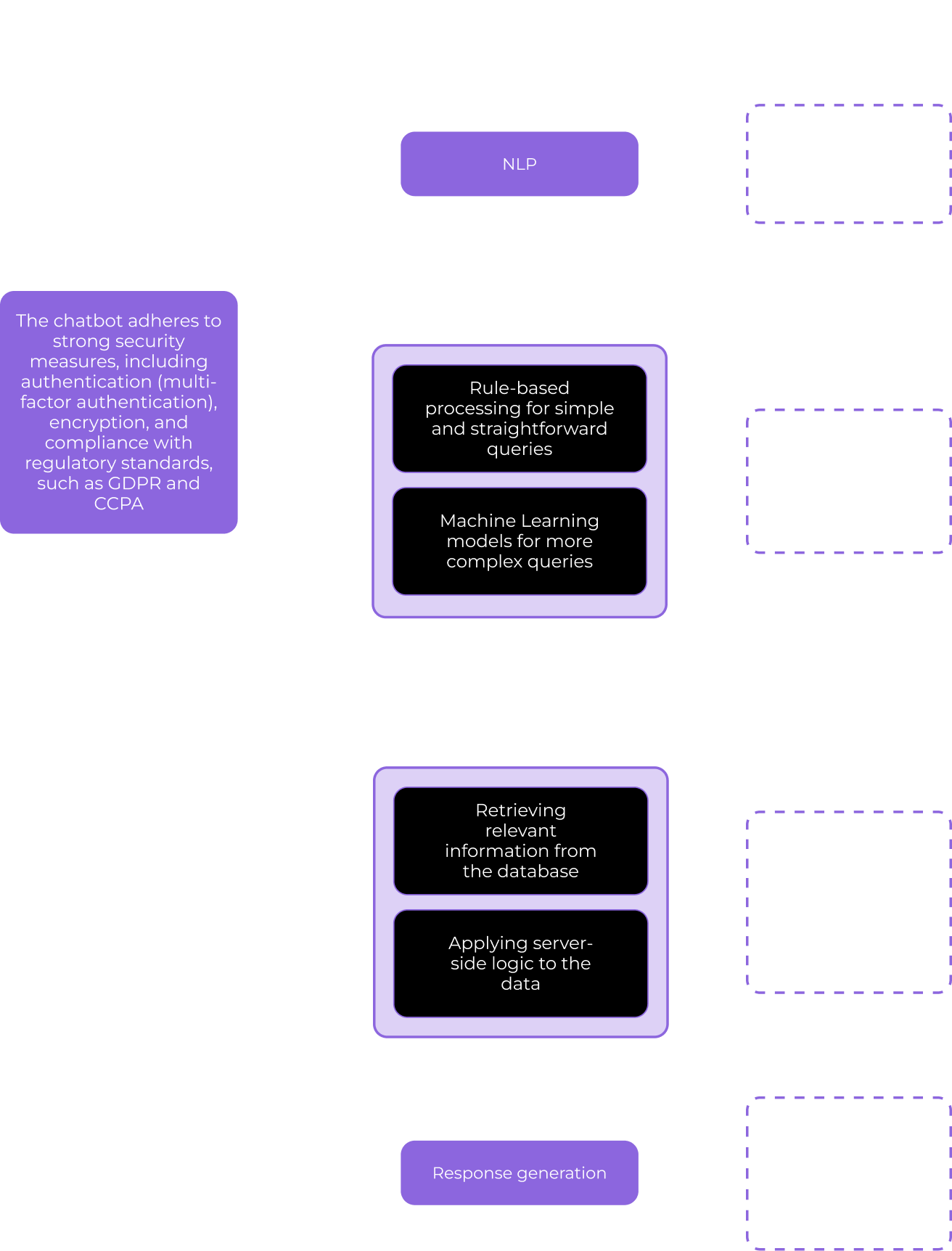
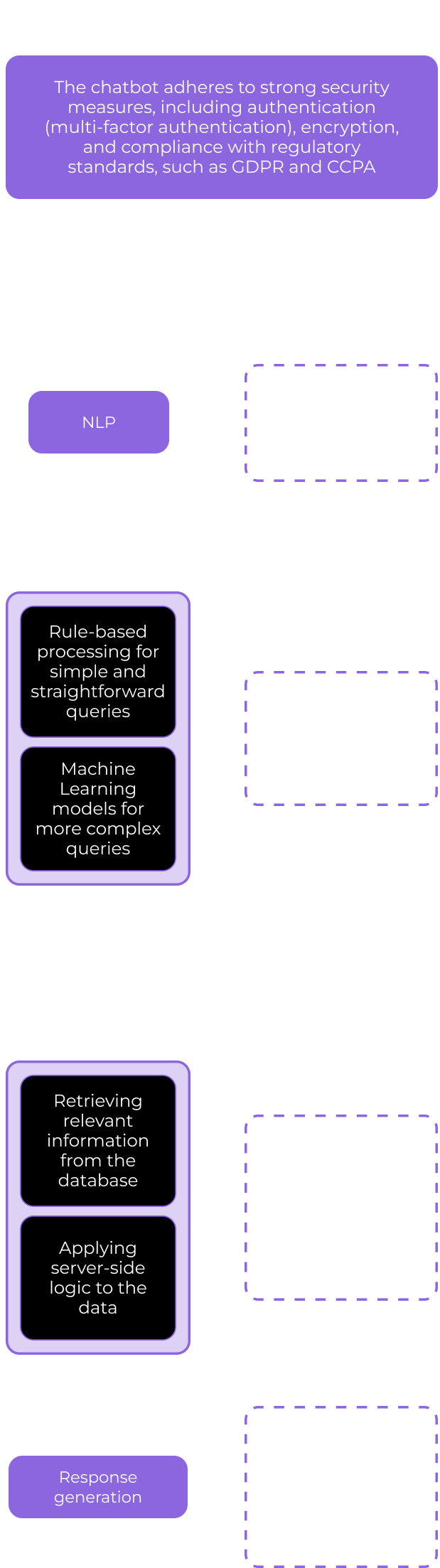
Here’s a high-level scheme of how GPT-powered banking chatbot works:

Integrating GPT-4 capabilities for customer support enabled the bank to solve user queries at least four minutes faster than with their previous middling chatbot. LLM implementation also helped decrease the number of requests that escalated to human support from 37% to 2% and step up First Contact Resolution (FCR) by 60%.

  1. Enabling full digital banking capabilities at the tip of a finger… and tongue

Motivated by their rapid gains, the client doubled down on reimagining user experience with conversational AI for finance. They announced pre-subscription to the new trailblazing features for their existing customers, who give explicit consent to access some of their profile data. In exchange, users were offered to be the first testers of a highly intelligent feature, a personalized virtual financial advisor. By analyzing customer data, their saving and expense patterns, the chatbot provides tailored insights, proactively helping users reach their financial goals.

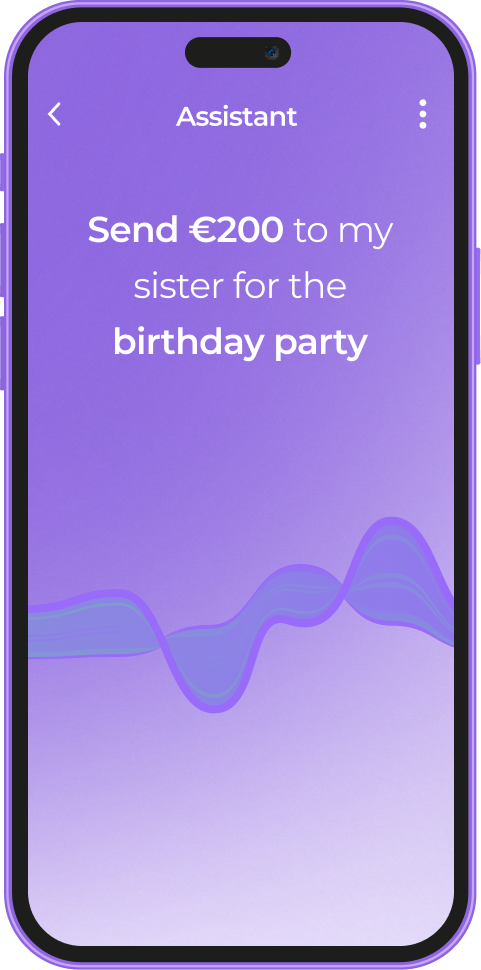
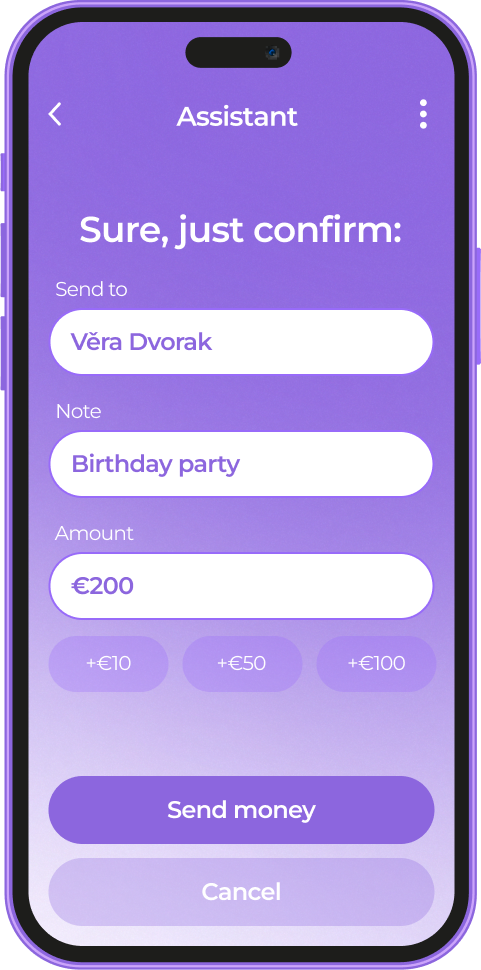
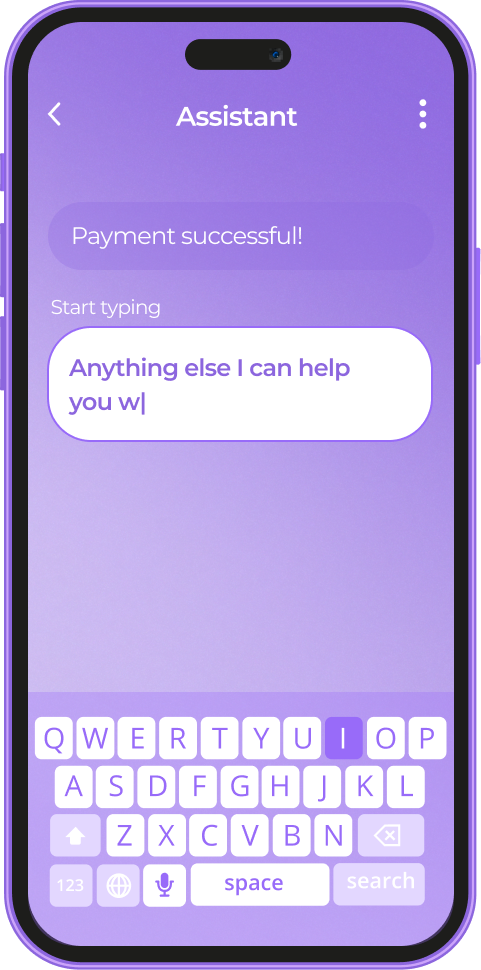
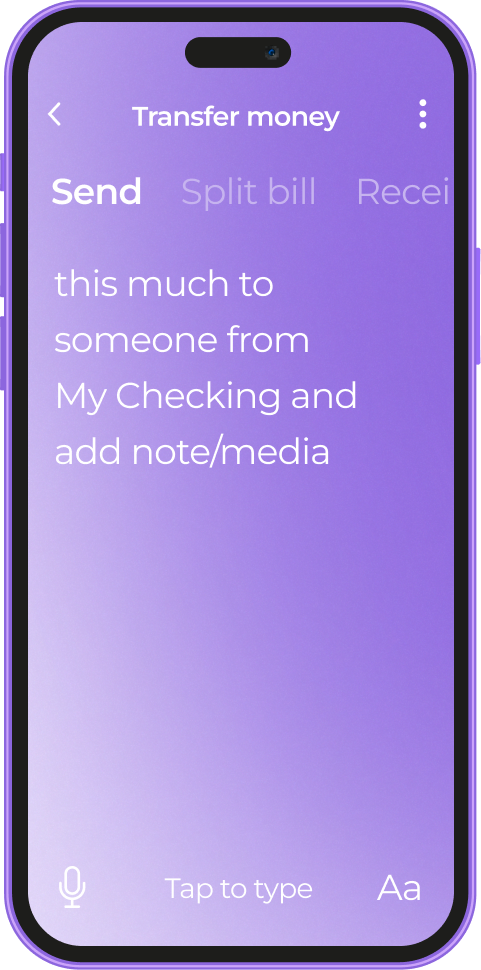
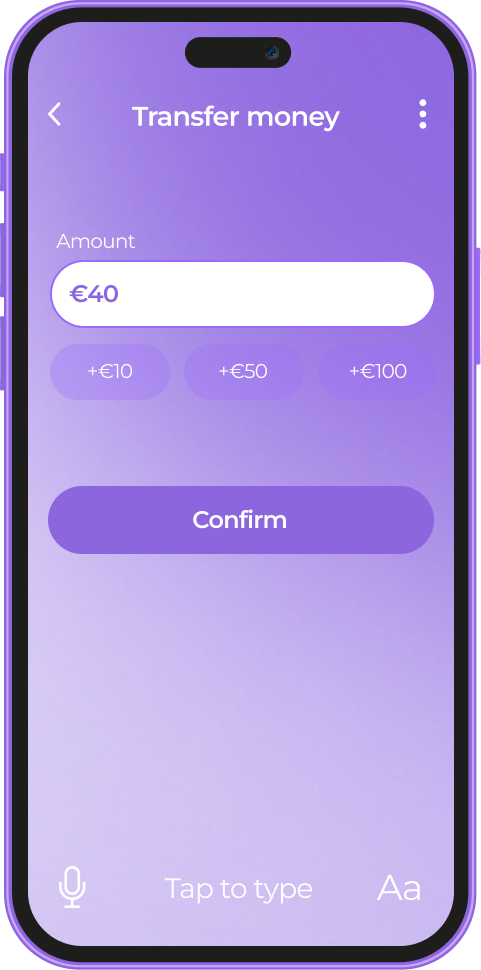
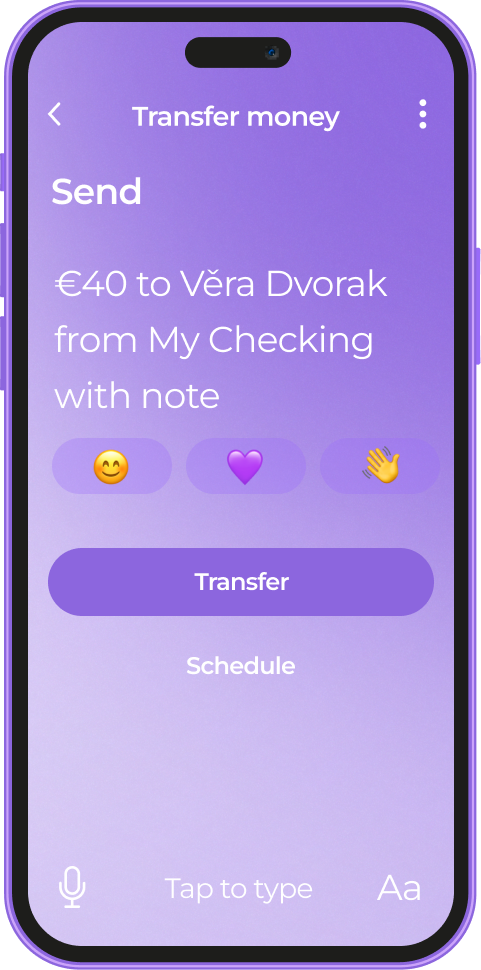
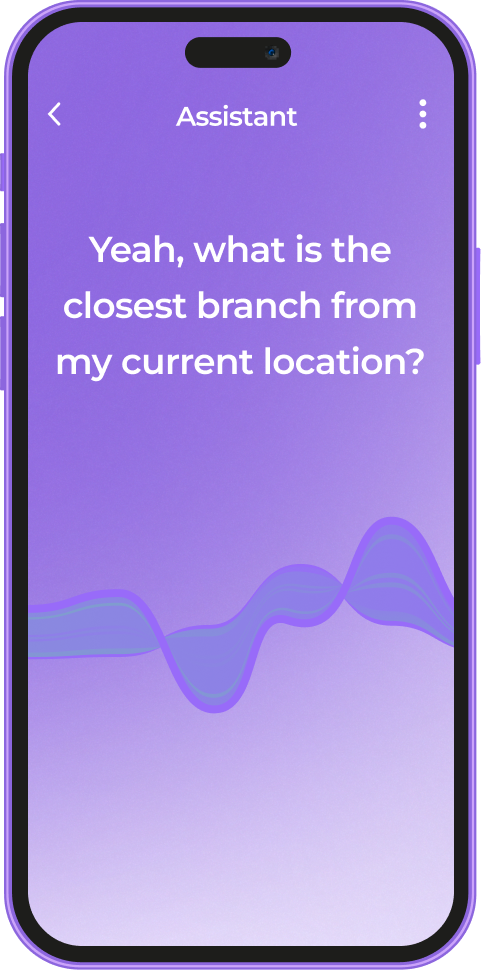
Another grand step was the adoption of automatic speech recognition (ASR). Customers can now effortlessly manage their finances with simple, conversational commands. With voice-activated banking, users can send money, check balances, and more, all with the ease of a casual conversation. For example, if a user says, “Send €150 to my mom,” the bot will immediately generate a confirmation form for this request.

Pattern recognition under the hood of the chatbot enables it to anticipate the user’s needs, spotting keywords, such as “pay”, “send”, “transfer”, etc.

Here’s, for instance, how the software reacts to the word “send” based on the user’s spending habits.

Other examples of operations the voice assistant covers include managing users’ cards, monthly budgeting, creating savings accounts with goal setting, making investments, and much more, all directly from the dialog box.

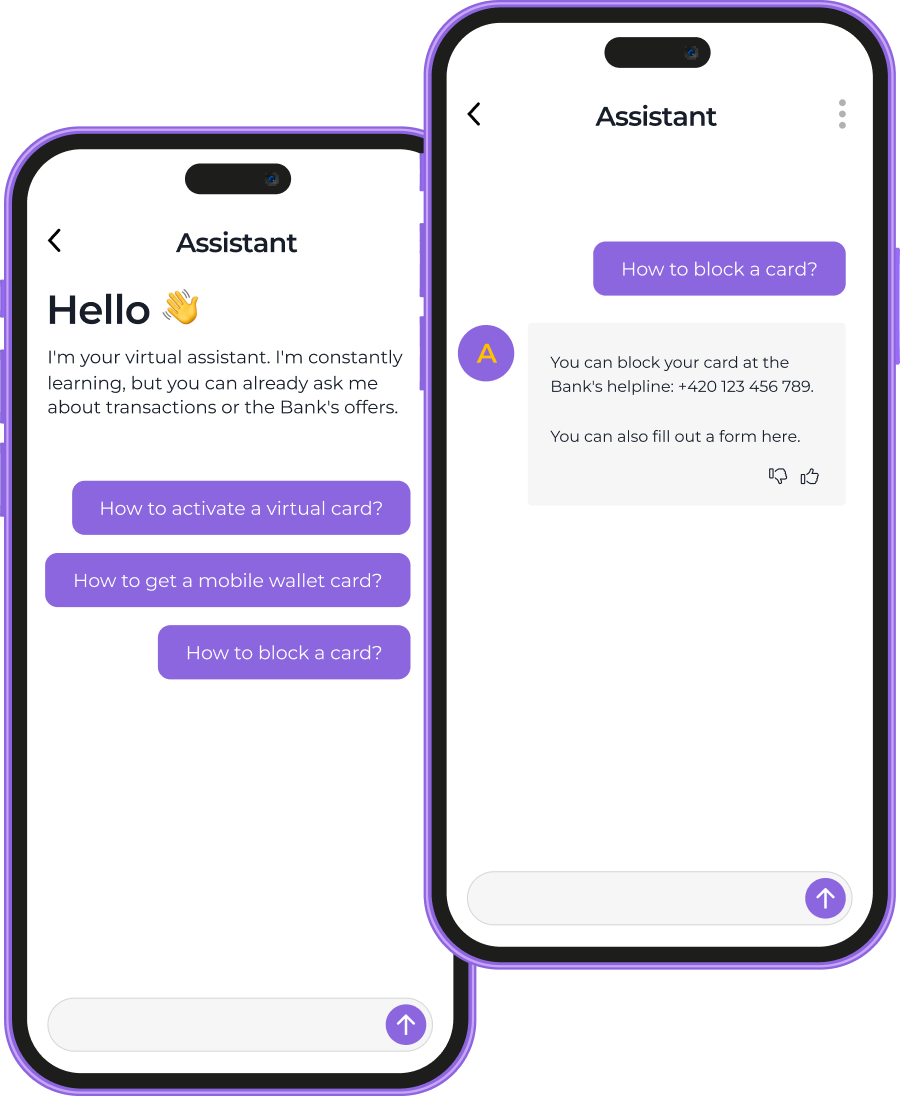
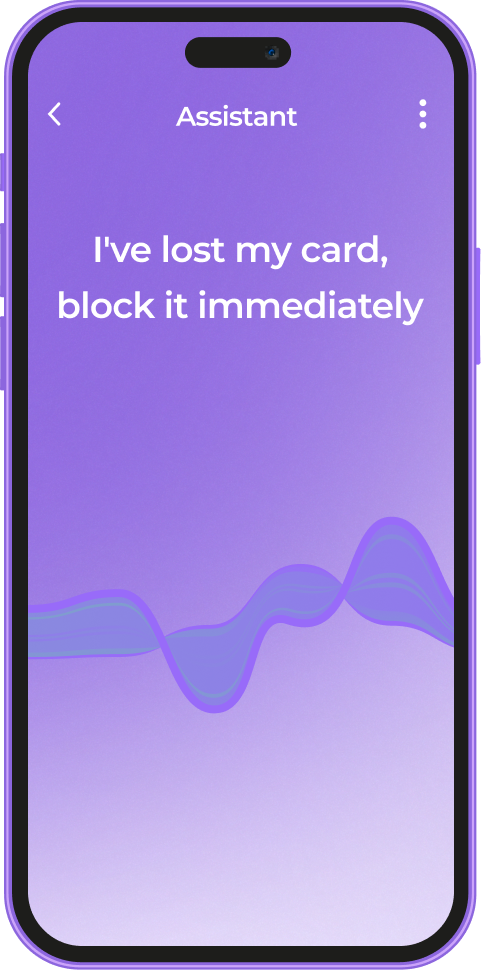
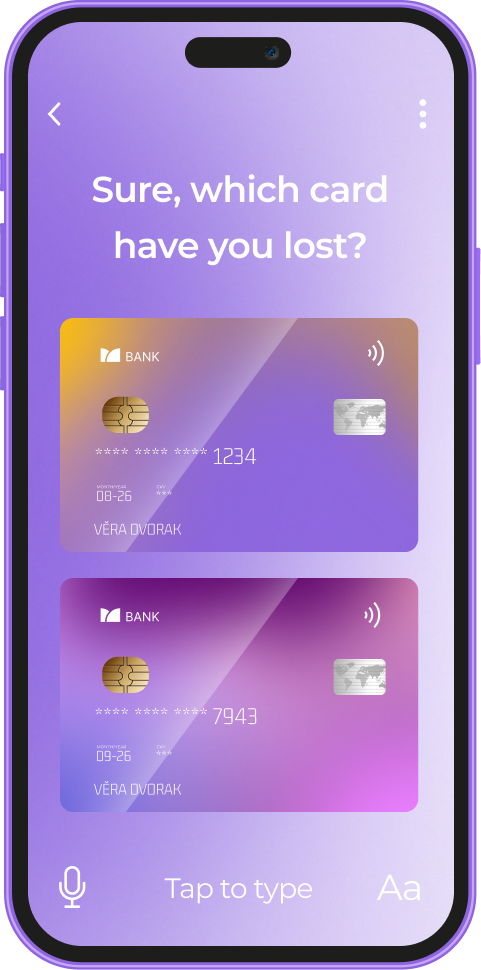
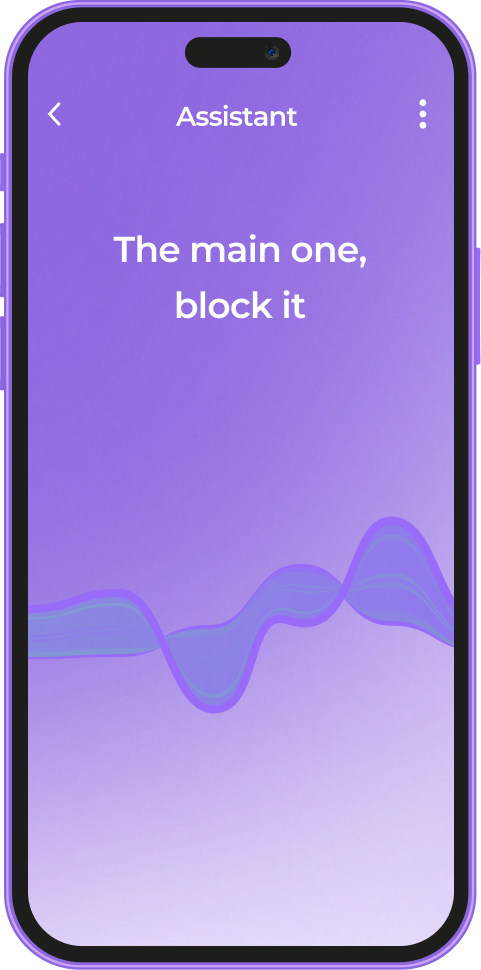
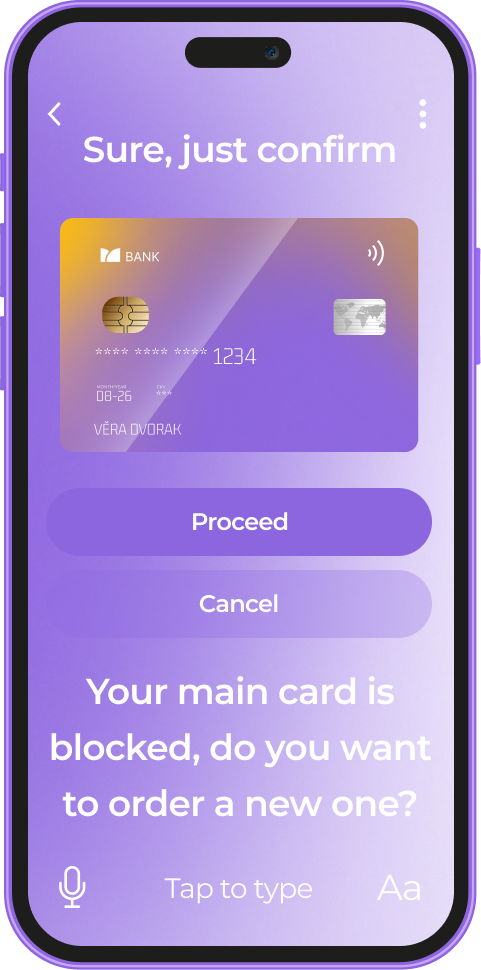
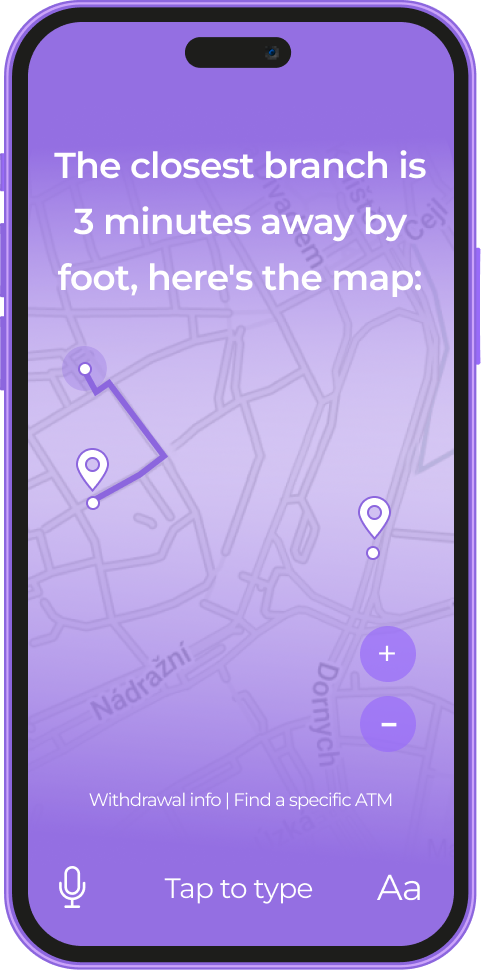
Here’s an example of a conversation for reporting and blocking a lost card. The assistant guides a user through identifying the missing card and provides information for the next steps, including ordering a new card at the nearest branch.

An experimental AI-driven chatbot has been a resounding success with users, resulting in a 7% boost in a 30-day retention rate. After making this feature available for all the users, our client also saw a noticeable increase in customer loyalty and satisfaction, measured in Net Promoter Score (NPS), which went up by 34%.

Before

  • Old chatbot could cover only the most rudimentary user queries
  • 37% of queries escalated to human support
  • Text-based communication with the application

After

  • Advanced demand forecasting with a deep learning engine at its core
  • New chatbot can serve as a personal financial advisor
  • 2% of user queries get to the client’s call center
  • Interaction with the app through a voice assistant

Business value

  • The first gen AI-driven personal financial advisor in the Czech mobile banking market
  • 60% step-up in First Contact Resolution (FCR)
  • 75% increase in Query Deflection Rate
  • 7% boost in a 30-day retention rate
  • 34% rise in Net Promoter Score (NPS)

Multiplier effect

As much as conversational AI in finance is reshaping the banking sector, it’s also changing the game for other domains, from healthcare and ecommerce to manufacturing and logistics. If your app implies communicating with end users, it has room for gen AI adoption.

Conversational AI enables your app to intelligently process users’ needs on the fly. Just like saying “I’ve lost my card” initiates a card-blocking procedure, AI streamlines critical processes in other industries.

Anna Vasilevskaya
AI modified real photo
Anna Vasilevskaya
Account Executive

Get in touch

Drop us a line about your project at
[email protected] or via the contact
form below, and we will contact you soon.