Software Modernization For a Canadian Machinery Manufacturer
How redesigning and enriching their existing app with new features armed a machinery manufacturer with a leading-edge mining equipment monitoring system, allowed them to spot maintenance issues on average three months earlier than they used to and decrease machines upkeep costs by 23%.
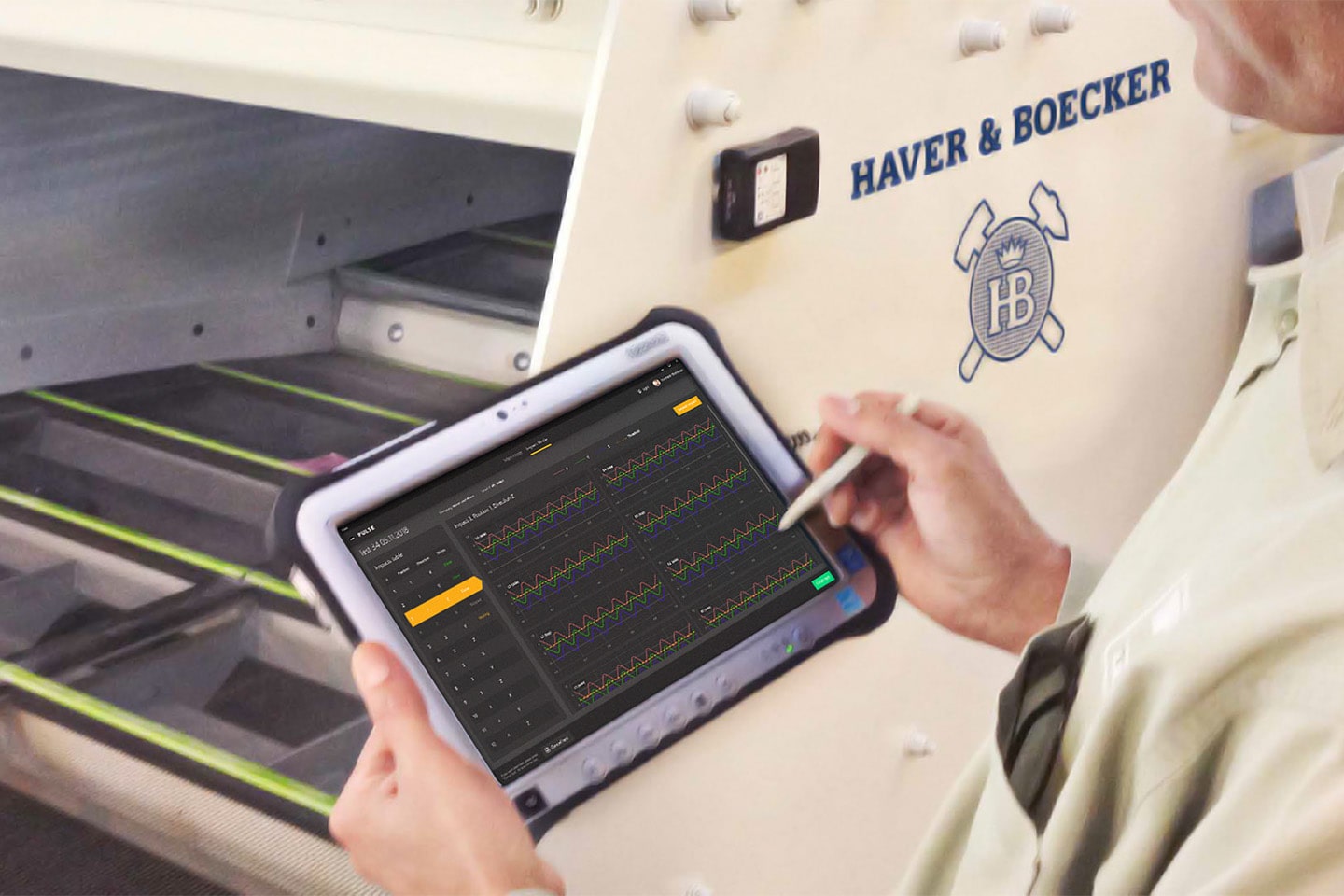
The company needed a modern and an easy-to-use application to execute tests and to monitor condition of mining equipment – vibrating screens for segmentation of friable material by particle size. Thus, the following tasks were set for *instinctools team:
Existing application code refactoring;
Full redesign of the application;
New test mode development and integration.
Solution
To meet the tight deadline and client’s needs, we chose Kanban approach for Agile application development, which implies full transparency of working processes and real time discussion of production.
The Spring Framework with C library was used for application implementation on Java.
Key features
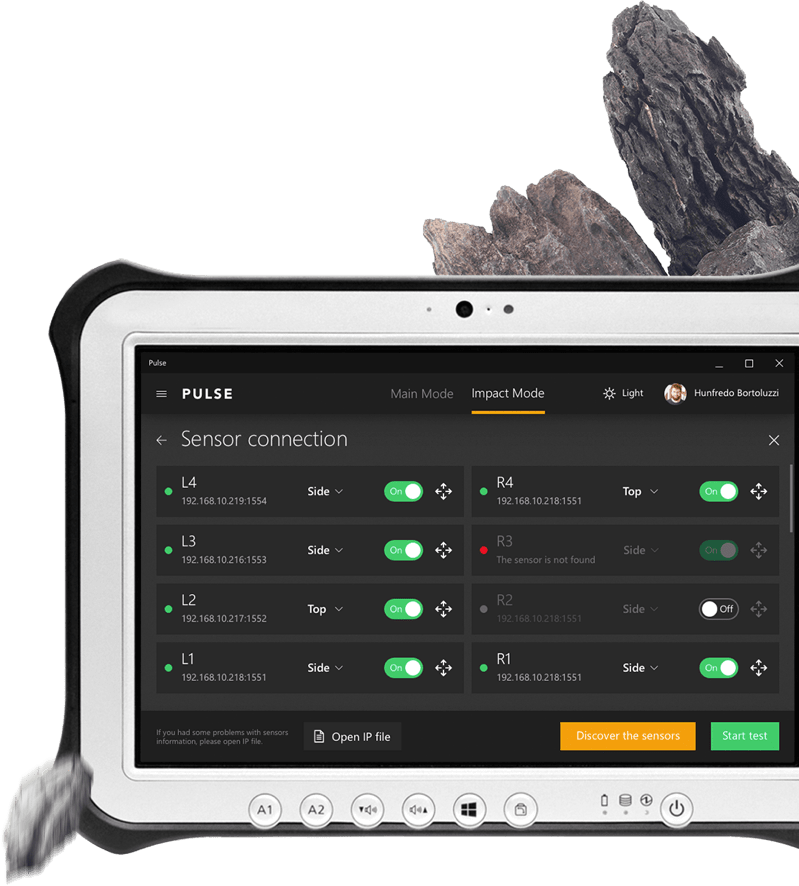
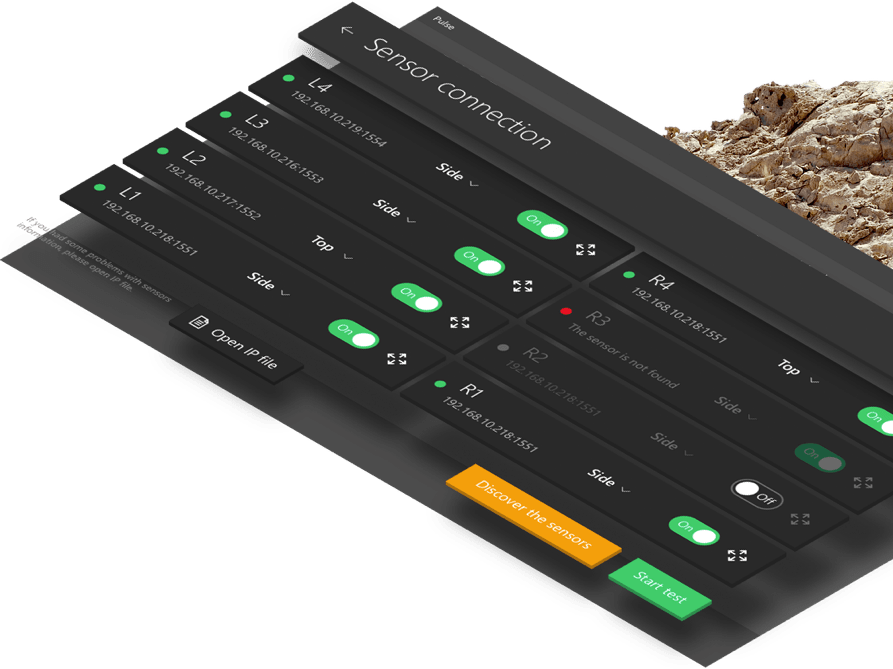
Final result from good teamwork exceeded all customer’s expectations. The client received a fully renewed application with the following features:
Impact mode — testing of vibrating screen elements from exposure to them at rest;
Orbit mode — testing of vibrating screen elements at work;
Reports generation with cloud storage;
New application design with user-friendly interface;
Application management system.
Value
Data for research
In addition to usability and two modes of testing the app provides information about the condition of machines owned by the company and company’s clients in order to conduct further research.
Cost saving
Real time monitoring of vibrating screen at work cuts costs on maintenance and shortens wait time in case of unexpected vehicle breakdown.
Further improvement
All data and research conducted through this application will help the company improve other products.
Document Management System For a Healthcare Company
How adopting new features empowered a HealthTech company to take their DMS software to the next level, fully automate document management, and put an extra coat on personal information protection.
SAP Commerce Cloud (Hybris) Migration For a Retail Company
How switching from their outdated ecommerce software to SAP Commerce Cloud helped a European company improve scalability and integration potential of the system, hone personalization, and level up customer satisfaction by 13%.
At some point shop’s management became too difficult, so demand for a customization based on customers geo location has greatly risen. The work was unproductive without centralized management system.
The key requirement for our development team was the ability to deliver across a wide amount of technologies and platforms, including desktop and mobile, and offer a complete set of services, from business analysis and development to quality assurance, support and creation of comprehensive project documentation of new features. The major dev task was to move PHP written code to a new platform, keeping old design and preserving extended functionality.
Solution
We were asked by our client to make a switch from PHP to SAP Commerce Cloud, a Java based ecommerce engine. As part of our PHP development services, we analyzed the PHP code and the old system functionality. Some of functionality was refactored and redesigned. Missing functionality was developed according to business needs and new rules.
Key features
Single codebase for many shops
Easy extendibility/flexibility
Ecommerce solution “from top to toe”
Channel selection
User Features
Easier for workers to control the operations of new shops
Easier to scale up the business
Shop assistants spend less time on shop’s сare-about and get more flexible pricing system
Easy integration with a third-party applications provide further customer company expansion
Wide range of payment & delivery options
Flexible progress hop: after successful implementation of innovation in one shop - diffused on the rest of other client shops
How implementing visualizations into an educational platform and honing its UX allowed an EdTech startup to experience an 11% boost in newly registered users.
The customer contacted *instinctools while looking for a contractor to help them implement several new features to their platform based on ExpressionEngine. Due to the startup nature of the project, cost was a major factor. The cost/quality ratio offered by *instinctools turned out to be the best among all of the other competitors.
The customer hired a senior PHP developer to work on a number of challenging data visualization tasks.
The goal of the project was to modify the platform and to add a number of useful features to the existing functionality.
Solution
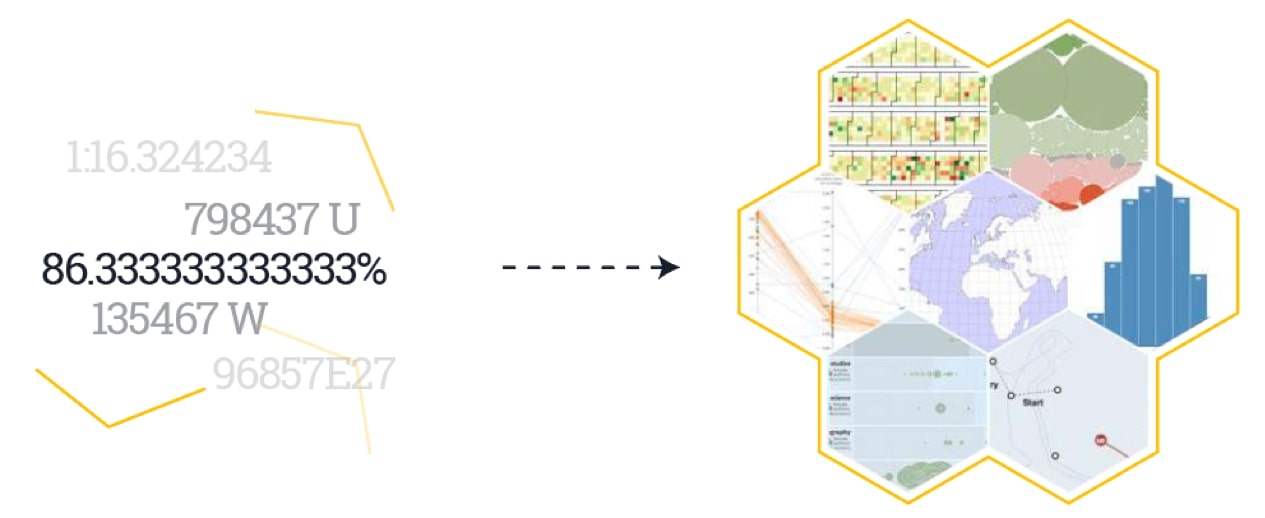
The problem was solved by the creation of complex charts for visualizing the relationship between admission success and various parameters:
Test results
Number of unique words in the application essay
Selected major
Charts were built using the D3 JavaScript library. However, the key challenge behind this task was to calculate the number of unique words. This required the use of the phpMorphy library for lemmatization.
Key Features
All of the necessary features were successfully implemented to the platform including:
An adaptive user form completion wizard
comprised of multiple steps.
Automatic filling of user forms with data from
student application forms in PDF file.
As a result, the use of the platform has become much more comfortable for its users.
The customer was pleased with this cooperation and plans to outsource more development tasks to *instinctools upon receiving an additional round of funding.
Legacy System Modernization For an Environmental Company
How migrating from no longer supported VB6 to Java provided an environmental company with an app that seamlessly handles multiple customer requests at a time.
Customers turned to us with the following problems:
They needed a convenient way to build complex queries in the database.
There were some performance problems with the client’s site. The system was running slowly in the case of multiple requests.
Customers needed to restrict access to the application using a White IP List where access would be allowed only to certain IP addresses.
There was a need to synchronize data with other databases.
It was necessary to construct graphs based on the processed data (e.g., “Number of bags per hour,” “Number of shipments per hour,” etc.).
Customers needed improvement of TimeSlot overview and scheduling. It was necessary to develop an electronic schedule (organizer) enabling the reserving of time for unloading and servicing of trucks with bottles.
They needed the ability to obtain additional user data from LDAP.
Solution
The problem was solved in the following way:
To enable easy construction of complex queries in the database, we suggested and implemented the use of Querydsl.
We optimized and used cache data to solve the performance problem and improve the operation speed when there are multiple requests.
To restrict access to the application, we implemented Interceptor for requests intercepting and filtering (White IP List and Whitelist for paths).
We implemented a file manager based on Qdrive.
To construct graphs on the basis of processed data, we used an additional module of chart.js.
We developed a data model and implemented basic logic for CRUD operations in accordance with business requirements (frontend and backend sides).
We developed Time Slots Overview – an electronic schedule (organizer) to reserve the unloading time of the machine with bottles, featuring marking of fields “reserved time” / “available for reservation time” / “unavailable for reservation time” by different colors. The mechanism takes into account the overlap of reserved periods, and automatically suggests the nearest free time, if the time the customer has chosen for reservation is already taken. After reservation, the customer can view its details at any time.
We created jobs or scheduling tasks for processing the scheduled data.
We developed a variety of services for the system, for example, MailService – a shared service to send e-mails.
Key features
Access by roles
Sending e-mails
History of the entities’ changes
Report generation
Display of the data in graphs
Receiving and sending data to external terminals and databases
Imitation of logging in as a different user for the administrator
Tasks that process data in manual or automated mode
Technologies
MySQL
AngularJS
Autocad
Gradle
JasperReports
AI modified real photo
Anna Vasilevskaya
Account Executive
Get in touch
Drop us a line about your project at [email protected] or via the contact form below, and we will contact you soon.
By continuing to use the site, you agree to the use of cookies