Rapid Prototyping Services for SaaS

Rapid Prototyping of a Recruitment-Focused Software For a French SaaS Startup

How banking on AI-driven rapid prototyping instead of the traditional approach enabled a French startup to validate their business idea in 4 days instead of several weeks and cut down the cost of developing a product demo by 60%.

Industry:
Technology

AI Development

UX and Design

SaaS Development

Business challenge

“Take your time” doesn’t apply to testing business ideas. If companies aim to get ahead of competitors, they need to test their hypotheses fast. And the timeframe for “fast” has shrunk over the past years. Back in the pre-GenAI era, it was fine to spend up to 8 weeks working on the wireframes, low-fidelity prototypes, and then high-fidelity ones. In 2025, with all AI capabilities available, even two weeks is a luxury. 

For our client, a French SaaS startup, speed to proof could make or break their fundraising efforts. They had an idea of an applicant tracking system (ATS) with the workflows tailored to French labor laws, local data regulations, equal opportunity compliance, etc.

A solid product demo was a must-have to achieve two goals in one go:  

  1. Validate the idea’s viability
  2. Get a tangible asset to “show, not tell” investors to win their financial support

To make it happen, the client needed a software partner well-versed in AI-driven SDLC practices who could deliver a clickable prototype of a future product ASAP. That’s when *instinctools entered the picture.  

Solution

One of the practices our teams lean on to speed up the development process is rapid prototyping with workflow automation platforms. For this project, we used n8n, where software engineers can orchestrate complex workflows with a visual workflow builder instead of hard-coding.

Beyond ease of use, n8n stood out for being:

  • Open-source. With full control over the data, it’s easier for the team to ensure air-tight safety of sensitive information.
  • Scalable. n8n is useful for more than prototypes, as the platform can seamlessly handle up to 220 workflow executions per second.
  • Secure. It’s a SOC 2 audited software with strong access control, debugging, and monitoring mechanisms out of the box.
  • Budget-friendly. With the self-hostable approach, the tool is free to use if you run it on your cloud or hardware.

We started with backend prototyping to ensure the product demo checks all functionality and compliance boxes from the get-go:

  • Integration with Pôle Emploi (French national employment agency), where all job openings have to be posted
  • Integration with the URSSAF portal to submit the DPAE (Déclaration Préalable à l’Embauche) directly without separate logging into the system
  • Integration with local payroll and HRIS vendors, such as Cegid, ADP France, and PayFit, for hitch-free compliance audits and downstream processing
  • Alignment with CNIL (Commission nationale de l’informatique et des libertés), as it enforces French-specific laws on data privacy, such as a 24-month limit for storing the candidates’ CVs

With all the integrations wired up, our UX/UI designers created a clickable product demo. Here’s an example of a drag-and-drop interface that lets HR managers select an applicant’s hard skills.
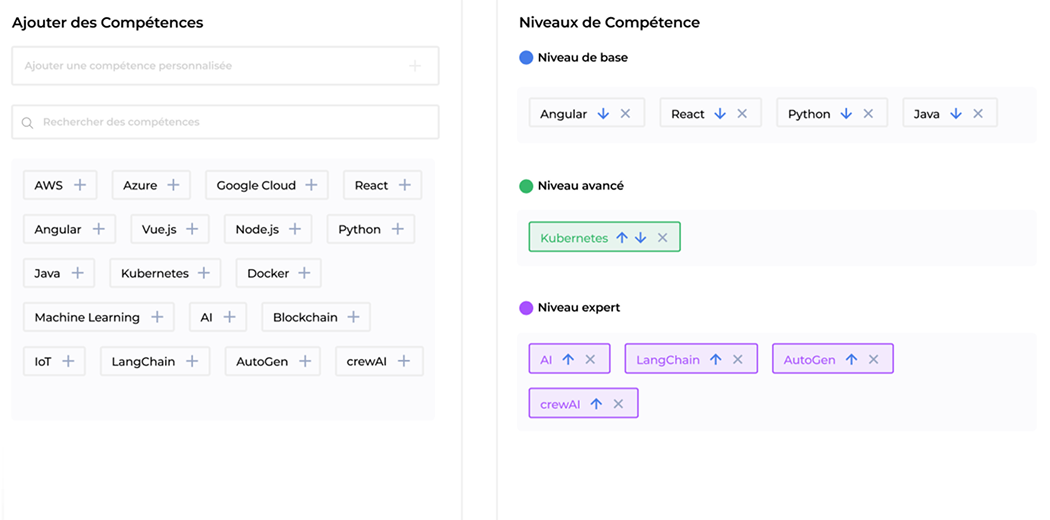
A user interface in French for adding and categorizing skills. On the left, selectable skill tags like AWS, Python, Java, and Docker. On the right, skills are sorted into “Niveau de base,” “Niveau avancé,” and “Niveau expert” with colored tags.

Four days after the start of the cooperation, the client had a working demo in hand. Not only did it prove the idea to be valid, it also became the centerpiece of their administrative, technical, and financial materials for investor pitches. Within six months, they raised €1 million to accelerate the next stage of development. 

Multiplier effect

Alongside startups in need of financial support from investors, rapid prototyping is a game-changer for established companies wanting to test their hypotheses faster. Earlier, business ideas used to pile up in the backlog, waiting for the team to catch up. 

With AI-powered rapid prototyping, idea verification becomes far less resource-intensive. Development teams no longer need weeks to create a high-fidelity, clickable product prototype – several days are enough. Testing the viability of new features takes even less time and can be done within hours. 

Six hands, each wearing differently colored sleeves, work together to connect four white puzzle pieces over a black tablet on a white table, symbolizing teamwork and collaboration.

Business value

  • Solid product demo ready in 4 days
  • – 60% in the product prototype development cost
  • Prototype features can be reused for full-scale product development
Custom Inventory Management System

Rewiring Inventory For an Eyewear Manufacturer
And Retailer

How replacing an overpriced SaaS inventory system with a custom, feature-rich IMS enabled a French eyewear manufacturer and retailer to double the RFID scanning speed and accelerate tag verification x3.

Industry:
Ecommerce

Enterprise Automation

Software Product Development

Data Visualization

Business challenge

Retail companies know better than anyone that inventory is a part that can make or break your business’s success. Understocking at critical times and locations can lead to dissatisfied customers. Meanwhile, maintaining a large stockpile brings its own challenges, including storage and insurance costs, the hazards of spoilage, theft, and damage. The ability to strike the balance between having ‘too much’ and ‘not enough’ hinges on inventory management. That’s why it’s critical to take care of its accuracy, transparency, and sustainability.

However, despite the abundance and diversity of ready-made inventory products, finding the one that fits your budget and completely fits your needs is still tricky. For companies that strive for flexibility and full control over the inventory management system (IMS), custom software development is more likely to be the best bet.

Getting inventory in order was the ultimate goal of our client – a French eyewear manufacturer and retailer. It was their fourth project with *instinctools – our team had previously developed several applications for the client’s ecommerce ecosystem.

Their inventory processes were already automated and relied on barcode and RFID scanners, but the SaaS software the client used was costly and feature-limited, failing to cover the company’s operational needs.

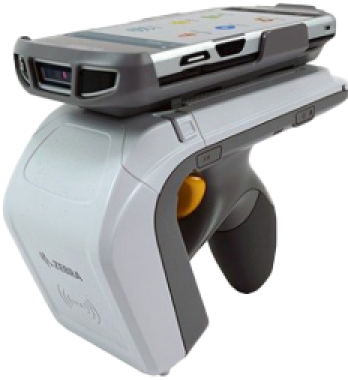
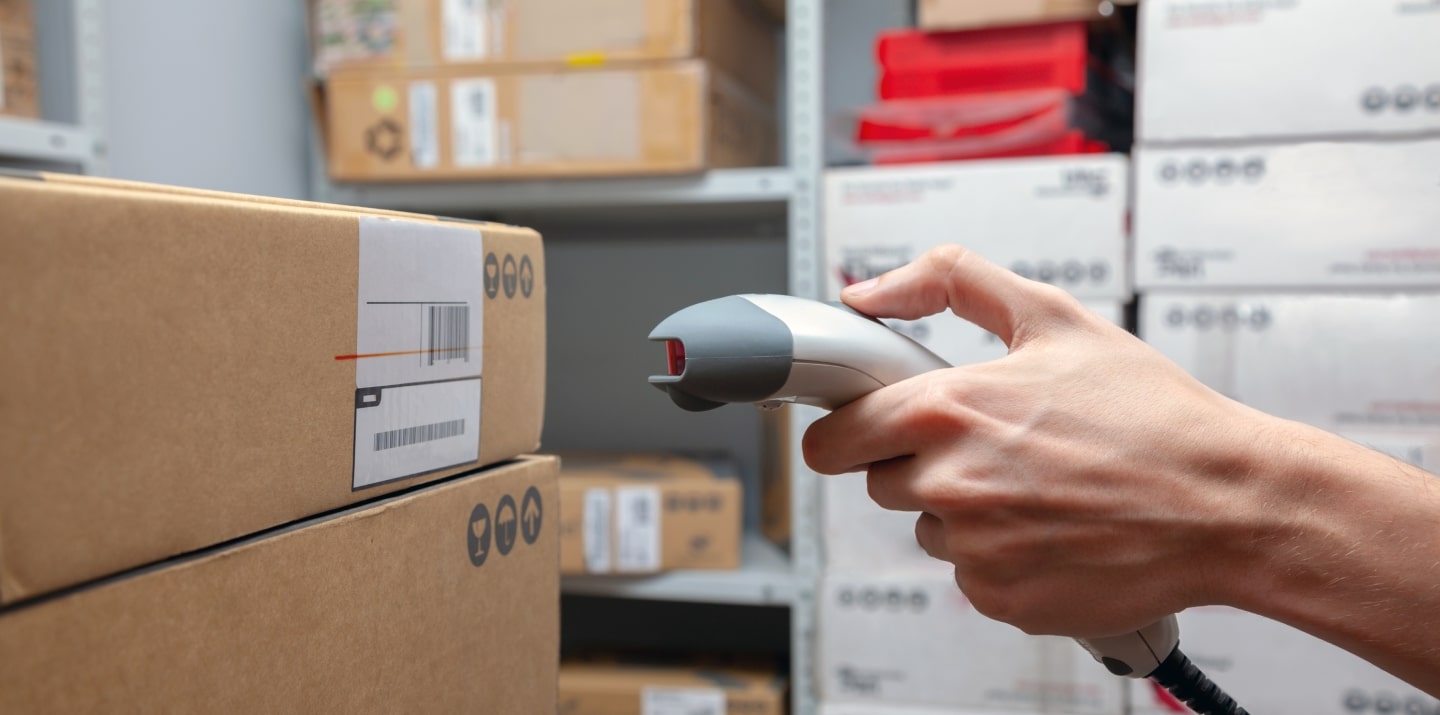
Barcode scanners

are designed for line-of-sight scanning within one to two feet; they’re a go-to option for individual product locating and tracking.

Radio frequency identification (RFID) scanners

read data with in an up-to-20-feet range and can near-simultaneously scan multiple tags, but they lack accuracy compared to barcodes. They’re the perfect fit for large-scale tasks such as warehouse management.

As their unmet requirements for IMS functionality kept snowballing, the client faced a dilemma, whether to pour money into adding new features to their current system or invest in a custom solution.

To escape the vendor lock, they decided to opt for their own feature-rich software with unlimited scalability potential.

Solution

The client needed a device-agnostic solution that wouldn’t cost a fortune. Therefore, we went with the idea of a cross-platform app. As other client’s applications were already written in React Native, there were no doubts about the tech stack for the inventory software.

What challenges did our dedicated team face and overcome while crafting a powerful app that fully covered the client’s inventory-related workflows?

  1. Stabilizing third-party libraries
    and writing custom ones

Robust libraries are the backbone of smooth integration with barcode and RFID scanners. There are plenty of ready-made options.; However, you should have a seasoned development team able to spot the relevant ones, and write custom libraries to cover your specific inventory functionality.

To provide the client with a stable and easy-to-maintain solution, we followed four key principles when working with the libraries:

  • Avoiding a cumbersome collection of libraries

The more libraries you have, the more challenging it is to keep them up to date, resolve conflicts between them, and manage a diverse set of dependencies.

  • Preventing solution architecture complexity

Tight coupling of the software modules and dependency conflicts contribute to crafting a jerry-rigged solution with poor performance and excessive memory consumption.

  • Stabilizing third-party libraries

Ready-made options can bring critical bugs to the production code, or they may join the ranks of neglected libraries that are no longer supported. In both cases, fine-tuning is a must.

  • Striking the balance between third-party and custom libraries

Writing custom libraries takes way more time than calibrating the ready-made ones, so for the sake of development speed, it’s better to build them only for highly specific functionality not covered by the existing elements.

With the aforementioned points in mind, our team selected suitable open-source libraries for barcode scanners:

  • Capture JS for Socket Mobile
  • React Native BLE (react-native-ble-plx) for Netum

Capture JS is a stable library with detailed documentation, so it was ready to use right away, while React Native BLE was in beta and, therefore, required debugging and stabilization. Since open-source libraries provide full access to their code, *instinctools’ developers fixed it, honing performance and minimizing the overall risk of a third-party element adoption.

Meanwhile, integration with RFID scanners requires custom native libraries. For this purpose, our team utilized React Native Bridge, which works as a communication layer between native modules in Java and the client’s app in React Native with JavaScript code.

  1. Incorporating tabletop RFID readers into the overall hardware ecosystem

Alongside handheld scanners, the client also has tabletop RFID readers. Those devices were much older than the rest of the client’s warehouse and in-store hardware.

Given their age, the tabletop RFID readers:

  • Lacked basic documentation
  • Worked with byte messages
  • Ran on a .NET library, while the rest of the client’s hardware used SDK libraries

The only artifact the client had for these readers was a configuration program. Due to this, *instinctools software engineers had to:

  • Decompile the configuration program
  • Investigate the code to understand the requests the program uses for communication with tabletop devices
  • Configure the same requests in JavaScript

These actions helped standardize the tech stack for all the client’s scanners.

  1. Fighting for the app’s speed

The client wanted to seize RFID scanners’ ability to read large amounts of data and accelerate tag processing. The previous software could handle 300 tags/sec, while their RFID scanners could read 600 tags/sec. Given 15,000+ tagged items in each of the 24 eyewear boutiques across France and Belgium, the client wanted to leverage the scanners’ full capacity.

*Instinctools’ team selected asynchronous caching with scheduled cache refresh to scan the maximum number of tags per second without data streaming hiccups, rendering lags, and other performance glitches. Here’s how it works:

Thanks to using the native Java cache, the app can seamlessly handle 600 elements per second, which is twice the capacity of the client’s previous solution.

Besides doubling tag scanning speed, we’ve accelerated the tag validation process. Our team tripled the speed of data reconciliation between the back end and brick-and-mortar stores by taking advantage of native Java code.

  1. Providing integration with RFID printers

The client decided to take the enhancement of their hardware ecosystem a step further and broaden it with RFID printers. This decision allowed the company to achieve independence from the suppliers of RFID tags and save on printing costs in the long run.

To ensure everything runs smoothly on the tech side, we designed the inventory app that could integrate seamlessly with various RFID printers, from Zebra and SATO to Toshiba, to name a few. That way, the client wasn’t limited in inventory equipment options and could print RFID tags entirely in-house.

  1. Achieving inventory transparency with custom dashboards

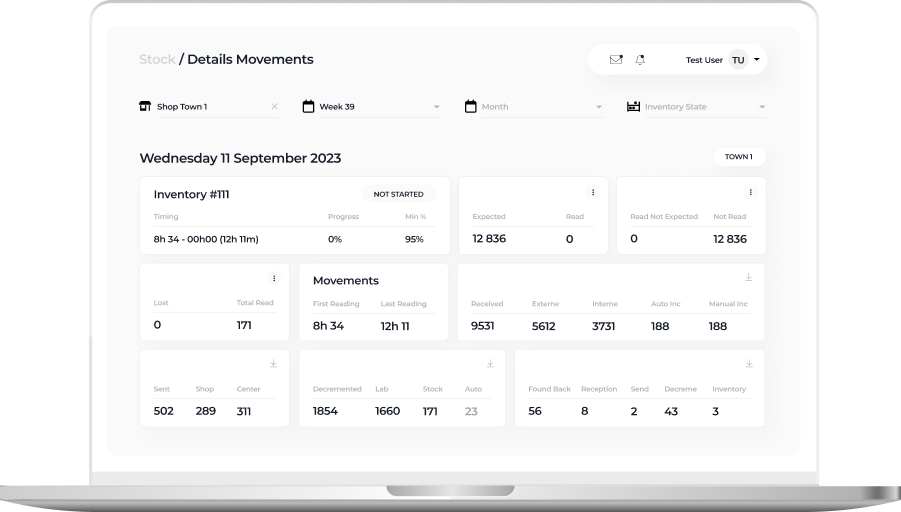
Before cooperating with *instinctools, the client didn’t have any dashboards to track inventory levels and, therefore, lacked transparency and traceability of the relevant processes.

Ensuring data tells a clear story is one of our areas of expertise, so the dedicated team bolstered the app’s functionality with a data visualization feature.

Detailed view of a daily inventory state within a particular eyewear shop

On this tab, in-store admins can check the status of inventories conducted in their store:

  • In progress
  • Closed
  • Device issues
  • Validated
  • Missing

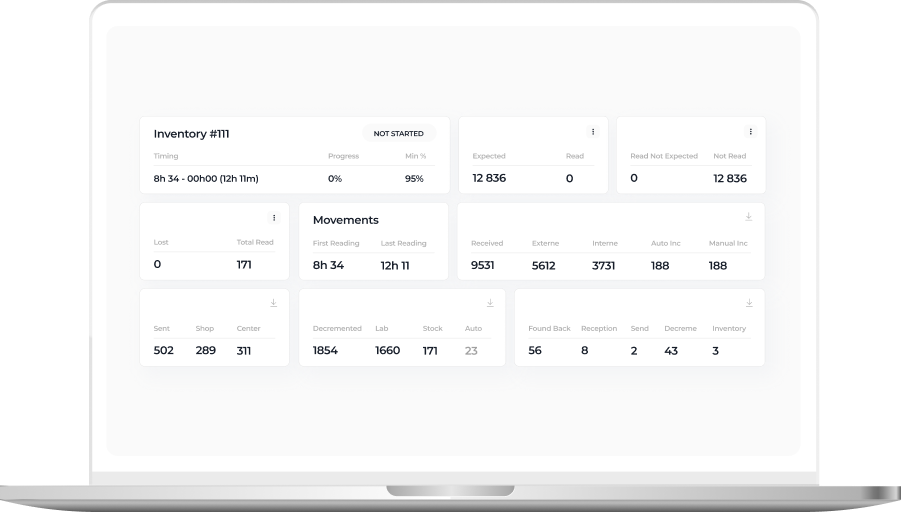
The staff can also see the number of expected, received, lost, and found back items, and inventory time.

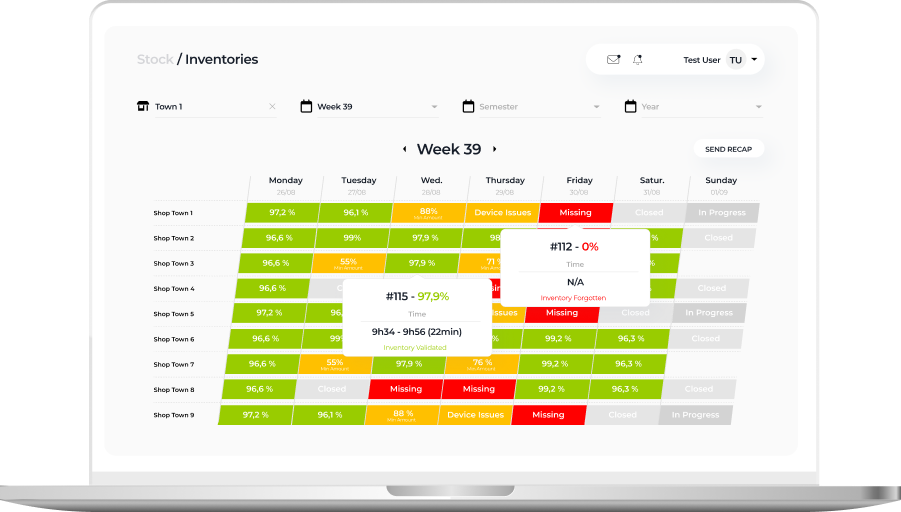
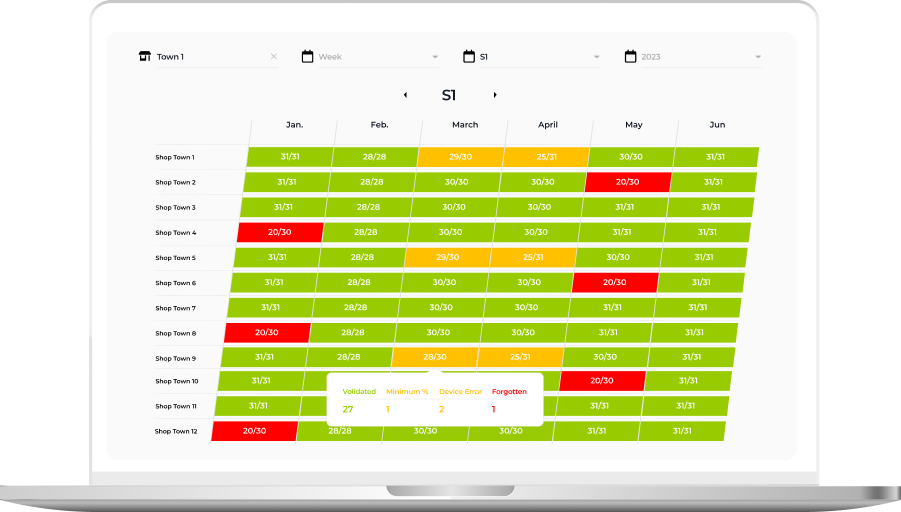
Week or Semester view with inventory state over a longer period

This tab provides higher-level information about inventory status in weeks and months. Thanks to intuitive UI with color-coded table cells, it’s easy to spot inventories calling for detailed analysis:

  • Successful inventories with more than 95% of items scanned and validated by the system are green
  • Processes with device issues are orange
  • Procedures with unidentified items are red
  • Inventory-free days are gray

These custom dashboards provided the client with much-coveted traceability of inventory processes and empowered them to uncover and nip alarming issues in the bud.

Business value

Before

  • Overpriced inventory software under the vendor lock-in
  • Tabletop RFID readers run on legacy software
  • Inability to use the full capacity of RFID readers
  • Low tag validation speed
  • Lack of visibility into the inventory flow

After

  • The budget-friendly and flexible app is fully tailored to the client’s manufacturing and inventory workflows
  • Standardized and easy-to-maintain tech stack
  • Boosted RFID scanners’ reading capacity from 300 to 600 tags per second
  • x3 tag validation speed
  • Full transparency and traceability of inventory-related processes thanks to custom dashboards

Client’s testimonial

Here’s how the client’s product manager evaluates the outcomes of collaboration with *instinctools:

WordPress To Shopify Migration

WordPress To Shopify Migration For a European Eyewear Retailer

How switching from an outdated WordPress website with a WooCommerce plugin to a sleek Shopify platform with a tailored theme empowered the French eyewear retailer to accelerate loading speed x6, lower bounce rate twice, increase session durations fourfold, and boost page visits per session by 64% — all without missing a beat in their operations.

Web Development

Software Product Development

Business сhallenge

Grappling with fierce competition, o​​wners of ecommerce businesses know better than anyone how tough it is to win customers and turn them into regulars. Especially, when a raft of external factors have already been preventing ecom companies from capturing buyers’ attention. 

While environmental, economic, and political hurdles are something that you can’t fend off, there are areas within your control – and technical prowess of your ecommerce solution is definitely among them.

Facing the challenge of revamping their tech foundation, our client — a leading French eyewear brand with a production hub and a network of over 20 retail stores — sought to elevate their three-year-old ecommerce solution, crafted on WordPress with WooCommerce integration.

Why did the existing online store with the WooCommerce plugin become a pain in the neck for the client?
  1. Due to a slew of plugins and underlying spaghetti code, their website’s loading time increased to a concerning 6 seconds. While this didn’t impact its visual appeal, it significantly affected user experience, leading to brief average use sessions of under 30 seconds and a 70% bounce rate. It’s an urgent matter we can’t overlook.
  2. There were problems with updating and maintaining of the current ecommerce entity as updates for plugins and WordPress versions aren’t synchronized. Situations where the update was available for WordPress but not plugins were far from rare.

    This left our client in a tight spot: prioritize security by upgrading WordPress and risk plugin functionality, or patiently wait for a full alignment of updates? As you can probably guess, neither of which seemed an attractive option.
  1. Considering its outdated nature and maintenance challenges, the existing store was exposed to security vulnerabilities. Notably, the client’s previous system leaned heavily on the jQuery library, deemed unsafe by modern security standards.
  2. There was no easy — or even remotely acceptable — way to add localization for Belgium, where the client was going to open new brick-and-mortar stores. With WordPress, they would have had to invest a sizable chunk of time and budget in adding a new language version by installing another plugin, which would have slowed down the loading speed even more.

The client has investigated available options and reached out to *instinctools with a request for WordPress to Shopify migration services.

As an all-in-one ecommerce platform, Shopify was expected to meet their current and future needs since it:

  • Can handle up to 10,000 requests per minute
  • Eliminates the need to deal with website updates and maintenance, which are the responsibility of the platform’s tech support
  • Simplifies content management thanks to the isolated fields in the admin panel so that employees can easily update the content without the risk of breaking the system
  • Keeps the security bar high
  • Offers free localizations for additional markets with a built-in auto-redirect without affecting the client’s search engine ranking
  • Provides vital ecommerce functionality, such as a multi-currency plugin, an automatic country-by-country tax calculator, analytics section, etc., right out of the box

How to migrate from WordPress to Shopify seamlessly and provide a client with a soaped-up new ecommerce solution, and what Shopify nuances did we have to deal with?

Solution

WordPress to Shopify migration wasn’t the client’s first project with *instinctools. The new Shopify store was supposed to become a part of a comprehensive ecommerce ecosystem, crafted by our dedicated team within our long-term cooperation with the client. 

We didn’t need to deal with the hassle of WordPress data migration to Shopify thanks to our team’s prior work, which included developing an inventory and logistics app and an ERP system for the client. All the required data was extracted from the shared back end of these solutions.

However, there still were issues that we had to sort out to successfully migrate from WordPress to Shopify.

Matching Shopify’s capabilities with the specifics of eyewear products

Although Shopify provides a plethora of vital ecommerce features out of the box, such as a multi-currency plugin, an automatic country-by-country tax calculator, an analytics section, etc., our dedicated team developed a custom theme in line with the client’s corporate style, and fine-tuned the solution’s initial setup considering the specifics of the client’s business and products.

  • Chose a pricing plan based on product variation limits

Glasses can be of different sizes and colors, yet it’s still one product available in multiple variations, with different prices and quantities in stock. Shopify’s standard plan has a limitation – the total amount of variations of a single product can’t exceed 100.

As for the moment of WordPress to Shopify product migration, the client had a maximum of 60 variations of one product. We’ve negotiated that until the next solution upgrade (in nearly three years), the basic version of Shopify is enough to cover their needs. 

When the number of variations approaches 100, the client will need to upgrade to Shopify+, but until then, there’s no need to overpay for a high-tier plan.

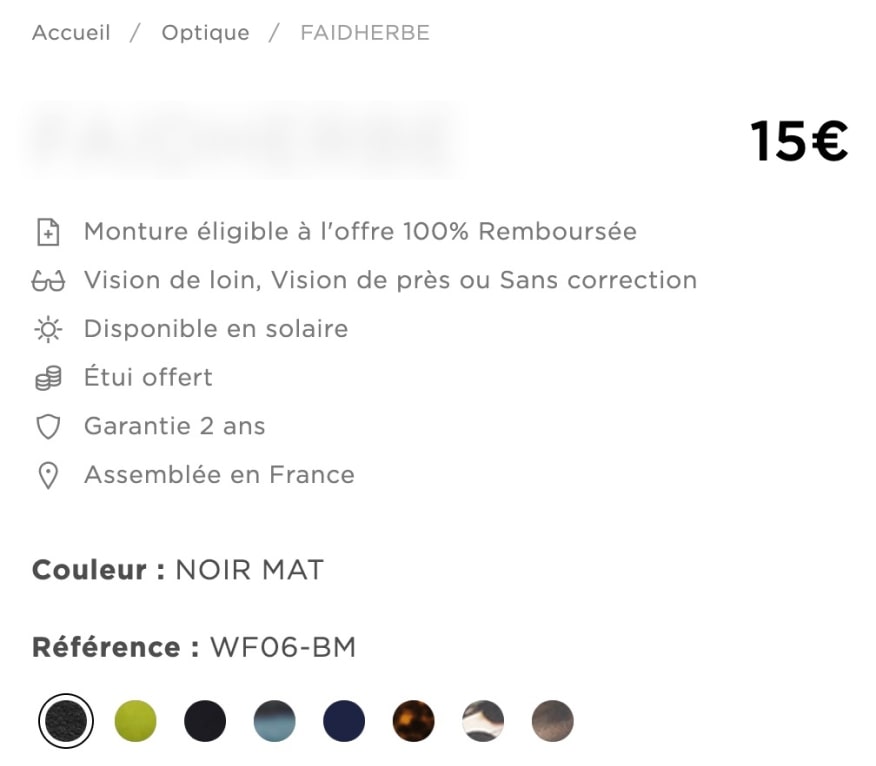
* For example, these glasses have 40 variations due to the combination of colors with parameters, such as diopters for near and far sight or without diopters, transparent or sun lenses.

  • Found a way to add more than three parameters in the product descriptions

Every product has a set of different attributes – size, color, width, etc. There are many more parameters for eyeglasses – weight, lenses, dioptres, interpupillary distance (PD), etc.

However, in Shopify, the maximum number of product characteristics is three, and it can’t be changed even by writing custom code. However, the platform has numerous custom fields that can be tailored to the product’s specifics. To solve this, our experts offered to leverage this opportunity to solve the issue and made a template for all the extra parameters.

  • Honed SEO functionality

Based on the client’s request to enhance SEO capabilities of a new Shopify store, we’ve bolstered it with two additional paid SEO modules. One of them allowed the client to swiftly generate titles and descriptions for multiple dynamic pages using adaptable variables. For example, a variable  “buy in France” following a product name in the admin panel, can be integrated across all or chosen pages automatically.

The other SEO module speeds up caching, preloading pages, etc., based on the analysis of user behavior.

Thanks to this upgrade, our client elevated their search engines’ rankings by three to five positions on average. 

Going extra mile without upping the project’s budget

The client was interested in Shopify’s analytics capabilities. They could have chosen Shopify+ to get access to this functionality. Still, our development team came up with a more budget-friendly option – they found and installed a free sales and analytics module that provides the same ability to collect detailed data from Google Tag Manager, GA4, and Facebook.

Before

  • 6-second website loading speed
  • Average session duration below 30 seconds
  • 70% bounce rate
  • A mind-boggling amount of plugins to ensure basic ecommerce functionality
  • Difficulties of maintaining an outdated ecommerce Frankenstein

After

  • 1-second website loading speed
  • Average session duration over two minutes
  • 35% bounce rate
  • Off-the-shelf budget-friendly solution fine-tuned to meet the client’s requirements
  • Free access to detailed customer analytics
  • Seamless solution updates and maintenance covered by the platform’s support

Key features

Continuity

WordPress to Shopify migration and revamping the whole ecommerce solution didn’t cause any disruption to the client’s business operation flow.

Scalability

The new store, based on the specialized ecommerce platform, supports the client’s plans to scale beyond France.

Reliability

The client always has the latest vulnerability-free version of the solution without lifting their finger, all thanks to delegating the maintenance hassle to the ecommerce vendor.

Business value

  • x6 higher loading speed
  • Halved bounce rate
  • x4 longer time spent on page
  • 64% boost in the number of pages visited per session
  • Free detailed analytics into customer behavior
  • Three to five positions higher search engine rankings

Client’s testimonial

Now, let’s here how the product owner talks the project’s results and the expected outcomes:

Ecommerce Ecosystem Development

Ecommerce Ecosystem For an Eyewear Company

How developing a comprehensive ecommerce ecosystem helped an optical company withstand severe economic headwinds and grow their store chain from 8 to 24 eyewear boutiques across France. 

Industry:
Manufacturing

Mobile App Development

Software Product Development

Web Development

Data Visualization

Business challenge

For highly competitive industries, such as ecommerce, being able to adjust to ever-changing market conditions in a blink of an eye is the only way to retain customers and win new ones. In this respect, COVID-19 became an inflection point at which only the most resilient companies could stay in the saddle, while others had no other choice than to ride off into the sunset.

When the pandemic began, companies were forced to rethink their business vision, look for new value and revenue-creation opportunities, and find ways to satiate consumers’ needs in unanticipated circumstances. The situation was the same for our client – an eyewear company with its own production and a chain of physical stores across France.

The client first reached out to *instinctools to create a mobile app for sales assistants. However, the coronavirus meddled in their business strategy, forcing them to move at a rapid clip and develop an additional sales channel aimed directly at consumers. That’s how the idea of a shopping app for customers arose.

When a company wants to drive revenue growth, banking only on a customer-facing solution isn’t enough. Internal processes also have to be enhanced. In the case of our client, the necessity to adapt to the changing ecommerce realm unveiled issues with order registration and processing, stock inventory, and logistics.

After analyzing the market and gathering the client’s requirements, we proposed developing a comprehensive ecommerce ecosystem of mobile and web solutions with a shared back end and multiple front ends.

Solution

As we’ve mentioned, the client initially approached *instinctools to craft one small application for internal usage. However, the retail industry upheaval, along with evolving consumer needs, forced them to reconsider an erstwhile firm view of ecommerce as a bolt-on to the main business. For over six years of cooperation, our dedicated team has developed four apps for the company’s staff, one customer-facing application, and a new website on Shopify.

Why did we develop niche applications one by one instead of crafting one multipurpose solution? Such an approach provided several benefits:

  • Maintaining and updating several small apps is much easier

than taking care of a large-scale solution with complex business logic.

  • Ensuring ease of use for the client’s staff

as each mobile or web solution is tailored to a specific role within the company.

  • Rolling out new functions apace

to attract new customers and retain existing ones.

All the applications, except for the one related to the local insurance system, are written in React Native. That way, our client isn’t limited to devices with a particular OS and can reach a larger pool of potential buyers.

Let’s zoom in on each of the solutions in the order of their occurrence.

  1. Eyewear measurements app for consultants in physical stores

When the client started the business, far from all processes were digitized. For instance, the in-store consultants used to mark out an eyeglasses frame for a buyer and then manually calculate the lens diameter and fitting distance to ensure that the glasses had the lenses at the correct distance from the customer’s pupil.

With such an approach, the probability of an error caused by the human factor increases manifold. The problem became more evident as the client’s store chain was expanding. Therefore, they decided to digitize and automate this task with a simple mobile application for internal usage. 

Developing the app in React Native became the starting point of our cooperation with the client. How does it work?

After a customer chooses a frame in the store, a consultant finds it in the catalog in the app.

Then, the consultant opens the camera on the device and points it at the customer’s face to determine control points – the center of the pupils, considering their vertical position.

Finally, the app automatically calculates the position of the optical center so that the geometrical center of the frame and the buyer’s pupil coincide to ensure the glasses are comfortable to wear.

After a customer chooses a frame in the store, a consultant finds it in the catalog in the app.

Then, the consultant opens the camera on the device and points it at the customer’s face to determine control points – the center of the pupils, considering their vertical position.

Finally, the app automatically calculates the position of the optical center so that the geometrical center of the frame and the buyer’s pupil coincide to ensure the glasses are comfortable to wear.

Besides eliminating the possibility of calculation errors, such automation has speeded up order processing by five minutes per order. It turned out to be a real breakthrough, as the client’s business model focuses on serving many visitors in a short time – the speed of order-making is even mentioned in their slogan. Therefore, at the client’s scale, even such a seemingly small improvement meant a 33% acceleration of order processing.

  1. Customer-facing mobile store app

Before 2020, the client launched new stores in several French cities and planned to develop new applications specifically for physical locations, such as kiosks for self-ordering of glasses.

However, the pandemic and the following quarantine with a strict ban on leaving home drastically changed the client’s business strategy. Magnifying their digital presence and providing customers with an app where they can select, order, and pay for the glasses became the client’s primary focus. That’s why our team switched from developing software solutions for internal usage to crafting a mobile ecommerce eyewear store for customers. It was also written in React Native to be apt consumers with iOS and Android devices. 

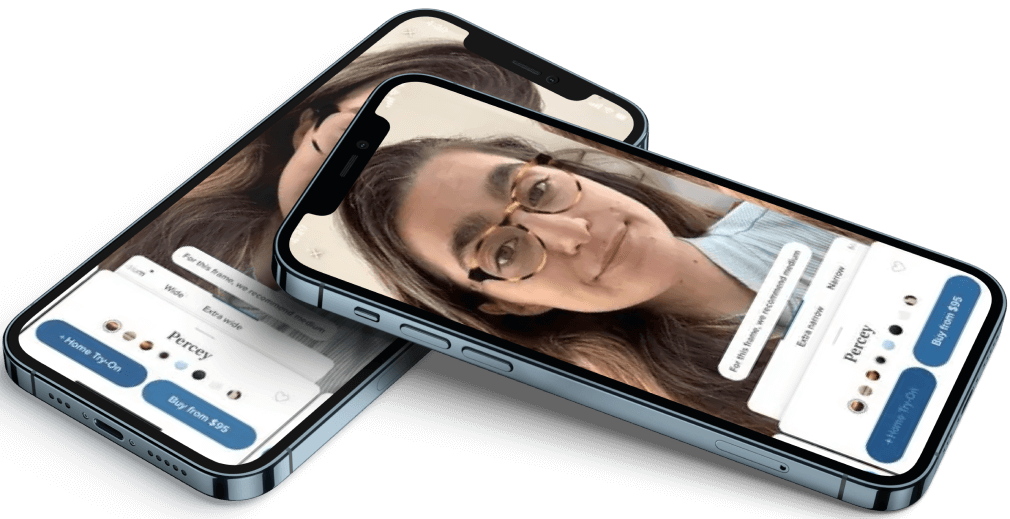
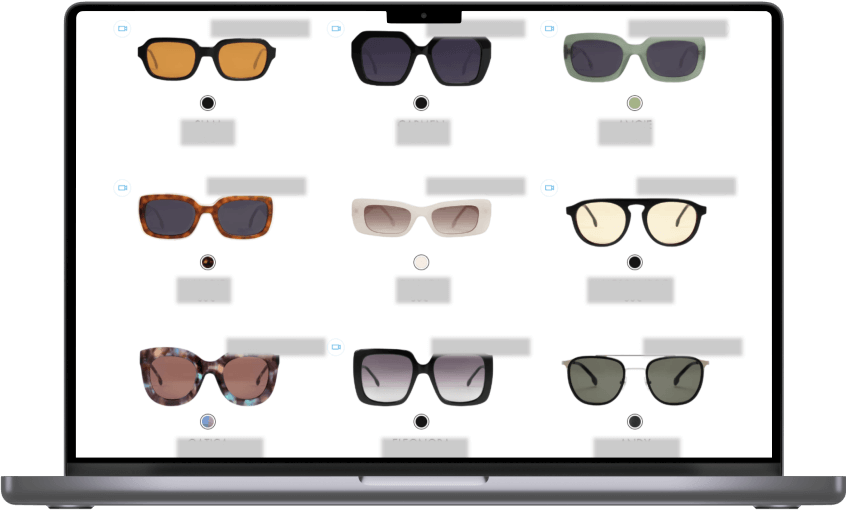
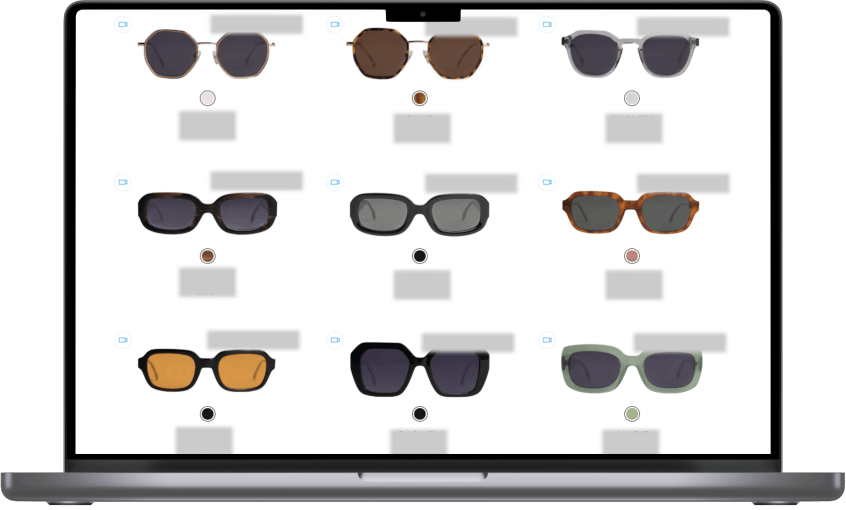
Given the impossibility of physical presence in the store, we added a feature of a virtual frame fitting. It gives a rough idea of how different frames would look on a person’s face. Even long after the lockdown, this function remains popular among the app’s users. 

  1. Custom ERP for internal usage

We inherited the enterprise resource planning project from the client’s previous tech partner who hadn’t been able to provide a no-fuss hiring process and unlimited scalability on demand.

After discussions with the client, it was decided to finalize the custom solution another team had been working on instead of adopting and customizing a ready-made ERP such as Odoo, SAP, etc., for two reasons:

  • The client didn’t need all the features that off-the-rack software provides, so it would have been unwise to overpay for it.
  • Only a bespoke system could guarantee perfect alignment with the client’s processes.

What roles does the web app cover within the company, and what functionality does it provide?

  • Sales person

has access to the customers’ database to create and edit consumer information.

  • HR

can create and edit staff accounts to make managing employees whole-company scale easier.

  • C-suite

can leverage advanced statistics to back up their decisions with up-to-the-minute data. We created dashboards to visualize the data about the number of orders in general and by cities, customers’ gender and age, lens type, and a raft of other parameters.

  • Technician

the employee responsible for assembling glasses — signs in the ERP to see the list of orders to be produced, delivered, etc. Moreover, each technician is assigned to a certain store and can see only the data related to their location.

  • In-store consultant

registers orders made by customers in the physical stores.

As the ERP automatically records status changes after each operation with an order, the client obtains a fully-transparent production and delivery process. And easy-to-grasp dashboards empowered them to make well-informed decisions based on vast amounts of data and keep a laser-sharp focus on the changing customer demands to adjust production accordingly as fast as possible.

  1. Mobile app for inventory and logistics

As the number of the chain stores was growing, our client faced the palpable need for a solution that would ensure centralized and automated stock monitoring, logistics, and inventory. That’s what became a driving force in launching a new project – a mobile application on React Native integrated with RF and RFID scanners, used for inventory, goods receipt, and shipping.

The app we developed simplifies the tasks for employees involved in inventory management and in-store consultants who receive orders.

It allowed the client to:

  • Digitize inventory management and logistics and therefore speed up related tasks, such as order picking
  • Automate stock and inventory management
  • Get a detailed view of the stocks in near real-time
  1. Healthcare software for simplified cooperation with insurance companies

One of the hallmarks of the client’s business is the direct cooperation with public and private insurance companies in France. It’s convenient for the consumers, but the client also wanted to facilitate the process for their employees. Therefore, our dedicated team developed an insurance processing application for internal usage.

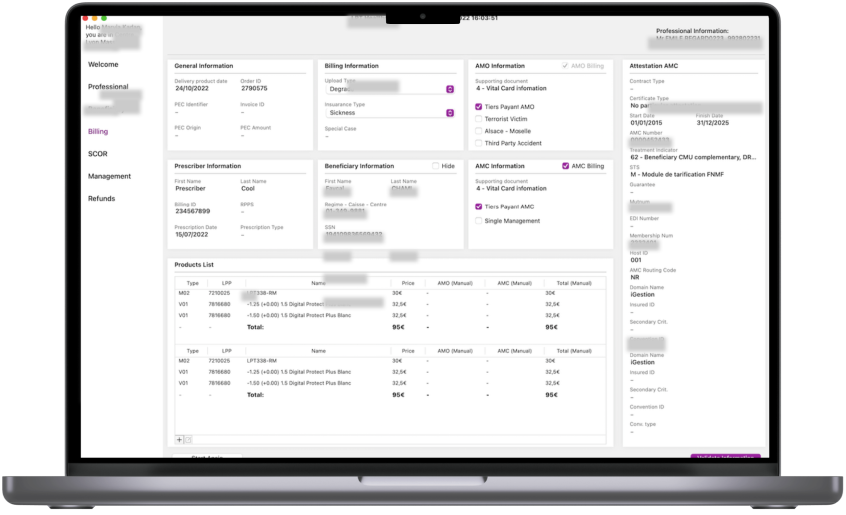
There are physical terminals in the client’s stores where consultants swipe customers’ insurance cards. The terminal reads the data and sends it to the app, which automatically matches this information with the data the insurance companies provide and displays:

  • what type of order the consultant can create for a client
  • how much of the order’s cost can be covered by insurance

Insurance regulations in France require choosing one OS for insurance processing with mandatory certification of the software before its rollout. As the client had already bought iMacs for their brick-and-mortar stores, we designed the healthcare solution for MacOS.

The app’s implementation allowed the client to automate the routine task of insurance processing and completely cut out the possibility of human error.

  1. Website on Shopify

The client’s former website used to run on WordPress, bolstered with the WooCommerce plugin. The problem was that as the website was expanding and new plugins were being added, the solution became overly complicated to be managed efficiently.

Tons of spaghetti code slowed down the pages’ loading speed — it could take up to six seconds — a parameter that, in 70% of cases, influences consumers’ willingness to buy from an online retailer*.

*Source: Unbounce, Think Fast: The Page Speed Report

Redesign and modernization of the old website would have taken too much time, so the client decided to switch to Shopify – a hosted SaaS solution — so that the provider would handle most of the technical issues and it would be easier to scale further.

Moreover, the out-of-the-box Shopify solution offers functionality that is missing in the off-the-shelf WooCommerce module:

  • a multi-currency plugin
  • a wide range of payment options
  • an automatic country-by-country tax calculator

With the former website, all of that had to be either coded manually or achieved through installing additional modules, which slowed down the solution.

Shopify adoption has also allowed the client to gather more detailed customer analytics thanks to the connection with Google Analytics, Google Tag Manager, and Meta Ads.

However, despite Shopify being an all-in-one ecommerce platform, our team had to work through some of its limitations. For example, it was impossible to specify more than three product options in a description. Check how we solved these issues in a detailed case study.

By switching to Shopify, the client got a user-friendly and easy-to-manage online store with 6x higher loading speed and access to detailed analytics.

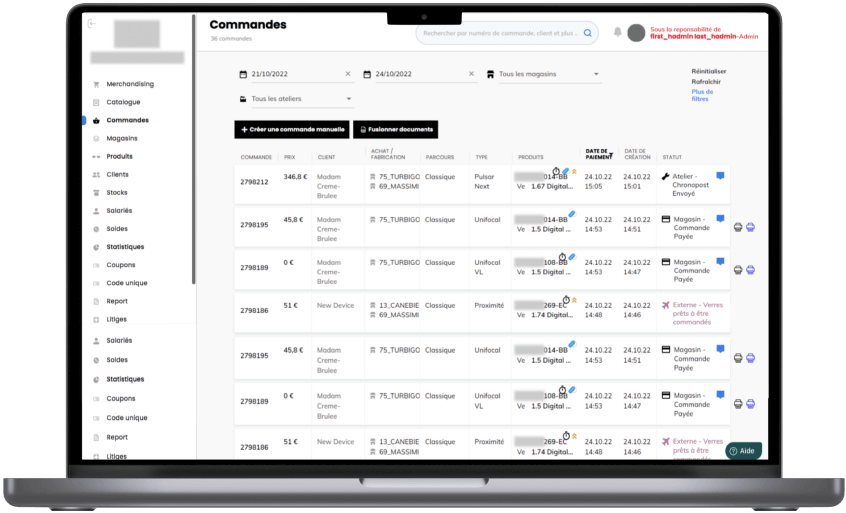
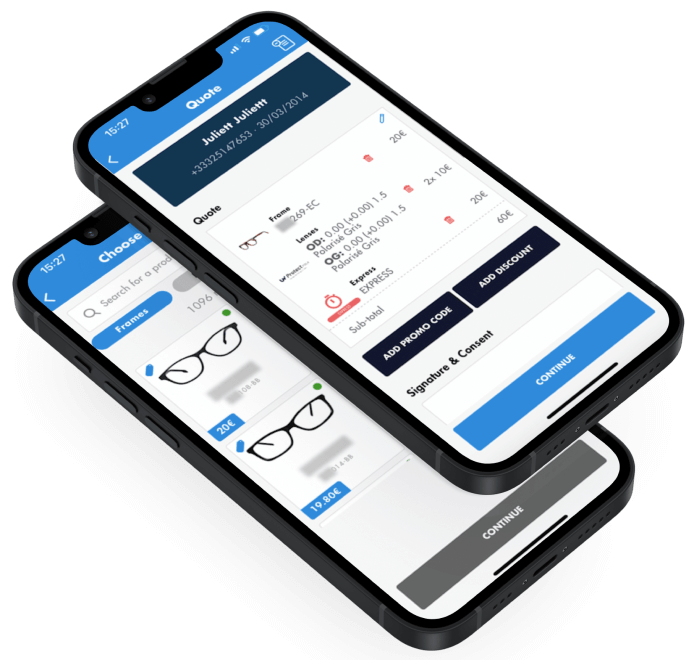
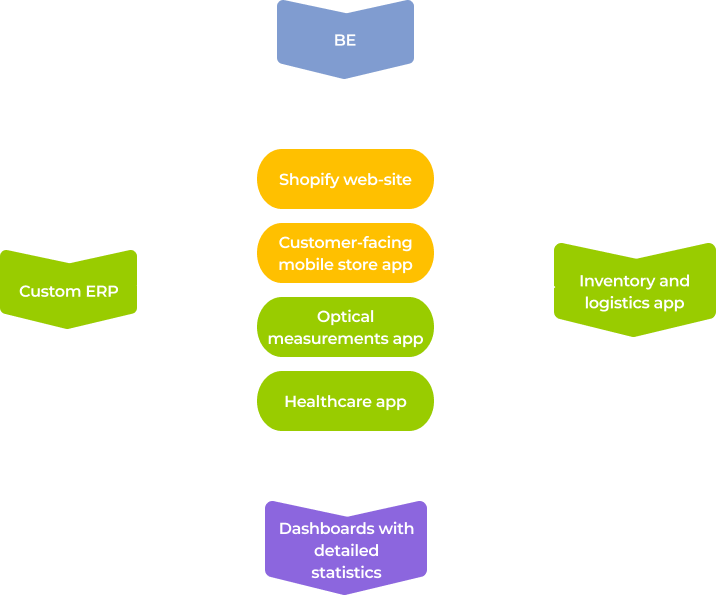
Here’s the client’s final ecommerce ecosystem with all the mobile and web applications we’ve developed for internal and external usage.

Before

  • Unoptimized business operations
  • Manual processes
  • High influence of human factor
  • Absence of an online ecommerce eyewear store for customers
  • Lack of tools for efficient data collection, analysis, and visualization
  • Draft version of a custom ERP that wasn’t released
  • Heavyweight and slow WordPress website with loads of spaghetti code

After

  • Digitized order processing, inventory, and logistics
  • Automated optical measurements and insurance-related tasks
  • Minimized possibility of human error
  • Eye-catching and user-friendly mobile app for online consumers
  • Insightful dashboards with detailed statistics
  • Full-fledged custom ERP 
  • Speedy and easy-to-maintain website on Shopify
  • Transparent and flexible ecosystem of lightweight software solutions

Key features

Adaptability

A comprehensible suite of lightweight applications allows the client to remain flexible and swiftly respond to any market changes. Such an approach also simplifies apps’ maintenance and support, not to mention the ease of use for the client’s employees.

Extensiveness

The custom B2B ecommerce ecosystem we’ve created encompasses software solutions that provide a seamless customer experience and streamline the client’s internal processes.

Customizability

Custom software aligns with the client’s business needs perfectly. Moreover, each solution for internal usage is targeted to a specific role within the company to simplify its management for the client’s employees.

Business value

  • 33% faster order processing
  • 6x boost in page loading speed on the website
  • Fully digital inventory management and logistics
  • Complete transparency of the operations within the company
  • Automated insurance processing
  • Eliminated possibility of a human error

Multiplier effect

A well-designed ecommerce ecosystem enhances your customers’ experience and turns them into regulars. 

Any B2C or B2B software solution is often a part of a larger ecosystem that includes internal business tools and external channels of interaction with potential customers. To hit it big down the line, you should adhere to a holistic approach to building software for your company’s needs. 

This principle plays out in any industry, from ecommerce, entertainment and media to healthcare, fintech, and manufacturing. Bank on comprehensive strategic solutions instead of one-off fixes to stay ahead of the pack and win over more customers.

Eyewear Measurements App For an Optical Company

Eyewear Measurements App For an Optical Company

How digitizing and automating eyewear measurement operations empowered a European eyewear company to accelerate in-store order processing by 67%.

Challenge

The customer contacted us with a request to build a native iOS application for their sellers. The application would be able to determine distances (in millimeters) between a customer’s pupils and heights (calculated between the bottom of the lens and the middle of the customer’s pupil) using the camera.

Solution

We have successfully accomplished the task that we were given. We have developed an optical measurements application based on iOS system. It can provide our customer with accurate values (in millimeters) of pupillary distances and heights.

A part of our work was also the development of a UX/UI design.

Key Features

  • accurate values (in millimeters) of pupillary distance and height.

Technologies

Anna Vasilevskaya
AI modified real photo
Anna Vasilevskaya
Account Executive

Get in touch

Drop us a line about your project at
[email protected] or via the contact
form below, and we will contact you soon.