
Legacy Software Modernization For a Global Heat Exchanger Manufacturer
How switching from legacy, head-office dependent software to a cutting-edge solution, featuring a modern toolset and intuitive UX, helped the leading heat exchanger manufacturer eliminate manual maintenance tasks and lower software upkeep cost by 27%.
Domain:
engineering, heat exchanger manufacturing,
heating & cooling systems
Budget:
>200.000$
Duration:
1 year
Challenge
The engineering toolset, which the customer had been using for more than two decades, had become complex and outdated. The problem was that the software was based on old technologies and was developed by people who were no longer with the company. Its maintenance required added manual effort which led to higher process costs.
“We need a state-of-the-art solution” – that’s what our customer emphasized on during the Clarification Call with us. The customer wanted to have a modern software that would provide calculation results in a quick and easy way, as it is one of the key factors in heat exchange industry which affects the client’s decision in choosing the supplier.
The customer’s pain points:
- slow and poor performance
- strong dependency (if the system stopped working in the head office, it stopped working everywhere)
- outdated approaches to user identification and authorization
- the necessity to maintain their own environment, which took a lot of effort and was risk-prone
- the problem of data backup and storage (local installations are not the most optimal backup solutions)
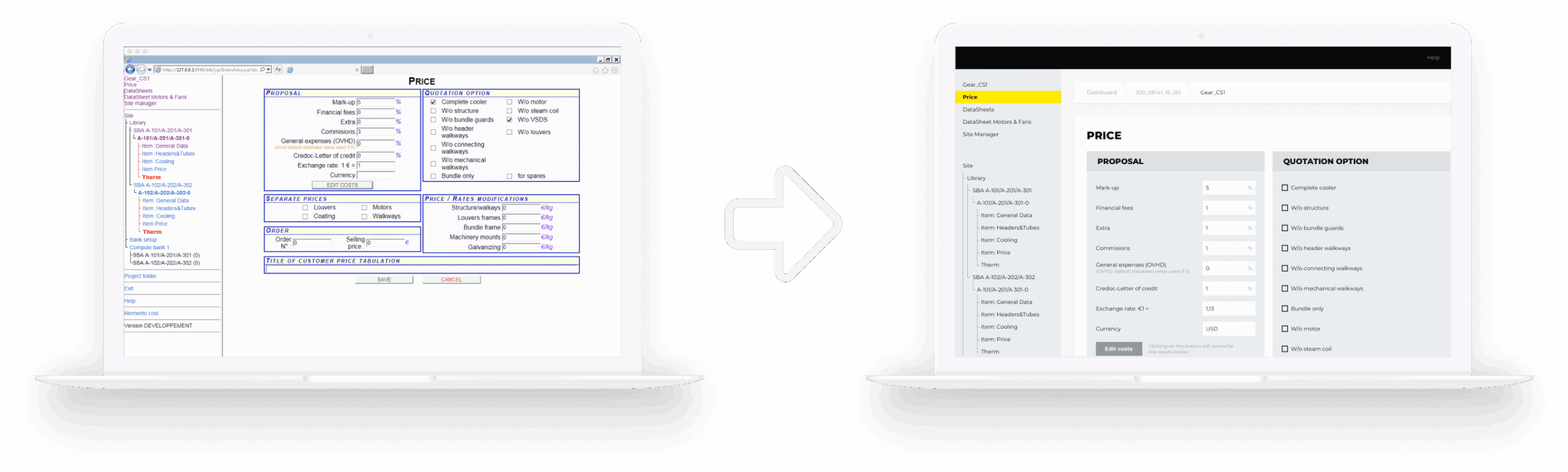
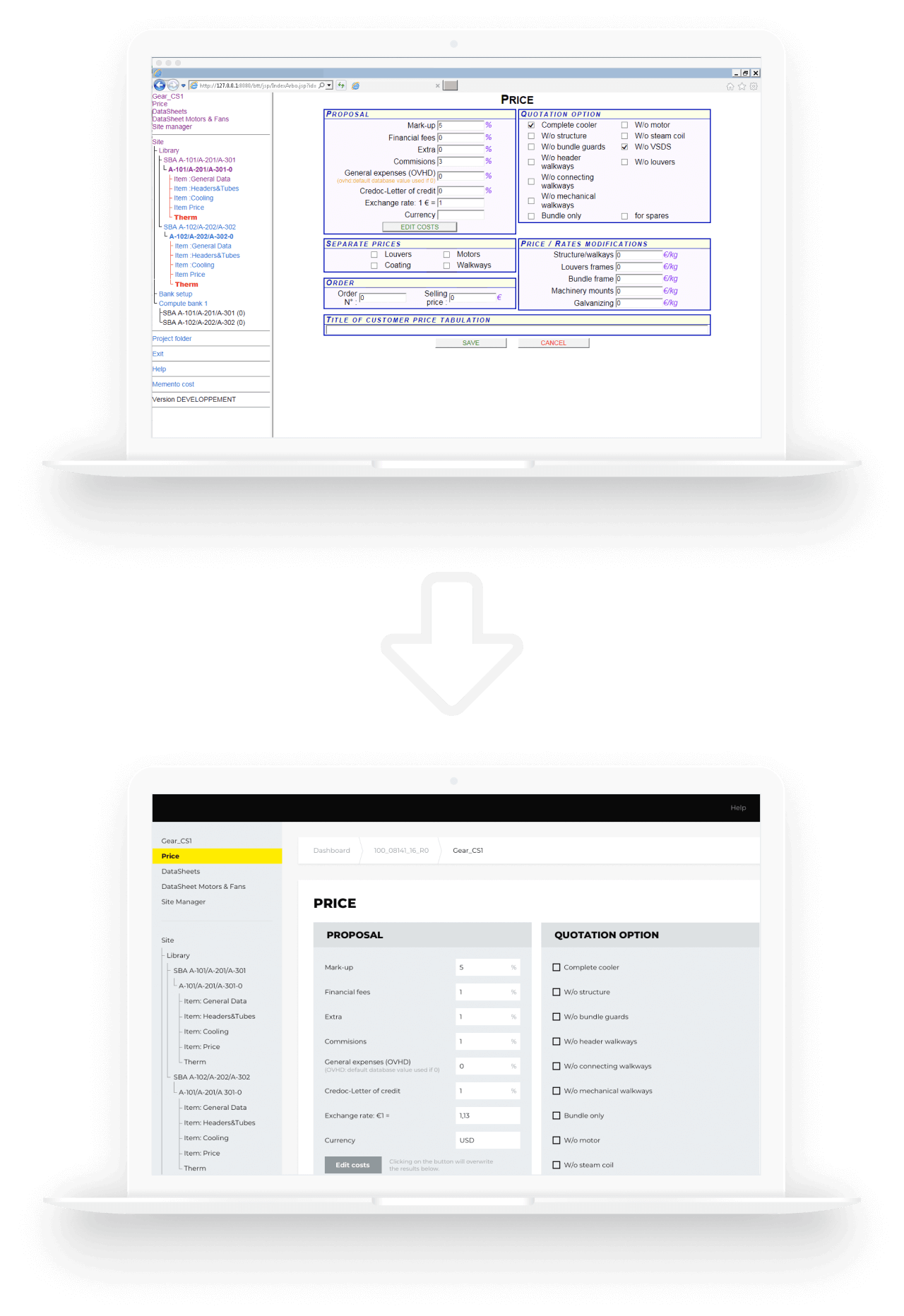
- old-fashioned design and unintuitive functionality
Tasks:
- to improve the efficiency of Sales / Order management process including further development of the tools and applications used by the customer
- to integrate the tools with the customer’s authentication system
- to use SharePoint as a document management and storage system
- to stabilize the current system, retaining all of the system’s components and business logic
- to upgrade UI by making it more current while minimizing changes in UX, thereby lowering the barrier to entry
Solution
The volume of work was quite substantial. It required a thorough analysis phase. At the start, the stakeholders in the customer company couldn’t come to a common understanding of what the project goals were. To make sure that the project implementation result will reflect what the customer really needed, it was decided to start with the Pre-Discovery workshop: we clarified all the details, discussed the customer’s pain points and chose the direction for further analysis. It prevented the project from going in the wrong direction from the very beginning and created a proper base for the Discovery phase
In this phase, we defined the tasks, planned the resources and the stages for implementation, and made the estimation of the project. This approach helped avoid wrong strategic decision-making and contributed to a successful project implementation: migration of the legacy system to Azure Cloud (fulfilling all the customer’s requirements) and implementation of the new UI.
Deliverables of *instinctools team:
- Architecture improvements and technical solutions compatible with Azure Cloud
- Project Charter with settled release processes and communication plan
- CI/CD
- UX/UI strategy and the implementation of new designs

Benefits for the customer:
minimizing errors and efforts for testing
making the maintenance process easier
lowering maintenance process costs to a minimum
reducing the workload (less time spent on requirements engineering and easy reuse of working modules)
unifying the whole process of equipment configuration
getting their software up to modern standards which makes addition of new features and upgradation of the existing ones cost and time effective
Technologies
Cloud: